
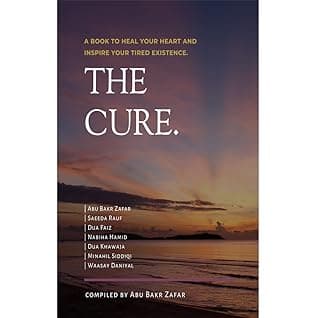
Core Idea
- Difficulty
- Medium
- Read it if
- You feel overwhelmed by passive consumption of self-help content and are ready for a call to action to integrate wisdom into your daily life for genuine transformation.
- Skip it if
- You are looking for a light, purely inspirational read without a strong emphasis on self-reflection, confronting regret, or practical steps towards change.
Key Takeaways from The Cure
Collective Wisdom for the Weary Soul
Healing is a multi-faceted journey, best navigated with diverse perspectives.
In an age of specific content, 'The Cure' stands out by offering many voices instead of just one expert. This collection recognizes that spiritual and emotional healing is rarely a one-size-fits-all process. By presenting seven different writers, the book suggests that various perspectives connect with different aspects of a 'broken heart' or 'tired soul.' This approach keeps readers from relying too much on one philosophy and encourages a more complete understanding of well-being. Its strength is its breadth, providing many insights for readers to choose what fits their current needs, rather than a strict plan.
“For one person, you are not going to have the inspirational and curing address from your favorite writer only, you will be reading and listening to other six writers too, who are there for you to heal your heart and help you inspire your tired soul.”
In the book: The very structure of the book, featuring seven Instagram writers compiled by Abu Bakr Zafar, serves as the primary evidence. Each writer contributes their 'curing content,' demonstrating a belief in the power of varied voices.
Try this: When seeking guidance or inspiration, actively seek out multiple perspectives rather than fixating on a single source. Engage with ideas that challenge or complement your existing beliefs to build a more robust personal philosophy for resilience and healing.
Related ideas: diverse-perspectives, holistic-healing, collective-wisdom
Beyond Inspiration: The Call to Action
Inspiration is merely the starting line; purposeful action defines the race.
'The Cure' is not just about feeling good; it pushes people to do good, especially in their own lives. The book stresses that real healing and inspiration must lead to concrete action and self-directed purpose. It criticizes passively consuming motivational content, suggesting that true change begins when an 'idea' about one's life becomes a 'goal,' which then requires 'working for' it. This sequence—idea to goal to work—is presented as the solution to a life of regret, making inspiration a tool for intentional life design rather than an end itself. It is a practical call to combine inner thought with outer action.
“And with the healing, to have the idea about what you are doing in your life and what you should do in your life is important and with that idea making a goal is important and with a goal working for is important.”
In the book: The specific sequence outlined in the book: 'idea about what you are doing' -> 'making a goal' -> 'working for is important' -> 'you will see the end and when you look back you gonna regret wasting your time living a life that gave you nothing.'
Try this: After consuming inspirational content, immediately identify one concrete idea that resonated. Transform that idea into a specific, measurable goal, and then outline the first three actionable steps you will take towards achieving it within the next 24-48 hours.
Related ideas: purposeful-action, goal-setting, inspiration-to-action
The Imperative of Self-Reflection
Understanding your current path is the prerequisite for charting a new course.
Before any real change can happen, 'The Cure' emphasizes the importance of honest self-reflection. It is not enough to feel 'broken' or 'tired'; one must actively understand the 'what' and 'why' of their current life. This is not about self-pity but a diagnostic process. By consciously evaluating 'what you are doing' and comparing it with 'what you should do,' people can see the gaps between their current life and their hopes. This introspective step is fundamental, preventing aimless effort and making sure that actions align with genuine personal growth and healing, rather than superficial fixes. It is like checking a compass before a journey.
“To have the idea about what you are doing in your life and what you should do in your life is important.”
In the book: The emphasis on 'to have the idea about what you are doing in your life' explicitly before moving to 'what you should do' and goal-setting.
Try this: Dedicate 15-30 minutes each week to a 'life audit.' Journal honestly about your daily activities, energy levels, and emotional state. Compare this to your ideal self and identify areas where your actions diverge from your values or long-term goals.
Related ideas: self-awareness, introspection, life-audit
Regret as a Catalyst for Change
The fear of future regret can be a powerful motivator for present action.
The book uses the strong emotion of regret as a force for change. It presents the potential future regret of 'wasting your time living a life that gave you nothing' as a stark warning, an uncomfortable truth meant to prompt immediate action. This is not manipulative; instead, it acknowledges that people are often more motivated by avoiding pain than by seeking pleasure. By clearly showing future dissatisfaction, 'The Cure' aims to create urgency, turning the abstract wish for a better life into a concrete need to 'get up' and act now. It is a powerful and relatable emotional tool.
“And when you look back you gonna regret wasting your time living a life that gave you nothing. get up”
In the book: The stark concluding phrase: 'you gonna regret wasting your time living a life that gave you nothing. get up.' This directly links inaction to future regret.
Try this: When procrastinating or feeling directionless, mentally fast-forward five or ten years. Imagine looking back at your current self. What would you regret not doing? Use that imagined regret to fuel immediate, small actions towards your goals.
Related ideas: fear-of-regret, motivation, urgency-for-change
The Anti-Dote to Passive Consumption
True healing demands engagement, not just reception.
While the book offers 'curing content,' it challenges readers to move beyond simply receiving it. The phrase 'after you will open up the book' suggests an initial step, but the later emphasis on self-reflection, goal-setting, and 'working for' those goals shows that the 'cure' is not just absorbed. It requires active engagement, internal processing, and external application. This collection is not a magic pill; it is a toolkit. The authors provide insights, but the reader is responsible for the work of self-transformation. This difference is important in a world full of easily consumed, but often ineffective, motivational content. It calls for active participation in one's own healing journey.
“Every writer is representing their curing content to their audience, that will be revealed to your broken heart and tired soul after you will open up the book...”
In the book: The juxtaposition of 'curing content' being 'revealed' with the later, more action-oriented directives like 'making a goal is important and with a goal working for is important.'
Try this: When engaging with any self-help or inspirational material, don't just read or listen. Actively highlight, take notes, and immediately brainstorm how you can apply one key insight to your life. Turn consumption into creation or action.
Related ideas: active-engagement, self-transformation, beyond-consumption
The Power of Shared Vulnerability
Discovering universal struggles through individual voices fosters connection and hope.
The idea of 'The Cure' relies on the power of shared human experience, even among different authors. Each writer offers 'curing content,' implying they have faced similar challenges or have insights into the 'broken heart and tired soul' that resonate widely. This collective offering subtly communicates that readers are not alone in their struggles. When multiple voices address similar themes of healing, purpose, and overcoming, it confirms the reader's own experiences and creates a sense of shared understanding. This shared vulnerability, presented through different viewpoints, strengthens the message of hope and possibility, making the 'cure' feel more accessible and less isolating.
“Every writer is representing their curing content to their audience, that will be revealed to your broken heart and tired soul...”
In the book: The compilation format itself, where 'other six writers too' are present 'to heal your heart and help you inspire your tired soul,' suggests a shared purpose and common understanding of human suffering and healing.
Try this: Seek out communities or diverse voices that openly discuss struggles and solutions related to your own challenges. Engage with their experiences not just for advice, but for the validation and connection that comes from knowing you are not alone.
Related ideas: shared-experience, vulnerability, community-healing
From 'Broken' to 'Building': A Path to Wholeness
The journey from despair isn't just about mending, but about constructing a new future.
'The Cure' describes healing not as returning to a previous state, but as a dynamic process of moving forward and creating. It acknowledges the 'broken heart and tired soul' but quickly shifts from just 'healing' to 'inspiring' and then to 'having an idea about what you are doing in your life and what you should do.' This sequence suggests that true recovery involves active self-redefinition and goal-setting, moving past the initial pain. It is about using lessons from past wounds as plans for a more intentional and fulfilling future. The book encourages readers to become architects of their own lives, rather than just patients seeking repair.
“You will be reading and listening to other six writers too, who are there for you to heal your heart and help you inspire your tired soul. and with the healing , to have the idea about what you are doing in your life and what you should do in your life is important...”
In the book: The progression from 'healing' and 'inspiring' to the concrete steps of 'idea,' 'goal,' and 'working for' it, demonstrating a shift from passive reception to active construction.
Try this: When facing a period of difficulty, shift your focus from simply 'getting over it' to 'what can I build from this experience?' Identify new skills, perspectives, or goals that emerge from your challenges and actively pursue them.
Related ideas: growth-mindset, reconstruction, intentional-living
The Everyday Accessibility of Inspiration
Profound insights can emerge from relatable, contemporary voices.
The fact that 'The Cure' is a collection of Instagram writers is important. It makes inspiration more accessible, moving it from academic or traditional authors to more current, relatable voices. This choice suggests that deep wisdom and healing insights are not only found in old texts or from famous gurus, but can also come from individuals using modern platforms. It makes the 'cure' feel more approachable and less intimidating, showing that inspiration can be found in everyday interactions and digital spaces, connecting directly with an audience that might avoid traditional self-help books. It shows the power of genuine, peer-to-peer wisdom.
“This book 'The Cure' is the individual collection of inspirational content by seven Instagram writers including Abu Bakr Zafar...”
In the book: The explicit mention that the contributors are 'seven Instagram writers,' including the compiler Abu Bakr Zafar, known for his online presence.
Try this: Don't limit your search for inspiration to traditional sources. Explore contemporary voices on social media, podcasts, or online communities. Discern what resonates with you, but always apply critical thinking and filter for actionable wisdom.
Related ideas: digital-wisdom, accessible-inspiration, contemporary-voices
The Cure Quotes
“The greatest ailment of the soul is forgetfulness of its Creator.”
“Indeed, the heart is a mirror, and sin is but the dust that obscures its shine.”
“True healing begins not with medication for the body, but with rectification of the spirit.”
“Patience is the saddle upon which one rides through the desert of trials.”
“The world is a bridge; pass over it, but build no house upon it.”
“Every breath is a step closer to your ultimate destination; ensure it is a step taken with purpose.”
“Fear not the poverty of possessions, but the poverty of the soul.”
“The best companion on the path to truth is a sincere heart and a seeking mind.”
“Just as a gardener tends to his plants, so too must one tend to the garden of their inner self.”
“Forgiveness is not merely an act of kindness to others, but a liberation for oneself.”
“The whispers of doubt are but fleeting shadows; do not let them obscure the sun of certainty.”
“A life lived without gratitude is a feast uneaten, a treasure undiscovered.”
“The cure for arrogance is humility, and its bitter medicine is self-reflection.”
“Seek knowledge not for debate, but for guidance; not for show, but for growth.”
Quiz
10 questions on the main ideas. Each answer comes with a short explanation.
Question 1
Who is the compiler of 'The Cure'?
- The Books Yard
- Abu Bakr Zafar
- The Speaking Psycho
- Helium
Show answer
B. Abu Bakr Zafar The book description explicitly states that 'this book is compiled by Abu Bakr Zafar'.
Question 2
How many Instagram writers, including Abu Bakr Zafar, contribute to the inspirational content in 'The Cure'?
- One
- Six
- Seven
- Ten
Show answer
C. Seven The description mentions 'seven Instagram writers including Abu Bakr Zafar'.
Question 3
What is the primary purpose of the content provided by the writers in 'The Cure'?
- To entertain with fictional stories
- To provide academic research
- To offer curing content for a broken heart and tired soul
- To teach marketing strategies
Show answer
C. To offer curing content for a broken heart and tired soul The book description states that 'every writer is representing their curing content to their audience, that will be revealed to your broken heart and tired soul'.
Question 4
Besides healing, what important aspect does the book emphasize for personal development?
- Traveling to new places
- Having an idea about one's life, making a goal, and working for it
- Learning new languages
- Ignoring past mistakes
Show answer
B. Having an idea about one's life, making a goal, and working for it The text explicitly states, 'with the healing, to have the idea about what you are doing in your life and what you should do in your life is important and with that idea making a goal is important and with a goal working for is important'.
Question 5
What is the implied consequence of not engaging with the principles of self-reflection and goal-setting presented in 'The Cure'?
- Achieving immediate success
- Experiencing regret for wasted time living an unfulfilling life
- Finding peace without effort
- Gaining new friends
Show answer
B. Experiencing regret for wasted time living an unfulfilling life The book warns, 'when you look back you gonna regret wasting your time living a life that gave you nothing.'
Question 6
What is unique about the reading experience in 'The Cure' regarding the contributing writers?
- Readers only get content from their single favorite writer.
- Readers receive content exclusively from Abu Bakr Zafar.
- Readers will engage with content from all seven writers, not just one favorite.
- The book features only anonymous contributions.
Show answer
C. Readers will engage with content from all seven writers, not just one favorite. The text states, 'for one person, you are not going to have the inspirational and curing address from your favorite writer only, you will be reading and listening to other six writers too'.
Question 7
Abu Bakr Zafar is also known as the author of which other books mentioned in the description?
- The Books Yard and The Cure
- The Speaking Psycho and Helium
- Broken Heart and Tired Soul
- Inspirational Content and Curing Address
Show answer
B. The Speaking Psycho and Helium The description identifies Abu Bakr Zafar as the 'author of The Speaking Psycho and Helium'.
Question 8
The book strongly implies a call to action for the reader. What is this immediate call?
- To wait for inspiration to strike naturally.
- To reflect on past failures without moving forward.
- To 'get up' and begin actively working towards a meaningful life.
- To seek external validation for one's goals.
Show answer
C. To 'get up' and begin actively working towards a meaningful life. The final sentence of the description is the imperative 'get up', urging immediate action.
Question 9
What is the significance of 'The Books Yard' in relation to 'The Cure'?
- It is one of the seven contributing writers.
- It is the publisher of the book.
- It is the main theme discussed in the book.
- It is the title of Abu Bakr Zafar's previous book.
Show answer
B. It is the publisher of the book. The description clearly states, 'this book is compiled by Abu Bakr Zafar. and published by The Books Yard'.
Question 10
How does 'The Cure' address the concept of self-awareness and future planning?
- It suggests that self-awareness is secondary to external guidance.
- It highlights the importance of understanding one's current path, defining goals, and actively pursuing them to avoid future regret.
- It implies that future planning is largely irrelevant as long as one is happy in the present.
- It focuses solely on healing emotional wounds without emphasizing future direction.
Show answer
B. It highlights the importance of understanding one's current path, defining goals, and actively pursuing them to avoid future regret. The text details the importance of 'having the idea about what you are doing in your life and what you should do in your life', 'making a goal', and 'working for' it, connecting these to avoiding regret.
The Cure FAQ
What is 'The Cure' by Abu Bakr Zafar about?
'The Cure' is a collection of inspirational content compiled by Abu Bakr Zafar, featuring the writings of seven Instagram authors. It aims to provide healing and inspiration for broken hearts and tired souls through diverse perspectives.
Who are the authors featured in 'The Cure'?
The book features content from seven Instagram writers, including Abu Bakr Zafar, known for 'The Speaking Psycho' and 'Helium'. Readers will find inspiration from a variety of voices within its pages.
Does 'The Cure' offer practical advice for life goals?
Yes, beyond healing and inspiration, the book emphasizes the importance of understanding your life's direction, setting goals, and working towards them. It encourages readers to avoid regret by actively shaping their future.
How is 'The Cure' different from a single-author self-help book?
'The Cure' stands out by offering a mosaic of voices from seven different writers, rather than just one perspective. This multi-author approach provides a broader range of insights and healing content for the reader.
What kind of content can I expect from the writers in 'The Cure'?
You can expect 'curing content' from each writer, designed to address your emotional well-being. The contributions aim to reveal insights that speak to a broken heart and inspire a tired soul.
Does 'The Cure' work for everyone seeking inspiration?
While individual experiences vary, 'The Cure' is designed to offer diverse inspirational and healing perspectives from multiple authors, increasing its potential to resonate with a wide audience seeking comfort and motivation.
Where can I purchase 'The Cure'?
You can order 'The Cure' directly from the publisher's website. Visit https://www.thebooksyard.com/the-cure to get your copy and begin your journey of healing and inspiration.
What is the core message of 'The Cure' regarding time and regret?
The book strongly conveys the message that wasting time living a life that yields nothing leads to regret. It urges readers to 'get up,' understand their purpose, set goals, and work diligently to avoid looking back with remorse.
Similar books
- Atomic Habits: An Easy & Proven Way to Build Good Habits & Break Bad Ones
James Clear
4.3 (126k) average on GoodreadsBusinessFocuses on actionable steps and building systems for personal improvement, moving beyond mere motivation.
- Man's Search for Meaning
Viktor E. Frankl
4.4 (401k) average on GoodreadsBiographyEmphasizes the imperative of self-reflection and finding meaning amidst suffering as a path to wholeness.
- The Diary of a Young Girl
Anne Frank
4.2 (2.7M) average on GoodreadsBiographyDuring the Nazi occupation, a teenage girl's diary, written from a secret annex, shares observations on humanity, hope, and the wait for freedom.
- Twisted 1. Twisted love
Ana Huang
3.7 (1.7M) average on GoodreadsA quiet billionaire with a difficult past finds his guarded heart opening to the woman he must protect, but their growing passion uncovers dangerous secrets and a shared, traumatic history.
- Eat, Pray, Love
Elizabeth Gilbert
3.6 (1.5M) average on GoodreadsLifestyleA heartbroken writer leaves her conventional life for a year-long global search for pleasure in Italy, spiritual devotion in India, and unexpected love and balance in Bali.
- Night
Elie Wiesel
4.3 (970k) average on GoodreadsBiographyIn the darkness of Auschwitz and Buchenwald, a teenage Elie Wiesel faces the extermination of his family, the loss of his faith, and the lasting scars of humanity's deepest cruelty.





Enjoyed the summary?
A summary gives you the shape of the book. The book itself has the detail, the examples and the voice.
Find The Cure on AmazonAs an Amazon Associate, BookBrief earns from qualifying purchases. How we're funded