
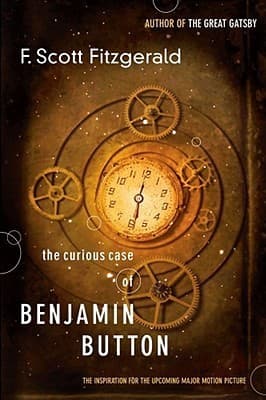
Synopsis
Covers the whole plot, including the ending.
- Difficulty
- Easy
- Pacing
- Moderate
- Mood
- Fantastical, Melancholy, Reflective, Witty
- Read it if
- You enjoy thought-provoking allegories about life, time, and the human condition, with a touch of the fantastical and a bittersweet tone.
- Skip it if
- You prefer fast-paced plots with clear-cut resolutions and dislike stories that explore the melancholy aspects of life and aging.
The Curious Case of Benjamin Button Plot Summary
Covers the whole plot, including the ending.
A Peculiar Birth in Baltimore
In 1860 Baltimore, Roger Button, a furniture dealer, eagerly awaits the birth of his first child. Upon arriving at the hospital, he is horrified to find that his son has been born as an old man, complete with a long white beard, failing eyesight, and the physical problems of age. The hospital staff is equally bewildered. Despite his initial disgust and attempts to disown the child, Roger is eventually convinced by his wife, who is surprisingly accepting, to take the 'baby' home. They name him Benjamin. Benjamin, though appearing elderly, has the mental capacity of an infant, crying for milk and needing care, but also speaking in a croaky, old man's voice.
Childhood in Reverse
Benjamin's reverse aging begins subtly. As a 'child,' he prefers the company of his grandfather, reads the encyclopedia, and smokes cigars, much to his father's chagrin. He is enrolled in kindergarten but is promptly removed due to his appearance and the discomfort he causes. He then attends Yale, where he is also rejected due to his age-defying appearance. Roger Button tries to make Benjamin conform, forcing him to play with children his 'actual' age and dyeing his beard. Despite these efforts, Benjamin continues to grow physically younger, his hair darkening and his wrinkles lessening. Society finds him an oddity, and his parents struggle to explain his condition.
Finding Love and Purpose
By the age of eighteen (though looking fifty), Benjamin is a successful businessman, having taken over his father's hardware company. He meets and falls in love with the beautiful, lively, and somewhat vain Hildegarde Moncrief, who is initially attracted to his mature appearance and wealth. They marry, much to the surprise of their social circles. With the outbreak of the Spanish-American War, Benjamin, now appearing around forty, feels a patriotic duty. He enlists as a captain, showing his vigor and leadership, and serves well, even earning a medal. This period marks a peak in his 'youth' and societal acceptance.
The War and Returning Youth
During the Spanish-American War, Benjamin Button, looking approximately forty, serves as a captain and proves to be an effective and courageous leader. His physical ability and strategic mind are an asset. He is wounded in battle but recovers quickly, further showing his unusual vitality. Upon his return from the war, he is celebrated as a hero, but his appearance has noticeably changed; he looks even younger, perhaps in his late thirties. This shift begins to cause a subtle strain in his marriage with Hildegarde, who is now aging normally and finds his increasing youthfulness disconcerting and, at times, embarrassing.
Marital Strain and Business Success
As the years pass, Benjamin continues to grow younger, while Hildegarde ages normally. This creates an increasing gap between them. Benjamin, now looking like a man in his late twenties, does well in his business, expanding the Button & Company hardware firm significantly. He is energetic, innovative, and enjoys life. However, Hildegarde, now a matronly woman in her fifties, becomes increasingly resentful and withdrawn. She feels her husband is abandoning her for a younger version of himself, and their social life suffers as people find Benjamin's appearance alongside his wife's age to be scandalous or confusing. Their son, Roscoe, grows up observing this strange dynamic.
Passing the Torch and College Life
By 1910, Benjamin, now looking like a young man of twenty, decides to retire from the family business, handing it over to his son, Roscoe. He feels a yearning for a 'normal' youth and enrolls in Harvard University. There, he is a star athlete, excelling in football and other sports, and becomes popular. He fully embraces college life, attending dances, parties, and forming close friendships, experiencing the boisterousness and carefree spirit he missed in his 'youth.' His wife Hildegarde remains at home, increasingly isolated and bitter, as Benjamin lives out the youth she can no longer share.
A New Romance and Social Scrutiny
While at Harvard, Benjamin, appearing to be in his late teens or early twenties, meets and falls in love with a much younger girl named Miss Kally. Their romance is passionate and intense, but it is met with confusion and disapproval from society, especially given his existing marriage to Hildegarde. His son, Roscoe, is mortified by his father's increasingly youthful appearance and behavior, which he sees as irresponsible and scandalous. Benjamin's unusual condition becomes a constant source of gossip and social awkwardness, showing the impossibility of his situation fitting into conventional norms.
The March of Time and Declining Faculties
After graduating from Harvard, Benjamin's aging process continues backward. He soon looks like a boy of twelve, then eight, then a mischievous six-year-old. His son, Roscoe, now a middle-aged man, reluctantly takes on the role of his 'father's' guardian. Benjamin's mental faculties begin to decline as his body de-ages. He attends a preparatory school, where he is a star student due to his mature mind trapped in a child's body, but this too is temporary. His memory starts to fade, and he becomes increasingly childlike in his thoughts and actions.
Kindergarten and Oblivion
Benjamin's regression accelerates. He is eventually enrolled in kindergarten, where he plays with blocks and learns his ABCs alongside actual toddlers. His mind continues to devolve, losing the memories of his adult life, his wife, his son, and his accomplishments. He is cared for by a series of governesses and nurses, eventually returning to the care of Nana, the same nursemaid who looked after him as an 'old man' infant. In the final stage, Benjamin becomes a helpless, babbling infant, completely unaware of the world, his past, or even his own identity. He eventually fades into a peaceful, blissful oblivion, a baby in the arms of his nurse, unaware of the 'curious case' of his life.
Principal Figures
Benjamin Button
Protagonist
A man born old who ages backward through life.
Benjamin Button is a unique individual born with the appearance and infirmities of a seventy-year-old man in 1860 Baltimore. His life is defined by his inverse aging process, which sees him grow physically younger while accumulating experiences. Initially a crotchety 'baby,' he gradually becomes a successful businessman, a war hero, a college athlete, and eventually regresses to infancy. He yearns for a 'normal' life, trying to fit into societal expectations at various stages, but his condition constantly sets him apart. His journey is marked by periods of societal acceptance and rejection, love and loss, and ultimately, a return to blissful ignorance.
Relationships: Roger Button (Father, initially disgusted but eventually accepting); Mrs. Button (Mother, more accepting and loving than Roger); Hildegarde Moncrief Button (Wife, initially attracted to his maturity, later resentful of his youth); Roscoe Button (Son, embarrassed and later guardian of Benjamin); Nana (Nursemaid, cares for Benjamin at both ends of his life)
Roger Button
Supporting
Benjamin's father, who struggles to accept his son's peculiar condition.
Roger Button is a wealthy and prominent Baltimore furniture dealer, deeply concerned with social propriety and appearances. He is initially horrified and disgusted by Benjamin's birth, attempting to disown him and later forcing him to conform to societal norms by dyeing his beard and making him play with children. He constantly tries to explain away Benjamin's condition and maintain a façade of normalcy. Despite his initial revulsion, he eventually accepts Benjamin, providing for him and integrating him into the family business. His character highlights society's struggle to comprehend and accept the unconventional.
Relationships: Benjamin Button (Son, whose condition brings him shame and confusion); Mrs. Button (Wife, who is more compassionate towards Benjamin)
Hildegarde Moncrief Button
Supporting
Benjamin's wife, whose love turns to resentment as he grows younger.
Hildegarde Moncrief is a beautiful, spirited, and somewhat vain young woman from a prominent family. She is initially attracted to Benjamin's mature appearance, wealth, and sophisticated demeanor when he looks around fifty. She marries him, enjoying his companionship and success. However, as Benjamin grows physically younger while she ages normally, her love turns to resentment and embarrassment. She feels increasingly abandoned and out of place, becoming bitter and withdrawn. Her inability to adapt to Benjamin's unique condition underscores the challenges of their unconventional marriage.
Relationships: Benjamin Button (Husband, whose inverse aging destroys their marital harmony); Roscoe Button (Son)
Roscoe Button
Supporting
Benjamin's son, who becomes his guardian as Benjamin regresses.
Roscoe Button is Benjamin and Hildegarde's son, who grows up in the shadow of his father's peculiar condition. He inherits the Button & Company business from Benjamin. As his father grows younger, Roscoe becomes increasingly embarrassed and mortified by Benjamin's appearance and behavior, especially when Benjamin attends college and later kindergarten. He tries to enforce an adult role upon his de-aging father, but eventually, he must take on the role of Benjamin's guardian, managing his care as Benjamin regresses into infancy. Roscoe represents the next generation grappling with the Button family's unique burden.
Relationships: Benjamin Button (Father, whose condition is a source of embarrassment and later responsibility); Hildegarde Moncrief Button (Mother)
Nana
Supporting
The nursemaid who cares for Benjamin at both the beginning and end of his life.
Nana is the nursemaid employed by the Button family. She is initially tasked with caring for Benjamin when he is born as an old man, attending to his needs despite his unusual appearance. Later, at the very end of Benjamin's life, when he has regressed completely to infancy and lost all memory, it is Nana who once again takes on the role of his caregiver. Her presence at both extremes of Benjamin's life cycle provides a poignant bookend, highlighting the cyclical nature of his existence and the fundamental human need for care, regardless of age or appearance.
Relationships: Benjamin Button (Charge, cared for at the beginning and end of his life)
Miss Kally
Supporting
A young woman Benjamin falls in love with during his 'youthful' college years.
Miss Kally is a beautiful and vivacious young woman whom Benjamin Button meets and falls in love with during his time at Harvard. At this point, Benjamin appears to be in his late teens or early twenties, making him a suitable romantic partner for Kally. Their romance is passionate and represents Benjamin's opportunity to experience a 'normal' youthful love, something he missed earlier in his life. Her character serves to emphasize Benjamin's peak of conventional youth and attractiveness, further highlighting the stark contrast with his aging wife and the societal complexities of his condition.
Relationships: Benjamin Button (Romantic interest during his college years)
General Moncrief
Mentioned
Hildegarde's father, a respected military figure.
General Moncrief is Hildegarde's father and a prominent social figure. He is initially impressed by Benjamin's mature appearance and wealth, which contributes to his approval of the marriage between Benjamin and Hildegarde. His presence reinforces the social standing of Hildegarde's family and the conventional expectations surrounding marriage and societal acceptance. His initial approval of Benjamin's 'maturity' provides a contrast to the later societal confusion and disapproval when Benjamin begins to look significantly younger than his wife.
Relationships: Hildegarde Moncrief Button (Daughter); Benjamin Button (Son-in-law)
Dr. Keene
Mentioned
The bewildered doctor who attends Benjamin's birth.
Dr. Keene is the physician present at Benjamin Button's birth. He is utterly perplexed and horrified by the sight of an old man being born, initially believing there to be some mistake or a hoax. His professional inability to explain or comprehend Benjamin's condition underscores the fantastical and unprecedented nature of the event. His reaction sets the tone for society's general confusion and disbelief regarding Benjamin throughout his life.
Relationships: Benjamin Button (Patient, whose birth defies medical understanding)
Themes & Insights
The Absurdity of Life and Time
The central theme revolves around the absurdity of life when conventional notions of time and aging are inverted. Benjamin Button's inverse aging shows how much of human experience, social norms, and personal relationships are tied to a linear progression of time. His life, while unique, mirrors the stages of a 'normal' life, but the reverse order exposes the arbitrary nature of these stages. Fitzgerald uses this fantastic premise to satirize societal expectations, the fleeting nature of youth, and the inevitability of decline, even if experienced backward. It questions what truly defines age and maturity.
“For the first time in his life he was happy. He was enjoying to the full the adventures of his new life. He was a freshman, and he was eighteen, and he was Benjamin Button.”
Identity and Belonging
Benjamin's life is a constant struggle with identity and the desire to belong. Born an old man, he is rejected by his father and society. As he grows 'younger,' he experiences periods of acceptance (as a mature businessman, a war hero, a college student) but is always an outsider. His changing appearance constantly forces him to redefine himself and his place in the world. The inability of others, particularly his wife Hildegarde, to adapt to his shifting identity leads to isolation and loneliness. This theme explores how much our identity is shaped by our physical appearance and the societal expectations associated with age.
“He knew that he was a man and not an infant, but he was not sure that he was a man of sixty, or that he was a man of seventy.”
The Nature of Love and Relationships
The story explores how love and relationships are affected by the passage of time and the physical changes it brings. Benjamin's marriage to Hildegarde is an example: their love flourishes when Benjamin appears mature, but it withers as he grows younger and she grows older. The reversal of their physical ages creates an insurmountable barrier, leading to resentment and emotional distance. This theme suggests that while love can transcend superficiality, it struggles against fundamental incompatibilities in shared life experiences and societal expectations tied to age, ultimately questioning the durability of love in the face of radical change.
“And it was an irony that he, Benjamin, was growing younger, while Hildegarde was growing older.”
Societal Conformity and Judgment
From his birth, Benjamin Button is subjected to societal judgment and pressure to conform. His father, Roger Button, is obsessed with maintaining appearances and forcing Benjamin into conventional roles, whether it is making him play with children or attempting to hide his true age. Society repeatedly rejects Benjamin when his appearance does not match his perceived age or role (e.g., at Yale, at kindergarten as an 'old man'). This shows society's rigid adherence to norms and its discomfort with anything that defies easy categorization. The story critiques the superficiality of social acceptance and the harshness with which those who deviate from the norm are treated.
“He was a boy of twelve, with the brain of a man of fifty. He was a boy of sixteen, with the brain of a man of forty. He was a boy of twenty, with the brain of a man of thirty.”
The Cycle of Life and Death
Despite its fantastical premise, the story ultimately reaffirms the cyclical nature of life, albeit in a reversed manner. Benjamin's journey from an old man to an infant mirrors the natural progression from birth to death, emphasizing that all life begins and ends in a state of helplessness and dependence. His loss of memory and awareness as he regresses into infancy suggests a peaceful return to the void, an oblivion similar to that of death. The story suggests that the specific order of one's journey through life's stages may not alter the fundamental experience of growth, decline, and eventual oblivion.
“Then it was all dark, and his nurse was singing. 'Sleep, baby, sleep. Thy father's watching the sheep…'”
Plot Devices & Literary Techniques
Reverse Chronology / Inverse Aging
The central fantastical premise of Benjamin aging backward.
The most prominent plot device is Benjamin Button's inverse aging. This fantastical element drives the entire narrative, dictating the progression of Benjamin's life, his relationships, and his interactions with society. It serves as a powerful metaphor for the human condition, allowing Fitzgerald to explore themes of youth, old age, identity, and the passage of time from a uniquely altered perspective. This device creates inherent irony and dramatic tension, as Benjamin experiences life's stages out of sync with everyone around him, forcing him into roles that contradict his physical appearance.
Satire and Irony
Used to highlight societal absurdities and human folly.
Fitzgerald employs satire and irony throughout the story to critique societal norms and human behavior. The absurdity of Benjamin's birth and his subsequent attempts to fit in (e.g., being sent to kindergarten as an old man, or attending college as a 'youth') are deeply ironic. The contrast between Benjamin's physical age and his mental state, or between his internal experience and external perception, creates much of the story's humor and pathos. This device allows Fitzgerald to poke fun at the superficiality of social acceptance and the arbitrary nature of age-based expectations.
Symbolism of Appearance
Physical appearance dictates social perception and self-identity.
Benjamin's changing physical appearance is a potent symbol throughout the story. It dictates how society perceives him, how he perceives himself, and the nature of his relationships. His white beard and wrinkles initially mark him as an outcast, while his youthful vigor allows him to thrive. As he regresses, his child-like appearance makes him dependent, regardless of his internal maturity. The constant disjunction between his outward form and his internal experience symbolizes the often-superficial judgments people make based on looks, and the struggle for an individual's true self to be recognized beyond their physical shell.
Framing Narrative (Implied)
A sense of a story being recounted, giving it a fable-like quality.
While not explicitly a character-narrated frame, the story has an implied framing narrative, beginning with the curious event of Benjamin's birth and following his entire life until his ultimate regression. The detached, somewhat whimsical tone of the narrator, often offering observations on the 'curious case,' lends the story a quality of a recounted fable or a historical oddity. This narrative distance allows the reader to consider the broader philosophical implications of Benjamin's life without getting bogged down in intense emotional realism, reinforcing its nature as a 'curious case' rather than a deeply personal drama.
The Curious Case of Benjamin Button Quotes
“For the first time in his life he was sorry to be a child, and he knew that he would never be quite the same again.”
“He began to realize that he was not like other people.”
“Life was a series of beginnings and ends, and Benjamin Button was destined to experience them in reverse.”
“He was an old man when he was born, and he grew younger with each passing year.”
“It was a curious case, indeed.”
“The world, it seemed, was not ready for Benjamin Button.”
“He fell in love with a woman who was growing older as he grew younger, and for a time, they met in the middle.”
“Youth and beauty were fleeting, but for Benjamin, they were a destination, not a starting point.”
“He had started at the end and was working his way back to the beginning.”
“There was a certain sadness in his eyes, a knowledge of things that had not yet happened to him.”
“He was a child, but he had lived a lifetime.”
“The years flew backward like a rewind of a film.”
“He remembered the past, but the past was his future.”
“It was a story that defied logic, a whimsical dance with the hands of time.”
Quiz
10 questions on the plot and the characters. Each answer comes with a short explanation.
Question 1
In what year is Benjamin Button born?
- 1900
- 1860
- 1880
- 1920
Show answer
B. 1860 Benjamin Button is born in 1860, appearing as an old man from the very beginning of his life.
Question 2
What is the primary unusual condition Benjamin Button experiences throughout his life?
- He is immortal and cannot die.
- He grows younger as time passes.
- He can change his physical appearance at will.
- He ages normally but has prophetic visions.
Show answer
B. He grows younger as time passes. Benjamin Button's unique condition is that he ages backward, starting as an old man and becoming younger over time.
Question 3
Which of the following experiences does Benjamin NOT have during his life?
- Attending college
- Fighting in a war
- Becoming a famous inventor
- Running a business
Show answer
C. Becoming a famous inventor While Benjamin has a rich and varied life, including war, business, and education, the story does not mention him becoming a famous inventor.
Question 4
What is the initial reaction of Benjamin's father, Roger Button, upon seeing his newborn son?
- Joy and excitement
- Pride in his unique son
- Horror and disbelief
- Calm acceptance
Show answer
C. Horror and disbelief Roger Button is horrified and in disbelief when he discovers his newborn son is an old man, initially thinking there's been a mistake at the hospital.
Question 5
As Benjamin gets physically younger, what happens to his mental capacity?
- It remains consistently sharp.
- It improves and he becomes a genius.
- It gradually devolves, mirroring his physical age.
- It fluctuates unpredictably.
Show answer
C. It gradually devolves, mirroring his physical age. As Benjamin's body gets younger, his mind also devolves, eventually leading him to kindergarten and losing all memory.
Question 6
What is the central theme Fitzgerald explores through Benjamin Button's unusual life cycle?
- The pursuit of eternal youth.
- The societal pressures of conformity and individuality.
- The arbitrary nature of time and the human perception of aging.
- The importance of family heritage.
Show answer
C. The arbitrary nature of time and the human perception of aging. The story primarily explores the concept of aging and time, highlighting how our perception of life stages is tied to a linear progression that Benjamin defies, revealing the arbitrary nature of 'normal' aging.
Question 7
What happens to Benjamin Button at the very end of his life?
- He becomes a normal infant and lives a second, normal life.
- He disappears mysteriously, never to be seen again.
- He returns to the care of his nurse as an infant, eventually fading into oblivion.
- He dies as a wise old man, having completed his reverse journey.
Show answer
C. He returns to the care of his nurse as an infant, eventually fading into oblivion. At the very end, Benjamin becomes an infant again, cared for by his nurse, and eventually his memory fades completely as he physically becomes a newborn.
Question 8
What is the primary literary device Fitzgerald uses to make the fantastical premise of Benjamin's aging seem plausible within the story?
- Extensive scientific explanations for the phenomenon.
- A matter-of-fact, almost journalistic tone in describing the events.
- Frequent use of magical realism elements.
- Constant reminders that the story is a dream.
Show answer
B. A matter-of-fact, almost journalistic tone in describing the events. Fitzgerald employs a detached, straightforward narrative style, presenting Benjamin's extraordinary condition as a simple fact, which helps ground the fantastical element and make it seem more believable.
Question 9
How does society generally react to Benjamin's reverse aging at different stages of his life?
- They consistently celebrate his uniqueness.
- They are mostly indifferent to his condition.
- They struggle to categorize and accept him, often reacting with confusion, embarrassment, or suspicion.
- They attempt to exploit his condition for scientific research.
Show answer
C. They struggle to categorize and accept him, often reacting with confusion, embarrassment, or suspicion. Society struggles immensely with Benjamin's condition. From his father's initial horror to his classmates' confusion and later, his own son's embarrassment, Benjamin's reverse aging constantly challenges social norms and expectations.
Question 10
What is the ultimate fate of Benjamin's relationship with his wife, Hildegarde?
- They grow old together happily, despite his condition.
- She eventually leaves him because she cannot cope with his growing youth.
- She also begins to age backward, mirroring him.
- They remain together until his final moments as a baby.
Show answer
B. She eventually leaves him because she cannot cope with his growing youth. As Benjamin grows younger and Hildegarde ages normally, their relationship becomes increasingly strained. Hildegarde cannot cope with her husband becoming younger than her and eventually leaves him.
The Curious Case of Benjamin Button FAQ
What is 'The Curious Case of Benjamin Button' about?
'The Curious Case of Benjamin Button' tells the story of Benjamin Button, a man born in 1860 with the physical appearance and ailments of an eighty-year-old. He experiences life in reverse, growing younger with each passing year, ultimately ending as an infant. The narrative explores his unique journey through different life stages, relationships, and societal perceptions.
Why should I read 'The Curious Case of Benjamin Button'?
You should read this story for its unique premise and its satirical take on societal expectations and the human experience of aging. Fitzgerald masterfully uses Benjamin's reverse aging to explore themes of identity, love, family, and the fleeting nature of time, all while maintaining a witty and thought-provoking narrative.
What is the background/setting of 'The Curious Case of Benjamin Button'?
The story is primarily set in Baltimore, Maryland, beginning in 1860 and spanning several decades into the early 20th century. The historical backdrop includes the Civil War and the societal changes that occur over Benjamin's unusual lifespan, providing a grounding for the fantastical elements of his condition.
What writing style does the author use?
F. Scott Fitzgerald employs a sophisticated, often ironic, and slightly detached narrative style. He uses precise language, vivid descriptions, and a matter-of-fact tone to present Benjamin's extraordinary circumstances, which makes the fantastical elements feel surprisingly plausible and adds to the story's satirical depth.
What minor details add significant meaning?
The repeated discomfort and confusion of the medical professionals and Benjamin's own father, Roger Button, when confronting Benjamin's condition highlight society's rigid expectations of life's progression. These reactions underscore the story's commentary on how we categorize and understand human existence.
What are some subtle foreshadowing moments?
Early in the story, the initial shock and rejection from his family and society subtly foreshadow the increasing isolation Benjamin will experience as his condition becomes more pronounced and he diverges further from conventional life stages, especially when he falls in love with Hildegarde Moncrief, who is aging normally.
What unexpected character connections exist?
The most unexpected connection is Benjamin's relationship with his own son, Roscoe. As Benjamin grows younger, he eventually becomes Roscoe's playmate and then his ward, reversing the traditional parent-child dynamic and creating a poignant, almost absurd, familial bond.
What are unspoken character motivations?
Benjamin's initial motivation to 'fit in' and lead a normal life, despite his condition, is unspoken but evident in his efforts to join Yale and fight in the Spanish-American War. Later, his pursuit of Hildegarde Moncrief is driven by a desire for a love that transcends his peculiar circumstance, even as he knows it's doomed.
What psychological complexities do characters exhibit?
Benjamin exhibits a complex psychological journey, from initial shame and confusion to embracing his unique existence, then experiencing a gradual loss of self as his mind devolves with his body. His wife, Hildegarde, struggles with the psychological burden of watching her husband become younger than her, eventually becoming a child.
What are the major emotional turning points?
A major emotional turning point is Benjamin's marriage to Hildegarde Moncrief, representing his attempt at a conventional life and love despite his condition. Another is when he returns from the war looking significantly younger, causing a rift with Hildegarde and marking the point where their paths irrevocably diverge.
How do relationship dynamics evolve?
Relationship dynamics constantly evolve and reverse. Benjamin's relationship with his father shifts from son-figure to a more equal footing. His marriage to Hildegarde transforms from a conventional husband-wife bond to her becoming his caretaker, and ultimately, his relationship with his son Roscoe reverses, with Roscoe becoming the paternal figure to a childlike Benjamin.
Which parts remain ambiguous or open-ended?
The precise cause of Benjamin's condition is never explained, nor is the mechanism by which he ages backward. Fitzgerald leaves the fantastical element unexplained, focusing instead on its implications for human experience rather than a scientific rationale, making the 'why' inherently ambiguous.
What are controversial scenes or decisions?
One potentially controversial aspect is Benjamin's eventual attendance in kindergarten and then being taken care of by his former nurse. While necessary for the plot's progression, it can be seen as a poignant, almost uncomfortable, depiction of the complete regression of a once-adult mind, challenging traditional notions of dignity in old age.
'The Curious Case of Benjamin Button' ending explained: how it ends & what it means
The story ends with Benjamin Button as an infant, having forgotten everything from his adult life, eventually fading into complete oblivion in the care of his old nurse, Nana. This ending signifies the cyclical nature of life and death, but in reverse. It suggests that regardless of how one ages, the journey culminates in a return to innocence and eventual forgetfulness, emphasizing the transient and often absurd nature of existence.
About the author
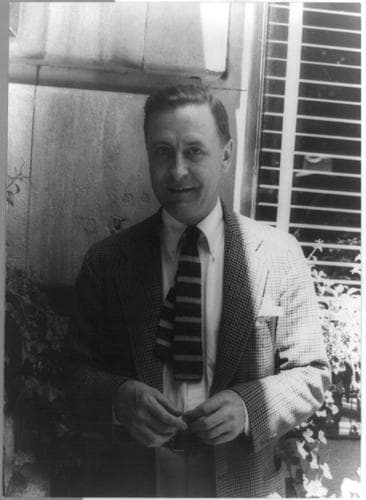
Francis Scott Key Fitzgerald was an American novelist, essayist, and short story writer. He is best known for his novels depicting the flamboyance and excess of the Jazz Age—a term he popularized in his short story collection Tales of the Jazz Age. During his lifetime, he published four novels, four story collections, and 164 short stories. Although he achieved temporary popular success and fortune in the 1920s, Fitzgerald received critical acclaim only after his death and is now widely regarded as one of the greatest American writers of the 20th century.
Similar books
- Flowers for Algernon
Daniel Keyes
4.1 (478k) average on GoodreadsPsychologyExplores a character's intellectual rise and tragic decline, prompting reflection on intelligence and humanity.
- Orlando
Virginia Woolf
3.9 (61k) average on GoodreadsFantasyFollows a character through centuries of life and gender changes, playing with themes of time and identity.
- One Hundred Years of Solitude
Gabriel García Márquez
4.1 (753k) average on GoodreadsLiterary FictionBoth utilize fantastical elements within a realistic setting (magical realism vs. speculative fiction). However, García Márquez's work offers a sprawling, multi-generational epic with a broader scope of history and cyclical time, while Fitzgerald's story is a more focused, allegorical character study of a single individual's life out of sync with time.
- Harry Potter and the Sorcerer's Stone
J.K. Rowling
4.5 (7M) average on GoodreadsFantasyRescued from a miserable life under the stairs, an orphaned boy discovers he's a wizard destined for a magical school, where he uncovers a dangerous secret tied to the dark wizard who murdered his parents.
- The Hunger Games
Suzanne Collins
4.3 (6.4M) average on GoodreadsFantasyIn a future where children fight to the death on live television, Katniss Everdeen volunteers for the arena, turning a death sentence into a fight for survival and a spark of rebellion.
- 1984
George Orwell
4.2 (3.1M) average on GoodreadsPoliticsIn a future where surveillance and thought control are absolute, a man's search for truth clashes with the Party, showing that hope can be a form of rebellion.






Enjoyed the summary?
A summary gives you the shape of the book. The book itself has the detail, the examples and the voice.
Find The Curious Case of Benjamin Button on AmazonAs an Amazon Associate, BookBrief earns from qualifying purchases. How we're funded