
Synopsis
Covers the whole plot, including the ending.
- Difficulty
- Easy
- Pacing
- Fast
- Mood
- Humorous, Adventurous, Mythological, Suspenseful
- Read it if
- You enjoy fast-paced mythological adventures, witty banter, and a protagonist who learns humility the hard way.
- Skip it if
- You dislike first-person narration, a comedic tone, or stories with a large cast of characters and ongoing series plots.
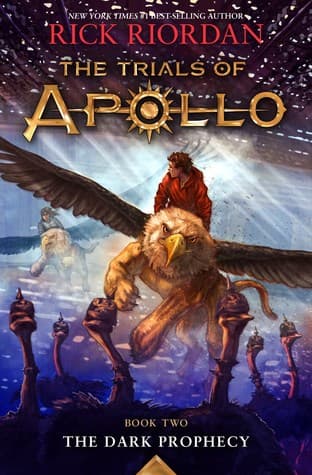
The Dark Prophecy Plot Summary
Covers the whole plot, including the ending.
Arrival in Indianapolis and First Encounters
Apollo, still in the mortal body of Lester Papadopoulos, arrives in Indianapolis in a garbage truck, sent by Zeus to find the next Oracle. He is immediately attacked by blemmyae but is saved by Emmie and Josephine, a blind girl and her partner. They take him to the Waystation, a hidden sanctuary for demigods and mythical creatures run by Emmie and Jo, who are immortal huntresses from Diana's ancient retinue. Here, Apollo learns that Meg McCaffrey, his demigod master who betrayed him to Nero, is also in Indianapolis, serving Nero's agenda. The Waystation offers temporary safety, but Nero's presence creates danger.
The Waystation and its Inhabitants
At the Waystation, Lester meets its community. He meets Georgina, a young demigod who communicates through cryptic messages, and Britomartis, the goddess of nets, who lives there. Most importantly, he meets Leo Valdez and Calypso, who arrived on Festus, the bronze dragon, also seeking the Oracle. Calypso, now mortal, struggles to adjust to the human world. Lester learns the next Oracle is Trophonius, located beneath the city. The Waystation itself is a former safe house for runaway slaves, now a sanctuary for demigods, showing its protectors' compassion.
Meg's Return and Nero's Influence
Meg McCaffrey eventually appears at the Waystation, but she is changed. Under Nero's powerful influence, she is more aggressive and less in control, often speaking his rhetoric. She reveals that Nero has built a network of control in Indianapolis, using his corporate empire to oppress people and capture demigods. Her presence creates tension, as Lester still needs her as his master, despite her past betrayal and current loyalty to Nero. Lester realizes that freeing Meg from Nero's psychological hold is necessary for his quest and for Meg's well-being.
The Prophecy and the Search for the Grove
Georgina, the young prophet, delivers a new prophecy about a poisoned grove and a serpent's lair. This indicates the Oracle of Trophonius is not only hidden but also corrupted. Lester, Leo, Calypso, Meg, Emmie, and Josephine interpret the prophecy to mean they must find a specific grove of sacred trees Nero has defiled, which is the key to the Oracle. Their search leads them to the Indianapolis Zoo, where Nero has a base. The group prepares for a dangerous infiltration, knowing Nero's forces will be strong and the environment hostile due to the corruption.
Infiltration of the Zoo and the Grove's Discovery
The heroes enter the Indianapolis Zoo, encountering Nero's armed security, the 'Germani.' They move through the zoo, using their skills. Inside, they discover Nero has desecrated the ancient Grove of Dodona, a sacred site, turning it into an industrialized garden of genetically modified, carnivorous plants and enslaved dryads. The grove is a symbol of Nero's disregard for nature. The dryads, once protectors, are forced to serve Nero, their life force drained to power his experiments. This discovery strengthens the heroes' resolve to stop Nero.
The Oracle of Trophonius and its Corruption
Following clues, Lester and Meg enter the Oracle of Trophonius, beneath the desecrated grove. The experience is terrifying and dreamlike, as the Oracle is a dark, fear-inducing entity. Trophonius is a chthonic deity who speaks through fear. Nero has been feeding the Oracle his paranoia, corrupting its prophecies for his gain. Lester and Meg confront their deepest fears, enduring psychological torment to receive a fragmented prophecy about a 'serpent's sting' and a 'tower of lies.'
Meg's Revelation and Confrontation with Nero
After the Oracle experience, Meg's memories of her stepfather, Nero, become clearer and more painful. She remembers his cruelty and manipulation, how he killed her father and forced her into his service. This memory, combined with the Oracle's influence, strengthens her resolve. She confronts Nero, rejecting his control and siding with Apollo and the Waystation. This defiance is a turning point for Meg, freeing her from Nero's control. Nero is enraged by her betrayal, escalating the conflict.
Battle at the Waystation and Nero's Retreat
Enraged by Meg's defection and the heroes' interference, Nero attacks the Waystation. He brings an army of Germani and powerful magical creatures. A fierce battle follows, with Lester, Leo, Calypso, Emmie, Josephine, and other Waystation residents fighting to protect their sanctuary. Despite their efforts, Nero's forces are strong. The Waystation is damaged, and the heroes are pushed to their limits. Nero is forced to retreat, but he leaves destruction and promises to return, showing the conflict is not over. This battle highlights Nero's power.
Aftermath and New Prophecy
After Nero's attack, the Waystation is in ruins, but its inhabitants are mostly safe. The heroes tend to the wounded and begin repairs. With Nero's influence weakened and Meg's connection severed, the Oracle of Trophonius is partly cleansed. Georgina, now clearer, delivers a new prophecy pointing to the next trial: 'The tower of lies awaits, where the emperor's final gambit plays.' This indicates the third emperor and final Oracle are in a new, dangerous place. The heroes realize their quest is far from over, and the next challenge will be even more dangerous.
Departure and New Alliance
With the Oracle of Trophonius secured (for now) and Meg committed to their cause, Lester, Meg, Leo, and Calypso prepare to leave Indianapolis. The Waystation, though damaged, will recover under Emmie and Josephine's care. The experience has strengthened the group's bond, especially between Lester and Meg, who now trust each other more. They decide to travel together, united in their mission to stop Triumvirate Holdings and restore Apollo's godhood. The next quest's destination is hinted at, suggesting a journey to a Roman stronghold and a confrontation with another emperor. The quest continues, with higher stakes.
Principal Figures
Apollo / Lester Papadopoulos
Protagonist
The former sun god, now a powerless mortal, struggling to regain his divinity.
Apollo, stripped of his godhood by Zeus and exiled to Earth as the mortal teenager Lester Papadopoulos, is the reluctant protagonist. He is vain, self-centered, and often cowardly, but beneath his superficiality, he slowly develops empathy and courage. His journey is one of humility and self-discovery, forced to rely on mortals and demigods he once disdained. He struggles with the indignities of mortality, from acne to allergies, and the constant threat of death, which he never faced as a god. His primary motivation is to regain his godhood, but he gradually becomes invested in protecting his friends and stopping the Triumvirate.
Relationships: Meg McCaffrey (His demigod master; initially antagonistic, evolving into a complex bond of reluctant friendship and mutual reliance.); Leo Valdez (Fellow demigod, friend, and traveling companion; a source of comic relief and practical skills.); Calypso (Leo's girlfriend, a former immortal now mortal; Apollo feels guilt over her past and is wary of her new struggles.); Emmie (Immortal huntress and Waystation co-owner; a kind, maternal figure who offers him sanctuary and guidance.); Josephine (Immortal huntress and Waystation co-owner; Emmie's partner, more pragmatic and direct.); Nero (His ancient enemy, one of the Triumvirate emperors, and Meg's abusive stepfather; the primary antagonist.)
Meg McCaffrey
Supporting
Apollo's demigod master, fiercely loyal to Nero but battling her inner demons.
Meg McCaffrey is a street-smart, tough demigod daughter of Demeter, initially bound to Apollo as his master. She is fiercely loyal to her abusive stepfather, Nero, due to years of manipulation and trauma, which makes her a conflicted character. Despite her gruff exterior and occasional cruelty, she possesses a deep well of latent kindness and a powerful connection to nature, manifested through her ability to summon karpoi (grain spirits). Her internal struggle between her ingrained loyalty to Nero and her growing bond with Apollo is central to her character arc. She wields twin golden gladii that transform into rings.
Relationships: Apollo / Lester Papadopoulos (Her demigod servant; a complex, often fraught relationship that evolves into a deep, trusting friendship.); Nero (Her abusive stepfather and master; a deeply traumatic and manipulative bond she eventually breaks.); Emmie (A maternal figure at the Waystation who offers her comfort and understanding.)
Leo Valdez
Supporting
A cheerful demigod son of Hephaestus, skilled mechanic, and pilot of Festus.
Leo Valdez is a quick-witted, often sarcastic demigod son of Hephaestus, known for his mechanical genius and ability to conjure fire. He arrives in Indianapolis with Calypso on his bronze dragon, Festus, having returned from Ogygia. Leo provides much-needed comic relief and practical skills, often fixing things and devising strategies. He is fiercely loyal to his friends, especially Calypso, and is determined to help Apollo, despite their past rivalry. His resourcefulness and positive attitude are invaluable to the quest, even as he navigates his own challenges with Calypso's adjustment to mortality.
Relationships: Calypso (His girlfriend; their relationship is strong but tested by Calypso's struggles with mortality.); Apollo / Lester Papadopoulos (Fellow demigod and friend; they share a history but are now allies.); Festus (His bronze dragon companion; a loyal and essential mode of transport.)
Calypso
Supporting
A former immortal nymph, now mortal, struggling to adapt to the human world.
Calypso is a former immortal nymph, cursed to eternal solitude on Ogygia, who was freed by Leo Valdez. She is now mortal, a significant and often frustrating change for her. She struggles with the mundane aspects of human life, from finding a job to understanding modern technology, and often feels out of place and resentful. Despite her struggles, she is intelligent, resourceful, and possesses a strong will. Her journey involves learning to embrace her new mortality and finding her own place in the world, separate from her past. She is a powerful sorceress, though her powers are diminished as a mortal.
Relationships: Leo Valdez (Her boyfriend; their love is a cornerstone of her new life, though her struggles test it.); Apollo / Lester Papadopoulos (She resents Apollo for her past imprisonment, but they become reluctant allies.)
Emmie
Supporting
An immortal huntress of Diana, co-owner of the Waystation, and a kind, maternal figure.
Emmie (Hemithea) is one of Diana's ancient huntresses, now living a quiet life in Indianapolis as the co-owner of the Waystation, a sanctuary for demigods and mythical creatures. She is blind but perceives the world through other senses and a deep intuition. Emmie is kind, compassionate, and possesses a strong maternal instinct, offering comfort and guidance to all who seek refuge. She is fiercely protective of the Waystation and its inhabitants, especially Georgina. Her ancient wisdom and unwavering dedication to helping others make her a crucial ally and mentor to Apollo.
Relationships: Josephine (Her partner and fellow immortal huntress; they share a deep bond and co-manage the Waystation.); Georgina (Her adopted prophetic daughter; Emmie is deeply loving and protective of her.); Apollo / Lester Papadopoulos (Offers him sanctuary and guidance, acting as a surrogate mother figure.)
Josephine
Supporting
An immortal huntress of Diana, co-owner of the Waystation, and Emmie's pragmatic partner.
Josephine (Parthenos) is Emmie's partner and another ancient huntress of Diana. She is more pragmatic and direct than Emmie, often taking on the more physical and organizational tasks at the Waystation. Josephine is fiercely loyal to Emmie and Georgina and is equally dedicated to protecting the sanctuary. She is a skilled warrior and strategist, providing a formidable defense against threats. While she may seem stern, she cares deeply for those under her protection, including Apollo and his companions. Her practical approach balances Emmie's more nurturing one.
Relationships: Emmie (Her partner and fellow immortal huntress; they share a deep bond and co-manage the Waystation.); Georgina (Her adopted prophetic daughter; Josephine is protective and caring.); Apollo / Lester Papadopoulos (A pragmatic ally, providing protection and strategic advice.)
Nero
Antagonist
An ancient Roman emperor, one of the Triumvirate, and Meg's abusive stepfather.
Nero is the primary antagonist of the book, one of the three Roman emperors forming the Triumvirate Holdings, who orchestrated Apollo's fall. He is portrayed as utterly ruthless, megalomaniacal, and deeply manipulative, using his vast wealth and power to control Indianapolis and capture demigods. He has a particularly twisted and abusive relationship with Meg McCaffrey, whom he groomed and psychologically tormented since childhood. Nero believes himself to be a great artist and visionary, but his actions are driven by paranoia, cruelty, and a desire for absolute control. He is a formidable foe, both militarily and psychologically.
Relationships: Meg McCaffrey (Her abusive stepfather and master; a relationship built on manipulation and fear.); Apollo / Lester Papadopoulos (His ancient enemy, whom he humiliated and exiled; seeks to destroy him.)
Georgina
Supporting
A young, prophetic demigod at the Waystation, adopted daughter of Emmie and Josephine.
Georgina is a young demigod residing at the Waystation, adopted by Emmie and Josephine. She possesses the rare and powerful gift of prophecy, though she often communicates through cryptic drawings and fragmented phrases due to the nature of the Oracle of Trophonius. She is a sensitive and vulnerable child, deeply affected by the spiritual corruption around her. Her prophecies are crucial to guiding Apollo and his companions on their quest. Her well-being and the clarity of her visions are directly tied to the health of the Oracle and the defeat of Nero's influence.
Relationships: Emmie (Her adoptive mother; Emmie is fiercely protective and loving.); Josephine (Her adoptive mother; Josephine also cares deeply for her.); Apollo / Lester Papadopoulos (Provides him with vital prophetic guidance.)
Britomartis
Mentioned
The goddess of nets and hunting, a permanent resident of the Waystation.
Britomartis is a minor goddess of nets, hunting, and mountains, who has taken up permanent residence at the Waystation. She is often seen in a casual, somewhat eccentric manner, wearing a tracksuit and obsessed with her collection of nets. Despite her seemingly laid-back demeanor, she is an immortal goddess with significant power. She provides occasional, often cryptic, advice and assistance to the heroes, often through the lens of her unique interests. Her presence at the Waystation underscores its status as a refuge for various mythical beings.
Relationships: Emmie (Fellow immortal and co-resident of the Waystation; they share a long history.); Josephine (Fellow immortal and co-resident of the Waystation; they share a long history.)
Themes & Insights
Redemption and Self-Sacrifice
Redemption is central to Apollo's journey. Stripped of his godhood, he faces his past arrogance and learns humility. His quest is not just about regaining powers, but proving he deserves them. This shows when he risks danger for others, especially Meg, despite his mortal state. Meg also seeks redemption, breaking free from Nero's influence and fighting for good, choosing friends over past loyalties. Their journey shows that true heroism comes from selfless acts and moral courage, as when Lester risks his life in the Oracle of Trophonius for Meg.
“I had been a god for millennia. I’d had all the power in the world. But it was only now, as a mortal, that I understood what it meant to be truly brave.”
Abuse and Recovery
The book explores abuse and the long path to recovery, mainly through Meg McCaffrey. Nero's psychological manipulation and physical abuse of Meg are clear, showing how trauma can bind a victim to their abuser. Meg's struggle to break free from Nero, remember her past, and trust others is painful but ultimately triumphant. The Waystation, with Emmie and Josephine's support, is a safe space for healing. This theme helps understand Meg's actions and her defiance against Nero, showing the strength needed to overcome deep trauma.
“Nero had twisted her mind for years. It was amazing she had any sanity left.”
The Nature of Power and Authority
The novel explores the corrupting influence of unchecked power. Nero shows this abuse of power, using his resources to dominate and terrorize. His rule in Indianapolis is a small example of a tyrannical empire, where fear maintains control. In contrast, Apollo, without his divine power, learns to value cooperation, friendship, and moral leadership. The Triumvirate emperors, with their desire for absolute control, contrast with the Waystation's community and protection, highlighting how power can be used for oppression or for good.
“Power. It was all Nero cared about. And he would destroy anything, anyone, to keep it.”
Found Family and Community
The idea of 'found family' and community strength is a major theme, seen in the Waystation. This sanctuary, run by Emmie and Josephine, offers a safe place for demigods and mythical beings with nowhere else to go. It provides belonging, protection, and support, sharply contrasting with the danger outside. The relationships formed within the Waystation—between Emmie, Josephine, Georgina, and eventually Apollo, Leo, and Calypso—show how chosen bonds can be stronger than blood ties. This community provides emotional and physical strength, proving essential in the fight against Nero.
“The Waystation was more than just a safe house. It was a home. A true home, built on love and trust.”
Environmentalism and Corruption
Nero's desecration of the Grove of Dodona highlights an environmental theme. His actions, turning a sacred natural space into a grotesque, industrialized garden of carnivorous plants, symbolize humanity's destructive impact on nature. The suffering of the enslaved dryads further emphasizes this, showing the connection between mythical creatures and their natural habitats. This theme underscores the importance of protecting the environment and respecting sacred natural sites, contrasting the reverence of Demeter's children (like Meg) with Nero's destructive use.
“He had taken something ancient and beautiful, something sacred, and turned it into a mockery. A twisted, unnatural garden of death.”
Plot Devices & Literary Techniques
The Waystation
A hidden sanctuary for demigods and mythical creatures, serving as a base of operations.
The Waystation functions as a crucial safe haven and a central hub for the protagonists. It provides shelter, resources, and a sense of community for Apollo and his allies, contrasting with the hostile outside world controlled by Nero. As a former Underground Railroad station, its history reinforces themes of sanctuary and protection for the vulnerable. It's where the main characters gather, strategize, and recover, making it indispensable for the progression of the quest. Its eventual attack by Nero underscores its importance and the stakes of the conflict.
The Oracle of Trophonius
A corrupted prophetic site that delivers terrifying, fear-inducing prophecies.
The Oracle of Trophonius serves as a major plot driver, being the second Oracle Apollo must find and cleanse. Unlike other Oracles, it is dark and feeds on fear, making its prophecies difficult and psychologically damaging to receive. Its corruption by Nero directly impacts the clarity of its visions and the mental state of those who consult it, particularly Meg and Georgina. Cleansing it is vital for the quest's success, as it provides crucial, albeit harrowing, guidance for the next stage of Apollo's journey and is tied to Meg's recovery from trauma.
Meg's Master-Servant Bond
The magical bond between Meg and Apollo, giving her power over him, even against her will.
The master-servant bond between Meg and Apollo is a central plot device that creates both conflict and narrative tension. It forces Apollo, the former god, into a position of subservience, highlighting his vulnerability and dependence on a mortal. Initially, this bond is used by Nero to control Apollo through Meg. However, as Meg struggles against Nero's influence, the bond becomes a symbolic representation of her internal conflict and her eventual defiance. Breaking free from Nero means choosing to use her power over Apollo for good, thus transforming the bond into a tool for their shared quest.
The Triumvirate Holdings
A sinister corporation run by the three Roman emperors, serving as the overarching antagonist.
The Triumvirate Holdings is the umbrella organization for the three Roman emperors (Nero, Commodus, Caligula) and serves as the overarching antagonistic force in the series. In 'The Dark Prophecy,' Nero's branch of the Triumvirate manifests as a corporate empire that subtly controls Indianapolis, providing a modern, insidious face to ancient tyranny. This device allows the emperors to exert power not just through brute force but through economic and social manipulation, making them a more complex and pervasive threat than traditional mythological monsters. It sets up the larger conflict that Apollo must resolve across multiple books.
Georgina's Prophecies and Drawings
Cryptic messages and drawings from a young demigod that guide the heroes.
Georgina, the young prophetic demigod, acts as a living conduit for the Oracle's messages. Her cryptic prophecies, often delivered through drawings or fragmented speech, serve as vital clues for Apollo and his companions. This device allows for exposition and foreshadowing in a mysterious and engaging way, driving the plot forward by revealing the next steps or dangers. Her vulnerability and the difficulty in interpreting her messages underscore the perilous nature of the quest and the corruption affecting the Oracle, making her an important, if fragile, source of information.
The Dark Prophecy Quotes
“The past is a stubborn thing. It doesn't want to change.”
“Being a god is easy. Being human is hard.”
“Hope is a powerful thing. It can keep you going when everything else is gone.”
“Sometimes the greatest strength is not in fighting, but in enduring.”
“You can't outrun your destiny, no matter how fast you are.”
“Fear is a liar. It tells you what you can't do, not what you can.”
“Even a god can fall. It’s getting back up that matters.”
“True power isn't about how many people you can command, but how many you can inspire.”
“The greatest heroes are often the ones who don't even realize they are heroes.”
“Sometimes you have to break a few rules to do the right thing.”
“Laughter is a weapon, too. It can disarm your enemies and strengthen your friends.”
“The future is not set in stone. It's written in the choices we make today.”
“Even in the darkest times, there is always a flicker of light.”
Quiz
10 questions on the plot and the characters. Each answer comes with a short explanation.
Question 1
What is Apollo's current mortal form's name?
- Lester Papadopoulos
- Leo Valdez
- Nero Augustus
- Percy Jackson
Show answer
A. Lester Papadopoulos Apollo was stripped of his godhood by Zeus and transformed into the mortal teenager Lester Papadopoulos.
Question 2
Who is Meg McCaffrey's villainous stepfather, who gave the orders to capture Apollo?
- Zeus
- Nero
- Leo
- Calypso
Show answer
B. Nero The excerpt explicitly states that Meg's 'old enemy Nero' gave her the orders to 'Go west. Capture Apollo'.
Question 3
Where does Nero want Apollo to be captured, leading Apollo to wonder why an ancient Roman emperor would target this specific city?
- Camp Half-Blood
- Indianapolis
- Olympus
- New York City
Show answer
B. Indianapolis Apollo states, 'But why would an ancient Roman emperor zero in on Indianapolis? And now that I have made it here...'
Question 4
What is Meg McCaffrey's relationship to Apollo, as described by him?
- His loyal quest partner
- His demigod master
- His long-lost daughter
- His divine protector
Show answer
B. His demigod master Apollo refers to Meg as 'Meg, my demigod master,' indicating her control over him due to his mortal state.
Question 5
What power does Meg McCaffrey possess over Apollo in his mortal form?
- She can grant him his godhood back.
- She can order him to do anything, even kill himself.
- She can heal any injury he sustains.
- She can communicate directly with Zeus on his behalf.
Show answer
B. She can order him to do anything, even kill himself. Apollo states, 'And while I'm mortal, she can order me to do anything . . . even kill myself.'
Question 6
What is Apollo's primary motivation for trying to 'pry' Meg away from Nero, despite her previous betrayal?
- He fears Nero will harm Meg.
- He needs her help to regain his godhood.
- He believes he has a chance to free her from her villainous stepfather.
- He wants revenge for her betrayal at Camp Half-Blood.
Show answer
C. He believes he has a chance to free her from her villainous stepfather. Apollo explicitly states, 'Despite all this, if I have a chance of prying her away from her villainous stepfather, I have to try.'
Question 7
Who is Calypso, and what is Apollo's curious comment about her?
- A goddess Apollo envies, wondering why she is on a quest.
- A sorceress Apollo finds annoying, questioning Leo's affection for her.
- A mortal who has helped Apollo, whom he promises to reward.
- Meg's sister, whom Apollo finds equally cantankerous.
Show answer
B. A sorceress Apollo finds annoying, questioning Leo's affection for her. Apollo mentions 'that sorceress Calypso. What does Leo see in her, anyway?' showing his disdain and curiosity.
Question 8
What is Apollo's major complaint about his current heroic-quest business, given his past as a god?
- He misses his musical instruments.
- He feels there isn't a reward at the end of each completed task, only more deadly quests.
- He is constantly being criticized by Zeus.
- He is forced to travel by mundane means instead of divine.
Show answer
B. He feels there isn't a reward at the end of each completed task, only more deadly quests. Apollo laments, 'Shouldn't there be a reward at the end of each completed task? Not just more deadly quests?'
Question 9
Despite his vow to never again send a poor mortal on a quest if he regains godhood, under what conditions does Apollo admit he might still do so?
- If the mortal volunteers enthusiastically and offers him a sacrifice.
- If it is really important, the mortal can handle it, he is pressed for time, or he doesn't feel like doing it himself.
- Only if Zeus directly orders him to, and he is promised a favor in return.
- If the mortal is a direct descendant of his and can prove their loyalty.
Show answer
B. If it is really important, the mortal can handle it, he is pressed for time, or he doesn't feel like doing it himself. Apollo's internal monologue reveals, 'Unless it is really important. And unless I am sure the mortal can handle it. And unless I am pressed for time . . . or I really just don't feel like doing it myself.'
Question 10
What specific indignity or pain does Apollo mention he has suffered, beyond general humiliation and danger?
- He was forced to sing karaoke with a group of satyrs.
- He was stripped of all his godly powers by his father, Zeus.
- He had to wear unfashionable mortal clothes.
- He was forced to eat mortal food that he disliked.
Show answer
B. He was stripped of all his godly powers by his father, Zeus. Apollo states, 'my father, Zeus, stripped me of all my godly powers.' This is the fundamental indignity that sets up his current predicament.
The Dark Prophecy FAQ
What is Apollo's primary goal upon arriving in Indianapolis in 'The Dark Prophecy'?
Apollo, in his mortal form of Lester Papadopoulos, is trying to locate the next Oracle, which is revealed to be the Oracle of Trophonius. He must find it before Nero's forces can corrupt or destroy it, as its prophecies are crucial for the Olympians' survival.
Who is Meg McCaffrey and what is her complicated relationship with Apollo?
Meg McCaffrey is a demigod daughter of Demeter and Apollo's reluctant master. She betrayed Apollo to her abusive stepfather, Nero, at Camp Half-Blood. Despite this, Apollo feels compelled to rescue her from Nero's influence, even though she can command him to perform any task, including self-harm.
Why is Indianapolis a significant location for Nero in this book?
Nero has chosen Indianapolis as the location for his next major operation because it houses the Oracle of Trophonius. He intends to control or destroy this ancient source of prophecy, as part of his larger plan to consolidate power and undermine the Olympian gods.
What major challenge does Apollo face in his mortal form, Lester Papadopoulos, during this quest?
As Lester, Apollo is completely stripped of his godly powers, making him vulnerable to physical harm, emotional distress, and the indignities of mortal life. He struggles with basic combat, lacks his divine foresight, and must rely on others for survival, a humbling experience for the former god.
Who are the troglodytes and what role do they play in the story?
The troglodytes, or 'trogs,' are a subterranean race of peaceful, mole-like beings who act as guardians of the Oracle of Trophonius in Indianapolis. They provide crucial assistance and guidance to Apollo and Meg, helping them navigate the underground passages and understand the Oracle's mysteries.
What is the significance of the 'Faun' character, Grover Underwood, appearing in Indianapolis?
Grover Underwood's appearance signifies the presence of a powerful natural force and a connection to ancient magic. He helps Apollo and Meg connect with the spirits of nature and the land, which is essential for understanding the Oracle of Trophonius and navigating the challenges posed by Nero.
How does the Oracle of Trophonius differ from other Oracles Apollo has encountered?
The Oracle of Trophonius is unique because it delivers prophecies through terrifying, often maddening visions and requires a specific, ritualistic preparation involving drinking from two rivers and facing profound fear. Unlike the Pythia, its prophecies are not always clear and can drive recipients insane.
What is the 'Commodus' character's connection to Nero and the overall plot?
Commodus is another one of the Triumvirate Emperors, and Nero's associate. He is responsible for orchestrating the capture of demigods and controlling parts of Nero's operations. His presence highlights the vast network of antagonists Apollo faces and the scale of the Triumvirate's threat.
What is the significance of the 'burning maze' mentioned in prophecies related to this book?
The 'burning maze' refers to the subsequent quest Apollo must undertake in the third book of the series, hinting at future dangers and the ongoing nature of his trials. It foreshadows the next major challenge involving another Triumvirate Emperor and a different Oracle.
How does Apollo's experience as Lester Papadopoulos impact his understanding of humanity?
As Lester, Apollo is forced to experience human emotions, vulnerabilities, and physical limitations firsthand. This deeply humbles him, making him more empathetic and appreciative of mortal resilience and courage, a stark contrast to his previous aloof and self-centered godly persona.
What psychological toll does Meg McCaffrey's abusive past with Nero have on her actions and decisions?
Meg's past abuse by Nero leaves her deeply traumatized, causing her to be fiercely loyal yet conflicted. She struggles with trust, self-worth, and the ingrained fear of defying Nero, which manifests in her erratic behavior and her initial reluctance to fully break free from his control.
How does the loss of divine power affect Apollo's sense of identity and self-worth?
Stripped of his divinity, Apollo grapples with a profound identity crisis. He feels worthless and incompetent without his powers, leading to self-pity and a struggle to adapt to mortal limitations. This forces him to redefine his value based on his character rather than his abilities.
In what ways does Apollo's relationship with Meg evolve throughout 'The Dark Prophecy'?
Their relationship transforms from master-servant with underlying resentment to one of mutual respect and reluctant friendship. Apollo learns to see Meg beyond her role as his master, recognizing her inner strength and vulnerability, while Meg begins to trust Apollo's genuine concern for her well-being.
Is Meg McCaffrey truly evil for betraying Apollo, or is her betrayal a result of her circumstances?
Meg's betrayal is portrayed as a direct result of her deeply abusive and manipulative upbringing under Nero. She is not inherently evil but rather a victim coerced into obedience through fear and psychological control, making her actions understandable within her traumatic context.
How does the portrayal of Nero in this book reflect historical interpretations of the Roman emperor?
Nero is depicted as megalomaniacal, cruel, artistic yet petty, and prone to dramatic displays of power, mirroring many historical accounts. His obsession with his own 'art' and his disregard for human life align with common perceptions of the historical emperor's tyranny and vanity.
Does Apollo truly deserve the punishment Zeus inflicted upon him, given his past arrogance?
While Apollo's past arrogance and irresponsibility certainly warranted consequences, the severity of his punishment, including multiple mortal deaths and profound suffering, is debatable. The narrative often explores whether the punishment fits the crime, forcing Apollo to reflect on his past actions.
What message does 'The Dark Prophecy' convey about the nature of power, both divine and mortal?
The book suggests that unchecked power, whether divine or mortal, can corrupt and lead to tyranny, as seen with Zeus and Nero. It also highlights that true power lies not in abilities, but in courage, empathy, and the willingness to sacrifice for others, qualities Apollo learns as Lester.
How does the book challenge or reinforce traditional heroic archetypes through Apollo's journey?
It challenges traditional heroic archetypes by presenting a protagonist who is initially cowardly, selfish, and incompetent. Apollo's journey is one of forced growth, where he reluctantly becomes a hero by learning humility, self-sacrifice, and reliance on others, subverting the typical 'chosen one' narrative.
About the author

Rick Riordan is an American author known for his young adult fiction, particularly in the fantasy genre. He is best known for the "Percy Jackson & the Olympians" series, which includes "The Lightning Thief," "The Sea of Monsters," "The Titan's Curse," "The Battle of the Labyrinth," and "The Last Olympian," as well as "The Lost Hero," part of the subsequent Heroes of Olympus series. His works often blend mythology with contemporary themes, appealing to a wide audience.
Similar books
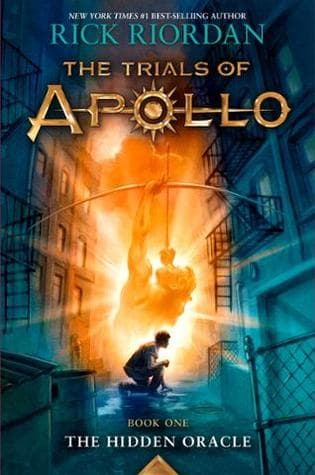
- The Hidden Oracle
Rick Riordan
4.2 (109k) average on GoodreadsFantasyFirst book in the Trials of Apollo series, direct continuation of the story and characters.
- The Golden Compass
Philip Pullman
4.0 (1.3M) average on GoodreadsFantasyRiordan's The Dark Prophecy is lighter in tone and thematic complexity. Pullman's work delves into profound philosophical and theological questions with morally ambiguous characters and existential choices, offering a deeper, more adult exploration of themes, whereas Riordan focuses on accessible myth appropriation and direct adventure.
- Harry Potter and the Sorcerer's Stone
J.K. Rowling
4.5 (7M) average on GoodreadsFantasyRescued from a miserable life under the stairs, an orphaned boy discovers he's a wizard destined for a magical school, where he uncovers a dangerous secret tied to the dark wizard who murdered his parents.
- The Hunger Games
Suzanne Collins
4.3 (6.4M) average on GoodreadsFantasyIn a future where children fight to the death on live television, Katniss Everdeen volunteers for the arena, turning a death sentence into a fight for survival and a spark of rebellion.
- 1984
George Orwell
4.2 (3.1M) average on GoodreadsPoliticsIn a future where surveillance and thought control are absolute, a man's search for truth clashes with the Party, showing that hope can be a form of rebellion.
- Divergent
Veronica Roth
4.2 (2.9M) average on GoodreadsFantasyIn a society divided by virtues, a sixteen-year-old's difference from the norm starts a rebellion that threatens her world.





Enjoyed the summary?
A summary gives you the shape of the book. The book itself has the detail, the examples and the voice.
Find The Dark Prophecy on AmazonAs an Amazon Associate, BookBrief earns from qualifying purchases. How we're funded