
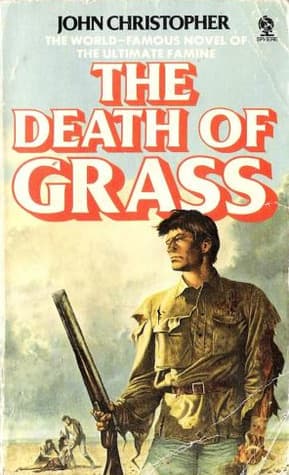
Synopsis
Covers the whole plot, including the ending.
- Difficulty
- Medium
- Pacing
- Moderate
- Mood
- Bleak, Suspenseful, Harrowing, Dystopian
- Read it if
- You enjoy classic post-apocalyptic stories focused on societal collapse and moral dilemmas, with a bleak, realistic tone.
- Skip it if
- You prefer hopeful or action-oriented sci-fi, or find themes of human depravity and the breakdown of civilization too grim.
The Death of Grass Plot Summary
Covers the whole plot, including the ending.
The Spreading Blight
John Custance, a London engineer, is at first unconcerned by news of the Chung-Li virus destroying rice crops in Asia. However, the situation quickly worsens as the virus mutates and begins to affect all grass crops in Europe, including wheat, barley, and oats. Government reports are vague, but John's brother, David, a farmer in the Westmorland valley, warns him of the coming disaster and urges him to prepare. John's wife, Ann, is doubtful, but the increasing food shortages and the government's panic convince them that strong actions are needed. They begin to gather supplies and consider their options, as the world around them begins to fall apart.
The Decision to Flee
As the food crisis grows, the British government uses harsh measures, including rationing and forced labor. John, using his contacts, uncovers a secret government plan to move important people to safe places, leaving most of the population to survive on their own. Realizing the city will be a death trap, John, Ann, and their children, Jane and Davy, decide to leave London. Their destination is David's secluded farm in Westmorland, a place they hope will offer safety. They plan to travel with John's friend, Roger Buckley, and his family, forming a small group for the dangerous journey north.
The Road to Anarchy
The Custance and Buckley families, along with Roger's wife, Olivia, and their children, begin their trip in their cars. Immediately, they meet the breakdown of law and order. Roads are full of desperate refugees, and fuel is hard to find. They see looting, violence, and no effective authority. Their initial attempts to stay civil quickly fail as they must defend themselves. During an encounter with looters, Roger's car is stolen, and he is badly hurt. This event changes things, forcing the group to face the brutal facts of their new world and the need to adapt to survive.
A Desperate Alliance
Continuing their journey on foot with limited supplies, the Custance family and a recovering Roger meet an armed and organized gang led by Pirrie. Pirrie, seeing John's intelligence, offers them an alliance, knowing that a larger, more coordinated group has better chances of survival. This alliance is tense, as Pirrie's methods are brutal and his followers are unruly. John must make difficult moral decisions to protect his family, including letting Pirrie's men raid other desperate survivors for food and resources, which further reduces his sense of humanity.
The Price of Survival
As resources decrease and the journey becomes harder, the moral compromises grow. Roger Buckley, still recovering from his injuries, becomes a burden, and his wife, Olivia, and their children are seen as extra mouths by Pirrie's men. In a cold moment, John decides that the Buckleys must be sacrificed for his family and the rest of the group. He arranges their murder, a decision that scars him and marks his complete change from a civilized man to a ruthless survivor. This act makes his position in the group stronger but leaves him deeply conflicted.
Escalating Violence
The journey north continues, with constant watch against other desperate groups and the threat of starvation. Pirrie's authority is challenged by his own men, and John becomes more involved in keeping order through force. They meet a large, organized group of survivors who try to ambush them. In the resulting chaotic battle, many lives are lost on both sides. John takes part in the fighting, showing a cold efficiency born of desperation. The violence hardens everyone, especially John and Ann, who see their children quickly grow used to the horrors around them.
The Treachery of Pirrie
As they near Westmorland, the tension between John and Pirrie reaches a breaking point. Pirrie, always looking for opportunities, sees John as a rival and decides to eliminate him before reaching David's farm. He tries to ambush John, but John, expecting the betrayal, turns the tables. A brutal fight follows, ending in Pirrie's death and the scattering of his remaining followers. This event makes John the leader of the remaining group and shows his complete willingness to use violence to protect his family and secure their future. He is now the most dangerous man in the group.
Arrival at the Valley
After weeks of travel and bloodshed, John, Ann, their children, and the few remaining survivors finally reach the entrance to David's secluded valley. The valley seems untouched by the widespread destruction, a green place in a brown world. David, a practical and equally hardened farmer, greets them, relieved but also wary. He has fortified his farm and created a self-sufficient community, but the arrival of John's group, especially the armed and traumatized survivors, brings a new challenge. The initial relief of arrival is mixed with the understanding that their fight for survival is not over, and new conflicts are coming.
The Valley's Rules
David explains the strict rules governing his valley community: resources are limited, and outsiders are viewed with suspicion. He has already had to defend the valley from desperate attacks. His farm is well-stocked and defended, but he makes it clear that every new person is a burden. John introduces the few remaining members of his traveling group, who are quickly taken in, though watched closely. The valley, while a safe place, is not a paradise. It is a small version of the new world, where resources control power and the threat of invasion is constant. John recognizes that the fight for survival has only changed locations.
A New Threat
Just as the Custance family begins to settle into the valley, news arrives from David's scouts: a large, organized group of armed survivors, possibly a government-backed militia or a powerful gang, is heading their way, systematically clearing out smaller communities. This new threat is far more serious than anything they have faced. The valley, once a sanctuary, now becomes a possible battleground. John, with his experience of the outside world's brutality, and David, with his knowledge of the land, must combine their strengths to prepare for the inevitable fight, understanding that the peaceful existence they hoped for is impossible.
Preparing for War
John and David, along with the other able-bodied members of the valley community, work to strengthen their defenses. They create traps, build watchtowers, and organize patrols. John's strategic thinking from his engineering background is valuable, while David's practical farming knowledge helps with resource management. The women and children prepare food and tend to essential supplies. The atmosphere is tense, a grim determination replacing the initial relief of arrival. They know this will be a fight for their existence, and failure means starvation or enslavement. The valley residents, once diverse, unite against the common threat.
The Battle for the Valley
The invading force arrives, a well-equipped and numerous group. A fierce and bloody battle follows for control of the valley. John and David lead the defense with efficiency, using guerrilla tactics and their knowledge of the terrain. Casualties are high on both sides. The fight is long and desperate, pushing everyone to their limits. John, now without his former civilized restraints, takes part in the killing without hesitation, driven by the need to protect his family and the community they have found. The valley becomes a scene of horrific violence, showing humanity's capacity for both survival and savagery.
Victory and Its Cost
Against great odds, the valley community repels the invaders, driving them back with heavy losses. The victory, however, is not without cost. Many defenders are dead or wounded, and the land is scarred by the battle. John and Ann see the changes in their children, who have been exposed to horrors and have learned to kill. The cost of survival has been immense, stripping them of their humanity and forcing them to commit acts they once thought impossible. The valley is safe for now, but the peace is fragile, built upon blood and the sacrifice of their former selves.
The New Order
After the battle, John and David, now leaders, establish a new, practical order in the valley. They understand that the old world's laws and ethics no longer apply. Resources are tightly controlled, and security is most important. They implement strict measures to ensure the community's long-term survival, including rationing and harsh penalties for disagreement. The valley becomes a self-sufficient fortress, isolated from the chaos of the outside world, but also reflecting its brutality. John, once a mild engineer, has fully accepted his role as a tribal leader, able to make life-or-death decisions without hesitation, forever changed by the journey.
A Glimpse of the Future
As a new harvest season nears, John and Ann observe their children, who have grown up in this brutal new world, adapting to its harsh realities. They are survivors, but their innocence is gone. John reflects on the journey, the terrible choices he made, and the man he has become. The world outside the valley remains a mystery, but they know it is still dangerous. The family has survived, but at the cost of their former selves. The novel ends with a chilling sense of the future, where humanity's survival depends on its ability to embrace a more primitive, ruthless existence, and the question of whether anything truly civilized can last.
Principal Figures
John Custance
Protagonist
A London engineer forced to become a ruthless survivor and leader.
Initially a conventional, middle-class London engineer, John is thrust into a world of chaos and violence by the Chung-Li virus. He is intelligent, resourceful, and initially clings to the vestiges of civility. However, as the journey progresses, he undergoes a profound transformation, shedding his moral inhibitions and making increasingly brutal decisions to protect his family. He evolves into a pragmatic, cold, and effective leader, capable of orchestrating murder and engaging in combat without remorse. His internal conflict between his past self and his survivalist present is a central element of the story.
Relationships: Ann Custance (Wife, partner in survival); David Custance (Brother, co-leader of the valley community); Roger Buckley (Friend, later a victim of John's pragmatism); Pirrie (Unwilling ally, then enemy)
Ann Custance
Supporting
John's wife, who adapts to the brutal new world alongside him.
Ann begins as a somewhat skeptical and more emotionally sensitive counterpart to John, representing the lingering hope for normalcy. She is devoted to her children and initially struggles with the violence and moral compromises. However, driven by maternal instinct and the sheer necessity of survival, she gradually hardens, accepting John's brutal decisions and even participating in the new, harsh reality. While she doesn't lead, she becomes an unwavering and pragmatic partner in John's transformation, losing much of her former softness and becoming a silent enabler of their new, savage existence.
Relationships: John Custance (Husband, partner in survival); Jane Custance (Daughter); Davy Custance (Son)
David Custance
Supporting
John's brother, a pragmatic farmer who establishes a self-sufficient valley community.
David is John's older brother, a farmer living in a remote Westmorland valley. He is initially more aware of the impending crisis due to his connection to the land and his self-sufficient lifestyle. He is pragmatic, stoic, and fiercely protective of his land and the small community he has built. David is already hardened by the early stages of the collapse, having had to defend his valley. He provides the sanctuary John's family seeks but also challenges John's lingering civility, sharing a similar ruthless pragmatism necessary for survival. He becomes a co-leader in the fortified valley.
Relationships: John Custance (Brother, co-leader)
Roger Buckley
Supporting
John's friend, whose family becomes a liability and a tragic victim.
Roger is John's friend and colleague from London, who joins the Custance family on their journey. He represents the more vulnerable aspects of civilized society, unable to adapt to the brutal realities of the collapse. He is injured early in the journey and becomes a burden, both physically and in terms of resources. His family, including his wife Olivia and children, are also seen as liabilities. Roger's fate highlights the novel's central theme of survival at any cost, as John ultimately sacrifices him and his family for the greater good of his own.
Relationships: John Custance (Friend); Olivia Buckley (Wife)
Pirrie
Antagonist/Supporting
A ruthless and opportunistic gang leader who forms a temporary alliance with John.
Pirrie is a charismatic but brutal leader of a gang of survivors whom John's group encounters on their journey. He is a product of the collapsed society, embodying its savagery and amorality. Pirrie is cunning and pragmatic, recognizing John's intelligence and offering a temporary, uneasy alliance. He operates by force and intimidation, and his methods challenge John's remaining moral boundaries. Pirrie serves as both an antagonist and a dark mentor figure, forcing John to confront the depths of human depravity and ultimately surpassing him in ruthlessness before John eliminates him.
Relationships: John Custance (Uneasy ally, then enemy)
Jane Custance
Supporting
John and Ann's daughter, who adapts quickly to the brutal new world.
Jane is John and Ann's daughter. She is young enough to adapt more readily than her parents to the harsh new world, showing a disturbing resilience and desensitization to violence. Her transformation highlights the tragic loss of innocence in the post-apocalyptic landscape. She learns to survive and accepts the brutal realities without the same moral struggle as her parents, representing the future generation shaped entirely by the collapse of civilization.
Relationships: John Custance (Father); Ann Custance (Mother); Davy Custance (Brother)
Davy Custance
Supporting
John and Ann's young son, who shows early signs of adapting to a savage existence.
Davy is John and Ann's young son. Even younger than Jane, his adaptation is even more complete and disturbing. He accepts the violence and the need for ruthlessness as the natural order of things, suggesting that the future generation will be entirely devoid of the pre-collapse moral framework. His character emphasizes the profound and potentially irreversible changes wrought upon humanity by the global catastrophe, embodying the raw, instinctual survivalism that will define the new world.
Relationships: John Custance (Father); Ann Custance (Mother); Jane Custance (Sister)
Olivia Buckley
Supporting
Roger Buckley's wife, a victim of the struggle for survival.
Olivia is Roger Buckley's wife and travels with her family and the Custances. She is presented as a typical suburban wife, ill-equipped for the brutal realities of the collapsing world. Her desperation and vulnerability make her and her children a perceived liability to the group. Her murder, alongside her husband and children, is a pivotal moment that underscores John Custance's complete moral transformation and the extreme measures required for survival.
Relationships: Roger Buckley (Husband)
Themes & Insights
The Collapse of Civilization and Morality
The novel shows the quick breakdown of societal structures and ethics when facing widespread disaster. As basic needs like food become scarce, government authority disappears, and people must abandon their morals for survival. John Custance's change from an engineer to a ruthless killer shows how quickly humanity can become savage when threatened. The journey from London to Westmorland is a literal and metaphorical descent into a world where only the strong survive, and compassion is a weakness. The children's acceptance of violence, Jane and Davy, further highlights this societal and moral collapse.
“The death of grass was the death of man's humanity.”
Survival at Any Cost
This theme drives the story, exploring the extreme actions people will take to ensure their own and their family's survival. John Custance's journey is a series of increasingly difficult moral choices, ending in the murder of the Buckley family and Pirrie. The novel suggests that in a post-apocalyptic world, traditional ethics are luxuries that can lead to death. The characters are stripped of everything but their most basic instincts, showing that the will to live can override all other considerations, leading to acts of cruelty. The fortified valley, while a safe place, also represents a community built on the harsh lessons of this survivalist way of life.
“There was no right or wrong anymore, only life and death.”
The Fragility of Society
The novel clearly shows how fragile civilization is. The Chung-Li virus, by destroying the global food supply, quickly unravels centuries of social progress, law, and order. The government's inability to cope, the quick rise of gangs, and widespread panic show how dependent society is on its basic systems. The immediate shift from an orderly urban environment to a lawless, every-man-for-himself landscape highlights how easily human society can collapse into a primitive state when its basic needs are threatened. The speed of this collapse is perhaps the most terrifying aspect, showing that stability is a privilege, not a guarantee.
“It had taken only weeks for the world to turn from green to brown, and from order to chaos.”
Loss of Innocence and Humanity
This theme is explored through the changes in John and Ann, but most clearly through their children, Jane and Davy. The children, exposed to violence and death early on, quickly adapt to the brutal new reality, losing their childhood innocence and becoming hardened. John and Ann, while surviving, also grieve the loss of their former selves and the moral compromises they've made. The novel questions what kind of humanity can last in such a world, suggesting that survival might come at the cost of the qualities that define human compassion and morality. The ending leaves the reader considering the future of a generation raised in barbarity.
“They were no longer children, but small, efficient survivors, their eyes holding the knowledge of death.”
Plot Devices & Literary Techniques
The Chung-Li Virus
The catalyst for global collapse and the central conflict.
The Chung-Li virus is the inciting incident of the novel, a global pandemic that specifically targets and destroys all grass crops. Its rapid mutation and spread serve as the ultimate external antagonist, driving the entire plot. It represents an unstoppable force of nature that exposes the inherent fragility of human civilization and its dependence on agriculture. The virus is not a character, but its devastating effects dictate every decision made by the protagonists, forcing them into a struggle for survival that reshapes their morality and the world around them.
The Journey North
A physical and metaphorical descent into barbarism.
The journey from London to David's farm in Westmorland serves as both a literal plot device and a powerful metaphor. Physically, it is a perilous trek through a collapsing country, encountering various manifestations of societal breakdown. Metaphorically, it represents John Custance's descent from a civilized man into a ruthless survivor. Each encounter, each act of violence or moral compromise along the way, marks a further step in this transformation. The journey is a crucible that strips away the veneer of civilization, revealing the raw instincts beneath, and its completion signifies John's full embrace of the new world order.
The Remote Valley
A symbol of isolated, self-sufficient survival and a new, harsh societal model.
David Custance's secluded farm valley initially represents a sanctuary, a last bastion of hope and self-sufficiency away from the chaos of the cities. However, it quickly becomes clear that even this isolated haven is not immune to the brutal realities of the post-apocalyptic world. The valley transforms into a fortified stronghold, a microcosm of the new society where resources are tightly controlled and defense is paramount. It symbolizes the necessity of forming insular, self-sufficient communities in a world devoid of larger governmental structures, but also highlights the harsh, pragmatic, and often violent principles required to maintain such an existence.
Moral Dilemmas and Compromises
A recurring narrative element forcing characters to choose between ethics and survival.
Throughout the novel, John Custance and his family are repeatedly confronted with dire moral dilemmas, forcing them to make choices that challenge their pre-collapse values. The decision to abandon the city, the alliance with Pirrie, and most significantly, the murder of the Buckley family, are all critical junctures. These compromises are not presented as easy or without internal conflict, but as necessary evils for survival. This device highlights the central theme of the collapse of morality, demonstrating how quickly ethical boundaries erode when faced with existential threats, and how these choices fundamentally reshape the characters' identities.
The Death of Grass Quotes
“There was no point in asking why. The answer was in the wind, in the shrivelling leaves, in the dust. The answer was death.”
“The rule was simple: if you had, you kept. If you didn't, you died.”
“Civilization, John thought, was a very thin veneer, easily scratched away.”
“The greatest danger, he realised, was not the hunger, but the knowledge that there was no end to it.”
“They were no longer men and women, but animals driven by the single, overriding instinct to survive.”
“The law was gone. There was only the will to live, and the strength to enforce it.”
“He understood then that true evil was not a sudden act of malice, but the slow, grinding erosion of humanity.”
“The world had not ended with a bang, but with a slow, agonising whimper of starvation.”
“Every man for himself, and the devil take the hindmost. It was no longer a proverb, but a blueprint for living.”
“The silence was the worst. The silence of dead fields, dead towns, dead hope.”
“He had imagined the end of the world differently. With fire, perhaps, or flood. Not with the slow, insidious spread of a blight.”
“The strong survived, not because they were good, but because they were strong.”
“There was no room for sentiment, no time for regret. Only the next step, the next breath, the next meal.”
“The green had gone, and with it, the future.”
Quiz
10 questions on the plot and the characters. Each answer comes with a short explanation.
Question 1
What is the initial impact of the Chung-Li virus in Asia before it mutates?
- It causes a global economic collapse.
- It specifically targets and wipes out the rice crop.
- It leads to a shortage of clean drinking water.
- It primarily affects livestock, not human food sources.
Show answer
B. It specifically targets and wipes out the rice crop. The Chung-Li virus initially devastates Asia by wiping out the rice crop, leading to mass starvation.
Question 2
What is the ultimate destination John Custance and his family are trying to reach?
- A government-run bunker in London.
- The coast to escape by boat.
- His brother's farm in a remote northern valley.
- A military base offering protection.
Show answer
C. His brother's farm in a remote northern valley. John Custance and his family decide to abandon their London home to head for the sanctuary of his brother's farm in a remote northern valley.
Question 3
Which of the following crops are NOT mentioned as being affected by the mutated Chung-Li virus?
- Wheat
- Barley
- Potatoes
- Rye
Show answer
C. Potatoes The text states that 'Wheat, barley, oats, rye: no grass crop is safe' after the mutation. Potatoes are not a grass crop and are not mentioned as being affected.
Question 4
What does the British Government secretly plan to do in response to the looming famine?
- Distribute food equally among all citizens.
- Evacuate the entire population to safer countries.
- Preserve the lives of a few at the expense of the many.
- Fund research into a new super-crop.
Show answer
C. Preserve the lives of a few at the expense of the many. The Government lies to its citizens, devising secret plans to preserve the lives of a few at the expense of the many.
Question 5
What is the primary theme explored by the phrase 'the law of the gun prevails, and the civilized values they once took for granted become the price they must pay if they are to survive'?
- The importance of technological advancement in crisis.
- The resilience of human connection in adversity.
- The rapid breakdown of societal order and morality under extreme pressure.
- The triumph of government control during a disaster.
Show answer
C. The rapid breakdown of societal order and morality under extreme pressure. This phrase directly speaks to the collapse of law and order and the sacrifice of moral principles for survival, a key theme of the novel.
Question 6
What is the initial worldwide expectation regarding the Chung-Li virus before its mutation?
- That it would quickly burn itself out.
- That a counter-virus would be developed any day.
- That it would only affect tropical climates.
- That it was a hoax orchestrated by a foreign power.
Show answer
B. That a counter-virus would be developed any day. The rest of the world looked on with concern, 'though safe in the expectation that a counter-virus will be developed any day.'
Question 7
How does the British Government initially communicate with its citizens about the crisis?
- It provides regular, honest updates.
- It lies to them while making secret plans.
- It issues evacuation orders for major cities.
- It encourages self-sufficiency and communal farming.
Show answer
B. It lies to them while making secret plans. The text explicitly states that 'the Government lies to its citizens, devising secret plans'.
Question 8
What does the phrase 'green fields are fast turning brown' symbolize in the context of the story?
- The changing seasons in Britain.
- The widespread failure of grass crops due to the virus.
- A drought unrelated to the virus.
- The decline of traditional farming methods.
Show answer
B. The widespread failure of grass crops due to the virus. This phrase directly describes the visible effect of the mutated Chung-Li virus on the grass crops in Britain, indicating the onset of famine.
Question 9
What critical piece of information prompts John Custance and his family to leave London?
- A public announcement from the government.
- A message from his brother inviting them to the farm.
- News of widespread rioting in London.
- Getting wind of the government's secret plans for selective survival.
Show answer
D. Getting wind of the government's secret plans for selective survival. The text states, 'Getting wind of what's in store,' referring to the government's secret plans to preserve a few at the expense of many, which prompts their departure.
Question 10
The journey across the country is described as traversing a land 'fast descending into barbarism.' This suggests a fundamental shift in what aspect of society?
- The climate and geography.
- The political structure, moving towards a dictatorship.
- The fundamental principles of human conduct and social order.
- The technological capabilities of the population.
Show answer
C. The fundamental principles of human conduct and social order. Descending into barbarism implies a collapse of civilized norms, laws, and moral behavior, indicating a profound change in human conduct and social order.
The Death of Grass FAQ
What is the initial global crisis that sets the stage for the book's events?
The initial crisis is the Chung-Li virus, which devastates rice crops in Asia, leading to widespread famine and social collapse there. The rest of the world, including Britain, initially believes it is contained and a cure will be found, but this assumption proves fatally wrong.
How does the Chung-Li virus evolve to threaten Britain and the rest of the world?
The Chung-Li virus mutates, becoming airborne and capable of infecting all grass crops, including wheat, barley, oats, and rye. This mutation directly threatens the primary food sources of Western nations, causing their green fields to rapidly turn brown and initiating a global famine.
Who is John Custance, and what is his immediate goal after learning of the government's plans?
John Custance is the protagonist, a family man living in London. Upon discovering the British government's secret plan to sacrifice the many for the few, he decides to abandon his city home and lead his family to the perceived safety of his brother David's remote farm in a northern valley.
Describe the state of Britain as John Custance and his family begin their journey.
As John and his family begin their trek, Britain is rapidly descending into anarchy. Civilized values are eroding, law and order are collapsing, and the 'law of the gun' is quickly becoming the prevailing rule. The journey becomes a perilous crossing of a country consumed by barbarism.
What is the significance of the northern valley and John's brother David's farm?
The northern valley and David's farm represent a potential sanctuary, a place where the Custance family hopes to find self-sufficiency and escape the chaos of the cities. David has already been preparing for such a crisis, accumulating supplies and weapons, making his farm a strategic destination.
How does the character of Pirrie act as a catalyst for John's moral decline?
Pirrie, a ruthless and pragmatic individual, quickly becomes a necessary evil for John's group, providing protection and strategic guidance. His influence, particularly his willingness to use violence and deception, gradually erodes John's own moral compass, forcing him to make increasingly brutal decisions for his family's survival.
What role do the children, especially Jane and Mary, play in highlighting the group's changing morality?
The children, particularly Jane and Mary, serve as a barometer for the group's deteriorating humanity. Their initial innocence and vulnerability contrast starkly with the harsh realities they are exposed to, and their gradual desensitization or adaptation to violence subtly underscores the loss of the adults' civilized values.
What unstated implications are there about the British government's 'secret plans'?
The government's 'secret plans' imply a deliberate and calculated decision to triage the population, sacrificing the majority to preserve a select few, likely those deemed essential for rebuilding or maintaining control. This reveals a chilling utilitarianism, prioritizing survival of a system over the lives of its citizens.
How does John Custance's leadership style evolve throughout the journey?
John begins as a relatively passive, civilized man, but the pressures of survival force him to become increasingly decisive, ruthless, and even violent. He transitions from relying on others to taking charge, making hard choices that often conflict with his former moral code, demonstrating a brutal pragmatism.
Analyze the psychological impact of the constant threat of starvation and violence on the characters.
The constant threat of starvation and violence strips away the characters' civility and exposes their primal instincts. It leads to profound psychological stress, paranoia, and a desensitization to suffering, compelling them to commit acts they would have previously found abhorrent, all in the name of survival.
How does the novel explore the concept of masculinity in a post-apocalyptic world?
The novel explores masculinity through John and Pirrie, contrasting traditional protective roles with the necessity for brutal, aggressive action. It suggests that in a post-apocalyptic world, masculinity is redefined by the capacity for violence, resourcefulness, and the willingness to make ruthless decisions to protect one's dependents, often at the expense of others.
Discuss the psychological toll on Ann, John's wife, as she witnesses her husband's transformation.
Ann experiences significant psychological distress as she witnesses John's transformation. She struggles with the erosion of his humanity and their shared moral values, often questioning his choices and the price of their survival. Her internal conflict highlights the emotional cost of adapting to a barbaric world.
Is the ending of the book optimistic or pessimistic, and why?
The ending is largely pessimistic. While John and his family reach a form of 'safety' at David's farm, it's a safety achieved through immense moral compromise and violence. The world outside remains broken, and their sanctuary is built on the sacrifice of their former selves and the lives of others, suggesting a bleak future for humanity.
How does the novel critique human civilization and its inherent fragility?
The novel critiques civilization by showing how quickly its structures and values collapse under extreme pressure. It suggests that the veneer of order and morality is thin, easily shattered by famine and fear, revealing a brutal, self-serving core beneath. The rapid descent into barbarism underscores civilization's inherent fragility.
Could the Custance family have survived without Pirrie's help, or was his presence inevitable for their survival?
It is highly debatable if the Custance family could have survived without Pirrie. His ruthlessness, military experience, and willingness to commit violence were instrumental in navigating the dangerous landscape and overcoming threats. While morally compromising, his pragmatic approach was arguably essential for their physical survival in a world where civility was a liability.
What is the broader message about environmental vulnerability that the book conveys?
The book conveys a powerful message about environmental vulnerability, specifically highlighting humanity's dependence on delicate ecosystems and agricultural stability. The rapid spread of the Chung-Li virus demonstrates how a single environmental factor can utterly dismantle global civilization, underscoring our precarious relationship with nature.
How does the novel challenge the reader's own moral boundaries?
The novel challenges the reader's moral boundaries by forcing them to confront the extreme choices John and his family make for survival. It prompts questions about what one would do in similar circumstances, blurring the lines between right and wrong, and suggesting that morality is a luxury in a world without law or resources.
What is the significance of the title, 'The Death of Grass'?
The title 'The Death of Grass' is highly significant, directly referencing the biological catastrophe that triggers the entire plot. It symbolizes not just the literal destruction of essential food crops, but also the 'death' of civilization, order, morality, and the very foundations upon which human society is built.
About the author
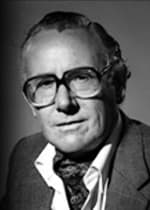
John Christopher was a British author known for his contributions to science fiction and speculative fiction. His notable works include "The White Mountains," which is part of the Tripods trilogy, "The Death of Grass," a post-apocalyptic novel, "When the Tripods Came," a prequel to the trilogy, and "The Guardians," which explores themes of survival and conflict.
Similar books
- The Road
Cormac McCarthy
4.0 (716k) average on GoodreadsScience FictionBoth depict a harsh, post-apocalyptic journey where characters confront extreme moral choices for survival.
- Earth Abides
George R. Stewart
4.0 (24k) average on GoodreadsFantasyExplores the long-term societal breakdown and rebuilding after a global catastrophe, with a focus on human adaptation.
- Z for Zachariah
Robert C. O'Brien
3.7 (14k) average on GoodreadsScience FictionFeatures a small group of survivors navigating moral and practical challenges in a post-catastrophe world.
- The Hunger Games
Suzanne Collins
4.3 (6.4M) average on GoodreadsFantasyIn a future where children fight to the death on live television, Katniss Everdeen volunteers for the arena, turning a death sentence into a fight for survival and a spark of rebellion.
- 1984
George Orwell
4.2 (3.1M) average on GoodreadsPoliticsIn a future where surveillance and thought control are absolute, a man's search for truth clashes with the Party, showing that hope can be a form of rebellion.
- Divergent
Veronica Roth
4.2 (2.9M) average on GoodreadsFantasyIn a society divided by virtues, a sixteen-year-old's difference from the norm starts a rebellion that threatens her world.




Enjoyed the summary?
A summary gives you the shape of the book. The book itself has the detail, the examples and the voice.
Find The Death of Grass on AmazonAs an Amazon Associate, BookBrief earns from qualifying purchases. How we're funded