

Synopsis
Covers the whole plot, including the ending.
- Difficulty
- Medium
- Pacing
- Slow
- Mood
- Atmospheric, Tense, Isolated, Thought-provoking
- Read it if
- You enjoy post-apocalyptic stories focused on psychological tension and moral dilemmas, with a strong female protagonist.
- Skip it if
- You prefer action-packed survival stories, or are sensitive to themes of isolation and attempted assault.
Z for Zachariah Plot Summary
Covers the whole plot, including the ending.
The Last Girl in the Valley
Sixteen-year-old Ann Burden survived a nuclear war by living in a secluded, self-contained valley that was somehow spared from the fallout. For over a year, she has managed the farm and her family's store, tending to her dog, Faro, and maintaining a routine that keeps her sane. She believes herself to be the last person alive, having seen no signs of other human life outside her valley's protective natural barrier. Her days are filled with the practicalities of survival: gardening, fetching water, and carefully rationing supplies. Despite her solitude, Ann finds a certain peace in her routine, constantly watching for any signs of danger or, more hopefully, other survivors.
A Distant Smoke
One day, while scanning the horizon from a high point in her valley, Ann spots a plume of smoke in the distance. Her initial shock turns into a mix of excitement and deep fear. The smoke confirms that she is not alone, but it also shatters her carefully constructed world of solitude and safety. She watches for days as the smoke draws closer, indicating the person is heading directly for her valley. Ann grapples with the implications: a companion, a threat, or both. She begins to prepare, hiding valuable supplies and making plans for observation, unsure whether to reveal herself or remain hidden until she can assess the newcomer's intentions.
The Arrival of Mr. Loomis
The man, later identified as John Loomis, eventually arrives in the valley, driving a strange, radiation-proof suit-vehicle. Ann observes him from a distance, noting his cautious movements and the Geiger counter he uses to check for radiation. To her horror, Loomis makes a critical error: he bathes in the contaminated stream that flows from outside the valley, despite Ann's family having always used the clean spring water within. He quickly falls ill, suffering from radiation sickness. Ann, torn between fear and compassion, watches him from afar, debating whether to help him or let nature take its course, fearing he might threaten her safe haven.
Ann's Compassion and Loomis's Recovery
Despite her deep-seated fear and distrust, Ann's compassion wins out. She decides to help Loomis, leaving food, water, and eventually medicine at his campsite while remaining hidden. She observes his slow, painful recovery, noting his persistence and ingenuity even when weak. As he regains strength, Loomis begins to explore the valley, unaware of Ann's presence. Ann continues to monitor him, learning more about his personality and intentions through his actions, trying to discern if he is a threat or a potential companion in this desolate world. Her anonymity becomes a fragile shield.
The First Encounter
Loomis eventually discovers signs of Ann's presence — a neatly kept garden, a small footprint. He sets a trap, and Ann, caught off guard, is forced to reveal herself. Their first direct encounter is tense. Loomis, though still weak, is clearly intelligent and manipulative. Ann, wary and defensive, tries to assert her ownership of the valley and establish boundaries. They begin a cautious co-existence, sharing meals and conversation, but an underlying current of distrust and unspoken power dynamics immediately emerges. Ann feels her control over her life and the valley slowly slipping away.
A Fragile Coexistence
Ann and Loomis establish a routine of sorts. They work together on the farm, sharing the labor, and Loomis proves to be resourceful and capable. He fixes machinery and brings new ideas, initially impressing Ann. However, Loomis's possessive and controlling tendencies soon become apparent. He begins to make decisions without consulting Ann, appropriating her family's belongings, and subtly undermining her authority. Ann feels increasingly uncomfortable and trapped, recognizing a growing imbalance in their relationship. She misses her solitude and the complete freedom she once had, realizing that his presence, while ending her loneliness, has brought a new kind of fear.
The Attempted Assault
The tension between Ann and Loomis culminates in a terrifying incident. One evening, after a day of uneasy co-existence, Loomis attempts to sexually assault Ann. She fights him off, managing to escape his grasp and flee into the night. This event shatters any remaining illusion Ann had about Loomis's good intentions or the possibility of a respectful partnership. She realizes the true depth of his predatory nature and the danger she is in. Her fear transforms into a desperate need for self-preservation, and she understands that she cannot stay in the valley with him.
The Power Struggle and Loomis's Injury
Following the assault, Ann makes plans to escape the valley. She retrieves a rifle and attempts to leave, but Loomis, ever watchful, confronts her. In a struggle, Ann manages to push Loomis, causing him to fall and severely injure his leg. This accidental injury incapacitates him, temporarily shifting the power dynamic back in Ann's favor. She is momentarily relieved but also burdened by the responsibility of his injury. She knows she cannot leave him to die, but she also cannot remain a prisoner.
The Dilemma and the Escape
Ann is faced with an agonizing dilemma: stay and risk further danger from Loomis, or leave him alone, injured, and vulnerable. After much internal debate, she decides she must leave for her own survival and freedom. She carefully prepares, gathering supplies and taking Loomis's radiation-proof suit, which he had repaired. This suit represents her only chance to explore the world outside the valley safely. She leaves him food and water, a gesture of reluctant mercy, but makes it clear that she is leaving for good, hoping he will recover and perhaps find another way to survive.
Beyond the Valley
Donning the cumbersome but protective radiation suit, Ann leaves the valley, venturing into the unknown and irradiated world. Her journey is filled with uncertainty and danger, but it is also filled with a new sense of purpose and a glimmer of hope. She carries with her the lessons learned from her time with Loomis, a stronger understanding of human nature, and a fierce determination to find a place where she can truly be safe and free. The book ends as Ann looks out at the wider world, a solitary figure embarking on a new, perilous quest for survival and, perhaps, other, kinder survivors.
Principal Figures
Ann Burden
Protagonist
A sixteen-year-old girl, the last known survivor in a protected valley.
Ann is intelligent, resourceful, and deeply connected to nature and her family's farm. She is initially naive but possesses a strong moral compass and an innate sense of survival. Her solitude has made her self-reliant but also vulnerable to the manipulative nature of others. She values freedom and independence above all else, and her experiences force her to confront the darker aspects of human nature. She is observant and thoughtful, constantly analyzing her situation and the people around her.
Relationships: John Loomis (Initially a potential companion, then a manipulative predator and antagonist.); Faro (Her loyal dog and only companion for over a year, a source of comfort.)
John Loomis
Antagonist
A scientist and the second survivor to arrive in Ann's valley.
Loomis is intelligent, resourceful, and technically skilled, having designed a radiation suit and survived in the outside world. However, beneath his capable exterior lies a manipulative, possessive, and predatory nature. He craves control and companionship, but his methods are coercive and self-serving. He sees Ann as an object to possess and the valley as his to command, demonstrating a profound lack of empathy. His past as a scientist may have contributed to a detached, utilitarian view of others.
Relationships: Ann Burden (His target for control, companionship, and sexual dominance.)
Faro
Supporting
Ann's loyal dog and companion.
Faro is Ann's faithful dog, her sole companion for over a year in the valley. He represents comfort, continuity, and the last tangible link to her old life. Faro's presence provides Ann with emotional support and a sense of normalcy, especially during her initial solitude. His instincts also serve as an early warning system, reacting to Loomis's presence before Ann fully comprehends the threat. His loyalty is unwavering, offering silent companionship.
Relationships: Ann Burden (Owner and devoted pet, a source of comfort and security.)
Ann's Family (Mentioned)
Mentioned
Ann's deceased parents and brother, whose memory guides her.
Ann's parents and younger brother, David, are deceased before the story begins, victims of the nuclear war. Their memory, however, plays a crucial role in Ann's life. Ann frequently recalls her father's wisdom, her mother's practical skills, and David's playful spirit. Their teachings and the values they instilled in her guide her actions and decisions, especially in maintaining the farm and her moral compass. They represent the lost world and the foundation of Ann's identity.
Relationships: Ann Burden (Her deceased family, whose memory and teachings guide her.)
Themes & Insights
The Nature of Humanity in Isolation
The novel explores how human nature, both good and evil, manifests when societal structures collapse. Ann embodies resilience, compassion, and a desire for connection, while Loomis represents the darker aspects: possessiveness, manipulation, and the urge to dominate. Ann's initial hope for companionship is shattered by Loomis's predatory actions, forcing her to confront the grim reality that not all human contact is beneficial. The valley, once a sanctuary, becomes a microcosm of the post-apocalyptic world's moral landscape, where survival often means facing not just environmental threats but also the dangerous impulses of other survivors. This theme is central when Ann weighs helping Loomis against protecting herself after he falls ill, and later when she must escape his control.
“Perhaps I was wrong to think that I was the only one. Perhaps I was wrong to think that there could be only one kind of person left alive.”
Loss of Innocence and Coming of Age
Ann's journey is a coming-of-age story set against a desolate backdrop. She starts as a relatively innocent sixteen-year-old, isolated but content. Her encounter with Loomis rapidly accelerates her transition from childhood to adulthood. She is forced to confront betrayal, sexual threat, and the harsh realities of survival without the protection of family or society. She loses her naive hope for an idyllic companionship and gains a pragmatic, wary understanding of human nature. Her decision to leave the valley and Loomis, taking his suit, marks her definitive step into independent, self-reliant adulthood, having shed the last vestiges of her childhood innocence.
“It was not easy to leave the valley, but it was harder to stay. I had learned too much.”
Environmentalism and the Consequences of Technology
The novel is a stark warning about the destructive potential of nuclear warfare and humanity's impact on the environment. The world outside the valley is a wasteland, ravaged by radiation and devoid of life, a direct consequence of unchecked technological advancement and conflict. The valley itself is a symbol of pristine nature, miraculously untouched, but constantly threatened by the contaminated outside world and, ironically, by Loomis's initial careless actions with the irradiated stream. Loomis's scientific background, while enabling his survival, also hints at the very intellect that led to the world's destruction, highlighting the double-edged sword of human ingenuity. The central conflict between Ann's natural, sustainable living and Loomis's more technological, controlling approach highlights this theme.
“The valley was a green jewel in a brown waste.”
Freedom vs. Security
Ann constantly grapples with the tension between her desire for security and her need for freedom. Her initial solitude provides absolute freedom but also a lack of security in a dangerous world. Loomis offers a semblance of security through his skills and companionship, but at the cost of Ann's autonomy and personal safety. The core conflict arises when Loomis's presence becomes a direct threat to her freedom, forcing Ann to choose between enduring a dangerous, controlled existence and risking the unknown dangers of the irradiated world for the sake of her independence. Her ultimate decision to leave underscores the paramount importance of freedom to her.
“I would rather be alone, truly alone, than be a prisoner with company.”
Plot Devices & Literary Techniques
The Valley as a Sanctuary
A secluded, naturally protected valley that survived the nuclear apocalypse.
The valley serves as a crucial plot device, representing a pristine, untouched Eden in a post-apocalyptic world. Its unique geological features protected it from radiation, making it a rare haven. This setting provides the initial framework for Ann's survival and isolation. It also acts as a magnet, drawing Loomis to its resources. The valley's status as a sanctuary creates both hope and conflict; it's a place worth protecting, but its very desirability leads to the struggle for control between Ann and Loomis. Its eventual loss for Ann signifies her ultimate liberation and maturation.
The Radiation Suit
A specialized, protective suit designed by Loomis to withstand radiation.
The radiation suit is a powerful symbol and a key plot device. Initially, it represents Loomis's technological superiority and his ability to survive the outside world, making him an intimidating figure. It also highlights the extreme dangers of the irradiated environment. Later, when Ann takes possession of the suit, it transforms into a symbol of her newfound agency and her means of escape. It enables her to venture beyond the valley, signifying her courage and determination to forge her own path in the dangerous world, thereby shifting the power dynamic and providing a tangible means for her climactic departure.
The Contaminated Stream
A stream flowing into the valley that carries radiation from the outside world.
The contaminated stream is a critical plot device that introduces the first major conflict and reveals Loomis's initial carelessness and ignorance. Ann's family always knew to avoid it, relying on a pure spring. Loomis's decision to bathe in it immediately leads to his radiation sickness, forcing Ann to make her first moral decision about helping him. It also serves as a constant reminder of the external dangers and the fragile boundary between the safe valley and the deadly outside world, emphasizing the importance of knowledge and caution in survival.
Ann's Diary/Journal
Ann's written record of her experiences and thoughts.
Though not explicitly a physical object within the narrative's active plot, the entire novel is presented as Ann's journal entries. This narrative structure is a significant plot device. It provides direct access to Ann's internal monologue, fears, hopes, and evolving understanding of her situation and Loomis. It allows the reader to experience the story intimately from her perspective, building empathy and suspense. It also serves as a testament to her isolation and her need to process her experiences, reinforcing her intelligence and observational skills as she meticulously records every detail.
Z for Zachariah Quotes
“I will go on living, no matter how hard it is.”
“It was like the end of the world, but it wasn't. It was just the end of my world.”
“He was a stranger, and yet he was the only other human being I had seen in over a year.”
“I had always thought that if I were the last person on Earth, I would be happy. I was wrong.”
“The valley was safe, or so I thought. But safety is a relative thing.”
“He was like a god, or a devil. I couldn't decide which.”
“Fear is a terrible thing. It can make you do things you never thought you would.”
“I had always loved the rain. Now it seemed to mock me.”
“The silence was the worst part. The silence of everything being gone.”
“He wanted my valley, and he wanted me. I knew that now.”
“There was no good or evil anymore, just survival.”
“I had to be strong. For myself, and for the valley.”
“Sometimes I think I'm going mad, being alone so much.”
“The world was dead, but I was not. And as long as I was not, there was hope.”
Quiz
10 questions on the plot and the characters. Each answer comes with a short explanation.
Question 1
What is the protagonist's name in 'Z for Zachariah'?
- Sarah
- Ann Burden
- Elizabeth
- Mary
Show answer
B. Ann Burden The protagonist of 'Z for Zachariah' is a sixteen-year-old girl named Ann Burden.
Question 2
What catastrophic event led to Ann being alone in the world?
- A global pandemic
- A massive earthquake
- A nuclear war
- An alien invasion
Show answer
C. A nuclear war The world was ravaged by a nuclear war, which is why Ann believes she is the last person on Earth.
Question 3
How long has Ann been living alone in the valley before she sees evidence of another survivor?
- A few weeks
- Six months
- One year
- Two years
Show answer
C. One year Ann has lived in the remote valley for the past year, completely alone, before seeing smoke from a distant campfire.
Question 4
What is the first sign Ann observes that indicates another survivor might be nearby?
- Footprints in the mud
- A distant campfire's smoke
- A sound of a vehicle
- A note left on her door
Show answer
B. A distant campfire's smoke Ann's solitude is shattered by the sight of smoke from a distant campfire, indicating someone else is alive.
Question 5
What is the name of the man who eventually arrives in Ann's valley?
- Mr. Loomis
- John Smith
- Dr. Peterson
- Caleb
Show answer
A. Mr. Loomis The man who arrives in the valley is named John Loomis, a scientist.
Question 6
Why is Ann's valley uniquely protected from the radiation that affected the rest of the world?
- It has a special force field.
- It is surrounded by tall mountains that trapped clean air.
- It was too far from any bomb sites.
- There's a special underground bunker.
Show answer
B. It is surrounded by tall mountains that trapped clean air. The valley is naturally protected from the fallout by its unique geological formation, with tall mountains trapping a pocket of clean, breathable air.
Question 7
What significant item does Mr. Loomis possess that Ann initially views as a symbol of hope and progress?
- A working shortwave radio
- A Geiger counter
- A fully functional rifle
- A book of poetry
Show answer
B. A Geiger counter Mr. Loomis has a Geiger counter, which he uses to test for radiation, a piece of technology that symbolizes his scientific knowledge and the possibility of understanding their situation.
Question 8
What is the primary theme explored through Ann's internal conflict regarding Mr. Loomis?
- The joy of companionship in isolation.
- The struggle between trust and suspicion in a post-apocalyptic world.
- The importance of scientific advancement.
- The beauty of nature's resilience.
Show answer
B. The struggle between trust and suspicion in a post-apocalyptic world. Ann grapples with whether to trust Mr. Loomis, as his presence brings both hope for companionship and fear of his intentions, highlighting the theme of trust versus suspicion in a world where normal societal rules have broken down.
Question 9
What is Mr. Loomis's initial motivation for entering Ann's valley, leading to him becoming sick?
- He was searching for Ann specifically.
- He was testing his radiation suit and believed the valley was completely safe.
- He was looking for supplies he had hidden there previously.
- He accidentally stumbled upon it while fleeing another danger.
Show answer
B. He was testing his radiation suit and believed the valley was completely safe. Mr. Loomis entered the valley believing his radiation suit would protect him, underestimating the residual radiation, which caused him to become very ill.
Question 10
What is the primary reason Ann ultimately decides to leave the valley at the end of the book?
- She found a map indicating another safe haven.
- She felt increasingly threatened and controlled by Mr. Loomis.
- She ran out of resources to survive.
- She heard a radio broadcast promising rescue.
Show answer
B. She felt increasingly threatened and controlled by Mr. Loomis. Ann leaves the valley because Mr. Loomis's behavior becomes increasingly possessive and threatening, making her feel unsafe and diminishing her freedom.
Z for Zachariah FAQ
What is the initial premise of 'Z for Zachariah' and Ann Burden's situation?
The novel begins with sixteen-year-old Ann Burden believing she is the sole survivor of a nuclear war, living alone for over a year in a secluded, radiation-free valley. Her family left the valley before the war and never returned, leaving Ann to manage the farm and her solitude. Her peaceful, isolated existence is shattered by the appearance of smoke from a distant campfire, signaling the arrival of another human.
Who is John Loomis and how does he enter Ann's life?
John Loomis is a scientist who survived the nuclear war by sealing himself in a radiation-proof bunker. He enters Ann's life by driving a radiation-proof suit and a Geiger counter into her valley, having been drawn by the valley's clear radiation readings. His arrival initially brings a mix of hope and fear to Ann, as he represents both potential companionship and a threat to her established autonomy.
What significant accident befalls Loomis shortly after his arrival?
Shortly after his arrival, Loomis becomes gravely ill from bathing in the contaminated creek outside the valley, despite his radiation suit protecting him from the initial external radiation. Ann, observing his symptoms, realizes he is suffering from radiation sickness and nurses him back to health, a period that establishes a complex power dynamic between them. This incident forces Ann to reveal herself and her valley's safe status.
How does Loomis's behavior change once he recovers, and what does he attempt to do?
After recovering, Loomis's behavior becomes increasingly possessive and controlling. He takes over the farm, dictates Ann's tasks, and eventually attempts to force himself upon her sexually. His initial vulnerability gives way to a desire for dominance and to recreate a semblance of societal order with himself at the top, viewing Ann as a subordinate.
What is the ultimate fate of the valley and Ann's decision at the end of the book?
The valley, initially Ann's sanctuary, becomes a prison under Loomis's control. Ann ultimately makes the difficult decision to leave Loomis behind, tricking him and taking his radiation suit to venture out into the unknown, leaving him effectively trapped and isolated in the valley she once cherished. She chooses an uncertain future over continued subjugation.
What is the significance of the book's title, 'Z for Zachariah'?
The title refers to an old children's Bible primer Ann found, which listed things from A to Z, with 'Zachariah' being the last entry. This symbolizes the end of the known world and the beginning of a new, uncertain one, where Ann is metaphorically at the 'end' of humanity, yet poised to start anew. It also highlights the theme of being the last.
What happened to Ann's family, and how does this impact her initial isolation?
Ann's family, including her parents and brother, left the valley to investigate the outside world after the war and never returned, presumably perishing from radiation exposure. Their absence deepens Ann's solitude and sense of responsibility for the valley, making Loomis's arrival both a potential reunion with humanity and a threat to her inherited domain.
How does the 'safe suit' (radiation suit) function as a symbol throughout the narrative?
The radiation suit symbolizes power, survival, and control. Initially, it's Loomis's tool for exploration and survival, giving him a distinct advantage. When Ann steals it, it becomes her means of escape and her assertion of independence, representing her newfound agency and the transfer of power. It's the ultimate key to navigating the post-apocalyptic world.
What role does the 'trap' Ann sets for Loomis play in the climax?
Ann sets a trap for Loomis by pretending to be friendly and cooperative, luring him into the mine she had prepared. She then locks him inside, ensuring her escape with the radiation suit. This act demonstrates her cunning, resourcefulness, and desperation to regain control over her own life, marking a definitive shift in the power dynamic.
Analyze Ann's initial psychological state before Loomis's arrival.
Ann is initially resilient and self-sufficient, having adapted to profound solitude and the practical demands of survival. However, she also harbors deep loneliness and a yearning for human connection, evident in her excitement and fear at the sight of Loomis's campfire. Her psychological landscape is a delicate balance of independence and a desperate need for companionship.
How does Loomis's illness affect Ann's psychological perception of him?
Loomis's severe illness initially humanizes him in Ann's eyes, evoking her empathy and a sense of responsibility. During his vulnerability, Ann experiences him as a dependent, temporarily shifting the power dynamic in her favor and fostering a bond of caretaker and patient. This period allows her to observe him closely and project her hopes onto him.
Discuss Loomis's psychological deterioration throughout the story.
Loomis's psychological state deteriorates from a seemingly rational scientist to a desperate, possessive, and ultimately tyrannical figure. His isolation, coupled with the trauma of survival and his perceived right to dominate, leads to a loss of moral compass and an increasing reliance on force. He struggles with loneliness and the burden of being one of the last men.
How does Ann's 'coming of age' manifest psychologically in the narrative?
Ann's coming of age is marked by her transition from a naive, hopeful girl to a shrewd, independent young woman capable of extreme self-preservation. She learns to distrust, to manipulate, and to make life-or-death decisions. Her journey forces her to confront the darker aspects of human nature and to forge her own path in a world without established norms.
Is Loomis truly evil, or a product of his circumstances and isolation?
This is debatable. While Loomis commits morally reprehensible acts, his actions can be interpreted as a desperate attempt to reassert control and sanity in an insane world, exacerbated by profound isolation and the trauma of survival. However, his willingness to resort to violence and sexual coercion suggests a pre-existing capacity for darker impulses, amplified by the lack of societal constraints. He becomes a symbol of humanity's potential for both good and evil under duress.
What is the primary theme of 'Z for Zachariah' regarding human nature?
The book primarily explores the fragility of civilization and the darker aspects of human nature when societal structures collapse. It suggests that even with only two people left, power struggles, possessiveness, and the potential for abuse can quickly emerge, challenging the idealized notion of humanity's inherent goodness. It's a stark look at survival and morality.
Could Ann have handled Loomis differently, or was her final action justified?
Ann's final action of trapping Loomis is presented as a necessary act of self-preservation given his escalating aggression and attempts to control and harm her. While some might argue for alternative solutions, the narrative emphasizes her increasing desperation and the lack of other viable options for escape or safety. Her actions are justified by the immediate threat to her bodily autonomy and freedom.
Does the ending offer hope, or is it a bleak continuation of the struggle for survival?
The ending is ambiguous. While Ann escapes Loomis, she ventures into a world still ravaged by radiation, alone once more, though now with the means to survive externally. It offers hope in her personal liberation and assertion of agency, but it's also bleak in its depiction of a solitary future and the enduring dangers of the post-apocalyptic landscape. It's a testament to her resilience, but not necessarily a promise of a better world.
How does the valley itself function as a character or symbol in the story?
The valley acts as a sanctuary, a symbol of untouched nature, and initially, Ann's personal domain and a symbol of hope for future life. As Loomis asserts control, it transforms into a prison for Ann and, ultimately, for Loomis himself. It represents the potential for a new beginning, but also the vulnerability of even the safest havens to human conflict.
About the author
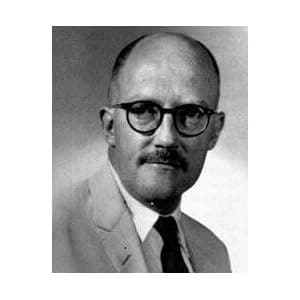
Robert C. O'Brien was an American author known for his contributions to children's literature. His notable works include "Mrs. Frisby and the Rats of NIMH," a story about a field mouse and genetically modified rats, "Z for Zachariah," a post-apocalyptic tale, and "The Silver Crown," which explores themes of adventure and fantasy.
Similar books
- Lord of the Flies
William Golding
3.7 (2.3M) average on GoodreadsYoung AdultExplores the breakdown of civilization and human nature under extreme circumstances.
- The Road
Cormac McCarthy
4.0 (716k) average on GoodreadsScience FictionFeatures a bleak, post-apocalyptic landscape and a focus on survival and human relationships.
- Station Eleven
Emily St. John Mandel
4.0 (322k) average on GoodreadsLiterary FictionExamines the aftermath of a pandemic and the struggle to rebuild society and maintain humanity.
- The Hunger Games
Suzanne Collins
4.3 (6.4M) average on GoodreadsFantasyIn a future where children fight to the death on live television, Katniss Everdeen volunteers for the arena, turning a death sentence into a fight for survival and a spark of rebellion.
- 1984
George Orwell
4.2 (3.1M) average on GoodreadsPoliticsIn a future where surveillance and thought control are absolute, a man's search for truth clashes with the Party, showing that hope can be a form of rebellion.
- Divergent
Veronica Roth
4.2 (2.9M) average on GoodreadsFantasyIn a society divided by virtues, a sixteen-year-old's difference from the norm starts a rebellion that threatens her world.






Enjoyed the summary?
A summary gives you the shape of the book. The book itself has the detail, the examples and the voice.
Find Z for Zachariah on AmazonAs an Amazon Associate, BookBrief earns from qualifying purchases. How we're funded