
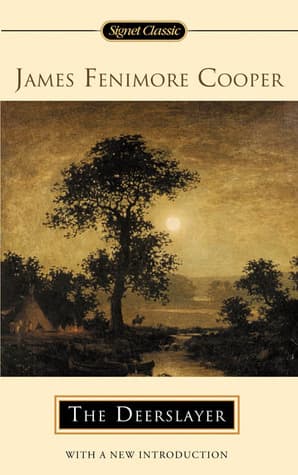
Synopsis
Covers the whole plot, including the ending.
- Difficulty
- Medium
- Pacing
- Slow
- Mood
- Classic, Reflective, Adventurous, Moralistic, Wilderness
- Read it if
- You enjoy classic American literature, tales of frontier life, moral dilemmas, and detailed descriptions of nature. You appreciate a hero of unwavering moral compass.
- Skip it if
- You prefer fast-paced plots, modern prose, or find lengthy descriptions and philosophical digressions tedious.
The Deerslayer Plot Summary
Covers the whole plot, including the ending.
Journey to the Glimmerglass
The story begins with Natty Bumppo, known as Deerslayer, a young white man raised by the Delaware Indians, traveling with the rough frontiersman Henry March, or Hurry Harry, through the forests of colonial New York. They are headed to the Glimmerglass (Lake Otsego), where they plan to meet Hurry Harry's friend, the trapper Tom Hutter, and his two stepdaughters, Judith and Hetty. Hurry Harry wants to hunt beaver and possibly marry Judith, while Deerslayer, true to his upbringing, cares more about the moral implications of their actions and the beauty of the untouched wilderness. Their journey shows the difference between Hurry Harry's materialistic view of nature and Deerslayer's respectful, almost spiritual connection to it, setting the stage for future conflicts.
Meeting Tom Hutter and His Daughters
At the Glimmerglass, Deerslayer and Hurry Harry find Tom Hutter living on a floating dwelling called the 'ark' and a fortified structure known as the 'muskrat castle.' They meet Hutter's stepdaughters, the beautiful, worldly, but morally complex Judith, and the simple, innocent Hetty. Hutter, a former pirate, is a practical and often ruthless individual, driven by self-preservation and profit from hunting and trapping. Hurry Harry is clearly interested in Judith, while Deerslayer navigates the complexities of their unusual domestic situation. The meeting reveals the various moral viewpoints at play, from Hutter's practicality to Hetty's strong faith, and Judith's internal conflict about her past and future.
The First Skirmish and Hutter's Capture
Learning that Mingo (Iroquois) Indians are in the area due to the French and Indian War, Hutter, always opportunistic, decides to try to scalp some of them for the bounty offered by the colonial government. Deerslayer, following his Delaware principles, objects to this practice as dishonorable. Despite his warnings, Hutter and Hurry Harry go out in a canoe, hoping to ambush the Mingoes. Their plan fails, and the Mingoes capture them. This event forces Deerslayer, Judith, and Hetty to retreat to the safety of the muskrat castle, leaving them isolated and vulnerable to the Mingo threat. It also highlights Hutter and Hurry Harry's reckless greed.
Deerslayer's First Kill
After Hutter and Hurry Harry's capture, Deerslayer is alone with Judith and Hetty on the lake. While paddling the ark, a Mingo warrior hidden in a tree ambushes Deerslayer. After a tense standoff and a warning, Deerslayer must shoot the warrior in self-defense, his first time taking a human life. The warrior dies with dignity, and Deerslayer thinks deeply about the act, struggling with the moral implications of killing another man, even for a good reason. This moment solidifies his character as a man of principle who respects life, even that of an enemy, and sets him apart from the more brutal frontiersmen.
Negotiations and Ransom
Deerslayer, showing his understanding of Indian customs, goes to the Mingo camp under a flag of truce to negotiate for Hutter and Hurry Harry's release. He offers to exchange two ivory chess pieces found in Hutter's possessions (which Judith believes belonged to her mother) for the captives. The Mingoes, initially interested in the unusual items, agree to a temporary exchange. This negotiation shows Deerslayer's courage, diplomatic skill, and honorable conduct, contrasting sharply with the Mingoes' cunning and the white men's often treacherous behavior. The truce is fragile, and tension remains high as the exchange is planned.
The Failed Exchange and Hutter's Death
During the prisoner exchange, the Mingoes try to capture Deerslayer and Judith through treachery. In the struggle, a tomahawk thrown by a Mingo mortally wounds Hutter. Deerslayer manages to escape with Judith and Hetty back to the ark, but Hutter dies shortly after. Before his death, Hutter reveals that he is Hetty's biological father, but Judith is not his child, further complicating the girls' parentage and Hutter's mysterious past. Hutter's death removes one of the more morally complex characters and intensifies the conflict, leaving Deerslayer, Judith, and Hetty to face the Mingo threat with one less protector.
Judith's Appeal and the Arrival of Rivenoak
After Hutter's death, Judith, using her beauty and intelligence, tries to negotiate with the Mingoes. She dresses elaborately and tries to appeal to their sense of honor, hoping to secure their safety. During these interactions, the wise Mingo chief, Rivenoak, becomes a significant figure. Rivenoak, though an enemy, is portrayed as a man of honor and intelligence, capable of respecting Deerslayer's virtues even as he seeks to defeat him. His presence raises the conflict from a simple fight for survival to a clash of different moral codes and cultures, with Judith's attempts at diplomacy highlighting her complex character.
Hetty's Folly and Deerslayer's Capture
Hetty, in her simple innocence and strong faith, believes she can reason with the Mingoes and convince them to stop fighting. She goes alone into the Mingo camp, carrying her Bible, hoping to preach peace. While her intentions are pure, her actions accidentally lead to Deerslayer's capture. Deerslayer, seeing Hetty's dangerous situation, tries to rescue her or at least ensure her safety, but in doing so, he is himself taken prisoner by the Mingoes. This event shows Hetty's vulnerability and the impact of her innocence on the narrative, while also putting Deerslayer in the greatest danger yet.
The Torture and Rescue
Deerslayer, now a captive, faces the Mingo gauntlet and torture at the stake. True to his character and Delaware upbringing, he endures the torment with stoicism and courage, refusing to cry out or show weakness. This earns the respect of some of his captors, especially Rivenoak. Just as his ordeal reaches its peak, a colonial military force, led by Captain Warley, arrives on the lake, guided by Hurry Harry and an Indian scout. The soldiers fight the Mingoes in a fierce battle, leading to a dramatic rescue of Deerslayer and the surviving women, bringing a temporary end to the immediate Mingo threat.
Judith's Offer and Deerslayer's Refusal
After the battle and the Mingoes' defeat, Judith, deeply affected by Deerslayer's courage, integrity, and shared experiences, confesses her love for him and proposes marriage. She reveals her past mistakes and hopes for a new life with him. Deerslayer, while acknowledging her beauty and good qualities, gently but firmly refuses. He explains that their paths are too different; her past and desire for a more 'civilized' life conflict with his commitment to the wilderness, his moral principles, and his Indian-trained sense of propriety. This refusal solidifies Deerslayer's identity as a man of the wilderness, unsuited for the complexities of settled society.
Hetty's Fate and Departure
Hetty, wounded during the Mingo attack or simply weakened by the ordeal and her simple nature, dies peacefully shortly after the rescue. Her death is mourned, especially by Deerslayer, who admired her pure heart and strong faith. With the immediate danger passed and Hutter and Hetty gone, the remaining characters prepare to leave the Glimmerglass. Judith, heartbroken by Deerslayer's refusal and with no other ties, decides to join Captain Warley's company, likely to pursue a life in the colonial settlements or even return to England. Deerslayer prepares to return to his life in the wilderness, having faced and overcome significant challenges.
Deerslayer's Return to the Wilderness
Deerslayer, having endured his 'initiation' into human conflict, violence, and the complexities of human relationships, leaves the Glimmerglass. He has killed his first man, faced torture, and navigated the moral ambiguities of both 'civilized' and 'savage' societies. While he has been exposed to the world's temptations and Judith's affections, he remains true to his core values and his identity as a man of the forest. He leaves a more mature, resolute individual, his moral compass strengthened, and his bond with the wilderness reaffirmed. The Glimmerglass, once a pristine paradise, has become a place of personal growth and loss for him.
The Deerslayer Characters
Natty Bumppo (Deerslayer)
Protagonist
A pure-hearted frontiersman raised by Delaware Indians, navigating moral dilemmas in the wilderness.
Deerslayer is a young, skilled hunter and scout, raised among the Delaware Indians, which has instilled in him a strong moral code, respect for nature, and a unique blend of 'savage' wisdom and 'Christian' virtue. He is honest, courageous, and deeply reflective, often pondering the ethics of violence and the differences between white and Indian cultures. He is uncomfortable with deception and the opportunistic greed of many white frontiersmen. His innocence is tested throughout the narrative, particularly when he is forced to take a human life.
Relationships: Hurry Harry (Traveling companion, friend by circumstance, but morally opposed); Tom Hutter (Temporary associate, morally reprehensible to Deerslayer); Judith Hutter (Object of her affection, but he ultimately rejects her for his principles); Hetty Hutter (Protector and admirer, values her innocence); Rivenoak (Respected Mingo adversary)
Judith Hutter
Supporting
Beautiful, intelligent, and morally complex stepdaughter of Tom Hutter.
Judith is striking in her beauty and intelligence, possessing a worldly sophistication that seems out of place in the wilderness. She is aware of her past indiscretions and reputation, which cause her internal conflict and a desire for redemption. She is capable of both vanity and deep affection, showing a strong protective instinct towards Hetty and developing a profound admiration and love for Deerslayer. Her character embodies the tension between refined society and the raw wilderness, and she struggles with her own identity and moral standing.
Relationships: Tom Hutter (Stepfather, with a mysterious and possibly troubled past connection); Hetty Hutter (Half-sister (revealed), fiercely protective of her); Deerslayer (Falls deeply in love with him, but is rejected); Hurry Harry (Object of his unwanted advances); Captain Warley (Potential romantic interest/protector after Deerslayer's refusal)
Hetty Hutter
Supporting
Innocent, simple-minded, and deeply religious daughter of Tom Hutter.
Hetty is characterized by her simple-mindedness, which the novel attributes to a mental disability, and her unwavering, almost childlike faith in God and the Bible. Despite her lack of worldly understanding, she possesses a profound moral purity and an unshakeable belief in goodness. She is gentle, kind, and sees the best in everyone, even her enemies, which often puts her in danger. Her innocence serves as a moral counterpoint to the more complex and often corrupt characters around her, and she acts as a symbol of untainted virtue.
Relationships: Tom Hutter (Biological father); Judith Hutter (Half-sister (revealed), dependent on and protected by her); Deerslayer (Admires and trusts him implicitly)
Henry March (Hurry Harry)
Supporting
Boisterous, opportunistic frontiersman driven by material gain and physical prowess.
Hurry Harry is a large, strong, and boisterous frontiersman, primarily driven by self-interest, the pursuit of beaver pelts, and a desire for women. He represents the more rough-hewn, materialistic, and often morally crude aspect of the frontier white man. He lacks Deerslayer's moral compass and spiritual connection to nature, viewing the wilderness as something to be exploited. While not malicious, he is often reckless and short-sighted, leading to dangerous situations for himself and others.
Relationships: Deerslayer (Traveling companion, often exasperated by Deerslayer's principles); Tom Hutter (Hunting partner and friend); Judith Hutter (Seeks her hand in marriage, but is rejected)
Tom Hutter
Supporting
Ruthless, pragmatic trapper with a mysterious past, living an isolated life.
Tom Hutter is an enigmatic and morally ambiguous character, a trapper living in isolation on the Glimmerglass. He is pragmatic, cunning, and often ruthless, driven by self-preservation and the desire for wealth, even resorting to scalping for bounty. He has a mysterious past, hinted at being a former pirate, and his true relationship with Judith is a source of speculation. He represents the darker, more opportunistic side of the frontier, valuing practical survival over moral principles. His death reveals some of his secrets, but he remains largely a figure of expediency.
Relationships: Deerslayer (Temporary associate, but frequently clashes over moral issues); Hurry Harry (Hunting partner and friend); Judith Hutter (Stepfather, with a complex and possibly strained relationship); Hetty Hutter (Biological father)
Rivenoak
Antagonist/Supporting
Wise and honorable Mingo chief, an intelligent adversary to Deerslayer.
Rivenoak is the Mingo chief who leads the war party threatening the ark. While an antagonist, he is portrayed not as a savage brute but as a wise, experienced, and honorable leader according to his own cultural code. He demonstrates respect for Deerslayer's courage and integrity, even attempting to adopt him into the Mingo tribe. He is cunning in warfare but also capable of adhering to certain principles of fair play and diplomacy, making him a formidable and complex adversary rather than a simple villain.
Relationships: Deerslayer (Respected adversary, attempts to adopt him)
Chingachgook
Mentioned
Deerslayer's absent Delaware friend, a skilled warrior.
Chingachgook is Deerslayer's closest friend and a brave Delaware warrior, though he does not appear physically in this novel. He is frequently mentioned by Deerslayer as a benchmark for honor, skill, and the true values of Indian life. His absence underscores Deerslayer's temporary isolation from his adopted people and highlights the contrast between the virtuous Delaware and the 'wicked' Mingoes. He represents the ideal of the noble savage through Deerslayer's eyes.
Relationships: Deerslayer (Closest friend and moral guide)
Captain Warley
Supporting
British officer who leads the rescue party.
Captain Warley is a British military officer who arrives with his troops to rescue Deerslayer and the women. He represents the formal military presence of 'civilization' in the wilderness. He is a man of duty and order, though perhaps less attuned to the nuances of frontier life than Deerslayer. He offers Judith a path to a more settled life, embodying a different kind of authority and social structure compared to the individualistic frontiersmen.
Relationships: Judith Hutter (Offers her protection and a possible future)
The Deerslayer Themes
The Noble Savage vs. Corrupt Civilization
This theme explores the inherent goodness and moral purity of individuals raised in the natural wilderness (like Deerslayer and, to some extent, the 'good' Indians like Chingachgook and even Rivenoak in his own code) in contrast to the moral decay and greed often found in 'civilized' society. Deerslayer's refusal to scalp, his respect for his Mingo adversary, and his deep connection to the untouched forest highlight his 'noble' qualities. Characters like Tom Hutter and Hurry Harry, who embody the destructive aspects of civilization's intrusion—greed, opportunism, and a disregard for nature—show its corrupting influence. The novel suggests that true virtue is more readily found in the uncorrupted state of nature.
“'I am a man without a cross, and my gifts are white. The Great Spirit has given me a white heart, and I will not do a red man's wickedness.'”
Moral Purity and Experience
The novel is a coming-of-age story for Deerslayer, an 'initiation' into the complexities of human conflict and moral choice. He begins as an untested youth, pure in his principles, but is forced to confront violence, treachery, and temptation. His 'first kill' is a key moment, forcing him to reconcile his peaceful nature with the necessity of self-defense. Despite these experiences, he maintains his moral integrity, refusing to adopt the ruthless ways of other frontiersmen or compromise his values for love or societal acceptance. Hetty's character also embodies moral purity, though her innocence ultimately proves vulnerable in the harsh world.
“'I have done nothing to be ashamed of, nor have I anything to mourn over.'”
The Wilderness as a Moral Landscape
The Glimmerglass and the surrounding forests are not just a setting but an active force that shapes characters and reflects their inner states. For Deerslayer, the wilderness is a sacred space, a source of moral guidance and spiritual connection, where 'God is present.' For Hutter and Hurry Harry, it is a resource to be exploited for profit, leading to conflict and destruction. The lake's pristine beauty contrasts sharply with the violence and moral compromises that occur on its shores. The wilderness acts as a crucible where character is tested and true nature is revealed, often stripping away the pretenses of 'civilization.'
“'The Glimmerglass is a lake that the Lord has made, and not man; and it is a fit place for a man to think of Him.'”
Justice and Law (Natural vs. Human)
The novel explores different forms of justice and law: the natural law of the wilderness, the unwritten codes of honor among Indians, and the formal laws of colonial society. Deerslayer adheres to a natural sense of justice and fair play, guided by his Delaware upbringing, which emphasizes honor in warfare and respect for life. This clashes with Hutter's opportunistic scalping for bounty, which colonial authorities sanction but Deerslayer finds morally wrong. The Mingo chief Rivenoak, despite being an enemy, also operates under a complex code of honor. The narrative questions which 'law' is truly just and whether human-made laws always align with fundamental moral principles.
“'There is a law for the white man and a law for the red man; but there is a law for all, that is the law of God.'”
The Role of Women in the Frontier
The female characters, Judith and Hetty, represent contrasting aspects of womanhood on the frontier. Judith, with her beauty, intelligence, and mysterious past, embodies the complexities and potential moral ambiguities of women who navigate a harsh world. She seeks love and redemption but struggles with her reputation. Hetty, on the other hand, represents pure, uncorrupted innocence and strong faith, often making her vulnerable. Their presence highlights the unique challenges and limited roles for women in this wilderness setting, from being objects of desire to symbols of virtue or vulnerability, and how their choices are shaped by their circumstances.
“'A woman's will is a law to herself, and sometimes to others.'”
Plot Devices & Literary Techniques
The Ark and Muskrat Castle
Floating dwellings providing both sanctuary and isolation.
These two unique structures—a floating house and a fortified hut built on stilts—serve as both a refuge and a trap for the characters. They symbolize humanity's attempt to create a secure, 'civilized' space within the untamed wilderness. While they offer protection from the Mingoes, they also isolate the inhabitants, forcing them to confront their moral choices and the harsh realities of their situation without immediate outside interference. The structures become central to the siege, representing the limited options and vulnerability of the white settlers.
The Glimmerglass
A pristine lake symbolizing unspoiled nature and a testing ground for character.
Lake Otsego, known as the Glimmerglass, is more than just a setting; it is a character in itself. Its pristine, untouched beauty symbolizes the ideal of unspoiled nature and the moral purity that Deerslayer embodies. It acts as a serene backdrop that highlights the violence and moral degradation brought by human conflict. The lake is also a testing ground, reflecting characters' true natures and forcing them to confront their deepest fears and principles. Its eventual 'desecration' by warfare foreshadows the inevitable encroachment of civilization.
The First Kill
A pivotal event marking Deerslayer's loss of innocence and moral awakening.
Deerslayer's act of taking a human life, even in self-defense, is a crucial turning point. It shatters his innocence and forces him to grapple with the moral implications of violence. Unlike other frontiersmen who kill without remorse, Deerslayer reflects deeply on the act, demonstrating his unique moral compass and respect for life. This event solidifies his character as a man of principle who can adapt to the harsh realities of the wilderness without losing his soul, distinguishing him from characters like Hurry Harry and Hutter.
The Ivory Chess Pieces
Mysterious objects hinting at Judith's past and Hutter's secrets.
These finely crafted chess pieces, found among Hutter's possessions, serve as a tangible link to Judith's unknown past and Hutter's mysterious origins. They suggest a connection to a more refined, possibly aristocratic European background, contrasting sharply with their current rustic existence. The pieces become a point of negotiation with the Mingoes, further highlighting their perceived value and the cultural clash. They are a subtle plot device that adds intrigue to the characters' backstories and underscores the theme of hidden identities and the impact of the past.
The Deerslayer Quotes
“Human natur' is a curious thing, and can't be accounted for by all the calculations of a Philadelphia lawyer.”
“There's a time for all things, and a place for all things, and a reason for all things.”
“The gifts of God are not to be despised, and that which comes from His hand is always good, though it may not always seem so to our erring judgments.”
“The law of the wilderness is to do as you would be done by.”
“A man must be a man, and not a woman, or a child, to stand up ag'in the trials of this life.”
“Every man has his gifts, and it's best to use 'em accordin' to the will of Him that gave 'em.”
“The Mingoes are a nation of vipers, and their ways are the ways of the serpent.”
“There's a pleasure in a canoe that no other craft can give.”
“A good name is better than riches, and a clear conscience better than a crown.”
“The creatur' is oncommon for sagacity, and sartinly oncommon for beauty.”
“It's nat'ral for a man to wish to live, and it's nat'ral for him to wish to die in peace.”
“The bullet has its arr'nd, and it will do its work.”
“The great difficulty is to find a path that will lead us to the right place.”
“God made us all, white, red, and black, and He meant us to live in peace and good fellowship.”
“The forest has its own laws, and they are as fixed as the stars.”
Quiz
10 questions on the plot and the characters. Each answer comes with a short explanation.
Question 1
What is Natty Bumppo's primary nickname at the beginning of 'The Deerslayer'?
- Hawkeye
- Deerslayer
- Long Rifle
- Pathfinder
Show answer
B. Deerslayer Natty Bumppo is called Deerslayer for his skill and daring, setting him apart from his peers before he has faced human conflict.
Question 2
Which lake serves as the primary setting for much of the novel's action?
- Lake Ontario
- Lake Champlain
- Otsego Lake (Glimmerglass)
- Lake Erie
Show answer
C. Otsego Lake (Glimmerglass) The story primarily unfolds around Otsego Lake, which is referred to as 'Glimmerglass' by the characters.
Question 3
What significant event marks Deerslayer's first true 'test of human conflict' in the novel?
- His first encounter with Judith Hutter
- Being captured by the Hurons
- Killing his first enemy warrior
- Escaping from Floating Tom Hutter's ark
Show answer
C. Killing his first enemy warrior The synopsis explicitly states that the harsh realities of tribal warfare force him to kill his first foe, marking his initiation into human conflict.
Question 4
Who is the 'ruthless' character often associated with 'civilized' men and their less honorable dealings?
- Chingachgook
- Harry March
- Floating Tom Hutter
- Rivenoak
Show answer
C. Floating Tom Hutter Floating Tom Hutter, along with Harry March, represents the less honorable 'civilized' men, particularly in his scalping and greed.
Question 5
What is the primary moral dilemma Deerslayer faces regarding the Hurons throughout the narrative?
- Whether to convert them to Christianity
- Balancing his 'gifts' as a white man with the Indian code of conduct
- Deciding if he should marry an Indian woman
- Convincing them to ally with the British
Show answer
B. Balancing his 'gifts' as a white man with the Indian code of conduct Deerslayer often reflects on the 'gifts' of different races and strives to act according to his own moral code, which often aligns with a higher standard than either 'civilized' men or the Hurons' tribal customs.
Question 6
Which character represents the 'special danger of a woman's will' that Deerslayer encounters?
- Hetty Hutter
- Judith Hutter
- Wah-ta!-Wah
- Mabel Dunham
Show answer
B. Judith Hutter The synopsis explicitly mentions 'the special danger of a woman's will' as another initiation, referring to Judith Hutter's complex character and her romantic interest in Deerslayer.
Question 7
What is the name of Deerslayer's close Mingo (Mohican) friend?
- Uncas
- Magua
- Chingachgook
- Tamenund
Show answer
C. Chingachgook Chingachgook is Deerslayer's loyal Mohican companion, with whom he shares a deep bond of friendship.
Question 8
Deerslayer faces torture at the stake at the hands of which Native American tribe?
- Mohawks
- Iroquois
- Hurons
- Delawares
Show answer
C. Hurons The synopsis mentions 'tribal warfare' and later, Deerslayer is captured and faces torture by the Hurons.
Question 9
What significant moral transformation does Deerslayer undergo by the end of the novel, as described in the summary?
- His desire for revenge is replaced by forgiveness.
- His reckless spirit is transformed into mature courage and moral certainty.
- He decides to abandon the wilderness for a civilized life.
- He becomes disillusioned with both white and Indian ways of life.
Show answer
B. His reckless spirit is transformed into mature courage and moral certainty. The summary states: 'His reckless spirit transformed into mature courage and moral certainty, the Deerslayer emerges to face life with nobility.'
Question 10
What object does Deerslayer famously refuse to use against a human opponent unless necessary, upholding his moral code?
- A knife in close combat
- His rifle 'Killdeer' from a hidden position
- A tomahawk in a surprise attack
- A scalping knife
Show answer
D. A scalping knife Deerslayer famously refuses to scalp his fallen enemies, viewing it as an act of savagery not befitting his 'gifts' as a white man, even when offered rewards.
The Deerslayer FAQ
What is the central conflict Deerslayer faces regarding violence and warfare?
Deerslayer, raised among the peaceful Mohicans, initially grapples with the morality of taking a human life. His first kill, a Huron warrior, deeply affects him, forcing him to reconcile his peaceful upbringing with the harsh realities of frontier warfare and the necessity of self-preservation in a brutal environment.
Who are the primary antagonists Deerslayer encounters in the story?
The primary antagonists are the Huron warriors, led by figures like Rivenoak, who seek to capture and torture Deerslayer and his companions. Additionally, the 'civilized' but morally ambiguous Tom Hutter and his associate Hurry Harry present a different kind of challenge, embodying greed and a disregard for native rights.
What role does Lake Glimmerglass (Otsego Lake) play in the novel's setting and plot?
Lake Glimmerglass serves as a pristine, isolated sanctuary where much of the early action unfolds, particularly around Tom Hutter's ark and muskrat castle. It symbolizes the untouched wilderness that Deerslayer cherishes, and its isolation allows for intense, contained conflicts and moral reflections away from broader 'civilization.'
How does Hetty Hutter's mental state influence the plot?
Hetty Hutter, described as simple-minded or 'innocent,' often acts as a catalyst for events due to her trusting nature and literal interpretations. Her attempts to negotiate peace with the Hurons, believing in their inherent goodness, inadvertently put herself and others in danger and highlight Deerslayer's protective instincts.
What is the significance of Chingachgook's presence in the narrative?
Chingachgook is Deerslayer's closest friend and a noble Mohican warrior, representing the idealized 'noble savage' archetype. His loyalty, bravery, and tracking skills are vital to their survival, and his quest to rescue his beloved Wah-ta!-Wah provides a parallel storyline of love and commitment.
What subtle hints foreshadow the ruthlessness of 'civilized' men, specifically Tom Hutter?
Early descriptions of Hutter's 'muskrat castle' and his obsessive pursuit of furs, coupled with his willingness to scalp and take risks for profit, subtly reveal his materialistic and morally compromised nature. His past as a pirate, only hinted at, further underscores his disregard for conventional morality.
Are there any symbolic implications behind Deerslayer's chosen weapon, the long rifle?
Deerslayer's long rifle, 'Killdeer,' is not just a tool but a symbol of his skill, precision, and moral code. Unlike the indiscriminate violence of some characters, Deerslayer uses his rifle with deliberate purpose, often only when necessary, reflecting his philosophy of responsible and ethical engagement with the wilderness and its conflicts.
What is the true nature of the 'special danger of a woman's will' that Deerslayer experiences?
This refers primarily to Judith Hutter's complex character. Her beauty, intelligence, and desire for a better life (and perhaps Deerslayer himself) present a moral and emotional challenge that Deerslayer, committed to the wilderness and his own moral purity, finds difficult to navigate. Her past and aspirations represent a 'civilized' entanglement he seeks to avoid.
How does Deerslayer's 'initiation' into human conflict psychologically transform him?
His first kill, though necessary, forces him to confront the moral weight of taking a life, leading to deep introspection rather than desensitization. This experience solidifies his resolve to live by a strict moral code, transforming his youthful daring into a mature, principled courage that guides his subsequent actions and decisions.
Analyze Deerslayer's psychological conflict between his Mohican upbringing and his white heritage.
Deerslayer embodies a synthesis of both worlds, having learned values like honesty and respect for nature from the Mohicans, while retaining an innate sense of justice and individualism. His internal struggle lies in navigating the conflicting moral codes of these two cultures, often finding the 'savage' more honorable than the 'civilized.'
How does fear manifest in the characters, particularly during the torture scenes, and how do they cope?
Fear is a constant undercurrent, especially in the face of torture. Deerslayer confronts it with stoicism and moral fortitude, refusing to betray his principles even under duress. Other characters, like Hurry Harry, show more overt panic, highlighting varying psychological responses to extreme duress and the strength of Deerslayer's inner resolve.
Discuss Judith Hutter's psychological complexity and her motivations.
Judith is a psychologically complex character, torn between her desire for refinement and social acceptance, her love for Deerslayer, and her compromised past. Her actions are driven by a yearning for a life beyond the frontier and a recognition of Deerslayer's moral superiority, which she both admires and struggles to emulate.
Is Deerslayer an idealized, unrealistic character, or does he represent a plausible moral archetype?
Deerslayer is often seen as an idealized character, embodying purity and unwavering moral integrity in a brutal world. While his perfection might seem unrealistic, he can be interpreted as an archetype representing the potential for moral clarity and nobility when one lives in harmony with nature and adheres to a strict personal code.
How does the novel critique or romanticize Native American culture?
The novel both romanticizes and critiques Native American culture. It romanticizes the Mohicans through characters like Chingachgook, portraying them with dignity and noble qualities. However, it also depicts the Hurons as savage and cruel, reflecting prevailing 19th-century attitudes while still acknowledging their own codes of honor and warfare.
What is the ultimate message about the relationship between humanity and the wilderness?
The novel suggests that true moral purity and freedom are found in harmony with the untamed wilderness, which serves as a testing ground for character. It implies that 'civilization' often corrupts, while the natural world can foster integrity, self-reliance, and a deeper understanding of justice, as exemplified by Deerslayer.
Does the novel endorse or condemn the expansion of 'civilization' into the frontier?
The novel largely critiques the negative aspects of 'civilization's' encroachment, showing how it brings greed, moral compromise, and destruction to the pristine wilderness and its native inhabitants. While not explicitly condemning all progress, it mourns the loss of the untouched frontier and the values it represents.
How does Deerslayer's refusal to marry Judith align with his character development?
Deerslayer's refusal to marry Judith, despite his admiration for her, reinforces his commitment to his independent, wilderness-bound life and his moral purity. He recognizes the incompatibility of their worlds and his own unsuitability for a 'civilized' life, choosing instead to remain true to his principles and the freedom of the frontier.
What is the significance of the specific title 'The Deerslayer'?
The title 'The Deerslayer' refers to Natty Bumppo's skill as a hunter, but also symbolically to his 'slaying' of moral ambiguities and his emergence as a clear-sighted, principled individual. It marks his transition from a youth to a man of mature courage and moral certainty, tested by the harsh realities of the frontier.
About the author
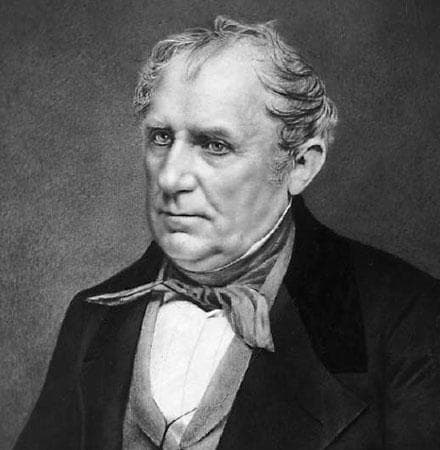
James Fenimore Cooper was an American writer of the first half of the 19th century, whose historical romances depicting colonial and indigenous characters from the 17th to the 19th centuries brought him fame and fortune. He lived much of his boyhood and the last fifteen years of life in Cooperstown, New York, which was founded by his father William Cooper on property that he owned. Cooper became a member of the Episcopal Church shortly before his death and contributed generously to it. He attended Yale University for three years, where he was a member of the Linonian Society.
Similar books
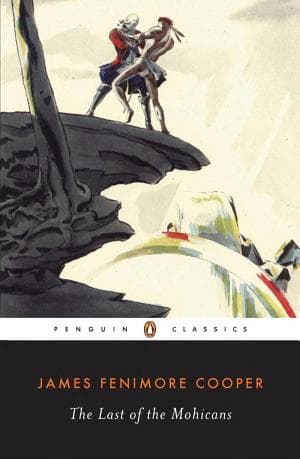
- The Last of the Mohicans
James Fenimore Cooper
3.7 (89k) average on GoodreadsHistorical FictionAnother installment in the Leatherstocking Tales, featuring Natty Bumppo and similar themes of frontier life and Native American interactions.
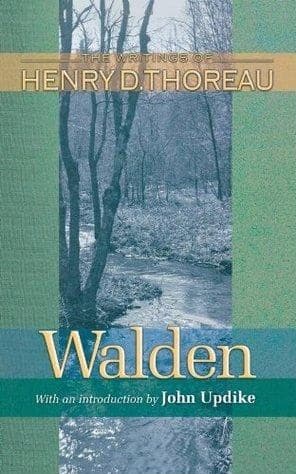
- Walden
Henry David Thoreau
3.8 (158k) average on GoodreadsBiographyExplores themes of wilderness, self-reliance, and philosophical reflection on living simply, though not a narrative fiction.
- To Kill a Mockingbird
Harper Lee
4.3 (4.5M) average on GoodreadsHistorical FictionIn the 1930s Jim Crow South, Harper Lee writes about racial injustice, moral growth, and the quiet courage of a lawyer father, Atticus Finch, as seen through his young daughter's eyes.
- The Great Gatsby
F. Scott Fitzgerald
3.9 (3.8M) average on GoodreadsHistorical FictionIn the opulent Roaring Twenties, a mysterious millionaire's lavish parties hide his desperate, tragic pursuit of a lost love, exposing the emptiness within the American Dream.
- Pride and Prejudice
Jane Austen
4.3 (3M) average on GoodreadsHistorical FictionIn a society focused on status and money, Elizabeth Bennet navigates love and pride, challenging Mr. Darcy and social expectations to find true affection.
- Angels & Demons
Dan Brown
3.9 (2.7M) average on GoodreadsThrillerA Harvard symbologist races through Rome's ancient sites, deciphering cryptic clues to unmask the Illuminati and stop a vengeful plot to destroy the Vatican with a stolen antimatter weapon.




Enjoyed the summary?
A summary gives you the shape of the book. The book itself has the detail, the examples and the voice.
Find The Deerslayer on AmazonAs an Amazon Associate, BookBrief earns from qualifying purchases. How we're funded