

Synopsis
Covers the whole plot, including the ending.
- Difficulty
- Medium
- Pacing
- Moderate
- Mood
- Philosophical, Suspenseful, Reflective, Dark
- Read it if
- You enjoy philosophical parables, moral dilemmas, and exploring the nature of good and evil through a thought-provoking narrative.
- Skip it if
- You prefer fast-paced thrillers or stories with clear-cut heroes and villains, or find extensive philosophical musings tedious.
The Devil and Miss Prym Plot Summary
Covers the whole plot, including the ending.
The Arrival of the Stranger and the Moral Proposition
A stranger, later known as Carlos, arrives in the isolated mountain village of Viscos. His family was murdered by terrorists, and his wife later died by suicide. Carlos now wants to know if people are good or evil. He buries eleven valuable gold bars near the village. He finds Chantal Prym, a young woman working at the local hotel, and tells her his plan: he will give the gold to the villagers if they kill someone within a week. If they refuse, he will take the gold and leave, convinced of humanity's goodness. Chantal is horrified but agrees to keep it secret, becoming part of his experiment.
Chantal's Internal Conflict and the Seed of Doubt
Chantal Prym is deeply troubled by Carlos's idea. She struggles with the ethics of murder but also sees Viscos's poverty and how the gold could change their lives. She imagines the improvements: better buildings, chances for young people, an end to their stagnant life. The stranger, a clever manipulator, suggests that sometimes bad acts can lead to good. Chantal spends her nights in torment, debating the situation's morality and the huge responsibility she has to keep this secret and possibly influence her village's fate.
The Whispers Begin: Chantal's Strategic Leak
Unable to keep the secret and wanting to test the villagers, Chantal subtly shares information. She tells Father Cornelio, the local priest, that a stranger has arrived with a lot of money for the village. She leaves out the murder condition. Her goal is to see how villagers react to the promise of wealth. The news spreads quickly through Viscos. The people, used to hard, routine lives, start dreaming of a better future, already thinking about how to get such wealth.
The Vision of the Saint and the Villagers' Deliberation
Bertha, the oldest woman in the village, has a vision of a saint and says it means good fortune is coming to Viscos. This 'miracle' increases the villagers' hopes for wealth. A public meeting is called to discuss the mysterious donor. At this meeting, Chantal, influenced by the group's excitement and the stranger's subtle hints, finally reveals Carlos's full offer: the gold will be theirs if they commit a murder within seven days. The news shocks the community, turning their joy into horror, disbelief, and a growing temptation.
The Search for a Victim and the Moral Decline
The initial shock turns into a disturbing discussion among the villagers. Led by the practical Mayor and the conflicted Priest, they start to justify the act, debating who would be 'least missed' and whose death would help the most people. They choose Fátima, an old, reclusive shepherd who lives on the village outskirts and is seen as an outcast due to her perceived madness and solitary life. The group decision shows their moral compromise, with each person finding ways to justify their part in the crime for the village's prosperity.
Chantal's Despair and the Attempted Intervention
Chantal feels despair and guilt as she sees the villagers agree to murder Fátima. The reality of their choice crushes her, making her realize how low people can go when tempted by greed. She tries to warn Fátima, running to her secluded hut. But the villagers, expecting this, stop Chantal from reaching Fátima, keeping their plan on track. Chantal faces her role in starting this evil, feeling unable to stop the coming tragedy.
The Night of the Murder and the Aftermath
Under cover of darkness, a group of villagers goes to Fátima's hut to carry out the murder. They hesitate and are afraid. But driven by their agreement and the promise of wealth, they continue. The details of the murder are vague, focusing on the group's guilt rather than individual responsibility. Afterward, a heavy silence falls over Viscos. The villagers are left to deal with their conscience and their actions, their excitement replaced by the chilling reality of what they did for their future.
Carlos's Revelation and Chantal's Defiance
Carlos, believing his experiment proved humanity's evil, prepares to leave Viscos, having gotten his desired result. He confronts Chantal, expecting her to be broken. But Chantal, having seen the act and gone through her own moral struggle, has a final move. She tells Carlos that Fátima was not actually murdered. Chantal, after being stopped from warning Fátima, had convinced the villagers to fake the murder, using a tranquilizer and a staged scene to trick Carlos. This revelation questions Carlos's whole idea.
The Truth About Fátima and the Villagers' Redemption
Chantal leads Carlos to Fátima, who is alive and well, hidden by the villagers after the staged event. The villagers, though they had agreed to the murder, ultimately did not do it. They found a way to deceive the stranger while still claiming the gold. This group deception, born from a desire for wealth but softened by a last-minute refusal to commit real evil, makes Carlos rethink his experiment. He sees that while people can be tempted by greed, they also have compassion and are unwilling to cross the ultimate moral line.
Carlos's Departure and Chantal's Future
Carlos, his view of the world changed, acknowledges human nature's complexity. He leaves the gold to the villagers, understanding that their choice, though morally unclear, was not purely evil. He leaves Viscos, his search for a definite answer unfinished, but with a new appreciation for the grey areas in human morality. Chantal, having navigated this difficult moral situation, becomes stronger. She decides to stay in Viscos, taking on the role of a guide, ready to help her community rebuild and think about the choices they made, forever changed by the devil's visit.
Principal Figures
Chantal Prym
Protagonist
Young, intelligent hotel worker caught in a moral dilemma.
Chantal is a bright, ambitious young woman in her twenties, working at the only hotel in the stagnant village of Viscos. She dreams of leaving the village for a more exciting life in the city, but is bound by a sense of duty to her grandmother. She is initially horrified by Carlos's proposition but is also pragmatic and recognizes the potential for the gold to transform her village. Her internal struggle between personal morality and collective benefit forms the core of the story. She is intelligent, perceptive, and ultimately, possesses a strong moral compass that allows her to devise a clever solution to the dilemma.
Relationships: Carlos (the Stranger) (Confidante and adversary in a moral experiment); Bertha (Grandmother figure, source of comfort and wisdom); Villagers of Viscos (Fellow community members, both tempted and redeemed)
Carlos (the Stranger/the Devil)
Antagonist/Catalyst
Wealthy, vengeful man testing humanity's inherent goodness or evil.
Carlos is a mysterious and wealthy stranger, haunted by a past tragedy where his family was murdered by terrorists, and his wife subsequently committed suicide out of grief. This trauma has driven him to question the fundamental nature of humanity. He arrives in Viscos with eleven gold bars, intending to prove that humans are inherently evil by tempting the villagers into murder. He is manipulative, intelligent, and deeply cynical, believing that all people have a dark side. His role is to act as a catalyst, forcing the villagers and Chantal to confront their own moral boundaries.
Relationships: Chantal Prym (His chosen confidante and the subject of his most intense observations); Villagers of Viscos (The subjects of his moral experiment)
Bertha
Supporting
Elderly, wise woman of Viscos, deeply connected to its history and faith.
Bertha is the oldest woman in Viscos, an esteemed figure known for her wisdom, her deep faith, and her connection to the village's past. She is a spiritual woman who claims to have visions and often speaks in proverbs. Initially, she interprets the stranger's arrival as a sign of impending good fortune, seeing a 'saint' in her dreams. Her faith and age give her a certain authority among the villagers, and her initial 'vision' contributes to the villagers' excitement and eventual rationalization of the gold. She serves as a moral compass, albeit one that is sometimes swayed by the collective desire.
Relationships: Chantal Prym (Grandmother figure to Chantal, offering her advice and comfort); Villagers of Viscos (Respected elder and spiritual guide)
Father Cornelio
Supporting
The conflicted priest of Viscos, struggling with his faith and the villagers' temptation.
Father Cornelio is the village priest, a man dedicated to his flock but also burdened by the responsibility of guiding them through an unprecedented moral crisis. He is initially shocked by Chantal's partial revelation of the gold and later by the full proposition. He struggles deeply with the moral implications of the villagers' decision, torn between his spiritual duties and the pragmatic desire to see his impoverished community thrive. He attempts to guide them towards good but eventually succumbs to the collective will, finding ways to rationalize the unthinkable.
Relationships: Chantal Prym (Confidante of Chantal, receiving the initial leak of information); Villagers of Viscos (Spiritual leader and moral guide)
The Mayor
Supporting
Pragmatic leader of Viscos, prioritizing the village's survival and prosperity.
The Mayor of Viscos is a practical, politically-minded leader primarily concerned with the welfare and survival of his struggling village. He is quick to see the immense potential of the gold to lift Viscos out of poverty and stagnation. He becomes a key figure in rationalizing the murder, using logic and the greater good of the community to justify the heinous act. He represents the pragmatic, often ruthless, side of humanity when faced with a chance for collective prosperity, even at a terrible cost.
Relationships: Villagers of Viscos (Civic leader, responsible for the community's well-being)
Fátima
Mentioned/Symbolic
The reclusive, 'mad' shepherd chosen as the victim.
Fátima is an elderly, reclusive shepherd who lives on the outskirts of Viscos. She is considered an outcast by the villagers, often labeled 'mad' due to her solitary lifestyle and unconventional behavior. She becomes the chosen victim for the proposed murder, precisely because she is perceived as the 'least missed' and her death would cause the least disruption to the community. Her vulnerability and isolation highlight the villagers' descent into calculating cruelty. Her ultimate survival is central to Chantal's defiance and the story's resolution.
Relationships: Villagers of Viscos (An outcast, chosen as a victim)
Achille
Supporting
The local hunter, whose skills are considered for the 'task'.
Achille is the village's most skilled hunter, known for his ability to track and kill animals. When the villagers decide to commit the murder, his name is naturally brought up as the most capable person for the 'task.' He represents the practical, physical aspect of carrying out the act, highlighting how skills can be twisted for nefarious purposes when morality is compromised. His role underscores the villagers' collective decision to delegate the 'dirty work'.
Relationships: Villagers of Viscos (Community member, skilled hunter)
The Old Woman who Speaks to the Stranger
Supporting
A pragmatic villager who engages in a philosophical debate with Carlos.
This unnamed old woman is one of the first villagers Carlos encounters. She engages him in a brief, yet significant, philosophical discussion about good and evil, offering a pragmatic, almost cynical, view of human nature. She believes that people are inherently selfish and will always act in their own interest, a view that initially resonates with Carlos's own convictions. Her early conversation sets the stage for the moral test and provides a glimpse into the villagers' potential for moral compromise.
Relationships: Carlos (the Stranger) (Early philosophical interlocutor)
Themes & Insights
Good vs. Evil and Human Nature
The main theme explores if people are good or evil, or if it's a constant fight between the two. Carlos's experiment aims to answer this, but the villagers' actions and Chantal's trick show a more complex truth. The book suggests that while temptation and greed are strong, there is also a human unwillingness to commit absolute evil, and a capacity for group moral compromise and even redemption. The villagers' choice to stage the murder rather than do it shows this complex balance.
“In the end, everyone is good, just as everyone is evil. It's the choices we make every day that determine which part of us is stronger.”
Temptation and Greed
The eleven gold bars are a huge temptation for the poor villagers of Viscos. The promise of wealth quickly breaks down their moral limits, leading them to consider, and even agree to, murder. This theme explores how money can corrupt individuals and groups, pushing them to justify terrible acts. The idea of a better life, free from hardship, is a strong motivator, showing how fragile morality is when faced with extreme temptation. The book shows how greed can blind people to their actions' results.
“The devil is not a person, but a force that tempts us to stray from the path of good.”
Moral Responsibility and Collective Guilt
The novel looks at individual versus group responsibility. No single villager is solely responsible for deciding to murder Fátima, but they all take part in the discussion and agreement. This creates a sense of shared guilt, where the decision's weight is spread out, making it easier for individuals to justify their part. Chantal, however, feels a deep personal responsibility as the first person told. The villagers' final decision to stage the murder shows a group moral awakening, demonstrating that shared responsibility can also lead to group redemption.
“Evil exists not in what we do, but in what we are capable of doing, and how we justify it.”
The Nature of Choice
The book is a deep look at human choice. Each character, especially Chantal and Carlos, must make hard decisions that show their core beliefs and values. The villagers also face a clear choice between poverty and wealth at the cost of a life. The story emphasizes that true morality comes from choices made when tempted, and that even a 'good' outcome can come from morally unclear choices. Chantal's decision to trick Carlos, for example, is a choice to avoid evil rather than give in to it.
“Every human being has a choice between good and evil. And it is in that choice that we define who we are.”
Isolation and Community
Viscos's isolated setting is important to the story. Its remoteness adds to the villagers' desperation for change and their openness to the stranger's offer. The close-knit community also plays a big role, as decisions are made together, and individuals can be swayed by the group. The isolation makes the moral problem bigger, as the villagers feel their choice will stay within their world, without outside judgment. The community's eventual unity in deception shows both their flaws and their strength.
“In a small village, everyone knows everyone's secrets, and everyone is complicit in everyone's choices.”
Plot Devices & Literary Techniques
The Stranger/Devil Archetype
Carlos embodies the classic 'devil' figure who tempts a community.
Carlos functions as an archetypal 'devil' or tempter. He arrives from outside the community, offers a seemingly irresistible bargain (the gold), and sets a moral challenge that forces the villagers to confront their darkest impulses. His name, 'Carlos,' is a common one, making him seem both ordinary and universally symbolic. He doesn't possess supernatural powers but uses psychological manipulation and a profound understanding of human weakness to achieve his goal. His role is to test humanity's limits, much like the devil in religious parables, making the story a modern morality play.
The Gold Bars
A potent symbol of temptation, wealth, and corruption.
The eleven gold bars are not just a plot device to motivate the villagers; they are a powerful symbol. They represent immense wealth, the promise of a better life, and the ultimate temptation that can corrupt even the most devout. The gold acts as a physical manifestation of the 'devil's bargain,' making the abstract concept of greed tangible. Its presence quickly erodes the villagers' moral scruples, highlighting how easily material desires can override ethical considerations. The gold is the bait, and the murder is the price, illustrating the high cost of unchecked ambition.
The Isolated Village of Viscos
A microcosm for humanity, cut off from external moral influence.
Viscos serves as a symbolic microcosm of humanity. Its isolation means that the moral experiment unfolds without external interference, allowing the characters' true natures to emerge under pressure. The villagers are a small, contained group, making their collective decision-making process more intense and revealing. The poverty of Viscos amplifies the temptation of the gold, making the moral dilemma more acute. The village acts as a stage where universal questions about good and evil are played out, unencumbered by the complexities of a larger society.
The Moral Dilemma/Experiment
A direct challenge to a community's ethical foundations.
Carlos's proposition is a classic moral dilemma presented as an experiment: will a community commit murder for vast wealth? This device is the driving force of the plot, forcing every character to confront their own beliefs about good and evil. It's not just about the outcome (whether they commit the murder) but the process—how they deliberate, rationalize, and ultimately act. The experiment reveals the complexities of human morality, demonstrating that people are not purely good or evil but capable of both, often simultaneously, especially under duress.
Chantal's Deception
A twist that challenges the 'devil's' premise and offers a nuanced resolution.
Chantal's ultimate act of deception, orchestrating the staged murder of Fátima, is a crucial plot device. It serves as a narrative twist that subverts Carlos's entire experiment. Instead of a straightforward choice between good (refusing the gold) and evil (committing murder), Chantal introduces a third, more complex option: appearing to commit evil while secretly upholding a moral boundary. This device allows the story to conclude not with a definitive answer about human nature, but with a nuanced understanding that humans can be cunning, tempted, and flawed, yet still possess a core reluctance to cross the ultimate moral line.
The Devil and Miss Prym Quotes
“The world is changed by your example, not by your opinion.”
“We can never judge the lives of others, because each person knows only their own pain and renunciation.”
“The two hardest tests on the spiritual road are the patience to wait for the right moment and the courage not to be disappointed with what we encounter.”
“A stranger arrives in the village offering gold bars in exchange for a murder, to test if people are inherently good or evil.”
“When you want something, all the universe conspires in helping you to achieve it.”
“People are never satisfied. If they have a little, they want more. If they have a lot, they want still more.”
“The devil isn't the prince of matter; the devil is the arrogance of the spirit, faith without smile, truth that is never seized by doubt.”
“Miss Prym, the young barmaid, becomes the moral compass of the village, torn between the stranger's gold and her conscience.”
“In order to find God, you must first lose everything you have.”
“The only way to deal with an unfree world is to become so absolutely free that your very existence is an act of rebellion.”
“Everyone seems to have a clear idea of how other people should lead their lives, but none about his or her own.”
“The village of Viscos symbolizes the microcosm of humanity, where every person's true nature is revealed under pressure.”
“There is only one thing that makes a dream impossible to achieve: the fear of failure.”
“When we least expect it, life sets us a challenge to test our courage and willingness to change.”
Quiz
10 questions on the plot and the characters. Each answer comes with a short explanation.
Question 1
What does the stranger, Carlos, bring with him to the village of Viscos?
- A suitcase full of money and a mysterious map
- A backpack containing a notebook and eleven gold bars
- A briefcase with legal documents and a single gold coin
- A duffel bag with ancient manuscripts and silver bars
Show answer
B. A backpack containing a notebook and eleven gold bars Carlos arrives in Viscos carrying a backpack that contains a notebook and eleven gold bars, which he buries near the village as part of his moral experiment.
Question 2
What is the stranger's primary goal in coming to Viscos?
- To find a hidden treasure rumored to be in the mountains
- To test whether human beings are essentially good or evil
- To escape his past and start a new life in isolation
- To convert the villagers to a new spiritual belief system
Show answer
B. To test whether human beings are essentially good or evil Carlos is driven by a philosophical quest to determine the fundamental nature of humanity—whether people are inherently good or evil—by setting up a moral challenge for the villagers.
Question 3
Who is the young woman that the stranger befriends in the village?
- Maria, the innkeeper's daughter
- Chantal Prym, a local waitress
- Isabella, the village schoolteacher
- Elena, the mayor's wife
Show answer
B. Chantal Prym, a local waitress Chantal Prym, often referred to as Miss Prym, is the young waitress who becomes Carlos's confidante and is central to the unfolding moral drama in Viscos.
Question 4
What specific challenge does Carlos propose to the villagers?
- To vote on whether to accept him as a new resident
- To commit a murder in exchange for the gold bars
- To donate all their savings to a charitable cause
- To solve a series of riddles to find the hidden gold
Show answer
B. To commit a murder in exchange for the gold bars Carlos offers the eleven gold bars to the village if they agree to kill one of their own, creating a moral dilemma to test their inherent goodness or evil.
Question 5
How does Miss Prym initially react to Carlos's proposal?
- She immediately reports him to the authorities
- She is horrified and tries to convince the villagers to reject it
- She is tempted by the gold and considers the idea
- She ignores him and continues with her daily life
Show answer
C. She is tempted by the gold and considers the idea Miss Prym experiences internal conflict; while repulsed by the idea, she is also drawn to the wealth and freedom the gold could provide, reflecting the book's theme of moral ambiguity.
Question 6
What role does Berta, the oldest woman in Viscos, play in the story?
- She is the village leader who organizes resistance against Carlos
- She serves as a wise figure who understands the true nature of the challenge
- She is Carlos's secret accomplice in burying the gold
- She is the intended victim of the proposed murder
Show answer
B. She serves as a wise figure who understands the true nature of the challenge Berta, with her age and insight, perceives the deeper implications of Carlos's experiment and offers guidance, symbolizing wisdom and moral clarity amidst the villagers' confusion.
Question 7
Why does Carlos choose the village of Viscos for his experiment?
- Because it is isolated and its residents are known for their purity
- Because it is a place where he once lived and wants to test old acquaintances
- Because it is small, forgotten, and represents a microcosm of humanity
- Because it is near a sacred site that he believes influences morality
Show answer
C. Because it is small, forgotten, and represents a microcosm of humanity Viscos is selected for its seclusion and simplicity, making it an ideal setting to observe fundamental human behaviors without external influences, as Carlos seeks universal truths about good and evil.
Question 8
What ultimately happens to the gold bars at the end of the story?
- They are divided equally among all the villagers
- They are left buried as a reminder of the moral lesson
- They are used to fund a new school for the village
- They are taken by Miss Prym, who decides to leave Viscos
Show answer
D. They are taken by Miss Prym, who decides to leave Viscos After the villagers reject the murder proposal, Miss Prym takes the gold bars and leaves Viscos, symbolizing her personal transformation and the choice to pursue a new life.
Question 9
How does the novel illustrate the theme of free will versus determinism?
- By showing that the villagers' actions are predestined by their environment
- Through Carlos's belief that people are inherently evil, leaving no room for choice
- By depicting the characters' struggles to choose between good and evil, emphasizing human agency
- By suggesting that divine intervention guides the outcome of the experiment
Show answer
C. By depicting the characters' struggles to choose between good and evil, emphasizing human agency The book centers on the idea that humans have the capacity to choose between good and evil, as seen in the villagers' deliberations and Miss Prym's final decision, highlighting free will over deterministic forces.
Question 10
What symbolic significance does the number eleven have in the story?
- It represents the eleven commandments given to the villagers
- It corresponds to the eleven years Carlos spent preparing for the experiment
- It signifies the eleven villagers who must agree to the murder
- It mirrors the eleven gold bars, suggesting imperfection or incompleteness in moral judgments
Show answer
D. It mirrors the eleven gold bars, suggesting imperfection or incompleteness in moral judgments The number eleven, being one short of twelve (a number often associated with wholeness), symbolizes the flawed and ambiguous nature of human morality, reflecting the book's exploration of good and evil as not absolute.
The Devil and Miss Prym FAQ
What is 'The Devil and Miss Prym' about?
The novel follows a Stranger who arrives in the isolated mountain village of Viscos with eleven gold bars and a notebook. He challenges the villagers through a young woman named Chantal Prym to commit a murder in exchange for the gold, aiming to test whether humanity is fundamentally good or evil. The story explores the moral decay and internal conflicts that arise as the villagers grapple with this temptation.
Why should I read 'The Devil and Miss Prym'?
This book offers a profound philosophical exploration of human nature, morality, and free will through a gripping allegorical narrative. Coelho blends spirituality with suspense as the villagers' reactions to the Stranger's challenge reveal deep truths about greed, conscience, and societal pressure. It's a thought-provoking read that encourages self-reflection on the choices that define good and evil.
What is the background/setting of 'The Devil and Miss Prym'?
The story is set in Viscos, a small, remote mountain village that has become isolated and economically stagnant over time. This setting symbolizes a microcosm of society, where tradition and simplicity mask underlying tensions. The village's history of violence and its current decline create a backdrop ripe for the Stranger's moral experiment.
What are the most memorable quotes from 'The Devil and Miss Prym'?
Key quotes include: 'Everyone has a personal legend to fulfill,' reflecting Coelho's recurring theme of destiny; 'The devil is not the one who knocks at your door, but the one who makes you open it,' highlighting personal responsibility; and 'Good and evil have the same face; it all depends on when they cross the path of each individual life,' emphasizing moral relativity.
What writing style does Paulo Coelho use in this book?
Coelho employs a parable-like, allegorical style with sparse, poetic prose that blends fantasy, spirituality, and philosophy. The narrative is driven by dialogue and internal monologues, particularly through Chantal Prym's perspective, creating a reflective and suspenseful tone. This style simplifies complex moral questions into an accessible, yet profound story.
What minor details add significant meaning to the story?
The Stranger's notebook, which contains his observations and philosophical musings, symbolizes the recording of human nature's test. The eleven gold bars represent not just wealth but the weight of temptation, with their burial hinting at hidden evils. The village's church bell, which rings at key moments, serves as a moral alarm clock for the characters.
What are some subtle foreshadowing moments in the book?
Early mentions of the village's past violence, such as the legend of a massacre, foreshadow the potential for murder in the present. Chantal's initial curiosity about the Stranger and her outsider status hint at her role as the moral compass. The Stranger's calm demeanor when burying the gold subtly suggests his detached, experimental approach to evil.
What unexpected character connections exist in the novel?
The Stranger is revealed to be a wealthy man who lost his family to violence, connecting his personal trauma to his mission to understand evil. Chantal Prym's desire to escape the village mirrors the Stranger's own search for meaning, creating a parallel between their journeys. The village priest's hidden doubts link to the broader theme of faith versus temptation.
What are the unspoken character motivations in 'The Devil and Miss Prym'?
The Stranger is driven by a deep-seated grief and a need to justify his own suffering by proving humanity's inherent evil. Chantal Prym secretly yearns for validation and a purpose beyond her mundane life, which fuels her initial cooperation with the Stranger. The villagers are motivated by collective greed and fear of poverty, masked by their outward piety.
What psychological complexities do the characters exhibit?
Chantal Prym shows a conflict between her moral integrity and her desperation for change, leading to guilt and introspection. The Stranger displays a cold, analytical detachment that borders on nihilism, yet he harbors emotional vulnerability from his past. The villagers exhibit groupthink, where peer pressure and rationalization allow them to consider murder collectively.
What are the major emotional turning points in the story?
The turning points include: Chantal's realization that the Stranger's challenge is real, sparking her internal moral struggle; the moment the villagers collectively decide to pursue the gold, revealing their corruption; and Chantal's final confrontation with the Stranger, where she chooses goodness and inspires a change in him, leading to redemption.
How do the relationship dynamics evolve between characters?
Chantal and the Stranger's relationship shifts from curiosity to manipulation, then to mutual understanding and eventual redemption. The villagers' dynamics deteriorate from communal harmony to suspicion and mob mentality under the gold's influence. Chantal's isolation from the village grows as she becomes the moral outlier, but she ultimately gains self-respect and influence.
Which parts of the book remain ambiguous or open-ended?
The Stranger's ultimate fate after leaving Viscos is left unclear, leaving readers to ponder whether he finds peace or continues his quest. The long-term impact on the village is ambiguous—whether they truly reform or revert to old ways. The nature of the 'devil' is open to interpretation, as it could symbolize external temptation or internal human flaws.
What are controversial scenes or decisions in the novel?
The villagers' collective agreement to commit murder for the gold is controversial, as it portrays ordinary people as easily corruptible. Chantal's initial willingness to go along with the Stranger's plan raises debates about moral compromise. The Stranger's manipulation of the village sparks ethical questions about whether testing humanity justifies causing harm.
'The Devil and Miss Prym' ending explained: how it ends & what it means
The novel ends with Chantal refusing to participate in the murder, inspiring the Stranger to abandon his experiment and leave the gold behind. This signifies that human choice and goodness can prevail over temptation. The ending emphasizes that evil is not inherent but a choice, and redemption is possible through individual courage and moral action.
What is the significance of the title 'The Devil and Miss Prym'?
The title symbolizes the central conflict between temptation (the 'devil,' represented by the Stranger and the gold) and morality (Miss Prym as the human conscience). It highlights the personal nature of this struggle, with 'Miss Prym' embodying the everyday individual faced with ethical choices. The title suggests that the devil is not an external force but a test within human interactions.
How does Coelho use allegory to convey philosophical themes?
Coelho uses the village of Viscos as an allegory for society, the gold as a symbol of material temptation, and the Stranger as a representation of existential doubt. The moral challenge serves as an allegory for the timeless question of good versus evil, illustrating how external pressures can reveal inner truths. This approach makes abstract philosophical ideas tangible and relatable.
About the author

Paulo Coelho de Souza is a Brazilian lyricist and novelist and a member of the Brazilian Academy of Letters since 2002. His novel The Alchemist became an international best-seller and he has published 30 more books since then.
Similar books
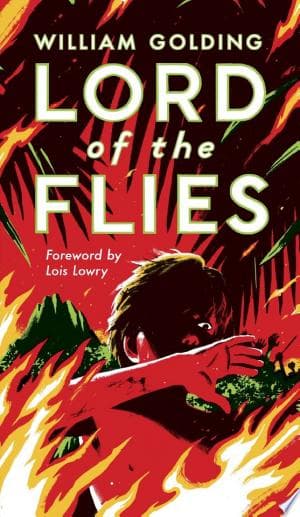
- Lord of the Flies
William Golding
3.7 (2.3M) average on GoodreadsYoung AdultExplores the darker aspects of human nature and societal breakdown under pressure.
- THE ALCHEMIST
Paulo Coelho
3.6 (3k) average on GoodreadsFictionShares Coelho's signature allegorical style and themes of destiny and self-discovery.
- Harry Potter and the Sorcerer's Stone
J.K. Rowling
4.5 (7M) average on GoodreadsFantasyRescued from a miserable life under the stairs, an orphaned boy discovers he's a wizard destined for a magical school, where he uncovers a dangerous secret tied to the dark wizard who murdered his parents.
- The Hunger Games
Suzanne Collins
4.3 (6.4M) average on GoodreadsFantasyIn a future where children fight to the death on live television, Katniss Everdeen volunteers for the arena, turning a death sentence into a fight for survival and a spark of rebellion.
- 1984
George Orwell
4.2 (3.1M) average on GoodreadsPoliticsIn a future where surveillance and thought control are absolute, a man's search for truth clashes with the Party, showing that hope can be a form of rebellion.
- Divergent
Veronica Roth
4.2 (2.9M) average on GoodreadsFantasyIn a society divided by virtues, a sixteen-year-old's difference from the norm starts a rebellion that threatens her world.





Enjoyed the summary?
A summary gives you the shape of the book. The book itself has the detail, the examples and the voice.
Find The Devil and Miss Prym on AmazonAs an Amazon Associate, BookBrief earns from qualifying purchases. How we're funded