
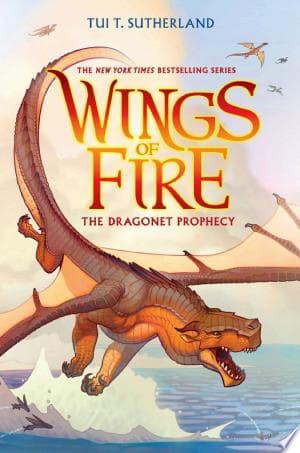
Core Idea
- Difficulty
- Easy
- Read it if
- You enjoy epic fantasy adventures with young protagonists, themes of destiny vs. free will, and a richly imagined world with diverse, warring factions.
- Skip it if
- You prefer adult-oriented fantasy with darker themes, complex political intrigue without a clear 'good vs. evil' dynamic, or are averse to animal-centric narratives.
Key Takeaways from The Dragonet Prophecy (Wings of Fire #1)
Prophecy's Unforeseen Consequences
Even well-intentioned prophecies can unravel when the chosen resist their fate.
The main conflict in 'The Dragonet Prophecy' is not just the war, but the unexpected results of trying to force peace through a rigid plan. The Talons of Peace, believing they are doing good, kidnap and raise five young dragons to fulfill a prophecy. However, their strict, isolated upbringing and denial of the dragonets' individual desires create a volatile situation. The dragonets' escape challenges the Talons' control, showing that even the most carefully made plans, especially those involving thinking beings, are vulnerable to free will and personal longing. This highlights a key theme: true peace cannot be forced; it must be chosen.
“But not every dragonet wants a destiny. And when the select five escape their underground captors to look for their original homes, what has been unleashed on the dragon world may be far more than the revolutionary planners intended . . .”
In the book: The entire premise of the dragonets' escape from the cave, driven by their desire to find their true families and understand their own identities, directly contradicts the Talons' plan for them to simply end the war as pawns.
Try this: When attempting to solve complex problems, especially those involving diverse groups, prioritize understanding individual motivations and fostering genuine buy-in rather than imposing solutions. Top-down, prescriptive approaches often breed resentment and unforeseen resistance.
Related ideas: free-will-vs-destiny, unintended-consequences, prophecy-unraveling
The Weight of Expectation
Being 'chosen' for a grand destiny can be a burden, not a blessing.
The dragonets of destiny are thrust into a major role before they understand what it means to be a dragon. Their existence is defined by the prophecy, making them feel like tools rather than individuals. This immense pressure, along with their lack of control, causes deep resentment and a desire for personal freedom. Clay, the main character, often feels the burden of protecting his friends and fulfilling his role as the 'bigwings,' but even he struggles with the abstract idea of ending a war he barely understands. The book shows how being 'chosen' can take away childhood and individuality, replacing it with an overwhelming sense of responsibility that can be isolating and frightening.
“Five dragonets are collected to fulfill the prophecy, raised in a hidden cave and enlisted, against their will, to end the terrible war.”
In the book: Clay's constant internal struggle to be the 'bigwings' and protect his friends, even when he's unsure of the prophecy's true meaning or his own role within it, exemplifies the burden of expectation.
Try this: Be mindful of the expectations placed on young individuals. While encouragement is good, avoid burdening them with responsibilities or destinies that overshadow their personal development and sense of self. Allow space for self-discovery.
Related ideas: burden-of-destiny, childhood-lost, identity-vs-role
Found Family vs. Biological Ties
The bonds forged in shared adversity can be stronger than blood.
Despite their different personalities and tribal backgrounds, the five dragonets — Clay, Tsunami, Glory, Starflight, and Sunny — form a strong bond during their isolated upbringing. Their shared captivity and desire for freedom create a powerful 'chosen family' dynamic. This bond is so strong that even as they seek their biological families, their loyalty to each other remains most important. The story suggests that shared experiences and mutual support can create a family unit as significant as, or more significant than, one based only on genetics. Their journey to find their original homes is also a journey to understand what 'family' truly means to them.
“The select five escape their underground captors to look for their original homes...”
In the book: The dragonets consistently prioritize each other's safety and well-being during their escape and subsequent adventures, often risking their own lives for their friends, even before they meet any biological relatives.
Try this: Cultivate strong, supportive relationships with those who share your journey and values. Recognize that 'family' extends beyond bloodlines and encompasses those with whom you share deep connections and mutual care.
Related ideas: found-family, chosen-family, bonds-of-adversity
The Dangers of Isolation
Shielding individuals from reality can hinder their growth and understanding.
The Talons of Peace raise the dragonets in complete isolation, shielding them from the outside world and the realities of the war they are meant to end. While this is meant to protect them and focus their training, this isolation severely limits their understanding of the world, other tribes, and even themselves. They grow up with abstract ideas of war and peace, lacking the context and empathy that comes from direct experience. This lack of exposure makes them ill-equipped to navigate the complex political situation they eventually face, showing how an overprotective environment can create more problems than it solves, hindering important developmental understanding.
“raised in a hidden cave and enlisted, against their will, to end the terrible war.”
In the book: The dragonets' initial naivete and shock when they first encounter other dragons and the harsh realities of the outside world, such as the SkyWing arena, directly stems from their sheltered upbringing.
Try this: Encourage exposure to diverse perspectives and real-world challenges (within reason). Over-sheltering can lead to a lack of resilience and understanding, making individuals less prepared to face life's complexities.
Related ideas: sheltered-upbringing, lack-of-context, developmental-stunting
Prejudice and Tribalism
Long-standing conflicts breed ingrained biases that are difficult to overcome.
The war has deeply ingrained prejudice and stereotypes among the dragon tribes. Even the dragonets, despite being raised together, carry subconscious biases about each other's tribes based on stories and limited information. Tsunami, a SeaWing, often views other tribes with suspicion, while Glory, a RainWing, struggles with the perception of her tribe as lazy or useless. The book subtly shows how generations of conflict can solidify harmful generalizations, making it hard for individuals to see past tribal affiliations and recognize shared traits. Overcoming these deep-seated prejudices is a central challenge for the dragonets and the wider world.
“The seven dragon tribes have been at war for generations, locked in an endless battle over an ancient, lost treasure.”
In the book: Tsunami's immediate distrust of any SkyWing she encounters, or Glory's defensiveness about her RainWing heritage, even among her friends, showcases the deep-seated tribal biases.
Try this: Actively challenge your own biases and assumptions about groups of people. Seek out diverse perspectives and engage with individuals to break down stereotypes fostered by historical conflicts or societal narratives.
Related ideas: tribalism, ingrained-bias, overcoming-prejudice
The Flaws of Leadership
Even those striving for peace can make significant strategic and ethical blunders.
The Talons of Peace, though working towards a good goal, are not perfect. Their methods are coercive, involving the kidnapping and manipulation of young dragons. Their strict adherence to a prophecy, without truly understanding its details or the dragonets' individual needs, shows a dangerous inflexibility. Also, the secrecy and questionable ethics of their operation undermine the very peace they seek to achieve. This highlights that good intentions alone are not enough for effective leadership; ethical considerations, adaptability, and respect for individual autonomy are equally, if not more, important. Their 'great sacrifice' seems to be primarily borne by the unwilling dragonets.
“A secret movement called the Talons of Peace is determined to bring an end to the fighting, with the help of a prophecy -- a foretelling that calls for great sacrifice.”
In the book: The Talons' choice to abduct the dragonets, keep them imprisoned, and dictate their future without their consent, despite their stated goal of peace, demonstrates their flawed approach to leadership.
Try this: When in a leadership position, consistently evaluate your methods against your stated goals. Ensure your actions align with ethical principles and consider the impact on all stakeholders, not just the desired outcome.
Related ideas: flawed-leadership, ethical-dilemmas, means-vs-ends
Individual Agency vs. Collective Fate
The struggle between personal desire and a prescribed destiny defines one's journey.
A central tension in the book is the conflict between the dragonets' individual desires and the collective fate forced upon them by the prophecy. Each dragonet has unique dreams and fears: Clay wants his family, Tsunami seeks leadership and understanding of her heritage, Glory wants respect and purpose beyond her perceived uselessness, Starflight wants knowledge, and Sunny wants acceptance. Their escape is a direct assertion of their individual agency, a refusal to be mere pawns in a larger game. This struggle emphasizes that true peace and fulfillment cannot be achieved by sacrificing individual will, but rather by integrating personal aspirations with broader societal needs.
“But not every dragonet wants a destiny.”
In the book: The dragonets' decision to defy the Talons and venture out to find their own families and answers, rather than passively waiting for the prophecy to unfold, is a strong example of individual agency.
Try this: Recognize and respect individual autonomy, even within collective goals. Understand that people are more likely to commit to a cause if they feel their personal desires and contributions are valued and integrated, rather than suppressed.
Related ideas: individual-agency, collective-destiny, personal-freedom
The Power of Storytelling (and Misinformation)
Narratives shape perceptions, influencing both peace and prolonged conflict.
The long-standing war among the dragon tribes is fueled not just by current grievances, but by generations of stories, legends, and misinformation passed down through each tribe. The dragonets themselves have only heard fragmented, often biased, accounts of the war and other tribes. The 'ancient, lost treasure' driving the conflict is itself a story, its true nature perhaps long forgotten or distorted. This highlights how narratives, whether accurate or not, shape collective memory, foster animosity, and perpetuate cycles of violence. Understanding and challenging these established narratives is crucial for breaking free from historical conflicts.
“The seven dragon tribes have been at war for generations, locked in an endless battle over an ancient, lost treasure.”
In the book: The dragonets' limited knowledge of the war, based on what the Talons told them, and their subsequent surprise and confusion when encountering the real world and conflicting accounts, shows the power of controlled narratives.
Try this: Critically evaluate the stories and information you receive, especially those related to historical conflicts or group identities. Seek out multiple perspectives to form a more complete and nuanced understanding.
Related ideas: narrative-power, misinformation, historical-revisionism
The Dragonet Prophecy (Wings of Fire #1) Quotes
“Not all dragons are like that, Sunny. Not all dragons are cruel or want to kill each other.”
“Sometimes the right thing to do is also the hardest.”
“What if the prophecy is wrong? What if we're not the dragons they're looking for?”
“You can't just run away from all your problems. Sometimes you have to face them.”
“I don't want to be a hero. I just want to be safe.”
“Being a queen isn't about being the strongest or the scariest. It's about being the smartest.”
“We're supposed to save the world, not destroy it.”
“There's a whole world out there, waiting for us.”
“Sometimes, the best way to help someone is to let them help themselves.”
“You never know what you can do until you try.”
“Just because someone says you're meant for something doesn't mean you have to be it.”
“The world isn't always fair, but you have to keep trying anyway.”
“We're a team, no matter what happens.”
“It's not about being fearless. It's about facing your fears, even when you're terrified.”
Quiz
10 questions on the main ideas. Each answer comes with a short explanation.
Question 1
Which tribe is Clay, the main protagonist, from?
- SkyWing
- MudWing
- SeaWing
- SandWing
Show answer
B. MudWing Clay is a MudWing, known for his protective nature and fire-resistant scales, a key characteristic of his tribe.
Question 2
What is the name of the secret movement that gathered the dragonets to fulfill the prophecy?
- The Dragon's Alliance
- The Talons of Peace
- The Prophecy Keepers
- The Hidden Guardians
Show answer
B. The Talons of Peace The Talons of Peace are the clandestine organization responsible for finding and raising the dragonets of destiny, hoping to end the war.
Question 3
Which dragonet is believed to be a SeaWing, but is actually a NightWing?
- Tsunami
- Sunny
- Starflight
- Glory
Show answer
C. Starflight Starflight is initially presented as a SeaWing in the prophecy, but is later revealed to be a NightWing, a fact that causes significant tension.
Question 4
What is the primary reason the dragonets decide to escape their hidden cave?
- They want to join the war effort directly.
- They want to find their own families and tribes.
- They are tired of the constant lessons and training.
- They believe the prophecy is a lie.
Show answer
B. They want to find their own families and tribes. Driven by curiosity and a desire to connect with their true heritage, the dragonets make the daring escape to seek out their original homes.
Question 5
Who is the SandWing queen that the prophecy states will be chosen by the dragonets?
- Burn
- Blister
- Blaze
- The prophecy doesn't specify which sister, only that one will be chosen.
Show answer
D. The prophecy doesn't specify which sister, only that one will be chosen. The prophecy explicitly states that 'A SandWing egg of royal kin, will bloom to have the world within,' but does not name which of the three sisters (Burn, Blister, or Blaze) will be chosen, leaving it ambiguous for the dragonets.
Question 6
Which dragonet is initially mistaken for a MudWing, but is actually a RainWing, and experiences identity confusion due to this?
- Clay
- Glory
- Sunny
- Tsunami
Show answer
B. Glory Glory is the RainWing dragonet who replaced the intended SkyWing and is often overlooked and underestimated, leading to her feeling like an outsider among the group.
Question 7
What unique physical characteristic does Clay possess that is common among MudWings and is crucial to his survival at several points?
- He can breathe underwater indefinitely.
- His scales are resistant to fire.
- He has venomous claws.
- He can change the color of his scales.
Show answer
B. His scales are resistant to fire. MudWings are known for their thick, fire-resistant scales, a trait that saves Clay's life when he is exposed to extreme heat or fire.
Question 8
Why is Glory considered an 'extra' or replacement dragonet by the Talons of Peace?
- She was found by accident and brought in.
- The original SkyWing egg was destroyed.
- She volunteered to join the prophecy.
- She was traded for another dragonet.
Show answer
B. The original SkyWing egg was destroyed. Glory was brought in as a last-minute replacement after the original SkyWing egg, intended for the prophecy, was tragically destroyed.
Question 9
What is the primary conflict that the dragonets are prophesied to end?
- A battle against a monstrous sea creature.
- A famine plaguing all the tribes.
- The war between the seven dragon tribes over the SandWing succession.
- A plague causing dragons to lose their powers.
Show answer
C. The war between the seven dragon tribes over the SandWing succession. The core of the prophecy revolves around ending the generations-long war ignited by the dispute over the SandWing throne among the three sisters.
Question 10
After escaping the cave, where do Clay and Tsunami first attempt to go to find their families?
- The SkyWing Palace
- The MudWing Kingdom
- The SeaWing Palace
- The Rainforest Kingdom
Show answer
B. The MudWing Kingdom Clay, driven by his desire to find his siblings, leads the group towards the MudWing Kingdom, which is their first destination after escaping the cave.
The Dragonet Prophecy (Wings of Fire #1) FAQ
What is the main prophecy in The Dragonet Prophecy?
The main prophecy foretells that five young dragonets from different tribes will come together to choose the next queen for the SkyWings, SeaWings, and IceWings, ultimately bringing an end to the long-standing war among the seven dragon tribes.
Who are the five dragonets of destiny?
The five dragonets of destiny are Clay (MudWing), Tsunami (SeaWing), Glory (RainWing), Starflight (NightWing), and Sunny (SandWing). Each represents a different tribe and is central to the prophecy's fulfillment.
Does the prophecy actually work as intended by the Talons of Peace?
While the dragonets do embark on a quest to fulfill their destiny, their journey quickly deviates from the rigid plans of the Talons of Peace. The dragonets frequently make their own choices, leading to unexpected outcomes and challenges that were not part of the original prophecy's design.
What is the 'Scavenger' mentioned in the book?
A 'Scavenger' is the dragon world's term for a human. They are generally viewed as small, weak, and sometimes tasty creatures by dragons, though some dragons, like Clay, show curiosity or even compassion towards them.
How is Wings of Fire different from other middle-grade fantasy series with prophecies?
Wings of Fire distinguishes itself by giving its young protagonists significant agency to question and even defy their predetermined destinies. Unlike many series where prophecies are absolute, here the dragonets' personal desires and moral dilemmas often drive the plot, challenging the very notion of fate.
Why are the seven dragon tribes at war?
The seven dragon tribes have been at war for generations primarily due to a dispute over the SandWing throne, following the death of their queen. This conflict has drawn in other tribes through alliances and ancient rivalries, perpetuating an endless cycle of battle.
What role do the Talons of Peace play in the story?
The Talons of Peace are a secret organization dedicated to ending the war by orchestrating the prophecy. They are responsible for collecting and raising the dragonets, believing that their intervention will bring about lasting peace, though their methods are often questionable.
Is 'The Dragonet Prophecy' suitable for all middle-grade readers?
Yes, 'The Dragonet Prophecy' is generally suitable for middle-grade readers, offering adventure, friendship, and themes of destiny and choice. While it features conflict and some peril, the violence is not overly graphic, making it accessible for its target audience.
How does the book explore themes of identity and belonging?
The book deeply explores themes of identity and belonging as the dragonets, raised in isolation, struggle to understand their true heritage and place in the world. Each dragonet grapples with their tribe's expectations versus their individual personalities, leading to significant personal growth.
About the author
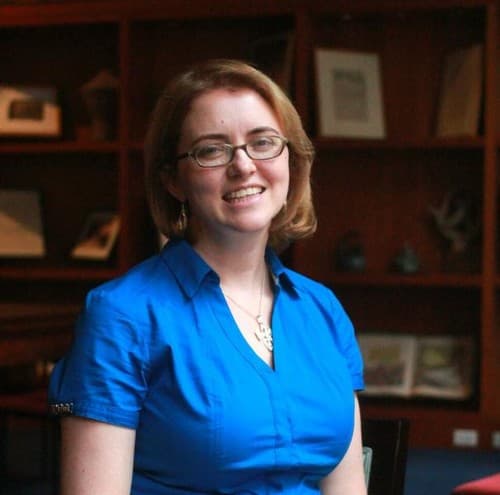
Tui T. Sutherland is an author known for her work in children's literature, particularly in the fantasy genre. She is best known for the "Wings of Fire" series, which includes titles such as "The Dragonet Prophecy," "The Hidden Kingdom," and "Winter Turning." Her stories often explore themes of friendship, courage, and adventure in richly imagined worlds.
Similar books
- The Hobbit, or There and Back Again
J.R.R. Tolkien
4.3 (2.9M) average on GoodreadsFantasyBoth books serve as foundational texts for their respective fantasy series and involve a reluctant protagonist (Bilbo Baggins, Clay) embarking on an unexpected adventure that challenges their preconceived notions of the world. However, The Dragonet Prophecy is distinctly modern in its thematic approach, particularly in its exploration of identity, prejudice, and the subversion of prophecy. Tolkien's The Hobbit, while a timeless classic, operates within a more traditional hero's journey framework and has a more singular focus on Bilbo's growth, whereas Sutherland's narrative juggles five distinct protagonists and their individual and collective struggles with destiny and tribal loyalties. Sutherland's world is also entirely populated by sentient dragons, offering a unique perspective not found in Tolkien's human-centric (albeit creature-filled) Middle-earth.
- The Diary of a Young Girl
Anne Frank
4.2 (2.7M) average on GoodreadsBiographyDuring the Nazi occupation, a teenage girl's diary, written from a secret annex, shares observations on humanity, hope, and the wait for freedom.
- Twisted 1. Twisted love
Ana Huang
3.7 (1.7M) average on GoodreadsA quiet billionaire with a difficult past finds his guarded heart opening to the woman he must protect, but their growing passion uncovers dangerous secrets and a shared, traumatic history.
- Eat, Pray, Love
Elizabeth Gilbert
3.6 (1.5M) average on GoodreadsLifestyleA heartbroken writer leaves her conventional life for a year-long global search for pleasure in Italy, spiritual devotion in India, and unexpected love and balance in Bali.
- Night
Elie Wiesel
4.3 (970k) average on GoodreadsBiographyIn the darkness of Auschwitz and Buchenwald, a teenage Elie Wiesel faces the extermination of his family, the loss of his faith, and the lasting scars of humanity's deepest cruelty.
- Steve Jobs
Walter Isaacson
4.1 (957k) average on GoodreadsBusinessSteve Jobs was a visionary who fused creativity and technology to revolutionize six industries and shape our digital world.






Enjoyed the summary?
A summary gives you the shape of the book. The book itself has the detail, the examples and the voice.
Find The Dragonet Prophecy (Wings of Fire #1) on AmazonAs an Amazon Associate, BookBrief earns from qualifying purchases. How we're funded