
Synopsis
Covers the whole plot, including the ending.
- Difficulty
- Medium
- Pacing
- Moderate
- Mood
- Intimate, Erotic, Claustrophobic, Dreamlike, Melancholy
The Dreamers Plot Summary
Covers the whole plot, including the ending.
The Cinémathèque Obsession
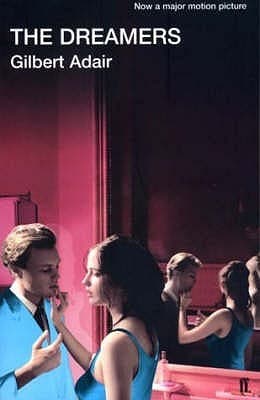
Matthew, an American exchange student, arrives in Paris and quickly becomes involved in the intense, isolated world of French cinema. He often goes to the Cinémathèque Française, where he sees how dedicated film lovers act. There, he meets Théo and Isabelle, twin siblings who have a close bond and a deep love for film. Matthew is an outsider at first, drawn to their knowledge and their shared, intimate life. He observes them, often feeling like he's watching a movie himself, as he navigates the city and the unique film subculture. Their shared passion for cinema starts to create a silent connection between them.
A Shared Passion
Matthew's initial observations lead to a cautious friendship with Théo and Isabelle. They connect over their vast film knowledge, their preferred front-row seats, and their dislike for anyone who doesn't share their strong dedication. The Cinémathèque becomes their refuge, a place where the outside world fades, replaced by the images on screen. Their talks are full of film facts, obscure directors, and passionate discussions about great movies. Matthew finds himself increasingly drawn to the twins' quirks and their deep, almost telepathic understanding of each other. This shared love for film is the basis of their developing, complicated relationship.
The Closure of the Cinémathèque
The peaceful, film-focused life of Matthew, Théo, and Isabelle is suddenly broken by the announcement that the Cinémathèque Française will close. This government decision, supposedly due to administrative changes, angers film lovers and suggests wider political unrest in Paris. For the three, it's a disaster, cutting off their main connection to the world and each other. With their daily ritual gone, they are left without direction. Théo and Isabelle invite Matthew to stay with them in their parents' large Parisian apartment, which is empty while their parents are away. This move is a major turning point, isolating them further from reality.
Withdrawal into the Apartment
With the Cinémathèque closed and the outside world growing more chaotic with student protests, the three withdraw completely into Théo and Isabelle's apartment. The spacious, elegant rooms become their new world, a sealed environment where time and outside events lose meaning. They cut themselves off from news, social interaction, and even daylight, drawing the shutters to create a constant twilight. This deliberate isolation creates an intense atmosphere, where their shared film knowledge and their increasingly strong personal dynamics become their only focus. The apartment becomes a stage for their unfolding drama, a refuge from the encroaching real world.
Cinematic Games and Challenges
To fill their days and keep their connection to cinema alive, Théo and Isabelle start a series of elaborate, often challenging games, all inspired by their vast film knowledge. These challenges range from guessing obscure movie quotes and recreating famous scenes to more personal and daring tasks. Matthew, at first a hesitant participant, is gradually drawn into their complex rules and forfeits. The games replace their lost Cinémathèque experience, allowing them to continue living within film narratives. However, these games become increasingly personal, pushing boundaries and revealing hidden tensions and attractions between them.
Shedding Inhibitions
As the days turn into weeks, the games become more transgressive and sexual. The forfeits for losing grow more personal and humiliating, often involving nudity and sexual acts. The line between role-playing and genuine desire blurs as their inhibitions disappear. Matthew finds himself caught between his initial fascination and a growing unease, yet he cannot resist the pull of the twins' shared world. The apartment becomes a place of radical freedom and experimentation, where conventional morality is suspended. Their bodies become another way to explore cinema, reflecting the uninhibited nature of some of the films they admire.
The Nature of Their Bond
The escalating sexual competition within the apartment shows the deeply intertwined, almost incestuous bond between Théo and Isabelle. Their interactions with Matthew often seem designed to test the limits of their own relationship, to include him in their private world while also reinforcing their unique connection. Matthew becomes both a participant and an observer, a catalyst for their explorations and a mirror reflecting their complex desires. The sexual acts are less about conventional romance and more about a shared psychological and physical exploration, a blurring of identities and desires that challenges social norms and deepens the intensity of their self-imposed isolation.
Growing Discomfort and Reality's Intrusion
Despite the intoxicating nature of their games, Matthew feels occasional unease and a longing for the outside world. The constant darkness, the lack of fresh air, and the relentless intensity of their interactions start to affect him. Subtle sounds from the street below – distant sirens, shouts, the rumbling of protests – sometimes break through their sealed environment, serving as faint reminders of the world they've left behind. These intrusions are initially dismissed, but they slowly chip away at the illusion of their perfect, isolated cinematic paradise. The growing unrest in Paris, at first a distant hum, begins to press in on their self-imposed delusion.
The Breaking Point
The games reach a dramatic climax, pushing the trio's psychological and physical limits. An intense challenge or a series of escalating dares leads to an act that shatters any remaining pretense of innocence or playful experimentation. This breaking point signals an irreversible shift in their dynamic, exposing the raw vulnerability and desperation beneath their cinematic posing. The sexual and emotional intensity becomes too much, creating unbearable tension within the apartment. The line between fantasy and reality, already weak, threatens to completely disappear, leaving them exposed and fragile.
The Outside World Breaks In
The escalating May 1968 student protests, which have been a distant, muffled background to their isolation, finally erupt directly outside their apartment. The sounds of sirens, chanting, and breaking glass become deafening. A brick or a Molotov cocktail shatters their window, violently breaking into their carefully built sanctuary. This sudden, brutal intrusion of the real world into their sealed universe is a shock. The filmic dream they've lived in is shattered, forcing them to confront the socio-political turmoil they had so carefully ignored. The contrast between their intimate, self-absorbed world and the chaos outside is stark and devastating.
Confrontation and Resolution
Stunned and disoriented by the violent intrusion, the trio must acknowledge the reality of the revolution unfolding around them. They look out from their shattered window, seeing the raw, unfiltered chaos of the streets. This sudden, direct exposure to the world outside their cinematic bubble is a deep shock. The film-inspired games and their self-imposed isolation are revealed as a fragile, ultimately unsustainable fantasy. The confrontation with the protests forces them to choose between their dream world and the urgent demands of reality, ending their shared delusion, and perhaps, their unique bond.
Principal Figures
Matthew
Protagonist
The American student drawn into the twins' world.
Matthew is an American exchange student in Paris, a passionate cinephile who initially observes the French film scene from a slight distance. He is intelligent, somewhat shy, and deeply fascinated by the intricate world of cinema. His curiosity and yearning for connection lead him to befriend Théo and Isabelle, becoming the third point in their intense, triangular relationship. He is initially a more passive participant in their games, but gradually sheds his inhibitions, becoming fully immersed in their perverse world. Matthew serves as the reader's entry point into their unique reality, often questioning their actions even as he participates.
Relationships: Théo (Friend, lover, rival); Isabelle (Friend, lover)
Théo
Protagonist
Isabelle's twin brother, a dominant figure in their shared world.
Théo is Isabelle's twin brother, possessing an encyclopedic knowledge of film and a strong, often manipulative personality. He is fiercely protective of his sister and their shared world, which he largely orchestrates. Théo is intelligent, articulate, and deeply entrenched in the cinematic fantasy they create. He is the instigator of many of their increasingly daring games and challenges, pushing boundaries and testing limits. His relationship with Isabelle is deeply intertwined and borders on the incestuous, and he seems to enjoy the power dynamics inherent in their trio, particularly in relation to Matthew.
Relationships: Isabelle (Twin brother, lover, co-conspirator); Matthew (Friend, rival, lover)
Isabelle
Protagonist
Théo's twin sister, equally immersed in their cinematic fantasy.
Isabelle is Théo's twin sister, sharing his profound passion for cinema and an almost telepathic connection with him. She is beautiful, enigmatic, and equally uninhibited in their private world. Isabelle is a willing and enthusiastic participant in their games, often matching Théo's daring and pushing Matthew further into their shared dynamic. While seemingly more yielding than Théo, she possesses a quiet strength and a deep understanding of their unique bond. Her sexuality is fluid and experimental, integral to the perverse eroticism that defines their triangular relationship. She is fiercely loyal to Théo, and their shared history is a powerful force.
Relationships: Théo (Twin sister, lover, co-conspirator); Matthew (Friend, lover)
The Cinémathèque Française
Supporting
The initial sanctuary and catalyst for their bond.
More than just a location, the Cinémathèque Française functions almost as a character in itself. It is the sacred space where Matthew first encounters Théo and Isabelle, and where their shared passion for cinema is cultivated. It represents their initial, pure connection to film and a communal, albeit intense, form of cinephilia. Its sudden closure is the catalyst that forces the trio into their self-imposed isolation, transforming their external obsession into an internal, private world. The Cinémathèque's absence is a constant presence, shaping their subsequent actions and games, which become a desperate attempt to recreate its magic.
The Parents (Théo and Isabelle's)
Supporting
Absent figures whose apartment becomes the trio's sanctuary.
Théo and Isabelle's parents are largely absent figures in the narrative, away on a trip for the duration of the story. Their absence is crucial, as it provides the empty apartment that becomes the hermetically sealed world for the trio. They represent the conventional adult world and societal norms from which the protagonists are deliberately escaping. Their affluence and the grandeur of their apartment create the perfect, luxurious cage for the twins and Matthew. Their distant presence serves to highlight the extreme freedom and lack of supervision enjoyed by the young protagonists, enabling their radical experimentation.
The May '68 Protesters
Supporting
The external force of reality that shatters their isolation.
The student protesters of May 1968 represent the external reality that the three protagonists are actively trying to ignore and escape. Initially, their actions are a distant rumble, a background noise to the trio's cinematic games. However, as the political unrest in Paris intensifies, the protesters become an increasingly powerful and unavoidable force. They symbolize social and political engagement, a stark contrast to the trio's self-absorbed retreat into fantasy. Their violent intrusion into the apartment at the climax of the novel serves as the ultimate breaking point, forcing the protagonists to confront the world they had so meticulously shut out.
Themes & Insights
Escapism and Reality
The novel explores the human desire to escape reality through art, especially cinema. The characters first find comfort and identity in the Cinémathèque, and when it's gone, they create an even more elaborate, isolated fantasy in their apartment. This theme highlights the appeal of creating one's own world, free from the demands of the external, socio-political reality. The tragic ending shows that complete escapism is impossible, as the real world inevitably breaks in, often violently, to shatter the illusion.
“The world outside their shuttered apartment succeeds at last in encroaching on their delirium.”
The Power of Cinema
Cinema is not just a setting but a core part of the characters' lives and identities. It provides their language, their shared history, their games, and their way of seeing the world. The novel shows how film can shape perception, influence behavior, and even dictate personal relationships. The characters' obsession with films allows them to live through cinematic narratives, blurring the lines between their own lives and the stories on screen. It is both a source of deep connection and a dangerous tool for self-deception.
“Night after night, they take their place beside their fellow cinephiles in the very front row of the stalls and feast insatiably off the images that flicker across the vast white screen.”
Sexual Awakening and Transgression
The novel examines the complexities of sexual awakening and the breaking of social rules within a closed environment. The triangular relationship between Matthew, Théo, and Isabelle involves perverse eroticism, hints of incest, and a radical loss of inhibitions. Their sexual experimentation is tied to their cinematic games, blurring the lines between performance and genuine desire. This theme explores the liberating yet potentially destructive nature of unrestrained sexual freedom when separated from external moral frameworks, highlighting the raw and often confusing aspects of developing sexuality.
“A vertiginous free fall interrupted only, and tragically, when the real world outside their shuttered apartment succeeds at last in encroaching on their delirium.”
Identity and Performance
The characters, especially Théo and Isabelle, constantly act out roles, inspired by the films they love. Their interactions, games, and even their sexual encounters often feel like carefully staged scenes from a movie. This theme questions the authenticity of identity, suggesting that in a media-filled world, people might build their selves through imitation and performance. Matthew, too, is drawn into this theatrical life, struggling to tell where the performance ends and real emotion begins. The apartment is a stage where identities are fluid and constantly re-negotiated.
“They had learned to speak in the language of cinema, their lives a perpetual homage to the silver screen.”
The Nature of Obsession
Obsession drives the novel, first seen in the characters' strong love for cinema and then in their increasingly intense private games. The closing of the Cinémathèque does not lessen their obsession; instead, it turns it inward, creating an intense environment where their desires and fixations grow unchecked. This theme explores the consuming nature of obsession, how it can both unite people and isolate them from the wider world. It also highlights the fine line between passionate dedication and destructive fixation, especially when not checked by outside influences.
“They think only of immersing themselves in another, addictive form of hibernation: moviegoing at the Cinémathèque Française.”
Plot Devices & Literary Techniques
The Hermetically Sealed Apartment
A physical and psychological cage.
The apartment serves as a crucial plot device, acting as both a sanctuary and a prison. Its physical isolation, with drawn shutters and lack of external communication, mirrors the psychological isolation of the characters. It enables their extreme experimentation and the breakdown of social norms, creating a hothouse environment where their desires and games can escalate without external judgment. The apartment's eventual breach by the outside world is the ultimate symbol of reality's inevitable intrusion, marking the tragic end of their self-made fantasy.
Cinematic Allusions and Games
Structuring their reality through film.
The constant allusions to classic films and the games based on cinematic knowledge are central to the narrative. They provide the framework for the characters' interactions, dictate their challenges, and blur the lines between their lives and the movies they idolize. This device allows the author to comment on the power of film to shape perception and identity, while also propelling the plot forward through escalating dares and forfeits. The games evolve from playful trivia to deeply personal and sexually charged enactments, mirroring the characters' increasing loss of inhibition.
May 1968 Protests
The external force of historical reality.
The historical backdrop of the May 1968 student protests in Paris functions as a powerful plot device, serving as a constant, looming threat to the characters' insular world. Initially a distant hum, the protests gradually intensify, symbolizing the inescapable reality and social responsibility that the protagonists are actively avoiding. Their eventual violent intrusion into the apartment provides the dramatic climax, forcing the characters to confront the world they had so carefully shut out. This device grounds the fantastical elements of the story in a specific historical context, highlighting the contrast between personal escapism and collective upheaval.
The Twin Dynamic
A pre-existing, intense bond.
The fact that Théo and Isabelle are twins is a crucial plot device, establishing a pre-existing, almost impenetrable bond that Matthew struggles to understand and penetrate. This twin dynamic creates a sense of exclusivity and shared history that shapes their interactions with each other and with Matthew. It also provides a natural foundation for the incestuous undertones and the blurring of individual identities within their relationship. Their telepathic understanding and shared world are amplified by their twin status, making their bond both fascinating and formidable.
Quiz
10 questions on the plot and the characters. Each answer comes with a short explanation.
Question 1
What city is the novel 'The Dreamers' set in?
- London
- New York
- Paris
- Rome
Show answer
C. Paris The novel is explicitly stated to be set in Paris.
Question 2
In what year is the novel set?
- 1958
- 1968
- 1978
- 1988
Show answer
B. 1968 The text mentions the setting as 'the spring of 1968'.
Question 3
Who are the three main characters introduced in the synopsis?
- Théo, Isabelle, and Pierre
- Théo, Isabelle, and Matthew
- Isabelle, Matthew, and Chloe
- Théo, Chloe, and Matthew
Show answer
B. Théo, Isabelle, and Matthew The synopsis names the three central characters as Théo, his twin sister Isabelle, and Matthew.
Question 4
What is the primary obsession of the main characters at the beginning of the novel?
- Political activism
- Studying abroad
- Moviegoing at the Cinémathèque Française
- Writing a novel
Show answer
C. Moviegoing at the Cinémathèque Française The characters 'think only of immersing themselves in another, addictive form of hibernation: moviegoing at the Cinémathèque Française.'
Question 5
What event causes the main characters to withdraw into their own world?
- A protest in the streets
- The closure of the Cinémathèque Française
- A personal tragedy
- An academic failure
Show answer
B. The closure of the Cinémathèque Française They are 'Denied their nightly 'fix' when the French government suddenly orders the Cinémathèque's closure', which leads to their withdrawal.
Question 6
The synopsis describes the characters' self-created world as a 'hermetically sealed' and 'airless universe' characterized by obsessive private games, ordeals, humiliations, and sexual jousting. What does this suggest about their state?
- They are finding healthy coping mechanisms for stress.
- They are experiencing a form of escapism that becomes destructive.
- They are engaging in avant-garde artistic expression.
- They are preparing for a significant social revolution.
Show answer
B. They are experiencing a form of escapism that becomes destructive. The description implies a retreat from reality that is intense and potentially unhealthy, leading to a 'vertiginous free fall'.
Question 7
The novel is compared to works in the 'romantic French tradition of Les Enfants Terribles and Le Grand Meaulnes'. What does this comparison imply about 'The Dreamers'?
- It is a political manifesto.
- It explores themes of youthful passion, obsession, and a sense of loss or disillusionment.
- It is a historical account of the May 1968 events.
- It is a straightforward coming-of-age story.
Show answer
B. It explores themes of youthful passion, obsession, and a sense of loss or disillusionment. Both 'Les Enfants Terribles' and 'Le Grand Meaulnes' are known for their exploration of intense, often destructive youthful relationships and obsessions, fitting the tone described in the synopsis.
Question 8
The synopsis mentions that the characters' 'delirium' is interrupted 'tragically' when the 'real world outside their shuttered apartment succeeds at last in encroaching'. What does this suggest about the novel's ending?
- The characters successfully integrate back into society.
- Their isolation leads to a devastating and unfortunate conclusion.
- They find a way to merge their inner world with the external reality.
- The political events of 1968 finally consume them.
Show answer
B. Their isolation leads to a devastating and unfortunate conclusion. The use of 'tragically' and the 'encroaching' real world implies that the characters' retreat ends in a negative and unfortunate manner.
Question 9
The novel is described as 'brilliant in its narrative invention and startling in its imagery'. Which of the following is NOT explicitly mentioned as a characteristic of the story's focus?
- A study of a triangular relationship
- Perverse eroticism
- The social and political upheaval of Paris in 1968
- A bruised purity
Show answer
C. The social and political upheaval of Paris in 1968 While the novel is set during the 1968 events, the synopsis focuses on the characters' personal, internal world and relationships, not the broader political upheaval itself as a primary narrative element.
Question 10
The synopsis states that 'The Dreamers' resembles 'no other work in recent British fiction'. What does this imply about the novel's style or content?
- It is a conventional and predictable story.
- It is highly experimental and unique within its national literary context.
- It lacks the artistic merit of other British novels.
- It is heavily influenced by American literary trends.
Show answer
B. It is highly experimental and unique within its national literary context. Stating it resembles 'no other work in recent British fiction' suggests its distinctiveness and likely unconventional nature compared to its contemporaries.
The Dreamers FAQ
What is the setting of 'The Dreamers'?
'The Dreamers' is set in Paris during the spring of 1968. The city is experiencing a period of social and political change, but the main characters are more focused on their passion for cinema.
Who are the main characters in 'The Dreamers'?
The central characters are Théo and his twin sister Isabelle, along with Matthew, an American student they befriend. Their lives become increasingly intertwined.
What is the central conflict or plot driver in 'The Dreamers'?
The main plot driver is the closure of the Cinémathèque Française, which deprives the characters of their beloved moviegoing ritual. This leads them to retreat into a private, self-created world.
What kind of world do Théo, Isabelle, and Matthew create for themselves?
They create a hermetically sealed world filled with obsessive private games, ordeals, and sexual exploration. This world becomes increasingly detached from reality.
What themes are explored in 'The Dreamers'?
The novel explores themes of obsession, escapism, identity, sexuality, and the blurring lines between fantasy and reality. It also touches on the spirit of rebellion in 1968 Paris.
Is 'The Dreamers' based on a true story?
While set against the backdrop of real historical events in Paris, 'The Dreamers' is a fictional novel. It draws inspiration from the atmosphere and spirit of that time.
What is the tone and style of 'The Dreamers'?
The novel is known for its romantic and lyrical style, with vivid imagery and a focus on intense psychological and emotional states. It has been compared to French literary traditions.
Who directed the film adaptation of 'The Dreamers'?
The film adaptation of 'The Dreamers' was directed by the acclaimed filmmaker Bernardo Bertolucci.
What is the significance of the Cinémathèque Française in the novel?
The Cinémathèque Française serves as a sanctuary and a catalyst for the characters' obsession with cinema. Its closure forces them to confront their isolation and create their own reality.
How does 'The Dreamers' compare to other works by Gilbert Adair?
As one of his notable works, 'The Dreamers' is often highlighted for its unique blend of youthful obsession, artistic immersion, and psychological intensity, characteristic of Adair's literary style.
Similar books
- The Unbearable Lightness of Being
Milan Kundera
4.1 (342k) average on GoodreadsLiterary FictionBoth "The Dreamers" and Kundera's masterpiece explore the intersection of personal lives with significant historical events (May '68 vs. the Prague Spring). While Adair focuses on a youthful, cinematic escapism, Kundera delves into philosophical questions of freedom, fate, and commitment. Adair's characters are more isolated in their intellectual bubble, whereas Kundera's are more overtly grappling with the political and existential weight of their circumstances, though both skillfully intertwine the erotic with the intellectual.
- Austerlitz
W.G. Sebald
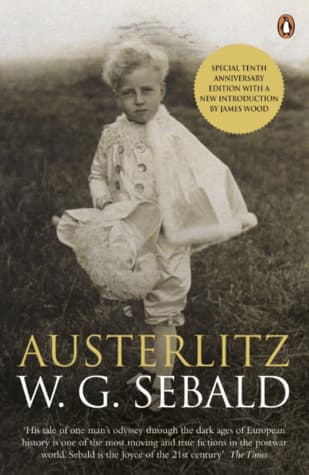
4.0 (14k) average on GoodreadsHistorical FictionWhile stylistically very different, both Adair and Sebald utilize a deep engagement with cultural history (film for Adair, architecture and photography for Sebald) to explore themes of memory, identity, and the lingering presence of the past. Sebald's work is more melancholic and fragmented, a quest for understanding a traumatic past, whereas Adair uses historical context as a stage for youthful rebellion and the exploration of a specific cultural moment, though both share a profound intellectual curiosity and a rich, evocative prose style.
- To Kill a Mockingbird
Harper Lee
4.3 (4.5M) average on GoodreadsHistorical FictionIn the 1930s Jim Crow South, Harper Lee writes about racial injustice, moral growth, and the quiet courage of a lawyer father, Atticus Finch, as seen through his young daughter's eyes.
- The Great Gatsby
F. Scott Fitzgerald
3.9 (3.8M) average on GoodreadsHistorical FictionIn the opulent Roaring Twenties, a mysterious millionaire's lavish parties hide his desperate, tragic pursuit of a lost love, exposing the emptiness within the American Dream.
- Pride and Prejudice
Jane Austen
4.3 (3M) average on GoodreadsHistorical FictionIn a society focused on status and money, Elizabeth Bennet navigates love and pride, challenging Mr. Darcy and social expectations to find true affection.
- Angels & Demons
Dan Brown
3.9 (2.7M) average on GoodreadsThrillerA Harvard symbologist races through Rome's ancient sites, deciphering cryptic clues to unmask the Illuminati and stop a vengeful plot to destroy the Vatican with a stolen antimatter weapon.





Enjoyed the summary?
A summary gives you the shape of the book. The book itself has the detail, the examples and the voice.
Find The Dreamers on AmazonAs an Amazon Associate, BookBrief earns from qualifying purchases. How we're funded