
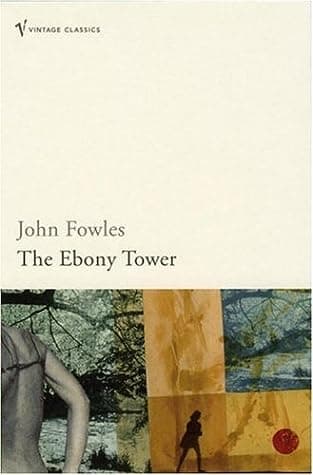
Synopsis
Covers the whole plot, including the ending.
- Difficulty
- Medium
- Pacing
- Slow
- Mood
- Introspective, Philosophical, Intense, Subtle
- Read it if
- You enjoy deep psychological exploration of characters and themes of art, freedom, and societal conventions.
- Skip it if
- You prefer fast-paced plots or clear, satisfying resolutions.
The Ebony Tower Plot Summary
Covers the whole plot, including the ending.
The Visit to Coët
David Williams, a thirty-two-year-old abstract painter and critic, travels to Coët in rural Brittany to meet the celebrated eighty-year-old artist, Henry Breasley. David admires Breasley's early realist landscapes. Breasley, living in self-imposed exile for decades, is known for his unconventional life and strong opinions on modern art. David anticipates the meeting with nervousness, aware of Breasley's reputation and his dislike for much of the contemporary art world. He arrives at Breasley's isolated estate, which appears both beautiful and out of time, setting the stage for an encounter that will challenge David's artistic and personal beliefs.
Introduction to the 'Girls'
At Coët, David meets the two young women who live with Breasley: Diana, 'the Mouse,' and Anne, 'the Freak.' Diana, beautiful and gentle, is Breasley's main companion and caretaker. Anne, more striking and unconventional, is an artist and Breasley's apprentice and model. David notices the unusual dynamic between the elderly artist and these two young women, sensing affection, dependence, and perhaps more. Their presence adds intrigue to the isolated home, hinting at Breasley's unconventional life and relationships.
Breasley's Philosophy on Art and Life
Over the next few days, Breasley engages David in long, often confrontational, discussions about art, life, and modern times. Breasley supports a traditional, representational approach to art, emphasizing beauty, skill, and accurate depiction of nature. He criticizes abstract art and much of the modern movement, seeing it as a betrayal of true artistic principles and a sign of societal decline. David, an abstract painter, finds his own beliefs challenged. While he defends his position, Breasley's passionate arguments and strong personality create an internal struggle for David, forcing him to rethink his own artistic philosophy and career.
The Ebony Tower Metaphor
During one intense conversation, Breasley introduces the 'Ebony Tower' metaphor. He describes it as a dark, sterile, isolated place where modern abstract artists live, cut off from the vibrant, sensual reality of the world and true artistic inspiration. For Breasley, this tower represents the intellectual, self-referential nature of abstract art, which he believes has lost touch with beauty, emotion, and the human condition. He contrasts this with his 'green world' of nature, sensuality, and traditional art values. This metaphor deeply affects David, echoing his own unspoken doubts about his abstract work's relevance, making him wonder if he too is trapped in such a tower.
Growing Attraction to Diana
As David spends more time at Coët, he feels increasingly attracted to Diana, 'the Mouse.' Her quiet grace, natural beauty, and gentle manner captivate him. He observes her interactions with Breasley, noting their tenderness and dependence, which complicates his feelings. David sees Diana as a symbol of the natural, pure beauty Breasley values, and which David feels is missing from his own life and art. His attraction is not just physical; it comes from a deeper longing for a connection to the 'green world' Diana seems to embody, contrasting sharply with his intellectual life as an abstract artist.
Anne's Perspective and Breasley's Control
Anne, 'the Freak,' offers David a different view of life at Coët. More outspoken and less submissive than Diana, Anne hints at the psychological complexities and manipulation in Breasley's home. She reveals that she and Diana are essentially captives in Breasley's 'green world,' dependent on him and isolated. Anne expresses her artistic frustrations and desire for independence, contrasting with Diana's more accepting nature. Her insights make David realize that Breasley's idyllic retreat also has a darker side, where his strong personality and traditional views control the young women, potentially hindering their development.
The Offer of a Green World
Breasley, observant of human nature, notices David's growing attraction to Diana. Instead of jealousy, he subtly encourages it, as if testing David or offering him a choice. He suggests David could stay at Coët, implying he could join their unconventional household and potentially form a relationship with Diana, embracing Breasley's 'green world.' This offer presents David with a profound dilemma: abandon his established life and artistic path for a radically different existence, one that promises a deeper connection to nature and sensuality, but also challenges his identity as an abstract artist and his commitment to his wife, Beth.
David's Internal Conflict
David's internal conflict grows. He is tempted by a life with Diana, drawn to her innocence, beauty, and the promise of a more authentic, sensual existence away from the intellectual demands of his abstract art. The 'green world' of Coët, with its apparent freedom and connection to fundamental human experiences, seems to offer a deep escape. However, he is also tied to his marriage to Beth and his career as an abstract painter. He questions if he can truly abandon his identity and responsibilities, or if this temptation is just a fleeting fantasy. The choice represents a fundamental fork in his life's path, forcing him to confront his deepest desires and fears.
The Failed Seduction and David's Departure
Driven by his desire and Breasley's perceived encouragement, David tries to seduce Diana. However, Diana, despite her apparent affection for David, rejects his advances, stating she loves Breasley and is committed to him. This rejection leaves David confused and disappointed. He realizes the depth of Diana's loyalty to Breasley and the true nature of their unique bond, which he had perhaps misunderstood. Humiliated and with his internal conflict unresolved, David abruptly decides to leave Coët. His visit ends in emotional turmoil and artistic uncertainty, leaving him to consider his choices and his path.
Return to the Ebony Tower
David returns to his life in London, to his abstract painting, and to his wife, Beth. The experience at Coët, however, has deeply affected him. He cannot fully shake off Breasley's arguments or the allure of Diana and the 'green world.' He has lingering doubts about his own art, questioning if he is trapped in an 'Ebony Tower' of his own making. The visit has opened a chasm of uncertainty, forcing him to confront the potential sterility of his intellectual life and the possibility of a different, more sensual and connected life he chose to leave behind. His return is not a resolution, but a continuation of his internal struggle.
The Ebony Tower Characters
David Williams
Protagonist
A young abstract painter and art critic grappling with his artistic identity and personal desires.
David Williams is a thirty-two-year-old abstract artist and critic, intellectually sharp but somewhat detached from raw emotion. He represents the modern art world, valuing intellectualism and theory over traditional beauty and sensuality. Initially confident in his artistic path, his encounter with Breasley and the 'green world' of Coët profoundly challenges his convictions. He is married to Beth but finds himself deeply attracted to Diana, symbolizing a yearning for a more natural, uninhibited existence.
Relationships: Henry Breasley (Admirer and intellectual challenger, later a source of deep conflict.); Diana (the Mouse) (Object of intense romantic and existential attraction.); Anne (the Freak) (Confidante and source of alternative perspective on Breasley's household.); Beth (His wife, representing his established life and responsibilities.)
Henry Breasley
Antagonist/Mentor
An eighty-year-old reclusive painter, a formidable figure who champions traditional art and a sensual life.
Henry Breasley is a legendary, reclusive artist, eighty years old and living in self-imposed exile in Brittany. He is a powerful, charismatic, and often tyrannical figure, fiercely devoted to traditional, representational art and a life lived in harmony with nature and sensuality. Breasley despises modern abstract art, viewing it as sterile and divorced from true beauty. He is a master manipulator, holding court over his two young female companions, Diana and Anne, and uses his wisdom and experience to challenge David's worldview, acting as both a mentor and an antagonist.
Relationships: David Williams (Intellectual opponent and a young man he subtly tries to convert to his worldview.); Diana (the Mouse) (Companion, muse, and emotional anchor, whom he deeply loves and controls.); Anne (the Freak) (Apprentice, model, and companion, who he also controls but with whom he has a more complex, challenging dynamic.)
Diana (the Mouse)
Supporting
A beautiful, innocent young woman living with Breasley, embodying natural beauty and loyalty.
Diana, nicknamed 'the Mouse' by Breasley, is a beautiful, gentle, and quiet young woman who lives with Breasley at Coët. She serves as his companion, caretaker, and muse, embodying the natural beauty and innocence that Breasley so cherishes. She is deeply loyal and devoted to Breasley, seemingly content in her 'green world' existence. Her quiet demeanor belies a strong internal resolve, particularly in her commitment to Breasley, which ultimately thwarts David's advances. She represents the allure of a simple, sensual life, unburdened by intellectual complexity.
Relationships: Henry Breasley (Deeply devoted companion, caretaker, and object of his affection and control.); David Williams (Object of his attraction, but she ultimately rejects him out of loyalty to Breasley.); Anne (the Freak) (Fellow companion in Breasley's household, with a contrasting personality.)
Anne (the Freak)
Supporting
A striking, independent young artist and companion to Breasley, offering an alternative perspective.
Anne, nicknamed 'the Freak' by Breasley, is a more striking, unconventional, and outspoken young woman than Diana. She is also an artist, serving as Breasley's apprentice and model, but she harbors a stronger desire for independence and a more critical view of their secluded life. She provides David with a glimpse into the more complex, potentially manipulative aspects of Breasley's control, contrasting with Diana's more placid acceptance. Anne represents a nascent rebellion against the confines of Breasley's 'green world' and a desire for artistic freedom beyond his influence.
Relationships: Henry Breasley (Apprentice, model, and companion, but with a more challenging and less submissive dynamic than Diana.); David Williams (Brief confidante, offering him an alternative perspective on Breasley's household.); Diana (the Mouse) (Fellow companion in Breasley's household, with a contrasting personality.)
Beth
Mentioned
David's wife, representing his established life and responsibilities outside Coët.
Beth is David Williams's wife, though she does not appear physically in the story. She represents David's established life, his responsibilities, and the conventional world he inhabits before his visit to Coët. Her presence, though unseen, serves as a constant reminder of the choices David faces and the commitments he has made. She symbolizes the stability and intellectual comfort of David's London life, which stands in stark contrast to the sensual, untamed allure of Breasley's 'green world' and Diana.
Relationships: David Williams (His wife, representing his commitment and the life he considers leaving.)
The Ebony Tower Themes
Art and the Artist's Purpose
The novella explores the nature of art, contrasting traditional, representational art with modern abstract forms. Breasley advocates for art connected to nature, beauty, and sensuality, seeing abstract art as sterile and self-indulgent ('the Ebony Tower'). David, an abstract painter, must re-evaluate his artistic purpose. The story asks if art should serve intellectual exploration or emotional connection and the depiction of beauty. Breasley's defense of his 'green world' art challenges David's intellectual approach, making him confront the potential emptiness of art divorced from tangible reality, as shown in his internal struggle after leaving Coët.
“'The green world and the ebony tower. That's the choice, David. The choice for all of us, artists or not.”
Nature vs. Intellect
This theme is a central conflict between Breasley's 'green world'—a life rooted in nature, sensuality, and immediate experience—and David's intellectual, abstract existence, which Breasley calls the 'Ebony Tower.' Breasley argues for a return to primal instincts and beauty, criticizing modern society's over-reliance on intellect. David is drawn to the natural beauty of Coët and Diana, feeling a pull toward a more authentic, less intellectual life. His internal struggle reflects the broader tension between instinctual life and rational existence, highlighting the sacrifices in either choice.
“'You've chosen the tower, David. You've chosen the mind over the heart, the abstract over the real.”
Freedom and Confinement
The novella explores different forms of freedom and confinement. Breasley's 'green world' appears to offer ultimate freedom from societal rules, yet Anne hints at the psychological confinement of herself and Diana, who depend on Breasley. David, initially believing himself free in his artistic choices, feels confined by his own intellectual 'Ebony Tower' and career expectations. His longing for Diana is a longing for escape from these constraints. The story suggests that true freedom is hard to find and often comes with its own limits, whether physical, emotional, or intellectual.
“'We are all prisoners, David. Some of us just have nicer cells.”
The Allure of the Primitive/Idyllic
The isolated estate of Coët, with its natural beauty and unconventional residents, represents an idyllic, almost primitive escape from modern life. David is drawn to this, especially to Diana, who seems untouched by his intellectual and societal pressures. This theme explores the human desire for a simpler, more authentic existence, free from perceived corruptions of civilization. However, Fowles subtly questions this idyll, suggesting that such a retreat can also hide its own forms of control and illusion, as revealed through Anne's cynical view of Breasley's household.
“'Here, time doesn't exist in the same way. You live, you feel, you breathe. That's all.”
Love, Lust, and Loyalty
The complex relationships at Coët highlight the intertwined nature of love, lust, and loyalty. David feels intense lust for Diana, which he initially mistakes for a deeper connection. Diana, however, shows unwavering loyalty and a deep, almost filial love for Breasley, rejecting David's advances. Breasley's relationships with Diana and Anne include paternal affection, artistic mentorship, and perhaps a more possessive, even erotic, undertone. The novella examines the boundaries of these emotions, showing how loyalty can be a powerful force, and how lust can mask deeper existential longings, leaving David to grapple with the true meaning of his desires and commitments.
“'Love is not just about wanting, David. It's about being wanted, and belonging.”
Plot Devices & Literary Techniques
The 'Green World' vs. 'Ebony Tower' Metaphor
A central, symbolic dichotomy representing opposing philosophies of art and life.
This metaphor is the core structural and thematic device of the novella. The 'Green World' represents Henry Breasley's philosophy: a life and art rooted in nature, sensuality, beauty, and traditional values, lived in harmony with primal instincts. The 'Ebony Tower' symbolizes modern abstract art and the intellectualized, detached existence that Breasley believes is sterile and isolating. This dichotomy frames David's internal conflict, forcing him to choose between two fundamentally different approaches to art, life, and personal fulfillment, making the abstract philosophical debate tangible.
The Isolated Setting of Coët
A remote, idyllic estate in Brittany that functions as a self-contained world.
The secluded location of Breasley's estate in rural Brittany serves as a crucial plot device. Its isolation creates a contained environment, allowing Breasley's unconventional lifestyle and philosophical arguments to flourish without external interference. This physical detachment from the modern world reinforces the 'Green World' concept and intensifies David's immersion in Breasley's influence. The isolation also heightens the psychological drama, making David's internal struggle more acute as he is cut off from his familiar surroundings and commitments, amplifying the allure and potential trap of Breasley's world.
The Female Companions (Diana and Anne)
Two young women who embody different aspects of Breasley's world and act as catalysts for David's conflict.
Diana ('the Mouse') and Anne ('the Freak') function as more than just characters; they are symbolic plot devices. Diana embodies the idealized, innocent, and sensual beauty of Breasley's 'Green World,' becoming the object of David's intense desire and representing the allure of a simpler life. Anne, with her more cynical and independent perspective, serves as a counterpoint, revealing the potential confinement and manipulation within Breasley's seemingly idyllic existence. Together, they force David to confront the complexities and contradictions of Breasley's philosophy and his own desires, acting as catalysts for his emotional and artistic crisis.
First-Person Perspective (David's Internal Monologue)
The story is largely filtered through David's thoughts, perceptions, and internal struggle.
While narrated in the third person, the story heavily relies on David's internal monologue and perceptions. This device allows the reader direct access to his intellectual debates, emotional turmoil, and evolving understanding of Breasley's world and his own desires. It emphasizes the subjective nature of his experience and the profound psychological impact of the visit. The filtering of events through David's consciousness highlights his struggle to reconcile his abstract intellectualism with the raw sensuality he encounters, making his journey of self-discovery and doubt the central focus.
The Ebony Tower Quotes
“All art is a way of seeing the world, and there are as many ways as there are artists.”
“The greatest freedom is to be oneself.”
“Love is not a state of mind, but a journey.”
“We are all prisoners of our own pasts.”
“Beauty is a form of truth.”
“The artist's job is to make the invisible visible.”
“Every choice we make closes off a thousand others.”
“There is a kind of courage in not knowing where you are going.”
“The true artist is always an exile.”
“Reality is always more complex than our theories.”
“To truly see is to be changed.”
“Old age is not a defeat, but a different kind of victory.”
“The world is full of ghosts, if you know how to look for them.”
Quiz
10 questions on the plot and the characters. Each answer comes with a short explanation.
Question 1
In the novella 'The Ebony Tower,' what is the profession of David Williams, the protagonist who visits Henry Breasley?
- Art Critic
- Novelist
- Journalist and abstract painter
- Biographer
Show answer
C. Journalist and abstract painter David Williams is described as a journalist and an abstract painter, making his visit to Breasley a professional one to interview him, but also a personal one as a fellow artist.
Question 2
What is the name of the reclusive elderly painter whom David Williams visits in 'The Ebony Tower'?
- Julian Blake
- Henry Breasley
- Edward Ashworth
- Arthur Finch
Show answer
B. Henry Breasley The central figure of the title novella is the celebrated but reclusive painter Henry Breasley.
Question 3
Which country is the setting for Henry Breasley's secluded home in 'The Ebony Tower'?
- Italy
- France
- Spain
- England
Show answer
B. France Breasley lives in a secluded manor house in rural France, which contributes to his reclusive nature.
Question 4
What is the primary artistic style that Henry Breasley, the elderly painter, is known for, in contrast to David Williams's abstract work?
- Cubism
- Surrealism
- Figurative and representational art
- Impressionism
Show answer
C. Figurative and representational art Breasley is a master of figurative art, which stands in stark contrast to David's modern abstract style, forming a central part of their artistic and philosophical debate.
Question 5
One of the two young women living with Henry Breasley is known by a specific nickname. What is it?
- The Muse
- The Girl
- The Apprentice
- The Shadow
Show answer
B. The Girl Catherine, one of the two young women, is consistently referred to as 'The Girl' throughout the novella, highlighting her youth and perhaps a certain archetypal role.
Question 6
What is the central thematic conflict explored through the interactions between David Williams and Henry Breasley regarding art?
- The value of commercial art versus fine art
- The superiority of English art over French art
- The clash between modern abstract art and traditional figurative art
- The role of government funding in artistic expression
Show answer
C. The clash between modern abstract art and traditional figurative art A core theme of 'The Ebony Tower' is the generational and philosophical conflict between Breasley's traditional, representational art and David's modern, abstract approach.
Question 7
What object does David Williams repeatedly notice and feel drawn to, which symbolizes a certain kind of feminine allure and artistic inspiration, particularly associated with 'The Girl'?
- A specific painting by Breasley
- A ancient Greek sculpture in the garden
- A pair of red boots
- A rare medieval manuscript
Show answer
C. A pair of red boots David is repeatedly drawn to a pair of red boots belonging to 'The Girl,' which become a symbol of her vivacity, raw feminine appeal, and perhaps a more primal, instinctual form of artistic inspiration that contrasts with his intellectualized abstract art.
Question 8
Breasley's philosophy on art, particularly his defense of the figurative and the 'real,' is often framed as a rejection of what he perceives as the 'ebony tower.' What does the 'ebony tower' primarily represent in his view?
- The physical isolation of artists from society
- The intellectual and academic isolation of modern art from life and nature
- The dark, depressing aspects of artistic creation
- The commercial exploitation of art
Show answer
B. The intellectual and academic isolation of modern art from life and nature For Breasley, the 'ebony tower' symbolizes the intellectualized, self-referential, and often abstract modern art world that he believes has become detached from the vibrant, sensual reality of life and nature, thus losing its true purpose.
Question 9
David Williams experiences a profound internal conflict during his stay. What is the core of this conflict regarding his own life and art?
- Whether to divorce his wife for 'The Girl'
- Whether to abandon his abstract painting for a more traditional style
- Whether to expose Breasley's unconventional lifestyle to the public
- Whether to accept a lucrative art commission or pursue personal projects
Show answer
B. Whether to abandon his abstract painting for a more traditional style David's encounter with Breasley and the two women deeply challenges his preconceived notions about art and life, leading him to question the validity and meaning of his own abstract art and the intellectual path he has chosen.
Question 10
What is the ultimate decision or outcome for David Williams regarding his relationship with 'The Girl' by the end of 'The Ebony Tower' novella?
- He convinces her to leave Breasley and start a new life with him.
- He makes a definitive choice to return to his wife, rejecting 'The Girl's' allure.
- He is unable to commit and leaves, still torn and unresolved about his desires.
- He is rejected by 'The Girl' who chooses to stay with Breasley.
Show answer
C. He is unable to commit and leaves, still torn and unresolved about his desires. Despite his intense attraction and the opportunity presented, David is ultimately unable to make a definitive choice, leaving Breasley's home still deeply conflicted and unresolved about his desires for 'The Girl' and the implications for his life and art.
The Ebony Tower FAQ
What is the central premise of the title novella, 'The Ebony Tower'?
The central premise involves David Williams, a young, critically acclaimed abstract painter and writer, visiting Henry Breasley, an aging, reclusive, and celebrated figurative artist in his remote French country home. David is there to interview Breasley for a book, but quickly becomes fascinated and disturbed by Breasley's unconventional lifestyle, particularly his close relationships with two much younger women, Diana (nicknamed 'The Freak') and Anne (nicknamed 'Mouse'). The narrative explores their contrasting views on art, life, and freedom.
Who are the main characters in 'The Ebony Tower' and what are their primary conflicts?
The main characters are David Williams, a modern intellectual struggling with his own artistic integrity and commitment to his wife, Beth; Henry Breasley, a powerful, charismatic, and controversial artist who rejects modernism and embraces a more 'natural' or 'pagan' way of life; and Diana ('The Freak') and Anne ('Mouse'), two young women who live with Breasley and embody different facets of artistic muse, freedom, and vulnerability. The primary conflicts arise from the clash between David's conventional morality and Breasley's hedonistic philosophy, as well as David's internal struggle with temptation and his perception of 'true' art.
What role do 'The Freak' (Diana) and 'Mouse' (Anne) play in the story?
'The Freak' (Diana) is presented as Breasley's primary muse and lover, embodying a wild, uninhibited naturalness and artistic freedom that both attracts and repels David. 'Mouse' (Anne) is younger and more reserved, serving as a foil to Diana and perhaps representing a more innocent or domesticated form of beauty and companionship for Breasley. Both women are central to Breasley's creative process and challenge David's preconceived notions of relationships and artistic inspiration.
How does Fowles use the setting of Breasley's remote French home to enhance the themes?
The remote French countryside, with its ancient forests and sense of isolation, functions as a sanctuary outside conventional society, allowing Breasley to live by his own rules and fostering an environment where art and nature merge. This setting emphasizes Breasley's rejection of urban modernity and provides a crucible for David's internal struggle, isolating him from his familiar world and intensifying the seductive power of Breasley's philosophy.
What is the significance of the 'Ebony Tower' metaphor in the title story?
The 'Ebony Tower' symbolizes a retreat from the modern world, a place where art can be pursued purely and intensely, free from commercialism and critical trends. For Breasley, it represents his chosen isolation and his commitment to his unique artistic vision. For David, it becomes a metaphorical prison of temptation and a challenge to his own artistic and moral principles, representing both a desirable purity and a dangerous detachment.
Are there any subtle allusions to other Fowles' works or recurring motifs within 'The Ebony Tower' collection?
Yes, Fowles frequently revisits themes of existential choice, the nature of artistic creation, the power dynamics between men and women, and the conflict between freedom and convention, similar to 'The French Lieutenant's Woman' and 'The Magus'. The remote, somewhat isolated setting and the enigmatic, manipulative older figure (Breasley) echo elements found in 'The Magus', while the exploration of artistic integrity and the male gaze connects to 'The Collector'.
What is the implied fate of David Williams's artistic career or personal life after his visit?
The novella leaves David's ultimate fate ambiguous, but strongly implies that his encounter with Breasley profoundly unsettled him. He returns to his wife, Beth, unable to fully articulate his experience or the temptation he faced. It is suggested that he will continue to struggle with the 'unlived life' represented by Breasley's world, and his own art and marriage may be forever tinged with regret or a sense of missed opportunity, having glimpsed a different path he was too afraid to take.
How does Fowles use color imagery, particularly in descriptions of Breasley's art and the women?
Fowles uses vivid color imagery to emphasize the contrast between Breasley's vibrant, sensual art and David's more intellectual, abstract world. Breasley's paintings are described with rich, earthy, and often 'pagan' colors, reflecting his connection to nature and primal instincts. The women, particularly Diana, are often associated with natural, untamed colors – green for the forest, gold for their hair – highlighting their wildness and natural beauty, distinct from the more muted tones of David's conventional life.
Is there a symbolic significance to the names 'The Freak' and 'Mouse' for Diana and Anne?
Yes, the nicknames are highly symbolic. 'The Freak' (Diana) suggests her unconventional beauty, her wild, untamed nature, and her perceived strangeness or otherness by society, yet for Breasley, it's a term of endearment for her unique spirit. 'Mouse' (Anne) denotes her smaller stature, shyness, and perhaps a more vulnerable, less dominant personality compared to Diana. These names highlight Breasley's power to define and categorize the women in his life, and how they embody different aspects of his artistic and personal world.
How does David's internal monologue reveal his psychological state and conflicts?
David's extensive internal monologue reveals his constant self-analysis, his intellectualizing of emotions, and his deep-seated anxieties about his artistic integrity, masculinity, and commitment. It exposes his hypocrisy – judging Breasley while being drawn to his lifestyle – and his fear of truly embracing freedom or passion, contrasting with Breasley's uninhibited nature. His thoughts are a battleground between societal expectations and primal desires.
What psychological archetypes do Breasley and David represent?
Breasley embodies the archetype of the 'Wise Old Man' or the 'Trickster', a powerful, unconventional figure who challenges the protagonist's worldview, often with hedonistic or primal wisdom. He also represents the 'Anima' figure for David, embodying uninhibited passion and creativity. David, on the other hand, represents the 'Puer Aeternus' (eternal youth) struggling with commitment, or the 'Hero' on a journey of self-discovery, confronting his shadow side and the limitations of his conventional ego.
How does Fowles explore the 'male gaze' and objectification through David's perspective?
Fowles extensively explores the male gaze through David's detailed observations and internal judgments of Diana and Anne. David constantly analyzes their bodies, their expressions, and their roles in Breasley's life, often reducing them to objects of desire or artistic inspiration rather than seeing them as fully autonomous individuals. His struggle with temptation is largely framed by his visual and intellectual consumption of the women, highlighting the power dynamics inherent in his male perspective.
What is the psychological impact of Breasley's charisma and dominance on David?
Breasley's immense charisma and intellectual dominance psychologically overwhelm David, challenging his self-perception as a successful artist and intellectual. David initially feels inferior and intimidated, then drawn into Breasley's worldview, experiencing a blurring of his own moral boundaries. This impact forces David to confront his own suppressed desires and the limitations of his own life, leading to profound internal conflict and a sense of inadequacy upon his return.
Is 'The Ebony Tower' a critique of modern art or a defense of traditional art?
It is more complex than a simple critique or defense. While Breasley vehemently critiques modern abstract art as sterile and disconnected from life, and David, a modern artist, feels a profound draw to Breasley's figurative passion, the novella isn't taking a definitive side. Instead, it explores the tension between different artistic philosophies, suggesting that both can be valid but also flawed. Fowles uses the debate to delve into deeper questions about authenticity, freedom, and the artist's relationship to life.
What is Fowles's ultimate message about freedom and commitment in relationships?
Fowles does not offer a simple message but rather explores the complex tension between freedom and commitment. Breasley's life with Diana and Anne represents a radical, unconventional freedom, but also potentially a form of possessiveness or escapism. David's commitment to Beth and his conventional life offers security but feels stifling. The novella suggests that true freedom might involve a difficult synthesis of passion and responsibility, or perhaps that absolute freedom is inherently elusive and comes with its own costs.
How does the ending of 'The Ebony Tower' challenge reader expectations?
The ending challenges reader expectations by denying a clear resolution or a definitive choice from David. Instead of David either fully succumbing to temptation or definitively rejecting Breasley's world, he returns to his life unchanged outwardly, but profoundly altered internally. This ambiguity forces the reader to confront the complexities of human choice and the lasting impact of unresolved desires, rather than providing a neat moral conclusion or romantic fulfillment.
Could 'The Ebony Tower' be interpreted as an allegory for the conflict between the id and the superego?
Yes, 'The Ebony Tower' lends itself well to an allegorical interpretation of the conflict between the id and the superego. Breasley, with his primal urges, hedonism, and uninhibited artistic expression, can be seen as representing the id. David, with his intellectualizing, moral anxieties, and adherence to societal norms and his marriage, embodies the superego. The tension and attraction David feels towards Breasley's world highlight the internal struggle between these fundamental psychological forces within himself.
What is the significance of the novella being part of a collection, 'The Ebony Tower', with other stories?
The significance lies in how the other novellas ('Eliduc', 'Poor Koko', 'The Cloud', 'The Enigma') echo and expand upon the core themes of art, reality, freedom, and the nature of storytelling, creating a richer tapestry of meaning. For instance, 'Eliduc' explores medieval romance and impossible choices, providing a historical counterpoint to modern dilemmas. The collection as a whole reinforces Fowles's preoccupation with challenging conventional narratives and exploring the multifaceted human condition through different lenses and genres.
How does Fowles use the concept of 'the unlived life' in the novella?
Fowles uses 'the unlived life' as a powerful undercurrent, particularly through David's internal conflict. David glimpses an alternative existence through Breasley's radical freedom, artistic passion, and sensual relationships, which represents a life he has consciously (or unconsciously) chosen to forgo. The novella explores the regret and yearning associated with this 'unlived life' – the path not taken – and how its ghost can haunt and redefine the choices one has made, leaving David with a profound sense of what he might have been.
About the author
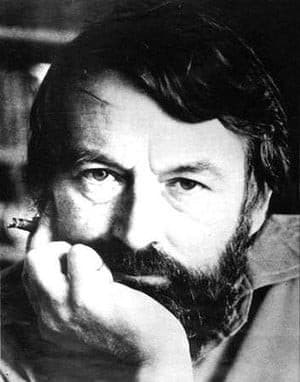
John Robert Fowles was an English novelist of international renown, critically positioned between modernism and postmodernism. His work was influenced by Jean-Paul Sartre and Albert Camus, among others.
Similar books
- The Magus
John Fowles
4.0 (48k) average on GoodreadsLiterary FictionExplores themes of manipulation, psychological games, and a young man's disillusionment.
- The Collector
John Fowles
3.9 (29k) average on GoodreadsThrillerDelves into power dynamics, obsession, and the dark side of human relationships.
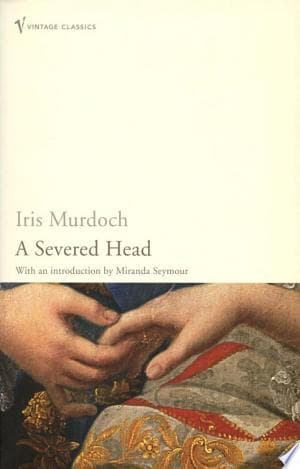
- A Severed Head
Iris Murdoch
3.8 (7k) average on GoodreadsFictionFeatures complex relationships, intellectual discussions, and a somewhat detached narrative style.
- Humboldt's Gift
Saul Bellow
3.9 (8k) average on GoodreadsLiterary FictionBoth tackle artistic integrity, success, and mentor-protégé dynamics. Fowles's The Ebony Tower is more tightly focused on core philosophical questions within a confined setting. Bellow's novel offers a broader, more satirical canvas of the literary world, with a more exuberant prose style.
- The Old Man and the Sea
Ernest Hemingway
3.8 (831k) average on GoodreadsLiterary FictionA Cuban fisherman's long struggle with a giant marlin becomes a story of endurance and dignity, now retold for young adults with illustrations, phonetic guides, and writing prompts in Traditional Chinese.
- One Hundred Years of Solitude
Gabriel García Márquez
4.1 (753k) average on GoodreadsLiterary FictionThrough the multi-generational story of the Buendía family, a mythical town deals with the repeating patterns of time, love, and solitude, as the extraordinary mixes with the ordinary.


Enjoyed the summary?
A summary gives you the shape of the book. The book itself has the detail, the examples and the voice.
Find The Ebony Tower on AmazonAs an Amazon Associate, BookBrief earns from qualifying purchases. How we're funded