
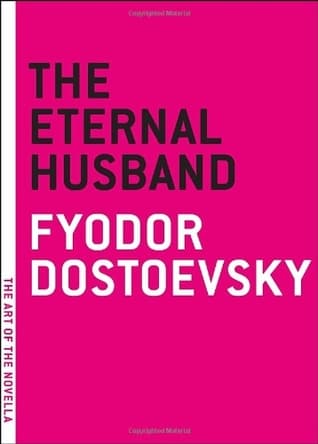
Synopsis
Covers the whole plot, including the ending.
- Difficulty
- Medium
- Pacing
- Moderate
- Mood
- Dark, Psychological, Intense, Melancholy
- Read it if
- You enjoy intense psychological dramas, nuanced character studies, and explorations of guilt, jealousy, and obsession within a classic Russian literary setting.
- Skip it if
- You prefer fast-paced plots, clear-cut resolutions, or lighthearted narratives.
The Eternal Husband Plot Summary
Covers the whole plot, including the ending.
A Strange Encounter and Lingering Unease
Alexey Ivanovich Velchaninov, a wealthy landowner and former military man, finds himself in a state of melancholy and emptiness in St. Petersburg. He is haunted by vague memories and a sense of guilt, though the source remains elusive. He begins to notice a peculiar, shabbily dressed man with a red nose who repeatedly appears in his peripheral vision, seemingly following him or observing him from a distance. These encounters, initially dismissed as coincidences, begin to disturb Velchaninov, adding to his already unsettled state of mind. He struggles to place the man, feeling an unsettling familiarity he cannot quite grasp, which deepens his internal turmoil and sense of foreboding.
The Unveiling of the Past: Pavel Pavlovich Trusotsky
One evening, the mysterious stranger confronts Velchaninov directly. He introduces himself as Pavel Pavlovich Trusotsky, a provincial official. Velchaninov, initially bewildered, slowly recognizes him. Trusotsky then reveals that his wife, Natalia Vassilyevna, has recently died. The mention of Natalia's name immediately jolts Velchaninov, bringing back a flood of memories and a realization of the man's identity. Velchaninov had a passionate affair with Natalia nine years prior, an affair he had since tried to forget. Trusotsky's arrival shatters Velchaninov's carefully constructed oblivion, forcing him to confront a past he had deliberately buried.
Liza's True Paternity
Trusotsky, after much oblique hinting and psychological torment, reveals his true purpose: he has brought his eight-year-old daughter, Liza, to St. Petersburg and presents her to Velchaninov. He then delivers the devastating truth: Liza is not his biological child, but Velchaninov's. He explains that Natalia, on her deathbed, confessed the truth to him and asked him to take Liza to her real father. This revelation profoundly shocks Velchaninov, stirring a powerful, protective instinct within him he never knew he possessed. Liza's frail health and quiet demeanor immediately endear her to him, but her presence also is a constant, painful reminder of his past transgression.
Liza's Illness and Death
Liza, already delicate, falls gravely ill shortly after being entrusted to Velchaninov's care. Velchaninov, despite his initial shock, dedicates himself to caring for her, experiencing genuine paternal love and anxiety. He arranges for doctors and tries his best to comfort her, feeling an immense burden of responsibility and guilt for his past actions that have led to this point. Trusotsky hovers in the background, exhibiting a strange mix of grief, resentment, and a perverse satisfaction in Velchaninov's suffering. Liza eventually succumbs to her illness, dying in Velchaninov's arms. Her death is a profound tragedy for Velchaninov, solidifying his remorse and leaving him with an enduring sense of loss.
The Strange Burial and Shared Grief
Following Liza's death, Velchaninov takes charge of the funeral arrangements. Trusotsky, while present, maintains his enigmatic and often contradictory behavior. He appears to grieve, yet there is an underlying resentment and a strange, almost voyeuristic interest in Velchaninov's pain. The two men, the biological father and the cuckolded husband, attend the small, somber ceremony together, united by the death of the child who was both of theirs and neither's in a conventional sense. The shared experience, rather than bringing them closer, highlights the deep-seated complexities and unresolved tensions between them, setting the stage for further psychological games.
Trusotsky's Pursuit of New Wives
With Natalia and Liza gone, Trusotsky, now a widower, immediately turns his attention to finding a new wife. He is driven by a compulsive need for marriage and domesticity, despite his past marital trauma. He seeks Velchaninov's advice and even his direct involvement in his matrimonial schemes, seemingly oblivious to the irony and insult this presents to Velchaninov. Trusotsky's choices are often questionable, and his methods are clumsy and desperate. Velchaninov, despite his disgust and desire to escape Trusotsky, finds himself drawn into these farcical attempts, unable to completely sever ties with the man who holds such a significant piece of his past.
The Zakhlebinin Family
Trusotsky fixates on marrying one of the Zakhlebinin sisters, two young women from a respectable but somewhat naive family. He introduces Velchaninov to them, seemingly using him as a reference or a means to impress. Velchaninov, witnessing Trusotsky's clumsy courtship and the Zakhlebinins' innocent susceptibility, feels a mix of pity and exasperation. He tries, subtly at first, to warn the family about Trusotsky's true nature, but his efforts are complicated by Trusotsky's manipulative tactics and his own lingering sense of obligation and guilt. The interactions highlight the social awkwardness and moral ambiguities inherent in their relationship.
The Betrothal to Nadya Zakhlebinina
Despite Velchaninov's unspoken reservations and veiled attempts to intervene, Trusotsky manages to secure a betrothal to Nadya Zakhlebinina, the younger and more impressionable of the two sisters. Velchaninov witnesses the engagement party, feeling a sense of unease and foreboding. He knows that Nadya is entering a marriage with a man who carries a deep-seated bitterness and a history of cuckoldry, and he fears for her future. The event shows Trusotsky's persistent ability to secure what he desires, albeit through morally dubious means, and Velchaninov's inability to truly escape his influence or prevent what he perceives as a looming tragedy.
Velchaninov's Intervention and Trusotsky's Rage
Unable to bear the thought of Nadya's fate, Velchaninov finally confronts Trusotsky directly, exposing his manipulative nature and warning Nadya and her family about his past. This public humiliation pushes Trusotsky over the edge. His carefully constructed facade of victimhood and naive longing shatters, revealing the deep-seated resentment and vengeful anger that has simmered beneath his polite exterior. In a fit of rage, Trusotsky attempts to attack Velchaninov with a razor, a dramatic and violent climax to their long-simmering psychological battle, revealing the extent of his suppressed fury and desire for retribution.
The Aftermath and Lingering Shadow
Velchaninov is wounded in the attack, though not fatally. The incident exposes Trusotsky's true character to the Zakhlebinin family, leading to the immediate breaking of the engagement. Trusotsky disappears shortly after, presumably returning to his provincial life. Velchaninov, though physically recovered, remains scarred psychologically. Months later, he encounters Trusotsky again, now married to a different, much younger woman. Trusotsky, still the 'eternal husband' destined to be cuckolded, greets Velchaninov with a chillingly familiar, almost friendly demeanor, implying that their strange, symbiotic relationship, though changed, is not truly over. Velchaninov recognizes that Trusotsky's shadow will always follow him, a perpetual reminder of his past and the complicated nature of guilt and retribution.
The Eternal Husband Characters
Alexey Ivanovich Velchaninov
Protagonist
A melancholic and guilt-ridden landowner haunted by his past.
Velchaninov is a man in his late 30s, once a dashing military officer, now suffering from a profound sense of emptiness and a 'vast' melancholy. He possesses a strong sense of honor and a capacity for genuine affection, particularly evident in his care for Liza, but he is also self-absorbed, prone to superficial relationships, and burdened by a past he tries to forget. His affair with Natalia and subsequent abandonment of her and Liza weigh heavily on his conscience, driving much of his internal conflict. He is intelligent and perceptive, yet struggles to understand the depths of Trusotsky's psyche.
Relationships: Pavel Pavlovich Trusotsky (former lover's husband, rival, tormentor, and a strange, inescapable mirror); Natalia Vassilyevna (deceased former lover); Liza (biological daughter, source of unexpected paternal love and grief)
Pavel Pavlovich Trusotsky
Antagonist
The cuckolded husband, a complex figure driven by resentment, humiliation, and a perverse need for companionship.
Trusotsky is a provincial official, about 40 years old, with a 'red nose' and a perpetually shifting demeanor. He is the 'eternal husband,' a man destined to be cuckolded, and his character is a study in suppressed rage, passive-aggression, and a profound sense of humiliation. He is cunning and manipulative, capable of tormenting Velchaninov with psychological games, yet also appears genuinely bewildered and pathetic at times. His motivations are complex: he seeks revenge, but also companionship and a restoration of his perceived honor through marriage, even if it means repeating his past mistakes. He represents the corrosive effects of betrayal and unacknowledged pain.
Relationships: Alexey Ivanovich Velchaninov (wife's former lover, object of his revenge and strange obsession); Natalia Vassilyevna (deceased wife, source of his deep humiliation); Liza (stepdaughter, whose paternity is a major plot point); Nadya Zakhlebinina (briefly betrothed, object of his second marriage attempt)
Natalia Vassilyevna
Mentioned
Velchaninov's deceased former lover and Trusotsky's wife.
Natalia Vassilyevna is deceased before the novel begins, but her presence permeates the story through the memories of Velchaninov and Trusotsky. She was Velchaninov's passionate lover nine years prior and Trusotsky's wife. Her deathbed confession about Liza's true paternity sets the entire plot in motion. She is depicted as a woman who engaged in an extramarital affair but ultimately felt a strong enough moral pull to reveal the truth before her death, leaving a legacy of complicated relationships and unresolved guilt for the men in her life. Her character serves as the catalyst for the novel's central conflict.
Relationships: Alexey Ivanovich Velchaninov (former lover); Pavel Pavlovich Trusotsky (husband); Liza (daughter)
Liza
Supporting
Velchaninov's biological daughter, a frail and innocent child.
Liza is an eight-year-old girl, the biological daughter of Velchaninov and Natalia. She is frail, quiet, and sickly, possessing a gentle and innocent nature that deeply moves Velchaninov. Her presence forces Velchaninov to confront his paternal responsibilities and awakens a profound, protective love within him. Her brief life and tragic death serve as a poignant symbol of the consequences of the adults' past actions and the innocent suffering they cause. Her genuine affection for Velchaninov, despite their short acquaintance, highlights his capacity for love and his deep remorse.
Relationships: Alexey Ivanovich Velchaninov (biological father); Pavel Pavlovich Trusotsky (stepfather, who raised her); Natalia Vassilyevna (mother)
Nadya Zakhlebinina
Supporting
A naive young woman briefly betrothed to Trusotsky.
Nadya Zakhlebinina is a young, innocent, and somewhat naive woman from a respectable family. She becomes the object of Trusotsky's second attempt at marriage. She represents the potential for another victim in Trusotsky's cycle of humiliation and revenge. Her youth and vulnerability highlight the predatory nature of Trusotsky's pursuit and Velchaninov's moral dilemma in whether to intervene. Her character serves to demonstrate Trusotsky's compulsive need for marriage and his willingness to repeat past patterns, as well as Velchaninov's lingering sense of responsibility.
Relationships: Pavel Pavlovich Trusotsky (briefly betrothed); Alexey Ivanovich Velchaninov (protector, who reveals Trusotsky's true nature)
The Zakhlebinin Sisters (Claudia and Nadya)
Supporting
Two sisters from a respectable family, one of whom becomes Trusotsky's target.
The Zakhlebinin sisters, primarily Nadya and her older sister Claudia, are presented as innocent, somewhat provincial young women. They are respectable and well-meaning but lack the sophistication to discern Trusotsky's true character. Their family represents a stable, conventional social circle that Trusotsky attempts to infiltrate. Their interactions with Velchaninov, who tries to subtly warn them, highlight the moral complexities of the situation and the difficulty of exposing Trusotsky's deceit without causing further scandal. They serve as a contrast to the morally ambiguous world of Velchaninov and Trusotsky.
Relationships: Pavel Pavlovich Trusotsky (suitor to Nadya); Alexey Ivanovich Velchaninov (acquaintance, who attempts to protect them)
Bagdatov
Mentioned
A minor character who provides context on Trusotsky's past.
Bagdatov is a minor character, a mutual acquaintance from Velchaninov's past. He provides some crucial background information about Trusotsky and Natalia, confirming aspects of their marriage and Trusotsky's character. His observations reinforce the idea of Trusotsky as a man prone to being cuckolded and highlight the social gossip and judgments surrounding such situations. Bagdatov's role is largely expository, helping to fill in the gaps of Velchaninov's memory and solidify the narrative of Trusotsky's 'eternal husband' status.
Relationships: Alexey Ivanovich Velchaninov (acquaintance); Pavel Pavlovich Trusotsky (acquaintance)
The Eternal Husband Themes
Guilt and Atonement
Velchaninov's melancholy and emptiness at the novel's outset stem from an unacknowledged guilt over his past affair with Natalia and the abandonment of Liza. Trusotsky's appearance forces him to confront this, particularly through his care for Liza, which becomes a form of atonement. Liza's death deepens his remorse, leaving him with an enduring psychological scar. The novel explores whether true atonement is possible for past transgressions, especially when the consequences, like Liza's death, are irreversible.
“He felt a terrible, insupportable burden on his heart, a burden of guilt and an agonizing, inexplicable regret.”
Revenge and Psychological Torment
Trusotsky's primary motivation is revenge for his cuckoldry. However, his revenge is not direct violence (until the climax) but a prolonged campaign of psychological torment against Velchaninov. He insinuates himself into Velchaninov's life, forces him to confront his past, and takes a perverse pleasure in his suffering. This theme explores the destructive nature of unaddressed humiliation and the complex, often twisted, ways in which individuals seek retribution, blurring the lines between victim and tormentor, as Trusotsky simultaneously seeks pity and inflicts pain.
“He had come here not to complain, but to torment, to sting, to lacerate.”
The Nature of Marriage and Cuckoldry
The novel deeply examines marriage through the lens of Trusotsky's repeated cuckoldry. Trusotsky is the 'eternal husband,' a man seemingly predestined to be betrayed. This theme explores the societal expectations of marriage, the humiliation associated with cuckoldry in 19th-century Russia, and the psychological impact of such a fate. It questions what constitutes a 'valid' marriage and exposes the hypocrisy and vulnerabilities within marital bonds, especially when trust is broken and resentment festers, often leading to a cycle of repetition.
“He was one of those husbands who are born only to be cuckolded.”
Identity and Self-Deception
Velchaninov begins the novel living a life of self-deception, having successfully suppressed memories of his affair and Liza. Trusotsky's arrival shatters this false peace, forcing Velchaninov to confront his true identity as a father and a man capable of profound regret. Similarly, Trusotsky's public persona as a pathetic victim conceals a vengeful and manipulative core. The theme explores how individuals construct their identities, often through denial, and how external forces or past actions inevitably force a confrontation with one's authentic self, however painful that recognition may be.
“He had lived for nine years as if he had never known that woman, never had that child.”
The Burden of the Past
The past is a relentless force in 'The Eternal Husband,' constantly intruding upon the present and shaping the characters' actions and emotional states. Velchaninov's affair from nine years prior directly leads to Trusotsky's appearance, Liza's existence, and the subsequent tragic events. Both men are inextricably bound by their shared history with Natalia, unable to escape its long shadow. The novel illustrates how unresolved conflicts, unacknowledged guilt, and past betrayals continue to exert a powerful influence, dictating future relationships and preventing true peace or closure.
“The past had risen up before him, vivid and inescapable.”
Plot Devices & Literary Techniques
The Doppelgänger Motif
Trusotsky as Velchaninov's dark reflection and inescapable shadow.
Trusotsky functions as a psychological doppelgänger for Velchaninov, representing the consequences of his past actions and the darker aspects of his own character. Velchaninov initially struggles to place Trusotsky, feeling an unsettling familiarity, almost as if he is seeing a distorted reflection of himself. Trusotsky embodies the guilt and humiliation that Velchaninov has tried to bury, forcing him to confront the moral failings he has suppressed. Their entwined fates suggest that one cannot escape the shadow of one's past or the people connected to it, as Trusotsky literally follows and mirrors Velchaninov's life.
Psychological Realism
Deep exploration of characters' internal states and motivations.
Dostoyevsky employs psychological realism by delving deeply into the complex, often contradictory internal lives of Velchaninov and Trusotsky. The narrative explores their neuroses, motivations, and emotional turmoil with intense detail, rather than focusing solely on external events. Velchaninov's melancholy, guilt, and fluctuating feelings for Liza and Trusotsky, and Trusotsky's blend of pathetic victimhood, cunning manipulation, and suppressed rage, are meticulously dissected. This device allows for a profound understanding of human nature, particularly in the context of moral ambiguity and psychological torment, making the characters' inner struggles as crucial as the plot itself.
The Unreliable Narrator (Velchaninov's Perspective)
The story is filtered through Velchaninov's subjective and often self-deceptive mind.
While not strictly a first-person narrative, the story is heavily filtered through Velchaninov's consciousness, particularly in the early chapters. His initial inability to recognize Trusotsky, his selective memory regarding Natalia, and his interpretations of Trusotsky's motives are all colored by his own guilt and self-deception. This unreliability creates suspense and forces the reader to question Velchaninov's perceptions, gradually revealing the full truth of the past as Velchaninov himself is forced to confront it. It highlights how personal biases and suppressed memories can distort reality.
Symbolism of the 'Eternal Husband'
Trusotsky's character as a symbol of perpetual cuckoldry and humiliation.
The very title, 'The Eternal Husband,' is a symbolic device. Trusotsky embodies the archetype of a man destined to be cuckolded, not just by Velchaninov but repeatedly. This symbolizes a deeper psychological flaw or fate, a perpetual state of humiliation and unfulfillment that defines his existence. It suggests that some individuals are trapped in recurring patterns, unable to break free from their past or their inherent character, forever seeking companionship only to find betrayal. The symbol extends beyond a mere character trait to represent a broader human condition of inescapable suffering.
The Eternal Husband Quotes
“There are moments when a man's whole life is concentrated in one point, and that point is the present moment.”
“Love is a mystery, and everything mysterious is terrible.”
“I am a scoundrel, but I am not a villain.”
“The most terrible thing in the world is a man who has nothing to lose.”
“We are all eternal husbands in our own way, bound by chains of our own making.”
“Jealousy is not love; it is the shadow of love, and shadows are always distorted.”
“To understand another person, you must first understand yourself, and that is the hardest task of all.”
“There is no greater torment than the torment of a guilty conscience.”
“We pretend to be free, but we are all slaves to our passions.”
“The past is a ghost that haunts the present, and we are all its unwilling mediums.”
“In every man there is a secret that he will carry to his grave.”
“To forgive is divine, but to forget is impossible.”
“We are all actors on the stage of life, but some of us have forgotten our lines.”
“The heart has its reasons which reason knows nothing of.”
Quiz
10 questions on the plot and the characters. Each answer comes with a short explanation.
Question 1
What is the primary reason Velchaninov feels haunted by Trusotsky's presence in St. Petersburg?
- Trusotsky owes him a large sum of money from a business deal.
- Velchaninov had an affair with Trusotsky's wife, who has since died.
- Trusotsky is blackmailing him over a political secret.
- Velchaninov suspects Trusotsky of stealing his identity.
Show answer
B. Velchaninov had an affair with Trusotsky's wife, who has since died. The central conflict arises from Velchaninov's past affair with Natalya Vasilyevna, Trusotsky's wife, who died before the novel begins. This guilt and unresolved tension drive the psychological drama between the two men.
Question 2
How does Trusotsky first approach Velchaninov in St. Petersburg?
- By sending a threatening letter demanding a confrontation.
- By appearing unannounced at Velchaninov's apartment late at night.
- Through a mutual friend who arranges a formal meeting.
- By publicly accusing him in a social gathering.
Show answer
B. By appearing unannounced at Velchaninov's apartment late at night. Trusotsky's sudden, late-night visit to Velchaninov's apartment sets the eerie and tense tone of their reunion, highlighting his intrusive and persistent nature as the 'eternal husband.'
Question 3
What is the name of the young girl that Trusotsky brings with him, who becomes a point of contention between the two men?
- Sonya
- Liza
- Anna
- Maria
Show answer
B. Liza Liza is the daughter of Natalya Vasilyevna, and her paternity is ambiguous—possibly Velchaninov's. Her presence intensifies the psychological struggle, as both men grapple with guilt, responsibility, and possession.
Question 4
Why does Velchaninov agree to help Trusotsky with his engagement to a young woman later in the novel?
- He hopes to earn Trusotsky's forgiveness and clear his conscience.
- He sees it as a way to manipulate Trusotsky into leaving him alone.
- He is driven by a mix of guilt, curiosity, and a desire to dominate Trusotsky.
- He is paid a substantial fee by Trusotsky's family.
Show answer
C. He is driven by a mix of guilt, curiosity, and a desire to dominate Trusotsky. Velchaninov's involvement stems from complex psychological motives: guilt over the affair, a fascination with Trusotsky's suffering, and a need to assert control, reflecting Dostoyevsky's exploration of human contradictions.
Question 5
What event leads to the climax where Trusotsky attempts to attack Velchaninov with a razor?
- Velchaninov publicly reveals the affair to shame Trusotsky.
- Trusotsky discovers that Velchaninov is planning to take Liza away from him.
- Velchaninov confesses his guilt and begs for forgiveness, enraging Trusotsky.
- Trusotsky's fiancée breaks off their engagement, and he blames Velchaninov's interference.
Show answer
D. Trusotsky's fiancée breaks off their engagement, and he blames Velchaninov's interference. After Trusotsky's engagement fails, partly due to Velchaninov's meddling, his pent-up resentment and humiliation explode into a violent confrontation, showcasing the destructive cycle of their relationship.
Question 6
Which theme is most prominently explored through the character of Trusotsky as the 'eternal husband'?
- The corruption of wealth and social status in Russian society.
- The psychological torment of betrayal and the inability to escape the past.
- The triumph of love and redemption over adversity.
- The importance of family loyalty and tradition.
Show answer
B. The psychological torment of betrayal and the inability to escape the past. Trusotsky embodies the theme of enduring suffering and obsession; he cannot move past his wife's infidelity, haunting Velchaninov as a constant reminder of guilt and unresolved conflict, central to Dostoyevsky's psychological depth.
Question 7
How does the novel conclude regarding the relationship between Velchaninov and Trusotsky?
- They reconcile and become close friends, putting the past behind them.
- Trusotsky dies, and Velchaninov is left with a sense of unresolved guilt.
- They part ways ambiguously, with Trusotsky remarrying and Velchaninov still haunted.
- Velchaninov is arrested for his role in the affair, and Trusotsky moves abroad.
Show answer
C. They part ways ambiguously, with Trusotsky remarrying and Velchaninov still haunted. The ending reflects the novel's psychological complexity: Trusotsky marries another woman, suggesting a cyclical pattern, while Velchaninov remains tormented, underscoring themes of eternal guilt and the inescapability of the past.
Question 8
What symbolic role does Liza play in the dynamics between Velchaninov and Trusotsky?
- She represents the innocent victim of their conflict, highlighting their moral failures.
- She serves as a messenger who reveals key secrets about the affair.
- She is a catalyst for their reconciliation through her kindness.
- She symbolizes the hope for a new beginning and forgiveness.
Show answer
A. She represents the innocent victim of their conflict, highlighting their moral failures. Liza's ambiguous paternity and vulnerable position emphasize the consequences of the men's actions. Her suffering mirrors their psychological turmoil, making her a poignant symbol of innocence corrupted by adult conflicts.
Question 9
In a key scene, what does Velchaninov realize during his feverish illness after encountering Trusotsky?
- That Trusotsky is actually his long-lost brother.
- That he himself is more tormented by guilt than Trusotsky is by betrayal.
- That Liza is not Natalya's daughter but an impostor.
- That Trusotsky plans to murder him and frame someone else.
Show answer
B. That he himself is more tormented by guilt than Trusotsky is by betrayal. During his illness, Velchaninov has a psychological epiphany: his guilt and inner torment surpass Trusotsky's external suffering, revealing the depth of his moral crisis and Dostoyevsky's focus on self-awareness and redemption.
Question 10
Which literary device is notably used in the novel to enhance the psychological tension between the characters?
- Extensive use of satire to mock social conventions.
- Frequent shifts in narrative perspective between multiple characters.
- Symbolism of objects like the razor to represent violence and desperation.
- Incorporation of supernatural elements to drive the plot.
Show answer
C. Symbolism of objects like the razor to represent violence and desperation. Dostoyevsky employs symbolism, such as the razor in the attack scene, to underscore themes of latent violence and psychological breakdown. This device deepens the exploration of guilt, obsession, and human fragility.
The Eternal Husband FAQ
What is 'The Eternal Husband' about?
The novel follows Alexei Ivanovich Velchaninov, a wealthy St. Petersburg gentleman, who is confronted by Pavel Pavlovich Trusotsky, the husband of his deceased former lover Natalya. Trusotsky arrives with a young girl, Liza, who may be Velchaninov's biological daughter, setting off a psychological duel as Trusotsky alternates between servility and aggression, forcing Velchaninov to confront his past guilt and moral decay.
Why should I read 'The Eternal Husband'?
It's a masterful exploration of guilt, jealousy, and psychological manipulation in under 200 pages, showcasing Dostoyevsky's ability to dissect human relationships with intense drama. The cat-and-mouse dynamic between Velchaninov and Trusotsky offers profound insights into obsession and redemption, making it a compelling entry point into Dostoyevsky's darker, more focused works.
What is the background/setting of 'The Eternal Husband'?
Set in 1860s St. Petersburg, Russia, the story unfolds in urban settings like Velchaninov's apartment, Trusotsky's lodgings, and social gatherings, reflecting the moral ambiguities of post-reform Russian society. The temporal backdrop—nine years after Velchaninov's affair with Natalya—highlights how past sins haunt the present in a rapidly changing world.
What are the most memorable quotes?
Key quotes include Trusotsky's paradoxical declaration, 'I am your eternal husband,' symbolizing his inescapable tie to Velchaninov, and Velchaninov's self-reflective, 'I am a scoundrel, but I am not a villain,' capturing his moral confusion. Another is Trusotsky's eerie, 'I have come to you as to a friend,' which masks his vengeful intentions.
What writing style does the author use?
Dostoyevsky employs a fast-paced, psychological narrative with dense dialogue and internal monologues, focusing on character interactions over plot. The style is intense and claustrophobic, using sharp contrasts—like Trusotsky's obsequiousness versus his sudden rages—to build tension and explore themes of duality and hidden motives.
What minor details add significant meaning?
Trusotsky's constant wearing of a crepe band on his hat, a symbol of mourning for his wife Natalya, becomes a twisted reminder of his cuckoldry and obsession. Liza's silent suffering and eventual illness subtly critique societal neglect of children, while Velchaninov's recurring toothache metaphorically represents his gnawing guilt over the past.
What are some subtle foreshadowing moments?
Early on, Trusotsky's overly polite demeanor and insistence on calling Velchaninov 'benefactor' hint at his underlying malice. Velchaninov's initial dismissal of Trusotsky as a 'nonentity' foreshadows his underestimation of the husband's psychological grip. Liza's fragile health from the start prefigures her tragic decline, mirroring the relationship's toxicity.
What unexpected character connections exist?
Beyond the obvious love triangle, Trusotsky's new fiancée, Nadya, is revealed to be a young woman Velchaninov once casually courted, deepening the web of romantic entanglements. This connection amplifies Trusotsky's sense of humiliation and Velchaninov's pattern of irresponsible behavior, tying past and present transgressions together.
What are unspoken character motivations?
Trusotsky is driven not just by jealousy but by a desperate need to force Velchaninov to acknowledge their shared guilt and suffering, seeking a twisted form of companionship. Velchaninov, beneath his arrogance, is motivated by a deep-seated shame and desire for absolution, which he tries to bury through denial and distraction.
What psychological complexities do characters exhibit?
Trusotsky embodies masochistic devotion mixed with vengeful pride, often groveling before Velchaninov only to later threaten him. Velchaninov shows narcissistic self-justification alongside genuine remorse, struggling to reconcile his past hedonism with his current emptiness. Their interactions reveal a symbiotic relationship of tormentor and tormented.
What are the major emotional turning points?
The climax occurs when Trusotsky attempts to murder Velchaninov with a razor, shifting their dynamic from psychological games to physical danger. Earlier, Liza's death from illness forces both men to confront their neglect, leading to a temporary reconciliation. The final scene, where Trusotsky remarries, leaves Velchaninov in existential despair, marking an emotional nadir.
How do relationship dynamics evolve?
Initially, Velchaninov dominates as the confident former lover, but Trusotsky gradually gains power through psychological manipulation, reducing Velchaninov to paranoia. After Liza's death, their roles briefly reverse into mutual pity, but the cycle resumes with Trusotsky's new marriage, showing how their 'eternal' bond perpetuates suffering without resolution.
Which parts remain ambiguous or open-ended?
It's never confirmed whether Liza is truly Velchaninov's daughter, leaving her paternity ambiguous and emphasizing the story's focus on psychological over biological truths. The ending, with Trusotsky remarrying and Velchaninov left alone, suggests an unresolved cycle of guilt, open to interpretation about whether either man achieves redemption.
What are controversial scenes or decisions?
Velchaninov's initial refusal to acknowledge Liza as his daughter, despite strong evidence, sparks debate over parental responsibility versus denial. Trusotsky's decision to bring Liza to St. Petersburg, leading to her death, is criticized as manipulative neglect. Their violent confrontation raises questions about whether their relationship is driven by love, hate, or both.
'The Eternal Husband' ending explained: how it ends & what it means
The novel ends with Trusotsky remarrying a young girl, seemingly repeating his cuckold cycle, while Velchaninov is left isolated in St. Petersburg, haunted by memories. This suggests that guilt and obsession are inescapable—Trusotsky becomes the 'eternal husband' in a new context, and Velchaninov remains trapped in his past, implying that moral failings perpetuate suffering without clear redemption.
About the author

Fyodor Mikhailovich Dostoevsky, sometimes transliterated as Dostoyevsky, was a Russian novelist, short story writer, essayist and journalist. Numerous literary critics regard him as one of the greatest novelists in all of world literature, as many of his works are considered highly influential masterpieces.
Similar books
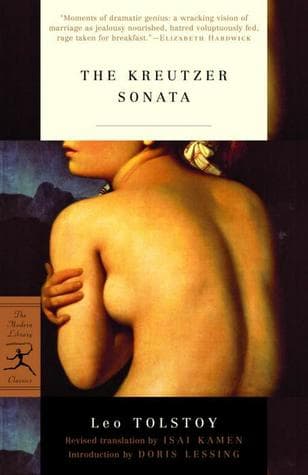
- The Kreutzer Sonata
Leo Tolstoy
3.9 (19k) average on GoodreadsFictionDeals with intense jealousy, marital discord, and the darker aspects of human relationships.
- Crime and Punishment
Fyodor Dostoyevsky
4.2 (627k) average on GoodreadsPhilosophyFeatures a protagonist grappling with guilt, moral ambiguity, and the consequences of past actions.
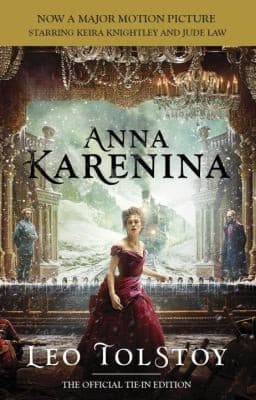
- Anna Karenina
Leo Tolstoy
4.0 (682k) average on GoodreadsHistorical FictionWhile both explore marital infidelity and its consequences, Dostoevsky's novella focuses more intensely on the peculiar psychological bond between the cuckold and the seducer, rather than the broader societal implications and romantic tragedy central to Anna Karenina.
- The Old Man and the Sea
Ernest Hemingway
3.8 (831k) average on GoodreadsLiterary FictionA Cuban fisherman's long struggle with a giant marlin becomes a story of endurance and dignity, now retold for young adults with illustrations, phonetic guides, and writing prompts in Traditional Chinese.
- One Hundred Years of Solitude
Gabriel García Márquez
4.1 (753k) average on GoodreadsLiterary FictionThrough the multi-generational story of the Buendía family, a mythical town deals with the repeating patterns of time, love, and solitude, as the extraordinary mixes with the ordinary.
- The Goldfinch
Donna Tartt
3.9 (720k) average on GoodreadsLiterary FictionHaunted by a tragic explosion and clutching a stolen Dutch masterpiece, a young orphan navigates the opulent drawing rooms of New York and the gritty underbelly of the art world, desperately seeking connection and redemption amidst a life spiraling into crime and obsession.



Enjoyed the summary?
A summary gives you the shape of the book. The book itself has the detail, the examples and the voice.
Find The Eternal Husband on AmazonAs an Amazon Associate, BookBrief earns from qualifying purchases. How we're funded