

Synopsis
Covers the whole plot, including the ending.
- Difficulty
- Easy
- Pacing
- Moderate
- Mood
- Charming, Mysterious, Clever, Whimsical
- Read it if
- You enjoy clever child protagonists, intricate puzzles, and charming mysteries with a touch of fantasy.
- Skip it if
- You prefer fast-paced action over cerebral problem-solving and character development.
The Extraordinary Education of Nicholas Benedict Plot Summary
Covers the whole plot, including the ending.
A New Beginning, A Familiar Problem
Nicholas Benedict, a nine-year-old orphan with a large nose and narcolepsy, is sent to the Rothbury Orphanage. He has been through several institutions, often because he falls asleep at bad times and makes sharp, sometimes unwelcome, observations. When he arrives, Marten, a cruel older boy, immediately targets him. Nicholas quickly notices the strict, often unfair, rules enforced by the adult staff, especially the stern Miss Perumal and the seemingly friendly Mr. Muldoon. He wants to stay unnoticed, but his intelligence and curiosity make this hard, drawing him into conflicts with bullies and connections with potential friends.
The First Mystery: The Missing Key
During one of his sudden sleep episodes, Nicholas has a vivid dream that feels like a memory. He wakes up in an unfamiliar part of the orphanage and finds a hidden compartment holding a small, fancy key. This discovery immediately interests him. He learns that a previous orphan, a girl named Violet, was obsessed with finding hidden things before she disappeared. Nicholas connects the key to cryptic messages he finds around the orphanage, seemingly left by Violet, hinting at a treasure or a secret. His attempts to investigate are often stopped by Marten and his friends, who suspect Nicholas is planning something.
Allies and Adversaries
Nicholas finds an unexpected friend in John, a quiet and clever orphan who is good at observing and figuring things out. John, though careful at first, is impressed by Nicholas's intelligence and helps him understand the orphanage's social rules, especially how to deal with Marten and his group. Marten, driven by jealousy and a desire to remain the orphanage's top bully, becomes Nicholas's main enemy, constantly trying to ruin his efforts and steal his discoveries. Nicholas also meets S.Q., a boy who seems to know more than he shows, and Constance, a careful girl who keeps track of everything.
The Hidden Library and Secret Passages
By carefully understanding Violet's clues and his own thoughts, Nicholas, with John's help, finds a hidden entrance to a large, dusty library under the orphanage. This library is filled with old books and more of Violet's secret messages. More importantly, it leads to a network of secret passages and rooms, showing the building's true, complex design. These passages allow Nicholas and John to move unseen throughout the orphanage, watching the staff and other children, and gathering more information about Violet's mystery and the hidden 'treasure' she looked for. They realize the orphanage holds more secrets than anyone thinks.
The Puzzle of the Staff
As Nicholas and John explore further, they start to notice odd things and suspicious actions among the orphanage staff. Miss Perumal, though strict, seems to care for the children, but Mr. Muldoon, despite appearing friendly, seems to be hiding something. They also notice the strange habits of the handyman, Mr. Bloom, and the cook, Mrs. Johnson. Nicholas realizes that the adults are not just unaware of the children's activities but might be actively involved in hiding the very secrets he is trying to uncover. His narcolepsy sometimes gives him unexpected insights, blurring the lines between dreams and reality, and revealing clues he might otherwise miss.
The 'Treasure' Revealed
After many close calls with Marten and the staff, Nicholas and John finally put together Violet's last and most complex clues. They discover that the 'treasure' is not gold or jewels, but a collection of documents and items that show the true history of the Rothbury Orphanage and its founder. It becomes clear that the orphanage was designed for a specific purpose, and Violet had been trying to reveal a long-held secret. The 'treasure' shows the founder's intentions and how the orphanage changed from those ideals, possibly involving the current staff.
Confrontation and Exposure
With his discoveries, Nicholas plans to show the truth to Miss Perumal, whom he trusts. He realizes that Mr. Muldoon is the main antagonist among the staff, manipulating the orphanage for his own benefit and hiding the founder's true vision. During a tense meeting, Nicholas, with John's support, presents the evidence he has gathered – the documents, the hidden passages, and Violet's messages. Mr. Muldoon tries to deny everything and even tries to make Nicholas look bad, but the clear proof, along with Miss Perumal's growing suspicions, leads to his removal.
Resolution and New Beginnings
With Mr. Muldoon gone, Miss Perumal takes charge and begins to make changes based on the founder's original plans, as Nicholas revealed. The orphanage becomes a more caring and educational place. Nicholas, no longer seen as just 'difficult' but as a smart and brave boy, finds acceptance and respect among his peers and the new leaders. His narcolepsy, though still present, is better understood and accommodated. He realizes that his unique mind, once a source of frustration, is his greatest strength. He has solved a complex mystery and found a place where he belongs and is valued for who he is.
The Call to Adventure
Nicholas's intelligence and problem-solving skills at Rothbury are noticed. He receives an invitation to a highly selective and unusual school for gifted children, an opportunity that promises more intellectual challenges and a community of similar individuals. This invitation marks a new part of his life, a recognition of his unique abilities beyond the orphanage. It suggests that his journey of self-discovery and extraordinary education is only beginning, setting the stage for future adventures and further growth of his remarkable talents.
Principal Figures
Nicholas Benedict
Protagonist
A nine-year-old orphan genius with narcolepsy and an insatiable curiosity.
Nicholas is an exceptionally intelligent and observant nine-year-old orphan. He possesses a keen mind for puzzles, deduction, and pattern recognition, which often makes him seem aloof or 'difficult' to adults. His most significant challenge is narcolepsy, which causes him to fall asleep unexpectedly and experience vivid dreams that sometimes contain clues. He has an unfortunate, large nose that is a source of self-consciousness. Despite his physical vulnerabilities and social awkwardness, Nicholas is incredibly resilient and driven by a deep-seated need to understand the world around him, particularly its mysteries.
Relationships: John (Best friend and loyal accomplice); Marten (Primary rival and bully); Miss Perumal (Initially a strict figure, later a trusted ally and mentor); Mr. Muldoon (Antagonist and authority figure)
John
Supporting
Nicholas's loyal, observant, and practical best friend.
John is a quiet, observant, and incredibly loyal orphan who becomes Nicholas's closest friend and accomplice. He is not as overtly brilliant as Nicholas, but he possesses a strong sense of practicality, resourcefulness, and common sense. John is skilled at navigating the social intricacies of the orphanage and provides crucial support, often acting as Nicholas's eyes and ears when Nicholas is incapacitated by his narcolepsy. He is brave and willing to follow Nicholas into dangerous situations, offering a grounding influence and unwavering companionship.
Relationships: Nicholas Benedict (Best friend and partner in mystery-solving)
Marten
Antagonist
The orphanage bully who torments Nicholas.
Marten is an older, physically imposing orphan who serves as the primary antagonist among the children. He is cruel, manipulative, and insecure, deriving pleasure from tormenting younger and weaker orphans. He views Nicholas's intelligence and unique nature as a threat to his own social standing and attempts to sabotage Nicholas's efforts and steal his discoveries. Marten represents the oppressive and unfair social hierarchy within the orphanage, reflecting the larger injustices Nicholas seeks to expose.
Relationships: Nicholas Benedict (Rival and victimizer)
Miss Perumal
Supporting
The strict but ultimately fair and caring matron of the orphanage.
Miss Perumal is initially presented as a stern and rigid authority figure, strictly enforcing the orphanage's rules. However, beneath her tough exterior, she possesses a genuine concern for the children's welfare and a strong sense of justice. She is observant and intelligent, eventually recognizing Nicholas's unique talents and the truth in his accusations. She becomes a crucial ally in exposing the corruption within the orphanage and reforming the institution.
Relationships: Nicholas Benedict (Initially an authority figure, later a trusted ally and mentor); Mr. Muldoon (Colleague, later antagonist)
Mr. Muldoon
Antagonist
The seemingly benevolent but corrupt administrator of the orphanage.
Mr. Muldoon is the charming and outwardly jovial administrator of the Rothbury Orphanage. He presents a friendly facade to the children and external visitors, but beneath this veneer lies a manipulative and self-serving individual. He is complicit in suppressing the true history and purpose of the orphanage, exploiting its resources for his own gain. He actively obstructs Nicholas's investigation, seeing the boy's curiosity as a threat to his comfortable position.
Relationships: Nicholas Benedict (Primary antagonist); Miss Perumal (Colleague, later antagonist)
Violet
Mentioned
A mysterious former orphan whose clues guide Nicholas.
Violet is a former orphan who disappeared from Rothbury some time before Nicholas's arrival. She was known for her obsession with finding hidden things and left behind a trail of cryptic clues and messages throughout the orphanage. Though never physically present, Violet's intelligence, courage, and determination to uncover the orphanage's secrets serve as a guiding force and inspiration for Nicholas. Her actions set the entire mystery into motion.
Relationships: Nicholas Benedict (Indirect mentor and inspiration)
Themes & Insights
The Power of the Mind and Intelligence
The novel often shows how Nicholas's intelligence, observation skills, and logic are his best qualities. Despite his physical challenges and social awkwardness, his mind lets him solve complex puzzles that adults miss. This theme is clear in his ability to understand Violet's clues, figure out the orphanage's design, and outsmart both the bullies and the corrupt adults. His intellect is shown not just as a way to solve mysteries but as a source of self-worth and power, especially in a world that often dismisses or misunderstands him.
“Nicholas always felt a thrill when a puzzle finally yielded to his relentless logic. It was a feeling of triumph, of proving the world could be understood, even if it refused to make sense on its own.”
Finding Belonging and Acceptance
A main theme is Nicholas's search for a place where he truly belongs and is accepted for who he is, including his narcolepsy and intelligence. Throughout the book, he feels like an outsider in different orphanages. At Rothbury, he first feels alone, but through his shared quest with John, he forms a strong friendship. His eventual success in solving the mystery and improving the orphanage earns him respect and a sense of community. The invitation to the special school at the end means he is finally accepted into a world that values his unique talents, fulfilling his desire to belong.
“For the first time, Nicholas felt not like an oddity, but like someone who had found his place, even if that place was still a mystery.”
The Nature of Truth and Deception
The entire story centers on finding hidden truths and revealing lies. The Rothbury Orphanage itself is a deception, hiding a complex history and current corruption. Nicholas must tell the difference between how things appear and how they really are, especially when judging characters like Mr. Muldoon, whose friendly outside hides manipulative plans. The mystery Violet left is a deliberate act to reveal a truth that others tried to bury. This theme highlights the importance of thinking critically and looking past surface impressions to find deeper realities, leading to justice and change.
“Secrets, Nicholas was learning, were not always kept for malicious reasons, but they were almost always kept for important ones.”
Overcoming Adversity and Self-Acceptance
Nicholas faces many difficulties, both internal and external. His narcolepsy is a constant challenge, causing him embarrassment and vulnerability, yet he learns to use it in his problem-solving, sometimes even using his dreams for clues. Externally, he deals with bullies like Marten and the manipulative Mr. Muldoon. His journey is one of self-acceptance, realizing that his 'flaws' are often connected to his strengths. By accepting his unique mind and condition, he changes from a self-conscious orphan into a confident young man capable of great change.
“His narcolepsy was a peculiar burden, but sometimes, Nicholas realized, it offered him glimpses others could never see.”
Plot Devices & Literary Techniques
Narcolepsy as a Plot Catalyst
Nicholas's sleep disorder not only creates obstacles but also provides unique insights and plot advancements.
Nicholas's narcolepsy is more than just a character trait; it's a crucial plot device. While it often puts him in vulnerable positions and complicates his investigations, his vivid dreams frequently contain cryptic clues or trigger forgotten memories that propel the mystery forward. His sudden sleep episodes sometimes allow him to overhear conversations or be in places he wouldn't normally, providing unexpected information. It forces him to rely on his intellect and the help of others, demonstrating how a perceived weakness can become an unexpected strength in problem-solving.
The Hidden Clues and Puzzles
A series of intricate riddles and hidden messages left by a previous orphan drive the central mystery.
The mystery of the Rothbury Orphanage is primarily driven by the elaborate trail of clues, riddles, and secret messages left by Violet. These puzzles are designed to test the reader's and Nicholas's deductive abilities, ranging from hidden keys to coded messages embedded in the orphanage's structure. This device creates a sense of engagement and intellectual challenge, allowing Nicholas to showcase his genius and providing a clear, progressive path for the plot to follow. Each solved puzzle reveals a new layer of the orphanage's history and moves Nicholas closer to the ultimate truth.
The Secret Passages and Hidden Rooms
The orphanage's concealed architecture facilitates stealth, observation, and discovery.
The discovery of a network of secret passages, hidden libraries, and concealed rooms within the Rothbury Orphanage is a key plot device. These architectural secrets allow Nicholas and John to move undetected throughout the building, observe the staff without being seen, and access information that would otherwise be inaccessible. This device creates an atmosphere of mystery and adventure, emphasizing the idea that the orphanage holds deeper truths beneath its surface. It also provides practical means for Nicholas to gather evidence and ultimately expose the corruption.
The Extraordinary Education of Nicholas Benedict Quotes
“You are a clever boy, Nicholas, but you have much to learn about the world, and even more to learn about yourself.”
“The only way to truly know if something is possible is to try it.”
“Sometimes the most obvious answer is the one we least expect.”
“A good memory is a valuable tool, but a good imagination is a treasure.”
“Fear is a powerful motivator, but it can also be a blinding one.”
“The greatest secrets are often hidden in plain sight.”
“It is not enough to be clever; one must also be kind.”
“Every puzzle has a solution, if you only look at it from the right angle.”
“The world is full of wonders, if you only open your eyes to them.”
“Even the smallest detail can unlock the biggest mystery.”
“True strength lies not in never falling, but in rising every time you fall.”
“Sometimes, the best way to hide something is to make it seem utterly insignificant.”
“A good friend is a treasure more valuable than any gold.”
“Learning is a journey, not a destination.”
Quiz
10 questions on the plot and the characters. Each answer comes with a short explanation.
Question 1
What is the primary physical condition Nicholas Benedict suffers from that causes him to fall asleep unexpectedly?
- Insomnia
- Narcolepsy
- Sleep apnea
- Chronic fatigue syndrome
Show answer
B. Narcolepsy Nicholas Benedict's narcolepsy is a key part of his character, causing him to fall asleep at unexpected and often inconvenient times.
Question 2
What unique feature does Nicholas possess that sets him apart from other children and aids him in solving puzzles?
- Exceptional athletic ability
- A photographic memory
- A genius-level intellect
- The ability to read minds
Show answer
C. A genius-level intellect The book explicitly states that Nicholas is a genius, which is his primary asset in unraveling the mystery.
Question 3
What is the initial setting where Nicholas Benedict is sent at the beginning of the story?
- A boarding school
- A relative's house
- A new orphanage
- A hospital
Show answer
C. A new orphanage Nicholas is sent to a new orphanage, where the central mystery and his adventures begin.
Question 4
Besides his narcolepsy, what other physical characteristic is mentioned as being 'unfortunate' for Nicholas?
- His height
- His eyesight
- His nose
- His hair color
Show answer
C. His nose The description mentions Nicholas having 'an unfortunate nose' in addition to his narcolepsy.
Question 5
What kind of challenges does Nicholas face from other inhabitants at the new orphanage?
- Strict academic challenges from teachers
- Vicious bullies and selfish adults
- A lack of resources and food
- Homesickness and loneliness
Show answer
B. Vicious bullies and selfish adults The synopsis explicitly states he encounters 'vicious bullies, selfish adults' at the orphanage.
Question 6
What is the overarching goal or quest that Nicholas embarks on at the orphanage?
- To escape the orphanage
- To find his birth parents
- To solve a mystery
- To become the top student
Show answer
C. To solve a mystery The core of the story revolves around Nicholas's quest to solve a mystery within the orphanage.
Question 7
Beyond external puzzles, what is described as 'the greatest puzzle of all' that Nicholas discovers?
- The true identity of the orphanage director
- The meaning of his nightmares
- The source of his genius
- Himself
Show answer
D. Himself The synopsis concludes by stating he 'discovers along the way that the greatest puzzle of all is himself,' highlighting a theme of self-discovery.
Question 8
What is the primary emotional consequence of Nicholas's narcolepsy, as mentioned in the description?
- It makes him overly energetic.
- It gives him terrible nightmares.
- It causes him to hallucinate.
- It makes him forgetful.
Show answer
B. It gives him terrible nightmares. The description states his narcolepsy 'gives him terrible nightmares,' which is an important aspect of his internal struggle.
Question 9
How does Nicholas generally find allies in his quest to solve the mystery?
- He recruits them through a secret society.
- He finds them in unexpected places.
- He is assigned a team by the orphanage director.
- His family members come to help him.
Show answer
B. He finds them in unexpected places. The synopsis mentions he 'finds enemies around every corner, but also friends in unexpected places,' indicating his allies are not obvious or easily found.
Question 10
What is the potential impact of solving the mystery on Nicholas's life?
- It will earn him a large sum of money.
- It will allow him to leave the country.
- It could change his life forever.
- It will reveal a hidden talent.
Show answer
C. It could change his life forever. The description highlights the profound significance of the mystery, stating it 'could change his life forever,' suggesting a major personal transformation or discovery.
The Extraordinary Education of Nicholas Benedict FAQ
What is the central mystery Nicholas Benedict is trying to solve at the orphanage?
Nicholas is trying to uncover the truth behind the disappearances of several children from the orphanage over the years, specifically focusing on the legend of 'The Whispering Room' and the strange circumstances surrounding the headmistress, Miss Perumal, and her unusual behavior. He suspects there's a more sinister explanation than simply children running away.
How does Nicholas's narcolepsy both hinder and help him during his investigation?
His narcolepsy often causes him to fall asleep at critical moments, making him vulnerable to bullies and missing important information. However, his dreams sometimes contain fragmented clues or insights that, upon waking, he can piece together to understand aspects of the mystery, almost like a subconscious detective.
Who are some of the key allies Nicholas makes at the orphanage?
Nicholas befriends several children who aid his investigation, most notably John, a quiet and observant boy who is good at gathering information, and Emily, a resourceful and courageous girl who often helps him navigate dangerous situations and provides practical support. These friendships are crucial to his success.
What role does the 'unfortunate nose' play in Nicholas's self-perception and how others view him?
His large, red nose makes him an immediate target for ridicule and bullying, especially from the older boys like George. This physical trait, combined with his narcolepsy, contributes to his initial feelings of isolation and being an outsider, but it also fuels his determination to prove his worth through his intellect.
What is the significance of the 'Whispering Room' in the orphanage?
The Whispering Room is a dilapidated, supposedly haunted room where children are said to have disappeared. It serves as a focal point for the orphanage's dark legends and is where Nicholas believes the key to understanding the missing children and the true nature of Miss Perumal's involvement lies.
Are there any subtle clues early on that hint at Miss Perumal's true nature or her connection to the mystery?
Yes, her overly strict and secretive demeanor, her unusual fascination with certain children, and her unexplained absences or sudden appearances often seem to have a calculated rather than accidental quality. Her reaction to specific questions about past disappearances is also notably evasive, hinting at a deeper involvement.
How does the author use the descriptions of the orphanage's architecture to foreshadow events or reveal character?
The orphanage is described as grand yet decaying, with hidden passages, locked rooms, and a general sense of neglect and forgotten grandeur. This oppressive and labyrinthine environment mirrors the complex and hidden nature of the mystery, and the children's confined existence reflects their powerlessness.
Is there any symbolic meaning behind Nicholas's nightmares, beyond just being a symptom of narcolepsy?
Nicholas's nightmares often feature fragmented images or unsettling feelings related to the orphanage and the missing children, sometimes hinting at the emotional distress of the victims or the predatory nature of their captors. They serve as a subconscious processing of his observations, offering symbolic insights rather than literal premonitions.
What is the true identity or purpose of the 'selfish adults' Nicholas encounters?
The 'selfish adults' are often the staff members who are either complicit in Miss Perumal's schemes, willfully ignorant, or simply too self-absorbed to notice the suffering of the children. They represent the systemic neglect and lack of genuine care within the institution, making it easier for the darker plot to unfold.
How does Nicholas's genius manifest and what are its psychological implications for him?
Nicholas's genius is primarily his ability to observe, deduce, and connect seemingly disparate pieces of information rapidly. Psychologically, it often isolates him from other children who don't understand his thought processes, but it also gives him a profound sense of purpose and self-worth, especially in solving the mystery.
Discuss the psychological impact of being an orphan on Nicholas, especially concerning his trust in adults.
As an orphan, Nicholas has experienced abandonment and a lack of reliable adult figures, making him naturally wary and distrustful of authority. This skepticism, while initially a defense mechanism, ironically equips him to question the adults at the orphanage and uncover their deceptions more readily than a child with unquestioning trust.
How do the bullies, like George, psychologically affect Nicholas, and how does he overcome their influence?
The bullies initially chip away at Nicholas's self-esteem and make him feel vulnerable. However, instead of succumbing, Nicholas learns to use his intellect to outsmart them or his friends to stand up to them. Psychologically, their harassment hardens his resolve and makes him more resourceful, rather than breaking him.
How does Nicholas's journey contribute to his understanding that 'the greatest puzzle of all is himself'?
Through solving the external mystery, Nicholas discovers his own courage, his capacity for friendship, and the power of his unique mind. He learns to accept his quirks, like his nose and narcolepsy, as parts of himself rather than weaknesses, realizing his true potential and identity are tied to his integrity and intellect.
Is Miss Perumal a purely evil character, or is there a more nuanced interpretation of her motives?
While her actions are undeniably cruel and harmful, a nuanced interpretation might suggest she is driven by a misguided or distorted belief system, perhaps stemming from her own past trauma or a twisted sense of duty to a larger, unseen force. Her motivations might be more complex than simple malice, though no less destructive.
What philosophical message about intelligence and empathy does the book convey?
The book suggests that while intelligence is a powerful tool for solving problems, it must be tempered with empathy and used for the good of others. Nicholas's genius is effective because he cares about the missing children, contrasting with adults who might be intelligent but lack compassion, making them dangerous or ineffective.
Could the ending be interpreted as a commentary on the failings of institutional care for children?
Absolutely. The orphanage, despite its facade, is a place of neglect, abuse, and deception. The story can be seen as a critique of systems that fail to protect vulnerable children, highlighting how easily corruption and cruelty can flourish when oversight is absent and genuine care is lacking.
How does the book's blend of fantasy and mystery contribute to its unique appeal?
The subtle fantastical elements, like the almost magical quality of Nicholas's intellect and the eerie atmosphere, elevate the mystery beyond a simple detective story. It creates a world where the stakes feel higher and the sense of wonder, even amidst danger, is more pronounced, captivating young readers with its imaginative depth.
What is the ultimate fate of the missing children, and what does this reveal about the book's tone?
The missing children are revealed to have been taken by Miss Perumal for a sinister purpose related to her hidden agenda, rather than simply running away. This dark resolution, while ultimately thwarted by Nicholas, establishes a serious and sometimes grim tone for a children's book, emphasizing the real dangers faced by the protagonists.
About the author

Trenton Lee Stewart is an American author known for his work in children's literature. He is best recognized for "The Mysterious Benedict Society" and its prequel, "The Extraordinary Education of Nicholas Benedict," both of which feature clever young protagonists solving intricate puzzles and challenges. His writing often combines adventure with themes of friendship and intelligence.
Similar books
- The Mysterious Benedict Society
Trenton Lee Stewart
4.2 (123k) average on GoodreadsFantasyFeatures the same protagonist and similar themes of child geniuses solving mysteries.
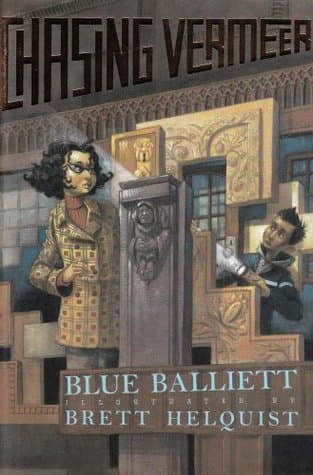
- Chasing Vermeer
Blue Balliett
3.7 (28k) average on GoodreadsChildren'sInvolves children solving an art mystery with codes and puzzles.
- Harry Potter and the Sorcerer's Stone
J.K. Rowling
4.5 (7M) average on GoodreadsFantasyRescued from a miserable life under the stairs, an orphaned boy discovers he's a wizard destined for a magical school, where he uncovers a dangerous secret tied to the dark wizard who murdered his parents.
- The Hunger Games
Suzanne Collins
4.3 (6.4M) average on GoodreadsFantasyIn a future where children fight to the death on live television, Katniss Everdeen volunteers for the arena, turning a death sentence into a fight for survival and a spark of rebellion.
- 1984
George Orwell
4.2 (3.1M) average on GoodreadsPoliticsIn a future where surveillance and thought control are absolute, a man's search for truth clashes with the Party, showing that hope can be a form of rebellion.
- Divergent
Veronica Roth
4.2 (2.9M) average on GoodreadsFantasyIn a society divided by virtues, a sixteen-year-old's difference from the norm starts a rebellion that threatens her world.





Enjoyed the summary?
A summary gives you the shape of the book. The book itself has the detail, the examples and the voice.
Find The Extraordinary Education of Nicholas Benedict on AmazonAs an Amazon Associate, BookBrief earns from qualifying purchases. How we're funded