

Synopsis
Covers the whole plot, including the ending.
- Difficulty
- Hard
- Pacing
- Slow
- Mood
- Philosophical, Dark, Introspective, Discomforting, Existential
- Read it if
- You enjoy philosophical monologues exploring themes of guilt, judgment, and the human condition with a dark, introspective tone.
- Skip it if
- You prefer fast-paced plots, clear resolutions, or straightforward narratives.
The Fall Plot Summary
Covers the whole plot, including the ending.
The First Encounter at Mexico City Bar
The story begins in a rundown Amsterdam bar called Mexico City. Jean-Baptiste Clamence, a former Parisian defense lawyer, approaches a stranger, the reader, and starts a long, unprompted speech. Clamence, with his refined speech, quickly establishes himself as intelligent and cynical. He talks about his past life in Paris, where he was a respected and successful lawyer, known for defending the poor and having a good moral character. He prides himself on his politeness, generosity, and always doing the right thing, often helping the blind and giving up his seat. This early self-description shows self-satisfaction, but a subtle unease is already clear.
The Laugh on the Pont des Arts
Clamence recalls a specific evening in Paris when, crossing the Pont des Arts, he heard a distinct, mocking laugh behind him. He looked back but saw no one. This seemingly small event, he says, began his downfall. He first dismissed it, but the memory stayed, slowly eroding his confidence. He describes his past life as one of complete self-love and public admiration, where he enjoyed others' approval and his ease in social settings. The laugh, however, introduced a jarring note, a hint of judgment he could not shake, planting the first seeds of doubt about his own virtue. He starts to examine his past actions with new, critical eyes.
The Suicide Attempt and Inaction
Clamence further describes the event that truly shattered his carefully built image: a woman jumping from a bridge into the Seine. He was there, heard the splash and the cries, but did nothing. He stood still, unable to act, then walked away. This moment of deep inaction, he explains, showed how hypocritical he was. His previous acts of charity, he now realizes, came not from true kindness but from a desire for recognition and self-admiration. The woman's death, and his failure to help, became a clear sign of his moral failure, a sharp contrast to the selfless image he had created. This realization leads him into a deep personal crisis and overwhelming guilt.
The Collapse of the Façade
After the laugh and the suicide incident, Clamence's careful facade begins to break. He finds himself less able to act as the virtuous lawyer. His eloquent defenses in court now feel empty and manipulative; his acts of charity seem driven by vanity. He confesses to feeling a constant sense of judgment, as if the whole world, and especially he himself, is watching his every move. He describes a time of strong self-hatred and worry, where he struggled to match his public image with his private failures. This inner struggle eventually causes him to leave his successful legal career and comfortable life in Paris, seeking escape in Amsterdam's anonymity.
Exile in Amsterdam
Clamence explains his move to Amsterdam, a city he calls a 'circle of hell' because its canals resemble Dante's Inferno. He now works as a 'judge-penitent' at the Mexico City bar, a role he gave himself. Here, he confesses his own sins, and by doing so, subtly encourages his listeners to think about their own. He carefully examines his past actions, showing the selfish reasons behind what he once considered virtues. He finds a strange satisfaction in shedding his former dignity, believing that true freedom comes from admitting one's own depravity. His self-condemnation is not for forgiveness, but to create a shared sense of guilt and involvement with his audience.
The Nature of Guilt and Judgment
Clamence argues that all humans are guilty, and that the idea of innocence is simply a defense. He believes that true freedom comes from admitting this universal guilt, rather than trying for an impossible purity. He describes how he now tries to involve everyone in his confession, stating that judgment is a two-way street. By confessing his own flaws in such detail, he subtly forces his listener to confront their own possible hypocrisy and self-deception. He sees himself as a prophet of this new, uncomfortable truth, where the only way to avoid being judged is to judge oneself and, by extension, everyone else, creating a collective sense of responsibility.
The Stolen Painting and the Pope's Slippers
Clamence shares a strange story about a stolen masterpiece, 'The Just Judges' panel from the Ghent Altarpiece, and his role in hiding it. He claims to guard a copy of the painting, and that the original is hidden somewhere in Amsterdam. He also mentions owning a pair of slippers supposedly belonging to a pope, which he keeps in his room. These details show his descent into a life of moral uncertainty and his interest in symbols of authority and judgment. The stolen painting, representing divine justice, and the pope's slippers, representing spiritual power, become ironic props in his new role as a 'judge-penitent,' highlighting the absurdity and ultimate pointlessness of seeking such external validations.
The Master-Slave Dialectic of Judgment
Clamence reveals the planned nature of his 'judge-penitent' role. He argues that by confessing his own sins, he disarms his listeners, making them feel superior at first. However, by detailing his own depravity, he subtly creates a shared sense of human imperfection, eventually leading his listeners to see their own involvement and flaws. This process, he believes, gives him a form of moral authority over them. He explains that by always being the first to accuse himself, he creates a position from which he can then judge others without seeming self-righteous. This complex psychological game is his way of having control and escaping the lonely burden of his own guilt.
The Desire for Innocence and the Impossibility of It
Clamence often returns to the idea of humanity's natural desire for innocence and the crushing realization that it is impossible. He describes how, in his former life, he truly believed himself innocent, a 'good man,' and how devastating it was to discover the selfish nature of his actions. He now sees this desire for purity as a basic human delusion, a pointless attempt to escape the universal condition of guilt. He states that true freedom does not come from achieving innocence, but from fully accepting one's guilt and recognizing it in others. This acceptance, however, is not a path to peace, but a constant state of self-condemnation and judging.
The Trap of Self-Knowledge
Clamence ends his monologue by stressing the painful trap of his self-knowledge. He understands his own hypocrisy and manipulative tendencies, yet he cannot escape them. He is caught in a constant cycle of judging himself and others, finding no real comfort or redemption. He hints that he might be ill, perhaps terminally, further isolating him in his self-made purgatory. He offers a final, chilling invitation for the listener to join him in his self-condemnation, suggesting that once one truly sees the truth of human nature, there is no turning back. The monologue ends with a sense of inescapable despair and a deep challenge to the reader's own moral comfort.
The Fall Characters
Jean-Baptiste Clamence
Protagonist
A former Parisian lawyer turned 'judge-penitent' in Amsterdam.
Jean-Baptiste Clamence is a highly articulate, intellectual, and deeply cynical man. Formerly a celebrated defense lawyer in Paris, known for his eloquence and perceived altruism, he now lives in self-imposed exile in Amsterdam. He is a master of language and psychological manipulation, using his monologues to confess his own perceived sins while subtly implicating his listeners in the universal human condition of guilt. His primary drive is to escape the burden of his own self-judgment and to achieve a perverse form of power by making others acknowledge their own flaws. He is a complex figure, both a victim of his own self-awareness and a perpetrator of psychological torment.
Relationships: The Listener (implied reader) (Confessor to confessor, judge to judged, manipulator to manipulated.)
The Listener
Implied Protagonist/Audience
An unnamed stranger in the bar, serving as Clamence's silent confidant and target.
The Listener is an unnamed individual, presumably a fellow Parisian, whom Clamence accosts in the Mexico City bar. This character serves as the silent recipient of Clamence's lengthy monologue, representing the reader themselves. The Listener's initial role is passive, but as Clamence's confession unfolds, they become increasingly implicated in the themes of universal guilt and hypocrisy. Clamence's direct address and rhetorical questions are aimed at this figure, drawing them into the moral quandary presented. The Listener is a stand-in for anyone who might believe themselves innocent, challenging their complacency through Clamence's relentless self-analysis.
Relationships: Jean-Baptiste Clamence (Subject of Clamence's monologue, recipient of his confessions and judgments.)
The Woman on the Pont des Arts
Mentioned/Catalyst
A woman who commits suicide, leading to Clamence's profound moral crisis.
The woman on the Pont des Arts is a pivotal, though unseen, figure in Clamence's narrative. Her suicide from a bridge into the Seine, and Clamence's subsequent inaction, serves as the ultimate catalyst for his moral collapse. She represents the concrete manifestation of the 'laugh' he heard earlier, a definitive moment that exposes his profound cowardice and the superficiality of his supposed altruism. Her death becomes a symbol of his inescapable guilt, haunting him and driving him to abandon his former life. She is a silent accuser, a constant reminder of his failure to act and his inherent self-serving nature.
Relationships: Jean-Baptiste Clamence (Victim of Clamence's inaction, central to his guilt.)
The Fall Themes
Guilt and Innocence
The main theme of 'The Fall' explores the unclear nature of innocence and the constant presence of human guilt. Clamence's monologue is a detailed confession of his own deep guilt, from his inaction during a suicide and his realization that his 'virtuous' deeds were from vanity. He argues that true innocence cannot be reached, it is just an illusion, and that all humans are guilty. This theme shows as Clamence carefully breaks down his past, revealing the selfish reasons behind his seemingly good actions, and then extends this judgment to all humanity, suggesting everyone shares in a universal human flaw. The novel challenges the reader to face their own possible hypocrisy and the weight of their own conscience.
“Oh, my dear sir, it is a terrible thing, the need to judge, and the need to be judged.”
Hypocrisy and Self-Deception
This theme looks at how people create false images of themselves, both for public view and private comfort. Clamence first presents himself as a model of virtue, a selfless lawyer. However, his monologue steadily removes this facade, showing the deep hypocrisy that lay beneath his 'good' deeds. He confesses how his acts of charity were driven by a wish for admiration and how his inaction during the suicide showed his true cowardice. The novel suggests that self-deception is a basic human tendency, a way to avoid the uncomfortable truth of one's own flaws. Clamence's 'judge-penitent' role is his attempt to make others confront their own self-deceptions.
“I was at ease in life. I was always at ease. I had the reputation of being a man of good counsel, a man of good works, a man of good cheer. I was, in short, a man of good.”
Judgment and Justice
The novel explores the complexities of judgment, both legal and moral, and the nature of justice. Clamence, a former lawyer, becomes obsessed with judging. He criticizes the legal system's superficiality and then creates his own form of 'justice' as a 'judge-penitent.' By confessing his own sins first, he creates a position from which he can then judge others, involving them in his own guilt. This theme explores the human need to judge and be judged, and how this shapes social interactions and individual conscience. Clamence's new 'profession' is a twisted attempt to control the story of judgment, to avoid being solely judged by being the first to judge himself and, by extension, everyone else. The stolen painting, 'The Just Judges,' further highlights this focus.
“I found that the best way to be rid of judgment was to put myself in its place.”
The Absurdity of Existence
While not an 'absurdist' text like 'The Stranger,' 'The Fall' touches on the absurdity of human existence, especially when faced with moral meaninglessness. Clamence's deep disappointment comes from realizing that his life, once seemingly purposeful and good, was built on lies and vanity. His self-imposed exile in Amsterdam, a city he calls a 'circle of hell,' and his adoption of the strange 'judge-penitent' role, reflect a sense of meaninglessness he now feels. His complex psychological games and his inability to find true redemption show the futility of seeking ultimate meaning or moral purity in a world that offers none. The stolen painting and the Pope's slippers also add an ironic layer of absurdity to his new life.
“We are all in the same boat, my dear sir, and it is a sinking one.”
Plot Devices & Literary Techniques
First-Person Monologue
The entire novel is presented as an uninterrupted, confessional monologue from Clamence.
The novel is entirely composed of Jean-Baptiste Clamence's first-person monologue, addressed directly to an unnamed listener (the reader). This device immerses the reader directly into Clamence's consciousness and allows for an intimate, unfiltered exploration of his thoughts, justifications, and self-condemnations. The lack of dialogue from the listener forces the reader to actively engage with Clamence's arguments, becoming both his confidant and his silent accuser. This narrative structure is crucial for conveying the psychological depth and manipulative nature of Clamence, as his words are designed to draw the listener into his own moral quagmire.
Unreliable Narrator
Clamence's account of his past and present is filtered through his own biased and manipulative perspective.
Clamence is a classic unreliable narrator. While he purports to be confessing his sins and revealing universal truths, his motivations are deeply suspect. He admits to being a master of rhetoric and manipulation, and his confessions often serve to implicate others rather than genuinely absolve himself. The reader must constantly question the veracity of his statements, the sincerity of his remorse, and the true purpose of his elaborate 'judge-penitent' scheme. This device creates a sense of unease and forces the reader to critically evaluate the narrative, preventing easy acceptance of Clamence's self-serving philosophy.
Symbolism of Amsterdam
The city of Amsterdam, particularly its concentric canals, serves as a symbolic representation of hell.
Clamence repeatedly describes Amsterdam as a 'circle of hell,' specifically referencing Dante's Inferno, due to its concentric canals. This symbolism underscores Clamence's self-perception as living in a moral purgatory, or even hell, after his 'fall.' The city's foggy, melancholic atmosphere further reflects his internal state of despair and moral ambiguity. The canals, trapping the city in a perpetual embrace, mirror Clamence's own inescapable guilt and his inability to truly break free from his past. The setting is not merely a backdrop but an active participant in conveying the novel's themes of judgment and inescapable human condition.
The Laugh
A mocking laugh Clamence hears on a bridge, symbolizing external judgment and the beginning of his self-doubt.
The laugh Clamence hears on the Pont des Arts is a potent symbol. It represents the external judgment he suddenly perceives, shattering his complacency and initiating his journey of self-scrutiny. It is ambiguous – he never sees who laughed – which makes it all the more powerful, as it could be the universe, society, or even his own subconscious judging him. This laugh marks the moment his public façade begins to crack, introducing an element of doubt and suspicion into his previously unblemished self-image. It is the first crack in his carefully constructed illusion of innocence.
The Fall Quotes
“I know what you're thinking: 'He's a judge, a penitent judge.' You're right. I am a penitent judge. I judge myself and I judge others.”
“The greater the sinner, the greater the saint.”
“Living without appeal. That's the thing. No one to call on, no one to intercede. Just you, and the void.”
“I shall tell you a great secret, my friend. Do not wait for the last judgment, it takes place every day.”
“We are all in the same boat, my friend, and we are all of us shipwrecked.”
“I had to become a prophet, of course, for a prophet is a man who throws stones at the heads of his fellow citizens.”
“When you have renounced everything, you are free.”
“Don't you think that I, too, have a right to accuse? After all, it is my profession.”
“I found that I was unable to condemn anyone without condemning myself.”
“I used to be a good man, for I was unaware of my faults.”
“The truth is that every man needs slaves as he needs air. To command is to breathe.”
“Oh, my dear, it is not a matter of knowing, but of doing. Of doing, I tell you!”
“What does a man do when he is alone? He looks for a mirror.”
“The game is over. I have nothing more to say. Unless you want to play another game?”
Quiz
10 questions on the plot and the characters. Each answer comes with a short explanation.
Question 1
What was Jean-Baptiste Clamence's profession in Paris before his 'fall'?
- A doctor
- A barrister (lawyer)
- A university professor
- A journalist
Show answer
B. A barrister (lawyer) Jean-Baptiste Clamence explicitly states he was a successful Parisian barrister, a 'judge-penitent' as he later calls himself.
Question 2
In what city does Jean-Baptiste Clamence narrate his story to an unnamed listener?
- Paris
- Amsterdam
- Geneva
- Brussels
Show answer
B. Amsterdam The entire monologue takes place in a bar called Mexico City in Amsterdam, where Clamence lives after leaving Paris.
Question 3
What specific incident involving a woman jumping from a bridge deeply affects Clamence and contributes to his 'fall'?
- He witnessed the event but did nothing to intervene.
- He heard a laugh after the event and felt judged for his inaction.
- He actively prevented her from jumping.
- He was the woman's lawyer and felt responsible for her despair.
Show answer
B. He heard a laugh after the event and felt judged for his inaction. Clamence recounts hearing a laugh from the river after failing to help a woman jump, which he interprets as a judgment on his self-righteousness and the beginning of his self-awareness.
Question 4
What is the central concept Jean-Baptiste Clamence introduces to describe his current role or philosophy?
- The Absurd Hero
- The Judge-Penitent
- The Innocent Bystander
- The Self-Appointed Messiah
Show answer
B. The Judge-Penitent Clamence invents the role of the 'judge-penitent' where he confesses his own flaws to then be able to judge others, thus escaping judgment himself.
Question 5
Which of the following best describes Clamence's view of human freedom?
- Humans are inherently free and capable of pure altruism.
- Freedom is an illusion, as all actions are driven by self-interest and the desire for superiority.
- True freedom can only be achieved through social revolution.
- Freedom is the ability to choose one's own suffering.
Show answer
B. Freedom is an illusion, as all actions are driven by self-interest and the desire for superiority. Clamence argues that even seemingly altruistic acts are motivated by a desire for power, recognition, or to feel superior, thus undermining the traditional notion of genuine freedom and good will.
Question 6
What is the primary method Clamence uses to 'undermine the reader's own complacency'?
- He directly accuses the reader of specific moral failings.
- He subtly implicates the listener (and by extension, the reader) in his own confessions of hypocrisy.
- He presents a series of moral dilemmas with no clear right answer.
- He uses logical fallacies to trick the reader into agreement.
Show answer
B. He subtly implicates the listener (and by extension, the reader) in his own confessions of hypocrisy. Clamence's monologue is structured as if he is speaking to a silent interlocutor, gradually revealing his own hypocrisy while simultaneously implying that the listener shares similar flaws, thus drawing the reader into the confession.
Question 7
What symbolic object does Clamence possess in Amsterdam, which he claims to have stolen?
- A famous painting by Rembrandt
- A papal ring
- An ancient Roman coin
- A valuable diamond necklace
Show answer
B. A papal ring Clamence reveals that he possesses a stolen panel from the Ghent Altarpiece, which depicts 'The Just Judges', and also a papal ring.
Question 8
What is Clamence's attitude towards love and relationships before his 'fall'?
- He sought deep, meaningful connections with women.
- He viewed women as objects for his pleasure and to enhance his self-image.
- He was entirely celibate, dedicating himself to his work.
- He believed in platonic love above all else.
Show answer
B. He viewed women as objects for his pleasure and to enhance his self-image. Clamence confesses that he used women to feed his vanity and sense of power, never truly committing or caring for them beyond his own gratification.
Question 9
The title 'The Fall' primarily refers to:
- The fall of humanity from grace, as in the biblical story.
- Clamence's personal decline from a respected public figure to a self-aware hypocrite.
- The collapse of European society after World War II.
- The physical act of the woman falling from the bridge.
Show answer
B. Clamence's personal decline from a respected public figure to a self-aware hypocrite. While the woman's fall is a catalyst, the title primarily signifies Clamence's 'fall' from his self-deceiving pedestal of moral superiority and his subsequent descent into self-awareness and the role of judge-penitent.
Question 10
According to Clamence, what is the 'last hope' for humanity, albeit a grim one?
- Universal love and forgiveness.
- The establishment of a global, benevolent government.
- To accept universal guilt and, through self-condemnation, condemn others.
- A return to traditional religious values.
Show answer
C. To accept universal guilt and, through self-condemnation, condemn others. Clamence concludes that the only way to avoid being judged is to judge oneself first, thereby gaining the right to judge others. This creates a cycle of mutual accusation and shared guilt, which he presents as humanity's bleak 'solution' to the problem of judgment.
The Fall FAQ
What is the central premise of 'The Fall' and who is the main character?
'The Fall' centers on Jean-Baptiste Clamence, a former esteemed Parisian defense lawyer, who has exiled himself to Amsterdam. He engages a stranger in a lengthy, self-incriminating monologue, revealing his past life of perceived virtue and his subsequent descent into self-awareness and judgment.
Where does the majority of the story take place and what is the significance of this setting?
The story primarily unfolds in a seedy bar called Mexico City in the red-light district of Amsterdam. This setting is crucial as it mirrors Clamence's own moral 'fall' from the elegant Parisian society to a place of judgment and self-confession, symbolizing a descent into the infernal.
What event triggered Jean-Baptiste Clamence's 'fall' from his seemingly virtuous life?
Clamence's fall was triggered by two main events: an incident where he failed to intervene when a woman jumped from a bridge into the Seine, and a moment of laughter he heard behind him after failing to help. These events shattered his self-perception of being a selfless, moral individual.
Who is the 'stranger' Clamence addresses throughout the book, and what is their role?
The 'stranger' is an unnamed, silent listener, implied to be the reader or a projection of Clamence's own conscience. This character serves as a confessor and a mirror, allowing Clamence to externalize his internal struggles and draw the 'stranger' (and by extension, the reader) into his web of self-judgment.
What is the significance of Clamence's title, 'judge-penitent'?
Clamence invents the title 'judge-penitent' to describe his new role. He confesses his own sins first, thereby disarming his listener and creating a space where he can then judge others, including the 'stranger,' for their own hypocrisies and complicity, establishing a hierarchy of guilt.
Are there any specific literary allusions or historical references embedded in the text?
The setting of Amsterdam, particularly its concentric canals, is often compared to the circles of Dante's Inferno, suggesting a descent into hell. Clamence's name, Jean-Baptiste, evokes John the Baptist, a prophet, while 'Clamence' suggests 'clamor' or 'proclamation,' fitting his role as a self-appointed prophet of judgment.
What is the recurring motif of laughter in the novel, and what does it represent?
Laughter is a pervasive and unsettling motif, first heard by Clamence after the bridge incident. It represents the laughter of judgment, the world's judgment of his hypocrisy, and later, the laughter he projects onto others. It symbolizes the inescapable recognition of human fallibility and the absurdity of self-deception.
How does the stolen painting, 'The Adoration of the Mystic Lamb' (or a panel from it), relate to Clamence's narrative?
Clamence claims to possess a stolen panel from the Ghent Altarpiece, 'The Adoration of the Mystic Lamb.' This stolen art, particularly the panel depicting the 'Just Judges,' symbolizes his own corrupted sense of justice and his desire to possess and control truth, even if it's through illicit means.
What is the psychological impact of Clamence's monologue on himself?
Clamence's monologue is a form of self-flagellation and a desperate attempt to maintain control. By confessing his own flaws first, he attempts to preempt judgment from others, but it also traps him in an endless cycle of self-analysis and the projection of his guilt onto humanity.
How does Clamence use his past as a lawyer to manipulate his listener?
Clamence, drawing on his legal background, skillfully constructs his argument, presenting his case and then dissecting his own motives and those of humanity. He uses rhetorical devices, leading questions, and calculated admissions of guilt to gradually corner the listener into accepting his bleak worldview.
What is the underlying psychological drive behind Clamence's need to confess and judge?
Clamence is driven by an overwhelming sense of guilt and a profound need for self-justification and superiority. By confessing his own sins, he seeks absolution, but more importantly, he establishes himself as an authority on human depravity, allowing him to alleviate his own burden by sharing it with others.
Does Clamence ever achieve genuine redemption or peace by the end of the novel?
No, Clamence does not achieve genuine redemption. His 'confessions' are not for true repentance but for the purpose of judging others. He remains trapped in his cycle of self-loathing and projection, finding a perverse satisfaction in dragging others down to his level rather than transcending his own fallen state.
Is Clamence a reliable narrator, or should his account be taken with skepticism?
Clamence is an unreliable narrator. His entire monologue is a carefully constructed performance designed to manipulate and ensnare his listener. While he reveals truths about human nature, his self-serving motives and the theatricality of his confession mean his account should be viewed with significant skepticism.
How does 'The Fall' reflect Camus's philosophy of absurdism?
The novel reflects absurdism through Clamence's recognition of the inherent meaninglessness of his 'virtuous' life and the universe's indifference to his moral struggles. His attempt to find meaning through judgment and his inability to escape the absurd human condition of hypocrisy and self-deception are central themes.
What is the broader message Camus conveys about human nature through Jean-Baptiste Clamence?
Camus suggests that human nature is inherently prone to hypocrisy, self-deception, and the desire for superiority. Through Clamence, he exposes the hidden motives behind seemingly altruistic actions and argues that even in our attempts to be good, we often seek to judge and dominate others.
Can 'The Fall' be read as a critique of modern society and its moral standards?
Yes, 'The Fall' can be interpreted as a scathing critique of modern society's superficial moral standards and its collective hypocrisy. Clamence's indictment of humanity's inability to live authentically and its preference for comfortable lies over uncomfortable truths serves as a harsh commentary on societal values.
What is the significance of the final lines of the novel, particularly Clamence's desire for a second chance?
In the final lines, Clamence expresses a morbid desire for another chance to save the woman from the bridge, not out of true altruism, but to prove his own virtue and silence the 'laughter' of judgment. This reveals his continued entrapment in his self-serving ego and his inability to genuinely transcend his fall.
How does the novel challenge the reader's own sense of self-complacency?
Clamence's relentless self-analysis and his projection of human hypocrisy force the reader to confront their own potential for similar moral failings. By implicating the 'stranger' in his judgments, Clamence subtly shifts the focus onto the reader, prompting uncomfortable introspection about one's own perceived virtues.
About the author

Albert Camus was a French-Algerian philosopher, author, dramatist, and journalist. He was the recipient of the 1957 Nobel Prize in Literature at the age of 44, the second-youngest recipient in history. His works include The Stranger, The Plague, The Myth of Sisyphus, The Fall, and The Rebel.
Similar books
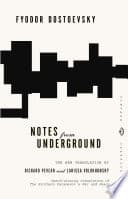
- Notes from Underground
Fyodor Dostoevsky
4.2 (84k) average on GoodreadsPsychologyBoth feature a confessional, introspective narrator grappling with existential angst and societal alienation.
- The Stranger
Albert Camus
4.1 (3k) average on GoodreadsFantasyExplores similar themes of existentialism, alienation, and the absurdity of life, characteristic of Camus's work.
- The Trial
Franz Kafka
4.0 (235k) average on GoodreadsLiterary FictionWhile both The Fall and The Trial explore themes of guilt and an oppressive system, Kafka's novel focuses on an innocent individual's struggle against an external, incomprehensible legal authority. Camus's work, conversely, places the source of judgment and guilt within the individual and humanity itself, with Clamence actively embracing his role as both judge and penitent, making the 'system' an internal, moral one rather than an external, bureaucratic one. Kafka's protagonist is a victim of an unknown charge, whereas Camus's Clamence becomes an architect of universal culpability.
- Nausea
Jean-Paul Sartre
3.9 (86k) average on GoodreadsPhilosophyBoth novels delve into existential themes, but Sartre's Nausea focuses on the protagonist's overwhelming experience of the contingency and absurdity of existence, leading to profound alienation and a sense of 'nausea' regarding being. Camus's The Fall, while also existential, shifts the emphasis to the moral implications of human freedom and inaction, particularly the hypocrisy and universal guilt that arise from judging others while being equally flawed. The Fall is more concerned with the ethical dimensions of human interaction and the burden of self-knowledge, whereas Nausea is primarily an ontological exploration of consciousness and being.
- Angels & Demons
Dan Brown
3.9 (2.7M) average on GoodreadsThrillerA Harvard symbologist races through Rome's ancient sites, deciphering cryptic clues to unmask the Illuminati and stop a vengeful plot to destroy the Vatican with a stolen antimatter weapon.
- Gone Girl
Gillian Flynn
4.1 (2.3M) average on GoodreadsThrillerA wife's sudden disappearance on her fifth anniversary reveals a web of lies and psychological warfare, exposing the secrets within a seemingly perfect marriage.





Enjoyed the summary?
A summary gives you the shape of the book. The book itself has the detail, the examples and the voice.
Find The Fall on AmazonAs an Amazon Associate, BookBrief earns from qualifying purchases. How we're funded