

Synopsis
Covers the whole plot, including the ending.
- Difficulty
- Medium
- Pacing
- Moderate
- Mood
- Epic, Spiritual, Dark, Dramatic, Mythic
- Read it if
- You enjoy epic fantasy sagas rooted in biblical narratives, featuring angelic warfare, cosmic scope, and explorations of good vs. evil.
- Skip it if
- You prefer secular fantasy or are uncomfortable with direct interpretations of religious texts as fiction.
The Fall of Lucifer Plot Summary
Covers the whole plot, including the ending.
The Celestial Council and the Prophecy
The story begins with a grand Celestial Council in Heaven, attended by many angels. God, called the Ancient of Days, reveals his plan: to create a new race, humankind, in his image, with free will. He states that humans, though initially below angels, will eventually reach great glory, even above angels. This news deeply troubles Lucifer, the most beautiful and powerful Archangel, who struggles to understand why a less perfect creation would receive such favor. His brothers, Michael and Gabriel, though surprised, accept God's decree with faith and love. Lucifer's heart, however, begins to feel jealousy and pride, making him question God's wisdom and justice.
Lucifer's Growing Discontent and the Seed of Rebellion
After the Celestial Council, Lucifer's inner turmoil grows. He stops joining his brothers in worship and spends time alone, wrestling with his pride and envy. He subtly shares his doubts with other angels, questioning the fairness of God's plan. He suggests that angels, who have served God faithfully for ages, are being overlooked for an untested, weaker creation. He argues that angels, with their inherent perfection and wisdom, deserve ultimate glory more. These whispers, initially ignored by many, slowly take root in the hearts of some, especially those drawn to Lucifer's charm and power, creating unease in the celestial realms.
The Temptation of the Stars
Driven by his growing ambition, Lucifer travels to the far reaches of the cosmos, observing the vastness of creation. He sees the stars and galaxies, and a deep sense of self-importance swells within him. He begins to believe his own brilliance and power are equal to, if not greater than, God's. He declares in his heart, 'I will ascend to the heavens; I will raise my throne above the stars of God; I will sit enthroned on the mount of assembly, on the utmost heights of Mount Zaphon. I will ascend above the tops of the clouds; I will make myself like the Most High.' This internal declaration marks a key moment, solidifying his intent to take God's authority and establish his own rule, driven by an insatiable desire for ultimate power and adoration.
The Gathering of the Disaffected
Lucifer starts gathering followers, appealing to the fears and ambitions of certain angels. He holds secret meetings in Heaven's outer courts, where he presents his vision of a new order where angels, led by him, would be supreme. He promises his followers greater power, recognition, and freedom from what he calls God's restrictive and unfair rules. He argues that God's love for humanity is a weakness and that only through his leadership can true justice and glory be achieved. Many are swayed by his eloquent speeches, his dazzling presence, and his alluring promises, leading to a major split among the angels. Among them is Azazel, a powerful warrior angel who becomes one of Lucifer's most loyal lieutenants, drawn by the promise of unrestrained power.
Michael's Plea and Gabriel's Warning
Michael, deeply troubled by Lucifer's growing rebellion, confronts his brother in a desperate attempt to bring him back to reason. He reminds Lucifer of their shared history, their bond, and Lucifer's original love for God, urging him to repent and abandon his destructive path. Lucifer, however, dismisses Michael's pleas as weakness and blind loyalty, hardening his heart further. Meanwhile, Gabriel, with his prophetic insights, senses the growing darkness and the coming conflict. He warns other loyal angels of the impending war, preparing them for the spiritual battle, even as celestial peace begins to break down under Lucifer's defiance and the division he has caused among the angels.
The First Skirmishes and the Lines Drawn
As Lucifer's rebellion gains strength, the celestial realms become tense. Arguments escalate into small skirmishes as loyal angels confront those swayed by Lucifer. These initial clashes, though not full-scale war, clearly divide the two sides: those loyal to God, led by Michael and Gabriel, and those loyal to Lucifer. Angels must choose sides, often at great emotional cost, as former friends and comrades find themselves on opposite ends of the growing conflict. Heaven's once harmonious choirs are replaced by murmurs of dissent and the sounds of early battle, signaling the irreversible end of celestial unity.
The Great War in Heaven Erupts
The tensions finally erupt into open warfare. Michael, empowered by God, leads the loyal angelic armies against Lucifer and his legions. The battle is depicted as an epic, devastating struggle that shakes the universe's foundations. Angels clash with immense force, wielding spiritual weapons and powers. Lucifer, with his great strength and charisma, fights fiercely, believing victory is within reach. However, Michael, embodying divine justice and unwavering loyalty, proves a formidable opponent. The conflict is not just physical; it is a war of wills, of faith against pride, and of obedience against rebellion, with creation's fate at stake.
Lucifer's Defeat and Expulsion
Despite Lucifer's power and his forces' strength, Michael ultimately wins. With a mighty cry and the strength of God's will, Michael defeats Lucifer, casting him down from the highest heavens. As Lucifer and his rebellious angels fall through the cosmic void, their divine light darkens, their forms twist, and their beauty corrupts. They become hideous demons, their hearts filled with eternal hatred and despair. This expulsion marks their permanent separation from God's presence and Heaven's glorious realms. They plummet into the abyssal depths, creating their own dark dominion, Hell, where they will forever plot against God and His creation, now filled with an insatiable desire for revenge.
The Creation of Earth and Humanity
After Lucifer and his demons are expelled, God continues with His original plan. He creates Earth, a beautiful and pristine world, then forms humanity: Adam and Eve, in His own image. They are placed in the idyllic Garden of Eden, given free will and a direct relationship with their Creator. This act further enrages Lucifer, now known as Satan, who sees humanity as a direct insult and a symbol of his humiliation. From his dark domain, he vows to corrupt God's beloved new creation, aiming to prove God's plan a failure and to get revenge by destroying what God loves most. The stage is now set for the next chapter in the cosmic struggle, with humanity as the central prize.
The Serpent in Eden
Driven by his burning hatred and desire for vengeance, Satan, now a master of deceit, takes the form of a cunning serpent. He enters the Garden of Eden and approaches Eve, subtly questioning God's command about the Tree of the Knowledge of Good and Evil. He twists God's words, suggesting that God is withholding true wisdom and that eating from the tree will make them 'like God,' knowing good and evil. Eve, swayed by the serpent's lies and the allure of forbidden knowledge, eats the fruit and shares it with Adam. This act of disobedience, known as the Fall, severs humanity's direct connection with God, introduces sin and death into the world, and gives Satan his first major victory in his ongoing war against God.
The Fall of Lucifer Characters
Lucifer (Satan)
Antagonist
The most beautiful and powerful Archangel, who rebels against God.
Lucifer is initially depicted as the most radiant and gifted of God's creations, possessing unparalleled beauty, wisdom, and power. He is a master of music and light, held in high esteem by all. However, his immense gifts become the source of his downfall, as pride and envy fester in his heart. He cannot accept God's plan to elevate humanity above angels, viewing it as an injustice and an affront to his own glory. His ambition to be 'like the Most High' drives him to rebellion, transforming him into the embodiment of evil and deceit, consumed by an eternal hatred for God and His creation.
Relationships: God (Ancient of Days) (Creator and ultimate adversary); Michael (Brother and chief opponent); Gabriel (Brother, though less direct interaction); Azazel (Loyal lieutenant/follower)
Michael
Protagonist/Supporting
The Archangel of War, fiercely loyal to God and leader of the heavenly armies.
Michael is portrayed as a powerful and unwavering Archangel, embodying loyalty, courage, and divine justice. He is dedicated to God's will above all else and serves as the general of the heavenly hosts. While initially saddened by Lucifer's growing rebellion, he does not hesitate to confront his brother when the time for war arrives. He is the instrument of God's judgment against Lucifer, leading the forces of light in the celestial war. His character represents steadfast faith and the embodiment of righteous power, willing to fight for truth and order against chaos and rebellion.
Relationships: God (Ancient of Days) (Loyal servant and general); Lucifer (Brother and chief adversary); Gabriel (Brother and comrade-in-arms)
Gabriel
Supporting
The Archangel of Revelation and Messenger of God.
Gabriel is depicted as an Archangel of profound wisdom, grace, and prophetic insight. He often serves as God's primary messenger, relaying divine decrees and visions. While less directly involved in the physical combat of the War in Heaven than Michael, Gabriel's role is crucial in understanding and communicating God's plan and the gravity of Lucifer's rebellion. He possesses a deep understanding of divine mysteries and often acts as a voice of reason and warning. His character embodies faith, understanding, and the solemn duty of carrying divine truth.
Relationships: God (Ancient of Days) (Messenger and confidant); Lucifer (Brother, whose rebellion he laments); Michael (Brother and ally)
God (The Ancient of Days)
Protagonist/Deity
The omnipotent Creator and Sovereign of the Universe.
Referred to as the Ancient of Days, God is the ultimate authority and benevolent Creator. He is portrayed as all-knowing, all-powerful, and infinitely loving, yet also just. His decision to create humanity in His image and bestow upon them free will, even knowing the potential for their fall, is central to the narrative. He allows Lucifer's rebellion to unfold, respecting free will even in His angels, but ultimately ensures that justice prevails. His character drives the overarching plot, setting the stage for the cosmic conflict and the subsequent creation of mankind.
Relationships: Lucifer (Creator and ultimate judge); Michael (Creator and commander); Gabriel (Creator and messenger); Adam and Eve (Creator and father figure)
Azazel
Supporting/Antagonist
A powerful warrior angel who becomes one of Lucifer's chief lieutenants.
Azazel is introduced as a strong and respected warrior angel within the heavenly host. He is drawn to Lucifer's charisma and promises of greater power and glory, becoming one of his most ardent and formidable followers. Azazel's character represents the angels who, despite their initial noble standing, are swayed by pride and ambition, choosing to abandon God for the allure of Lucifer's rebellion. He fights fiercely on Lucifer's side during the War in Heaven and ultimately suffers the same fate of expulsion and transformation into a demon, becoming a significant figure within the demonic hierarchy.
Relationships: Lucifer (Loyal follower and lieutenant); Michael (Opponent in battle)
Adam
Supporting
The first man, created by God in His image.
Adam is the first human being, created by God and placed in the Garden of Eden. He is innocent, pure, and enjoys direct communion with his Creator. He is given dominion over the Earth and shares a loving relationship with Eve. His character represents humanity's original state of perfection and innocence before the Fall. He is a pivotal figure as his choice, influenced by Eve and the serpent, leads to the introduction of sin and death into the human race, fulfilling Lucifer's initial act of revenge against God's new creation.
Relationships: God (Ancient of Days) (Created son); Eve (Wife and companion); Lucifer (as serpent) (Tempter and deceiver)
Eve
Supporting
The first woman, created from Adam's rib.
Eve is the first woman, created by God as a companion for Adam. She is beautiful, curious, and shares in humanity's initial innocence and favor with God. Her character is central to the narrative of the Fall, as she is the first to be directly tempted by Lucifer in his serpent form. Her desire for knowledge and her susceptibility to the serpent's deceit lead her to eat the forbidden fruit, subsequently offering it to Adam. Her actions, though perhaps born of curiosity rather than malice, precipitate humanity's expulsion from Eden and the profound consequences of sin.
Relationships: God (Ancient of Days) (Created daughter); Adam (Husband and companion); Lucifer (as serpent) (Tempter and deceiver)
The Fall of Lucifer Themes
Pride and Envy as Corrupting Forces
The main theme is how pride and envy can corrupt even perfect beings. Lucifer, initially the most glorious angel, cannot accept God's plan to elevate humanity. His pride makes him believe he deserves worship and authority more, and his envy of humanity's destined glory fuels his rebellion. This is clear from his thoughts after the Celestial Council, where he questions God's wisdom, and his declaration, 'I will ascend above the tops of the clouds; I will make myself like the Most High,' showing his excessive ambition. His fall is a warning of how these vices can lead to destruction and eternal damnation.
“How you have fallen from heaven, morning star, son of the dawn! You have been cast down to the earth, you who once laid low the nations!”
Free Will and its Consequences
The story explores free will, for both angels and humans, and its deep consequences. God gives his creations the ability to choose, even if that choice leads to rebellion and suffering. Lucifer's rebellion is a direct exercise of his free will, as is the choice of the angels who follow him. Similarly, Adam and Eve are given free will in the Garden of Eden, and their decision to disobey God, despite warnings, leads to mankind's Fall. The story emphasizes that while free will allows for love and obedience, it also carries the great risk of disobedience and separation from the Creator.
“I will make myself like the Most High.”
Loyalty vs. Rebellion
This theme shows through the sharp contrast between Michael's unwavering loyalty to God and Lucifer's rebellion. Michael and Gabriel show steady faith and obedience, accepting God's decrees even when challenging. Lucifer, in contrast, chooses defiance, questioning divine authority and seeking his own rule. The War in Heaven is the physical sign of this conflict, with angels forced to choose sides. The results of these choices are absolute: eternal glory for the loyal, and eternal damnation for the rebellious, highlighting the basic importance of allegiance in the cosmic order.
“Who is like God?”
The Nature of Good and Evil
The book looks at the origins of good and evil. Initially, all creation is good, but evil emerges through Lucifer's internal corruption, born from his pride and envy. His change from a being of light to the embodiment of darkness shows that evil is not created but is a distortion of good, a misuse of free will. The story shows how evil, once unleashed, seeks to corrupt and destroy, as seen in Satan's temptation of humanity. The constant struggle between Michael's forces and Lucifer's legions is a cosmic representation of the eternal battle between these opposing forces.
“And there was war in heaven: Michael and his angels fought against the dragon; and the dragon and his angels fought.”
Redemption and Hope (Implicit)
While the main focus is on the fall, there is an implied theme of redemption and hope, especially through God's continued plan for humanity. Despite the Fall of Man, God does not abandon his creation. The act of creating humanity after Lucifer's fall, and the later promise of a future Redeemer (though not detailed in this specific book, it is a basic spiritual idea the book builds upon), hints at a larger plan for salvation. The existence of Adam and Eve, even after their disobedience, signifies God's lasting love and his ultimate intention to reconcile creation to himself, offering hope amid the cosmic tragedy.
“I will put enmity between you and the woman, and between your offspring and hers; he will crush your head, and you will strike his heel.”
Plot Devices & Literary Techniques
Prophecy/Divine Decree
God's announced plan for humanity which sets the entire conflict in motion.
The divine decree concerning the creation and elevation of humanity serves as the inciting incident for the entire narrative. God's announcement at the Celestial Council directly triggers Lucifer's envy and pride, leading to his rebellion. This device establishes the central conflict and the stakes, as Lucifer's actions are a direct challenge to God's foretold plan. It also provides a sense of cosmic destiny, where certain events are preordained, yet free will still plays a critical role in how those events unfold.
Internal Monologue/Thought Process
Reveals Lucifer's descent into pride and rebellion.
The book frequently uses Lucifer's internal monologues and detailed descriptions of his thought processes to chart his transformation from a glorious Archangel to the Prince of Darkness. This device allows readers to understand the insidious nature of pride and envy as they take root and grow within him, providing psychological depth to his fall. It shows his rationalizations, his growing dissatisfaction with God's authority, and his ultimate decision to rebel, making his motivations clear and his downfall more tragic.
Cosmic Battle
The epic War in Heaven between loyal and rebellious angels.
The War in Heaven is a major plot device that serves as the climax of the angelic conflict. It physically manifests the spiritual battle between good and evil, loyalty and rebellion. This epic clash of celestial beings not only provides dramatic action but also solidifies the permanent separation between God and the rebellious angels. Its scale underscores the immense stakes of the conflict and the power of both Michael's divine authority and Lucifer's formidable defiance, leading directly to the expulsion of the fallen angels and the creation of Hell.
Temptation
Satan's act of luring humanity to disobedience in the Garden of Eden.
The temptation of Eve by Satan in the form of a serpent is a crucial plot device that directly leads to the Fall of Humanity. This act serves as Lucifer's primary revenge against God's new creation, demonstrating his continued malice and cunning. It mirrors his own fall, as he tempts humanity with the promise of becoming 'like God,' echoing his own ambition. This event introduces sin, suffering, and death into the human experience, setting the stage for the ongoing spiritual warfare on Earth and the need for future redemption.
The Fall of Lucifer Quotes
“The very air in heaven hummed with the worship of the seraphim, a symphony of adoration that was Lucifer’s birthright to lead.”
“Pride is a venomous seed, small at first, but with the power to corrupt the most magnificent of creations.”
“He gazed upon the face of the Almighty, and for the first time, saw not love, but a rival.”
“The silence that followed his declaration was more deafening than any thunder, for it was the silence of a broken heart in Heaven.”
“Freedom, he had called it. But it was a freedom born of chains, forged from his own deceit.”
“The tears of the loyal angels fell like starlight, mourning a brother lost to the abyss of his own choosing.”
“Even in his descent, a flicker of that divine light still clung to him, a painful reminder of what he had forsaken.”
“The universe itself seemed to shudder, sensing the profound rupture in the fabric of creation.”
“He sought dominion, not to serve, but to be served, a fatal inversion of divine order.”
“The choice was always there, a whisper in the heart, before it became a roar in the mind.”
“To deny the Creator is to deny the very essence of one's own being, for we are but reflections of His glory.”
“The echo of his once-beautiful song was now a discordant wail, a lament for what might have been.”
“Darkness was not merely the absence of light, but a consuming presence, a hunger that could never be sated.”
“He had traded eternal light for transient power, and found only an eternal void.”
Quiz
10 questions on the plot and the characters. Each answer comes with a short explanation.
Question 1
Which of the three Archangel brothers is the first to express doubts about the Creator's plan for the new race of men?
- Michael
- Gabriel
- Lucifer
- Raphael
Show answer
C. Lucifer Lucifer is the first of the Archangel brothers to voice his discontent and doubts regarding the Creator's decision to bestow free will and a special status upon the newly created race of men.
Question 2
What is the primary 'prize' that the war between the angelic brothers is fought for, as stated in the book's description?
- Control over the celestial palaces
- The greatest weapon in the universe
- The race of men
- The Creator's ultimate favor
Show answer
C. The race of men The book explicitly states that the war is fought 'for the greatest prize in the universe... That war for the race of men,' highlighting humanity's central role in the conflict.
Question 3
What emotion or characteristic is most closely associated with Lucifer's downfall, as portrayed in the narrative?
- Fear
- Envy and pride
- Compassion
- Indifference
Show answer
B. Envy and pride Lucifer's 'obsessive love and treason' stem primarily from his pride and envy regarding the Creator's attention and plans for humanity, leading to his rebellion.
Question 4
Where are some of the key settings for the epic saga, according to the description?
- Ancient Earth cities and distant galaxies
- Opulent palaces and frightening hell worlds
- Underground bunkers and futuristic space stations
- Heavenly gardens and desolate deserts
Show answer
B. Opulent palaces and frightening hell worlds The book's description clearly states the settings include 'opulent palaces and frightening hell worlds,' contrasting the celestial and infernal realms.
Question 5
What is a central theme explored through the conflict between the Archangel brothers?
- The importance of technological advancement
- The nature of free will versus divine authority
- The struggle for resources in a barren universe
- The discovery of new magical abilities
Show answer
B. The nature of free will versus divine authority Lucifer's rebellion is fundamentally about questioning the Creator's authority and the implications of humanity's free will, making it a core thematic conflict.
Question 6
Which character is identified as having 'turned renegade' in the book's synopsis?
- Michael
- Gabriel
- One of the human leaders
- One of the three Archangel brothers
Show answer
D. One of the three Archangel brothers The description states, 'Three Archangels...Three Brothers...One turned renegade,' directly referring to Lucifer's rebellion from the angelic host.
Question 7
What is the primary characteristic of the 'ancient evil' mentioned in the book's description?
- It is limited to specific geographical locations
- It is a newly emerging force in the universe
- It knows no bounds
- It only affects non-angelic beings
Show answer
C. It knows no bounds The description specifically states that the 'ancient evil... knows no bounds,' implying its pervasive and limitless nature.
Question 8
Beyond the physical conflict, what internal struggle does the book delve into, particularly concerning the angelic beings?
- Their struggle with physical hunger and thirst
- Their inability to understand human emotions
- The theme of doubt and questioning divine authority
- Their competition for artistic creation
Show answer
C. The theme of doubt and questioning divine authority The description mentions 'a timeless saga of doubt,' indicating that internal struggles, particularly questioning the Creator's wisdom, are central to the narrative, especially for Lucifer.
Question 9
The book describes events 'older than the universe itself.' What does this imply about the nature of the conflict and its origins?
- The conflict began before the physical creation of the cosmos.
- The universe is an illusion, and the conflict is entirely mental.
- The story is set in a different dimension outside of time.
- The characters are immortal and have existed for an infinite time.
Show answer
A. The conflict began before the physical creation of the cosmos. Stating 'older than the universe itself' implies that the origins of the conflict, particularly Lucifer's fall, predate the creation of the physical universe, grounding it in a spiritual or pre-creation timeline.
Question 10
What kind of warriors are involved in the impending war, as described in the summary?
- Human soldiers and alien invaders
- Robotic armies and ancient spirits
- Demons and angelic warriors
- Mythical beasts and sorcerers
Show answer
C. Demons and angelic warriors The description explicitly mentions 'demons and angelic warriors,' indicating the primary combatants in the cosmic war.
The Fall of Lucifer FAQ
What is the central conflict that drives the narrative in 'The Fall of Lucifer'?
The central conflict revolves around the war between the three archangel brothers – Lucifer, Michael, and Gabriel – and the universe-shaking repercussions of Lucifer's rebellion. This war is fought not only for dominance but specifically for the fate and allegiance of the newly created race of men, making humanity the ultimate prize.
Who are the three archangel brothers, and what are their primary roles or characteristics before the rebellion?
The three archangel brothers are Lucifer, Michael, and Gabriel. Lucifer is initially depicted as the most beautiful and gifted, a leader among the heavenly hosts. Michael is the fierce warrior, loyal and powerful, while Gabriel is often portrayed as the messenger and the more contemplative, gentle brother, though equally mighty.
What event triggers Lucifer's descent into rebellion and his eventual fall?
Lucifer's rebellion is triggered by his immense pride and jealousy, particularly after the creation of humanity. He resents God's command for the angels to bow before mankind, viewing humans as inferior, and believes he is more deserving of such adoration and power, leading him to challenge the Creator directly.
Describe the settings where the story primarily unfolds.
The story unfolds across a vast cosmic canvas, ranging from the opulent, pristine palaces of Heaven, where angels reside and worship, to the terrifying and desolate hell-worlds that are forged as a consequence of Lucifer's rebellion. These contrasting environments highlight the stark difference between divine order and chaotic evil.
What is the 'greatest prize in the universe' that the angels are fighting for?
The 'greatest prize in the universe' is explicitly stated as the race of men. The angelic war is ultimately fought over humanity's allegiance, their souls, and their destiny, with both sides vying for control and influence over this newly created species.
Are there any subtle hints about Lucifer's future rebellion or his character flaws early in the narrative, before his full turn?
Yes, early in the narrative, there are subtle hints of Lucifer's burgeoning pride and ambition, often masked by his beauty and talent. His exceptional nature and the admiration he receives subtly feed his ego, making him susceptible to the idea that he is superior even to his Creator's plans, especially concerning humanity.
How does the author connect the angelic war with the fate of humanity beyond just the 'prize' aspect?
The author connects the angelic war with humanity's fate by showing how the cosmic conflict directly impacts mankind's creation, their innocence, and their eventual fall. The choices made by the angels, particularly Lucifer, set the stage for humanity's struggle with temptation, sin, and the ongoing spiritual battle for their souls.
Are there any prophetic elements or ancient prophecies mentioned that foreshadow the events of the war or its outcome?
The narrative implies an ancient, timeless saga, suggesting that the conflict is part of a pre-ordained cosmic drama, though not always through explicit 'prophecies' in the traditional sense. The very act of creation and the hierarchy established by God inherently set up the conditions for Lucifer's challenge and the subsequent cosmic struggle.
What role does 'obsessive love' play in Lucifer's motivations or his relationships with his brothers?
Lucifer's 'obsessive love' is complex; it's less about romantic love and more about an intense, possessive desire for admiration and ultimate power, which he believes is his due. This twisted 'love' for his own perceived glory fuels his rebellion and ultimately corrupts his relationships with Michael and Gabriel, turning brotherly bonds into bitter enmity.
How does Michael cope with the betrayal of his brother, Lucifer, from a psychological perspective?
Michael's psychological coping with Lucifer's betrayal is marked by profound grief, shock, and a fierce sense of duty. He is torn between his love for his brother and his unwavering loyalty to God, leading to a deep internal conflict that manifests as resolute determination and a heavy heart as he leads the heavenly armies against his kin.
Analyze the psychological impact of Lucifer's rebellion on the other angels who chose to follow him.
The angels who followed Lucifer likely experienced a complex mix of disillusionment, ambition, and fear. Initially drawn by Lucifer's charisma and promises of greater freedom or power, they would have progressively descended into deeper levels of corruption, resentment, and despair as the consequences of their treason became horrifyingly clear, leading to their transformation into demons.
What psychological factors contribute to Lucifer's inability to repent or turn back, even when facing defeat?
Lucifer's inability to repent stems from an overwhelming pride and an unyielding ego that cannot conceive of submission or admitting fault. His profound narcissism makes him believe he is justified, and any act of repentance would shatter his self-image of ultimate power and independence, trapping him in his own defiance.
Is Lucifer portrayed as purely evil from the outset, or is there a gradual transformation, and how does this affect the reader's interpretation?
Lucifer is not portrayed as purely evil from the outset; rather, there is a gradual and tragic transformation. He begins as the most radiant and gifted, making his descent into evil more poignant and horrifying. This nuanced portrayal allows readers to interpret his fall as a cautionary tale of pride and free will, rather than just a simplistic battle between good and evil.
How does the book's depiction of 'obsessive love' and 'treason' challenge traditional interpretations of angelic beings?
The book challenges traditional interpretations by imbuing angelic beings with deeply human-like emotions such as 'obsessive love' (transformed into possessiveness and pride) and 'treason.' This humanizes them, making their motivations and conflicts more relatable and tragic, moving beyond simplistic celestial purity to explore complex moral failings within divine beings.
What is the author's message about the nature of free will, as demonstrated through Lucifer's choices?
Through Lucifer's choices, the author conveys a powerful message about the profound and perilous nature of free will. Even in a perfect creation, the ability to choose allows for rebellion against the Creator, illustrating that true love and obedience must be freely given, and that the abuse of free will can lead to catastrophic consequences and eternal separation.
Does the book offer any hope for redemption for Lucifer or the fallen angels, or is their fate sealed?
The book primarily depicts the sealed fate of Lucifer and the fallen angels, emphasizing the irreversible nature of their treason and the profound consequences of their rebellion. While the narrative focuses on the conflict and the establishment of evil, it generally aligns with the theological understanding that their choice for defiance is permanent, leading to no redemption.
How does the concept of 'ancient evil that knows no bounds' manifest in the story beyond Lucifer's actions?
The 'ancient evil that knows no bounds' manifests not only through Lucifer's initial rebellion but also in the pervasive corruption he spreads, the creation of hell-worlds, and the subsequent temptation and torment of humanity. This evil becomes an independent, self-perpetuating force that seeks to destroy and corrupt all that is good, extending its influence far beyond its originator.
In what ways does 'The Fall of Lucifer' expand upon or reinterpret biblical accounts of the angelic rebellion?
'The Fall of Lucifer' greatly expands upon biblical accounts by providing rich, character-driven narratives and detailed psychological motivations for the angels. It delves into their relationships, emotions, and the specific events leading to the rebellion, offering a dramatic, humanized, and epic interpretation that fills in the often sparse details found in scripture.
About the author

Wendy Alec is an author known for her fiction, particularly in the realm of fantasy. Her notable work, "The Fall of Lucifer," explores themes of good and evil through a narrative centered on the character of Lucifer. Alec's writing often combines elements of spirituality and mythology.
Similar books
- Paradise Lost
John Milton
4.1 (6k) average on GoodreadsMysteryA classic epic poem exploring the fall of Lucifer and the biblical narrative.
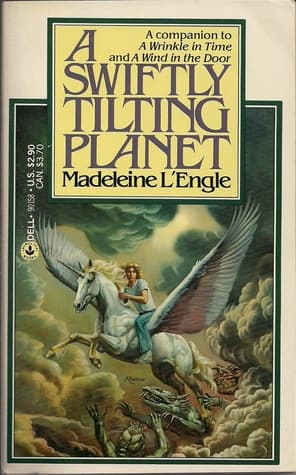
- A Swiftly Tilting Planet
Madeleine L'Engle
4.1 (101k) average on GoodreadsFantasyWhile not directly about the fall of Lucifer, L'Engle's 'A Swiftly Tilting Planet' (part of the Time Quintet) explores themes of good versus evil, cosmic struggle, and the power of choice within a spiritual fantasy framework. L'Engle's approach is more subtle and allegorical, intertwining scientific concepts with deep theological questions, often through the lens of young protagonists. Alec's "The Fall of Lucifer" is much more direct and epic in its scope, focusing on a singular, grand biblical narrative. L'Engle's work encourages readers to ponder complex moral dilemmas without explicit didacticism, whereas Alec's narrative, while engaging, tends to reaffirm established theological interpretations with less room for ambiguity or nuanced philosophical exploration, prioritizing narrative spectacle over subtle thematic development.
- Harry Potter and the Sorcerer's Stone
J.K. Rowling
4.5 (7M) average on GoodreadsFantasyRescued from a miserable life under the stairs, an orphaned boy discovers he's a wizard destined for a magical school, where he uncovers a dangerous secret tied to the dark wizard who murdered his parents.
- The Hunger Games
Suzanne Collins
4.3 (6.4M) average on GoodreadsFantasyIn a future where children fight to the death on live television, Katniss Everdeen volunteers for the arena, turning a death sentence into a fight for survival and a spark of rebellion.
- 1984
George Orwell
4.2 (3.1M) average on GoodreadsPoliticsIn a future where surveillance and thought control are absolute, a man's search for truth clashes with the Party, showing that hope can be a form of rebellion.
- Divergent
Veronica Roth
4.2 (2.9M) average on GoodreadsFantasyIn a society divided by virtues, a sixteen-year-old's difference from the norm starts a rebellion that threatens her world.





Enjoyed the summary?
A summary gives you the shape of the book. The book itself has the detail, the examples and the voice.
Find The Fall of Lucifer on AmazonAs an Amazon Associate, BookBrief earns from qualifying purchases. How we're funded