
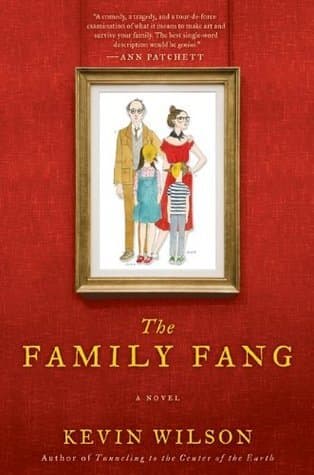
Synopsis
Covers the whole plot, including the ending.
- Difficulty
- Medium
- Pacing
- Moderate
- Mood
- Quirky, Reflective, Humorous, Melancholy
- Read it if
- You enjoy quirky family dramas, explorations of art and identity, and stories with a mix of humor and melancholy.
- Skip it if
- You prefer straightforward plots without ambiguity, or dislike characters who are difficult to empathize with.
The Family Fang Plot Summary
Covers the whole plot, including the ending.
The Accidental Injury and the Return Home
Buster Fang, a writer, gets a concussion when a can of cream of mushroom soup hits him in the head. This bizarre injury, along with a recent breakup and a stalled writing career, makes him call his sister, Annie Fang. Annie, an actress whose career is also in decline, agrees they should return to their childhood home in rural Ohio to recover. They had avoided the home due to their unconventional upbringing by performance artists Caleb and Camille Fang. Their return marks the beginning of their reluctant re-entry into their parents' chaotic world, a world they had tried to escape.
A Childhood Re-lived Through Documentation
At their parents' house, Buster and Annie find themselves surrounded by the meticulously cataloged remnants of their childhood—a vast archive of videos, photographs, and documents detailing Caleb and Camille's performance art. Many of these pieces, which their parents call 'Fang performances,' involved Buster and Annie, often unknowingly, as central figures. As they review this material, they confront the surreal and often humiliating experiences of their youth, where the line between art and life was constantly blurred. This re-examination of their past highlights how their parents' artistic pursuits shaped their development, showing how much their identities were formed by these public, unconventional interventions.
The Parents' Latest Project: 'The End'
While Buster and Annie navigate their present anxieties and past traumas, Caleb and Camille are focused on their latest and potentially final performance art piece, titled 'The End.' They are secretive about the details, only hinting at its grand scale and importance as their magnum opus. The parents' dedication to their art, even in their old age, is a source of both admiration and immense frustration for Buster and Annie. The children suspect that 'The End' will involve them, reigniting their old anxieties about being used for their parents' artistic vision. This further complicates their strained family dynamic and their attempts to find solace at home.
The Disappearance of Caleb and Camille
Caleb and Camille Fang disappear after their car is found abandoned and wrecked on a rural road, with signs of a struggle. The local police, led by Sheriff Duncan, investigate, initially treating it as a possible abduction or murder. Buster and Annie are central to the investigation, forced to interact with law enforcement and the media, who are intrigued by the Fangs' eccentric reputation. However, the children, having grown up witnessing their parents' elaborate hoaxes and staged events, suspect the disappearance is not what it seems. They wonder if this is another, perhaps their most ambitious, performance art piece.
Investigating the 'Disappearance'
Skeptical of the police investigation and convinced their parents' disappearance is staged, Buster and Annie begin their own search for clues. They revisit the 'accident' scene, examine their parents' belongings, and review past performance art documents, searching for patterns or hints about 'The End.' Buster, with his writer's eye for detail, and Annie, with her actor's understanding of performance, piece together fragments of information. Their investigation becomes a journey into their parents' artistic methods, forcing them to confront how far Caleb and Camille would go for their art, and the blurry boundaries between truth and fiction that defined their family life.
The Media Frenzy and Public Speculation
The mysterious disappearance of the renowned, if controversial, performance artists Caleb and Camille Fang quickly gets national media attention. News outlets arrive in the quiet rural town, eager to report on the bizarre case. The Fangs' unconventional past, including their history of staging elaborate public events and pranks, fuels widespread speculation. Some believe it is a genuine tragedy, while others, familiar with their work, suspect it is their ultimate performance art piece. Buster and Annie are under intense scrutiny, their every move analyzed by reporters and the public. This media frenzy adds pressure to their already fraught search, as they try to discern the truth amid the public's hunger for a sensational story, further isolating them.
The Role of Charles and the Art World
As Buster and Annie investigate, they seek out Charles, a former collaborator and close friend of Caleb and Camille from their early art days. Charles, now an art critic and curator, provides insights into the Fangs' artistic philosophy and their commitment to blurring the lines between art and life. He explains the depth of their artistic ambition and their desire to create work that provoked and challenged audiences. Charles's perspective helps Buster and Annie understand their parents' dedication to their craft, offering a different view of their eccentric upbringing and the current disappearance. His insights confirm their suspicions that 'The End' is a performance.
The Unveiling of 'The End'
Following a series of cryptic clues, Buster and Annie uncover the truth behind Caleb and Camille's disappearance. They discover that 'The End' is a planned performance art piece designed to simulate their own deaths, forcing the public, and more importantly, their children, to confront questions of authenticity, grief, and the legacy of their art. The parents orchestrated the car accident and their subsequent vanishing act to create a powerful, immersive experience that would be debated and analyzed for years. Buster and Annie are initially furious and hurt by the deception, but also impressed by the audacity and artistic brilliance of the scheme, realizing its profound impact on them.
Confrontation and Reconciliation
Buster and Annie eventually track down Caleb and Camille, who have been hiding and observing the fallout of their performance. The reunion is charged with a mix of anger, relief, and a strange sense of understanding. Buster and Annie confront their parents about the emotional toll their art has taken on them, expressing the resentment and confusion they have carried since childhood. Caleb and Camille, in turn, explain their artistic motivations, their belief that art should be lived and experienced, not merely observed. This confrontation, though difficult, allows for a fragile form of reconciliation, as both generations begin to acknowledge the other's perspective, albeit imperfectly, finally verbalizing years of unspoken grievances and artistic justifications.
The Aftermath and Lingering Questions
After 'The End,' the Fang family deals with the public's reaction, which ranges from outrage to admiration, and the legal repercussions of their elaborate hoax. More importantly, Buster and Annie process the implications of their parents' final performance on their own lives and identities. While they gain a deeper, if still complicated, understanding of their parents' artistic drive, the experience leaves them with lingering questions about the nature of truth, the boundaries of art, and the true cost of creativity. The novel concludes with the family's future uncertain, but with Buster and Annie having gained a clearer, if still ambivalent, perspective on their unique heritage, and perhaps a path forward for their own lives.
The Family Fang Characters
Buster Fang
Protagonist
A struggling writer haunted by his performance artist parents' past.
Buster is a thoughtful, introverted man in his late thirties, struggling with a stalled writing career and a recently ended relationship. He is deeply affected by his childhood, where he was an unwitting participant in his parents' performance art. He often feels like an observer in his own life, constantly analyzing situations for their 'Fang performance' potential. Buster seeks order and meaning, a stark contrast to the chaos of his upbringing. He is prone to anxiety and overthinking, often retreating into himself when faced with overwhelming situations. His primary motivation is to understand and escape the shadow of his parents' artistic legacy, while also finding his own authentic voice and purpose.
Relationships: Annie Fang (Sister; co-conspirator in navigating their parents' world); Caleb Fang (Father; complex, often resentful relationship due to artistic exploitation); Camille Fang (Mother; similar complex relationship, but perhaps with more underlying affection)
Annie Fang
Protagonist
A troubled actress whose career and personal life are impacted by her childhood.
Annie is Buster's older sister, a once-promising actress whose career is now in decline. More outwardly rebellious and volatile than Buster, Annie often acts impulsively and struggles with self-destructive tendencies, partly as a reaction to her unconventional upbringing. She craves attention and validation, perhaps a lasting effect of being constantly 'on stage' in her parents' art. Despite her frustrations with her parents, there's a part of her that understands and even admires their artistic vision. She is fiercely protective of Buster and possesses a sharp wit, often using humor as a defense mechanism. Her drive is to find stability and control in her life, something she never had as a child.
Relationships: Buster Fang (Brother; close bond, co-dependent in many ways); Caleb Fang (Father; strained relationship, marked by resentment and a desire for his approval); Camille Fang (Mother; similar complex relationship, with moments of shared understanding)
Caleb Fang
Antagonist/Supporting
The eccentric, uncompromising patriarch and performance artist.
Caleb Fang is the visionary and driving force behind the Fang family's performance art. He is brilliant, manipulative, and utterly devoted to his artistic vision, often at the expense of conventional family life. He sees the world as a canvas and everyday interactions as opportunities for art. Caleb is charismatic but also deeply self-absorbed, believing his art to be of paramount importance. He is unrepentant about how his work affected his children, viewing their participation as a necessary part of a larger artistic statement. His primary motivation is to create meaningful, provocative art that challenges societal norms and leaves a lasting legacy, even if it means alienating those closest to him.
Relationships: Camille Fang (Wife and artistic partner; deeply intertwined in their creative and personal lives); Buster Fang (Son; views him as a component of his art); Annie Fang (Daughter; views her as a component of his art)
Camille Fang
Antagonist/Supporting
The equally dedicated and enigmatic matriarch and performance artist.
Camille Fang is Caleb's wife and artistic partner, equally committed to their performance art. She is often the more pragmatic and organized of the two, meticulously documenting their performances and managing the logistical aspects of their artistic endeavors. While she shares Caleb's artistic vision, she sometimes displays a more subtle awareness of the emotional toll their work takes on their children, though she rarely intervenes. Camille is intelligent, sharp-witted, and possesses a quiet strength that complements Caleb's more flamboyant personality. Her motivation is to support and contribute to their shared artistic legacy, believing deeply in the power and necessity of their work.
Relationships: Caleb Fang (Husband and artistic partner; deeply intertwined in their creative and personal lives); Buster Fang (Son; views him as a component of her art); Annie Fang (Daughter; views her as a component of her art)
Sheriff Duncan
Supporting
The local law enforcement officer investigating the Fang disappearance.
Sheriff Duncan is the pragmatic and somewhat bewildered local sheriff tasked with investigating the disappearance of Caleb and Camille Fang. He represents conventional authority and logic in contrast to the Fangs' artistic chaos. He tries to apply standard police procedures to a highly unconventional situation, often finding himself frustrated and confused by the Fangs' history of performance art. He is earnest and diligent but ultimately out of his depth when dealing with the Fangs' unique brand of reality-bending. His presence highlights the clash between the mundane world and the Fangs' artistic universe.
Relationships: Buster Fang (Investigator and subject; a source of both information and suspicion); Annie Fang (Investigator and subject; a source of both information and suspicion)
Charles
Supporting
A former collaborator and art critic who provides context for the Fangs' work.
Charles is an art critic and former colleague of Caleb and Camille Fang from their early days in the art world. He possesses a deep understanding and appreciation for their artistic philosophy, having witnessed its development firsthand. Charles serves as a bridge between the Fangs' insular world and the broader art community, offering Buster and Annie crucial insights into their parents' motivations and the historical context of their work. He is intellectual and articulate, capable of explaining the artistic merit of the Fangs' often controversial performances. His role is to provide an external, informed perspective on the Fangs' art, helping the children to see their parents through a different lens.
Relationships: Caleb Fang (Old friend and artistic associate); Camille Fang (Old friend and artistic associate); Buster Fang (Provides context and understanding to him)
The Family Fang Themes
The Nature of Art and Reality
The novel constantly blurs the lines between art and reality, asking what constitutes 'art' and at what cost it should be pursued. Caleb and Camille's entire lives are a performance, with their children as unwilling participants, forcing Buster and Annie to question the authenticity of every interaction. Their 'disappearance' is the ultimate blurring, making the police, media, and even their children question whether it is a real crime or a staged masterpiece. This theme explores the ethical boundaries of art and its impact on the lives it touches, suggesting that art, in its most extreme forms, can become indistinguishable from life itself, with real consequences for those involved, particularly the Fang children who never had a 'normal' life.
“They didn’t make art so much as they made life into art, which meant that life was pretty much unlivable for everyone else.”
Family Identity and Legacy
The Fang children struggle to form their own identities outside their parents' artistic legacy. Buster and Annie are defined by being 'Fang children,' and their professional and personal failures are often linked to their inability to escape this inherited identity. The parents, in turn, are obsessed with their artistic legacy, viewing their children's involvement in their performances as a natural extension of their art. The novel explores how family history, especially a unique and public one, shapes individual lives and the complex, often resentful, bond that forms when personal identity is subsumed by a collective, artistic one. The 'disappearance' forces the children to confront their parents' legacy and decide how much they want to be a part of it.
“The question, it seemed to Buster, was not whether he was a Fang, but what kind of Fang he was.”
Childhood Trauma and Its Aftermath
Buster and Annie's adult struggles—Annie's acting career and self-destructive tendencies, Buster's stalled writing and relationship issues—are direct consequences of their unconventional and emotionally confusing childhood. They were raised in an environment where parental love was often intertwined with artistic manipulation, leading to trust issues and a skewed perception of normal relationships. The novel explores the long-term psychological effects of being constantly 'on stage' and having one's personal life used for public consumption. Their return home and the investigation of their parents' disappearance force them to confront these unresolved childhood traumas, highlighting how early experiences can shape an individual's capacity for happiness and stability in adulthood.
“They were children of art, and art had broken them.”
The Search for Authenticity
Throughout the novel, Buster and Annie search for authenticity, both in their own lives and in understanding their parents. Having grown up in a world of staged realities and calculated deceptions, they struggle to discern what is genuine. Buster's writing is an attempt to find his own truth, while Annie's acting career ironically involves embodying other people's truths. The parents' final performance, 'The End,' is the ultimate challenge to this search, forcing everyone to question the nature of truth itself. The characters grapple with whether true authenticity can exist in a world where everything, even family, can be manipulated for artistic effect, and if 'art' can ever truly be authentic when it involves such elaborate deception.
“How do you know what’s real, when your whole life has been a performance?”
Plot Devices & Literary Techniques
The Fang Archives
A vast collection of documented performance art that serves as both a historical record and a source of trauma.
The Fang Archives consist of meticulously cataloged videos, photographs, and written accounts of Caleb and Camille's performance art, many of which feature Buster and Annie. This device serves multiple functions: it provides exposition about the Fangs' past, visually immersing the reader in their eccentric world; it acts as a catalyst for Buster and Annie's emotional reckoning, forcing them to confront their childhood traumas; and it becomes a crucial source of clues during their investigation into 'The End,' as they search for patterns and hidden messages within their parents' artistic history. The archives symbolize the indelible mark the parents' art has left on their children.
The Disappearance/Hoax
The central mystery that drives the plot and forces the children to engage with their parents' art.
The disappearance of Caleb and Camille Fang, initially presented as a potential tragedy, quickly evolves into a suspected hoax. This central plot device is the primary engine of the narrative, compelling Buster and Annie to return home and actively investigate their parents' lives and art. It functions as a meta-performance within the story, designed by Caleb and Camille to provoke a grand public and familial response. The ambiguity of the disappearance—is it real or art?—mirrors the overarching theme of blurred reality in the Fangs' lives, forcing the characters and the reader to constantly question what is true and what is staged, ultimately leading to a profound confrontation.
The Potato Gun Incident
A bizarre, seemingly random event that initiates Buster's return home and symbolizes the absurdity of his life.
The incident where Buster is hit in the head by a can of cream of mushroom soup launched from a potato gun is a moment of absurd, almost farcical, violence. This device acts as a clear inciting incident, forcing Buster to return to his parents' home. Beyond its plot function, it symbolically reflects the chaotic and unpredictable nature of Buster's life, echoing the bizarre, often violent, and always unexpected 'art' his parents created. It's a mundane absurdity that perfectly encapsulates the kind of surreal, slightly off-kilter reality Buster has always inhabited, setting the tone for the strange events that follow and highlighting his inability to escape the absurd even in his 'normal' life.
The Family Fang Quotes
“They were artists first, parents second, and their children were, for better or worse, their greatest work of art.”
“The only thing worse than being talked about is not being talked about.”
“It was their job to make the world a stranger place, to make people question what was real.”
“Buster had always felt like an accessory to the art, a prop, a living, breathing part of their parents' grand design.”
“They had never learned how to be normal, because normal was never an option.”
“Maybe the art was the only thing that made sense, the only thing that held them together.”
“The real performance wasn't the event itself, but the aftermath, the ripple effect.”
“You can't just stop being an artist. It's not a switch you can turn off.”
“They were always waiting for the other shoe to drop, for the next bizarre event to unfold.”
“The problem with being raised by artists, Annie thought, was that you were never quite sure when the performance ended.”
“Sometimes the best way to disappear is to make everyone believe you're still there.”
“They didn't just make art; they lived it, breathed it, forced their children to consume it.”
“What if the greatest performance of all was the one they never showed anyone?”
“Being normal felt like a costume, ill-fitting and temporary.”
“They were a family of questions, never answers.”
Quiz
10 questions on the plot and the characters. Each answer comes with a short explanation.
Question 1
What was the primary medium of art practiced by Caleb and Camille Fang?
- Sculpture
- Performance art
- Painting
- Abstract photography
Show answer
B. Performance art Caleb and Camille Fang were known for their performance art, often involving public pranks and staged events.
Question 2
What are the names of Caleb and Camille Fang's children?
- Buster and Annie
- Arthur and Beatrice
- Caleb Jr. and Camilla
- Peter and Penny
Show answer
A. Buster and Annie The children's names are explicitly stated as Buster and Annie Fang in the provided text.
Question 3
What impact did their parents' artistic lifestyle have on Buster and Annie as adults?
- They became successful performance artists themselves.
- They found it difficult to cope with normal life outside their parents' world.
- They completely cut ties with their parents and lived isolated lives.
- They became critics of performance art.
Show answer
B. They found it difficult to cope with normal life outside their parents' world. The text states that the chaos of their childhood 'made it difficult to cope with life outside the fishbowl of their parents’ strange world.'
Question 4
Why do Buster and Annie return home as adults?
- They were invited to collaborate on a new art piece.
- Their own lives had 'come crashing down,' leaving them nowhere else to go.
- They wanted to confront their parents about their childhood roles.
- Their parents were ill and needed care.
Show answer
B. Their own lives had 'come crashing down,' leaving them nowhere else to go. The text explains, 'When the lives they’ve built come crashing down, brother and sister have nowhere to go but home.'
Question 5
What do Caleb and Camille Fang refer to their final planned performance as?
- Their final act
- Their swansong
- Their magnum opus
- Their grand finale
Show answer
C. Their magnum opus The text explicitly states that Caleb and Camille are planning 'their magnum opus'.
Question 6
What is the central conflict that Buster and Annie face regarding their parents' final project?
- Whether to help their parents move to a new location for the art.
- Whether to participate in their parents' final performance, despite their past experiences.
- Whether to fund their parents' ambitious art project.
- Whether to expose their parents' art as fraudulent.
Show answer
B. Whether to participate in their parents' final performance, despite their past experiences. The text indicates the parents are planning their magnum opus 'whether the kids agree to participate or not,' highlighting the conflict around the children's involvement.
Question 7
What overarching theme is explored through the Fang family's story?
- The importance of financial stability in artistic endeavors.
- The conflict between personal ambition (art) and family relationships.
- The challenges of achieving fame as a performance artist.
- The psychological impact of public scrutiny.
Show answer
B. The conflict between personal ambition (art) and family relationships. The last sentence of the synopsis directly states, 'bringing the Fangs to face the difficult decision about what’s ultimately more important: their family or their art.'
Question 8
How did Buster and Annie primarily experience their parents' art during their childhood?
- As eager collaborators and willing participants.
- As unwilling stars in their parents' madcap pieces.
- As distant observers who rarely understood the art.
- As critics who often challenged the artistic merit of the performances.
Show answer
B. As unwilling stars in their parents' madcap pieces. The text states, 'For as long as they can remember, they starred (unwillingly) in their parents’ madcap pieces.'
Question 9
The description implies that Caleb and Camille's art often involved what kind of societal interaction?
- Direct engagement with political activism.
- Quiet, contemplative installations in galleries.
- Subverting normality and creating mischief in public spaces.
- Collaborations with other established artists.
Show answer
C. Subverting normality and creating mischief in public spaces. The text states their work 'lies in subverting normality' and their children called it 'mischief,' suggesting public, disruptive acts.
Question 10
What does the phrase 'life outside the fishbowl of their parents' strange world' signify for Buster and Annie?
- Their desire to live in a house with an actual fishbowl.
- The difficulty of adapting to conventional society after an unconventional upbringing.
- Their longing for a more exotic and adventurous life than their parents'.
- Their literal escape from a confined living space.
Show answer
B. The difficulty of adapting to conventional society after an unconventional upbringing. The 'fishbowl' metaphor highlights their childhood was constantly on display and abnormal, making 'normal' life feel alien and difficult to navigate as adults.
The Family Fang FAQ
What is the central premise of 'The Family Fang'?
The novel explores the lives of Buster and Annie Fang, who were unwilling participants in their parents' elaborate performance art pieces throughout their childhood. As adults, they struggle with the psychological repercussions of this upbringing, only to be drawn back into their parents' world for one final, mysterious performance.
Who are Caleb and Camille Fang, and what kind of artists are they?
Caleb and Camille Fang are performance artists known for their public pranks and staged events that often involve their unsuspecting children, Buster and Annie. Their art is characterized by subverting social norms and creating chaos, blurring the lines between reality and performance.
What are Buster and Annie's professions as adults, and how do they reflect their upbringing?
Buster is an unsuccessful novelist, struggling with writer's block and a lack of authentic experience, while Annie is an actress known for commercial work, often typecast as the 'girl next door.' Both professions reflect their childhood spent performing roles, but they struggle to find their own voices and identities outside of their parents' art.
What brings Buster and Annie back to their parents' home?
Buster suffers a potato-gun injury to his head and Annie has a public meltdown on a film set, leading both of their careers and personal lives to unravel. With nowhere else to go, they reluctantly return to their parents' house in Renaissance, Massachusetts, seeking refuge and an attempt to reset their lives.
What is the 'magnum opus' that Caleb and Camille are planning?
Caleb and Camille plan their final, most ambitious performance, which involves their mysterious disappearance and presumed death. They stage a car accident and leave behind ambiguous clues, intending for their children and the public to believe they are gone, making their 'resurrection' the ultimate artistic statement.
How does the potato-gun incident symbolize Buster's struggle?
Buster's potato-gun injury, which causes a concussion and temporary aphasia, symbolizes his inability to articulate his own story and find his own voice. It literally impairs his capacity for language, mirroring his figurative struggle to create his own narrative distinct from his parents' influence.
What is the significance of the town name, Renaissance, where the Fangs live?
The name Renaissance hints at themes of rebirth, artistic revival, and a return to classical forms, which ironically contrasts with the Fangs' contemporary, often destructive, performance art. It also foreshadows the potential for Buster and Annie to find a 'renaissance' in their own lives.
How do Buster and Annie's childhood 'roles' impact their adult relationships?
Buster and Annie's childhood as unwitting performers made them wary of genuine connection and trust, as they were constantly on guard for the next performance. This leads to difficulties in forming intimate relationships, as they struggle to discern authenticity and fear being manipulated or used.
How does the novel explore the concept of identity within a family of artists?
The novel highlights how Buster and Annie's identities are deeply intertwined with, and often overshadowed by, their parents' artistic personas. They struggle to define themselves outside of being 'Fang children,' leading to feelings of displacement and a constant search for their own authentic selves.
What psychological impact does the constant uncertainty of performance art have on Buster and Annie?
The constant uncertainty and blurring of reality inherent in their parents' art led to significant anxiety and a lack of grounding for Buster and Annie. They developed a hyper-awareness of manipulation and struggled to trust their own perceptions, making it difficult to navigate conventional life.
How does Annie's acting career reflect her desire for control versus her childhood experiences?
Annie's choice of acting, particularly in commercial roles, reflects a desire for control over her performances and a clear distinction between character and self, unlike her childhood where the lines were always blurred. However, her public meltdown shows the lingering trauma and lack of true control she still experiences.
Is the novel ultimately critical or celebratory of the Fangs' artistic endeavors?
The novel offers a nuanced perspective; it critiques the selfish and damaging aspects of the Fangs' art, particularly its impact on their children, but also acknowledges the compelling, thought-provoking nature of their work. It ultimately questions the cost of 'great art' when it comes at the expense of family well-being.
What is the significance of the 'anti-art' movement discussed by Caleb?
Caleb's concept of 'anti-art,' which involves creating chaos and then disappearing, suggests a desire to make art that transcends traditional forms and leaves a lasting, unsettling impact. It's a final, radical statement against the commercialization and predictability of mainstream art, designed to provoke thought and debate.
How does Buster's eventual discovery of his parents' plan affect him?
Buster's discovery of the elaborate hoax, particularly the details of the staged car crash and the 'anti-art' manifesto, brings a mix of anger, understanding, and a strange sense of liberation. It allows him to finally confront the truth of his parents' artistic devotion and begin to forge his own path, free from their immediate influence.
Does the novel offer a definitive resolution for Buster and Annie?
The novel offers a sense of tentative resolution rather than a definitive one. Buster and Annie gain a clearer understanding of their parents and their own past, allowing them to begin healing and making independent choices. While their struggles aren't entirely over, they are equipped to face them with newfound autonomy.
How does the novel explore the theme of legacy, both artistic and familial?
The novel deeply explores the complex legacy Caleb and Camille leave behind: an artistic legacy of provocative, memorable performances, and a familial legacy of trauma, confusion, but also a unique perspective on life. Buster and Annie grapple with inheriting both, trying to reconcile the two while forging their own identities.
What role does the character of Hobart play in Buster's journey?
Hobart, Buster's literary agent, initially represents Buster's desperate desire for external validation and success. His advice and presence, however, also inadvertently push Buster to confront his own creative blocks and the need to tell an authentic story, rather than one designed to please others.
How do Caleb and Camille justify their methods as parents and artists?
Caleb and Camille believe their art is paramount and that involving their children was simply part of their artistic process, viewing it as a form of education or exposure to 'real life.' They prioritize the artistic statement over conventional parenting, often rationalizing their actions as necessary for the creation of great art.
What is the significance of the recurring motif of 'seeing' or 'not seeing' in the novel?
The motif of 'seeing' highlights the Fangs' art, which often depends on public perception and the audience's interpretation. Conversely, 'not seeing' refers to Buster and Annie's struggle to truly see their parents' intentions or to be seen as individuals, rather than just components of a performance, until the very end.
About the author

Kevin Wilson is an American author known for his fiction, particularly his novel "The Family Fang," which explores the complexities of family dynamics and the impact of art on personal relationships. His work often blends humor with poignant themes, earning him recognition in contemporary literature.
Similar books
- A Visit From the Goon Squad
Jennifer Egan
3.7 (175k) average on GoodreadsLiterary FictionFeatures interconnected stories and unconventional family dynamics, with a focus on art and the passage of time.
- This is Where I Leave You
Jonathan Tropper
3.9 (134k) average on GoodreadsLiterary FictionA family reunites under stressful circumstances, leading to humorous and emotional confrontations about their past.
- The Corrections
Jonathan Franzen
3.8 (156k) average on GoodreadsLiterary FictionFranzen's 'The Corrections' similarly explores the dysfunctional dynamics of a middle-class American family, with adult children struggling under the shadow and expectations of their parents. However, while Franzen's novel focuses on the more conventional psychological and economic struggles of its characters, 'The Family Fang' introduces the unique element of performance art as the primary source of familial dysfunction and identity crisis. Wilson's scope is narrower, focusing intensely on the two siblings and their parents' artistic legacy, whereas Franzen's novel provides a broader, more sprawling social commentary.
- The Old Man and the Sea
Ernest Hemingway
3.8 (831k) average on GoodreadsLiterary FictionA Cuban fisherman's long struggle with a giant marlin becomes a story of endurance and dignity, now retold for young adults with illustrations, phonetic guides, and writing prompts in Traditional Chinese.
- One Hundred Years of Solitude
Gabriel García Márquez
4.1 (753k) average on GoodreadsLiterary FictionThrough the multi-generational story of the Buendía family, a mythical town deals with the repeating patterns of time, love, and solitude, as the extraordinary mixes with the ordinary.
- The Goldfinch
Donna Tartt
3.9 (720k) average on GoodreadsLiterary FictionHaunted by a tragic explosion and clutching a stolen Dutch masterpiece, a young orphan navigates the opulent drawing rooms of New York and the gritty underbelly of the art world, desperately seeking connection and redemption amidst a life spiraling into crime and obsession.




Enjoyed the summary?
A summary gives you the shape of the book. The book itself has the detail, the examples and the voice.
Find The Family Fang on AmazonAs an Amazon Associate, BookBrief earns from qualifying purchases. How we're funded