

Synopsis
Covers the whole plot, including the ending.
- Difficulty
- Easy
- Pacing
- Moderate
- Mood
- Humorous, Emotional, Reflective, Witty, Bittersweet
- Read it if
- You enjoy humorous, character-driven family dramas with a blend of wit and emotional depth, exploring themes of grief, infidelity, and sibling dynamics.
- Skip it if
- You prefer fast-paced thrillers or stories without significant family dysfunction and adult themes.
This is Where I Leave You Plot Summary
Covers the whole plot, including the ending.
The Funeral and the Unveiling of the Will
Judd Foxman, still reeling from discovering his wife Jen's affair with his boss Wade, learns his father Mort has died. He returns to his childhood home in Elmsville, New York, for the funeral. There, he's immediately back in the chaotic dynamics of his family: his overbearing mother Hillary, his older, successful brother Paul, his younger, wild brother Phillip, and his sarcastic sister Wendy. During the shiva, Rabbi Grodner reveals Mort's dying wish: for the entire family to sit shiva together for seven days, confined to the family home. This order is met with immediate resistance and arguments, especially from Judd, who is struggling to process his father's death, his failing marriage, and the news Jen dropped just before the funeral—that she is pregnant.
Confined Chaos and Old Flames
Confined to the house, the Foxman siblings quickly fall back into their adolescent roles. Paul, the responsible eldest, argues with Phillip, the irresponsible youngest who brings his much older, wealthy girlfriend Tracy to shiva. Wendy, the middle child, feels trapped in her marriage to Barry and finds herself drawn back to her high school sweetheart, Horry Callen, who lives next door and suffered a traumatic brain injury years ago. Judd, meanwhile, deals with Jen's pregnancy news and his family's constant judgment and advice. He also finds an unexpected connection with Penny Moore, a childhood friend and former crush who has returned to Elmsville after a divorce.
Phillip's Engagement and Family Intervention
Phillip, always unpredictable, announces his engagement to Tracy, much to the family's dismay. Hillary and Paul are especially critical, seeing Tracy as a gold-digger and Phillip's decision as another immature stunt. A tense family meeting follows, where years of resentment and unaddressed issues boil over. Phillip defends Tracy and accuses his siblings of never accepting him. This confrontation shows the deep-seated problems and lack of real communication within the Foxman family, with Judd observing the chaos from a detached, yet deeply affected, perspective.
Wendy's Marital Woes and Horry
Wendy's unhappiness in her marriage to Barry becomes clearer. She feels unappreciated and stifled by his predictable, demanding nature. Her interactions with Horry Callen, her kind former boyfriend, intensify. Despite Horry's brain injury, his genuine affection and understanding offer Wendy a strong contrast to her current relationship. She spends more and more time with him, sharing intimate conversations and finding comfort in his presence. Her brothers, especially Judd, notice this and see her struggling with a similar sense of disillusionment about her life choices.
Judd's Crossroads with Jen and Penny
Judd is tormented by Jen's pregnancy. He still loves her, but the betrayal makes reconciliation seem impossible, especially with the child's paternity uncertain. Jen tries to speak with him, expressing remorse and her desire to fix their marriage, but Judd remains guarded. At the same time, his connection with Penny Moore deepens. They have honest conversations about their pasts and current disappointments. Penny represents a possible new beginning, a chance for Judd to move on from the pain of Jen's infidelity, but the unresolved issues with his wife and the impending baby weigh heavily on him.
Paul's Unfulfilled Dreams and Fertility Struggles
Paul, who has always been seen as the most stable and successful Foxman, shows cracks in his facade. He desperately wants to take over the family sporting goods store, but Hillary refuses, still holding onto Mort's legacy. More painfully, Paul and his wife Alice have been struggling with infertility, undergoing difficult IVF treatments. This struggle puts immense pressure on their marriage and makes Phillip's casual engagement and potential fatherhood particularly upsetting to Paul, highlighting his own unfulfilled desires for a family and a sense of purpose beyond his current role.
Hillary's Secret Life and the Shiva's Purpose
As the shiva progresses, Hillary's eccentricities take on new meaning. She reveals she had a breast augmentation, a secret she kept for years, and also shares details about her and Mort's marriage, which was far from perfect. She implies that Mort's dying wish for the seven-day shiva wasn't just about mourning him, but about forcing his children to finally confront their issues and reconnect. Her honesty, though still dramatic, helps the siblings understand their parents—and themselves—a little better, softening some of their long-held resentments.
The Confrontation and Reconciliation
The simmering tensions among the siblings finally erupt in a series of confrontations. Phillip confronts Paul about his condescension, and Wendy expresses her frustration with being the overlooked middle child. Judd, initially a passive observer, is drawn into the conflict, forced to articulate his own pain and disillusionment. These arguments, though messy and painful, offer a release. They don't resolve everything, but they break down some of the walls that have existed between them for years, allowing for a fragile sense of understanding and a glimmer of hope for future connection, even if their problems remain.
The End of Shiva and New Beginnings
On the final day of shiva, the family gathers for a last meal. Though not everything is resolved, the atmosphere has changed. Judd makes a difficult decision about Jen and the baby, choosing to support Jen and the child regardless of paternity, recognizing his own desire for fatherhood. Wendy decides to confront Barry about her unhappiness and explores her feelings for Horry. Paul and Alice find new hope regarding their fertility struggles and a clearer path for Paul's future with the store. Phillip and Tracy's relationship seems to solidify, now with a family blessing, however reluctant.
Moving Forward, Together and Apart
As the seven days conclude, the Foxman siblings prepare to leave their childhood home, changed people. Judd, while still heartbroken over Jen, has found a new sense of purpose and a potential path forward with Penny. Wendy, empowered, is ready to make difficult choices about her marriage. Paul has a renewed sense of commitment to his family and his future. Phillip, for once, seems to be making a genuine effort toward maturity. The shiva, intended by Mort to bring them together, has indeed forced them to confront their pasts, their present, and their individual paths forward, forever altering their relationships with each other and themselves.
This is Where I Leave You Characters
Judd Foxman
Protagonist
The emotionally numb middle brother grappling with infidelity and loss.
Judd is a radio producer whose life has recently imploded. His wife, Jen, had an affair with his boss, leading to his professional and personal humiliation. He is sarcastic, observant, and often uses humor as a defense mechanism to mask his deep pain and confusion. He feels like an outsider in his own family, often retreating into himself, but the forced proximity of shiva compels him to engage. He is fundamentally decent but struggles with confrontation and decision-making, particularly regarding his marriage and future.
Relationships: Jen Foxman (Estranged wife, mother of his child (possibly)); Hillary Foxman (Overbearing but loving mother); Paul Foxman (Older brother, rival and confidante); Wendy Foxman (Sister, close bond, shared understanding); Phillip Foxman (Younger brother, source of frustration); Penny Moore (Childhood crush, potential new love interest)
Hillary Foxman
Matriarch
The eccentric, overbearing, yet ultimately loving mother of the Foxman siblings.
Hillary is the flamboyant, often inappropriate, and emotionally manipulative matriarch of the Foxman family. She is a therapist who constantly analyzes her children, often to their annoyance. Despite her meddling and dramatic tendencies, she deeply loves her children and is fiercely protective of her family unit. She holds many secrets, including about her own marriage to Mort, and her seemingly superficial exterior hides a complex woman grappling with her own grief and the desire for her children to find happiness and connection.
Relationships: Mort Foxman (Late husband, complex marriage); Judd Foxman (Son, often subject to her analysis); Paul Foxman (Son, often clashes over family business); Wendy Foxman (Daughter, often tries to set her up); Phillip Foxman (Son, frequently worries about his choices)
Wendy Foxman
Supporting
The overlooked middle sister, trapped in an unfulfilling marriage.
Wendy is the only daughter and middle child of the Foxman family. She is intelligent and perceptive, often playing the role of mediator or observer, but also feels overlooked and undervalued. She is married to the successful but emotionally distant Barry, and her life feels predictable and unsatisfying. She carries a torch for her childhood sweetheart, Horry Callen, representing a road not taken. Wendy is empathetic but also prone to sarcasm and frustration, especially when dealing with her brothers' antics.
Relationships: Barry (Husband, emotionally distant); Horry Callen (Childhood sweetheart, object of rekindled affection); Judd Foxman (Brother, closest confidante among siblings); Paul Foxman (Brother, often clashes with); Phillip Foxman (Brother, often exasperated by)
Paul Foxman
Supporting
The eldest, seemingly responsible brother, burdened by unfulfilled desires.
Paul is the eldest Foxman sibling, traditionally seen as the most responsible and successful. He runs the family sporting goods store and is married to Alice. Beneath his composed exterior, Paul is deeply frustrated by his mother's refusal to hand over control of the store and by his and Alice's struggles with infertility. He often acts as the patriarch in Mort's absence, attempting to bring order to the chaos, but his efforts are frequently undermined by his own insecurities and resentments, particularly towards Phillip.
Relationships: Alice Foxman (Wife, partner in fertility struggles); Hillary Foxman (Mother, clashes over family business); Judd Foxman (Brother, occasional rival); Wendy Foxman (Sister); Phillip Foxman (Younger brother, constant source of irritation)
Phillip Foxman
Supporting
The youngest, rebellious brother, perpetually seeking attention and approval.
Phillip is the youngest and most irresponsible of the Foxman siblings. He's a charming but volatile perpetual adolescent, known for his questionable business ventures and his penchant for dating older, wealthy women. He craves attention and approval from his family but often acts out in ways that alienate them. Despite his immaturity, Phillip possesses a certain loyalty and a desire for connection, even if he expresses it poorly. His engagement to Tracy during shiva is another attempt to assert his independence and prove himself.
Relationships: Tracy (Older girlfriend, fiancée); Hillary Foxman (Mother, frequently worries about him); Paul Foxman (Older brother, constant rival); Judd Foxman (Brother, often exasperated by him); Wendy Foxman (Sister, often tries to rein him in)
Jen Foxman
Supporting
Judd's estranged wife, pregnant with a child of uncertain paternity.
Jen is Judd's wife, whose affair with his boss precipitated the collapse of their marriage. She is remorseful and clearly still loves Judd, desperate to salvage their relationship. Her pregnancy adds a layer of immense complexity and emotional weight to Judd's already turbulent life. She represents Judd's past and the pain of betrayal, but also the potential for a future, albeit a complicated one. Her presence, though often off-page, looms large over Judd's decisions and emotional state.
Relationships: Judd Foxman (Estranged husband); Wade (Judd's boss, her affair partner)
Penny Moore
Supporting
Judd's childhood friend and a potential new romantic interest.
Penny is a childhood friend of Judd and the Foxman siblings. She recently returned to Elmsville after her own divorce. She is kind, intelligent, and possesses a refreshing honesty and directness that contrasts with the Foxmans' usual indirect communication. She offers Judd a sympathetic ear and a perspective outside of his family's dysfunction. She represents the possibility of a new beginning for Judd, a chance for genuine connection and a future free from the shadow of his past.
Relationships: Judd Foxman (Childhood friend, developing romantic interest)
Horry Callen
Supporting
Wendy's kind-hearted childhood sweetheart who suffered a traumatic brain injury.
Horry Callen is Wendy's high school sweetheart, who suffered a traumatic brain injury years ago, leaving him with some cognitive and emotional impairments but retaining his essential kindness and gentle nature. He lives next door to the Foxmans and represents a simpler, idealized past for Wendy. His unwavering affection and uncritical acceptance provide a stark contrast to Wendy's strained marriage, making him a significant figure in her emotional journey during shiva.
Relationships: Wendy Foxman (Childhood sweetheart, object of rekindled affection)
This is Where I Leave You Themes
The Enduring Dysfunction of Family
The novel explores how family dynamics, even in adulthood, revert to ingrained patterns of conflict, rivalry, and codependency. The forced proximity of shiva removes polite facades, revealing generations of unresolved issues, resentments, and unmet expectations among the Foxman siblings and their mother. Despite constant arguments and emotional wounds, an undeniable bond and a reluctant, yet persistent, love ties them together, showing that family, for better or worse, is inescapable. This is clear in scenes like the chaotic family meeting where Phillip's engagement is discussed, and the siblings' constant sniping and unsolicited advice.
“You can't go home again, but you can always go home to the same old arguments.”
Grief and Loss in Adulthood
Mort Foxman's death starts the entire story, but the novel looks at the complex nature of adult grief. It is not just about mourning the deceased, but also about facing one's own mortality, reflecting on life choices, and the deep impact a parent's death has on adult children. Each Foxman sibling processes Mort's death differently, often overshadowed by their personal crises, yet his absence forces them to re-evaluate their lives and relationships. Judd's grief over his father intertwines with his grief over his marriage, showing how loss can trigger other unresolved feelings.
“It's funny how a death can make you feel so alive, so aware of everything you've lost and everything you still have to lose.”
The Search for Identity and Purpose
Each Foxman sibling is at a turning point, questioning their life choices, relationships, and professional paths. Judd is reeling from a shattered marriage and career; Wendy feels trapped in her marriage; Paul is frustrated by his mother's control and his infertility; and Phillip struggles to find real direction. The shiva acts as a test, forcing them to confront who they are and who they want to be. Their individual journeys reflect a universal struggle to define oneself outside of family expectations and past failures. This is especially clear in Wendy's thoughts about Horry and Judd's eventual decision regarding Jen and Penny.
“I was looking for a sign, a reason to believe that my life hadn't just become a permanent holding pattern.”
Love, Betrayal, and Forgiveness
Central to Judd's storyline, and echoed in other characters' experiences, is the intricate dance of love, betrayal, and the difficult path to forgiveness. Judd grapples with Jen's infidelity, the pain of which is made worse by her pregnancy. The novel explores how hard it is to forgive someone who has deeply wounded you, even when love still exists. It also examines how betrayal within a marriage can force a re-evaluation of the entire relationship, and whether forgiveness is even possible or desired. This theme extends to the siblings' betrayals of each other, both clear and subtle, over the years, and their slow, tentative steps toward understanding.
“How do you forgive someone you still love, when the thing they did feels unforgivable?”
Plot Devices & Literary Techniques
The Seven-Day Shiva
A mandated period of mourning that forces the dysfunctional family into close quarters.
Mort Foxman's dying wish for his family to sit shiva for seven days, confined to the family home, serves as the central plot device. This traditional Jewish mourning period is subverted by Mort's specific, binding instruction, creating an artificial, high-pressure environment. It strips the siblings of their usual escape mechanisms and forces them to confront each other, their pasts, and their individual crises. The duration allows for a slow burn of escalating tension and gradual revelation, making character development and relationship shifts feel earned rather than rushed.
The Patriarch's Final Wish
Mort's post-mortem directive that acts as a catalyst for the plot and character development.
Mort Foxman's final wish, delivered through Rabbi Grodner, is more than just a plot starter; it's a posthumous intervention. By forcing his children into this extended, inescapable proximity, Mort orchestrates a scenario where they are compelled to address their deep-seated issues. His 'ghost' lingers, not just in their grief, but in the very structure of their confinement. This device highlights his understanding of his children's dysfunction and his ultimate desire for them to reconnect and heal, even if his methods are unconventional and initially resented.
The Unreliable Narrator (Judd's Perspective)
The story is filtered through Judd's cynical and emotionally wounded viewpoint.
The novel is told primarily through Judd Foxman's first-person perspective, making him an inherently unreliable narrator, particularly concerning his own emotional state and his family's motivations. His cynicism, sarcasm, and profound heartbreak color his observations and interactions. While this provides a deeply personal and often humorous insight into his struggles, it also means the reader sees the other characters, especially Jen, through his pain-tinted lens. This device allows for moments of unexpected empathy and self-awareness from Judd as he slowly sheds his protective shell.
This is Where I Leave You Quotes
“I’m not a bad person. I’m a good person who’s had some bad things happen to her. And I’ve made some bad choices. But I’m not a bad person.”
“Life is what happens when you're busy making other plans.”
“We’re all just a bunch of broken toys, aren’t we? And we keep trying to fix each other, but we can’t. We just break each other more.”
“There are no happy endings. Endings are the saddest part, so just give me a happy middle. And a very happy start.”
“You can’t go home again, but you can always go to your parents’ house.”
“Grief is a tricky thing. It can make you do things you never thought you’d do. And it can make you say things you never thought you’d say.”
“The problem with being an adult is that you're supposed to know what you're doing.”
“Sometimes the only way to move forward is to let go of the things that are holding you back, even if those things are people you love.”
“Family. Can’t live with ‘em, can’t kill ‘em.”
“Being a parent means you spend the rest of your life worrying about someone else.”
“The past is never really dead. It's not even past.”
“We all have our secrets. And sometimes, those secrets are the only things that keep us sane.”
“Love is messy. It’s complicated. And sometimes, it’s just plain stupid.”
“You don't get over grief, you just get used to it.”
Quiz
10 questions on the plot and the characters. Each answer comes with a short explanation.
Question 1
What is the primary reason the Foxman family is forced to stay together for seven days?
- Their mother insisted on it as a way to heal old wounds.
- It was a condition of their father's will, to receive their inheritance.
- It was their patriarch's dying request to spend the seven days following the funeral together.
- They were snowed in after the funeral, unable to leave.
Show answer
C. It was their patriarch's dying request to spend the seven days following the funeral together. The family is together because it was their father's dying wish to have them spend seven days in the same house after his funeral.
Question 2
What significant personal crisis is Judd Foxman dealing with at the beginning of the novel, in addition to his father's death?
- He lost his job shortly before his father died.
- His wife, Jen, had a public affair with his boss, leading to the demise of his marriage.
- He is struggling with a serious gambling addiction.
- He just received a terminal illness diagnosis.
Show answer
B. His wife, Jen, had a public affair with his boss, leading to the demise of his marriage. Judd is simultaneously mourning his father's death and the very public dissolution of his marriage due to his wife's affair with his boss.
Question 3
What 'bomb' does Judd's wife, Jen, drop on him the day his father dies?
- She has decided to move to a different country.
- She is pregnant.
- She is suing him for everything he owns.
- She has already remarried his boss.
Show answer
B. She is pregnant. The 'bomb' Jen drops on Judd is the news that she is pregnant, adding another layer of complexity to his already tumultuous life.
Question 4
How long was Jen's affair with Judd's radio-shock-jock boss?
- Three months
- Six months
- Ten months
- Fourteen months
Show answer
D. Fourteen months The description states that Jen's affair with Judd's boss had been ongoing for fourteen months.
Question 5
What is a central theme explored through the Foxman family's interactions during their week together?
- The importance of individual independence over family ties.
- The destructive nature of ambition and success.
- The enduring, often complicated, ties that bind a dysfunctional family, whether they like it or not.
- The ease with which families can overcome deep-seated grudges.
Show answer
C. The enduring, often complicated, ties that bind a dysfunctional family, whether they like it or not. The novel explicitly explores 'the ties that bind—whether we like it or not' within the context of a dysfunctional family, highlighting resurfacing grudges and secrets.
Question 6
What is Judd's main personal goal during the week-long family gathering?
- To win back Jen and save his marriage.
- To escape the family house and find a new place to live.
- To make sense of the mess his life has become while trying to avoid getting sucked into family battles.
- To uncover a hidden family fortune.
Show answer
C. To make sense of the mess his life has become while trying to avoid getting sucked into family battles. Judd's week is an 'attempt to make sense of the mess his life has become while trying in vain not to get sucked into the regressive battles of his madly dysfunctional family.'
Question 7
What aspect of the Foxman family dynamic is highlighted by the phrase 'longstanding grudges resurface, secrets are revealed, and old passions reawakened'?
- Their exceptional ability to forgive and forget past conflicts.
- The superficial nature of their family relationships.
- The deep-seated, unresolved issues and emotional complexity within the family.
- Their collective desire to start fresh with no historical baggage.
Show answer
C. The deep-seated, unresolved issues and emotional complexity within the family. This phrase directly points to the dysfunctional nature of the family, where past conflicts and hidden truths come to the surface when they are forced to be together.
Question 8
What makes the public nature of Jen's affair particularly painful for Judd?
- It was with a local politician, causing a scandal.
- It was with his radio-shock-jock boss, making it widely known and embarrassing.
- She broadcast details of the affair on a reality TV show.
- His father found out and disowned Jen before he died.
Show answer
B. It was with his radio-shock-jock boss, making it widely known and embarrassing. The affair was 'painfully public' because it was with Judd's 'radio-shock-jock boss,' implying that the details of the infidelity were likely sensationalized or widely discussed in the media he worked in.
Question 9
The description characterizes the novel as 'riotously funny, emotionally raw.' What literary element does this combination suggest about the author's style?
- A preference for purely comedic situations without emotional depth.
- An ability to blend humor with profound and often painful human experiences.
- A focus on melodrama with exaggerated emotions and little humor.
- A detached, observational tone that avoids strong emotional engagement.
Show answer
B. An ability to blend humor with profound and often painful human experiences. The combination of 'riotously funny' and 'emotionally raw' indicates that Tropper masterfully uses humor to navigate and express deep, often painful, human emotions and experiences, a hallmark of his literary style.
Question 10
What does the phrase 'sucked into the regressive battles of his madly dysfunctional family' imply about the nature of the Foxman family's conflicts?
- Their battles are always productive and lead to positive change.
- The family members tend to revert to old, childish arguments and unresolved issues when together.
- Their arguments are always about current events and new disagreements.
- The family has successfully moved past all their historical conflicts.
Show answer
B. The family members tend to revert to old, childish arguments and unresolved issues when together. 'Regressive battles' suggests that when the family is together, they fall back into old patterns of conflict and unresolved issues from their past, rather than addressing things maturely or moving forward.
This is Where I Leave You FAQ
What is the central premise that brings the Foxman family together?
The Foxman family is brought together by the death of their patriarch, Mort Foxman. His dying wish was for his entire family—his wife Hillary, and four adult children, Judd, Paul, Phillip, and Wendy—to sit shiva together for seven days in their childhood home, despite their various personal crises and long-standing dysfunctions.
Who is Judd Foxman, and what significant personal crisis is he facing at the start of the novel?
Judd Foxman is the protagonist and the middle son of the Foxman family. At the novel's outset, he discovers his wife, Jen, has been having a fourteen-month affair with his shock-jock boss, Wade. This revelation shatters his marriage and career, adding immense personal turmoil to his grief over his father's death.
What major bombshell does Judd's wife, Jen, drop on him shortly after his father's death?
Jen reveals to Judd that she is pregnant. This news complicates Judd's already tumultuous emotional state, forcing him to confront the future of his relationship with Jen and the implications of fatherhood amidst their marital breakdown.
Describe the dynamic between the Foxman siblings—Judd, Paul, Phillip, and Wendy.
The Foxman siblings have a complex, often combative dynamic marked by sibling rivalry, unresolved grudges, and a tendency to regress into childhood roles. Paul, the oldest, feels responsible but is resentful; Wendy, the only daughter, is burdened by family expectations; Phillip, the youngest, is the charming black sheep; and Judd often feels like the overlooked middle child.
What is the significance of the Foxman family home during the shiva period?
The family home serves as both a physical setting and a symbolic crucible for the Foxman family. It's a place where childhood memories and traumas are inescapable, forcing the adult siblings to confront their pasts, their relationships with each other, and the lingering influence of their parents, particularly their overbearing mother, Hillary.
What is the truth behind Hillary Foxman's relationship with the neighbor, Len?
It is revealed that Hillary Foxman and Len, the next-door neighbor, have been having an affair for years, which was an open secret to Mort. This detail adds another layer to the family's dysfunction and reveals the complex, unconventional nature of Mort and Hillary's marriage.
How does the relationship between Wendy and Horry affect the family dynamic?
Wendy and Horry were childhood sweethearts, and Horry suffered a brain injury in an accident when they were teenagers, for which Wendy feels immense guilt. Their unresolved romantic tension and Wendy's protective instincts towards Horry add strain to her already unhappy marriage with Barry and highlight her deep-seated loyalties and regrets.
What secret is Paul Foxman harboring regarding the family business?
Paul is struggling to keep the family sporting goods business afloat and is facing significant financial difficulties, despite his efforts to appear in control. He resents his siblings' lack of involvement and feels the burden of his father's legacy, which contributes to his stress and short temper.
What role does Phillip Foxman's financial situation and relationships play in the family drama?
Phillip, the youngest, is a charming but irresponsible entrepreneur who frequently relies on his family for money. His latest romantic entanglement with Tracy, an older, wealthy woman, further exasperates his siblings, particularly Paul, who sees him as a perpetual freeloading child.
How does Judd's encounter with Penny, his childhood crush, impact his emotional state?
Judd's rekindled connection with Penny offers him a glimpse of a simpler, more hopeful past and a potential new beginning. Her presence provides a comforting distraction from his marital woes and the family chaos, making him question his future with Jen even more profoundly.
Analyze Hillary Foxman's coping mechanisms and their impact on her children.
Hillary copes with grief through a mix of blunt honesty, emotional manipulation, and a surprising openness about her personal life, including her long-term affair. Her children, accustomed to her overbearing nature, are often exasperated but also deeply affected by her pronouncements, which force them to confront uncomfortable truths about their family.
How do the siblings' unresolved childhood issues manifest during their week together?
The forced proximity during shiva causes the siblings to regress into old patterns: Paul's need for control, Wendy's resentment of being the 'good girl,' Phillip's irresponsibility, and Judd's feeling of being overlooked. They re-enact old arguments and rivalries, revealing how deeply their childhood experiences shaped their adult personalities and relationships.
Discuss the psychological impact of Mort Foxman's dying wish on his family.
Mort's dying wish, though seemingly simple, acts as a catalyst for the family's emotional unraveling and eventual, albeit messy, re-stitching. It forces them to confront each other, their individual failures, and their collective dysfunction, serving as a final, profound act of fatherly intervention designed to make them truly see each other.
What does the ending suggest about Judd's future with Jen and the baby?
The ending leaves Judd's future with Jen ambiguous, suggesting a tentative, uncertain path forward. While he acknowledges the baby as his responsibility, his feelings for Jen are still fractured, implying that their reconciliation, if it happens, will be complex and challenging, focusing on co-parenting rather than romantic love.
Is the novel ultimately optimistic or pessimistic about the possibility of family healing?
The novel leans towards a cautiously optimistic view of family healing. While it doesn't offer a perfect resolution, it suggests that despite their deep-seated dysfunctions, the Foxmans possess an enduring, albeit messy, love for each other. Their week together, though painful, initiates a process of understanding and acceptance, implying that healing is ongoing rather than a singular event.
How does the novel use humor to explore its themes of grief and dysfunction?
The novel uses dark, often self-deprecating humor and witty dialogue to lighten the heavy themes of grief, marital breakdown, and family dysfunction. This comedic approach allows the characters to cope with their pain and provides readers with a relatable entry point into their messy lives, highlighting the absurdity inherent in profound emotional crises.
What is the significance of the title, 'This is Where I Leave You'?
The title carries multiple meanings: it refers to Mort leaving his family with his dying wish, Judd leaving his old life behind after Jen's affair, and the characters potentially leaving behind their past grievances to move forward. It signifies a point of transition and departure from old patterns, both literally and figuratively.
How does the novel portray the complexities of infidelity and its aftermath?
The novel portrays infidelity not just as a betrayal but as a symptom of deeper marital issues and personal unhappiness. It explores the profound pain and confusion it causes, particularly for Judd, but also the nuanced reasons behind Jen's actions, demonstrating that the aftermath is rarely black and white, involving forgiveness, resentment, and difficult choices.
About the author

Jonathan Tropper is an American author known for his contemporary fiction that often explores themes of family and relationships. His notable work, "This is Where I Leave You," delves into the complexities of a dysfunctional family coming together for a funeral. Tropper's writing is characterized by its blend of humor and emotional depth.
Similar books
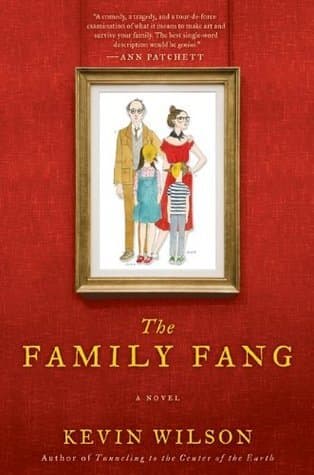
- The Family Fang
Kevin Wilson
3.6 (26k) average on GoodreadsLiterary FictionCenters on adult siblings grappling with their eccentric parents and their own identities.
- Olive Kitteridge
Elizabeth Strout
3.8 (172k) average on GoodreadsLiterary FictionWhile both explore family and community dynamics, Strout's novel is generally more melancholic and focuses on quiet desperation and internal lives. Tropper's work is significantly more humorous and relies on sharp, often rapid-fire dialogue and externalized chaos, making for a different emotional and narrative experience.
- Then We Came to the End
Joshua Ferris
3.5 (31k) average on GoodreadsLiterary FictionBoth novels explore group dynamics and existential angst in confined settings (Tropper's shiva, Ferris's advertising agency). However, Ferris's novel is more experimental in its form and narrative voice, often more abstract and less focused on direct emotional accessibility. Tropper's work, while equally insightful, maintains a more conventional and emotionally direct narrative structure.
- The Old Man and the Sea
Ernest Hemingway
3.8 (831k) average on GoodreadsLiterary FictionA Cuban fisherman's long struggle with a giant marlin becomes a story of endurance and dignity, now retold for young adults with illustrations, phonetic guides, and writing prompts in Traditional Chinese.
- One Hundred Years of Solitude
Gabriel García Márquez
4.1 (753k) average on GoodreadsLiterary FictionThrough the multi-generational story of the Buendía family, a mythical town deals with the repeating patterns of time, love, and solitude, as the extraordinary mixes with the ordinary.
- The Goldfinch
Donna Tartt
3.9 (720k) average on GoodreadsLiterary FictionHaunted by a tragic explosion and clutching a stolen Dutch masterpiece, a young orphan navigates the opulent drawing rooms of New York and the gritty underbelly of the art world, desperately seeking connection and redemption amidst a life spiraling into crime and obsession.





Enjoyed the summary?
A summary gives you the shape of the book. The book itself has the detail, the examples and the voice.
Find This is Where I Leave You on AmazonAs an Amazon Associate, BookBrief earns from qualifying purchases. How we're funded