
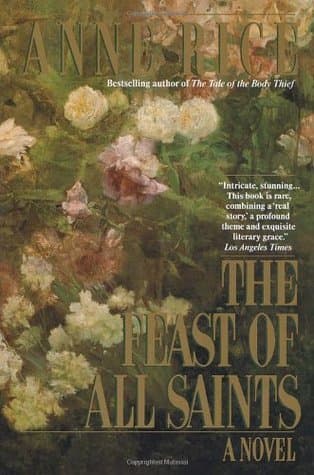
Synopsis
Covers the whole plot, including the ending.
- Difficulty
- Medium
- Pacing
- Moderate
- Mood
- Atmospheric, Lyrical, Melancholy, Reflective
- Read it if
- You enjoy rich historical fiction with deep character studies and a focus on societal intricacies, particularly in a unique historical setting.
- Skip it if
- You prefer fast-paced plots over detailed world-building and character introspection, or are not interested in the nuances of racial identity and social stratification.
The Feast of All Saints Plot Summary
Covers the whole plot, including the ending.
The World of the Gens de Couleur Libre
The novel begins by introducing Marcel Ste. Marie, a young, sensitive, and scholarly 'gens de couleur libre' (free person of color) in pre-Civil War New Orleans. He lives with his sister, Marie, and their mother, Anna Bella, a quadroon mistress who has a long relationship with Philippe Ferronaire, a wealthy white planter. Marcel is intellectually gifted but struggles with his identity and the strict social rules of his community. He attends the quadroon balls with his family, observing the social hierarchy and the unspoken rules for the gens de couleur libre, especially the women who often become mistresses to white men.
Christophe and the Literary Circle
Marcel's curiosity leads him to Christophe, a writer, teacher, and an influential person among the gens de couleur libre. Christophe hosts a salon where young artists, poets, and intellectuals gather to discuss literature, philosophy, and the injustices their community faces. Marcel is drawn to Christophe's passion and intellect, seeing him as a mentor and a source of hope. Christophe encourages Marcel's writing and critical thinking, pushing him to explore his own voice and challenge society's limits. This group gives Marcel the sense of belonging and intellectual stimulation he seeks.
Marie's Dilemma and the Quadroon Ball
Marie, Marcel's sister, is beautiful and can 'pass' for white, which brings both opportunity and danger. At one of the quadroon balls, where white men look for quadroon women for long-term arrangements, Marie catches the eye of a powerful white planter, Maurice Mercier. Despite her mother Anna Bella's attempts to protect her and her own reluctance, Marie is pressured by society and the possibility of a financially secure future. The ball highlights the objectification and limited choices available to women like Marie.
The Arrangement with Mercier
Marie, influenced by her mother and social expectations, agrees to become Maurice Mercier's mistress. She moves into a house Mercier provides, living in material comfort but emotional isolation. Mercier is possessive and controlling. He provides for her but offers little affection or understanding. Marie's life becomes a gilded cage, where her beauty is admired but her spirit is stifled. Marcel observes his sister's situation with a heavy heart, feeling unable to help her escape, which affects their sibling bond.
Marcel's Growing Disillusionment
As Marcel grows, he becomes unhappy with the limits and falsehoods of his world. He sees the casual racism and brutal treatment of enslaved people, the social divisions within the gens de couleur libre community, and their inherent powerlessness despite their 'freedom.' His studies show him ideals of liberty and equality that sharply contrast with his reality. He struggles with his identity—neither fully black nor fully white—and his people's lack of true power. This growing awareness fuels his inner conflict and desire for change, which he often discusses with Christophe.
Anna Bella's Past and Resilience
Anna Bella, Marcel and Marie's mother, is a strong and practical woman who has navigated the complex world of the gens de couleur libre with resilience. Her long relationship with Philippe Ferronaire, a kind white planter, has given her and her children stability and protection. Through flashbacks and her own thoughts, her past as a young quadroon mistress is explored, showing the sacrifices she made and the cleverness she developed to ensure her children's well-being. She embodies the strengths and limits of women in her position, always striving for the best within a flawed system.
The Threat of the Civil War
The political mood in New Orleans becomes tense as the nation moves toward Civil War. The gens de couleur libre, despite their 'free' status, find their rights and freedoms increasingly threatened. Discussions among Christophe's group turn to the war's potential impact on their community—whether it will bring liberation or further oppression. Marcel senses a shift, a disruption to their delicate balance. The coming conflict intensifies the characters' personal struggles and highlights the fragility of their social position.
Marcel's Journey to Paris
Driven by his desire for intellectual freedom and to escape New Orleans' constraints, Marcel decides to leave for Paris. This journey represents a break from his past and a search for a place where his intellect and spirit can grow without racial prejudice. In Paris, he hopes to find a society where he is judged on his merits and can explore his potential as a scholar and writer. His departure is bittersweet, leaving his family and community, but embracing the unknown in pursuit of self-realization.
Life in Paris and Self-Discovery
In Paris, Marcel feels liberated. He attends lectures, visits literary salons, and engages with intellectuals without his racial identity defining him. He finds a world where ideas are important and his intellect is valued. He begins to publish his writings, gaining recognition and confidence. This time abroad allows him to reflect on his New Orleans past from a distance, gaining new perspectives on his heritage and the injustices he left behind. He grapples with what it means to be truly free, both intellectually and personally.
Return to a Changed New Orleans
After the Civil War, Marcel returns to New Orleans, a city changed forever. The gens de couleur libre community he knew has been reshaped by the war. He finds his family and friends dealing with new realities, facing both opportunities and challenges. The old social structures have fallen, but new forms of prejudice have emerged. Marcel, now more experienced, must navigate this altered landscape, using his European experiences and broader perspectives to help his people. He seeks to use his knowledge to help rebuild and advocate for his community.
Reconciliation and New Beginnings
Upon his return, Marcel seeks to reconcile with his family, especially Marie, and to understand their lives during his absence. He finds that while much has changed, his community's core resilience remains. He reconnects with surviving members of Christophe's group, now older and perhaps more practical, but still committed to their people's advancement. Marcel begins to see his role in this new era, using his education and experiences to help rebuild his community and fight for equality. He seeks to connect his European enlightenment with the ongoing struggles of his homeland.
The Legacy of the Gens de Couleur Libre
The novel ends with Marcel reflecting on the spirit and complex history of the gens de couleur libre. He understands their history as one of oppression and resilience, of sacrifice and cultural richness. While the social structures of his youth have vanished, the struggle for identity, equality, and recognition continues. Marcel commits himself to preserving their stories and advocating for their future. He sees that his own journey, from New Orleans to Paris and back, mirrors his people's larger journey toward a more just and equal world, even as challenges persist.
Principal Figures
Marcel Ste. Marie
Protagonist
A sensitive and intelligent 'gens de couleur libre' scholar searching for identity and freedom.
Marcel is the introspective and highly intelligent protagonist of the story. Born into the unique society of free people of color in pre-Civil War New Orleans, he is a gifted scholar with a deep love for literature and philosophy. He struggles with the restrictive social codes and the inherent limitations placed upon his community, yearning for a world where he can be judged solely on his intellect and character, not his lineage. His sensitivity makes him acutely aware of the injustices around him, fueling his desire for a more just existence. He is observant, reflective, and deeply connected to his family, particularly his sister Marie.
Relationships: Marie Ste. Marie (Devoted brother, concerned for her fate as a quadroon mistress.); Anna Bella Ste. Marie (Loving son, respects her strength and resilience.); Christophe (Mentee and intellectual companion, deeply admires and learns from him.); Philippe Ferronaire (Respectful relationship as his mother's partner and a kindly benefactor.)
Marie Ste. Marie
Supporting
Marcel's breathtakingly beautiful sister, whose light skin allows her to pass for white.
Marie is Marcel's stunningly beautiful sister, whose light complexion allows her to 'pass' for white, a quality that both blesses and curses her. She is initially presented as somewhat naive but possesses an inner strength and resilience. Her beauty makes her a prime candidate for the quadroon balls, where she is ultimately chosen by Maurice Mercier as his mistress. Despite her material comfort, she lives a life of emotional isolation and confinement, yearning for genuine love and freedom. She represents the limited choices and objectification faced by quadroon women in her society.
Relationships: Marcel Ste. Marie (Affectionate sister, relies on his understanding and care.); Anna Bella Ste. Marie (Daughter, influenced by her mother's pragmatic approach to survival.); Maurice Mercier (Mistress to a possessive and controlling white planter.)
Anna Bella Ste. Marie
Supporting
Marcel and Marie's mother, a resilient and pragmatic quadroon mistress.
Anna Bella is the mother of Marcel and Marie, a strong, pragmatic, and resourceful woman. She has navigated the complex and often treacherous world of the gens de couleur libre as a quadroon mistress for many years, primarily to the kind and wealthy Philippe Ferronaire. She is fiercely protective of her children and strives to provide them with the best possible life within the constraints of their society. Her experiences have made her shrewd and realistic, understanding the sacrifices required for survival and advancement. She embodies the resilience and quiet strength of women who carved out a place for themselves in a system designed to limit them.
Relationships: Marcel Ste. Marie (Loving mother, guides him with practical wisdom.); Marie Ste. Marie (Loving mother, prepares her for the realities of her position.); Philippe Ferronaire (Long-term mistress and companion, a relationship of mutual respect and affection.)
Christophe
Supporting
A charismatic and influential writer and teacher among the gens de couleur libre.
Christophe is a brilliant and charismatic writer, teacher, and intellectual who serves as a mentor and inspiration to Marcel. He hosts a vibrant literary salon where young gens de couleur libre gather to discuss ideas, art, and the challenges facing their community. Christophe is passionate about literature, history, and the pursuit of knowledge, using his voice to advocate for the rights and recognition of his people. He encourages critical thinking and self-expression, pushing Marcel to find his own voice and challenge societal norms. He represents the intellectual and artistic aspirations of the free people of color.
Relationships: Marcel Ste. Marie (Mentor and intellectual guide, shares a deep bond of mutual respect.); Various gens de couleur libre (Respected leader and intellectual figure.)
Philippe Ferronaire
Supporting
A wealthy and kind white planter, Anna Bella's long-term companion.
Philippe Ferronaire is a wealthy white planter who has maintained a long-term, respectful relationship with Anna Bella. Unlike many white men who engaged with quadroon women, Philippe treats Anna Bella with genuine affection and provides for her and her children generously. He is a kind and honorable man within the confines of his society, offering a degree of protection and stability to the Ste. Marie family. He represents a more benevolent, though still patriarchal, aspect of the white planter class, highlighting the nuances in these complex relationships.
Relationships: Anna Bella Ste. Marie (Long-term companion and lover, a relationship built on affection and respect.); Marcel Ste. Marie (Kindly benefactor, almost a father figure.)
Maurice Mercier
Antagonist
A powerful and possessive white planter who takes Marie as his mistress.
Maurice Mercier is a wealthy and powerful white planter who becomes Marie's patron and lover after meeting her at a quadroon ball. He is possessive, controlling, and views Marie as a beautiful acquisition rather than an individual with her own desires and feelings. While he provides her with material comfort, he offers no genuine emotional connection or freedom. Mercier embodies the darker, more exploitative aspects of the relationships between white men and quadroon women, highlighting the inherent power imbalance and the objectification inherent in the system.
Relationships: Marie Ste. Marie (Controlling patron and lover, views her as property.)
Uncle Julian
Supporting
Marcel's uncle, a successful businessman among the gens de couleur libre.
Uncle Julian is Marcel's pragmatic and successful uncle, a prominent figure within the gens de couleur libre community. He is a shrewd businessman who has built a comfortable life for himself and his family, demonstrating the economic capabilities of free people of color despite societal restrictions. Julian often provides a more grounded, practical perspective compared to Marcel's idealistic leanings. He represents the segment of the community that focused on economic advancement and stability within the existing system, even while acknowledging its injustices.
Relationships: Marcel Ste. Marie (Uncle, offers practical advice and support.)
Cécile
Supporting
A family friend and confidante, often present in the Ste. Marie household.
Cécile is a close family friend and often a confidante to Anna Bella and the Ste. Marie children. She is a compassionate and observant woman who understands the nuances of their society. She provides emotional support and often acts as a sounding board for Anna Bella's concerns regarding Marie and Marcel. Cécile represents the strong communal bonds and supportive networks that existed within the gens de couleur libre, offering a sense of shared experience and understanding amidst their challenges.
Relationships: Anna Bella Ste. Marie (Close friend and confidante.); Marcel Ste. Marie (Supportive family friend.)
Themes & Insights
Identity and Belonging
The novel explores the complex theme of identity for the gens de couleur libre, a group caught 'between black and white.' Marcel's journey is central, as he struggles to define himself in a society that gives him a specific, limited place based on his ancestry. His struggle to match his intellect and hopes with his assigned social status, ending in his search for belonging in Paris, shows how race affects self-perception. Marie's ability to 'pass' for white further complicates this, raising questions about authenticity and the sacrifices made for perceived freedom. The community itself, rich in culture, constantly defines itself against white and enslaved societies.
“We were a people of the in-between, too light for one world, too dark for the other, yet we built our own world, fragile and beautiful.”
Freedom vs. Confinement
Despite being 'free people of color,' the characters live lives of confinement. Their freedom is conditional, limited by strict social rules, legal restrictions, and the constant threat of racial prejudice. Marie's life as Mercier's mistress, though comfortable, is a gilded cage, symbolizing the lack of true control for women in her position. Marcel's desire for intellectual freedom drives him to Paris, showing the mental and physical confinement he feels in New Orleans. The coming Civil War further highlights the fragility of their 'freedom,' threatening to take away even the limited rights they have. The story contrasts the ideal of liberty with the harsh realities of their lives.
“To be free was not to be equal. To be free was merely to exist in a space between chains, a space still defined by them.”
The Power of Art and Intellect
The novel celebrates art, literature, and intellect as ways of resistance, self-expression, and community building within the gens de couleur libre. Christophe's salon is a hub for intellectual discussion and artistic creation, offering a place where minds can grow despite outside oppression. Marcel's studies and his success as a writer in Paris show how intellectual achievement can overcome social barriers and provide self-worth and influence. Art, whether through music, poetry, or storytelling, becomes a way for the community to preserve its culture, express its grievances, and assert its humanity in a world that often denies it.
“In our words, in our music, in our paintings, we found the true freedom that the laws denied us.”
Love, Sacrifice, and Family
Love and sacrifice, especially within the family, are central to the story. Anna Bella's life shows her love and sacrifice for her children, navigating a complex social scene to ensure their well-being. The strong bond between Marcel and Marie, and Marcel's concern for his sister, highlights the protective instincts within the family. Unconventional relationships, such as Anna Bella's with Philippe Ferronaire, show how love and companionship could form even within restrictive social norms, often requiring great sacrifice and practicality. These family ties provide emotional anchors and motivations for the characters' choices.
“A mother's love, in our world, was a shield and a sword, wielded with a silent strength that few outsiders could ever comprehend.”
Social Hierarchy and Hypocrisy
The social hierarchies of pre-Civil War New Orleans are detailed. The novel shows the divisions within the gens de couleur libre themselves, based on skin color, wealth, and education, as well as the overall racial hierarchy that placed white society at the top and enslaved people at the bottom. The quadroon balls, where white men openly sought quadroon mistresses while keeping their 'respectable' white families, show the era's widespread hypocrisy. This theme reveals how social structures, driven by race and class, dictated destinies and continued injustice, even among those considered 'free.'
“Our freedom was a whisper compared to the roar of their power, a fragile thing built upon their whims and their unspoken rules.”
Plot Devices & Literary Techniques
The Quadroon Ball
A social institution where white men sought out quadroon mistresses.
The quadroon ball serves as a powerful symbol and a crucial plot device. It is the primary setting where Marie's fate is determined, highlighting the limited choices available to beautiful quadroon women. This institution, while appearing elegant, underscores the objectification and commodification of these women, forcing them into arrangements that offered material security but little personal freedom. It vividly illustrates the unique social contract and the inherent hypocrisy of New Orleans society, where racial lines were both rigidly enforced and strategically blurred for the pleasure and convenience of white men.
Passing for White
The ability of light-skinned individuals to be perceived as white.
The ability of Marie to 'pass' for white is a significant plot device that drives much of her personal narrative and highlights the complexities of racial identity. It offers her a potential path to greater freedom and opportunity, but also comes with the burden of denying her heritage and living a life of pretense. This device exposes the arbitrary nature of racial categories and the profound psychological toll of living a dual identity. It also underscores the privileges associated with whiteness and the sacrifices made to attain them, even if superficially.
The Salon of Christophe
A gathering place for intellectuals and artists among the gens de couleur libre.
Christophe's salon functions as a vital plot device by providing a space for intellectual discourse, character development, and thematic exploration. For Marcel, it's a sanctuary where he finds mentorship, intellectual stimulation, and a sense of belonging. The discussions held there allow the author to delve into the philosophical, political, and artistic concerns of the gens de couleur libre, articulating their hopes, frustrations, and calls for change. It represents the community's resilience and its commitment to cultural and intellectual advancement despite societal oppression, serving as a counterpoint to the more restrictive social institutions.
Marcel's Journey to Paris
A physical and metaphorical journey of self-discovery and liberation.
Marcel's journey to Paris is a pivotal plot device representing his quest for true freedom and identity. Geographically, it removes him from the suffocating racial constraints of New Orleans, allowing him to experience a world where his intellect is valued above his lineage. Metaphorically, it symbolizes his intellectual and personal liberation, enabling him to gain perspective on his past and forge a new self. This journey is crucial for his character arc, transforming him from a questioning youth into a confident scholar, and ultimately preparing him to return and contribute to his community with a broadened worldview.
The Feast of All Saints Quotes
“Memory, my dear, is a monster. It is a great devouring dragon. It eats us whole, and spits us out, and sometimes, if we are lucky, we are reborn through its fiery breath.”
“The past is never dead. It's not even past. It is merely sleeping, waiting to be awakened by a scent, a sound, a phrase.”
“There are some things, Daniel, that once seen, can never be unseen. And once known, can never be unknown.”
“To be human is to suffer. To truly live is to embrace that suffering and find beauty in it.”
“We are all prisoners of our own making, Daniel. And sometimes, the key to our freedom lies in the very chains we forge.”
“Love is a dangerous thing. It can make you feel alive, and it can tear you apart, all at the same time.”
“The greatest tragedy is not death, but life unlived. The dreams unpursued, the words unspoken, the love unfelt.”
“Beauty is a mask, Daniel. A beautiful lie that hides the truth of what we are.”
“Every secret comes with a price. And the longer you keep it, the higher that price becomes.”
“There is no such thing as absolute good or absolute evil, Daniel. Only shades of gray, and the choices we make within them.”
“To truly know someone, you must know their darkness, Daniel. For it is in the shadows that our true selves reside.”
“Art is the only immortality I know. It is the only way we can truly defy death, by leaving something of ourselves behind.”
“The world is a stage, and we are merely players. But what a magnificent play it is, Daniel, and what roles we are given!”
“Fear is a powerful master, Daniel. It can make us do things we never thought ourselves capable of, both good and ill.”
Quiz
10 questions on the plot and the characters. Each answer comes with a short explanation.
Question 1
Which character is described as a 'sensitive, blue-eyed scholar'?
- Christophe
- Marcel
- Jean-Marc
- Philippe
Show answer
B. Marcel The book description explicitly names Marcel as 'the sensitive, blue-eyed scholar'.
Question 2
What is Marie's 'curse', as described in the synopsis?
- Her inability to find love
- Her talent for music
- Her ability to pass for white
- Her rebellious nature
Show answer
C. Her ability to pass for white The synopsis states Marie's 'curse is to pass for white', highlighting the societal complexities of the time.
Question 3
In what city and historical period is 'The Feast of All Saints' primarily set?
- Charleston, South Carolina, during the Reconstruction era
- New Orleans, Louisiana, in the days before the Civil War
- Richmond, Virginia, immediately after the Civil War
- Savannah, Georgia, during the Antebellum period
Show answer
B. New Orleans, Louisiana, in the days before the Civil War The book's introduction clearly states the setting is 'New Orleans... in the days before the Civil War'.
Question 4
What term is used to describe the group of people Marcel, Marie, Christophe, and Anna Bella belong to?
- Creole elite
- gens de couleur libre
- Quadroon society
- Free People of Color
Show answer
B. gens de couleur libre The synopsis specifically uses the French term 'gens de couleur libre' to describe this social group.
Question 5
Despite their liberation, what key limitation did the gens de couleur libre face due to their color?
- They were forbidden from owning property
- They were denied access to education
- A life of political nonexistence and social subordination
- They could not practice any skilled trades
Show answer
C. A life of political nonexistence and social subordination The text states they were 'confined by their color to a life of political nonexistence and social subordination'.
Question 6
What kind of talents and reputations allowed an 'aristocracy' to emerge within the gens de couleur libre society?
- Military prowess and leadership
- Political activism and revolutionary ideas
- Artists, poets, musicians, plantation owners, scientists, and craftsmen
- Religious leadership and charitable works
Show answer
C. Artists, poets, musicians, plantation owners, scientists, and craftsmen The synopsis lists 'artist, poets, and musicians, plantation owners, scientists and craftsmen' as those whose talents created an aristocracy.
Question 7
What is a central theme explored in 'The Feast of All Saints' regarding the identity of its characters?
- The triumph of economic prosperity over social class
- The struggle for complete political autonomy
- Being caught in the shadows between black and white
- The pursuit of religious freedom
Show answer
C. Being caught in the shadows between black and white The final sentence of the synopsis describes the tale as being 'of a people forever caught in the shadows between black and white', directly addressing a core theme.
Question 8
How is Christophe characterized in relation to the younger gens de couleur libre?
- As a controversial political figure
- As a reclusive philosopher
- As a novelist and teacher, the idol of all young gens
- As a wealthy merchant and patron of the arts
Show answer
C. As a novelist and teacher, the idol of all young gens Christophe is described as 'novelist and teacher, the idol of all young gens', indicating his respected status.
Question 9
What specific characteristic is noted about Anna Bella?
- Her skill as a musician
- Her allure for the well-to-do white man
- Her dedication to charity work
- Her fierce independence and political activism
Show answer
B. Her allure for the well-to-do white man The synopsis highlights 'stunning Anna Bella, whose allure for the well-to-do white man would become legend'.
Question 10
What does the phrase 'confined by their color' imply about the freedom of the gens de couleur libre, despite being 'liberated by their owners'?
- They were physically restricted to specific neighborhoods.
- Their social and political opportunities were severely limited by racial prejudice.
- They were under constant surveillance by former slave owners.
- They were unable to travel outside of New Orleans.
Show answer
B. Their social and political opportunities were severely limited by racial prejudice. The phrase 'confined by their color to a life of political nonexistence and social subordination' directly implies that despite legal freedom, racial prejudice imposed significant societal and political limitations on their lives.
The Feast of All Saints FAQ
What is the central premise of 'The Feast of All Saints'?
'The Feast of All Saints' explores the lives of the gens de couleur libre in antebellum New Orleans, a community of free people of color who, despite their freedom, faced significant racial discrimination and social limitations. The novel focuses on their struggles for identity, acceptance, and love within a society that confined them to a liminal space between white and Black.
Who are the primary protagonists and what are their defining characteristics?
The main protagonists include Marcel, a sensitive, blue-eyed scholar grappling with his identity; Marie, his beautiful sister who can pass for white, leading to unique challenges; Christophe, a respected novelist and teacher who inspires the community; and Anna Bella, whose striking beauty attracts powerful white men, creating both opportunities and perils for her. Their interwoven stories highlight different facets of the gens de couleur libre experience.
What kind of social hierarchy existed within the gens de couleur libre community?
Within the gens de couleur libre, an aristocracy emerged based on talent, wealth, and reputation, including artists, poets, musicians, plantation owners, scientists, and craftsmen. This internal hierarchy provided some social standing and influence within their confined world, even as they collectively faced subordination from the broader white society.
How does the novel portray the racial tensions of pre-Civil War New Orleans?
The novel vividly portrays the complex racial tensions through the experiences of its characters, showcasing the explicit discrimination faced by the gens de couleur libre, their struggle for political nonexistence, and the constant threat of being re-enslaved or losing their limited freedoms. It highlights the stark contrast between their internal community and the oppressive external world.
What role does the ability to 'pass' for white play in the narrative, particularly for Marie?
The ability to 'pass' for white is a central and often tragic theme, especially for Marie. While it offers her temporary access to privileges and a different social sphere, it also forces her to deny her heritage and family, leading to profound internal conflict, isolation, and the constant fear of exposure. This ability becomes both a perceived blessing and a significant curse.
Are there any subtle allusions to Anne Rice's other works or themes present in 'The Feast of All Saints'?
While 'The Feast of All Saints' is not part of Rice's supernatural sagas, it shares her characteristic exploration of marginalized communities, intense emotional landscapes, and the beauty and tragedy of human existence. The detailed historical setting, the focus on identity, and the lyrical prose style are hallmarks found across her diverse body of work, though without direct supernatural connections.
What is the significance of the title, 'The Feast of All Saints'?
The title 'The Feast of All Saints' carries multiple layers of meaning. It refers to a religious holiday, but more profoundly, it symbolizes the community of the gens de couleur libre, who, despite being marginalized and overlooked by society, possess a spiritual and cultural richness, deserving of recognition and remembrance, much like saints. It evokes a sense of sacredness and memory for their struggles and contributions.
How do characters like Christophe use art and education to resist their societal constraints?
Christophe, as a novelist and teacher, embodies resistance through intellectual and artistic pursuits. He fosters a sense of pride and identity within the gens de couleur libre by educating younger generations and creating art that reflects their experiences. His efforts demonstrate how culture and knowledge can be powerful tools for empowerment and preserving heritage in the face of oppression.
What is the underlying psychological impact of Marcel's 'blue eyes' on his character development?
Marcel's blue eyes signify his mixed heritage and often make him an object of curiosity or prejudice, both within his own community and by white society. Psychologically, this contributes to his sensitivity and scholarly nature, as he grapples with his identity and seeks understanding through intellect, often feeling an internal conflict between his appearance and his cultural belonging.
How does the constant threat of social subordination affect the characters' self-esteem and relationships?
The constant threat of social subordination deeply impacts the characters' self-esteem, often leading to feelings of inadequacy, resentment, or a desperate need for validation. This pressure strains their relationships, creating mistrust, competition, and sometimes forcing difficult choices that prioritize survival or perceived social advancement over genuine connection, as seen in Marie's struggles.
In what ways do the female characters, particularly Marie and Anna Bella, navigate the psychological complexities of their beauty and limited agency?
Marie and Anna Bella navigate the psychological complexities of their beauty in contrasting ways. Marie's ability to pass for white brings both opportunity and profound internal conflict, forcing her to suppress her true identity. Anna Bella's allure for white men grants her a dangerous form of power and economic stability, but also subjects her to exploitation and limits her genuine agency, trapping her in a gilded cage.
How do the characters cope with the psychological burden of being 'caught in the shadows between black and white'?
The characters cope with this psychological burden in various ways: Marcel through intellectualism and introspection, seeking understanding; Marie by attempting to assimilate, leading to internal fragmentation; Christophe through leadership and cultural preservation; and Anna Bella by leveraging her beauty for survival and a degree of independence. Each strategy reflects a different response to their liminal existence.
Is the novel primarily a historical account, or does it offer a broader commentary on identity and belonging?
While meticulously researched and rich in historical detail, 'The Feast of All Saints' transcends a mere historical account to offer a profound commentary on universal themes of identity, belonging, and the human condition. It explores how societal constructs of race and class impact individual lives, choices, and the search for self-acceptance, making its themes relevant beyond its specific setting.
How does Anne Rice challenge or reinforce stereotypes about race and class through her characters?
Anne Rice challenges stereotypes by presenting the gens de couleur libre as a complex, cultured, and multifaceted community, rather than a monolithic group. She reinforces the tragic reality of racial and class oppression through her characters' experiences, showing how even those with privilege within their community are still subjected to the brutal realities of a prejudiced society. She avoids simplistic portrayals.
What message does the novel convey about the endurance of spirit in the face of systemic oppression?
The novel conveys a powerful message about the endurance of the human spirit. Despite facing systemic oppression, political nonexistence, and social subordination, the characters strive for love, education, artistic expression, and a sense of dignity. Their resilience, even amidst tragedy and compromise, highlights the strength of their community and their individual will to survive and thrive.
Could 'The Feast of All Saints' be considered a tragedy, a romance, or a social commentary, and why?
'The Feast of All Saints' can be considered all three. It is a tragedy due to the limitations and heartbreaks imposed by racial prejudice; a romance through the deep emotional connections and loves explored by its characters; and a profound social commentary on race, class, and identity in antebellum New Orleans. These elements intertwine to create a rich and complex narrative.
How does the setting of New Orleans contribute to the novel's unique atmosphere and themes?
New Orleans, with its vibrant Creole culture, distinct social hierarchies, and atmospheric blend of European, African, and Caribbean influences, is integral to the novel. Its unique history as a place where gens de couleur libre could achieve a degree of freedom and culture, yet still face severe restrictions, provides the perfect backdrop for exploring the nuanced themes of identity, race, and societal constraints.
What is the ultimate fate or resolution for the main characters like Marcel and Marie?
Without revealing exact plot spoilers, the fates of Marcel and Marie are deeply intertwined with the societal pressures they face. Marcel often finds solace and purpose in his scholarship, but struggles with the limitations placed upon him. Marie's journey with passing for white leads her down a path of difficult choices and consequences, reflecting the tragic compromises many in her position were forced to make.
About the author
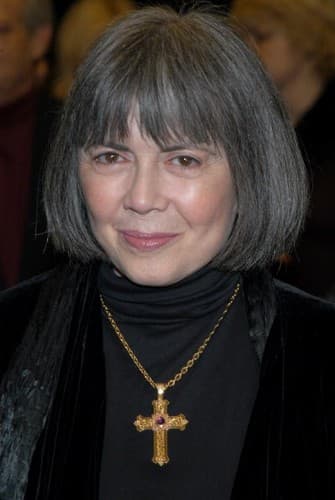
Anne Rice was an American author of gothic fiction, erotic literature, and Christian literature. She was best known for her series of novels The Vampire Chronicles. The first book became the subject of a film adaptation—Interview with the Vampire (1994).
Similar books
- Beloved
Toni Morrison
3.9 (325k) average on GoodreadsLiterary FictionExplores the complexities of race, freedom, and identity in post-slavery America with profound emotional depth.
- Interview With The Vampire
Anne Rice
4.0 (485k) average on GoodreadsFantasyShowcases Anne Rice's signature lyrical prose, rich atmosphere, and exploration of complex characters navigating a unique world.
- Harry Potter and the Sorcerer's Stone
J.K. Rowling
4.5 (7M) average on GoodreadsFantasyRescued from a miserable life under the stairs, an orphaned boy discovers he's a wizard destined for a magical school, where he uncovers a dangerous secret tied to the dark wizard who murdered his parents.
- The Hunger Games
Suzanne Collins
4.3 (6.4M) average on GoodreadsFantasyIn a future where children fight to the death on live television, Katniss Everdeen volunteers for the arena, turning a death sentence into a fight for survival and a spark of rebellion.
- 1984
George Orwell
4.2 (3.1M) average on GoodreadsPoliticsIn a future where surveillance and thought control are absolute, a man's search for truth clashes with the Party, showing that hope can be a form of rebellion.
- Divergent
Veronica Roth
4.2 (2.9M) average on GoodreadsFantasyIn a society divided by virtues, a sixteen-year-old's difference from the norm starts a rebellion that threatens her world.






Enjoyed the summary?
A summary gives you the shape of the book. The book itself has the detail, the examples and the voice.
Find The Feast of All Saints on AmazonAs an Amazon Associate, BookBrief earns from qualifying purchases. How we're funded