
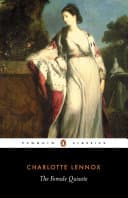
Synopsis
Covers the whole plot, including the ending.
- Difficulty
- Medium
- Pacing
- Moderate
- Mood
- Satirical, Witty, Observational, Comedic
- Read it if
- You enjoy satirical takes on literary conventions, explorations of female education in the 18th century, or stories where a character's vivid imagination leads to comedic misunderstandings.
- Skip it if
- You prefer fast-paced plots with clear, straightforward romance, or find extensive internal monologue and character delusion frustrating.
The Female Quixote Plot Summary
Covers the whole plot, including the ending.
Arbella's Romantic Delusions Begin
Lady Arabella, the beautiful and smart daughter of a rich Marquis, lives a quiet life on her father's country estate. Her main companions are her governess and a large collection of 17th-century French heroic romances, which she reads with great passion. These books, full of tales of perfect heroines, brave knights, and elaborate courtly love, twist her view of reality. She starts to believe the world works by these romantic rules, expecting men to act like chivalrous suitors and women like besieged beauties. Her imagination is so taken over that she sees everyday events and talks through this warped lens, leading to many misunderstandings and funny problems.
Sir George Bellmour's Unconventional Courtship
Sir George Bellmour, Arabella's cousin and intended suitor, arrives at the Marquis's estate. He is a sensible and kind young man, truly drawn to Arabella. However, Arabella immediately labels him a 'lover' from her romances, expecting him to pass elaborate tests of loyalty and courage. She sees his direct attempts at conversation and affection as part of a complex romantic plot. She demands he perform silly feats and express his love in the exaggerated language of her books. As a man of reason, he finds this confusing. Their interactions are a constant source of humor, as Sir George tries to understand her expectations while Arabella believes he is just following a suitor's script.
The Marquis's Attempts to Marry Arabella
The Marquis, Arabella's father, wants his daughter married and settled, especially to Sir George, whose character he approves of. But Arabella's romantic ideas are a big problem. She believes marriage can only happen after a long, hard courtship, full of trials, abductions, and heroic rescues, like in her favorite books. She rejects a simple, arranged marriage, insisting her suitor must prove his worth as a romantic hero. Her father's attempts to discuss practical matters are met with fantastical explanations and demands, leading to his frustration and the indefinite delay of any marriage plans.
The Gardener's Son and the 'Abduction'
One of Arabella's funniest delusions involves a young gardener's son. Seeing him near the estate, Arabella immediately decides he is a disguised prince, madly in love with her and planning an abduction. This is a common theme in her romances. She sees his innocent actions as secret signals and preparations for her 'capture.' This leads to a dramatic scene where Arabella, convinced of his evil yet romantic plans, 'escapes' or 'resists' him in a very theatrical way. This confuses the boy and amuses the servants who watch. This event further shows her complete separation from reality.
The Jealous Lady and the 'Rival'
When Miss Glanville, a stylish and lively young woman, visits Arabella, she also becomes a victim of Arabella's romantic imagination. Arabella, seeing Miss Glanville's beauty and wit, immediately casts her as a 'rival' for Sir George's affection. She believes Miss Glanville is secretly in love with him and plotting against her. This makes Arabella treat Miss Glanville with suspicion and disdain, interpreting every polite interaction between Miss Glanville and Sir George as proof of a secret affair. Miss Glanville, completely confused by Arabella's accusations, is deeply offended. This creates awkward social situations and shows how Arabella's delusions isolate her.
The Bath Incident and Public Humiliation
Arabella's delusions become dangerous during a visit to Bath. Believing Sir George is trying to prove his love by staging a dramatic 'abduction' or 'rescue' (as in her romances), she misinterprets a gentleman's genuine attempt to help her with a minor accident near the water. Convinced he is a villain trying to carry her off, she dramatically throws herself into the river to escape. This public scene not only risks her life but also greatly embarrasses her family and friends, especially Sir George. He is forced to rescue her and see her complete loss of touch with reality in front of society.
Sir Charles Glanville's Intervention
After the humiliating incident at Bath, Arabella's father and Sir George realize her romantic obsession has become a serious problem for her well-being and future. They decide to ask Sir Charles Glanville for help. He is a wise and respected clergyman, known for his intelligence and persuasive arguments. Sir Charles learns about Arabella's unique condition and agrees to try and free her from her romantic delusions. His method is not ridicule, but gentle, logical argument. He aims to show her the impracticality and absurdity of applying fictional stories to real life.
The Philosophical Cure
Sir Charles Glanville talks with Arabella in a thoughtful way. Instead of confronting her directly or mocking her beliefs, he patiently and logically examines heroic romances. He points out their historical mistakes, moral flaws, and impractical plots and characters. He explains how such stories, while entertaining, offer a dangerous and unrealistic model for real-world behavior and relationships. He gently guides her to understand the difference between literary rules and actual human nature, slowly but surely breaking down her fantastical worldview through reason and eloquent discussion.
Arabella's Awakening
Through Sir Charles's patient and reasoned arguments, Arabella slowly begins to see her mistakes. She starts to question the absolute truth of her cherished romances and recognizes the absurdity of her past actions. The logical problems and impracticalities Sir Charles pointed out resonate with her intelligence. She has a big change in how she sees things, realizing the world is not a grand stage for heroic deeds but a place of ordinary human interactions and real, though less dramatic, emotions. This awakening is gradual but significant, leading her to regret her past behavior and embrace a more rational understanding of life.
Embracing Reality and Sir George
With her romantic delusions gone, Arabella can see Sir George Bellmour for who he really is: a kind, sensible, and truly loving man. She understands his sincere affection, free from the need for dramatic displays or elaborate tests. Her acceptance of reality allows her to appreciate his steady devotion and good character. The novel ends with Arabella, now a balanced and rational young woman, agreeing to marry Sir George. Their future will be based on mutual respect and understanding, not the fantastical ideas of her past imagination. Her journey from delusion to enlightenment is complete.
The Female Quixote Characters
Lady Arabella
Protagonist
A beautiful and intelligent young woman whose mind is warped by heroic romances.
Lady Arabella is the central character, a young woman of noble birth, beauty, and considerable intelligence. Raised in isolation, her only intellectual companions are 17th-century French heroic romances, which she reads with an intensity that blurs the lines between fiction and reality. She genuinely believes the world operates according to these fantastical narratives, leading her to misinterpret social interactions, romantic advances, and everyday events. Her virtue is unquestionable, but her judgment is severely impaired by her literary obsessions, making her both a source of comedy and a figure of sympathy. She is driven by a desire to live up to the ideals of her heroines.
Relationships: Sir George Bellmour (Cousin and intended suitor, initially misunderstood by Arabella as a romantic hero in disguise.); Marquis (her father) (Loving but exasperated father, keen to see her married.); Sir Charles Glanville (Her intellectual 'curer' and mentor.); Miss Glanville (Friend, initially mistaken for a romantic rival.)
Sir George Bellmour
Supporting
Arabella's sensible and devoted cousin and suitor.
Sir George Bellmour is Arabella's cousin and the man her father intends for her to marry. He is presented as a man of good sense, integrity, and genuine affection. He is deeply in love with Arabella but is constantly bewildered and frustrated by her romantic delusions. He attempts to court her in a straightforward, rational manner, which Arabella consistently misinterprets as part of a complex romantic trial. Despite her eccentricities, his devotion remains steadfast, and he patiently endures her odd behavior, hoping for her eventual return to reality. He represents reason and genuine, understated affection.
Relationships: Lady Arabella (Cousin and suitor, deeply in love with her despite her delusions.); Marquis (Respected by Arabella's father, who approves of him as a son-in-law.)
Marquis
Supporting
Arabella's wealthy and well-meaning, but often exasperated, father.
The Marquis is Lady Arabella's father, a wealthy and influential nobleman. He loves his daughter deeply and is concerned for her well-being and future. He is a pragmatic man, keen to see Arabella married to a suitable match, particularly Sir George Bellmour. However, he is constantly baffled and frustrated by Arabella's romantic delusions, which thwart all his attempts at sensible arrangements. He tries various methods to bring her to her senses, from gentle persuasion to outright command, but ultimately realizes he needs external, intellectual help to cure her. He represents the voice of parental concern and societal expectation.
Relationships: Lady Arabella (Father, loving but frustrated by her delusions.); Sir George Bellmour (Approves of him as a son-in-law.)
Sir Charles Glanville
Supporting
A learned and wise clergyman who logically cures Arabella's delusions.
Sir Charles Glanville is introduced late in the novel as a highly educated and respected clergyman, known for his wisdom and persuasive rhetoric. He is called upon by Arabella's family to cure her of her romantic delusions. Unlike others, he doesn't ridicule her but engages her in calm, logical, and philosophical discussions, gently dismantling her romantic worldview by exposing the inconsistencies and impracticalities of the heroic romances. He represents the voice of reason, enlightenment, and intellectual authority, offering a cure through persuasive discourse rather than force or mockery. His character embodies the Enlightenment ideals of rationality and education.
Relationships: Lady Arabella (Her intellectual 'curer' and mentor.); Miss Glanville (His sister.)
Miss Glanville
Supporting
A fashionable and sensible young woman, often misunderstood by Arabella.
Miss Glanville is Sir Charles's sister and a friend of Arabella's. She is a woman of fashion, good sense, and vivacity, who initially finds Arabella's eccentricities amusing but quickly becomes exasperated and offended by them. Arabella, in her delusions, often casts Miss Glanville as a romantic rival or a scheming woman from her books, leading to awkward and hurtful interactions. Miss Glanville represents a more conventional, realistic female character, highlighting the stark contrast with Arabella's fantastical worldview. She is a foil to Arabella's romantic excesses.
Relationships: Lady Arabella (Friend, but often the subject of Arabella's romantic misinterpretations.); Sir Charles Glanville (Sister.)
The Governess
Supporting
Arabella's long-suffering and somewhat ineffectual chaperone.
The Governess is Arabella's constant companion and chaperone. While well-meaning, she is largely ineffectual in curbing Arabella's romantic imagination. She often tries to reason with Arabella or explain her behavior to others but is typically ignored or dismissed. She represents the limitations of conventional authority in the face of deeply entrenched delusion. Her presence often serves to highlight Arabella's isolation and the lack of a strong guiding hand in her early life that might have prevented her extreme immersion in fiction.
Relationships: Lady Arabella (Her chaperone and companion.)
The Gardener's Son
Mentioned
A local boy mistaken by Arabella for a disguised prince.
The gardener's son is a minor character who briefly appears in one of Arabella's most humorous delusions. He is an ordinary local boy, simply going about his tasks, but Arabella, in her romantic fervor, interprets his innocent actions as those of a disguised prince planning to abduct her. He serves as an object for Arabella's misinterpretations, highlighting the absurdity of her applying fictional tropes to real-world interactions.
Relationships: Lady Arabella (Briefly the object of her romantic misinterpretation.)
Mr. Hervey
Supporting
A gentleman who briefly attempts to court Arabella.
Mr. Hervey is another gentleman who briefly attempts to court Arabella. Like Sir George, he is a man of good standing but quickly becomes confused and frustrated by Arabella's unconventional expectations and her interpretations of his actions through the lens of her romances. His brief courtship serves to further illustrate Arabella's inability to engage in normal social interactions and her unwavering commitment to her delusional worldview, driving away potential suitors who cannot decipher her romantic code.
Relationships: Lady Arabella (Briefly a suitor, quickly rebuffed by her romantic expectations.)
The Female Quixote Themes
The Dangers of Unchecked Imagination and Fiction
The novel mainly explores the dangers of letting fictional stories control how one sees reality. Arabella's full immersion in French heroic romances makes her misunderstand social interactions, romantic intentions, and even simple events, causing embarrassment, danger, and isolation. Her story is a warning against confusing art with life, especially for young, easily influenced minds without enough real-world experience. The Bath incident, where Arabella throws herself into the river, clearly shows the physical danger of her delusions, while her social mistakes highlight the problems it causes with others.
“She was not born to lead a common life; her mind was formed to nobler views, and she was determined to act in every scene of life, as the heroines of romance had acted before her.”
The Power of Reason and Education
The novel also supports the power of reason and good education in forming a balanced mind. Sir Charles Glanville's careful and logical arguments, which gently break down Arabella's romantic worldview, show the importance of critical thinking and rational discussion. His approach, based on Enlightenment ideas, demonstrates that intellectual persuasion, not ridicule or force, is the best way to correct wrong perceptions. Arabella's eventual recovery shows how reasoned argument can change someone and the value of basing one's understanding of the world on facts and logic.
“Reason, when it can once gain an audience, seldom fails of success.”
Gender Roles and Expectations in 18th-Century Society
The novel subtly examines the limited roles available to women in 18th-century society, especially those in the upper classes. Arabella's isolation and her reliance on books for companionship may be a result of societal limits on women's power and education. Her romantic delusions, though extreme, also show a desire for a life of passion and importance beyond the home, a desire her society largely denied. The expectation for her to marry and settle, compared to her fantastical ideals, shows the conflict between personal dreams and societal norms for women.
“A young lady, bred in the country, and who has no other employment than reading, is very apt to contract a romantic turn of mind.”
The Nature of Love and Courtship
The novel compares two different views of love and courtship: the exaggerated, theatrical, and often absurd depictions in heroic romances versus the more realistic, quiet, and genuine affection shown by characters like Sir George Bellmour. Arabella's demands for elaborate trials and poetic declarations highlight how impractical it is to apply fictional romantic ideals to real relationships. The ending, with Arabella accepting Sir George's sincere but undramatic love, argues for a type of affection based on mutual respect, understanding, and shared reality, rather than grand gestures and impossible feats.
“True love, Madam, is not a fever of the mind, but a calm, steady, and rational preference.”
Plot Devices & Literary Techniques
Quixotism
A character whose mind is warped by reading too much fiction.
This is the central plot device, directly referencing Cervantes' *Don Quixote*. Lady Arabella is a 'female Quixote,' whose mind is so thoroughly saturated with 17th-century French heroic romances that she perceives the real world through their lens. This device drives all of her actions, misunderstandings, and the comedic elements of the novel. It allows for the exploration of the dangers of unchecked imagination and the contrast between fiction and reality, as Arabella continually misinterprets everyday events as grand romantic adventures.
Satire and Parody
Humorous ridicule of a literary genre and societal norms.
Lennox uses satire and parody to critique the excesses of the heroic romance genre, which was popular in her time. Arabella's absurd interpretations and actions are a direct parody of the improbable plots, exaggerated sentiments, and unrealistic characters found in these romances. Beyond literary critique, the satire also extends to societal expectations, particularly concerning women's education and courtship rituals, highlighting their potential for fostering delusion or limiting rational thought.
Epistolary Elements / Embedded Narratives
Letters and stories within the main narrative.
While not a purely epistolary novel, 'The Female Quixote' incorporates letters and embedded narratives, particularly when Arabella recounts 'her story' or 'her lover's story' in the convoluted, anachronistic style of her romances. These moments serve to reinforce her delusional state and allow the author to directly showcase the style she is critiquing. Sir Charles Glanville also employs narratives and logical arguments within their discussions, acting as a counterpoint to Arabella's fictional tales.
Foil Characters
Characters who highlight the protagonist's traits through contrast.
Several characters serve as foils to Arabella. Sir George Bellmour, with his sensible and genuine affection, highlights the absurdity of Arabella's demands for theatrical courtship. Miss Glanville, a conventional and rational young woman, contrasts sharply with Arabella's romanticized view of female relationships. Most significantly, Sir Charles Glanville, representing Enlightenment reason and logical discourse, acts as the ultimate foil, providing the intellectual antidote to Arabella's unchecked imagination and emotional excess.
The Female Quixote Quotes
“Sure never any Mortal was so persecuted, so torn, so mangled, so disfigured as I am, since I had the Misfortune to be born.”
“For my part, I am very well satisfied, that I have done my Duty, and have not suffered a Spot to fix upon my Honour.”
“I am not to be imposed upon, I know the World, and am not to be deceived by appearances.”
“What! shall I suffer myself to be treated with such Indignity? No, I will die a thousand Deaths first.”
“A Lady, who has any regard for her Honour, ought to be prepared for all Accidents.”
“My Life is one continued Series of Adventures, and I am perpetually meeting with new ones.”
“It is not for a Lady of my Quality to be seen without her Attendants.”
“I am not to be governed by the arbitrary Will of another, but by my own Reason.”
“You are a very impertinent Fellow, to talk to a Lady of my Rank in such a Manner.”
“I perceive you are one of those who imagine that a Woman has no Business but to love, and be beloved.”
“I will never suffer myself to be confined, or to have my Liberty infringed upon.”
“This is a most cruel and barbarous Treatment! I am used worse than any Slave.”
“I am not to be bought and sold like a common Commodity.”
“There are some Men, who, for the sake of an Estate, would marry a Woman with a wooden Leg.”
“My Honour is dearer to me than my Life.”
Quiz
10 questions on the plot and the characters. Each answer comes with a short explanation.
Question 1
What is Arabella's primary source of understanding the world and human relationships?
- The Bible
- Classical Greek and Roman literature
- French heroic romances
- Contemporary English novels
Show answer
C. French heroic romances Arabella's worldview is almost entirely shaped by the French heroic romances she reads, leading her to interpret real-world events through their highly stylized and often unrealistic lens.
Question 2
Who is Arabella's most persistent and devoted suitor throughout much of the novel, despite her initial rejections?
- Sir George Bellmour
- Mr. Glanville
- The Marquis
- Edward
Show answer
B. Mr. Glanville Mr. Glanville, her cousin, is deeply in love with Arabella and persistently seeks her hand, often misunderstanding her romantic delusions.
Question 3
What common theme of the heroic romances does Arabella frequently apply to her own life, leading to misunderstandings?
- The importance of social climbing
- The necessity of duels to prove honor
- The belief that all women of rank are secretly princesses stolen at birth
- The virtue of arranged marriages
Show answer
C. The belief that all women of rank are secretly princesses stolen at birth Arabella frequently suspects that people she meets are disguised royalty, particularly ladies, believing them to be princesses whose true identities are concealed, a common trope in her beloved romances.
Question 4
What specific incident leads Arabella to believe she is being pursued by an enamored prince, resulting in her jumping into a river?
- She overhears a conversation between two servants discussing a 'royal' visitor.
- She sees a stranger observing her from a distance and misinterprets his actions.
- A letter arrives at the castle addressed to 'the Princess of *****'.
- Her father tells her a cryptic story about her true parentage.
Show answer
B. She sees a stranger observing her from a distance and misinterprets his actions. Arabella misinterprets the actions of a stranger, believing him to be a prince attempting to abduct her, leading her to jump into the Thames to escape.
Question 5
Who is the learned clergyman who finally succeeds in convincing Arabella to abandon her romantic delusions?
- Dr. Johnson (The Author of The Rambler)
- Mr. Hervey
- Father Anselm
- The Bishop of London
Show answer
A. Dr. Johnson (The Author of The Rambler) It is a learned doctor, widely believed to represent Samuel Johnson, who delivers a lengthy and reasoned discourse that finally convinces Arabella to see the folly of her romantic worldview.
Question 6
What is the primary characteristic of the language Arabella uses when describing her own experiences and expectations?
- Practical and straightforward
- Highly formal and archaic, filled with allusions to classical mythology
- Flowery, hyperbolic, and full of references to heroic romance tropes
- Sarcastic and ironic
Show answer
C. Flowery, hyperbolic, and full of references to heroic romance tropes Arabella's language mirrors that of her beloved romances, being overly dramatic, elaborate, and filled with the language of exaggerated passion and chivalry.
Question 7
How does Arabella react to the idea of a simple, affectionate marriage proposal from Mr. Glanville?
- She accepts it with joy.
- She finds it dull and unromantic, expecting a grander, more dramatic declaration.
- She consults her father for his approval.
- She immediately suspects it is a trick orchestrated by a rival.
Show answer
B. She finds it dull and unromantic, expecting a grander, more dramatic declaration. Consistent with her romantic ideals, Arabella finds Glanville's sincere, straightforward proposals utterly lacking in the dramatic flair and 'perils' she expects from a true lover in a romance.
Question 8
What is the primary moral or message conveyed by the novel's resolution regarding Arabella's delusions?
- That imagination is always superior to reality.
- That excessive reading can lead to a dangerous disconnect from reality.
- That women should always follow their hearts, regardless of societal norms.
- That all historical fiction is inherently misleading.
Show answer
B. That excessive reading can lead to a dangerous disconnect from reality. The novel serves as a cautionary tale, demonstrating how an uncritical absorption in fictional narratives, especially those of exaggerated romance, can distort one's perception of the real world and hinder rational judgment.
Question 9
Which character frequently attempts to reason with Arabella using practical arguments and common sense, but is largely unsuccessful until the very end?
- Her father, the Marquis
- Mr. Glanville
- Lady Bellmour
- Her maid, Lucy
Show answer
B. Mr. Glanville Mr. Glanville consistently tries to use logic and reason to dissuade Arabella from her romantic fantasies, but his efforts are mostly futile until she is spoken to by the learned doctor.
Question 10
In what way does 'The Female Quixote' primarily satirize the conventions of popular heroic romances?
- By showing how their complex political intrigues are unrealistic.
- By demonstrating the absurd and dangerous consequences of applying their tropes to everyday life.
- By portraying all the characters as inherently evil.
- By replacing all the romantic elements with mundane domestic scenes.
Show answer
B. By demonstrating the absurd and dangerous consequences of applying their tropes to everyday life. The novel's central satirical device is to show the comical and sometimes perilous situations that arise when Arabella attempts to live her life strictly according to the exaggerated and unrealistic rules of heroic romance.
The Female Quixote FAQ
What is the central premise of 'The Female Quixote'?
The novel centers on Arabella, a young, beautiful, and wealthy heiress who, having spent her formative years isolated in the countryside, has read an extensive collection of French heroic romances. As a result, she views the world through the distorted lens of these fantastical stories, expecting elaborate courtships, abductions, and heroic deeds in everyday life.
Who is Arabella's primary suitor, and what challenges does he face?
Arabella's primary suitor is Mr. Glanville, her cousin and intended husband by her father's will. He faces the daunting task of navigating Arabella's romantic delusions, constantly having his sincere affections misinterpreted as part of an elaborate romantic plot, and struggling to express his love in a way she can comprehend outside her fantastical framework.
How does Arabella's father contribute to her peculiar worldview?
Arabella's father, an eccentric nobleman, indulged her love for romances and allowed her to remain isolated in the countryside after her mother's death, surrounded only by books. His distant parenting and lack of real-world guidance directly contributed to her developing an extreme and unchallenged romantic imagination, detached from reality.
What is the role of Miss Glanville, Arabella's aunt, in the narrative?
Miss Glanville, Arabella's aunt and Mr. Glanville's mother, is a practical and sensible woman who attempts to guide Arabella towards a more realistic understanding of the world. She often serves as a voice of reason, though her efforts are frequently frustrated by Arabella's unwavering adherence to her romantic ideals.
How does Arabella's understanding of 'honor' differ from conventional society?
Arabella's understanding of 'honor' is entirely shaped by the chivalric codes of her romance novels, where it involves elaborate duels, defending ladies' reputations with swords, and maintaining an almost superhuman virtue. This contrasts sharply with the more pragmatic and social understanding of honor prevalent in 18th-century English society, leading to many misunderstandings.
What is the significance of the 'history of the Princess of Gaul' that Arabella recounts?
The 'history of the Princess of Gaul' is an extended narrative Arabella shares, which is a fictional romance she herself has concocted, heavily influenced by her readings. It serves as a meta-commentary, allowing Lennox to showcase the absurdities of the romance genre while also providing insight into Arabella's creative but deluded mind.
Are there any subtle indications of Arabella's intelligence beneath her delusions?
Yes, despite her extreme delusions, Arabella demonstrates remarkable wit, eloquence, and a sharp memory, often able to argue her points with sophisticated reasoning drawn from her vast knowledge of romances. This underlying intelligence suggests that her 'cure' is not about dulling her mind but reorienting its focus.
What is the purpose of the various 'abduction' attempts Arabella experiences or imagines?
The frequent 'abduction' scenarios, whether real or imagined, serve to highlight Arabella's ingrained belief in the romance trope of a heroine needing rescue. They are often orchestrated by characters like Sir George Bellmour to gain her attention or by Arabella's own misinterpretations, illustrating how her mind bends reality to fit her narrative.
How does the ending, particularly the intervention of the Doctor, resolve Arabella's delusions?
The Doctor, a wise and learned man, gently guides Arabella to recognize the fictional nature of her romances by logically dissecting their impossibilities and contrasting them with real-world morality and practicality. His method is not confrontational but persuasive, appealing to her intellect and allowing her to come to her own realization, ultimately leading to her 'cure'.
What psychological defense mechanisms does Arabella employ to maintain her worldview?
Arabella primarily uses confirmation bias, interpreting every event and interaction through the lens of her beloved romances. She also employs a form of rationalization, creating elaborate explanations to justify incongruities and maintain her belief system, often dismissing contradictory evidence as part of a larger, unseen romantic plot.
How does Arabella's isolation contribute to her psychological state?
Her prolonged isolation in the countryside, with no peers or diverse social interactions, prevented her from developing a realistic understanding of human behavior and societal norms. Without external checks or alternative perspectives, her romantic fantasies were allowed to flourish unchecked, becoming her sole framework for reality.
In what ways does Arabella's behavior reflect a search for agency and control?
Arabella's insistence on her romantic worldview, while deluded, also gives her a sense of agency and control in a patriarchal society. By casting herself as the heroine of an epic tale, she dictates the terms of her interactions and expects others to conform to her script, allowing her to feel powerful and significant.
How does Arabella's 'cure' impact her identity?
Her 'cure' involves shedding her romantic identity, which was deeply intertwined with her self-perception. While initially disorienting, it ultimately allows her to develop a more authentic identity based on reality, reason, and genuine human connection, rather than one prescribed by fictional narratives.
Is Arabella's 'cure' presented as a loss or a gain for her character?
The novel predominantly presents Arabella's 'cure' as a significant gain. While she loses her fantastical imagination, she gains a realistic understanding of love, society, and self, enabling her to participate meaningfully in the real world and appreciate genuine affection, particularly Mr. Glanville's.
To what extent is 'The Female Quixote' a feminist novel?
While it critiques female education that leads to delusion, it also implicitly argues for a more balanced and robust education for women, one that equips them for real-world challenges. Arabella's intellectual capacity is never questioned, suggesting that her potential is merely misdirected, making it a nuanced commentary on women's roles and intellectual development.
How does Lennox's novel compare to Cervantes' 'Don Quixote'?
Lennox's novel directly mirrors Cervantes' 'Don Quixote' by having a protagonist whose mind is warped by excessive reading of a specific genre, leading to a comedic clash with reality. However, Lennox adapts it to an 18th-century female context, exploring themes of female education, social expectations, and the nature of romantic love, rather than chivalry.
What is the significance of the novel's ending being somewhat abrupt with the Doctor's monologue?
The abruptness of the Doctor's monologue and Arabella's subsequent 'cure' can be interpreted in several ways. It might suggest the difficulty of depicting a gradual mental transformation, or it could be a deliberate choice to emphasize the power of rational discourse over romantic fantasy, providing a clear, didactic resolution to her delusions.
Does the novel romanticize or critique the literature Arabella reads?
The novel primarily critiques the genre of French heroic romances, highlighting their impracticality, absurdity, and potential to mislead impressionable minds. While it acknowledges their imaginative appeal, it strongly advocates for a more grounded and rational approach to literature and life, contrasting them with sensible, realistic fiction.
What message does the novel convey about the dangers of unchecked imagination?
The novel strongly warns against the dangers of an unchecked imagination, particularly when isolated from real-world experience and reason. Arabella's story illustrates how an overreliance on fantasy can lead to social alienation, misjudgment of character, and an inability to function effectively within society, emphasizing the need for balance.
About the author

Charlotte Lennox, née Ramsay, was a Scottish novelist, playwright, poet, translator, essayist, and magazine editor, who has primarily been remembered as the author of The Female Quixote, and for her association with Samuel Johnson, Joshua Reynolds and Samuel Richardson. However, she had a long, productive career in her own right.
Similar books
- Northanger Abbey
Jane Austen
3.8 (298k) average on GoodreadsHistorical FictionFeatures a young heroine whose perceptions are skewed by gothic novels, leading to humorous misunderstandings.
- To Kill a Mockingbird
Harper Lee
4.3 (4.5M) average on GoodreadsHistorical FictionIn the 1930s Jim Crow South, Harper Lee writes about racial injustice, moral growth, and the quiet courage of a lawyer father, Atticus Finch, as seen through his young daughter's eyes.
- The Great Gatsby
F. Scott Fitzgerald
3.9 (3.8M) average on GoodreadsHistorical FictionIn the opulent Roaring Twenties, a mysterious millionaire's lavish parties hide his desperate, tragic pursuit of a lost love, exposing the emptiness within the American Dream.
- Pride and Prejudice
Jane Austen
4.3 (3M) average on GoodreadsHistorical FictionIn a society focused on status and money, Elizabeth Bennet navigates love and pride, challenging Mr. Darcy and social expectations to find true affection.
- Angels & Demons
Dan Brown
3.9 (2.7M) average on GoodreadsThrillerA Harvard symbologist races through Rome's ancient sites, deciphering cryptic clues to unmask the Illuminati and stop a vengeful plot to destroy the Vatican with a stolen antimatter weapon.
- The Kite Runner
Khaled Hosseini
4.3 (2.4M) average on GoodreadsHistorical FictionIn pre-Taliban Afghanistan, a wealthy boy's betrayal of his servant's son during a kite-running tournament starts a lifelong journey for amends as his country collapses.





Enjoyed the summary?
A summary gives you the shape of the book. The book itself has the detail, the examples and the voice.
Find The Female Quixote on AmazonAs an Amazon Associate, BookBrief earns from qualifying purchases. How we're funded