

Core Idea
- Difficulty
- Medium
- Read it if
- You are interested in a foundational psychological critique of religion, its origins, and its societal function from a psychoanalytic perspective. Also if you want to understand Freud's views on the relationship between science, morality, and human development.
- Skip it if
- You are looking for a theological defense of faith, a spiritual guide, or a book that approaches religion from an anthropological or sociological perspective without a strong psychoanalytic bias.
Key Takeaways from The Future of an Illusion
Religion as a Universal Neurosis
Freud posits that religious beliefs function as a collective psychological defense mechanism.
Freud's main argument is that religion, rather than being a divine truth, is a complex and deep-seated neurosis shared by all people. He says our early experiences of helplessness as children, relying on powerful parents, are projected onto the world, creating the idea of an all-powerful God or gods. This 'childhood neurosis' offers comfort against nature's terrifying forces, the certainty of death, and life's unfairness. It is a way to handle life's harsh realities, offering protection, meaning, and a sense of control where none truly exists. This shared illusion, while comforting, ultimately stops humanity's intellectual and emotional growth.
“Religion is a system of wishful illusions, which are by no means unamenable to a psychological-historical criticism.”
In the book: Freud draws parallels between the psychological mechanisms observed in individual neuroses (like obsessional rituals) and the practices and dogmas of religious belief, suggesting a shared origin in repressed desires and anxieties.
Try this: Reflect on personal or societal anxieties that might be alleviated by belief systems. Consider how the comfort offered by certain beliefs might inadvertently prevent a more direct engagement with difficult truths or the development of personal resilience.
Related ideas: neurosis, infantile-helplessness, wish-fulfillment
The Illusion of Divine Protection
Religious beliefs arise from humanity's fundamental need for security and a father figure.
Humanity's early helplessness against nature's power and the threat of death creates a deep need for protection. Freud suggests religion meets this need by projecting the image of an all-powerful, kind father figure onto the universe. This 'Providence' promises to correct wrongs, reward good deeds, and offer eternal life, lessening the fear of an uncaring world. It is an illusion born from a deep desire for comfort and order in a chaotic world, a direct continuation of a child's dependence on parents. This illusion, though psychologically effective for many, ultimately prevents a mature look at reality.
“The poor creatures, for whom the hard struggle for existence has taken away their belief in an all-powerful God, cling to the hope that a kind Providence will watch over them.”
In the book: Freud points to the universal human experience of childhood dependence and the subsequent projection of these dependency needs onto a cosmic scale, creating the concept of God as a benevolent protector.
Try this: Examine how modern secular societies still grapple with existential anxieties and the search for meaning, sometimes creating new 'illusions' or collective narratives to provide comfort and security. Consider the role of community and social structures in fulfilling these needs.
Related ideas: father-figure, providence, existential-fear
Religion's Role in Civilization
Religion historically served as a crucial, albeit coercive, tool for social control and moral development.
Freud recognizes religion's significant past role in developing civilization. Before science, religious ideas provided the main framework for moral rules, social unity, and controlling basic, destructive human instincts. By threatening divine punishment and promising heavenly rewards, religion effectively made people follow societal norms, preventing chaos and allowing complex societies to form. It was a necessary, though basic, 'teaching' tool to civilize humanity, directing aggression and encouraging cooperation. However, Freud argues that this usefulness does not prove its truth, and its controlling nature eventually limits human freedom and intellectual growth.
“Religion has rendered great services to human civilization. It has contributed to the taming of the asocial instincts.”
In the book: Freud refers to the historical development of moral codes and legal systems, often rooted in religious commandments, as evidence of religion's early function in managing human aggression and fostering social order.
Try this: Analyze how contemporary secular laws and ethical frameworks still bear the imprint of religious morality. Consider the challenges societies face in maintaining social cohesion and moral standards in a post-religious or multi-religious context without recourse to divine authority.
Related ideas: social-control, civilization, morality, coercion
The Price of Illusion
Relying on religious illusions stunts intellectual growth and prevents a mature engagement with reality.
While acknowledging the comfort religion provides, Freud strongly argues that this comfort comes with a significant cost: the suppression of critical thought and the continuation of intellectual immaturity. By offering ready answers to life's big questions and demanding unquestioning faith, religion discourages independent thinking and the search for truth through reason and observation. It keeps humanity in a state of prolonged childhood, unwilling to face the often-uncomfortable realities of an uncaring universe or to take full responsibility for its own future. This clinging to illusion, Freud believes, stops humanity's progress toward a more rational and mature understanding of itself and the world.
“It is a matter of profound regret that the power of illusion is so great in the human mind.”
In the book: Freud contrasts the dogmatic nature of religious belief with the scientific method, which encourages doubt, evidence-based reasoning, and a willingness to revise conclusions. He sees religion as inherently resistant to such intellectual rigor.
Try this: Evaluate how individuals and societies prioritize comfort over truth in various aspects of life. Consider the role of critical thinking and skepticism in personal development and societal progress, even when it leads to uncomfortable conclusions.
Related ideas: intellectual-infantilism, critical-thought, reason, reality-principle
The Path to Disillusionment
Humanity's intellectual maturation requires shedding religious illusions and embracing scientific reason.
Freud strongly supports humanity's move from religious belief to scientific reason as the ultimate path to maturity and freedom. He believes that just as a person must outgrow childhood dependencies, humanity must also shed its shared religious illusions. This 'disillusionment' is not just a loss but a necessary step toward a stronger, reality-based understanding of the world. Science, with its focus on evidence, critical inquiry, and acceptance of uncertainty, offers a better way to navigate life. While recognizing the difficulty and possible discomfort of this change, Freud sees it as vital for true intellectual and psychological progress, allowing humanity to build a civilization based on reason rather than comforting fantasies.
“The time has come to replace the effects of repression by the results of rational mental effort.”
In the book: Freud champions the advancements made by science in understanding the natural world and human psychology, contrasting it with religion's static and often contradictory explanations.
Try this: Consider how individuals and societies navigate the tension between traditional beliefs and scientific understanding. Explore strategies for fostering critical thinking and a willingness to confront uncomfortable truths, even when they challenge deeply held convictions.
Related ideas: science, reason, disillusionment, maturity
The Future of Morality
Morality can and must exist independently of divine commandments.
A common concern about leaving religion is the fear that morality would fall apart without divine rules. Freud directly addresses this, saying that morality does not depend on God's commands. Instead, he suggests that ethical behavior comes from the needs of social living, empathy, and the development of the superego (internalized societal rules). As humanity matures, it can develop a more rational and humane ethical system based on mutual benefit, compassion, and the pursuit of collective well-being, rather than fear of punishment or hope of reward. This secular morality, born from reason and human solidarity, would be stronger and more genuine than one dictated by external, illusory authority.
“We shall then have to make our arrangements without the help of God, and we shall have to bear the whole burden of responsibility ourselves.”
In the book: Freud implicitly references his own psychoanalytic theories of the superego and ego, suggesting that internalized social norms and rational self-interest can drive ethical behavior more effectively than external religious mandates.
Try this: Reflect on how personal and societal moral codes are formed and maintained in secular contexts. Discuss the role of education, law, and community values in fostering ethical behavior without recourse to religious dogma.
Related ideas: secular-morality, superego, ethics, responsibility
Illusions vs. Errors
An illusion is a belief driven by wish-fulfillment, distinct from a mere error of judgment.
Freud carefully distinguishes between an 'illusion' and an 'error.' An error is simply a wrong belief that can be corrected by evidence and reason. An illusion, however, is a belief mainly driven by wish-fulfillment, often resistant to opposing evidence because it satisfies deep psychological needs. Religious beliefs, for Freud, are illusions because they fulfill basic human desires for protection, justice, and immortality. While not necessarily false themselves (though often unprovable), their origin lies in psychological longing rather than rational assessment, making them particularly strong and hard to remove, even with scientific progress.
“What is characteristic of illusions is that they are derived from human wishes.”
In the book: Freud provides the example of a young woman who, despite evidence, believes her suitor is wealthy because she wishes it to be true. This illustrates the wish-fulfillment driving an illusion, regardless of its objective truth or falsity.
Try this: Identify areas in personal or public discourse where beliefs seem to be resistant to evidence, and consider if wish-fulfillment might be playing a role. Analyze how collective illusions can shape political or social narratives, making them difficult to challenge.
Related ideas: wish-fulfillment, error, belief-formation, cognitive-bias
The Strength of Reason
Despite its perceived weakness, reason offers the most reliable path to human progress and happiness.
Freud acknowledges that reason can seem cold and unappealing compared to the warmth and certainty offered by religious faith. He understands why many hold onto comforting illusions. However, he strongly argues that reason, despite its demanding nature and the discomfort it can bring by revealing harsh truths, is humanity's greatest asset. It is the only reliable tool for understanding the world, solving problems, and building a more just and sustainable civilization. He imagines a future where reason, rather than blind faith, guides human affairs, leading to a more mature, responsible, and ultimately more fulfilling existence, even if it means giving up some comforting fantasies.
“Our best hope for the future is that intellect — scientific spirit, reason — will in time establish a dictatorship in the human mind.”
In the book: Freud points to the cumulative achievements of science and rational thought in improving human conditions and understanding, contrasting this with the stagnation often associated with dogmatic belief systems.
Try this: Consider how to cultivate a greater appreciation for critical thinking and evidence-based decision-making in personal life and community discussions, even when it challenges comforting narratives. Explore the concept of 'intellectual courage.'
Related ideas: rationalism, enlightenment, intellectual-courage, progress
The Uncomfortable Truths
Embracing an indifferent universe, without divine purpose, is a necessary step for psychological maturity.
Perhaps the most challenging part of Freud's argument is the demand that humanity face the perceived lack of meaning in an uncaring universe. Religious illusions offer a comforting story of divine purpose, special creation, and ultimate justice. Freud argues that a mature person must be able to accept the absence of such external guarantees. This means admitting that there is no inherent cosmic plan, no kind overseer, and that life's meaning must be created by humanity itself, through its actions, relationships, and intellectual pursuits. This acceptance, while potentially terrifying, is the foundation of true psychological freedom and responsibility.
“The cosmos is a vast, cold, indifferent entity, in which humanity is but a tiny, transient speck, without ultimate significance or purpose.”
In the book: Freud contrasts the scientific understanding of the universe (vast, indifferent) with the anthropocentric, purposeful universe depicted in religious narratives, highlighting the psychological burden of accepting the former.
Try this: Reflect on personal sources of meaning and purpose that are independent of traditional religious frameworks. Consider how individuals and communities can build meaning and solidarity in a secular context, fostering resilience in the face of existential uncertainty.
Related ideas: existentialism, meaninglessness, cosmic-indifference, self-authorship
The Future of an Illusion Quotes
“Thus the two worlds, that of external reality and that of internal fantasy, remain distinct.”
“The poor have no reason to be grateful to the rich for anything, and the oppressors have no reason to feel anything but hatred for the oppressed.”
“An illusion is not the same as an error, it is indeed not necessarily an error.”
“Religion is an illusion and it derives its strength from the fact that it falls in with our instinctual desires.”
“Man, as is well known, is not a gentle creature, who wants to be loved, who at the most can defend himself when attacked; he is, on the contrary, a creature among whose instinctual endowments is to be reckoned a powerful share of aggressiveness.”
“The belief in God, in a future life, in a moral world order, in the meaning of life, is an illusion.”
“Where id was, there ego shall be.”
“The riddles of the universe reveal themselves only to the spirit of science.”
“The whole thing is so patently infantile, so incongruous with reality, that to one whose attitude to humanity is a friendly one it is painful to think that the great majority of mortals will never be able to rise above this view of life.”
“It is not science that is an illusion, but it would be an illusion to suppose that we could get anywhere else what it cannot give us.”
“The future will probably attribute a greater importance to our children’s upbringing.”
“The only way to master reality is to become aware of it.”
“Ignorance is ignorance; no right to believe anything is due to it.”
“The time has come when we must make a clear distinction between the actual content of our knowledge and the wishes that have crept into it.”
Quiz
10 questions on the main ideas. Each answer comes with a short explanation.
Question 1
According to Freud in 'The Future of an Illusion,' what is the primary function of religious beliefs for humanity?
- To provide a rational explanation for natural phenomena.
- To offer consolation and protection against the terrors of nature and the harshness of fate.
- To foster community and social cohesion through shared rituals.
- To encourage individual moral development and self-actualization.
Show answer
B. To offer consolation and protection against the terrors of nature and the harshness of fate. Freud argues that religious beliefs serve as a psychological defense mechanism, providing solace and an illusion of control against the overwhelming forces of nature and the inevitability of suffering and death.
Question 2
Freud characterizes religious doctrines as 'illusions.' What specific characteristic defines an illusion in his framework, as distinct from an error or a delusion?
- An illusion is a belief that is demonstrably false and based on logical fallacies.
- An illusion is a belief derived from human wishes, which is not necessarily false but is resistant to verification or falsification.
- An illusion is a belief held only by individuals suffering from severe psychological disorders.
- An illusion is a belief that is true but has not yet been scientifically proven.
Show answer
B. An illusion is a belief derived from human wishes, which is not necessarily false but is resistant to verification or falsification. Freud defines an illusion as a belief whose motivating force is wish-fulfillment. It's not necessarily false, but its acceptance stems from desire rather than empirical evidence or rational deduction, making it resistant to scrutiny.
Question 3
What analogy does Freud frequently use to describe the relationship between primitive man and the forces of nature, which he then extends to religious beliefs?
- A craftsman and his tools.
- A child and its parents.
- A soldier and his commander.
- A prisoner and his captors.
Show answer
B. A child and its parents. Freud repeatedly uses the analogy of a child's helplessness and longing for a protective father figure when confronting the overwhelming forces of nature. This infantile helplessness is projected onto a divine father in religious belief.
Question 4
Freud argues that the 'illusions' of religion are maintained by what primary psychological mechanism?
- Sublimation of aggressive instincts.
- Repression of traumatic childhood memories.
- The renunciation of instinctual gratification.
- The projection of infantile wishes and the fear of a powerful father figure.
Show answer
D. The projection of infantile wishes and the fear of a powerful father figure. Freud posits that religious illusions are sustained by the projection of infantile wishes for a powerful, protective father figure onto a deity, and the fear of this figure's retribution if moral codes are transgressed.
Question 5
What does Freud propose as a potential 're-education' or alternative to religion for the future of civilization?
- A return to more primitive, nature-based spiritual practices.
- The embrace of a new, universally accepted philosophical system.
- An education in reality, grounded in scientific observation and rational thought.
- A global government that enforces secular humanism.
Show answer
C. An education in reality, grounded in scientific observation and rational thought. Freud advocates for an 'education to reality,' suggesting that humanity should confront its limitations and the harshness of existence through scientific inquiry and rational thought, rather than relying on comforting illusions.
Question 6
Freud discusses the 'cultural renunciation' necessary for civilization. How does he link this concept to the role of religion?
- Religion provides the sole means for individuals to achieve instinctual gratification within societal bounds.
- Religion is an expression of the individual's defiance against societal demands and renunciations.
- Religion offers a super-sensory justification for the necessary instinctual renunciations that make civilized life possible.
- Religion is a primitive form of justice that predates and eventually replaces cultural renunciation.
Show answer
C. Religion offers a super-sensory justification for the necessary instinctual renunciations that make civilized life possible. Freud argues that civilization requires individuals to renounce certain instinctual gratifications. Religion provides a powerful, often supernatural, justification for these renunciations, promising rewards in an afterlife or divine punishment for transgressions, thereby helping to maintain social order.
Question 7
What is the 'religious phase' of humanity, according to Freud, and what does he believe should eventually replace it?
- A phase of intense spiritual revival, to be replaced by a new form of organized religion.
- A period of communal worship, to be replaced by individual meditation and introspection.
- An infantile phase of dependence on illusions, to be replaced by a mature, scientific worldview.
- A historical era of widespread belief in deities, to be replaced by polytheism.
Show answer
C. An infantile phase of dependence on illusions, to be replaced by a mature, scientific worldview. Freud views the religious phase as an infantile stage of human development, where humanity clings to comforting illusions. He hopes that humanity will mature to a more rational, scientific understanding of the world, shedding these illusions.
Question 8
Freud suggests that the 'intellectual poverty' of religious arguments is compensated by what aspect?
- Their widespread acceptance across all cultures.
- Their ability to inspire great works of art and architecture.
- Their compelling emotional force and the fulfillment of deep-seated wishes.
- Their foundation in ancient, revered texts and traditions.
Show answer
C. Their compelling emotional force and the fulfillment of deep-seated wishes. Freud argues that despite the lack of logical or empirical support for religious doctrines, their power lies in their ability to satisfy profound human wishes and provide emotional comfort, making them incredibly potent and resistant to rational critique.
Question 9
What is Freud's ultimate prognosis for the future of religion in a scientifically advancing society?
- Religion will adapt and merge with scientific findings to create a new synthesis.
- Religion will continue to thrive as an unchanging cornerstone of human civilization.
- Religion will gradually diminish in influence as humanity matures and embraces reason and science.
- Religion will be replaced by a more sophisticated form of mythology and folklore.
Show answer
C. Religion will gradually diminish in influence as humanity matures and embraces reason and science. Freud expresses optimism that as humanity progresses intellectually and scientifically, the need for religious illusions will lessen, and religion will gradually recede, replaced by a more reality-based approach to life.
Question 10
Freud contrasts the methods of religion with those of science. What is the fundamental difference he highlights regarding their approach to knowledge and belief?
- Religion relies on empirical evidence, while science relies on faith.
- Religion demands belief without proof and forbids critical inquiry, while science encourages doubt and continuous testing.
- Religion focuses on the external world, while science focuses on inner psychological states.
- Religion is concerned with moral truths, while science is concerned with factual truths.
Show answer
B. Religion demands belief without proof and forbids critical inquiry, while science encourages doubt and continuous testing. A core argument of the book is that religion demands unquestioning faith and prohibits intellectual inquiry into its doctrines, whereas science is characterized by its openness to doubt, critical examination, and constant revision based on evidence.
The Future of an Illusion FAQ
What is the main argument of Sigmund Freud's 'The Future of an Illusion'?
In 'The Future of an Illusion,' Freud argues that religion is a form of collective neurosis or illusion, serving as a psychological coping mechanism to manage the hardships of life and the fear of death. He posits that religious beliefs are wish-fulfillments, lacking empirical basis, and ultimately hinder humanity's intellectual and emotional maturity.
Does Freud believe religion works as a positive force for society?
While Freud acknowledges that religion has historically provided comfort and imposed social order, he ultimately views its benefits as superficial and detrimental in the long run. He suggests that relying on religious illusions prevents humanity from confronting reality and developing a more rational, scientific understanding of the world and themselves.
What is an 'illusion' according to Freud in the context of this book?
For Freud, an 'illusion' is a belief primarily motivated by wish-fulfillment, rather than by a rigorous examination of reality. He distinguishes it from an error, as an illusion isn't necessarily false, but its acceptance stems from desire, making it resistant to empirical refutation, which he applies to religious doctrines.
How does Freud's psychoanalysis apply to religious belief?
Freud applies psychoanalytic concepts by suggesting that religious beliefs originate from infantile psychological needs, particularly the longing for a protective father figure. He sees religious rituals and doctrines as analogous to neurotic symptoms, providing temporary relief but ultimately rooted in unresolved Oedipal conflicts and anxieties.
How is 'The Future of an Illusion' different from other philosophical critiques of religion?
'The Future of an Illusion' distinguishes itself by offering a psychological, rather than purely philosophical or historical, critique of religion. Freud doesn't just question the truth claims of religion but delves into its origins and functions within the human psyche, framing it as a collective neurosis based on wish-fulfillment.
Does Freud propose an alternative to religion for human society?
Freud suggests that humanity should move beyond religious illusions and embrace a scientific, rational approach to understanding the world and solving its problems. He advocates for an 'education to reality,' where individuals confront life's difficulties without the comforting but ultimately deceptive solace of religion, fostering intellectual maturity and responsibility.
What role does science play in Freud's vision for the future?
Freud envisions science as the primary tool for humanity to overcome the need for religious illusions. He believes that scientific inquiry and rational thought can provide a more accurate and ultimately more beneficial understanding of the universe, leading to greater human autonomy and a more mature approach to existence.
Is 'The Future of an Illusion' still relevant today?
'The Future of an Illusion' remains highly relevant, sparking ongoing debates about the psychological origins of belief, the relationship between science and religion, and the role of illusion in human life. Its insights continue to inform discussions in psychology, philosophy, and cultural studies regarding faith and reason in modern society.
Does Freud believe that religion will eventually disappear?
While Freud argues that religion is an illusion that humanity should ideally outgrow, he does not definitively state that it will disappear entirely or quickly. He expresses hope that with the advancement of science and reason, the need for such illusions will diminish, leading to a more mature and reality-oriented human civilization.
About the author
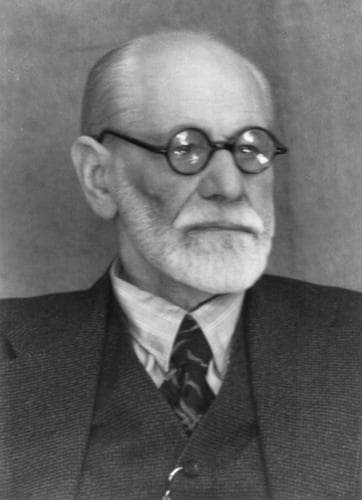
Sigmund Freud was an Austrian neurologist and the founder of psychoanalysis, a clinical method for treating psychopathology through dialogue between a patient and a psychoanalyst. His notable works include "Civilization and Its Discontents," "Totem and Taboo," and "The Psychopathology of Everyday Life," which explore the complexities of human behavior and the unconscious mind. Freud's theories have significantly influenced psychology, literature, and the arts.
Similar books
- Civilization and Its Discontents
Sigmund Freud
3.8 (32k) average on GoodreadsPsychologyExpands on the tension between individual desires and societal demands, touching upon religion as a coping mechanism.
- The God Delusion
Richard Dawkins
3.9 (231k) average on GoodreadsPsychologyA modern, scientific argument against the existence of God and the utility of religion, echoing some of Freud's critiques.
- The Varieties of Religious Experience
William James
4.0 (11k) average on GoodreadsPsychologyJames's (1902) work offers a phenomenological approach, focusing on individual religious experiences and their psychological effects, both positive and negative, without reducing them to pathology. Unlike Freud's universalizing diagnosis of neurosis, James explores the diverse manifestations of religious feeling and their practical utility, acknowledging their transformative power. James is more descriptive and less prescriptive, validating subjective experience rather than pathologizing it. While Freud seeks to explain away religion, James seeks to understand its lived reality.
- The Perks of Being a Wallflower
Stephen Chbosky
4.2 (1.3M) average on GoodreadsPsychologyThrough letters, a shy high school freshman learns to navigate first love, trauma, and self-discovery, stepping off the sidelines and into life.
- Eleanor Oliphant Is Completely Fine
Gail Honeyman
4.3 (708k) average on GoodreadsLiterary FictionA lonely woman's structured life changes when an IT guy and an elderly man help her learn to open her heart.
- One Flew Over the Cuckoo's Nest
Ken Kesey
4.2 (631k) average on GoodreadsPsychologyIn a mind-bending asylum, the boisterous Randle McMurphy wages a defiant war against the tyrannical Nurse Ratched, inspiring his fellow inmates, including the seemingly catatonic Chief Bromden, to reclaim their lost humanity.




Enjoyed the summary?
A summary gives you the shape of the book. The book itself has the detail, the examples and the voice.
Find The Future of an Illusion on AmazonAs an Amazon Associate, BookBrief earns from qualifying purchases. How we're funded