
Core Idea
- Difficulty
- Hard
- Read it if
- You are interested in understanding religion from a psychological and philosophical perspective, focusing on individual experience rather than dogma or institutions. You want to explore the nature of faith, mysticism, and conversion through an empirical lens.
- Skip it if
- You are looking for a theological defense or critique of specific religions, or a purely historical account. If you prefer concise, modern self-help, this dense philosophical text might not be for you.
Key Takeaways from The Varieties of Religious Experience
Religion's Personal Core
True religion resides in individual experience, not institutional dogma.
James changes how we define religion. He moves the focus from churches and beliefs to individuals' deeply personal, inner experiences. He says religion's core is in the subjective feelings, perceptions, and actions that connect a person to what they see as divine. This is true regardless of specific beliefs or group practices. This psychological view allows for a wide understanding of religious events. It recognizes the variety of spiritual encounters without favoring any one tradition. By focusing on individual experience, James opens the study of religion to observation. He moves past religious debates to look at the raw data of human awareness and its spiritual desires. This view supports the truth of personal revelation over the sameness of organized faith.
“The feelings, acts, and experiences of individual men in their solitude, so far as they apprehend themselves to stand in relation to whatever they may consider the divine.”
In the book: James's opening definition of religion as 'the feelings, acts, and experiences of individual men in their solitude' sets the stage for his entire inquiry, distinguishing his approach from sociological or theological studies.
Try this: Reflect on your own 'solitude' and what feelings or experiences connect you to something larger than yourself. Journal about these moments, observing them without judgment or the need to fit them into pre-existing religious categories.
Related ideas: personal-religion, subjective-experience, psychology-of-religion
The Healthy-Minded vs. The Sick Soul
Two distinct psychological temperaments shape religious outlooks.
James identifies two main psychological types that greatly affect how people approach and experience religion: the 'healthy-minded' and the 'sick soul.' The healthy-minded are naturally hopeful. They tend to see good in the world, and religion often seems like a natural part of their positive outlook. They usually downplay evil and suffering, focusing on divine kindness and the joy of life. In contrast, the 'sick soul' is very aware of suffering, evil, and life's natural flaws. For them, religion often meets a deep need for redemption. It is a way to find meaning and comfort when facing fear about existence and personal brokenness. James says that while healthy-mindedness can be good, the 'sick soul' often reaches a deeper, stronger faith precisely because it has faced life's darker parts.
“The world is all the richer for having a devil in it, if the devil is only there to be finally overcome.”
In the book: James dedicates entire chapters to 'The Religion of Healthy-Mindedness' and 'The Sick Soul,' providing numerous anecdotal accounts and philosophical discussions to illustrate these two poles of human temperament and their religious implications.
Try this: Identify whether your natural temperament leans more towards healthy-mindedness or the sick soul. Consider how this predisposition has shaped your past or current spiritual beliefs and practices, and explore how understanding both perspectives can enrich your empathy for others' spiritual journeys.
Related ideas: healthy-mindedness, sick-soul, religious-temperament, optimism-pessimism
Conversion as a Psychological Pivot
Religious conversion is a profound and often sudden psychological transformation.
James sees religious conversion as more than a religious event; it is a key psychological event. He carefully studies the process, which can be slow or sudden. In it, a person's previously divided self finds a new sense of unity and purpose, often with strong emotional experiences. This change involves a shift in the 'usual center of their personal energy,' leading to new reasons, values, and a clear worldview. He looks at different kinds of conversion, from conscious choices to involuntary, often spiritual, experiences. He stresses the great impact these shifts have on a person's identity, behavior, and overall well-being. James suggests that such conversions, no matter their specific religious content, show a powerful psychological re-ordering.
“To be converted, to be regenerated, to receive grace, to experience religion, to gain an assurance, are so many phrases which denote the process, gradual or sudden, by which a self hitherto divided, and consequently unhappy, becomes unified and consciously right, either by its own efforts or by the grace of a higher power.”
In the book: James cites numerous conversion narratives, including those of famous figures like Tolstoy, as well as accounts from his own correspondents, detailing the sudden shifts in perspective, emotional intensity, and subsequent behavioral changes.
Try this: Reflect on any significant shifts in your own values, beliefs, or life direction. Consider if these changes, even if not explicitly 'religious,' share psychological characteristics with the conversions James describes, such as a re-centering of purpose or a newfound sense of unity.
Related ideas: religious-conversion, psychological-transformation, spiritual-awakening, unified-self
Mysticism's Four Marks
Mystical experiences share universal characteristics, transcending religious traditions.
James looks at mystical experiences. He says that despite their varied cultural and religious backgrounds, they have four main features: they cannot be fully put into words (ineffability), they give deep insights into truth (noetic quality), they are usually short (transiency), and the person feels taken over by a higher power (passivity). He suggests that these shared features point to a common underlying psychological, and perhaps spiritual, reality. By looking at accounts from Christian saints, Sufi mystics, and Eastern meditators, James shows that the deep insights and changing power of mystical states are not only in one faith. They show a universal human ability to directly grasp ultimate reality. This study questions usual religious boundaries and highlights the shared experience under different beliefs.
“They are states of insight into depths of truth unplumbed by the discursive intellect. They are illuminations, revelations, full of significance and importance, all inarticulate though they remain; and as a rule they carry with them a curious sense of authority for after-time.”
In the book: James analyzes a wide array of mystical accounts, from St. Teresa of Ávila and Meister Eckhart to lesser-known individuals, identifying these four 'marks' as recurring patterns across different traditions.
Try this: When encountering accounts of profound spiritual or 'peak' experiences, look for these four marks. Consider how such experiences, even if not explicitly mystical, might offer insights that transcend ordinary language or rational thought.
Related ideas: mystical-experience, ineffability, noetic-quality, spiritual-insight, transcendent-experience
The Fruits, Not the Roots
The value of religion is judged by its practical effects on life, not its origins.
James clearly states that the best way to judge a religious experience is by its 'fruits' — its practical, ethical, and psychological results in a person's life. This is more important than its 'roots' — its possible psychological or physical origins. He rejects the idea that religious experiences can be dismissed by saying they are only brain states or illnesses. While some religious events might have unusual physical links, James argues that an experience's truth or value comes from its ability to help moral action, strength, joy, and purpose. A religious experience that makes a person better, more loving, or braver is, by James's practical standard, valuable, no matter its first cause. This view is very freeing for spirituality, validating different paths based on their good effects.
“By their fruits ye shall know them, not by their roots.”
In the book: James critiques 'medical materialism' by arguing that while the 'roots' (e.g., physiological states) of an experience are interesting to science, they do not invalidate the 'fruits' (e.g., moral transformation) of that experience. He provides examples of individuals whose lives were demonstrably improved by their religious experiences, regardless of their origins.
Try this: When evaluating any belief system or spiritual practice, focus less on its historical claims or origins and more on its tangible impact on your own life and the lives of others. Does it promote kindness, resilience, growth, and connection?
Related ideas: pragmatism, religious-value, ethical-impact, medical-materialism, consequences-of-belief
The Subconscious and the Divine
The subconscious mind serves as a conduit for spiritual impulses.
James suggests that the subconscious, or 'subliminal,' self is important in religious experience. It acts as a link between our normal awareness and a 'wider self' or even a divine reality. He thinks that many religious insights, inspirations, and feelings of connection to a higher power might come from this deeper, often hidden, part of our minds. This does not necessarily reduce religion to just psychological events. Instead, it raises the subconscious as a possible point of contact with spiritual truths. James's study of the subconscious predicts later psychological theories. It provides a way to understand how seemingly outside divine messages might come through inner mental processes, blurring the lines between the natural and the supernatural.
“The further limits of our being plunge, it seems to me, into an altogether other dimension of existence from the sensible and continuous world.”
In the book: James frequently refers to the 'subliminal self' as a source of religious inspiration, intuitions, and even 'invasions' of consciousness, drawing on contemporary psychological theories and anecdotal accounts of spontaneous spiritual insights.
Try this: Pay attention to your intuitions, dreams, and sudden insights, especially those that carry a sense of profound meaning or guidance. Consider how these might be expressions of a deeper, subconscious part of yourself interacting with a wider reality.
Related ideas: subconscious, subliminal-self, wider-self, divine-connection, intuition
A Pluralistic Universe
The divine is multifaceted, inviting diverse human interpretations and missions.
James supports a very open view of the divine and religious truth. He argues against the idea of a single God or a single path to spiritual fulfillment. Instead, he suggests that 'the divine' includes many qualities. Different people, with their unique personalities and experiences, will naturally connect with and show different parts of this many-sided reality. This openness is not just tolerance but active respect. It recognizes that diverse religious expressions are valid and needed, each showing a part of the ultimate truth. This view is a strong answer to religious exclusiveness and a call for broad acceptance.
“The divine can mean no single quality, it must mean a group of qualities, by being champions of which in alternation, different men may all find worthy missions.”
In the book: James's entire work is a testament to religious pluralism, as he draws examples from Christianity, Buddhism, Islam, and various individual experiences, demonstrating that the 'divine' manifests in countless forms and inspires varied missions.
Try this: Actively seek to understand the spiritual perspectives of others, even those that differ radically from your own. Recognize that their 'worthy mission' might be to champion a different, yet equally valid, aspect of the divine or ultimate reality.
Related ideas: religious-pluralism, divine-multiplicity, spiritual-tolerance, diverse-missions
The Will to Believe
Faith is a rational choice when evidence is inconclusive and the stakes are high.
While not a main topic in Varieties, James's earlier essay 'The Will to Believe' supports much of his approach to religious experience. He argues that when there is not enough proof to make a clear choice, but the choice itself is 'forced, living, and momentous,' it is not only allowed but often necessary for our 'passional nature' (our feelings, hopes, and desires) to influence our belief. For James, believing in certain religious or moral ideas, even without full proof, can be a rational act, especially if that belief has good, life-affirming results. This does not mean blind faith. It means a practical approach where the possible 'fruits' of belief justify the leap of faith when there is no clear proof.
“Our passional nature not only lawfully may, but must, decide an option between propositions, whenever it is a genuine option that cannot by its nature be decided on intellectual grounds.”
In the book: While 'The Will to Believe' is a separate essay, its core argument about the legitimacy of choosing belief in the face of insufficient evidence informs James's acceptance of diverse religious experiences as valid, even if their 'roots' are not scientifically verifiable. He implicitly applies this principle when evaluating the 'fruits' of religious life.
Try this: When faced with significant life choices where purely rational evidence is lacking, consider what belief, if acted upon, would lead to the most positive and fulfilling outcome for you and others. Embrace the idea that some truths are only accessible through active engagement and belief.
Related ideas: will-to-believe, pragmatic-belief, faith-as-choice, passional-nature, truth-seeking
The Utility of Suffering
Adversity and suffering can be catalysts for profound spiritual growth.
James, especially through his look at the 'sick soul,' shows how suffering can lead to change. He suggests that while pain, sorrow, and fear about existence are hard, they can greatly help spiritual growth and the development of a stronger faith. Those who have faced life's darker parts often reach a deeper sense of redemption. They find meaning and purpose that the always 'healthy-minded' miss. This does not mean suffering is good. Instead, it means religion, in its strongest forms, offers a way to deal with and move beyond hardship, leading to a richer, more complex understanding of existence and a more caring engagement with the world. The 'sick soul' finds its salvation not by avoiding suffering, but by facing and overcoming it.
“The world is all the richer for having a devil in it, if the devil is only there to be finally overcome.”
In the book: The extensive discussions on 'The Sick Soul' and 'The Divided Self' are replete with examples of individuals who found their deepest spiritual insights and conversions precisely through periods of intense suffering, despair, and mental anguish.
Try this: When facing personal difficulties, consider how these challenges, while painful, might be an opportunity for deeper reflection, spiritual growth, and the development of greater empathy and resilience. Look for the meaning that can emerge from struggle.
Related ideas: suffering-and-faith, spiritual-growth, meaning-in-adversity, sick-soul, redemption
Empirical Psychology of Faith
Religious experience is a legitimate subject for scientific psychological inquiry.
James's most lasting contribution is establishing the psychology of religion as a real field of study. He argues that religious experiences, though personal and often hard to describe, are observable 'facts about man's mental makeup.' Thus, they can be studied psychologically. By collecting, sorting, and explaining many personal stories, confessions, and life accounts, James showed that religious events could be studied without needing to agree with or deny their religious claims. He approached these experiences with intellectual care and understanding. This laid the groundwork for future psychological, sociological, and anthropological studies of religion. His work confirmed that the inner life of faith is a rich source of information for understanding human nature.
“To the psychologist the religious propensities of man must be at least as interesting as any other of the facts pertaining to his mental constitution.”
In the book: The entire methodology of the book—collecting and analyzing hundreds of individual accounts of religious experiences—serves as evidence for James's commitment to an empirical, psychological approach to religion, treating it as a natural phenomenon.
Try this: Approach your own spiritual questions and the beliefs of others with a spirit of open inquiry, seeking to understand the psychological and experiential dimensions without immediately resorting to judgment or theological debate. See religious life as a valid expression of human consciousness.
Related ideas: psychology-of-religion, empirical-study, scientific-inquiry, human-consciousness, descriptive-psychology
The Varieties of Religious Experience Quotes
“The only reason for living is to have our whole nervous system aware and tingling with the sense of it.”
“Our normal waking consciousness, rational consciousness as we call it, is but one special type of consciousness, whilst all about it, parted from it by the flimsiest of screens, there lie potential forms of consciousness entirely different.”
“If you have intuitions, it is because you are a thinking being and have been forming them all your life.”
“The greatest discovery of my generation is that a human being can alter his life by altering his attitudes of mind.”
“The sway of alcohol over mankind is unquestionably due to its power to stimulate the mystical faculties of human nature, usually crushed to earth by the weight of the material world.”
“To be converted, to be regenerated, to receive grace, to experience religion, to gain an assurance, are so many phrases which denote the process, gradual or sudden, by which a self hitherto divided, and consciously wrong, inferior and unhappy, becomes unified and consciously right, superior and happy, in consequence of its firmer hold upon religious realities.”
“The world is all the richer for having a devil in it, if only because we can then better appreciate the saints.”
“Religion, whatever it is, is a man's total reaction upon life.”
“The value of a religious experience is not to be judged by its origin, but by its fruits.”
“The baby, assailed by eyes, ears, nose, skin, and entrails at once, feels it all as one great blooming, buzzing confusion.”
“If a certain system of ideas makes you feel better and live a more effective life, it is true for you.”
“The highest flights of charity, devotion, trust, patience, and courage are in themselves the strongest arguments for the religious hypothesis.”
“The fact that a person has a religious experience does not prove that God exists, but it does prove that the person had a religious experience.”
“Not God, but life, more life, a larger, richer, more satisfying life, is in the last analysis the end of religion.”
Quiz
10 questions on the main ideas. Each answer comes with a short explanation.
Question 1
According to William James's definition in 'The Varieties of Religious Experience,' what is the primary focus of religion?
- The dogmas and rituals of established churches.
- The feelings, acts, and experiences of individual men in their solitude.
- The historical development of religious institutions.
- The sociological impact of religious communities.
Show answer
B. The feelings, acts, and experiences of individual men in their solitude. James explicitly defines religion as 'the feelings, acts, and experiences of individual men in their solitude, so far as they apprehend themselves to stand in relation to whatever they may consider the divine,' emphasizing the personal and individual aspect over institutional forms.
Question 2
What academic discipline does William James state is the only one in which he is 'particularly versed' and from which he approaches the study of religious propensities?
- Theology
- Anthropology
- History of Religions
- Psychology
Show answer
D. Psychology James clearly states, 'Psychology is the only branch of learning in which I am particularly versed,' positioning his work as a psychological survey of religious experiences.
Question 3
What was the original context for the lectures that became 'The Varieties of Religious Experience'?
- A series of sermons delivered in American churches.
- A philosophical debate at Harvard University.
- Lectures on 'natural religion' at the University of Edinburgh in 1901.
- A course on comparative religion for graduate students.
Show answer
C. Lectures on 'natural religion' at the University of Edinburgh in 1901. The introductory text specifies that James went to the University of Edinburgh in 1901 to deliver a series of lectures on 'natural religion,' which formed the basis of the book.
Question 4
James's 'pluralistic framework' for understanding the divine implies what about different religious experiences?
- Only one specific quality of the divine is truly valid.
- The divine can embody a group of qualities, allowing different individuals to find worthy missions through championing different aspects.
- Religious experiences are fundamentally uniform across all individuals.
- The concept of the divine is ultimately unknowable and indefinable.
Show answer
B. The divine can embody a group of qualities, allowing different individuals to find worthy missions through championing different aspects. The text states that in James's pluralistic framework, 'the divine can mean no single quality, it must mean a group of qualities, by being champions of which in alternation, different men may all find worthy missions,' advocating for a broad and inclusive understanding of spirituality.
Question 5
What is a key implication of James's focus on individual religious experience rather than institutional religion?
- It dismisses the importance of communal worship and religious traditions.
- It allows for a psychological examination of how religion is 'felt in everyday life' by individuals.
- It argues that organized religion is inherently detrimental to spiritual growth.
- It asserts that only solitary religious practices are authentic.
Show answer
B. It allows for a psychological examination of how religion is 'felt in everyday life' by individuals. By considering religion 'not as it is defined by--or takes place in--the churches, but as it is felt in everyday life,' James opens the door for a psychological analysis of personal apprehension of the divine.
Question 6
What is the primary objective of James's project, given his background and chosen approach?
- To establish a definitive theological doctrine for 'natural religion.'
- To provide a descriptive survey of man's religious propensities from a psychological perspective.
- To critique the historical inaccuracies within various religious narratives.
- To prove the existence of God through empirical psychological evidence.
Show answer
B. To provide a descriptive survey of man's religious propensities from a psychological perspective. James states that 'as a psychologist, the natural thing for me would be to invite you to a descriptive survey of those religious propensities,' indicating his aim is to describe and analyze, not to create doctrine or prove theological claims.
Question 7
The text describes 'The Varieties of Religious Experience' as contributing to which of the following fields?
- Primarily as a historical account of religious wars.
- As an important text on psychology, a contemplation of spirituality, and a significant work of nonfiction.
- Exclusively as a guide for personal spiritual development.
- Solely as a critique of organized religious institutions.
Show answer
B. As an important text on psychology, a contemplation of spirituality, and a significant work of nonfiction. The introduction highlights its multifaceted impact: 'stands not only as one of the most important texts on psychology ever written, not only as a vitally serious contemplation of spirituality, but for many critics one of the best works of nonfiction written in the 20th century.'
Question 8
How does James's 'pluralistic framework' directly contribute to his call for 'serious religious tolerance—indeed, respect'?
- By advocating for a single, universal religious truth that all must accept.
- By demonstrating that the divine can manifest in diverse qualities, validating multiple paths and expressions of faith.
- By arguing that all religions are ultimately illogical and should be tolerated out of pity.
- By emphasizing the superiority of certain religious experiences over others.
Show answer
B. By demonstrating that the divine can manifest in diverse qualities, validating multiple paths and expressions of faith. The text directly links the pluralistic framework—where 'the divine can mean no single quality, it must mean a group of qualities'—to 'an intellectual call for serious religious tolerance—indeed, respect,' because it legitimizes the diversity of ways individuals apprehend the divine.
Question 9
Given James's stated expertise and approach, what kind of 'religious accounts' would he be most interested in analyzing?
- Ancient scriptures and theological treatises.
- Personal narratives and firsthand descriptions of spiritual experiences.
- Formal declarations and edicts from religious councils.
- Statistical data on religious adherence and demographics.
Show answer
B. Personal narratives and firsthand descriptions of spiritual experiences. As a psychologist focusing on 'the feelings, acts, and experiences of individual men' and applying 'analytic clarity to religious accounts from a variety of sources,' James would be most interested in subjective, personal accounts that reveal the inner workings of religious propensities.
Question 10
How does James's stated position as 'neither a theologian, nor a scholar learned in the history of religions, nor an anthropologist' influence the scope and method of his inquiry?
- It leads him to focus on the institutional power structures of religion.
- It allows him to approach religion specifically from a psychological viewpoint, examining individual mental states and experiences without theological or historical bias.
- It compels him to invent entirely new terms and concepts for religious study.
- It restricts his study to only contemporary forms of religious expression.
Show answer
B. It allows him to approach religion specifically from a psychological viewpoint, examining individual mental states and experiences without theological or historical bias. By disclaiming expertise in theology, history, or anthropology, James clears the path for a purely psychological investigation, focusing on the 'mental constitution' and 'religious propensities' of the individual, free from the specific methodologies and concerns of those other disciplines.
The Varieties of Religious Experience FAQ
What is the main purpose of William James's 'The Varieties of Religious Experience'?
William James's 'The Varieties of Religious Experience' aims to descriptively survey the religious propensities of individuals from a psychological perspective. It explores religion as a personal, felt experience rather than through institutional or theological definitions, analyzing diverse accounts of spiritual life.
What is James's definition of religion in this book?
James defines religion as 'the feelings, acts, and experiences of individual men in their solitude, so far as they apprehend themselves to stand in relation to whatever they may consider the divine.' This emphasizes personal, subjective experience over communal or dogmatic interpretations.
Does James argue for the existence of God in 'The Varieties of Religious Experience'?
No, James does not directly argue for or against the existence of God. Instead, he focuses on the psychological reality and impact of religious experiences on individuals, treating them as valid human phenomena worthy of study regardless of their ultimate metaphysical origin.
How does James's approach to religion differ from that of a theologian or anthropologist?
James approaches religion primarily as a psychologist, focusing on individual subjective experiences and their mental constitution, rather than theological doctrines, historical development, or cultural practices. He is interested in the inner life of the religious individual.
What is 'pluralism' in the context of James's view on religion?
In 'The Varieties of Religious Experience,' pluralism refers to James's idea that 'the divine can mean no single quality.' He suggests that different individuals may apprehend the divine through various qualities and experiences, leading to diverse yet equally valid religious missions and understandings.
Does 'The Varieties of Religious Experience' promote religious tolerance?
Yes, the book implicitly and explicitly promotes religious tolerance and respect. By elaborating a pluralistic framework where diverse religious experiences can all be considered valid and meaningful, James encourages an intellectual appreciation for the varied paths individuals take in their spiritual lives.
Is this book suitable for someone with no background in psychology or philosophy?
While it delves into complex psychological and philosophical ideas, James's prose is known for its clarity and accessibility. The book draws on numerous personal accounts, making it engaging for general readers interested in spirituality, human experience, and the mind, even without prior academic background.
What kind of 'varieties' of religious experience does James explore?
James explores a wide range of experiences, including conversion, mysticism, saintliness, healthy-mindedness, the sick soul, and experiences of awe, fear, and joy in relation to the divine. He draws from biographies, autobiographies, and personal testimonies to illustrate these diverse phenomena.
About the author
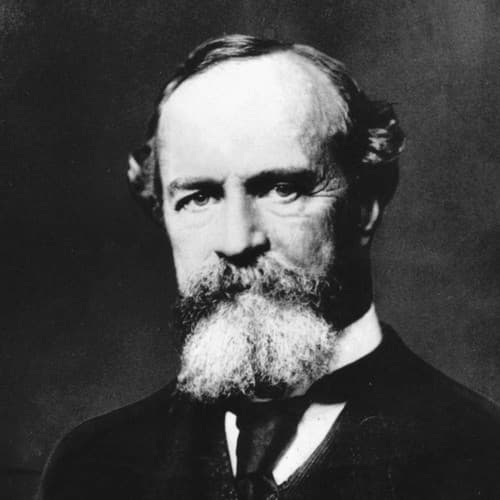
William James was an American philosopher and psychologist active in the late 19th and early 20th centuries. He is best known for his work "The Varieties of Religious Experience," which explores different personal experiences of faith and spirituality. James's contributions to psychology and philosophy have had a lasting impact on both fields.
Similar books
- Man's Search for Meaning
Viktor E. Frankl
4.4 (401k) average on GoodreadsBiographyExplores the human search for meaning and purpose, often through suffering, from a psychological and existential perspective.
- The Doors of Perception
Aldous Huxley
3.9 (12k) average on GoodreadsPsychologyInvestigates altered states of consciousness and their implications for understanding reality and spiritual experience.
- Totem and Taboo
Sigmund Freud
3.9 (8k) average on GoodreadsPsychologyFreud's (1913/1950) Totem and Taboo provides an alternative psychological explanation for the origins of religion, albeit from a psychoanalytic perspective. Freud views religion as a universal neurosis, rooted in unconscious desires, Oedipal conflicts, and the projection of parental authority onto a divine figure. Unlike James, who largely maintains a respectful, non-reductive stance towards the subjective validity of religious experience, Freud offers a highly reductive and pathologizing account. James would likely find Freud's sweeping generalizations and lack of empirical evidence for his historical reconstructions problematic, preferring to analyze the phenomenology of religious states rather than their supposed infantile origins.
- The Perks of Being a Wallflower
Stephen Chbosky
4.2 (1.3M) average on GoodreadsPsychologyThrough letters, a shy high school freshman learns to navigate first love, trauma, and self-discovery, stepping off the sidelines and into life.
- Eleanor Oliphant Is Completely Fine
Gail Honeyman
4.3 (708k) average on GoodreadsLiterary FictionA lonely woman's structured life changes when an IT guy and an elderly man help her learn to open her heart.
- One Flew Over the Cuckoo's Nest
Ken Kesey
4.2 (631k) average on GoodreadsPsychologyIn a mind-bending asylum, the boisterous Randle McMurphy wages a defiant war against the tyrannical Nurse Ratched, inspiring his fellow inmates, including the seemingly catatonic Chief Bromden, to reclaim their lost humanity.





Enjoyed the summary?
A summary gives you the shape of the book. The book itself has the detail, the examples and the voice.
Find The Varieties of Religious Experience on AmazonAs an Amazon Associate, BookBrief earns from qualifying purchases. How we're funded