

Synopsis
Covers the whole plot, including the ending.
- Difficulty
- Medium
- Pacing
- Moderate
- Mood
- Reflective, Philosophical, Historical, Poignant
- Read it if
- You are fascinated by the lives of spiritual leaders, the origins of religions, and the clash of ancient philosophies, presented through a biographical lens.
- Skip it if
- You prefer fast-paced narratives with modern sensibilities or are not interested in historical biographies centered on religious figures.
The Gardens of Light Plot Summary
Covers the whole plot, including the ending.
The Birth and Early Visions
The story begins with Mani's birth in 216 CE in Mesopotamia, into a community of Elchasaites, a Gnostic-Baptist group led by his father, Pattikios. From an early age, Mani stands out for his intelligence and sensitivity. At four, he has his first vision, where a heavenly being, whom he later understands to be his Twin Spirit or heavenly counterpart, speaks with him. These visions grow stronger as he gets older, showing him divine truths and pushing him toward a different path than his father's strict sect. He struggles to match the Elchasaite teachings with the deep spiritual insights he receives, feeling a growing sense of purpose and a unique mission to bring a new message to the world.
The Call to Prophecy
At twenty-four, Mani receives a clear message from his Twin Spirit, telling him to preach his own message. This divine call makes him publicly declare himself a prophet, much to the dismay and anger of the Elchasaite elders, including his father. Mani challenges their fixed interpretations and rituals, stating that he has been chosen to reveal a more universal truth, a blend of existing faiths. This declaration marks a clear break with his community. He starts to gather his first followers, including his father, who eventually accepts Mani's divine calling. This moment cements Mani's commitment to his mission, knowing it will be full of challenges.
Journeys to the East
After his initial declaration, Mani begins a long journey eastward, traveling through Persia and into India. During these travels, he encounters various spiritual traditions, including Buddhism and Hinduism. He debates philosophy and theology with local wise men and religious leaders. He preaches his message of light and darkness, good and evil, and the path to salvation through knowledge and self-control. Mani is not just a preacher; he is also a painter. He uses his art to illustrate his teachings, creating beautiful manuscripts and images that capture his audiences. His experiences in India deeply shape his understanding of the universal nature of spiritual truth, strengthening his belief that different faiths can be reconciled.
Return and Royal Patronage
After several years of travel, Mani returns to the Sasanian Empire, where his teachings begin to gain followers. He gets an audience with King Shapur I, the powerful ruler of Persia. Through his words, wisdom, and perhaps divine help, Mani impresses the king. The king grants him some royal protection and support. This endorsement is important, allowing Mani to openly preach his religion, Manichaeism, and establish communities of believers across the empire. The time under Shapur I's rule is a good period for Manichaeism, as Mani travels widely within Persia, building his church and attracting diverse followers, including nobles. He sets up a church structure with elected leaders and scribes.
The Scribes and the Canon
Mani, very aware of what happened to past prophets whose messages were broken or changed, places great importance on the written word. He personally oversees the creation of a full sacred collection for Manichaeism, making sure his teachings are accurately recorded and kept. He employs a team of skilled scribes to write down his sermons, letters, and writings in various languages, including Syriac, Middle Persian, and Parthian. Mani himself contributes much to this writing, creating several major works such as the 'Shapuragan,' for King Shapur I, and the 'Book of Giants.' This careful way of creating a canon makes Manichaeism stand out and ensures its clear spread across large areas, stopping the rise of different interpretations that troubled other religions.
The Zoroastrian Opposition
Despite royal protection, Manichaeism faces growing opposition from the established Zoroastrian priesthood, especially the powerful high priest Kartir. The Zoroastrians, who also have a dualistic faith but with different beliefs and a strong national identity, see Mani's universal and blended message as a direct threat to their authority and the Persian state religion. They view Manichaeism as a foreign invasion and a dangerous heresy that weakens old traditions. Kartir starts to gather power and influence at court, subtly working to turn the royal family against Mani. This opposition is not just about religion; it is a fight for political and religious control within the Sasanian Empire, hinting at the troubles to come.
The Succession of Kings
King Shapur I's death marks a turning point for Mani. His successor, Hormizd I, initially tolerates Mani, but his rule is short. The real change happens with the rise of Bahram I, who is heavily influenced by the staunchly Zoroastrian high priest Kartir. Bahram I, unlike his predecessors, is less willing to tolerate religious diversity and more open to the pressures of the powerful Zoroastrian clergy. Mani senses the changing political situation and the growing hostility toward his faith. The royal court, once a source of protection, now becomes a dangerous place, as Kartir's influence over the new king becomes complete, setting the stage for Mani's eventual fall.
The Trial and Imprisonment
Under Kartir's constant pressure, King Bahram I calls Mani to court, accusing him of heresy and corrupting Persia's true religion. Mani, despite his old age and poor health, bravely defends his teachings and his divine mission. However, the outcome is decided. The king, swayed by Kartir's arguments and the strong demands of the Zoroastrian clergy, condemns Mani. He is not executed immediately but is cruelly imprisoned, bound in heavy chains. This time in captivity is a period of great suffering for Mani, yet he keeps his spiritual strength, continuing to write and teach his followers from his cell, knowing his end is near. His followers, though saddened, are inspired by his firmness.
The Martyrdom of Mani
Mani's imprisonment ends with his death, likely in 274 or 277 CE. The exact details of his death are debated, but tradition says he suffered a gruesome martyrdom, possibly flayed alive, and his body was disrespected. The Zoroastrian authorities aimed to completely wipe out his influence and terrorize his followers. Mani faces his end with dignity and strong faith, seeing it as the ultimate sacrifice for the Light. His death, far from ending Manichaeism, energizes his followers, making him a martyr and a divine figure. His final moments are described as a peaceful leaving, his spirit rising to the realm of Light, leaving a legacy that would continue to spread across continents.
The Legacy and Dispersion
After Mani's martyrdom, Manichaeism faces strong persecution within the Sasanian Empire, forcing its followers to flee and spread their faith. Despite the brutal suppression, the religion shows great resilience and adaptability. Manichaean missionaries carry Mani's message west into the Roman Empire, North Africa, and Europe, influencing figures like Augustine of Hippo before his conversion to Christianity. To the east, it travels along the Silk Road, reaching Central Asia, China, and beyond. For over a thousand years, Manichaeism thrives in various forms, a sign of Mani's powerful vision and the lasting appeal of his dualistic cosmology. The book ends by reflecting on Mani's forgotten legacy, his name living on in the negative term 'Manichaean,' which ironically hides the important figure behind the word.
Principal Figures
Mani
Protagonist
The prophet, painter, and physician who founded Manichaeism.
Mani is a highly intelligent, sensitive, and deeply spiritual individual from Mesopotamia. He is driven by a profound sense of divine mission, believing himself to be the final prophet in a lineage including Zoroaster, Buddha, and Jesus. His core drive is to reconcile the fragmented spiritual truths of his time into a universal religion of light and darkness. He is also a gifted artist, using painting to convey his complex theological concepts, and a compassionate physician. His tolerance, intellectual curiosity, and unwavering faith define his character.
Relationships: Pattikios (Father; initially an Elchasaite leader, later Mani's first disciple.); Twin Spirit (Syzygos) (Divine guide and celestial counterpart, the source of Mani's revelations.); King Shapur I (Royal patron and protector, allowing Manichaeism to flourish temporarily.); Kartir (Antagonist; the powerful Zoroastrian high priest who orchestrates Mani's downfall.)
Pattikios
Supporting
Mani's father and an early leader of the Elchasaite sect.
Pattikios is a devout and initially rigid follower of the Elchasaite sect. He represents the established religious order that Mani challenges. Despite his initial resistance and disappointment in Mani's departure from the sect's traditions, he eventually comes to accept his son's divine calling. His transformation from an elder in a closed community to Mani's first and most loyal disciple demonstrates his capacity for faith and his profound love for his son. He provides a crucial link to Mani's origins and the initial spiritual context of his life.
Relationships: Mani (Father of Mani; initially disapproving, later his first disciple.); Elchasaite Community (Leader and member of the community from which Mani emerged.)
King Shapur I
Supporting
The Sasanian King of Persia who initially grants Mani royal patronage.
Shapur I is a powerful and relatively open-minded Sasanian monarch. His character represents a brief period of religious tolerance and intellectual curiosity within the Persian Empire. He is impressed by Mani's wisdom, artistry, and perhaps the political utility of a new, unifying religion. His patronage is instrumental in allowing Manichaeism to establish itself and spread. However, his tolerance is not absolute, and his support for Mani is ultimately limited by the political realities and the growing power of the Zoroastrian priesthood. He embodies the fleeting opportunity Mani had for widespread acceptance.
Relationships: Mani (Royal patron; grants Mani protection and allows his religion to spread.); Kartir (Ruler of the empire also governed by the influence of the high priest.)
Kartir
Antagonist
The powerful Zoroastrian high priest who orchestrates Mani's persecution and death.
Kartir is the zealous and politically astute high priest of the Zoroastrian faith. He is the primary antagonist, representing the forces of religious orthodoxy and political power that oppose Mani's universalist vision. Kartir views Manichaeism as a dangerous heresy that threatens the integrity of the Sasanian state and the dominance of Zoroastrianism. He is driven by a desire to consolidate his own power and purge the empire of rival faiths. His machinations and unwavering determination eventually lead to Mani's downfall and martyrdom. He embodies the rigid, intolerant face of established religion.
Relationships: Mani (Arch-enemy and persecutor; seeks to destroy Mani and his religion.); King Bahram I (Influential advisor; manipulates the king to condemn Mani.); Zoroastrian Priesthood (Leader and consolidator of their power against Manichaeism.)
Bahram I
Supporting
The Sasanian King who, under Kartir's influence, condemns Mani.
Bahram I is a weaker, more impressionable king compared to his predecessor, Shapur I. He represents the vulnerability of royal power to religious and political manipulation. Easily swayed by Kartir's zealous arguments and the pressure of the Zoroastrian clergy, he becomes the instrument of Mani's persecution. His actions demonstrate how quickly a prophet's fortunes can turn when royal patronage is withdrawn and replaced by hostility. He is less a character of strong conviction and more a figure who succumbs to the prevailing political and religious pressures of his court.
Relationships: Mani (The monarch who condemns Mani to imprisonment and death.); Kartir (King heavily influenced by Kartir's counsel and pressure.)
Scribes and Disciples
Supporting
Mani's loyal followers who help record and spread his teachings.
This collective represents the dedicated community that formed around Mani. They are instrumental in the preservation and dissemination of Manichaeism. These individuals, often unnamed but vital, include the scribes who meticulously copied Mani's writings, the missionaries who traveled to distant lands, and the believers who formed the core of the Manichaean church. Their unwavering loyalty and commitment, even in the face of persecution, are crucial to the survival and spread of Mani's message after his death. They embody the strength of faith and community.
Relationships: Mani (Loyal followers, scribes, and missionaries who propagate his message.)
Themes & Insights
The Search for Universal Truth
Mani's life is a quest to combine the different spiritual traditions of his time into one complete truth. He believes that earlier prophets—Zoroaster, Buddha, Jesus—revealed parts of this truth, and his mission is to finish the picture. This idea is clear in his travels to India, where he engages with Buddhist and Hindu philosophies, and in his deliberate inclusion of elements from various religions into Manichaeism. His wish to bridge differences and offer a path that goes beyond cultural and religious boundaries is central to who he is and the lasting appeal of his message, despite its eventual persecution. The book highlights the human desire for meaning beyond strict religious rules.
“I came from the land of Babylon to proclaim the truth to all peoples, to all nations, to all tongues. My teaching is for all the world, for all the world to hear.”
Light Versus Darkness (Dualism)
The core idea of Manichaeism, the cosmic struggle between the Kingdom of Light (good) and the Kingdom of Darkness (evil), runs through Mani's philosophy and the story itself. This dualism is not just a religious concept but a metaphor for the struggles Mani faces: the light of his truth against the darkness of ignorance, intolerance, and persecution. The physical world, including humans, is seen as a mix of these two ideas, and salvation comes from separating the light from the darkness within oneself. This idea is clearly shown in Mani's visions and his explanation of the human condition, making it the center of his spiritual message.
“Two Natures there are, two Kingdoms, two Powers, two Principles, two Worlds, two Gods, two Spirits, two Souls, two Lights, two Darknesses, two Goods, two Evils.”
The Power and Peril of the Written Word
Mani's careful efforts to write down his teachings show the great power he gives to the written word. He believes that accurate, divinely inspired texts are essential to keeping truth and preventing distortion, a lesson learned from the broken legacies of past prophets. He hires scribes and writes much himself, creating a complete Manichaean collection of texts. However, the written word also carries danger; it can be misunderstood, suppressed, or used as evidence against him. The destruction of Manichaean texts by persecutors shows how vulnerable written truth is to those who want to erase it, yet paradoxically, it is through some surviving pieces that Mani's story is known.
“For the Scriptures of the ancient religions were not written down by their founders, but by their disciples after their death, and they were often incomplete, altered, or even contradictory. My Scriptures, however, are written by me, and I am the living prophet.”
Martyrdom and the Enduring Legacy of Faith
Mani's eventual persecution and death show the theme of martyrdom. His willingness to suffer and die for his beliefs, rather than give them up, raises him to the status of a divine figure in the eyes of his followers. His martyrdom, arranged by Kartir and Bahram I, is meant to end his influence, but it ironically strengthens his disciples' faith and helps Manichaeism spread further. The book stresses that while individuals can be destroyed, ideas and faith, especially those sealed by sacrifice, can last for centuries, influencing later cultures and religions long after the original setting has faded.
“My death will not be the end of my teaching, but its beginning. For the seed, once planted, must die to bear fruit.”
Plot Devices & Literary Techniques
Divine Visions and the Twin Spirit
Mani's direct communication with a celestial being guides his prophetic mission.
From childhood, Mani experiences profound visions and receives direct counsel from his 'Twin Spirit' or 'Syzygos.' This device serves as the primary source of Mani's authority and the foundation of his theological insights. It establishes his unique connection to the divine, distinguishing him from other religious figures and justifying his claim as a prophet. The visions provide narrative propulsion, explaining Mani's actions and decisions, particularly his break from the Elchasaites and his universalist mission. It also lends a mystical and spiritual depth to the narrative, grounding Mani's rational discourse in direct divine experience.
The Journey (Physical and Spiritual)
Mani's extensive travels parallel his spiritual growth and the spread of his message.
Mani's physical journeys to India and throughout the Sasanian Empire are a crucial plot device. These travels allow him to encounter diverse cultures and religions, enriching his understanding and shaping his syncretic message. They also serve to demonstrate the universal appeal of his teachings as he gathers disciples from various backgrounds. Symbolically, these journeys mirror Mani's spiritual quest for universal truth and the arduous path of spreading a new faith across vast geographical and cultural divides. Each journey marks a stage in his development and the expansion of Manichaeism.
The Political Intrigue of the Sasanian Court
The shifting allegiances and power struggles at court dictate Mani's fate.
The Sasanian court, with its complex web of power, patronage, and religious rivalries, acts as a critical plot device. The initial favor of King Shapur I provides Mani with a window of opportunity, while the subsequent influence of the zealous Kartir over Bahram I leads directly to Mani's persecution. This device highlights how external political forces can profoundly impact the trajectory of a religious movement, demonstrating the precariousness of divine missions in the face of temporal power. It injects tension and conflict into the narrative, moving the plot towards its tragic climax.
The Book as a Sacred Object and Weapon
Mani's emphasis on written scriptures and their role in preserving and propagating his faith.
Mani's meticulous creation of a sacred canon, his 'Books,' is a central plot device. Unlike previous prophets, he personally supervises the writing and illustration of his scriptures, ensuring the purity and consistency of his message. These books are not merely texts; they are sacred objects, essential for the propagation and preservation of Manichaeism. They serve as a powerful tool for teaching and conversion. Conversely, their very existence makes them targets for destruction by persecutors, transforming them into symbols of both enduring truth and vulnerability, mirroring Mani's own fate.
The Gardens of Light Quotes
“The earth is not a battlefield, it is a garden. And we are its gardeners.”
“Every man has two angels, one of light and one of darkness. The one you feed will grow.”
“Truth is not a single path, but a mountain with many roads leading to its summit.”
“I am a physician, and I bring you the medicine of salvation.”
“The greatest prison is the one we build for ourselves within our own minds.”
“To truly see the light, one must first acknowledge the darkness.”
“Our words are seeds. Plant them carefully, for they will bear fruit.”
“Do not seek to conquer the world, but to enlighten it.”
“The only chains that bind us are those forged by our own ignorance.”
“Peace is not the absence of conflict, but the presence of justice.”
“The stars do not dictate our fate, but reflect the choices we make.”
“Beauty is a glimpse of the divine, a whisper of perfection.”
“The true kingdom is not of this world, but within the hearts of men.”
“Every tear shed for another is a drop of light in the darkness.”
Quiz
10 questions on the plot and the characters. Each answer comes with a short explanation.
Question 1
Which empire's ruler initially offered Mani protection and support, allowing him to spread his teachings?
- The Roman Empire
- The Sasanian Empire
- The Kushan Empire
- The Byzantine Empire
Show answer
B. The Sasanian Empire Mani began his ministry in the Sasanian Empire, where King Shapur I initially granted him favor and protection, which was crucial for the early spread of Manichaeism.
Question 2
Mani's teachings are often characterized by a fundamental dualism. What two opposing forces does he believe are in constant conflict?
- Heaven and Earth
- Good and Evil (Light and Darkness)
- Humanity and Divinity
- Order and Chaos
Show answer
B. Good and Evil (Light and Darkness) Manichaeism is famously dualistic, positing a cosmic struggle between the Kingdom of Light (Good) and the Kingdom of Darkness (Evil), with human souls being particles of light trapped in the material world.
Question 3
Before establishing his own religion, Mani was raised within a specific religious community. Which one was it?
- Zoroastrianism
- Judaism
- A Jewish-Christian Gnostic sect (Elkesaites)
- Buddhism
Show answer
C. A Jewish-Christian Gnostic sect (Elkesaites) Mani grew up in Mesopotamia as a member of the Elkesaites, a Jewish-Christian Gnostic baptismal sect, which heavily influenced his early spiritual development.
Question 4
What artistic skill was Mani particularly renowned for, earning him a significant title in some cultures?
- Sculptor
- Musician
- Painter
- Poet
Show answer
C. Painter Mani was a skilled painter, and he extensively used illustrated books to propagate his teachings. This artistic talent earned him the title 'the Buddha of Light' by the Chinese, highlighting his visual approach to spirituality.
Question 5
Which of the following figures did Mani consider to be his spiritual predecessors and part of a lineage of prophets?
- Plato, Aristotle, and Socrates
- Moses, Zoroaster, and Confucius
- Zoroaster, Buddha, and Jesus
- Abraham, David, and Solomon
Show answer
C. Zoroaster, Buddha, and Jesus Mani saw himself as the final prophet in a line that included Zoroaster, Buddha, and Jesus, aiming to complete and universalize their messages through his own revelation.
Question 6
What was the primary reason for Mani's eventual persecution and execution by the Sasanian authorities?
- His refusal to pay taxes to the king
- His attempt to incite a rebellion against the empire
- His challenge to the established Zoroastrian priesthood and their influence
- His alliance with the Roman Empire
Show answer
C. His challenge to the established Zoroastrian priesthood and their influence The growing influence of the Zoroastrian priesthood, particularly the High Priest Kartir, led to Mani's downfall. They viewed his teachings as a direct threat to their authority and the state religion.
Question 7
Mani's philosophy aimed to reconcile different religions of his time. What was his method for achieving this reconciliation?
- By advocating for the complete abandonment of all existing faiths in favor of a new one
- By demonstrating that all religions contained fragments of a universal truth, which his own teachings unified
- By conquering and converting followers of other religions through force
- By creating a syncretic religion that blended all existing rituals and deities
Show answer
B. By demonstrating that all religions contained fragments of a universal truth, which his own teachings unified Mani believed that the fundamental truths of previous religions were revealed piecemeal by earlier prophets, but that he, Mani, was the final prophet sent to present the complete, universal truth, thus unifying disparate spiritual paths.
Question 8
The book emphasizes Mani as a 'forgotten figure' whose name is 'paradoxically, on everyone's lips.' This paradox primarily refers to:
- The widespread use of his name in modern literature and art without knowledge of his historical identity.
- The common usage of the terms 'Manichean' or 'Manichaeism' to describe dualistic thought, often without knowing the historical Mani.
- His teachings being preserved only in obscure academic texts, yet influencing popular culture.
- His name being a common personal name in several cultures despite his persecution.
Show answer
B. The common usage of the terms 'Manichean' or 'Manichaeism' to describe dualistic thought, often without knowing the historical Mani. The introduction directly states this paradox: people use 'Manichean' or 'Manichaeism' to describe dualistic worldviews, but rarely connect these terms to Mani, the historical figure who founded the religion.
Question 9
In the latter part of his life, Mani faced increasing hostility. Under which Sasanian king was he ultimately imprisoned and executed?
- Shapur I
- Hormizd I
- Bahram I
- Narseh
Show answer
C. Bahram I After the relatively tolerant reigns of Shapur I and Hormizd I, Bahram I, under the influence of the powerful Zoroastrian high priest Kartir, ordered Mani's arrest and execution, marking the dramatic end of his life.
Question 10
Mani's universalist approach to religion, aiming to reconcile diverse spiritual paths, can be best described as a challenge to the prevailing religious particularism of the time. What was a key element of his strategy to achieve this universalism?
- He emphasized strict adherence to a single, unchangeable sacred text for all followers.
- He deliberately tailored his message and scriptures to resonate with local traditions and languages in each region he visited.
- He sought to establish a centralized religious authority with a single head based in Mesopotamia.
- He insisted on converting people to a singular, rigid set of rituals and dietary laws.
Show answer
B. He deliberately tailored his message and scriptures to resonate with local traditions and languages in each region he visited. Mani was known for adapting his message to different cultural contexts, presenting himself as a successor to local prophets (like Buddha in India, Jesus in the West, Zoroaster in Persia) and translating his scriptures into various languages to ensure wider appeal and understanding.
The Gardens of Light FAQ
What is the central premise of 'The Gardens of Light'?
'The Gardens of Light' chronicles the life of Mani, a historical figure from the 3rd century AD, often misunderstood through the term 'Manichaeism'. The book explores his journey as a painter, doctor, and philosopher who sought to unify the major religions of his time, emphasizing tolerance and light over darkness.
Who is Mani, and what makes his story significant in this novel?
Mani is presented as 'the Buddha of Light' by the Chinese and 'the apostle of Jesus' by Egyptians, a testament to his ambition to reconcile diverse spiritual traditions. His significance lies in his humanist philosophy, which aimed to bridge Zoroastrianism, Christianity, and Buddhism, a radical idea that ultimately led to his persecution and martyrdom.
What kind of world does Mani grow up in, and how does it shape his early beliefs?
Mani grows up in a diverse Mesopotamian world under Sassanid Persian rule, exposed to various religious traditions, including a Christian-Gnostic sect and Zoroastrianism. This multicultural environment, coupled with his innate sensitivity and visions, fuels his desire to find a universal truth that transcends sectarian divides.
How does the novel portray Mani's spiritual awakening and his claim to prophethood?
The novel depicts Mani's spiritual awakening through a series of divine revelations, particularly from his 'Twin' or 'Syzygos', a celestial companion. These visions compel him to proclaim himself a prophet, not to create a new religion but to clarify and complete the messages of previous prophets like Zoroaster, Buddha, and Jesus.
What are the core tenets of Mani's philosophy as presented in the book?
Mani's philosophy, as detailed in the book, centers on a radical dualism of light and darkness, good and evil, spirit and matter. He believed that human souls are fragments of divine light trapped in the material world, and through knowledge (gnosis), asceticism, and righteous living, they can return to the Realm of Light.
What is the role of Mani's 'Twin' or 'Syzygos' in his spiritual journey?
Mani's 'Twin' or 'Syzygos' is a crucial mystical figure, representing his celestial counterpart and the source of his divine revelations. This entity guides Mani, imparting wisdom and urging him to fulfill his prophetic mission, providing a direct link to the divine and validating his teachings.
How does the novel subtly hint at the political motivations behind Mani's persecution, beyond religious disagreement?
The novel suggests that Mani's growing influence and the universal appeal of his message threatened the established Zoroastrian priesthood and the Sassanid imperial power. His desire to unite different peoples under a single spiritual banner was perceived as a destabilizing force against the existing social and political order.
Are there specific historical figures or events woven into Mani's narrative that might be overlooked?
The narrative subtly incorporates the shifting political landscape of the Sassanid Empire and the rivalry with the Roman Empire, which influenced the tolerance or persecution of minority religions. The influence of figures like Shapur I, who initially offered Mani protection, and later Bahram I, who condemned him, are critical yet often undersold aspects of the historical context.
How does Mani's artistic talent as a painter connect to his philosophical mission?
Mani's talent as a painter is intimately linked to his philosophical mission; he believed in conveying spiritual truths through visual imagery, creating illustrated books and frescoes. He saw art as a powerful tool to make abstract spiritual concepts accessible and memorable, hence his epithet 'the Painter'.
What psychological pressures does Mani face as he attempts to reconcile disparate religious traditions?
Mani faces immense psychological pressure from the constant need to adapt his message to different audiences (Zoroastrians, Christians, Buddhists) without compromising his core beliefs. This balancing act, coupled with the inevitable rejections and accusations of heresy, leads to profound isolation and internal conflict.
How does the novel explore Mani's personal sacrifices and the toll of his ascetic lifestyle?
The novel delves into Mani's personal sacrifices, including renouncing worldly pleasures, family life, and even physical comfort for his mission. It highlights the emotional and physical toll of constant travel, persecution, and the burden of carrying a message that few truly understand or accept, leading to a deep sense of loneliness.
In what ways does Mani exhibit traits of both profound humility and unwavering conviction?
Mani exhibits profound humility by never claiming superiority over past prophets, viewing himself as a successor completing their work. Yet, he possesses unwavering conviction in his divine mandate, enduring torture and martyrdom rather than renouncing his teachings, demonstrating an iron will beneath a gentle demeanor.
How does the narrative convey Mani's inner struggle with doubt, if at all, given his conviction?
While Mani's conviction is strong, the narrative subtly hints at his inner struggle, particularly during periods of intense persecution or when his followers face dire consequences. These moments reveal his human frailty and the immense burden of leadership, questioning the efficacy of his peaceful approach against overwhelming hostility.
Is Mani portrayed as a flawless prophet, or does the book suggest any human imperfections?
Mani is not portrayed as flawless; the book emphasizes his human imperfections, particularly his occasional naivety regarding political realities and the dangers of religious fanaticism. His unwavering idealism, while admirable, sometimes blinds him to the cynical power plays of his adversaries, making him vulnerable.
Does 'The Gardens of Light' offer a definitive judgment on Mani's historical impact, or leave it open to interpretation?
The novel largely leaves Mani's historical impact open to interpretation, presenting his life and teachings with empathy while acknowledging the tragic outcome. It highlights the irony that while his name became synonymous with heresy ('Manichean'), his original message of reconciliation and light was largely forgotten or distorted.
How does the book challenge or reinforce modern understandings of religious tolerance and pluralism?
The book powerfully challenges modern understandings by showing an ancient prophet advocating for a radical form of religious pluralism and tolerance, seeking common ground rather than division. It reinforces the idea that such ideals, though noble, often face immense resistance from entrenched powers and dogmatism, mirroring contemporary struggles.
What is the significance of the title 'The Gardens of Light' in relation to Mani's philosophy and fate?
The title 'The Gardens of Light' symbolizes Mani's vision of a spiritual realm of purity and truth, the ultimate destination for souls freed from darkness. It contrasts sharply with his earthly fate of persecution and imprisonment, suggesting that even in torment, his spirit remained focused on this luminous ideal.
Could Mani's attempts to reconcile religions be seen as a strength or a weakness in the context of the novel's events?
Mani's attempts to reconcile religions are portrayed as both his greatest strength and ultimate weakness. It was his strength because it offered a universal, humanist message appealing to many; however, it was a weakness because it threatened existing religious authorities who saw his syncretism as a dilution or usurpation of their unique truths, leading to his downfall.
What message, if any, does Amin Maalouf convey about the enduring power of ideas versus brute force?
Amin Maalouf conveys that while brute force can suppress individuals and movements, the power of ideas, particularly those rooted in universal truths and compassion, can endure for centuries. Mani's ideas, though distorted and persecuted, continued to resonate and influence subsequent spiritual traditions, demonstrating their profound resilience.
About the author

Amin Maalouf is a Lebanese-French author known for his historical novels that explore cultural identity and the intersection of civilizations. His notable works include 'The Gardens of Light,' 'Leo Africanus,' and 'The Crusades Through Arab Eyes,' which offer profound insights into historical events and diverse perspectives. Maalouf's writing is celebrated for its lyrical prose and deep engagement with complex themes.
Similar books
- Siddhartha
Hermann Hesse
4.0 (583k) average on GoodreadsHistorical FictionFollows a spiritual seeker's journey of self-discovery and the formation of a unique philosophy.
- The Name of the Rose
Umberto Eco
4.1 (301k) average on GoodreadsHistorical FictionOffers a deep dive into historical religious contexts, heresies, and intellectual conflicts.
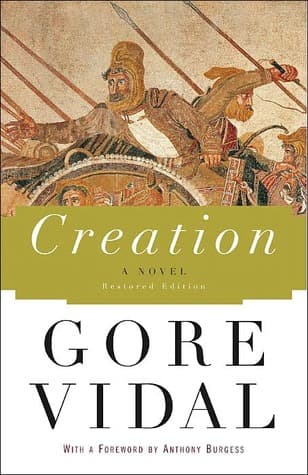
- Creation
Gore Vidal
4.2 (4k) average on GoodreadsHistorical FictionGore Vidal's "Creation" also explores ancient history through the eyes of a single protagonist, Cyrus Spitama, who interacts with historical figures like Zoroaster and Buddha. Both authors excel at bringing ancient worlds to life, but Vidal's approach is often more satirical and critical, using his protagonist as a vehicle for observing and critiquing various philosophical and political systems. Maalouf, while not uncritical, maintains a more reverent and empathetic stance towards Mani's spiritual quest. Vidal's scope is broader geographically and chronologically, while Maalouf focuses intensely on Mani's specific life and mission, offering a more concentrated psychological portrait.
- To Kill a Mockingbird
Harper Lee
4.3 (4.5M) average on GoodreadsHistorical FictionIn the 1930s Jim Crow South, Harper Lee writes about racial injustice, moral growth, and the quiet courage of a lawyer father, Atticus Finch, as seen through his young daughter's eyes.
- The Great Gatsby
F. Scott Fitzgerald
3.9 (3.8M) average on GoodreadsHistorical FictionIn the opulent Roaring Twenties, a mysterious millionaire's lavish parties hide his desperate, tragic pursuit of a lost love, exposing the emptiness within the American Dream.
- Pride and Prejudice
Jane Austen
4.3 (3M) average on GoodreadsHistorical FictionIn a society focused on status and money, Elizabeth Bennet navigates love and pride, challenging Mr. Darcy and social expectations to find true affection.





Enjoyed the summary?
A summary gives you the shape of the book. The book itself has the detail, the examples and the voice.
Find The Gardens of Light on AmazonAs an Amazon Associate, BookBrief earns from qualifying purchases. How we're funded