
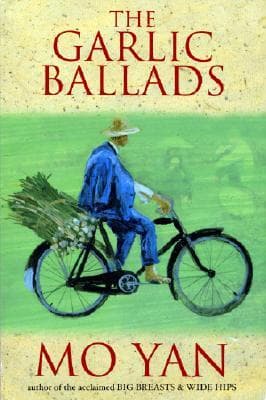
Synopsis
Covers the whole plot, including the ending.
- Difficulty
- Medium
- Pacing
- Moderate
- Mood
- Bleak, poignant, defiant, tragic, thought-provoking
The Garlic Ballads Plot Summary
Covers the whole plot, including the ending.
The Garlic Harvest and Mounting Frustration
The story begins with farmers in Paradise County facing a huge garlic harvest, encouraged by the local government. But the promised government purchasing stations are too busy, causing a major bottleneck. Farmers, like Gao Ma, wait for days in long, messy lines, often sleeping by their carts, only to be turned away or have their garlic rot. The situation gets worse with unfair taxes and corrupt officials who demand bribes, further reducing the farmers' small profits. Gao Ma's family, including his elderly father and his love, Jinju, are directly hurt by this financial struggle and growing unfairness. The farmers are desperate as their livelihood, the garlic, starts to spoil.
Gao Ma's Act of Defiance
Desperate from endless waiting and seeing his garlic rot, Gao Ma makes a drastic choice. He dumps his garlic on the road in front of the government purchasing station. This act is a protest against the incompetence and corruption. He is immediately seen as a troublemaker. He is then arrested and jailed, accused of disturbing public order and defying the state. His arrest devastates his family, especially Jinju, who is now without her love and faces an uncertain future. Gao Ma's imprisonment shows the harsh results for any perceived resistance against the authorities, no matter how desperate the act.
The Plight of the Prisoners
Inside the county jail, Gao Ma experiences the Chinese prison system's brutal reality. He is beaten, deprived, and psychologically tormented. The cells are overcrowded and dirty, and food is scarce. Despite the terrible conditions, Gao Ma finds a strange bond with other prisoners. Many of them are also farmers arrested for similar protests or small crimes. Among them are Fourth Aunt, a spirited woman arrested for selling garlic privately, and a blind minstrel who inspires hope and resistance through his songs. These shared experiences of suffering and resilience create a bond among the inmates, offering some human connection amid the inhumanity.
Jinju's Struggle and Forced Marriage
With Gao Ma in prison, Jinju's situation becomes more uncertain. Her family, especially her strict father, sees her relationship with Gao Ma as a disgrace and a problem. They decide to marry her off to One-Eyed Wang, a local official's helper, for a large bride price. This arranged marriage is a harsh betrayal of her love for Gao Ma. It shows how little power women have in this society. Jinju resists strongly, but she cannot fight her family's will and the societal pressures that prioritize money and conformity over happiness and love. Her despair grows each day as her hope for reuniting with Gao Ma shrinks.
The Blind Minstrel's Incitement
The blind minstrel, a figure of old tradition and folk wisdom, helps stir the farmers' growing unhappiness. He travels through villages, singing songs that show the farmers' suffering, the government's unfairness, and the officials' corruption. His songs are not just entertainment; they are powerful stories that voice the people's unspoken complaints, giving words to their shared pain and anger. He subtly encourages resistance, reminding them of their strength in numbers. His performances become gathering points for the community, quietly uniting them in their shared struggle and planting the seeds for a more direct protest.
The Riot of the Garlic Farmers
Moved by the minstrel's songs, their own desperate situation, and news of more government abuses (like forced tax collection despite rotting crops), the farmers finally explode in a large, chaotic riot. They storm the government compound, destroying property, burning offices, and confronting the officials they blame for their misery. The riot is a raw, uncontrolled burst of pent-up rage and frustration, a desperate attempt to regain some dignity and fairness. The scene involves violence and destruction, as the farmers, who have suffered so much, unleash their fury on the symbols of their oppression. This uprising changes individual suffering into group action.
The Aftermath of the Riot
The government responds to the riot quickly and brutally. Military forces are sent to Paradise County, crushing the rebellion with overwhelming power. Many farmers are arrested, and some are executed immediately or after quick trials. The crackdown shows the state's absolute power and its willingness to use violence to keep control. The initial relief of the riot is replaced by fear and despair as the community suffers the severe consequences. Families are broken, and hope for justice is replaced by the grim reality of state punishment. The streets, once full of angry protestors, are now silent and afraid.
Gao Ma's Escape and Search for Jinju
Amid the riot's chaos and the subsequent crackdown, Gao Ma escapes from prison. Driven by his love for Jinju and his desire for freedom, he starts a dangerous journey to find her. His escape is full of risk, as he is a wanted man, constantly avoiding authorities. He learns of Jinju's forced marriage to One-Eyed Wang, which increases his desperation and resolve. His journey becomes a quest for survival and reunion, navigating a land scarred by state violence and personal tragedy. He is determined to rescue Jinju from her unwanted marriage and reclaim their lost love, despite the overwhelming odds.
The Confrontation and Tragic Endings
Gao Ma eventually finds Jinju, living unhappily with One-Eyed Wang. A dramatic and violent fight happens between Gao Ma and One-Eyed Wang. In the struggle, both men are fatally wounded. Jinju, caught in the middle of this tragic conflict, also dies, either by accident or by her own hand in despair. The peak of their love story is not a happy reunion but a devastating loss. This is a direct result of the oppressive forces that separated them and the personal feuds they caused. Their deaths show the ultimate cost of the state's cruelty and an individual's struggle against an unyielding system.
Reflections and Lingering Sorrow
The novel ends with the lasting sorrow and deep impact of these events on Paradise County. The riot, the crackdown, and the personal tragedies of Gao Ma and Jinju leave a permanent mark on the community. While the immediate chaos ends, the memory of the injustice and loss remains. The blind minstrel continues to sing his songs, now with even greater sadness and a deeper sense of grief. This ensures that the stories of suffering and resistance are not forgotten. The ending is not one of solution or victory, but a somber look at the enduring human spirit when facing overwhelming oppression and the high price paid for both love and defiance.
The Garlic Ballads Characters
Gao Ma
Protagonist
A defiant garlic farmer driven by love and a sense of justice.
Gao Ma is a young, hardworking farmer in Paradise County, deeply in love with Jinju. He is initially a quiet and obedient citizen, but the injustice of the garlic crisis and the government's indifference ignite a fierce sense of defiance within him. His actions, from pouring out his garlic to escaping prison, are driven by a desperate desire to protect his livelihood, his family, and his love. He embodies the resilience and desperation of the common farmer, willing to risk everything for what he believes is right.
Relationships: Jinju (lover); Gao Yang (Father) (son)
Jinju
Protagonist
Gao Ma's beloved, caught in a web of familial and societal pressures.
Jinju is a spirited and beautiful young woman, deeply in love with Gao Ma. Her character represents the vulnerability of women in a patriarchal society, where their destinies are often dictated by family and circumstance. She endures immense suffering, including the loss of her beloved and a forced marriage to One-Eyed Wang. Despite her helplessness, she maintains a defiant spirit, clinging to the memory of her love for Gao Ma, even as her world crumbles around her. Her tragic fate underscores the devastating personal cost of political and social oppression.
Relationships: Gao Ma (lover); One-Eyed Wang (forced husband)
The Blind Minstrel
Supporting
A traditional storyteller who incites rebellion through his songs.
The Blind Minstrel is a pivotal figure who travels through Paradise County, singing traditional ballads that subtly and overtly critique the government's injustices. He serves as the voice of the people, articulating their grievances and inspiring their collective action. Despite his physical blindness, he possesses a keen insight into the human condition and the political climate. His songs act as a catalyst for the riot, transforming individual suffering into a unified cry for justice. He represents the enduring power of art and storytelling as a form of resistance.
One-Eyed Wang
Antagonist
A corrupt official's henchman and Jinju's forced husband.
One-Eyed Wang is a minor official or a henchman for local authorities, known for his cruelty and opportunism. He represents the petty corruption and abuse of power that permeates the lower echelons of the government. He is instrumental in Jinju's forced marriage, motivated by personal gain and a desire for control. His character embodies the immediate oppressors faced by the farmers, making him a tangible target for their anger and Gao Ma's vengeance. His eventual demise is a violent culmination of the personal and political conflicts.
Fourth Aunt
Supporting
A resilient older woman imprisoned alongside Gao Ma.
Fourth Aunt is a feisty and resilient older woman who is imprisoned for illegally selling garlic. She becomes a source of strength and wisdom for Gao Ma and the other inmates. Her pragmatic approach to survival and her unwavering spirit provide a stark contrast to the despair around them. She embodies the enduring spirit of the ordinary people, capable of finding humor and maintaining dignity even in the most dehumanizing circumstances. Her character highlights the widespread nature of the government's oppression, affecting people of all ages.
Relationships: Gao Ma (fellow prisoner/friend)
Gao Yang
Supporting
Gao Ma's aging father, representing generational suffering.
Gao Yang is Gao Ma's father, an elderly farmer who has witnessed generations of hardship. He represents the long-suffering peasant class, whose lives are dictated by the whims of nature and government. He is initially cautious, advising obedience, but his spirit is broken by the injustices and his son's imprisonment. His character highlights the generational cycle of poverty and oppression, and the way in which the current crisis exacerbates existing vulnerabilities within families. His quiet despair underscores the pervasive impact of the government's policies.
Relationships: Gao Ma (father)
County Chief
Antagonist
The high-ranking official responsible for the garlic policy.
The County Chief is the primary antagonist representing the bureaucratic and uncaring government. He is the architect of the disastrous garlic policy and the enforcer of the subsequent crackdown. He is portrayed as detached from the suffering of the farmers, prioritizing political directives and maintaining control over the well-being of his constituents. His actions, or lack thereof, directly lead to the crisis and the ensuing violence. He symbolizes the impersonal and oppressive nature of the state apparatus, far removed from the daily struggles of the people.
The Garlic Ballads Themes
Oppression and Resistance
The novel shows how state oppression crushes the individual and group lives of garlic farmers. Government policies, from dictating crops to imposing unfair taxes and jailing protestors, take away the farmers' dignity and livelihood. This theme also explores different forms of resistance, from small acts like Gao Ma pouring out his garlic, to the group, violent uprising of the riot, and the lasting resistance in the minstrel's songs. It examines the high cost of both giving in and fighting back.
“When the officials talk, the people listen. When the people talk, the officials don't hear a sound.”
Love and Loss
At the center of the political trouble is the tender and tragic love story of Gao Ma and Jinju. Their love is a light of hope and humanity amid their harsh lives, but it is ultimately destroyed by forces beyond their control. This theme explores how political oppression and societal pressures can ruin personal happiness and lead to great loss, not just of life, but of dreams and futures. It highlights how vulnerable human connection is when facing an inflexible system, and the devastating impact of forced separation and betrayal.
“In this world, only the love between a man and a woman can truly warm the heart.”
The Power of Storytelling and Art
The Blind Minstrel's songs are a strong way to express the farmers' shared suffering and hopes. His songs are not just entertainment; they are a form of historical record, a way to preserve memory, and a trigger for social change. This theme shows how storytelling, even in its oldest forms, can empower the voiceless, expose injustice, and ignite the spirit of resistance. It suggests that art can overcome physical limits and political censorship to connect people and inspire action.
“His voice, like a sharp knife, carved into the hearts of the people, cutting away their numbness.”
Corruption and Bureaucracy
The novel carefully details the widespread corruption and inefficiency within the local government. Officials demand bribes, enforce rules unfairly, and put their own interests before the farmers' well-being. The complex bureaucracy created by the garlic policy, from the overwhelmed purchasing stations to the complicated tax system, highlights the absurdity and cruelty of a system designed to control rather than serve. This theme shows how widespread corruption makes suffering worse and fuels public anger, eventually leading to violent outbreaks.
“The government's hand was like a net, catching everything, but letting nothing go without a struggle.”
Plot Devices & Literary Techniques
The Garlic
A symbol of livelihood, hope, and oppression.
The garlic itself is a potent symbol throughout the novel. Initially, it represents the farmers' livelihood and their hope for prosperity, cultivated with immense effort. As the crisis unfolds, it transforms into a symbol of the government's oppression, rotting in the fields and becoming a burden rather than a blessing. It also symbolizes the farmers' dignity and their collective grievance, leading to acts of protest. The smell of garlic permeates the narrative, serving as a constant reminder of their struggle and identity.
The Blind Minstrel's Ballads
Oral tradition as a catalyst for rebellion and historical record.
The minstrel's songs are a crucial plot device, functioning as both a narrative voice and a direct instigator of action. They serve to articulate the unspoken grievances of the farmers, providing a collective voice for their suffering and anger. By recounting past injustices and inspiring courage, the ballads gradually build the collective will for resistance, culminating in the riot. They also act as a historical record, ensuring that the events and the suffering of the people are remembered beyond the immediate moment.
Imprisonment
A microcosm of state control and a crucible for character.
Gao Ma's imprisonment, along with that of Fourth Aunt and others, serves as a significant plot device. It provides a stark depiction of the state's brutal power and its methods of control. Within the confines of the jail, characters are stripped of their freedom and dignity, forcing them to confront their inner strength and form unexpected bonds. The prison becomes a microcosm of the larger oppressive society, highlighting themes of human resilience, survival, and the enduring spirit of defiance even in the most dire circumstances.
Quiz
10 questions on the plot and the characters. Each answer comes with a short explanation.
Question 1
What is the primary crop that the farmers in Paradise County are encouraged to plant?
- Rice
- Wheat
- Garlic
- Corn
Show answer
C. Garlic The Communist government encouraged the farmers to plant garlic, which became the central focus of the story's conflict.
Question 2
What problem arises for the farmers after they successfully grow a large amount of garlic?
- The market is flooded, and they cannot sell their crop.
- A devastating pest destroys the garlic in the fields.
- The government suddenly bans the sale of garlic.
- A neighboring county steals their entire harvest.
Show answer
A. The market is flooded, and they cannot sell their crop. Despite planting garlic as encouraged, the farmers face a surplus on the market, leading to their crops rotting.
Question 3
What happens to many of the farmers and their families as a consequence of the garlic surplus and government actions?
- They are forced to relocate to new farming communities.
- They are imprisoned for supposed crimes against the state.
- They are compensated by the government for their losses.
- They are able to sell their garlic at a reduced price.
Show answer
B. They are imprisoned for supposed crimes against the state. The story describes random imprisonment of farmers for supposed crimes against the state, leading to destroyed families.
Question 4
Who incites the masses to take matters into their own hands, leading to a riot?
- A disillusioned government official
- A charismatic village elder
- A blind minstrel
- A disgruntled military leader
Show answer
C. A blind minstrel A blind minstrel plays a crucial role in inciting the farmers to riot against the oppressive government.
Question 5
What is the nature of the 'supposed crimes against the state' for which farmers are imprisoned?
- Sabotage of government property
- Failure to meet garlic quotas
- Protesting government policies
- The text implies these are arbitrary and used to control the population.
Show answer
D. The text implies these are arbitrary and used to control the population. The description suggests the imprisonments are 'random' and for 'supposed crimes,' implying a lack of clear justification and an exercise of state power for control.
Question 6
Beyond the political and economic hardship, what other significant theme is explored in 'The Garlic Ballads'?
- The pursuit of artistic freedom
- The struggle to maintain love and human connection
- The exploration of scientific agricultural advancements
- The conflict between traditional beliefs and modernization
Show answer
B. The struggle to maintain love and human connection The book is described as not only a critique of government but also a 'delicate story of love between man and woman, father and child, friend and friend—and the struggle to maintain that love despite overwhelming obstacles.'
Question 7
What is the overall tone of the government's actions towards the farmers as depicted in the book?
- Supportive and nurturing
- Indifferent and oppressive
- Experimental and innovative
- Chaotic and unpredictable
Show answer
B. Indifferent and oppressive The text explicitly states it's a 'vision of life under the heel of an inflexible and uncaring government,' indicating indifference and oppression.
Question 8
The novel contrasts the harsh realities of the farmers' lives with what internal human capacity?
- Ambition for personal wealth
- The desire for technological advancement
- Strength of character and thoughts of loved ones
- Apathy and resignation
Show answer
C. Strength of character and thoughts of loved ones The prisoners are said to be sustained by 'only their strength of character and thoughts of their loved ones to save them from madness,' highlighting these as crucial coping mechanisms.
Question 9
The 'apocalyptic proportions' of the riot suggest its consequences were:
- Limited to a small, localized area
- Primarily symbolic with no real-world impact
- Widespread, devastating, and unforgettable
- A minor disturbance quickly suppressed
Show answer
C. Widespread, devastating, and unforgettable The phrase 'apocalyptic proportions' implies a catastrophic event with severe and memorable consequences, far beyond a minor disturbance.
Question 10
What does the description of the government as 'inflexible and uncaring' imply about its approach to the farmers' plight?
- It was willing to adapt its policies if presented with sufficient evidence of hardship.
- It prioritized bureaucratic procedure over the well-being of its citizens.
- It genuinely believed its policies were beneficial in the long run.
- It was actively trying to foster a sense of community among the farmers.
Show answer
B. It prioritized bureaucratic procedure over the well-being of its citizens. The terms 'inflexible' and 'uncaring' suggest a rigid adherence to policies without regard for the human cost or suffering, pointing towards a bureaucratic system prioritizing procedure over people.
The Garlic Ballads FAQ
What is 'The Garlic Ballads' about?
'The Garlic Ballads' by Mo Yan tells the story of farmers in China's Paradise County who face immense hardship after being encouraged to plant garlic. Their struggles escalate as warehouses fill, taxes rise, and corrupt officials mistreat them, leading to a surplus, rotting crops, and devastating consequences for families.
What historical period does 'The Garlic Ballads' depict?
The novel is set in a period of significant political and economic upheaval in China, focusing on the impact of government policies on rural agricultural communities. While not explicitly dated, it reflects the era of collectivization and state control over farming.
Who is the main protagonist in 'The Garlic Ballads'?
While there isn't one single protagonist, the novel follows the collective experiences of the farmers of Paradise County. Their shared struggles, resilience, and the destruction of their lives form the core narrative.
What is the role of the blind minstrel in the story?
The blind minstrel acts as a catalyst for change and rebellion. He incites the oppressed farmers to take matters into their own hands, ultimately leading to a large-scale riot with severe and unforgettable consequences.
What are the main themes explored in 'The Garlic Ballads'?
The novel explores themes of oppression by an uncaring government, the resilience of the human spirit, the destruction of rural life, the struggle to maintain love and family bonds under duress, and the consequences of unchecked power.
How does Mo Yan portray the government in 'The Garlic Ballads'?
Mo Yan depicts the government as inflexible, uncaring, and often corrupt. Officials are shown to be abusive and exploitative, prioritizing state mandates over the well-being of the farmers, leading to suffering and injustice.
Is 'The Garlic Ballads' a historically accurate account?
'The Garlic Ballads' is a work of historical fiction, meaning it is inspired by real historical events and conditions but also includes fictional elements and characters. It offers a powerful, albeit dramatized, vision of life for farmers during a specific period of Chinese history.
What kind of writing style does Mo Yan use in 'The Garlic Ballads'?
Mo Yan is known for his rich, often surreal, and deeply humanistic storytelling. His style in 'The Garlic Ballads' is characterized by vivid imagery, a focus on the sensory details of rural life, and a blend of the tragic with moments of profound tenderness.
What is the significance of garlic in the novel?
Garlic serves as a symbol of false hope and the disastrous consequences of misguided government policy. The encouragement to plant garlic leads to economic ruin for the farmers when the market is oversaturated and the crop becomes a source of their despair rather than prosperity.
Who would enjoy reading 'The Garlic Ballads'?
Readers who enjoy powerful historical fiction, stories of social injustice, narratives about rural life, and works that explore the human spirit's resilience in the face of adversity would likely appreciate 'The Garlic Ballads'. Fans of Mo Yan's unique storytelling style will also find it compelling.
About the author

Mo Yan is a Chinese author known for his works of fiction that often explore themes of rural life and the complexities of Chinese society. His notable books include "Red Sorghum," "Life and Death are Wearing Me Out," "Frog," and "The Garlic Ballads." He was awarded the Nobel Prize in Literature in 2012 for his writing, which blends magical realism with historical narratives.
Similar books
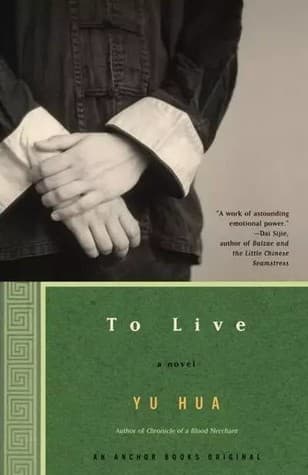
- To Live
Yu Hua
4.3 (8k) average on GoodreadsHistorical FictionBoth "The Garlic Ballads" and Yu Hua's "To Live" chronicle the hardships of ordinary Chinese people during periods of immense political and social upheaval. However, "To Live" focuses more on the resilience and endurance of a single individual, Fugui, across decades of change, often with a more melancholic and reflective tone, finding small moments of joy amidst tragedy. "The Garlic Ballads," conversely, is a more direct and explosive critique of a specific government policy, culminating in collective rebellion and a more overtly satirical and indignant voice. While both are critical of the state, Mo Yan's work is arguably more confrontational in its depiction of active resistance and its brutal suppression.
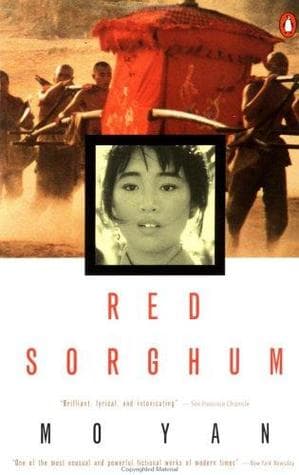
- Red Sorghum
Mo Yan
3.8 (6k) average on GoodreadsHistorical FictionAs another work by Mo Yan, "Red Sorghum" shares the same 'hallucinatory realism' and focus on rural life, particularly in Gaomi County, Mo Yan's fictionalized hometown. However, "Red Sorghum" is set earlier, during the Sino-Japanese War and the tumultuous years leading up to it, and celebrates a more primal, almost mythic, vitality and a form of heroic, if violent, resistance against external invaders. "The Garlic Ballads," in contrast, tackles internal oppression, focusing on the systemic exploitation of farmers by their own government. While both feature strong, often rebellious, characters, the rebellion in "The Garlic Ballads" is against a faceless bureaucracy rather than a clear foreign enemy, making its tragedy perhaps more poignant and its critique more specific to post-Mao economic policies.
- To Kill a Mockingbird
Harper Lee
4.3 (4.5M) average on GoodreadsHistorical FictionIn the 1930s Jim Crow South, Harper Lee writes about racial injustice, moral growth, and the quiet courage of a lawyer father, Atticus Finch, as seen through his young daughter's eyes.
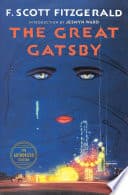
- The Great Gatsby
F. Scott Fitzgerald
3.9 (3.8M) average on GoodreadsHistorical FictionIn the opulent Roaring Twenties, a mysterious millionaire's lavish parties hide his desperate, tragic pursuit of a lost love, exposing the emptiness within the American Dream.
- Pride and Prejudice
Jane Austen
4.3 (3M) average on GoodreadsHistorical FictionIn a society focused on status and money, Elizabeth Bennet navigates love and pride, challenging Mr. Darcy and social expectations to find true affection.
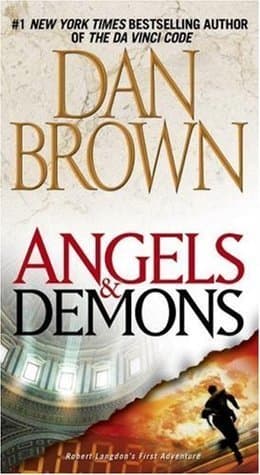
- Angels & Demons
Dan Brown
3.9 (2.7M) average on GoodreadsThrillerA Harvard symbologist races through Rome's ancient sites, deciphering cryptic clues to unmask the Illuminati and stop a vengeful plot to destroy the Vatican with a stolen antimatter weapon.
Enjoyed the summary?
A summary gives you the shape of the book. The book itself has the detail, the examples and the voice.
Find The Garlic Ballads on AmazonAs an Amazon Associate, BookBrief earns from qualifying purchases. How we're funded