“How will I ever get out of this labyrinth!”
— Simón Bolívar's famous dying words, reflecting on his life and struggles.


Sign in to track this book
Simón Bolívar, prematurely aged and exiled, once the Liberator, navigates his fading power and vivid memories on a final river journey, clinging to life and his shattered dream of a united continent.
Ask anything about The General in His Labyrinth and get instant answers grounded in the summary.
In 1830, the ailing General Simón Bolívar, 47 but appearing much older, reluctantly leaves Bogotá after resigning from the presidency of Gran Colombia. Accompanied by his loyal aide, General José Palacios, and a small group, he begins a journey down the Magdalena River towards the Caribbean coast, intending to seek exile in Europe. His departure is marked by a deep sense of abandonment and betrayal, as the nations he liberated now seem to reject him. The General is ill, his memory is failing, and he faces the bitter truth that his grand vision of a united South America has crumbled, leaving him a deposed and forgotten hero.
The General's journey takes him to Honda, a town where he meets indifference and open hostility. He sees the decay and disarray of the region, a contrast to the nations he once imagined. In Honda, he receives news of more political instability and the growing threat of civil war, deepening his despair. Bolívar discusses philosophy with his companions, grappling with the ingratitude of the people and the ultimate futility of his sacrifices. He revisits memories of past triumphs and loves, but these recollections are now tinged with sadness and a sense of impending doom.
As the General's flotilla continues down the Magdalena River, his health declines. He suffers from severe fevers, coughing fits, and a general wasting of his body, symptoms of the tuberculosis consuming him. The stifling heat and the monotonous journey contribute to his growing introspection and delirium. He often converses with his inner thoughts, reliving moments from his past, from battlefield strategies to intimate encounters with women. The river itself becomes a metaphor for his journey through life and memory, carrying him towards his final destination while washing over the remnants of his former glory.
During a stop, Bolívar receives devastating news: the assassination of his most loyal general, Antonio José de Sucre. This news shatters him, not only because of the personal loss but also because it confirms his darkest fears about the collapse of the Gran Colombian project and the triumph of political infighting and treachery. The General sees Sucre's death as a direct result of the forces that drove him from power, reinforcing his belief that his dream of a united continent is irreversibly dead. The event plunges him into deeper disillusionment and despair.
The journey brings Bolívar to Mompox, a town that holds significant memories for him. He recalls the enthusiasm and hope of his earlier visits, contrasting them with the present atmosphere of apathy and decay. He faces the reality that the ideals he fought for have largely failed to materialize in the lives of ordinary people. The General engages with local officials and citizens, trying to understand their grievances and the reasons for widespread disillusionment. These interactions further show the gap between his revolutionary vision and the harsh realities of the nascent republics.
As his physical decline accelerates, Bolívar's mind becomes a labyrinth of memories. He revisits battles, passionate love affairs, grand political speeches, and moments of both triumph and profound doubt. These recollections often intertwine and overlap, reflecting his increasingly fragmented mental state. He remembers Manuela Sáenz, his devoted mistress, and other women who shared his life. He also grapples with his complex relationships with his generals and political allies, questioning their loyalty and his own judgment. The past becomes a vivid, almost tangible presence, offering both solace and torment.
Finally, the General's party reaches Cartagena. Despite his rapidly deteriorating health, Bolívar still hopes to secure passage to Europe, believing that exile might offer him peace or perhaps a chance to regroup. However, the political climate remains hostile, and the logistical challenges of arranging his departure are too great. He is trapped, physically and politically, on the continent he liberated. The city offers little comfort, serving instead as a reminder of his confinement and the unfulfilled promises of his revolutionary career.
Unable to secure passage, Bolívar is taken to the Quinta de San Pedro Alejandrino, a hacienda near Santa Marta, where he will spend his final days. Here, surrounded by a small group of loyal companions, including General Palacios, his doctor, and a few servants, he grapples with the inevitability of death. His physical suffering intensifies, but his mind, though often clouded, retains flashes of its former brilliance. He dictates letters, reflecting on his life, his failures, and the future of South America, still holding onto a desperate hope for unity even as his own body betrays him.
In his last moments, Bolívar receives the sacrament of confession from a local priest. This act is not just spiritual but also a deep reflection on his life, his sins, and his public image. He reviews his will, ensuring his remaining possessions are distributed. He dictates his final proclamation, a statement of his vision and a plea for unity, even as he acknowledges the failures of his political project. He is aware of how history will judge him, and he tries to shape his legacy one last time, asserting his commitment to liberty and peace for the continent.
On December 17, 1830, at one o'clock in the afternoon, General Simón Bolívar, the Liberator of six nations, dies at the Quinta de San Pedro Alejandrino. His death is quiet and solitary, a contrast to the battles and public adulation of his past. He dies a disillusioned man, convinced that he has 'plowed the sea' and failed in his ambition to unite South America. His passing marks not only the end of a remarkable life but also the symbolic end of the revolutionary era in the continent, leaving behind a fragmented legacy and unresolved tensions that would plague the newly independent nations for centuries.
The Protagonist
From a once-powerful, visionary leader, Bolívar descends into physical decay and profound disillusionment, ultimately confronting the failure of his grandest dreams and accepting his mortality.
The Supporting
Palacios remains steadfast and loyal, witnessing Bolívar's decline and death, embodying unwavering devotion to a fading legend.
The Supporting (recalled in memory)
Her story is presented through Bolívar's recollections, remaining a constant symbol of his passion and revolutionary spirit, even in his decline.
The Supporting (mentioned)
His assassination serves as a catalyst for Bolívar's final descent into despair, solidifying the failure of his political vision.
The Antagonist
They remain a persistent, unseen force, successfully dismantling Bolívar's vision and ensuring his downfall.
The Supporting
He serves as a professional witness to Bolívar's physical decline, providing medical context to the General's final moments.
The Supporting
He witnesses his uncle's decline, representing a younger generation inheriting a complex, fragmented legacy.
The novel explores the psychological weight of being a national hero who experiences political failure. Bolívar, once the Liberator, is now a deposed, forgotten figure, haunted by the collapse of his Gran Colombian dream. His journey is a constant reckoning with the gap between his glorious past and his desolate present. He grapples with the ingratitude of the people he freed and the betrayal of his former allies, leading to deep disillusionment. This theme is clear in his bitter reflections on 'plowing the sea' and his lament that 'those who served the revolution have plowed the sea.'
“''Those who served the revolution have plowed the sea.'”
Bolívar's physical journey down the Magdalena River mirrors his mental journey through the 'labyrinth' of his failing health and fragmented memories. As his body weakens, his mind moves between lucidity and delirium, reliving moments from his life — battles, loves, political speeches. This mental labyrinth reflects not only his personal decline but also the complex, often contradictory nature of his legacy. The constant shifting between past and present emphasizes how his identity is tied to his historical actions and the erosion of his former self.
“''He was a man who had lost his way in the labyrinth of his own memory, a prisoner of his own legend.'”
The novel examines the fragility of grand political ideals when faced with human ambition, regionalism, and corruption. Bolívar's dream of a united South America, born from noble revolutionary principles, is shown to be shattered by the very forces it sought to overcome. The political chaos, the assassination of Sucre, and the constant threat of civil war all show how quickly revolutionary fervor can devolve into fragmentation and self-interest. Bolívar's despair is rooted in the realization that the liberty he fought for did not translate into the stable, unified future he envisioned.
“''America is ungovernable. Those who serve the revolution plow the sea.'”
At its core, the book is a meditation on mortality and the human experience of confronting death. Bolívar, despite his historical grandeur, is reduced to a frail, suffering man battling a terminal illness. His physical decline is detailed, emphasizing the indignities and vulnerabilities of the human body. His final days are spent grappling with the end of his life, his legacy, and the ultimate meaning of his existence. This theme humanizes the larger-than-life figure, reminding readers that even the greatest heroes are subject to the same biological fate as everyone else.
“''How will I ever get out of this labyrinth!'”
The novel delves into the complexities of power, leadership, and the isolation that often accompanies it. Bolívar, accustomed to absolute authority, finds himself powerless and abandoned. The narrative explores the responsibility of leading a continent, the sacrifices required, and the inevitable loneliness that comes with such a position. It also questions the effectiveness of even the most charismatic and visionary leadership when confronted with entrenched political divisions and human fallibility. Bolívar's reflections reveal the heavy cost of wielding power and the difficulty of relinquishing it.
“''I am the man of difficulties. I am the man of sorrows.'”
Bolívar's thoughts and memories dominate the narrative.
The novel frequently delves into Bolívar's inner world, presenting his thoughts, reflections, and memories in a fluid, often non-linear manner. This device allows the reader to experience the General's fragmented mental state as he battles illness and disillusionment. It provides deep insight into his psychological landscape, blurring the lines between past and present, and revealing the complex interplay of his public persona and private anguish. This technique emphasizes the 'labyrinth' of his mind.
Reimagining a historical figure with human flaws.
García Márquez takes a revered historical figure, Simón Bolívar, and strips away the hagiographic layers to reveal a deeply flawed, human individual. This device challenges conventional historical narratives by presenting Bolívar not just as the heroic Liberator but as a man suffering from illness, regret, and personal failings. It recontextualizes historical events through a subjective lens, inviting readers to question the nature of heroism and the construction of national myths. The novel humanizes a legend.
The river as a metaphor for life, memory, and inexorable fate.
The Magdalena River serves as a powerful symbol throughout the novel. It is the physical path of Bolívar's final journey, leading him towards death and exile. Metaphorically, it represents the flow of time, carrying him away from his past glories and towards an uncertain end. It also mirrors the 'labyrinth' of his memories, with its winding course and shifting currents reflecting the General's internal struggles. The river is both a source of life and a path to oblivion, encapsulating the dualities of Bolívar's existence.
Subtle and overt hints of Bolívar's impending demise and the collapse of his vision.
The narrative is imbued with a pervasive sense of impending doom. Bolívar's deteriorating health, the constant news of political unrest, the assassination of Sucre, and his own melancholic reflections all serve as continuous foreshadowing. This device creates a tragic atmosphere, building tension towards the inevitable conclusion of both Bolívar's life and his political project. It reinforces the theme of the fragility of human endeavors and the inescapable nature of mortality, even for historical giants.
“How will I ever get out of this labyrinth!”
— Simón Bolívar's famous dying words, reflecting on his life and struggles.
“Damn it, General, how much longer are we going to have to put up with your tyranny?”
— A frustrated soldier's outburst during Bolívar's final journey, highlighting the weariness of his companions.
“The only thing that was clear was that the world was going to be another world, and he, Bolívar, was already a relic of the past.”
— Bolívar's internal reflection on the changing political landscape and his diminishing relevance.
“He had the conviction that his life was not his own, but a public property, and he had to manage it as such.”
— Describing Bolívar's deep sense of duty and sacrifice for his cause.
“This is a sea of tears and blood, and it will be a sea of tears and blood as long as there are men.”
— Bolívar's pessimistic view on the nature of human conflict and suffering.
“He understood then that the glory of the world was only a fleeting illusion, and that only love could give meaning to life.”
— A moment of introspection for Bolívar, valuing personal connection over public acclaim.
“His last journey was a defeat, not because he was dying, but because he was leaving behind a continent fragmented and without a future.”
— Narrator's observation on the ultimate failure of Bolívar's vision for a unified Gran Colombia.
“The only thing he regretted was that he had not been able to finish his work, to consolidate the independence of America.”
— Bolívar's final thoughts on his unfulfilled political goals.
“He had always believed that the only way to govern was with an iron fist, but now he realized that an iron fist could also break.”
— Bolívar's evolving understanding of leadership and the limits of authoritarianism.
“He felt a strange relief at the thought of finally being free of the burden of history.”
— Bolívar contemplating the peace that death might bring, away from his historical responsibilities.
“He was a man who had lived too much, seen too much, and now he was tired.”
— A simple yet profound description of Bolívar's exhaustion at the end of his life.
“His illness was not only in his body, but in his spirit, in the disillusionment of his dreams.”
— Highlighting the psychological toll of Bolívar's political failures and personal disappointments.
“He had liberated nations, but he had not been able to liberate himself from the labyrinth of his own glory.”
— A poignant reflection on Bolívar's personal struggles despite his public achievements.
“Nobody understood that he was not dying of age or illness, but of that immense, uncontainable love for his country that had consumed him.”
— The narrator's interpretation of the ultimate cause of Bolívar's demise.
Ready to see how well you understood this book? Take our interactive quiz with 10 questions.
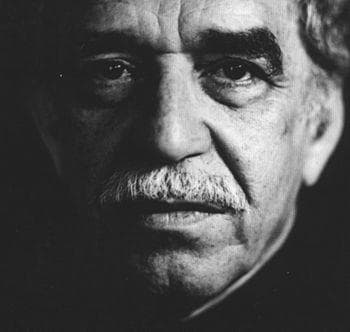
Gabriel José de la Concordia García Márquez was a Colombian novelist, short-story writer, screenwriter, and journalist, known affectionately as Gabo or Gabito throughout Latin America. Considered one of the most significant authors of the 20th century, particularly in the Spanish language, he was awarded the 1972 Neustadt International Prize for Literature and the 1982 Nobel Prize in Literature. He pursued a self-directed education that resulted in leaving law school for a career in journalism. From early on he showed no inhibitions in his criticism of Colombian and foreign politics. In 1958, he married Mercedes Barcha Pardo; they had two sons, Rodrigo and Gonzalo.
Support the author — grab the full book.
As an Amazon Associate, BookBrief earns from qualifying purchases, at no extra cost to you. How we're funded.