

Synopsis
Covers the whole plot, including the ending.
- Difficulty
- Medium
- Pacing
- Variable
- Mood
- Irreverent, Humorous, Bohemian, Chaotic, Melancholy
- Read it if
- You enjoy classic literary fiction with a focus on character-driven narratives, black humor, and a protagonist who is an anti-hero or scoundrel.
- Skip it if
- You prefer protagonists with strong moral compasses, clear plot progression, or a sense of justice prevailing.
The Ginger Man Plot Summary
Covers the whole plot, including the ending.
A Dublin Morning and Mounting Debts
The novel opens with Sebastian Dangerfield, an American ex-GI studying at Trinity College, waking in his squalid Dublin home. He is always cold, hungry, and broke, a state made worse by his young wife, Marion, and their infant daughter. Marion constantly criticizes him for his idleness and lack of income, contrasting his irresponsible nature with her own attempts at budgeting. Sebastian's main concern is avoiding creditors and finding money for whiskey and a fire. He often goes to pubs, seeking comfort in drink and the company of other students, leaving Marion to care for herself and the baby. This early scene establishes Sebastian's charm and the instability of his domestic life, driven by his desires and dislike of responsibility.
Seeking Solace and Schemes in the Pub
Sebastian spends much of his time in Dublin's pubs, escaping the cold and his wife's demands. Here, he often meets other students and local characters, sharing drinks and inventing elaborate plans to get money, none of which ever happen. His conversations mix intellectual showmanship, self-pity, and an unwavering belief in his own future success, despite all evidence. He borrows small sums, promising repayment he never delivers, and charms his way into free drinks. These pub visits show his social skill and his talent for manipulating others, while also serving as a temporary escape from his poverty and responsibilities as a husband and father.
The Arrival of Kenneth O'Keefe
Sebastian's friend, Kenneth O'Keefe, an American ex-GI, arrives in Dublin to study law. Kenneth is more reserved and somewhat naive than Sebastian, but he is drawn into Sebastian's chaotic life. Initially, Kenneth helps Sebastian, lending him money, which Sebastian quickly wastes on drink and unnecessary expenses, much to Marion's annoyance. Kenneth sees firsthand the disarray of Sebastian's life and the constant tension between him and Marion. Their friendship, though marked by Sebastian's exploitation, gives Sebastian companionship and an audience for his grand statements, further delaying his confrontation with his financial and marital problems.
Escalating Marital Strife
The relationship between Sebastian and Marion worsens as Sebastian's financial irresponsibility and infidelity become clear. Marion's patience wears thin, and their arguments grow more frequent and vicious. She calls him a drunken wastrel, unable to provide for his family, while he accuses her of being cold and unappreciative. Sebastian's affairs, especially with Mary, a young woman from the countryside, fuel Marion's rage. These confrontations often become physical, leaving both bruised and resentful. Their home becomes a battleground, showing the complete breakdown of their marriage under the weight of poverty and Sebastian's self-destructive behavior.
Sebastian's Affairs and Escapades
Sebastian's desire for women leads him into many affairs and casual encounters throughout Dublin. He pursues women with charming recklessness, often using his wit and American accent to win them over. His affair with Mary, a young, innocent woman, is notable because he conducts it with blatant disregard for Marion's feelings. He also has dalliances with other women, often leading to awkward and comedic situations. These escapades show his impulsive nature and inability to commit, further cementing his reputation as a philanderer and contributing significantly to his marital problems and financial woes, as he often spends what little money he has on these pursuits.
The Move to the Countryside
To escape creditors and the constant tension in Dublin, Sebastian and Marion move to a dilapidated cottage in the Irish countryside. The move is meant to be a fresh start, a chance for Sebastian to focus on his studies and for them to live more frugally. However, the isolation and continued lack of money only worsen their existing problems. Sebastian finds it hard to concentrate, and the cottage is cold and uncomfortable. Their arguments continue, fueled by the same issues of Sebastian's idleness and Marion's resentment. The change of scenery does little to alter Sebastian's basic character or their dysfunctional relationship.
Marion's Departure
After enduring Sebastian's neglect, infidelity, and financial irresponsibility for too long, Marion reaches her breaking point. Following a particularly nasty argument and another revelation of Sebastian's infidelity, she decides to leave him for good. She takes their infant daughter, leaving Sebastian alone in the cold, empty cottage. This departure is a turning point in the novel, as Sebastian is now truly on his own, forced to face the consequences of his actions without Marion's constant presence. Her departure leaves him with a mix of relief and a vague sense of loss, but little genuine remorse.
Life as a Bachelor and Further Debts
With Marion gone, Sebastian temporarily enjoys his newfound freedom, indulging his whims without restraint. He moves back to Dublin, often squatting in various lodgings and accumulating more debts. His studies at Trinity become even less important, replaced by a relentless pursuit of drink, women, and any fleeting pleasure he can find. He continues to borrow money from anyone he can, including Kenneth O'Keefe, and his creditors multiply. His life becomes a series of narrow escapes from landlords and tradesmen, a continuous performance of charming deception to avoid his obligations. He maintains an air of detached amusement, even as his circumstances grow more dire.
Kenneth's Growing Disillusionment
Kenneth O'Keefe, initially sympathetic to Sebastian, gradually becomes disillusioned with his friend's chronic irresponsibility and exploitation. He sees Sebastian's destructive patterns, his inability to keep a job, his constant borrowing, and his callous treatment of women. Kenneth's own attempts at a more stable, studious life are often disrupted by Sebastian's chaotic demands. He grows tired of being Sebastian's financial safety net and moral compass, leading to increasing tension and resentment in their friendship. Kenneth's growing awareness highlights the moral decay in Sebastian's lifestyle.
A Trip to England and New Pursuits
To escape his mounting debts and increasingly hostile creditors in Ireland, Sebastian eventually goes to England. He believes this move will give him a fresh start and new opportunities, though he arrives with little money and no concrete plans. In England, he continues his pattern of charming his way into temporary lodgings and borrowing money. He pursues new women, including Miss Frost, and tries to find some form of employment, though his efforts are half-hearted and quickly abandoned. The change of scenery does little to alter his basic character or his approach to life, as he remains a charming, feckless wanderer.
Sebastian's Encounter with Miss Frost
In England, Sebastian meets Miss Frost, an older, wealthy, and somewhat naive woman. Recognizing her financial stability, Sebastian charmingly inserts himself into her life, seeing her as a possible solution to his money problems. He flatters her, paints a romanticized picture of his own artistic struggles, and ultimately moves into her luxurious home. He exploits her generosity, living off her wealth while continuing his irresponsible behavior. This relationship is a calculated move by Sebastian, a desperate attempt to secure his comfort and avoid genuine work, further showing his parasitic tendencies and willingness to use others for his own gain.
The Return of Marion and the Final Break
Just as Sebastian seems settled with Miss Frost, Marion unexpectedly reappears in England, having tracked him down. Her arrival shatters his temporary peace and forces a final confrontation. Marion is still furious about his neglect and abandonment, and she demands financial support for their daughter. The encounter is full of bitterness and accusations, ending their marriage definitively and acrimoniously. Sebastian, always the escape artist, manages to avoid serious responsibility, leaving Marion once again to her own devices. The encounter serves as a stark reminder of the wreckage he leaves behind.
Continuing the Cycle
By the novel's end, Sebastian Dangerfield has endured many setbacks, lost his wife and child, and alienated most of his friends, yet he remains remarkably unchanged. He continues to avoid responsibility, live by his wits, and pursue pleasure with an unyielding, almost pathological, determination. His financial situation is still precarious, and he is always on the run from creditors, but his spirit remains unbroken, if self-serving. The narrative suggests that Sebastian is trapped in a cyclical pattern of charm, debt, and escape, destined to repeat his misadventures indefinitely, forever the 'Ginger Man' – a roguish, charming, and utterly irresponsible figure.
Principal Figures
Sebastian Dangerfield
Protagonist
An American ex-GI and Trinity College student, perpetually broke and charmingly irresponsible.
Sebastian Dangerfield is the charismatic but feckless protagonist, an American studying at Trinity College in Dublin after World War II. He is characterized by his insatiable appetites for drink, women, and a life of leisure, all financed by the generosity of others or through elaborate, often fraudulent, schemes. Despite his dire circumstances, he possesses an indomitable spirit, a quick wit, and a self-deprecating charm that allows him to perpetually evade responsibility and endear himself to others, even as he exploits them. He sees himself as an artist and intellectual, though his actions rarely reflect such aspirations.
Relationships: Marion Dangerfield (wife, estranged, relationship marked by conflict and resentment); Kenneth O'Keefe (friend, often exploited for money and companionship); Mary (mistress, a younger, naive Irish woman); Miss Frost (wealthy older woman, exploited for financial support)
Marion Dangerfield
Supporting
Sebastian's long-suffering wife, struggling to raise their child amidst his irresponsibility.
Marion is Sebastian's English wife and the mother of their infant daughter. She is portrayed as a practical, long-suffering woman, constantly battling Sebastian's irresponsibility and their dire poverty. She attempts to manage their meager finances, maintain some semblance of order, and provide for their child, often clashing bitterly with Sebastian over his spending, drinking, and infidelity. Her character represents the harsh reality and consequences of Sebastian's actions, providing a grounded contrast to his fantastical self-image. She eventually leaves Sebastian, unable to endure his destructive behavior any longer.
Relationships: Sebastian Dangerfield (husband, estranged, relationship marked by conflict and resentment)
Kenneth O'Keefe
Supporting
Sebastian's American friend, a law student who becomes increasingly disillusioned with Sebastian.
Kenneth O'Keefe is Sebastian's American friend, an ex-GI like Sebastian, who comes to Dublin to study law. He is more reserved, earnest, and somewhat naive compared to Sebastian. Initially, he is drawn to Sebastian's charisma and provides him with financial assistance, but he gradually becomes Sebastian's primary confidant and moral sounding board. Over time, Kenneth grows increasingly disillusioned with Sebastian's parasitic lifestyle, his constant borrowing, and his inability to take responsibility. He represents a more conventional path and serves as a foil to Sebastian's bohemian chaos, though he struggles to fully extricate himself from Sebastian's orbit.
Relationships: Sebastian Dangerfield (friend, often exploited for money and companionship)
Mary
Supporting
A young, naive Irish woman from the countryside who becomes Sebastian's mistress.
Mary is a young, innocent Irish woman from the countryside whom Sebastian seduces and takes as his mistress. She represents a simpler, more traditional aspect of Irish life, contrasting with the sophisticated decadence Sebastian often projects. Her affair with Sebastian is conducted with a blatant disregard for Marion and highlights Sebastian's callousness and his ability to exploit the affections of others. Her character serves primarily to illustrate Sebastian's promiscuity and the emotional wreckage he leaves in his wake, as she is ultimately discarded by him.
Relationships: Sebastian Dangerfield (mistress, seduced and abandoned)
Miss Frost
Supporting
A wealthy, older English woman whom Sebastian seduces for financial gain.
Miss Frost is a wealthy, somewhat naive older English woman whom Sebastian encounters in England. She is drawn to Sebastian's charm and apparent intellectual struggles, and he expertly manipulates her generosity to secure a luxurious living arrangement. She provides Sebastian with financial security and a comfortable home, allowing him to continue his life of leisure without genuine effort. Her character underscores Sebastian's parasitic nature and his willingness to exploit anyone for his own comfort, regardless of their feelings or his own lack of genuine affection.
Relationships: Sebastian Dangerfield (lover, exploited for financial support)
The Landlord (Mr. Breen/Mr. Fitzwilliam)
Mentioned
Various landlords hounding Sebastian for unpaid rent.
Throughout the novel, Sebastian is perpetually pursued by various landlords to whom he owes rent. These figures, often nameless or given generic names like Mr. Breen or Mr. Fitzwilliam, represent the tangible consequences of Sebastian's financial irresponsibility. They are the constant threat, the reason Sebastian is always on the move or devising elaborate excuses. They embody the societal expectations and financial obligations that Sebastian so defiantly rejects, serving as a recurring motif of his picaresque existence.
Relationships: Sebastian Dangerfield (creditor, constantly pursuing payment)
The Baby (Felicity)
Mentioned
Sebastian and Marion's infant daughter, often neglected by Sebastian.
Sebastian and Marion's infant daughter, Felicity, is a largely passive character, but her presence profoundly impacts Marion's struggles and Sebastian's perceived failures. She represents Sebastian's parental responsibilities, which he consistently shirks. Her constant needs for warmth, food, and care highlight Sebastian's self-absorption and his inability to prioritize anyone but himself. Her welfare is a major point of contention between Sebastian and Marion, symbolizing the innocent victims of Sebastian's chaotic lifestyle.
Relationships: Sebastian Dangerfield (daughter, neglected); Marion Dangerfield (daughter, cared for)
Themes & Insights
Irresponsibility and Escapism
Sebastian Dangerfield shows chronic irresponsibility, constantly avoiding his financial, marital, and academic duties. He escapes the harsh realities of his poverty through heavy drinking, many affairs, and a strong dislike of work. This theme is clear from the opening scenes, where Sebastian prioritizes whiskey and warmth over feeding his family, and continues as he flees creditors, abandons his wife, and exploits friends. His charm helps him postpone consequences, but never truly avoid them, creating a cycle of debt and flight. His entire life is a series of escapes from real responsibility.
“'God's truth, I'm a man that can't be pushed. I'm a man that needs his freedom. My freedom's my religion.”
Poverty and Social Class
The novel shows the grinding poverty Sebastian and Marion experience in post-war Dublin. Their constant struggle for warmth, food, and basic necessities causes much of their marital conflict. Sebastian's desperate schemes to get money, his reliance on borrowing, and his exploitation of wealthier individuals (like Miss Frost) come directly from his poverty. The contrast between Sebastian's perceived intellectual superiority and his squalid living conditions highlights the gap between aspiration and reality. The setting in a poverty-stricken Dublin emphasizes the bleakness of their financial situation.
“'I was cold, hungry and thirsty, and I had no money. That's a triple threat, and it's a hell of a hand to play.”
The Nature of Marriage and Relationships
The novel presents a cynical and often brutal picture of marriage, especially through Sebastian and Marion's turbulent relationship. Their union is marked by constant conflict, resentment, and mutual accusations, made worse by Sebastian's infidelity and financial neglect. Sebastian's inability to commit and his selfish pursuits destroy any loving partnership. His other relationships, whether with mistresses like Mary or benefactors like Miss Frost, are equally transactional and exploitative, driven by his own desires and needs rather than genuine affection or respect. The novel suggests that for Sebastian, relationships are primarily a means to an end.
“'The only thing a wife ever wants is to be the only thing a man ever wants.”
The Picaresque Hero
Sebastian Dangerfield is a classic picaresque hero, a charming rogue who lives by his wits and travels from place to place, meeting various social groups. He is an outsider, an American in Ireland and later England, who navigates society through deception and charisma rather than honest work. His journey is less about moral development and more about a series of episodic adventures and narrow escapes from creditors, landlords, and the consequences of his actions. His adventures, though often self-inflicted, have a dark humor and a sense of detached observation, making him an anti-hero who defies conventional morality.
“'I am a gentleman, a scholar, and a rogue.”
Existential Discontent and Identity
Beneath Sebastian's loud exterior is a current of existential discontent and a struggle with identity. He is an ex-GI, seemingly without purpose beyond self-gratification, drifting through life. He occasionally thinks about his artistic aspirations or intellectual abilities, but he rarely pursues these seriously. His constant movement and evasion suggest a deeper unease with settling down or defining himself. His self-aggrandizing statements often hide a deep insecurity and an inability to find meaning in conventional life, leading him to embrace a chaotic, unmoored existence.
“'I am a man of talent, a man of genius, and I am wasting my life.”
Plot Devices & Literary Techniques
First-Person Narrative with Stream of Consciousness
The story is told from Sebastian's perspective, often blurring the lines between thought and speech.
The novel is narrated in the first person by Sebastian Dangerfield, often employing a stream-of-consciousness style. This allows direct access to Sebastian's chaotic internal world, his grandiose thoughts, self-pity, and cynical observations, often presented in long, run-on sentences. This narrative choice immerses the reader in Sebastian's perspective, making his charm, despite his flaws, more understandable and even engaging. It also creates a sense of immediacy and intimacy, blurring the lines between his actual experiences and his often unreliable interpretations of them, reinforcing his self-serving worldview.
Black Humor and Satire
The novel uses dark comedy to portray dire circumstances and Sebastian's often deplorable actions.
Donleavy employs extensive black humor and satire to lighten the grim realities of poverty, marital strife, and Sebastian's moral failings. The comedic effect often arises from the juxtaposition of Sebastian's desperate circumstances with his inflated self-image, his witty but often cruel remarks, and the absurd situations he creates. For instance, his elaborate schemes to avoid creditors or his self-pitying monologues are often darkly funny. This device allows the reader to laugh at the often tragic events, preventing the narrative from becoming overly bleak and highlighting the inherent absurdity of Sebastian's existence.
Episodic Structure
The plot unfolds as a series of loosely connected incidents and encounters rather than a strong, linear arc.
The novel follows an episodic, picaresque structure, characteristic of the genre. Rather than a tightly constructed plot with a clear rising action and climax, the story progresses through a series of loosely connected incidents, misadventures, and encounters Sebastian has as he moves through Dublin and then England. This structure emphasizes Sebastian's drifting, unmoored existence and his inability to settle down or commit. Each episode showcases another facet of his character, his charm, his irresponsibility, and his perpetual state of being on the run, reinforcing the cyclical nature of his life without a definitive resolution.
The 'Ginger Man' Moniker
A symbolic nickname that encapsulates Sebastian's roguish, untamed nature.
The title 'The Ginger Man' functions as a symbolic plot device, representing Sebastian Dangerfield's untamed, fiery, and somewhat mercurial nature. 'Ginger' can imply a fiery temperament, a distinctive appearance (red hair, though not explicitly stated for Sebastian), and even a certain zest or spice. The 'Man' part suggests a universal archetype of the rogue, the wanderer, the individual who lives outside societal norms. The moniker encapsulates his charming yet irresponsible personality, his constant movement, and his inability to be tied down, becoming a shorthand for his entire picaresque identity.
The Ginger Man Quotes
“God's mercy is great, but you can't go through life on it.”
“The world is full of people who are trying to be someone else.”
“He knew he was no longer a young man, but the thought of being an old one was even more appalling.”
“It was a dark and stormy night. The kind of night a man could get lost in, or found.”
“A man's got to do what a man's got to do, even if it's nothing.”
“He was a man who believed in miracles, especially when he needed one.”
“The only thing worse than being poor is being poor and sober.”
“He carried his guilt like a suitcase full of bricks.”
“Life was a series of small humiliations, punctuated by moments of grand despair.”
“He had a way of making everything sound plausible, even the most outrageous lies.”
“The greatest tragedy in life is not death, but life unlived.”
“There was a certain freedom in having nothing left to lose.”
“He was always chasing something, even if he didn't know what it was.”
“The truth was a luxury he couldn't afford.”
Quiz
10 questions on the plot and the characters. Each answer comes with a short explanation.
Question 1
What is Sebastian Dangerfield's primary academic pursuit at Trinity College Dublin?
- Law
- Divinity
- Medicine
- Engineering
Show answer
B. Divinity Sebastian Dangerfield is ostensibly studying Divinity at Trinity College, though his focus is rarely on his studies.
Question 2
What is the name of Sebastian Dangerfield's first wife in the novel?
- Mary
- Marion
- Monica
- Martha
Show answer
B. Marion Sebastian's first wife, with whom he has a child, is Marion.
Question 3
Which city is the primary setting for the majority of Sebastian Dangerfield's misadventures?
- London
- Paris
- Dublin
- New York
Show answer
C. Dublin The novel is largely set in Dublin, Ireland, where Sebastian attends Trinity College.
Question 4
What is one of Sebastian's recurring methods for trying to acquire money or avoid paying debts?
- Working odd jobs for local merchants
- Selling his wife's jewelry
- Writing letters to his wealthy American father for remittances
- Gambling on horse races
Show answer
C. Writing letters to his wealthy American father for remittances Sebastian frequently writes to his father in America, often exaggerating his plight, to request money.
Question 5
Who is Kenneth O'Keefe in relation to Sebastian Dangerfield?
- His academic advisor
- His landlord
- A fellow American student and friend
- A local pub owner
Show answer
C. A fellow American student and friend Kenneth O'Keefe is another American student and a friend of Sebastian's, often entangled in his schemes.
Question 6
What major recurring problem does Sebastian face due to his lifestyle?
- Academic probation and expulsion from Trinity College
- Constant financial destitution and inability to pay rent or buy food
- Frequent arrests and imprisonment for public disturbances
- Serious health issues due to excessive drinking
Show answer
B. Constant financial destitution and inability to pay rent or buy food Sebastian is perpetually broke, struggling to afford basic necessities like rent, food, and heat, often leading to him and his family being evicted or going hungry.
Question 7
Which character does Sebastian have an affair with while still married to Marion, leading to further complications?
- Miss Frost
- Veronica
- Chris
- Mary
Show answer
C. Chris Sebastian has an affair with Chris, a wealthy Englishwoman, which complicates his relationship with Marion and provides temporary financial relief.
Question 8
What is the significance of the title 'The Ginger Man'?
- It refers to Sebastian's red hair, a prominent physical characteristic.
- It's a metaphor for Sebastian's fiery, unpredictable, and often spicy personality.
- It's a reference to a specific type of alcoholic drink Sebastian frequently consumes.
- It alludes to a traditional Irish folk tale that Sebastian often tells.
Show answer
B. It's a metaphor for Sebastian's fiery, unpredictable, and often spicy personality. The 'Ginger Man' is often interpreted as a metaphor for Sebastian's vibrant, restless, and sometimes destructive nature, akin to the pungent and stimulating qualities of ginger.
Question 9
What is the primary reason for Sebastian's constant state of financial desperation, beyond his lack of income?
- He is supporting a large extended family in America.
- He has a severe gambling addiction that consumes all his money.
- His extravagant and irresponsible spending on drink, women, and frivolous pursuits.
- He is constantly sending money back to his impoverished parents.
Show answer
C. His extravagant and irresponsible spending on drink, women, and frivolous pursuits. While he lacks income, Sebastian's financial woes are primarily exacerbated by his insatiable appetites for alcohol, women, and a generally hedonistic lifestyle, leading him to quickly squander any money he acquires.
Question 10
Which of the following best describes the narrative style of 'The Ginger Man'?
- Strictly linear, third-person omniscient.
- A blend of first-person stream-of-consciousness and third-person narration.
- Epistolary, told entirely through letters.
- A series of interconnected short stories from different perspectives.
Show answer
B. A blend of first-person stream-of-consciousness and third-person narration. Donleavy employs a unique narrative style, often shifting between a close third-person perspective and Sebastian's own internal, stream-of-consciousness thoughts, giving the reader intimate access to his chaotic mind.
The Ginger Man FAQ
Who is Sebastian Dangerfield and what is his primary struggle throughout the novel?
Sebastian Dangerfield is a young, impoverished American studying at Trinity College, Dublin, just after WWII. His primary struggle is a relentless pursuit of pleasure—women, alcohol, and avoiding responsibility—while constantly trying to evade his financial obligations and the consequences of his actions, often at the expense of those around him.
Describe Sebastian's relationship with his wife, Marion.
Sebastian's relationship with Marion is deeply dysfunctional and marked by his infidelity, financial exploitation, and emotional abuse. Marion, initially drawn to his charm, increasingly bears the brunt of his irresponsibility, struggling to provide for their child and facing his frequent desertions and cruelties.
What role does Ireland's post-war setting play in Sebastian's misadventures?
Post-war Ireland, with its lingering austerity and traditional social structures, provides a backdrop against which Sebastian's bohemian, hedonistic lifestyle stands in stark contrast. The scarcity of resources exacerbates his financial woes, while the cultural milieu offers both opportunities for his escapades and a moral framework he constantly defies.
Who is O'Keefe and how does he interact with Sebastian?
O'Keefe is Sebastian's fellow American student and landlord, a more reserved and somewhat puritanical character. He often finds himself unwillingly entangled in Sebastian's schemes, lending him money or getting involved in his domestic disputes, despite his disapproval of Sebastian's dissolute lifestyle.
What is the significance of the novel's title, 'The Ginger Man'?
The title 'The Ginger Man' refers to Sebastian's fiery red hair, a physical characteristic that symbolizes his spirited, volatile, and often troublesome nature. It hints at his distinctive, almost mythical presence and his tendency to stir up trouble wherever he goes, much like a potent, spicy ingredient.
Are there any subtle indications of Sebastian's background beyond his American nationality?
The novel occasionally alludes to Sebastian's upper-class American background and his family's wealth, which he has either squandered or been disinherited from. This provides a subtle contrast to his current destitution, suggesting a fall from grace rather than a life always lived on the margins, and hints at a deeper psychological root for his rebellion.
What is the symbolic meaning behind Sebastian's constant pursuit of new lodgings?
Sebastian's perpetual search for new lodgings symbolizes his deeper inability to settle down or commit, both physically and emotionally. Each new dwelling represents a temporary escape from his debts and responsibilities, reflecting his transient nature and his avoidance of confronting his own life.
How does the novel subtly comment on the nature of artistic aspiration through Sebastian?
While Sebastian is ostensibly a student, his 'studies' are rarely shown, and his artistic aspirations, if any, remain vague and unfulfilled. The novel subtly suggests that his chaotic lifestyle and lack of discipline prevent any genuine creative output, critiquing the romanticized notion of the 'struggling artist' when divorced from actual work.
What is the significance of the recurring motif of hunger and lack of food for Sebastian and Marion?
The recurring motif of hunger and lack of food for Sebastian and Marion highlights their extreme poverty and Sebastian's irresponsibility. For Marion, it's a stark reality of her struggle to feed herself and their child, while for Sebastian, it often serves as a temporary inconvenience before he finds another way to indulge his appetites.
Analyze Sebastian's apparent charm despite his reprehensible actions.
Sebastian's charm is a key component of his psychological makeup, acting as a manipulative tool. It allows him to disarm others, secure favors, and escape immediate consequences, masking his self-serving nature. This charm often stems from a raw, uninhibited vitality and a certain wit that makes him compelling despite his destructive tendencies.
How does Sebastian's relationship with Marion reflect a deeper fear of domesticity or responsibility?
Sebastian's treatment of Marion and his frequent desertions strongly suggest a profound fear of domesticity and the responsibilities that come with marriage and fatherhood. He views these commitments as infringements on his freedom, constantly rebelling against them in a desperate attempt to maintain an unburdened, adolescent existence.
Is Sebastian a sociopath, or is there evidence of genuine internal conflict or remorse?
While Sebastian exhibits many sociopathic traits—lack of empathy, manipulation, disregard for consequences—the novel occasionally hints at fleeting moments of self-awareness or vague remorse, particularly when he is alone or at his lowest ebb. These glimpses, however brief, suggest a more complex character than a pure sociopath, perhaps a deeply immature and self-destructive individual.
Explore the psychological appeal Sebastian holds for the women in his life.
Sebastian's appeal to women, including Marion and Miss Frost, often stems from his unconventional nature, his intense charisma, and a certain wild, untamed energy. He offers an escape from mundane life, a sense of excitement and danger, which some women initially find intoxicating, despite the inevitable pain and disappointment that follow.
Does the novel endorse or condemn Sebastian's lifestyle?
The novel offers a complex portrayal that neither fully endorses nor outright condemns Sebastian's lifestyle. While it vividly depicts the destructive consequences of his actions on himself and others, it also presents his hedonism with a certain vitality and dark humor, allowing readers to form their own judgments rather than providing a clear moral stance.
How does the ending of 'The Ginger Man' reflect Sebastian's character arc, or lack thereof?
The ending of 'The Ginger Man' sees Sebastian largely unchanged, still evading responsibility and pursuing his desires, albeit in a new setting. This lack of a traditional character arc emphasizes his ingrained nature and the cyclical pattern of his life, suggesting that he is condemned to repeat his misadventures rather than learn from them.
Can 'The Ginger Man' be considered a critique of masculinity or a celebration of a particular type of male freedom?
The novel can be interpreted as both. It critiques a certain toxic masculinity that prioritizes self-gratification over responsibility, showing its destructive impact. However, it also, perhaps inadvertently, celebrates a rebellious, uninhibited male freedom that, despite its flaws, possesses a compelling, almost admirable vitality for some readers.
What is the lasting appeal of Sebastian Dangerfield as a literary character?
Sebastian Dangerfield's lasting appeal lies in his unapologetic, larger-than-life nature and his embodiment of the id. He represents a primal desire for freedom and pleasure, a character who dares to defy societal norms and consequences, making him both repulsive and strangely fascinating to readers who might secretly envy his lack of inhibition.
How does Donleavy's prose style contribute to the novel's unique tone and impact?
Donleavy's distinctive prose, characterized by its rhythmic, almost poetic quality, stream-of-consciousness elements, and often fragmented sentences, creates an immersive and immediate experience. This style mirrors Sebastian's chaotic mind and impulsive actions, contributing to the novel's darkly comic, picaresque, and often frenetic tone.
About the author
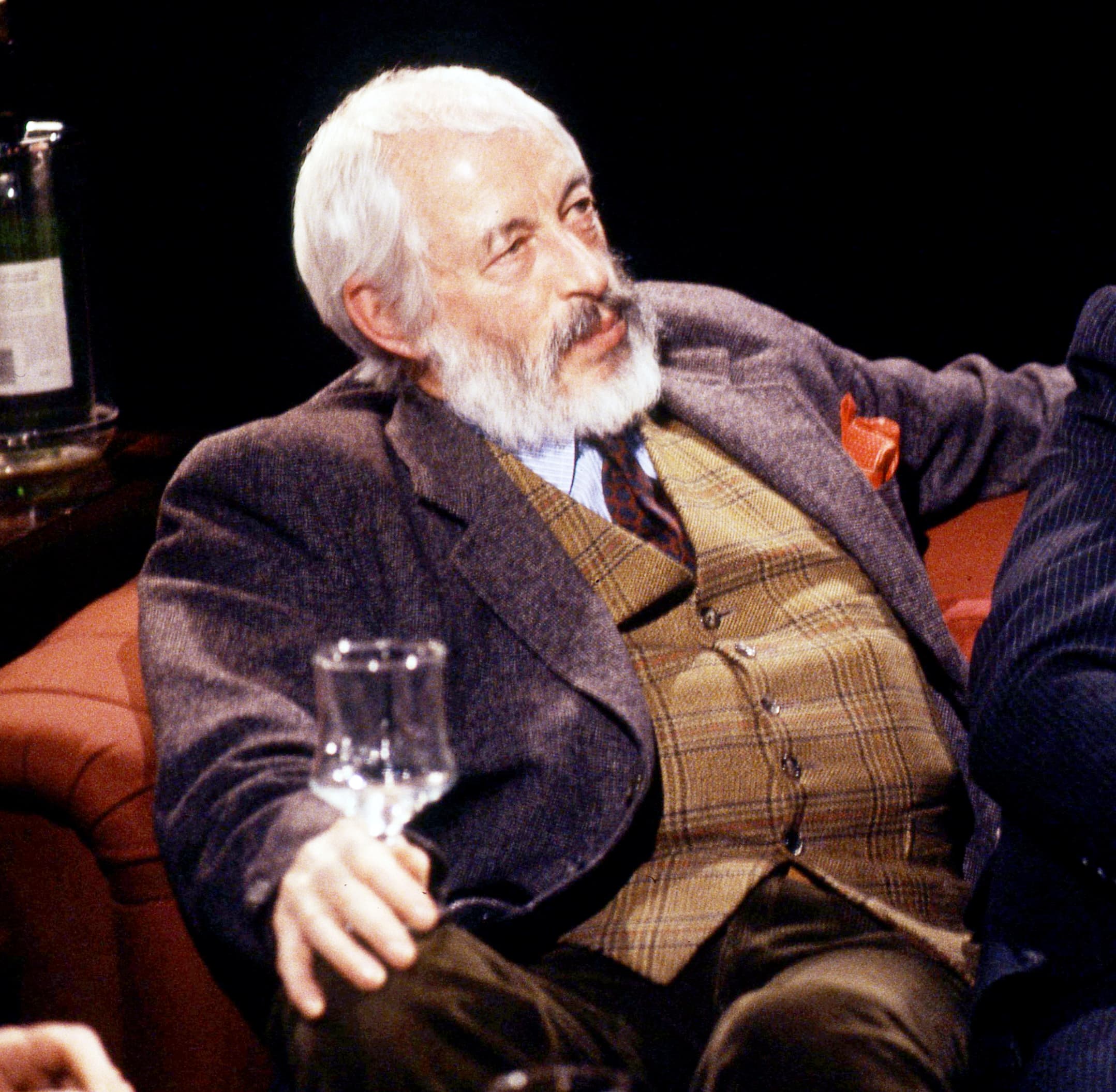
J.P. Donleavy was an Irish-American author known for his distinctive style and dark humor. He is best known for his novel "The Ginger Man," which explores the life of an expatriate in post-World War II Europe. Donleavy's works often delve into themes of identity and the human condition.
Similar books
- A Confederacy of Dunces
John Kennedy Toole
3.9 (231k) average on GoodreadsLiterary FictionFeatures an eccentric, anti-hero protagonist who navigates life with a unique worldview and often comedic mishaps.
- Lucky Jim
Kingsley Amis
3.8 (25k) average on GoodreadsLiterary FictionA post-war comic novel about a young man struggling with his career and personal life, full of social satire.
- Under the Volcano
Malcolm Lowry
3.8 (22k) average on GoodreadsLiterary FictionExplores the self-destructive tendencies of a protagonist, though with a much darker and more tragic tone.
- A Portrait of the Artist as a Young Man
James Joyce
3.6 (128k) average on GoodreadsLiterary FictionWhile both novels are set in Dublin and explore the struggles of young men, "The Ginger Man" presents a stark contrast to Joyce's "A Portrait." Joyce's Stephen Dedalus, though alienated, is driven by intellectual and artistic aspirations, seeking to forge an identity through language and art. Dangerfield, by contrast, is driven by immediate gratification, hedonism, and a chaotic pursuit of pleasure, largely devoid of intellectual or artistic ambition. Donleavy's style is more visceral and less meticulously structured than Joyce's, reflecting a different kind of internal landscape. Where Dedalus seeks liberation through aestheticism, Dangerfield seeks it through pure, unbridled living, often at the expense of others. Critic Declan Kiberd highlights how Donleavy's work, while echoing the modernism of Joyce, diverges significantly in its embrace of the earthy and the profane, moving away from Joyce's more cerebral concerns.
- The Old Man and the Sea
Ernest Hemingway
3.8 (831k) average on GoodreadsLiterary FictionA Cuban fisherman's long struggle with a giant marlin becomes a story of endurance and dignity, now retold for young adults with illustrations, phonetic guides, and writing prompts in Traditional Chinese.
- One Hundred Years of Solitude
Gabriel García Márquez
4.1 (753k) average on GoodreadsLiterary FictionThrough the multi-generational story of the Buendía family, a mythical town deals with the repeating patterns of time, love, and solitude, as the extraordinary mixes with the ordinary.






Enjoyed the summary?
A summary gives you the shape of the book. The book itself has the detail, the examples and the voice.
Find The Ginger Man on AmazonAs an Amazon Associate, BookBrief earns from qualifying purchases. How we're funded