

Core Idea
- Difficulty
- Medium
Key Takeaways from The Giver Quartet
The Enduring Power of Maternal Love
Claire's unwavering quest for her son transcends societal conditioning and physical limitations.
The Giver Quartet, especially 'Son,' shows that the bond between a mother and child is a basic force. Society cannot erase it through manipulation or memory suppression. Claire's journey from a sterile community to a world where she searches for her lost child highlights how strong human connection is. Even though she was trained for detachment and her son was taken, her natural drive to find him remains. This shows that some parts of human nature are too fundamental to be engineered away. This contrasts with the Giver's community, which tries to remove all painful emotions, including grief. Claire's suffering, though immense, ultimately drives her determination. This suggests that experiencing all human emotions, even pain, is necessary for true love and purpose.
“She was supposed to forget him, but that was impossible.”
In the book: Claire's entire narrative arc in 'Son' is dedicated to finding Gabe, her son, showcasing her relentless pursuit across different communities and overcoming severe physical challenges.
Try this: Recognize and value the deep, often irrational, connections we form with others, particularly family. Understand that attempts to suppress or deny these bonds can lead to profound emotional deficits.
The Cost of Control and Sameness
The seemingly utopian society of 'The Giver' reveals its inherent cruelty through its suppression of individuality and emotion.
The series often criticizes the desire for absolute control and 'sameness' when it means losing individual freedom and deep emotion. The Giver's community, designed to eliminate pain, conflict, and choice, unintentionally deprives its citizens of joy, love, and real understanding. Claire's origins in this society show its limits: she was a 'Vessel,' reduced to a biological function, without personal choice or emotional connection to her child. This extreme example warns that a life without lows cannot experience true highs, and that trying to remove complexity ultimately lessens humanity. The later books explore the effects of this basic flaw as characters from this world awaken emotionally.
“They called her Water Claire. When she washed up on their shore, no one knew that she came from a society where emotions and colors didn't exist.”
In the book: The Giver's community systematically eliminates color, music, memory, and strong emotions. Claire's role as a Vessel and the 'release' of infants demonstrate the brutal efficiency of this system.
Try this: Question systems or ideologies that promise absolute safety or comfort by demanding conformity or the suppression of individual expression. Recognize that true human flourishing requires embracing complexity, including discomfort and pain.
The Burden and Beauty of Memory
Memories, both joyful and painful, are essential for human identity and empathy.
The quartet, starting with 'The Giver,' establishes memory as central to human experience. Without shared and personal memories, a society repeats mistakes and lacks the emotional depth to understand love, loss, or happiness. Claire's gradual recovery of her memories of Gabe is important for her development; these fragmented recollections spark her determination. This idea has limits, as memory can also be overwhelming, as seen with the Giver. However, the series ultimately argues that the beauty of memory, even when painful, is better than the comfort of ignorance. Memories provide context, build empathy, and allow for real connection, making them essential for a full human existence.
“The memory was of a child, a baby, and it was her own. She had carried it inside her body. It had been stolen from her.”
In the book: The Giver's role as the Receiver of Memory in the first book, and Claire's desperate clinging to and eventual recovery of her son's memory in 'Son,' are central to the narrative.
Try this: Actively engage with and reflect on personal and collective histories. Understand that both positive and negative experiences contribute to growth and empathy. Support the preservation of diverse narratives and historical accounts.
The Fragility of Community and the Search for Belonging
Characters constantly navigate new groups, highlighting the human need for connection amidst shifting social structures.
The series explores different kinds of communities, from the strict 'Sameness' of the Giver's society to the more organic, but sometimes isolated, villages in 'Gathering Blue' and 'Messenger,' and finally the diverse haven in 'Son.' Characters like Jonas, Kira, Matty, and Claire are all, at different times, outsiders looking for a place where they belong and are understood. This is a key insight into human social dynamics: despite dangers and challenges, the human need for community persists. Claire's difficult journey shows that belonging is not just about physical presence, but about shared values, empathy, and the freedom to be oneself. The diverse and accepting community she finds in 'Son' contrasts sharply with her origins, suggesting that true belonging requires openness and acceptance of differences.
“She was supposed to forget him, but that was impossible. Now Claire will stop at nothing to find her child, even if it means making an unimaginable sacrifice.”
In the book: Jonas's escape from his community, Kira's integration into Village, Matty's role as Messenger, and Claire's eventual arrival at the coastal village all illustrate the search for and formation of new communities.
Try this: Actively seek out and cultivate communities that foster acceptance, empathy, and genuine connection. Be mindful of the signs of communities that suppress individuality or demand unquestioning conformity.
The Nature of Good vs. Evil
The series culminates in a clear confrontation between benevolent forces and a manipulative, destructive antagonist.
While 'The Giver' initially offers a subtle criticism of a society that sacrifices good for the absence of evil, the later books, especially 'Messenger' and 'Son,' introduce a more direct antagonist in Trademaster. This shift allows the quartet to explore clear examples of evil—greed, manipulation, and exploiting human desire. Trademaster's ability to prey on weaknesses and offer false promises of fulfillment is a strong symbol for the deceptive nature of temptation and corruption. Trademaster's eventual defeat, through collective effort and individual sacrifice, reinforces the idea that true good requires courage, selflessness, and a willingness to confront darkness directly. This argument has limits, as the initial books' more subtle exploration of systemic evil might be seen as more profound than the later introduction of a single villain.
“In this thrilling series finale, the startling and long-awaited conclusion to Lois Lowry's epic tale culminates in a final clash between good and evil in which a new hero emerges.”
In the book: Trademaster's manipulation of the Village in 'Messenger' and his continued influence in 'Son,' leading to the final confrontation and his ultimate demise.
Try this: Be vigilant against forces that promise easy solutions or exploit vulnerabilities for personal gain. Recognize that confronting evil often requires collective action and individual moral courage.
Sacrifice as a Path to Redemption and Progress
Characters repeatedly make profound personal sacrifices for the greater good or for those they love.
Sacrifice is a recurring theme throughout the quartet. Jonas sacrifices his comfortable life and community's safety to bring memories to his people. Matty sacrifices his life to heal the land and save his friends. Claire, in 'Son,' undertakes a difficult, physically draining journey and makes a great sacrifice (her youth and appearance) to rescue Gabe. These acts show that true progress and deep love often come at a personal cost. The series suggests that while easy choices might maintain things as they are, meaningful change and preserving what is truly valuable require difficult, selfless decisions. This theme makes the characters symbols of hope and resilience, showing the transformative power of selflessness.
“Now Claire will stop at nothing to find her child, even if it means making an unimaginable sacrifice.”
In the book: Jonas's escape with Gabe, Matty's use of his power to heal the land, and Claire's physical transformation during her journey to find Gabe.
Try this: Consider the long-term impact of personal choices and be willing to make difficult sacrifices for values or people you deeply care about. Understand that true heroism often involves selflessness rather than self-preservation.
The Importance of Sensory Experience and Emotion
The absence of color, music, and feeling diminishes humanity; their return enriches life immeasurably.
The Giver's community, by removing sensory experiences like color and music, and suppressing emotions, creates a society that is safe but ultimately bland and incomplete. The quartet consistently argues that life's richness comes from experiencing the full range of sensory input and emotional responses. Claire's journey out of this world into one filled with colors, tastes, and feelings highlights the emptiness of her origins. The return of these elements to the characters' lives is not just aesthetic; it is fundamental to their ability to connect, empathize, and truly live. This is a key insight into human flourishing, suggesting that a fully realized human existence embraces all facets of experience, both pleasant and challenging.
“She came from a society where emotions and colors didn't exist.”
In the book: Jonas's initial reception of color and music, Kira's intricate weaving and song, and Claire's rediscovery of her senses after leaving the Giver's community.
Try this: Actively seek out and appreciate diverse sensory experiences in daily life. Allow yourself to feel and process a full range of emotions, understanding that they contribute to a richer, more meaningful existence.
The Search for Identity and Purpose
Each protagonist embarks on a personal quest to understand who they are and their role in the world.
From Jonas being chosen as the Receiver to Kira discovering her artistic path, Matty embracing his healing gift, and Claire's relentless pursuit of her son, the characters are all on journeys of self-discovery. In societies that often try to dictate roles or suppress individuality, these protagonists make their own paths. Claire's initial lack of identity as a 'Vessel' makes her transformation into a determined mother and hero especially powerful. Her quest for Gabe is not just about finding her son, but about reclaiming her own identity as a mother and a person with agency. The quartet suggests that true purpose is not assigned but found through personal struggle, difficult choices, and a commitment to one's deepest values.
“What was his name? Was he even alive? She was supposed to forget him, but that was impossible. Now Claire will stop at nothing to find her child...”
In the book: Jonas's unique role as Receiver, Kira's reinterpretation of the Singer's robe, Matty's understanding of his 'true name,' and Claire's singular focus on finding Gabe.
Try this: Engage in self-reflection to understand personal values and strengths. Be open to challenging pre-assigned roles or societal expectations to define your own purpose and identity.
The Interconnectedness of All Life
The series emphasizes the delicate balance between humanity, nature, and the spiritual realm.
Beyond the human characters, the quartet subtly includes themes of ecological balance and a spiritual connection that goes beyond the physical world. The health of the land in 'Gathering Blue' and 'Messenger' directly reflects the moral state of its inhabitants. Matty's unique ability to heal and the presence of 'spirit' or 'evil' in the forest point to a mystical understanding of the world. Even Claire's difficult journey involves a deep connection to nature—the sea, the mountains—which both challenge and help her. This idea has limits, as the spiritual elements become more pronounced in the later books and might not appeal to all readers. However, it strongly suggests that human actions have far-reaching consequences, affecting not just other people but the very fabric of the world around them, reinforcing a holistic view of existence.
“Matty had a special gift, a power to heal, to mend, to make whole.”
In the book: The corrupted forest in 'Messenger,' Matty's healing powers, and Claire's reliance on natural elements during her journey.
Try this: Recognize the impact of human actions on the environment and other living beings. Cultivate a sense of stewardship and interconnectedness with the natural world.
The Power of Storytelling and Art
Narratives, songs, and crafts serve as vital tools for preserving truth and fostering empathy.
The quartet, particularly 'Gathering Blue,' supports the role of storytelling, art, and craft as essential for cultural preservation and emotional expression. Kira's talent for weaving and her role in completing the Singer's robe symbolize the importance of narratives in understanding history, predicting the future, and holding a community's values. These artistic expressions are not just entertainment; they are sources of truth and emotion, able to transmit knowledge and build empathy across generations. In societies that suppress truth or memory, art becomes an act of defiance, a way to keep humanity alive. Reading the quartet itself is an engagement with this theme, as Lowry uses her own storytelling to convey important truths.
“Kira saw the future in the threads, the past in the patterns, and the present in the colors.”
In the book: Kira's role as a weaver and her connection to the Singer's robe, the songs and stories shared in the more open communities.
Try this: Support and engage with various forms of art and storytelling as crucial means of cultural transmission, emotional expression, and critical thinking. Recognize the power of narratives to shape understanding and empathy.
Quiz
10 questions on the main ideas. Each answer comes with a short explanation.
Question 1
What was the name given to Claire when she washed ashore?
- Claire
- Water Claire
- Mother Claire
- Lost Claire
Show answer
B. Water Claire The text states, "They called her Water Claire."
Question 2
In Claire's society, which of the following did not exist?
- Family units
- Jobs
- Emotions and colors
- Rules
Show answer
C. Emotions and colors The text mentions that Claire came from "a society where emotions and colors didn't exist."
Question 3
At what age did Claire become a Vessel?
- Thirteen
- Fourteen
- Fifteen
- Twelve
Show answer
A. Thirteen The text states, "That she had become a Vessel at age thirteen."
Question 4
What happened to Claire when she was fourteen?
- She gave birth to a child.
- Her child was stolen from her body.
- She carried a Product that was stolen from her body.
- She forgot her child.
Show answer
C. She carried a Product that was stolen from her body. The text says, "That she had carried a Product at age fourteen. That it had been stolen from her body."
Question 5
What was Claire's primary motivation for her actions in the story?
- To escape her society.
- To find her child.
- To regain her lost memories.
- To confront the people who stole her child.
Show answer
B. To find her child. The text clearly states, "Now Claire will stop at nothing to find her child."
Question 6
Which of the following books is NOT mentioned as part of The Giver Quartet series?
- The Giver
- Gathering Blue
- Messenger
- The Giver's Return
Show answer
D. The Giver's Return The text mentions 'The Giver', 'Gathering Blue', and 'Messenger' as companion books. 'The Giver's Return' is not mentioned.
Question 7
What does the text imply about Claire's society regarding memory and loss?
- They encourage remembering lost loved ones.
- They have methods to help people forget painful experiences.
- Forgetting is considered a normal and achievable process.
- Forgetting is impossible for mothers, even if society expects it.
Show answer
D. Forgetting is impossible for mothers, even if society expects it. The text states, "She was supposed to forget him, but that was impossible."
Question 8
What is the ultimate outcome of the events in this series finale?
- Claire finds her child and lives happily ever after.
- A new hero emerges after a clash between good and evil.
- Claire sacrifices herself to save her child.
- The society of no emotions is overthrown.
Show answer
B. A new hero emerges after a clash between good and evil. The text describes the finale as having "a final clash between good and evil in which a new hero emerges."
Question 9
The term 'Product' in Claire's society, as described in the text, most likely refers to:
- An item manufactured by the society.
- A child born to a Vessel.
- A significant emotional experience.
- A piece of technology.
Show answer
B. A child born to a Vessel. Given that Claire carried a 'Product' at age fourteen and it was 'stolen from her body,' and she had a son, it strongly implies 'Product' refers to a child in this context, especially within the dystopian themes of the Giver series.
Question 10
What does the phrase 'unimaginable sacrifice' suggest about Claire's potential actions?
- She will make a small, personal sacrifice.
- Her sacrifice will be easily understood by others.
- Her sacrifice will be extreme and difficult to comprehend.
- She will sacrifice her desire to find her child.
Show answer
C. Her sacrifice will be extreme and difficult to comprehend. The word 'unimaginable' directly implies something that is extremely difficult or impossible to imagine, suggesting a sacrifice of immense and profound consequence.
The Giver Quartet FAQ
What is the Giver Quartet series about?
The Giver Quartet is a series of dystopian young adult novels by Lois Lowry. The books explore themes of memory, individuality, and the consequences of a society that seeks to eliminate pain and suffering by controlling emotions and experiences. Each book introduces a new protagonist within a similar, controlled society and explores different facets of these themes.
What is the order of the Giver Quartet books?
The books in the Giver Quartet series, in order of publication and chronological story, are The Giver, Gathering Blue, Messenger, and Son.
Who is the main character in The Giver?
The main character in the first book, The Giver, is a young boy named Jonas. He is chosen to be the Receiver of Memory, a role that allows him to experience the true history and emotions of his community, which are otherwise suppressed.
What is the society in The Giver like?
The society in The Giver is presented as a seemingly utopian community that has achieved "Sameness." This means that individuality, strong emotions, color, and even memory of the past have been eliminated to prevent conflict and pain. Decisions are made by a Council of Elders.
What is the role of the Receiver of Memory?
The Receiver of Memory is the single individual in the community tasked with holding all the memories of the past, both the joys and the pains. This is done so that the rest of the community does not have to bear them, and so that the Elders can make decisions based on historical knowledge.
Who is Claire and what is her story in Son?
Claire is the protagonist of the final book, Son. She comes from a society where emotions and colors don't exist, and she becomes a Vessel and later carries a Product. Her story focuses on her desperate search for the son who was stolen from her, and her willingness to make immense sacrifices to find him.
How does Son connect to the other books in the Giver Quartet?
Son is the thrilling conclusion to the Giver Quartet, bringing together characters and themes from The Giver, Gathering Blue, and Messenger. It explores the consequences of the "Sameness" and the fight against it, culminating in a final clash and the emergence of a new hero.
What are the main themes explored in the Giver Quartet?
The Giver Quartet explores profound themes such as the importance of memory, the value of individuality, the dangers of conformity and control, the nature of pain and joy, and the sacrifices required for freedom and love.
Is The Giver Quartet suitable for adults?
Yes, while the books are often categorized as young adult fiction, the Giver Quartet tackles complex philosophical and ethical questions about society, humanity, and choice that resonate deeply with adult readers.
What is the significance of "Sameness" in the Giver Quartet?
"Sameness" is the core principle of the society in The Giver and its related books. It represents the deliberate elimination of differences in appearance, emotion, and experience in order to create a stable, conflict-free society, but at the cost of true humanity.
About the author
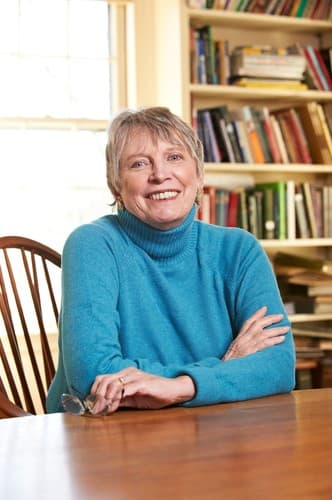
Lois Lowry is an American author known for her contributions to children's and young adult literature. Her notable works include "The Giver," "Number the Stars," "Gathering Blue," and the books in "The Giver Quartet," which explore themes of memory, identity, and the human experience. Lowry has received multiple awards for her writing, including the Newbery Medal.
Similar books
- Brave New World
Aldous Huxley
4.0 (1.4M) average on GoodreadsFantasyBoth 'The Giver Quartet' and 'Brave New World' depict dystopian societies that achieve stability through the suppression of individuality and emotion. However, Huxley's world relies on genetic engineering and conditioning for control, creating a society that largely embraces its 'happiness' without question. Lowry's Giver community, while also controlled, explicitly removes memory and choice, leading to Jonas's stark realization of the emptiness of his world. 'The Giver' focuses more on the personal journey of awakening and rebellion from within, whereas 'Brave New World' presents a broader societal critique with less emphasis on individual agency to change the system.
- The Diary of a Young Girl
Anne Frank
4.2 (2.7M) average on GoodreadsBiographyDuring the Nazi occupation, a teenage girl's diary, written from a secret annex, shares observations on humanity, hope, and the wait for freedom.
- Twisted 1. Twisted love
Ana Huang
3.7 (1.7M) average on GoodreadsA quiet billionaire with a difficult past finds his guarded heart opening to the woman he must protect, but their growing passion uncovers dangerous secrets and a shared, traumatic history.
- Eat, Pray, Love
Elizabeth Gilbert
3.6 (1.5M) average on GoodreadsLifestyleA heartbroken writer leaves her conventional life for a year-long global search for pleasure in Italy, spiritual devotion in India, and unexpected love and balance in Bali.
- Night
Elie Wiesel
4.3 (970k) average on GoodreadsBiographyIn the darkness of Auschwitz and Buchenwald, a teenage Elie Wiesel faces the extermination of his family, the loss of his faith, and the lasting scars of humanity's deepest cruelty.
- Steve Jobs
Walter Isaacson
4.1 (957k) average on GoodreadsBusinessSteve Jobs was a visionary who fused creativity and technology to revolutionize six industries and shape our digital world.






Enjoyed the summary?
A summary gives you the shape of the book. The book itself has the detail, the examples and the voice.
Find The Giver Quartet on AmazonAs an Amazon Associate, BookBrief earns from qualifying purchases. How we're funded