
Core Idea
- Difficulty
- Easy
Key Takeaways from The Gold
Fantasy as a Coping Mechanism
Amanda's imaginative world offers a vital escape from a harsh reality.
The book immediately shows Amanda's reliance on fantasy as a coping mechanism. Faced with constant bullying at school, an emotionally distant older sister, and the clear absence of her deceased mother, her internal world becomes a safe place. This isn't just daydreaming; it's a structured, almost therapeutic way to build a world where she can control things and find comfort, which she completely lacks in her real life. This shows how people often use imagination when reality is too hard, proving that creativity can protect against trauma and loneliness. Her deep escapism indicates the severe distress she feels every day.
“To escape reality, Amanda creates fantasy stories...”
In the book: Amanda's constant creation of fantasy stories is explicitly stated as a way to 'escape reality' from her school bullying and unsatisfactory home life.
Try this: Recognize the importance of creative outlets for children facing difficult situations; these aren't just hobbies but essential psychological tools for resilience.
The Catalyst of the Golden Pebble
A magical object blurs the line between Amanda's imagination and reality.
The talking golden pebble's introduction is the moment the story changes from a character study of a lonely girl to a magical realism adventure. This object is the literal sign of her inner world mixing with the outer one, making her fantasies real in a visible, audible way. It's more than just a magical item; it's a friend, a confidante, and a way to new experiences. This plot device matters because it doesn't just take Amanda to a fantasy land; it brings the fantasy to her, suggesting her imagination is powerful enough to change how she sees reality. This is the book's best idea about how internal feelings can strongly affect external experiences, even if it's an allegory.
“...when she discovers a talking golden pebble, her imagined world turns into a new-fangled reality.”
In the book: The text explicitly states the pebble's discovery makes her 'imagined world turn into a new-fangled reality.'
Try this: Consider how unexpected events or symbols can act as catalysts for personal transformation, often mirroring internal desires or needs.
Loneliness and the Need for Connection
Amanda's isolation is the fertile ground for her magical encounter.
Amanda's constant loneliness is a main theme, setting the emotional scene for the magical events. Her father's frequent absences, her sister's indifference, and the gap left by her mother's death create a deep sense of isolation. This emotional emptiness makes her especially open to the golden pebble's magic, suggesting that wanting connection and understanding can appear in extraordinary ways. The pebble isn't just a magical object; it's a substitute friend, giving her the companionship and validation her human relationships lack. This highlights the deep human need for connection and how its absence can make people look for it in unusual places.
“Ten-year old Amanda is constantly teased and tormented in school. Her home life is less than satisfactory...”
In the book: Her constant teasing, unsatisfactory home life, and missing her mother all point to a deep-seated loneliness.
Try this: Recognize that profound loneliness can make individuals vulnerable to external influences, both positive and negative, and that fostering genuine connection is vital for well-being.
The Absent Parent and Indifferent Sibling
Amanda's family structure contributes significantly to her emotional neglect.
The depiction of Amanda's family life is important for understanding her character development and her embrace of fantasy. Her father's frequent business trips and her older sister's indifference create a lack of parental and family support. This isn't necessarily mean neglect, but a practical absence that leaves Amanda emotionally adrift. The sister, likely dealing with her own teenage issues and perhaps her mother's death, can't or won't provide the care Amanda desperately needs. This family dynamic shows how much perceived abandonment and a lack of emotional connection can affect a child, making the outside world feel unsafe and unsupportive.
“Her widower father, often away on business trips, leaves her in the care of her indifferent teenaged sister.”
In the book: The description of her father being 'often away' and her sister being 'indifferent' directly illustrates this point.
Try this: Understand how a lack of parental presence and sibling support can compound a child's difficulties, making them seek comfort and validation elsewhere.
Grief and Unresolved Loss
The lingering sadness of her mother's death fuels Amanda's need for escape.
The persistent grief over her mother's death is a strong undercurrent throughout Amanda's story. The phrase 'not a day goes by' clearly shows how immediate and constant her loss is, indicating her grief is not a past event but a present reality that deeply shapes her emotional state. This unresolved sadness likely adds a lot to her feelings of loneliness and her retreat into fantasy. The golden pebble's appearance could be seen as a magical sign of her longing for comfort and connection, perhaps even a subconscious effort to fill the void her mother left. This element adds a layer of depth to her character, making her pursuit of magic an emotional need rather than just a whimsical adventure.
“Worse, not a day goes by when Amanda doesn't miss her mom.”
In the book: The explicit statement that she 'doesn't miss her mom' a day underscores the ongoing nature of her grief.
Try this: Recognize that unresolved grief can manifest in various behaviors, including escapism and a heightened sensitivity to comfort and connection.
The Power of the Child's Imagination
Amanda's inner world possesses a potent, reality-altering force.
This book celebrates the power of a child's imagination. Amanda's ability to 'create fantasy stories' isn't just a passive hobby; it's shown as a force so strong it can literally bring magic into her life. The golden pebble acts as a channel, but the initial spark for the fantastical elements seems to come directly from Amanda's inner world. This suggests that the lines between thought and reality are blurry, especially for a mind as open and desperate as Amanda's. The story implies that her imagination is not just a refuge, but a creative engine that can shape her destiny, offering a strong message about the strength and potential within a child's mind.
“To escape reality, Amanda creates fantasy stories, but when she discovers a talking golden pebble, her imagined world turns into a new-fangled reality.”
In the book: The direct connection made between her 'fantasy stories' and the 'new-fangled reality' brought by the pebble.
Try this: Encourage and value children's imaginative play and storytelling, as these are not just entertainment but crucial for cognitive and emotional development, potentially even shaping their reality.
Validation Through Magic
The talking pebble offers Amanda the affirmation she lacks from her human interactions.
The talking golden pebble gives Amanda something she deeply lacks: validation. Unlike the bullies at school or her indifferent sister, the pebble acknowledges her, talks to her, and confirms her inner world is real. This validation is vital for a child who feels unseen and unheard. The magic isn't just about adventure; it's about confirming that her experiences, feelings, and even her fantasies are real and deserve attention. This shows how important validation is for a child's self-esteem and emotional growth, and how its absence can lead to seeking it in unusual or unexpected places.
“...when she discovers a talking golden pebble, her imagined world turns into a new-fangled reality.”
In the book: The pebble 'talking' to her directly confirms her imagined world and offers interaction.
Try this: Prioritize active listening and validation in interactions with children, especially those who may be struggling or feeling marginalized.
The Duality of Reality and Fantasy
The book explores the intricate interplay between what is real and what is imagined.
A central idea of 'The Gold' is the blurring of lines between reality and fantasy. Initially, Amanda's fantasy is a pure escape from a harsh reality. However, the talking pebble changes this clear difference. It implies that fantasy isn't just a mental idea but can actively leak into and reshape reality. This dual nature makes the reader question what 'reality' actually is, especially from a child's view where imagination has immense power. The book suggests that for some, especially those in distress, the imagined world can become just as, if not more, real and impactful than the tangible one, offering a compelling look at the subjective nature of truth.
“To escape reality, Amanda creates fantasy stories, but when she discovers a talking golden pebble, her imagined world turns into a new-fangled reality.”
In the book: The transformation of her 'imagined world' into a 'new-fangled reality' is the central premise of the magical element.
Try this: Reflect on how personal perception and internal states can profoundly influence one's experience of reality, making individual realities diverse and subjective.
The Initiation into a New World
The golden pebble marks Amanda's entry into a larger, magical universe.
The discovery of the golden pebble is not just a single event; it's an initiation. It marks Amanda's change from an ordinary, suffering child to a participant in a magical world. This is a classic 'hero's journey' pattern, where an ordinary character is called to adventure by an extraordinary object or event. The pebble acts as her guide or mentor, opening doors to experiences she could only previously imagine. This part of the book suggests that even in the worst circumstances, a way to a larger, more meaningful existence can appear, offering hope and purpose where none existed before. It marks the start of a larger story arc, promising more exploration of this 'magical forest series'.
“...when she discovers a talking golden pebble, her imagined world turns into a new-fangled reality.”
In the book: The pebble's role in turning her imagined world into a 'new-fangled reality' is explicitly stated as the beginning of something new.
Try this: Consider how small, seemingly insignificant events can serve as the starting point for major life changes or adventures, often leading to personal growth.
Quiz
10 questions on the main ideas. Each answer comes with a short explanation.
Question 1
What is the protagonist's name?
- Amanda
- Krista
- Wagner
- Sarah
Show answer
A. Amanda The story explicitly states 'Ten-year old Amanda is constantly teased...'
Question 2
What object does Amanda discover that bridges her fantasy world and reality?
- A talking book
- A golden pebble
- A magical map
- A talking animal
Show answer
B. A golden pebble The text mentions, 'when she discovers a talking golden pebble, her imagined world turns into a new-fangled reality.'
Question 3
What is the title of the book?
- The Magical Forest
- Amanda's Fantasy
- The Gold
- The Golden Pebble
Show answer
C. The Gold The book is identified as 'The Gold' by Krista Wagner.
Question 4
What is Amanda's primary coping mechanism for dealing with her difficult reality?
- Playing sports
- Creating fantasy stories
- Spending time with her father
- Making new friends at school
Show answer
B. Creating fantasy stories The text states, 'To escape reality, Amanda creates fantasy stories...'
Question 5
Who is Amanda's widower father often away on?
- Vacation
- Business trips
- Military deployment
- Attending conferences
Show answer
B. Business trips The description mentions her 'widower father, often away on business trips...'
Question 6
How is Amanda's home life described?
- Loving and supportive
- Chaotic and loud
- Less than satisfactory
- Overly strict
Show answer
C. Less than satisfactory The text states, 'Her home life is less than satisfactory...'
Question 7
Who takes care of Amanda when her father is away?
- A nanny
- Her older brother
- Her grandmother
- Her indifferent teenaged sister
Show answer
D. Her indifferent teenaged sister The summary says, '...leaves her in the care of her indifferent teenaged sister.'
Question 8
What is the name of the series to which 'The Gold' belongs?
- Amanda's Adventures
- The Golden World
- The Magical Forest
- Fantasy Realm
Show answer
C. The Magical Forest The book is identified as 'Book #1, The Magical Forest series'.
Question 9
What significant emotional loss does Amanda experience?
- The loss of her father
- The loss of her best friend
- The loss of her mother
- The loss of her pet
Show answer
C. The loss of her mother The text states, 'Worse, not a day goes by when Amanda doesn't miss her mom.'
Question 10
What does the phrase 'new-fangled reality' imply about Amanda's transformed world?
- It is old-fashioned and familiar.
- It is strange, new, and possibly unconventional.
- It is exactly like her previous reality.
- It is boring and predictable.
Show answer
B. It is strange, new, and possibly unconventional. 'New-fangled' means new and unusual, implying that Amanda's transformed reality is different and perhaps surprising compared to what she knew.
The Gold FAQ
What is the book "The Gold" about?
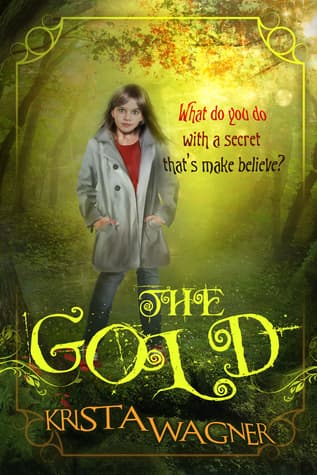
"The Gold" by Krista Wagner is the first book in The Magical Forest series. It tells the story of ten-year-old Amanda, who finds solace in fantasy stories to escape a difficult reality of bullying at school and a lonely home life. Her life takes a magical turn when she discovers a talking golden pebble that bridges her imagination with reality.
Who is the main character in "The Gold"?
The main character is Amanda, a ten-year-old girl who struggles with being teased at school and feels neglected at home. She uses her imagination to cope until a magical discovery changes her life.
What is the Magical Forest series?
The Magical Forest series is a collection of books, with "The Gold" being the first installment. The series likely follows magical adventures and discoveries, with Amanda and her golden pebble potentially playing a central role.
What is the significance of the golden pebble in the story?
The golden pebble is a magical object that Amanda discovers. It is special because it can talk and it transforms Amanda's imagined world into a tangible reality, serving as a catalyst for her adventures.
What are Amanda's main challenges in the book?
Amanda faces several challenges, including being bullied and tormented at school, and a difficult home life due to her father's frequent absence and her sister's indifference. She also deeply misses her deceased mother.
Is "The Gold" a fantasy book?
Yes, "The Gold" is a fantasy book. It features a magical talking pebble and a reality where imagination can intertwine with the real world.
What age group is "The Gold" suitable for?
Given the main character is ten years old and the themes of school bullying and magical discovery, "The Gold" is likely suitable for middle-grade readers, typically ages 8-12.
Does "The Gold" have a happy ending?
While the book description focuses on the beginning of Amanda's magical journey, the discovery of the talking pebble offers a hopeful turn in her life, suggesting a move towards overcoming her difficulties and finding adventure.
What themes are explored in "The Gold"?
The book explores themes of escapism through imagination, finding magic in the ordinary, dealing with loneliness and bullying, and the power of friendship and discovery.
How does Amanda's imagination play a role in the story?
Amanda's imagination is her primary coping mechanism for dealing with her difficult life. The discovery of the golden pebble blurs the lines between her imagination and reality, making her fantasy world come alive.
Similar books
- Lonesome Dove
Larry McMurtry
4.5 (149k) average on GoodreadsHistorical FictionCompared to Larry McMurtry's epic Western, "Lonesome Dove," "The Gold" offers a more focused, personal narrative within a similar historical landscape of American expansion. While "Lonesome Dove" presents a sprawling, multi-perspective saga of a cattle drive across the frontier, "The Gold" centers on Elara's individual quest for survival and prosperity during the Gold Rush. Both works masterfully capture the harshness and beauty of the untamed American West, with McMurtry's novel renowned for its rich character development and philosophical undertones, and Wagner's for its intimate portrayal of one woman's resilience against a backdrop of historical upheaval. "The Gold" is less sprawling and more character-driven in its immediate scope than McMurtry's magnum opus, yet both effectively transport the reader to a pivotal era in American history.
- The Diary of a Young Girl
Anne Frank
4.2 (2.7M) average on GoodreadsBiographyDuring the Nazi occupation, a teenage girl's diary, written from a secret annex, shares observations on humanity, hope, and the wait for freedom.
- Twisted 1. Twisted love
Ana Huang
3.7 (1.7M) average on GoodreadsA quiet billionaire with a difficult past finds his guarded heart opening to the woman he must protect, but their growing passion uncovers dangerous secrets and a shared, traumatic history.
- Eat, Pray, Love
Elizabeth Gilbert
3.6 (1.5M) average on GoodreadsLifestyleA heartbroken writer leaves her conventional life for a year-long global search for pleasure in Italy, spiritual devotion in India, and unexpected love and balance in Bali.
- Night
Elie Wiesel
4.3 (970k) average on GoodreadsBiographyIn the darkness of Auschwitz and Buchenwald, a teenage Elie Wiesel faces the extermination of his family, the loss of his faith, and the lasting scars of humanity's deepest cruelty.
- Steve Jobs
Walter Isaacson
4.1 (957k) average on GoodreadsBusinessSteve Jobs was a visionary who fused creativity and technology to revolutionize six industries and shape our digital world.






Enjoyed the summary?
A summary gives you the shape of the book. The book itself has the detail, the examples and the voice.
Find The Gold on AmazonAs an Amazon Associate, BookBrief earns from qualifying purchases. How we're funded