
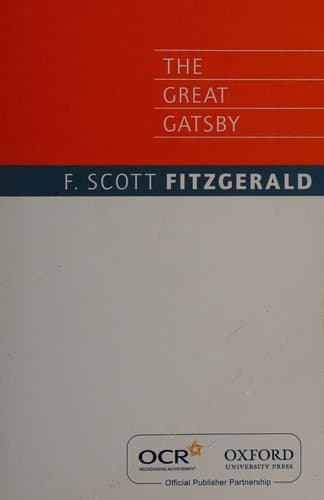
Synopsis
Covers the whole plot, including the ending.
- Difficulty
- Medium
- Pacing
- Moderate
- Mood
- Melancholy, nostalgic, critical, romantic, reflective, tragic
- Read it if
- you enjoy classic literature, stories about unrequited love and the pursuit of an idealized past, critiques of the American Dream, and narratives set in the glamorous yet superficial Roaring Twenties. Also, if you appreciate rich, evocative prose and complex character studies.
- Skip it if
- you prefer fast-paced thrillers, lighthearted plots, or stories with unequivocally happy endings. If you dislike narratives focused on social commentary and the disillusionment of wealth, this might not be for you.
The Great Gatsby Plot Summary
Covers the whole plot, including the ending.
Arrival in West Egg
Nick Carraway, a Yale graduate hoping to become a bond salesman, moves from the Midwest to West Egg, Long Island, in the summer of 1922. His small house is next to a huge mansion owned by Jay Gatsby, a man known for his lavish parties. Nick soon visits his wealthy cousin, Daisy Buchanan, and her husband, Tom, in East Egg. There, Nick meets Jordan Baker, a professional golfer, and learns about Tom's affair with a woman in New York. Nick immediately notices the difference between the old money of East Egg and the new money of West Egg, and the tensions between them.
The Valley of Ashes and Myrtle Wilson
Tom Buchanan takes Nick to New York, stopping in the 'valley of ashes,' a rundown industrial area between West Egg and New York City. Here, Nick meets Tom's mistress, Myrtle Wilson, the wife of George Wilson, a garage owner. Tom openly conducts his affair, taking Nick and Myrtle to an apartment in New York City he keeps for their meetings. A loud, drunken party follows, showing how crude Tom and Myrtle's relationship is. The night ends with Tom violently breaking Myrtle's nose during an argument about Daisy.
Gatsby's Party
Gatsby sends Nick a direct invitation to one of his Saturday night parties. The parties are elaborate, with hundreds of guests, live orchestras, and endless food and drinks, but most guests do not know Gatsby. Nick walks through the chaotic party, seeing how shallow and anonymous the guests are. He meets Jordan Baker, and they look for Gatsby, hearing rumors about his past. Nick eventually talks to a man who turns out to be Gatsby. Gatsby is surprisingly young, handsome, and polite, which contrasts with his wild parties.
Gatsby's Confession and Daisy's Reappearance
Gatsby starts a friendship with Nick, taking him on a drive into the city. During the drive, Gatsby tries to impress Nick with made-up stories about his past, claiming to be an Oxford graduate, a war hero, and from old family money. He shows Nick a medal and a photograph as proof. Later, Jordan Baker tells Nick the truth: Gatsby bought his mansion and throws parties only to attract Daisy Buchanan. They had an affair five years earlier before he went to war and she married Tom. Gatsby desperately wants Nick to arrange a reunion with Daisy.
The Reunion
Nick agrees to arrange a tea party at his cottage, inviting both Gatsby and Daisy without telling Daisy that Gatsby will be there. The initial reunion is awkward and tense; Gatsby is visibly nervous, and Daisy is surprised. After some discomfort, Gatsby and Daisy start to reconnect, remembering their past. Gatsby then invites Nick and Daisy to his mansion, where he shows off his wealth, especially his shirt collection, which makes Daisy cry. The scene highlights Gatsby's deep desire to win Daisy back and her complex feelings.
Gatsby's True Past
Nick learns more about Jay Gatsby's background. Born James Gatz to poor farmers in North Dakota, he changed his identity when he was young. His transformation began when he met the wealthy copper magnate Dan Cody, who became his mentor. Gatsby worked for Cody, traveling with him and learning about the rich, though he was ultimately cheated out of an inheritance. This time strengthened his ambition and his dream of wealth, which he thought was necessary to win Daisy. His current fortune came from illegal means, likely bootlegging, which further complicates his romantic image.
The Confrontation at the Plaza Hotel
On a hot summer day, the group—Gatsby, Nick, Daisy, Tom, and Jordan—has lunch at the Buchanan's. Tom, growing suspicious of Daisy and Gatsby, notices their connection. Daisy, wanting to escape the heat and marital tension, suggests they all go to New York City. They take two cars: Tom, Nick, and Jordan in Gatsby's yellow car, and Gatsby and Daisy in Tom's blue car. At the Plaza Hotel, Tom confronts Gatsby about his affair with Daisy, revealing Gatsby's bootlegging. Gatsby declares Daisy loves only him, but Daisy, torn, admits she loves both men, unable to fully commit to Gatsby.
Myrtle's Death
After the confrontation at the Plaza Hotel, the group leaves for Long Island. Gatsby and Daisy drive back in Gatsby's yellow car. As they pass through the valley of ashes, Myrtle Wilson, upset after an argument with George and believing Tom is in the yellow car, runs into the road. Daisy, who is driving, accidentally hits and kills Myrtle. Gatsby, in an act of devotion, takes the blame for the accident, telling Nick he will protect Daisy. George Wilson, consumed by grief and anger, believes the driver of the yellow car intentionally killed his wife and seeks revenge.
Gatsby's Death
George Wilson, devastated by Myrtle's death and influenced by Tom Buchanan's comments about the yellow car's owner, is determined to get revenge. He tracks Gatsby to his mansion. Gatsby, waiting by his pool for a call from Daisy that never comes, is shot and killed by George Wilson. Wilson then shoots himself. The deaths happen just as Gatsby's dream of a life with Daisy is shattered, showing the consequences of his obsessive pursuit and the moral decay of the wealthy.
The Funeral and Nick's Departure
After Gatsby's death, Nick tries to arrange a funeral but finds himself mostly alone. Daisy and Tom leave Long Island without a trace, showing no concern. Many of Gatsby's former party guests disappear, revealing their shallow relationships with him. Only Gatsby's father, Henry C. Gatz, and a few others attend the small service. Nick, disillusioned by the moral emptiness of the East Coast elite, decides to return to the Midwest. He thinks about Gatsby's hope and the American Dream, concluding that the past cannot be recaptured.
Principal Figures
Jay Gatsby
Protagonist
The enigmatic millionaire who rose from poverty to pursue an impossible dream.
Jay Gatsby is the central figure of the novel, a mysterious millionaire who throws lavish parties at his West Egg mansion. Born James Gatz, he reinvented himself, amassing his fortune through illicit means (likely bootlegging) to achieve the wealth and status he believed necessary to win back his lost love, Daisy Buchanan. He is characterized by his unwavering optimism, his 'extraordinary gift for hope,' and his deep romantic idealism, which contrasts sharply with the moral decay of his wealthy peers. Despite his outward glamour, he remains isolated and ultimately tragically alone.
Relationships: Daisy Buchanan (Obsessive love interest); Nick Carraway (Confidant and neighbor); Dan Cody (Mentor); Tom Buchanan (Rival)
Nick Carraway
Narrator and Supporting
The observant, moralistic outsider who chronicles Gatsby's story.
Nick Carraway is the novel's first-person narrator, a young man from the Midwest who moves to West Egg, Long Island, to work in bonds. He positions himself as an honest, non-judgmental observer, though his narrative often reveals his own biases and moral judgments. He is initially drawn to Gatsby's romantic idealism but becomes increasingly disillusioned by the moral emptiness and carelessness of the wealthy East Coast society. Nick serves as both a participant in and a commentator on the events, ultimately leaving the East feeling repulsed by its superficiality and tragedy.
Relationships: Jay Gatsby (Friend and neighbor); Daisy Buchanan (Cousin); Tom Buchanan (Acquaintance and former college mate); Jordan Baker (Brief romantic interest)
Daisy Buchanan
Supporting
The object of Gatsby's obsession, a beautiful but ultimately careless woman.
Daisy Buchanan is Gatsby's idealized love interest, a beautiful, charming, and wealthy woman from Louisville. She embodies the allure and superficiality of the old money elite. While she genuinely loved Gatsby in her youth, she ultimately chose the security and status offered by Tom Buchanan. Daisy is characterized by her captivating voice, which Gatsby describes as 'full of money,' and her profound indecisiveness. She is ultimately portrayed as a 'careless' individual who retreats from responsibility, leaving others to deal with the consequences of her actions.
Relationships: Jay Gatsby (Former and current love interest); Tom Buchanan (Husband); Nick Carraway (Cousin)
Tom Buchanan
Antagonist
Daisy's wealthy, arrogant, and brutish husband.
Tom Buchanan is Daisy's immensely wealthy husband, a former Yale football star, and a symbol of old money's arrogance and hypocrisy. He is physically imposing, aggressive, and openly racist, embodying the worst aspects of inherited wealth and privilege. Tom is unfaithful to Daisy, openly having an affair with Myrtle Wilson, and is quick to anger and violence. He represents the established social order that Gatsby, with his new money, attempts to infiltrate. Tom's actions, particularly his insidious suggestion to George Wilson, directly contribute to Gatsby's downfall.
Relationships: Daisy Buchanan (Wife); Myrtle Wilson (Mistress); Jay Gatsby (Rival); Nick Carraway (Acquaintance)
Jordan Baker
Supporting
A cynical, dishonest professional golfer and Nick's brief romantic interest.
Jordan Baker is a competitive professional golfer and a friend of Daisy Buchanan. She is beautiful, self-sufficient, and possesses a cynical, world-weary demeanor. Jordan is also notably dishonest, having cheated in a golf tournament, and she often displays a detached, bored attitude towards life. She has a brief romantic relationship with Nick Carraway, but their connection ultimately falters due to their differing moral compasses. Jordan represents the 'new woman' of the 1920s, independent but also morally ambiguous and careless.
Relationships: Nick Carraway (Brief romantic interest); Daisy Buchanan (Friend)
Myrtle Wilson
Supporting
Tom Buchanan's vivacious but ill-fated mistress.
Myrtle Wilson is the wife of George Wilson and Tom Buchanan's mistress. She is a vivacious, sensuous, and ambitious woman who desperately seeks to escape her impoverished existence in the valley of ashes. Myrtle sees her affair with Tom as a means to a better life, enjoying the material possessions and social opportunities he provides. She is presented as coarse and vulgar, a stark contrast to Daisy's refined elegance, yet she possesses a vitality that Daisy lacks. Her tragic death, a hit-and-run accident, is a pivotal moment in the novel.
Relationships: Tom Buchanan (Lover); George Wilson (Husband)
George Wilson
Supporting
Myrtle's downtrodden husband, a garage owner in the valley of ashes.
George Wilson is the owner of a run-down garage in the desolate valley of ashes. He is a weary, exhausted man, deeply in love with his wife, Myrtle, and oblivious to her affair with Tom Buchanan. George is depicted as a victim of his circumstances, trapped in poverty and hopelessness. His grief over Myrtle's death transforms him into a man consumed by vengeance, leading him to murder Gatsby before taking his own life. He represents the working class who are crushed by the indifference and carelessness of the wealthy.
Relationships: Myrtle Wilson (Wife)
Meyer Wolfsheim
Supporting
Gatsby's business associate, a notorious gambler and criminal.
Meyer Wolfsheim is Gatsby's mysterious and shady business associate, a notorious figure in the criminal underworld. He is a gambler who famously 'fixed' the 1919 World Series. Wolfsheim is portrayed as a man of questionable ethics, but he shows a certain loyalty to Gatsby, remembering him fondly after his death. He represents the corrupt underbelly of the Jazz Age and the illicit means by which Gatsby likely acquired his wealth, contrasting sharply with Gatsby's romantic idealism.
Relationships: Jay Gatsby (Business associate/mentor)
Themes & Insights
The American Dream
The novel critiques how the American Dream became corrupt. It was originally about pursuing happiness through hard work. Gatsby embodies a distorted version, believing wealth and possessions are the way to achieve his ideal (Daisy). His dream is impossible because it is based on a past he cannot get back and a materialistic vision. The novel suggests that pursuing wealth for its own sake, and the moral decay that often comes with it, has emptied the once-noble ideals of the American Dream, replacing them with shallowness and moral emptiness.
“Gatsby believed in the green light, the orgastic future that year by year recedes before us. It eluded us then, but that's no matter—tomorrow we will run faster, stretch out our arms farther.... And one fine morning—”
Social Class and Old vs. New Money
The novel shows the strict division between 'old money' (East Egg) and 'new money' (West Egg). Old money, like the Buchanans, means inherited wealth, a sense of superiority, and a disregard for consequences. New money, like Gatsby's, is seen as crude, flashy, and lacking the 'breeding' of the established elite, despite its extravagance. This class difference is a barrier to Gatsby's acceptance into Daisy's world and contributes to his isolation and downfall, as the old money class keeps its power and dismisses those who try to rise without their lineage.
“They were careless people, Tom and Daisy—they smashed up things and creatures and then retreated back into their money or their vast carelessness, or whatever it was that kept them together, and let other people clean up the mess they had made.”
The Corrupting Power of Wealth
Wealth in 'The Great Gatsby' is often a source of moral decay and irresponsibility, not happiness. The East Egg characters, especially Tom and Daisy, use their inherited wealth for leisure, indulgence, and carelessness, causing destruction without facing consequences. Gatsby's wealth, gained illegally, is a tool for his romantic ideal, but it also isolates him and fuels the superficiality of his social interactions. The novel suggests that while wealth can offer opportunities, it often leads to moral emptiness, a detachment from reality, and a disregard for human life among those who possess it.
“Her voice is full of money, that's what it is.”
The Impossibility of Recapturing the Past
Gatsby's life is dedicated to reliving his past with Daisy. He believes if he can recreate their initial love, he can win her back and achieve his dream. He builds his life, his mansion, and his reputation around this goal. However, the novel shows that the past cannot be retrieved; memories are idealized, and people change. Gatsby's inability to accept this reality leads to his downfall. Nick's final thoughts emphasize that while one can learn from the past, it is impossible to literally revisit or recreate it, especially with human relationships and time.
“Can’t repeat the past?…Why of course you can!”
Love, Illusion, and Disillusionment
The novel explores different kinds of love, many based on illusion rather than reality. Gatsby's love for Daisy is an idealized fantasy, a projection of his desires onto her, not an understanding of who she is. Daisy is torn between Gatsby's passionate dream and the security Tom offers. The shallowness of relationships, especially among the wealthy, leads to disillusionment. Nick, initially drawn to the glamour, becomes disenchanted as he sees the moral bankruptcy and tragic results of these illusory loves, ultimately rejecting the values of the East.
“He had committed himself to the following of a grail.”
Plot Devices & Literary Techniques
First-Person Narrator (Nick Carraway)
A biased yet insightful observer shapes the narrative.
Nick Carraway serves as the novel's first-person narrator, providing a subjective lens through which the events unfold. His position as both an outsider (from the Midwest, new to West Egg) and an insider (Gatsby's neighbor, Daisy's cousin) allows him unique access to the characters and their secrets. Nick's narrative voice is characterized by his moral judgments, his initial fascination with Gatsby, and his growing disillusionment. This device allows Fitzgerald to control the pace of information, build suspense around Gatsby's past, and offer a critical perspective on the Jazz Age elite through Nick's evolving moral compass, making the reader question the reliability of his observations at times.
Symbolism (The Green Light)
A distant beacon representing Gatsby's unattainable dream.
The green light at the end of Daisy's dock is a powerful and recurring symbol. For Gatsby, it represents his ultimate goal: Daisy, her wealth, and the idealized past he desperately seeks to recapture. It is a beacon of hope and desire, constantly visible but always just out of reach. The light embodies the elusive nature of the American Dream and Gatsby's romantic idealism. Its distance and ultimate meaninglessness (once Gatsby is reunited with Daisy) underscore the theme that the past cannot be repeated and that idealized dreams often fall short when confronted with reality. Its final fade into the background signifies the death of Gatsby's hope.
Setting (East Egg vs. West Egg)
Geographical divide symbolizing old money vs. new money.
The geographical division of East Egg and West Egg on Long Island serves as a crucial plot device, symbolizing the fundamental class distinctions and social tensions within the novel. East Egg, home to the Buchanans, represents 'old money' – inherited wealth, established social status, and an air of aristocratic superiority. West Egg, where Gatsby and Nick reside, signifies 'new money' – recently acquired wealth, often through illicit means, and a more ostentatious, striving social climbing. This physical separation highlights the inherent clash between these two worlds and the impossibility of Gatsby, despite his wealth, truly integrating into Daisy's old money society. The 'valley of ashes' further contrasts these opulent worlds with industrial decay.
Flashbacks and Rumors
Unveiling Gatsby's mysterious past through fragmented revelations.
Fitzgerald employs flashbacks and the propagation of rumors to slowly unveil the enigmatic past of Jay Gatsby. Initially, Gatsby is shrouded in mystery, with guests at his parties circulating wild and contradictory stories about his origins and profession. This creates suspense and intrigue, drawing the reader, along with Nick, into the quest to understand him. Later, Gatsby himself provides fragmented, often embellished, accounts of his past, and Jordan Baker fills in crucial details about his relationship with Daisy. This gradual revelation of Gatsby's true history, from his humble beginnings to his illicit fortune, builds a complex character while highlighting the theme of illusion versus reality, as his fabricated persona slowly crumbles.
The Great Gatsby Quotes
“Whenever you feel like criticizing any one... just remember that all the people in this world haven't had the advantages that you've had.”
“In my younger and more vulnerable years my father gave me some advice that I’ve been turning over in my mind ever since. 'Whenever you feel like criticizing any one,' he told me, 'just remember that all the people in this world haven't had the advantages that you've had.'”
“Gatsby believed in the green light, the orgastic future that year by year recedes before us. It eluded us then, but that’s no matter—tomorrow we will run faster, stretch out our arms farther.... And one fine morning—— So we beat on, boats against the current, borne back ceaselessly into the past.”
“He had one of those rare smiles with a quality of eternal reassurance in it, that you may come across four or five times in life.”
“I hope she'll be a fool—that's the best thing a girl can be in this world, a beautiful little fool.”
“There are only the pursued, the pursuing, the busy and the tired.”
“Can’t repeat the past? Why of course you can!”
“Her voice is full of money.”
“So we beat on, boats against the current, borne back ceaselessly into the past.”
“It was an extraordinary gift for hope, a romantic readiness such as I have never found in any other person and which it is not likely I shall ever find again.”
“They were careless people, Tom and Daisy—they smashed up things and creatures and then retreated back into their money or their vast carelessness, or whatever it was that kept them together, and let other people clean up the mess they had made.”
“He stretched out his arms toward the dark water in a curious way, and, far as I was from him, I could have sworn he was trembling. Involuntarily I glanced seaward—and distinguished nothing except a single green light, minute and far way, that might have been at the end of a dock.”
“I like large parties. They’re so intimate. At small parties there isn’t any privacy.”
“The truth was that Jay Gatsby of West Egg, Long Island, sprang from his Platonic conception of himself.”
Quiz
10 questions on the plot and the characters. Each answer comes with a short explanation.
Question 1
What is the primary setting of Jay Gatsby's lavish parties?
- East Egg
- New York City
- West Egg
- Long Island Sound
Show answer
C. West Egg Gatsby's opulent parties are famously held at his mansion in West Egg.
Question 2
Who is the narrator of 'The Great Gatsby'?
- Jay Gatsby
- Daisy Buchanan
- Tom Buchanan
- Nick Carraway
Show answer
D. Nick Carraway Nick Carraway, Gatsby's neighbor and Daisy's cousin, narrates the story.
Question 3
What is Gatsby's primary motivation throughout the novel?
- To become the wealthiest man in West Egg
- To win back the love of Daisy Buchanan
- To expose the corruption of the wealthy elite
- To achieve political power
Show answer
B. To win back the love of Daisy Buchanan Gatsby's entire pursuit of wealth and status is driven by his desire to reunite with Daisy.
Question 4
The first edition jacket describes Gatsby as having 'a marvelous fusion into unity of the curious incongruities of the life of the period.' What does this suggest about the era?
- It was a time of great social harmony and consistency.
- It was characterized by contradictions and complexities.
- It was a period of strict adherence to tradition.
- It was a time of widespread poverty and despair.
Show answer
B. It was characterized by contradictions and complexities. The phrase 'curious incongruities' points to the contrasting elements and paradoxes of the Roaring Twenties, such as immense wealth alongside moral decay.
Question 5
The excerpt states Gatsby possessed 'an extraordinary gift for hope, a romantic readiness'. What literary term best describes this characteristic?
- Cynicism
- Realism
- Idealism
- Nihilism
Show answer
C. Idealism Idealism is the belief in or pursuit of perfection and noble goals, often in the face of reality, which aligns with Gatsby's enduring hope and romantic outlook.
Question 6
The novel is described as ranging 'from pure lyrical beauty to sheer brutal realism'. This suggests the author uses a style that:
- Is consistently sentimental and poetic.
- Focuses solely on the harsh realities of life.
- Employs a wide spectrum of tones and depictions.
- Maintains a detached and objective narrative voice.
Show answer
C. Employs a wide spectrum of tones and depictions. The phrase indicates a dynamic range in the narrative, incorporating both beautiful, evocative language and stark, unflinching portrayals of reality.
Question 7
The excerpt mentions Gatsby's love for Daisy Buchanan. What does this relationship symbolize within the broader context of the novel?
- The corrupting influence of wealth
- The unattainable nature of the American Dream
- The importance of social class
- The superficiality of modern relationships
Show answer
B. The unattainable nature of the American Dream Gatsby's pursuit of Daisy, who represents wealth and an idealized past, becomes a metaphor for the elusive and often corrupted American Dream.
Question 8
The jacket copy states Gatsby 'will live as a character... as long as the memory of any reader lasts.' This is an example of:
- Foreshadowing
- Hyperbole
- Irony
- A prediction of literary endurance
Show answer
D. A prediction of literary endurance This statement is a confident assertion about the lasting impact and memorability of the character of Gatsby, suggesting his significance in literature.
Question 9
The novel is described as 'blended of irony, romance, and mysticism'. Which of these elements is LEAST explicitly supported by the provided excerpt?
- Irony
- Romance
- Mysticism
- All are supported
Show answer
C. Mysticism While irony and romance are clearly evident in the descriptions of Gatsby's character and his pursuit of Daisy, 'mysticism' is not directly elaborated upon in the given text, though it could be inferred from Gatsby's mysterious aura.
Question 10
The phrase 'heedless universe' suggests a theme within the novel related to:
- Divine intervention and predestination
- The indifference of the cosmos to human struggles
- The power of human will to shape destiny
- The interconnectedness of all living beings
Show answer
B. The indifference of the cosmos to human struggles A 'heedless universe' implies a world that is uncaring or unconcerned with the fate of individuals, highlighting themes of existentialism and the struggle against overwhelming odds.
The Great Gatsby FAQ
What is the main theme of The Great Gatsby?
The Great Gatsby primarily explores the American Dream and its corruption, focusing on themes of wealth, class, love, and disillusionment in the Roaring Twenties. It questions whether the dream is attainable and at what cost.
Who is Jay Gatsby and what does he represent?
Jay Gatsby is a mysterious, wealthy man who throws extravagant parties. He represents the embodiment of the American Dream, striving to achieve wealth and status to win back his lost love, Daisy.
What is the significance of Daisy Buchanan in the novel?
Daisy Buchanan is the object of Gatsby's obsessive love and a symbol of his unattainable dream. She represents the allure of wealth, status, and a past that Gatsby desperately wants to recapture.
What is the role of Nick Carraway in The Great Gatsby?
Nick Carraway is the narrator of the story. He acts as an observer and moral compass, providing an outsider's perspective on the events and characters, and ultimately becoming disillusioned with the wealthy elite.
What does the green light symbolize in The Great Gatsby?
The green light, visible across the bay at Daisy's dock, symbolizes Gatsby's hopes and dreams, particularly his longing for Daisy and the idealized past he wishes to recreate. It represents the elusive nature of the American Dream.
What is the historical context of The Great Gatsby?
The novel is set in the summer of 1922 during the Roaring Twenties, a period of economic prosperity, social change, and cultural upheaval in America, characterized by jazz music, Prohibition, and a burgeoning sense of materialism.
How does The Great Gatsby critique the American Dream?
The novel critiques the American Dream by showing how it can be corrupted by materialism, social class, and moral decay. Gatsby's pursuit of wealth and status ultimately leads to his downfall, suggesting the dream is often hollow and unattainable.
What is the main message of The Great Gatsby?
A central message is the destructive nature of obsession and the illusion of recapturing the past. It also highlights the moral emptiness that can accompany great wealth and the superficiality of the Jazz Age society.
Is The Great Gatsby a tragic story?
Yes, The Great Gatsby is widely considered a tragedy. Gatsby's relentless pursuit of an idealized past and his ultimate demise underscore the destructive consequences of his dreams and the superficiality of the society he inhabits.
What is the difference between West Egg and East Egg?
West Egg represents the 'new money' or self-made wealthy, characterized by Gatsby's extravagant but somewhat gaudy mansion. East Egg represents the established aristocracy or 'old money,' home to the Buchanans, signifying inherited wealth and social prestige.
About the author

Francis Scott Key Fitzgerald was an American novelist, essayist, and short story writer. He is best known for his novels depicting the flamboyance and excess of the Jazz Age—a term he popularized in his short story collection Tales of the Jazz Age. During his lifetime, he published four novels, four story collections, and 164 short stories. Although he achieved temporary popular success and fortune in the 1920s, Fitzgerald received critical acclaim only after his death and is now widely regarded as one of the greatest American writers of the 20th century.
Similar books
- Tender is the Night
F. Scott Fitzgerald
3.8 (114k) average on GoodreadsLiterary FictionExplores similar themes of wealth, romance, and tragic decline among the American expatriate elite.
- The Age of Innocence
Edith Wharton
4.0 (139k) average on GoodreadsHistorical FictionExamines unfulfilled love and the constraints of societal expectations within a specific historical American context.
- Brideshead Revisited
Evelyn Waugh
4.0 (93k) average on GoodreadsLiterary FictionA nostalgic look at a bygone era, exploring themes of class, wealth, and lost love with a sense of melancholic reflection.
- The Catcher in the Rye
J.D. Salinger
3.8 (2.7M) average on GoodreadsYoung AdultWhile both novels feature a critical first-person narrator observing societal phoniness, "The Great Gatsby" critiques the external facade of wealth and class, whereas "The Catcher in the Rye" delves into Holden Caulfield's internal struggle with authenticity and the loss of innocence. Gatsby's tragedy stems from an idealized past; Holden's from a fear of an imperfect future. Fitzgerald's prose is more ornate and descriptive, Salinger's more colloquial and introspective.
- A Farewell to Arms
Ernest Hemingway
3.8 (263k) average on GoodreadsHistorical FictionBoth Fitzgerald and Hemingway were contemporaries of the 'Lost Generation,' exploring themes of disillusionment. However, "The Great Gatsby" focuses on the disillusionment with the American Dream post-WWI, driven by material excess and social climbing, whereas "A Farewell to Arms" directly grapples with the brutal realities of war and the search for meaning and love amidst chaos. Hemingway's prose is famously sparse and direct, a stark contrast to Fitzgerald's rich, poetic descriptions, reflecting different narrative aims and stylistic choices for conveying emotional depth and societal critique.
- Harry Potter and the Sorcerer's Stone
J.K. Rowling
4.5 (7M) average on GoodreadsFantasyRescued from a miserable life under the stairs, an orphaned boy discovers he's a wizard destined for a magical school, where he uncovers a dangerous secret tied to the dark wizard who murdered his parents.




Enjoyed the summary?
A summary gives you the shape of the book. The book itself has the detail, the examples and the voice.
Find The Great Gatsby on AmazonAs an Amazon Associate, BookBrief earns from qualifying purchases. How we're funded