

Synopsis
Covers the whole plot, including the ending.
- Difficulty
- Easy
- Pacing
- Moderate
- Mood
- Humorous, Witty, Nostalgic, Melancholy, Satirical
- Read it if
- You enjoy British humor, coming-of-age stories, or a satirical look at 1980s Britain through the eyes of a self-important teenager.
- Skip it if
- You prefer fast-paced plots with a strong narrative arc, or find adolescent angst and self-pitying protagonists tiresome.
The Growing Pains of Adrian Mole Plot Summary
Covers the whole plot, including the ending.
A New Year, A New Diary
The diary starts on January 1st, 1982, with Adrian Mole, now sixteen and a half, thinking about the past year. His parents, Pauline and George, have gotten back together, which Adrian is initially relieved about, though their arguments quickly resume. Adrian is still very much in love with Pandora Braithwaite, calling her his 'true love,' despite their frequent fights and her sometimes dismissive attitude. He continues to struggle with his academic goals, especially his hopes of becoming a published intellectual, and his general feeling of being misunderstood. He also worries about Britain under Margaret Thatcher and rising unemployment, which he takes personally.
The Saga of the Socialist and the Squatter
Adrian's father, George, takes a new job managing a mushroom farm, which Adrian views with both scorn and interest. Meanwhile, Adrian's grandmother, May, takes in Bert Baxter, an elderly, grumpy man with strong socialist beliefs. Bert quickly becomes part of Adrian's life, demanding his attention and care, much to Adrian's annoyance. Bert's political views often conflict with Adrian's more romantic, though naive, world view. Adrian also gets involved with the local Labour Party, mainly because of Pandora, finding himself handing out leaflets and attending meetings, though he grows increasingly disillusioned.
Pandora's Political Awakening and Adrian's Despair
Pandora becomes more involved in political activism, especially the peace movement and nuclear disarmament. She joins a protest camp and spends more time with other activists, including a handsome, charming young man named Julian. Adrian, feeling ignored and insecure, becomes very jealous of Julian and Pandora's growing friendship. He struggles to accept Pandora's political passion alongside his desire for her exclusive attention. Their relationship becomes tense, marked by arguments and Adrian's persistent, often clumsy and self-pitying, attempts to win back her full affection.
The Falklands War Erupts
The Falklands War begins, becoming a main topic in Adrian's diary and in the daily lives of his family and friends. Adrian, at first confused by the conflict, finds himself caught between patriotic feelings and his growing anti-war views, influenced by Pandora and Bert. His father, George, becomes very nationalistic, while his mother, Pauline, worries about the war's impact on their lives. Adrian grapples with the morality of war, how the media presents events, and the personal consequences, especially how it affects his relationship with Pandora, who strongly opposes the conflict.
Academic Woes and Creative Frustrations
Adrian continues to struggle with his schoolwork, especially his 'O' levels, despite his self-proclaimed intelligence. He dreams of going to university, specifically Oxford or Cambridge, but his grades and lack of focus often hinder him. His attempts to get his poetry published or recognized by the BBC are repeatedly rejected, feeding his belief that he is an unappreciated genius. He often complains about the lack of cultural understanding in Britain and his belief that his talents are overlooked. His creative work, mostly poetry, often shows his current emotional state, typically one of angst and unrequited love.
Bert Baxter's Influence and Illness
Bert Baxter's health starts to worsen, and Adrian finds himself increasingly responsible for his care, despite his initial reluctance. He takes Bert to the doctor, helps him with daily tasks, and listens to his often-cynical pronouncements. Through this forced closeness, Adrian develops a reluctant affection for Bert, though he still finds him incredibly irritating. Bert's illness and eventual hospitalization force Adrian to face the realities of old age, sickness, and death, adding a serious note to his otherwise self-absorbed thoughts. He also learns more about Bert's past and socialist ideas, which subtly influence Adrian's own developing worldview.
The Breakup and the Aftermath
The stress on Adrian and Pandora's relationship, made worse by Pandora's political activism, Julian's presence, and Adrian's jealousy, finally leads to a breakup. Pandora, feeling smothered by Adrian's possessiveness and his inability to understand her deeper commitments, decides to end their romance. Adrian is heartbroken, falling into deep self-pity and despair. He tries to win her back through various desperate methods, including writing her passionate letters and poetry, but his efforts are largely unsuccessful. The breakup marks a significant change for Adrian, forcing him to confront loneliness and the loss of his perceived soulmate.
New Loves and Lingering Hopes
After his breakup with Pandora, Adrian tries to move on. He briefly dates Sharon, but the relationship lacks the intensity and intellectual connection he had with Pandora. He also feels drawn to Bianca, but these attempts at new romance are often overshadowed by his lingering feelings for Pandora. He continues to watch Pandora from a distance, noting her activities and her ongoing involvement with Julian, which only fuels his jealousy. Adrian swings between moments of hope for reconciliation and periods of deep sadness, constantly rethinking his past actions and Pandora's reasons.
Family Dynamics and Parental Troubles
Adrian's parents, George and Pauline, continue their unstable, often argumentative relationship. Their reconciliation is fragile, marked by frequent arguments, threats of separation, and financial worries. Adrian often finds himself caught in the middle of their disputes, acting as a reluctant confidant for both. His mother, Pauline, sometimes seeks comfort elsewhere, leading to Adrian's suspicions and worries. These home problems add to Adrian's general sense of instability and his desire for a more peaceful family life, even as he criticizes his parents' perceived flaws.
The End of an Era, The Start of a New School Year
As the year goes on, Adrian takes his 'O' level examinations, experiencing the usual mix of confidence and panic. He continues to write his diary, recording his thoughts on politics, love, literature, and his own perceived talent. The book ends as Adrian prepares to start his 'A' levels, still longing for Pandora, still convinced of his intellectual superiority despite his academic struggles, and still observing the world with his unique blend of self-pity and sharp, if often misguided, commentary. He remains hopeful about his future as a writer, despite many rejection slips, and always hopes for a reconciliation with Pandora, even as he tries to move on.
The Growing Pains of Adrian Mole Characters
Adrian Mole
Protagonist
A self-proclaimed intellectual and sensitive teenager navigating the awkwardness of adolescence.
Adrian is a 16-and-a-half-year-old aspiring intellectual and poet, chronicling his life in diary form. He sees himself as highly intelligent and misunderstood, constantly battling the perceived philistinism of his family and the wider world. He is deeply in love with Pandora Braithwaite, which forms the central emotional conflict of his diary. Adrian is prone to self-pity, hypochondria, and a keen, often humorous, observation of the mundane and the absurd. He is obsessed with his appearance, his health, and his intellectual development, often to the detriment of his social skills.
Relationships: Pandora Braithwaite (Adrian's intense, often unrequited, love interest); Pauline Mole (His often exasperating, but ultimately loved, mother); George Mole (His often exasperating, but ultimately loved, father); Bert Baxter (Elderly, curmudgeonly friend and charge); Nigel Hetherington (His best friend, often a sounding board for Adrian's woes)
Pandora Braithwaite
Love Interest/Supporting
Adrian's intelligent, politically active, and often elusive girlfriend.
Pandora is Adrian's on-again, off-again girlfriend, the object of his intense affection and a source of much of his emotional turmoil. She is intelligent, articulate, and becomes increasingly involved in political activism, particularly the peace movement. Pandora is more mature and independent than Adrian, often frustrated by his self-absorption and jealousy. She is beautiful and charismatic, drawing the attention of other boys, which fuels Adrian's insecurities. Her growing political consciousness leads her to prioritize causes over Adrian's romantic demands, ultimately causing a rift between them.
Relationships: Adrian Mole (Her boyfriend, later ex-boyfriend, who she finds both endearing and exasperating); Julian (A fellow activist, a rival for Adrian's affections)
Pauline Mole
Supporting
Adrian's volatile and often dissatisfied mother.
Pauline is Adrian's mother, a woman prone to dramatic outbursts, periods of melancholy, and a restless search for personal fulfillment. She has recently reconciled with George, Adrian's father, but their marriage remains tumultuous. Pauline often expresses dissatisfaction with her life and her husband, sometimes seeking solace in other relationships or new hobbies. She is often exasperated by Adrian's intellectual pretensions but also shows moments of genuine maternal concern. Her actions and moods significantly impact the atmosphere of the Mole household.
Relationships: Adrian Mole (Her son, whom she loves but often finds irritating); George Mole (Her husband, with whom she has a tempestuous relationship)
George Mole
Supporting
Adrian's well-meaning but often bumbling father.
George is Adrian's father, a man who recently reconciled with Pauline after a period of separation. He often struggles with unemployment or unsatisfying jobs, such as managing a mushroom farm. George is generally good-natured but can be prone to fits of temper and strong, sometimes misguided, opinions, particularly on politics and current events. He is less intellectually inclined than Adrian but sometimes tries to connect with his son. His relationship with Pauline is often fraught with arguments, contributing to Adrian's domestic anxieties.
Relationships: Adrian Mole (His son, whom he loves but often misunderstands); Pauline Mole (His wife, with whom he has a tempestuous relationship)
Bert Baxter
Supporting
An elderly, curmudgeonly socialist who Adrian reluctantly cares for.
Bert Baxter is an elderly squatter and staunch socialist who is taken in by Adrian's grandmother. He is gruff, cynical, and often demanding, but possesses a sharp wit and strong political convictions. Adrian is initially tasked with caring for Bert as part of a school project, and later out of necessity as Bert's health declines. Despite his initial reluctance, Adrian develops a grudging affection for Bert, who becomes a significant influence on Adrian's developing worldview, particularly his political consciousness. Bert's experiences and uncompromising views offer Adrian a different perspective on life and society.
Relationships: Adrian Mole (His reluctant caregiver and friend); May Mole (Adrian's grandmother, who takes him in)
Nigel Hetherington
Supporting
Adrian's best friend and often the recipient of his confidences.
Nigel is Adrian's best friend and a constant presence in his life. He is generally more grounded and less prone to dramatic introspection than Adrian, often serving as a foil to Adrian's self-absorption. Nigel is loyal and patient, frequently listening to Adrian's woes about Pandora, his intellectual struggles, and his family problems. While not as academically ambitious as Adrian, he is a steady and reliable friend, offering a sense of normalcy amidst Adrian's chaotic emotional landscape. He is often the only one Adrian truly confides in.
Relationships: Adrian Mole (His best friend)
Grandma (May Mole)
Supporting
Adrian's sensible and often exasperated grandmother.
May Mole is Adrian's grandmother, a practical and down-to-earth woman who often provides a voice of reason in the Mole family chaos. She takes in Bert Baxter, showing her compassionate side, but is also capable of being stern and direct. Adrian often seeks her advice or comfort, though he also finds her old-fashioned views frustrating. She provides a stable presence in Adrian's life, despite the eccentricities of her own household with Bert.
Relationships: Adrian Mole (Her grandson, whom she cares for); Bert Baxter (Her lodger, with whom she has a complex relationship)
Julian
Mentioned/Minor Antagonist
A handsome and charismatic fellow activist who sparks Adrian's jealousy.
Julian is a young man involved in political activism who becomes a rival for Pandora's affections. He is handsome, charismatic, and shares Pandora's passion for social causes, making him a formidable threat in Adrian's eyes. Adrian's jealousy of Julian is a significant catalyst for the deterioration of his relationship with Pandora. Julian represents the intellectual and political world that Pandora increasingly inhabits, a world where Adrian feels out of his depth and insecure.
Relationships: Pandora Braithwaite (Fellow activist and a source of Adrian's jealousy)
The Growing Pains of Adrian Mole Themes
The Pain of Unrequited/Lost Love
This theme is central to Adrian's diary. His intense, often obsessive, love for Pandora Braithwaite drives much of his emotional story. He constantly deals with her perceived indifference, her political commitments, and eventually, her rejection. Adrian's self-pity and poetic writings are almost always tied to his romantic problems. The pain of their breakup and his lingering hope for reconciliation form the emotional core of the book, showing the common agony of adolescent love and loss. This is clear in many entries where he laments Pandora's distance or his own perceived shortcomings as a lover.
“Oh, Pandora, why do you torment me so? My heart is a broken thing, shattered into a million pieces by your indifference.”
Adolescent Intellectual Pretensions vs. Reality
Adrian sees himself as a deep intellectual and poet, but this constantly clashes with his ordinary life, his academic struggles, and the lack of recognition he gets. He believes he is a genius, meant for literary fame, yet he struggles with 'O' levels and receives many rejection slips for his poetry. This theme highlights the humor and sadness of teenage ambition, where big dreams often conflict with limited talent or chances. His criticisms of British society and culture often sound naive or self-serving, showing the gap between his perceived intelligence and his actual understanding.
“I am an intellectual. It's just that nobody else seems to have noticed yet.”
Political Awakening and Disillusionment
The political situation of 1982, especially the Falklands War and the peace movement, greatly affects Adrian and those around him. Adrian's initial disinterest turns into a complex mix of patriotism, anti-war feelings (influenced by Pandora and Bert), and a growing, though often naive, political awareness. He takes part in protests, debates with his father, and observes the societal divisions. This theme explores how major global events shape individual views, especially during the formative years of adolescence, and the disillusionment that can come with engaging with the complexities of real-world politics.
“The Falklands War. Is it right to kill people for a few sheep and some penguins?”
The Dysfunctional Family Unit
Adrian's home life is a constant source of worry and material for his diary. His parents' on-again, off-again, and often argumentative relationship creates an unstable environment. Adrian often finds himself caught between their disputes, acting as a reluctant confidant or mediator. The parents' financial problems, infidelities, and general unhappiness add to Adrian's own anxieties and his desire for a more peaceful family life, even as he criticizes his parents' perceived faults.
“My parents are having another row. I wish they'd just get divorced and be done with it.”
Plot Devices & Literary Techniques
Diary Format
The entire novel is presented as Adrian's personal diary entries.
The diary format is the primary narrative device, offering an intimate, first-person perspective into Adrian's thoughts, feelings, and observations. This allows for a direct and unfiltered portrayal of Adrian's self-absorption, his intellectual pretensions, his romantic woes, and his often-humorous misinterpretations of the world. The dated entries create a chronological progression, tracking Adrian's emotional and intellectual development (or lack thereof) over the course of a year. It also allows the reader to witness the gap between Adrian's self-perception and the reality of his situations, generating much of the novel's comedic effect.
Dramatic Irony
The reader understands Adrian's situations and character better than he does.
Dramatic irony is heavily employed throughout the novel. Adrian often presents himself as a profound intellectual, a sensitive poet, or a victim of circumstance, but his diary entries frequently reveal his immaturity, naiveté, and self-absorption to the reader. The humor largely stems from this discrepancy between Adrian's self-image and the reality of his actions and thoughts. For example, he might write a terrible poem believing it to be a masterpiece, or lament his bad luck while clearly being the cause of his own misfortune. This allows the reader to laugh at Adrian while also sympathizing with his adolescent struggles.
Social Commentary
Adrian's observations provide a satirical look at 1980s British society.
Through Adrian's often-misguided lens, the novel offers sharp social commentary on various aspects of 1980s Britain. This includes the political climate (Thatcherism, the Falklands War, unemployment), class distinctions, the education system, and cultural trends. Adrian's interactions with characters like Bert Baxter (a staunch socialist) and Pandora (a political activist) provide different viewpoints, even if Adrian himself doesn't fully grasp their complexities. The commentary is usually delivered with a satirical edge, highlighting the absurdities and contradictions of the era through the eyes of an earnest but often clueless teenager.
Epistolary Elements (Letters within Diary)
Adrian includes letters he writes or receives within his diary entries.
While primarily a diary, Adrian frequently includes copies of letters he has written (to Pandora, to the BBC, to various dignitaries) or received. This device serves multiple functions: it further reveals Adrian's attempts at communication and self-expression, often highlighting his formal or overly dramatic style; it provides external perspectives or reactions to his actions; and it adds to the comedic effect when the content of the letters clashes with Adrian's diary reflections. These letters are often crucial for understanding the progression of his relationships and his attempts to gain recognition.
The Growing Pains of Adrian Mole Quotes
“I am a intellectual, but I have not been asked to join Mensa yet.”
“My father is a complete idiot.”
“I have been going out with Pandora for three weeks, two days and seven hours.”
“My mother is having an affair with Mr. Lucas, next door.”
“It is a well known fact that adults are only children who have got bigger.”
“I think I am an unappreciated literary genius.”
“I will never get over Pandora. She is the love of my life.”
“My spots are getting worse. I look like a pizza.”
“Nobody understands me. Not even my dog, who is supposed to be man's best friend.”
“I have decided to become an atheist. There is no point in believing in God if he is going to let me have spots.”
“Being thirteen and three-quarters is not easy.”
“Why do adults have to complicate everything?”
“I am reading 'War and Peace' by Tolstoy. It's a bit long.”
“My father has left home. He says he needs space. He's got a lot of space in the shed.”
Quiz
10 questions on the plot and the characters. Each answer comes with a short explanation.
Question 1
At the beginning of 'The Growing Pains of Adrian Mole', what significant academic event is Adrian preparing for?
- His 'O' Level exams
- His 'A' Level exams
- His university entrance exams
- His GCSEs
Show answer
B. His 'A' Level exams Adrian is sixteen and navigating his 'A' Level exams, a major academic hurdle for him.
Question 2
Which political figure does Adrian's mother, Pauline, become increasingly involved with, much to Adrian's chagrin?
- Margaret Thatcher
- Tony Benn
- Mr. Lucas
- Mr. Braithwaite
Show answer
D. Mr. Braithwaite Pauline becomes involved with the Labour councillor Mr. Braithwaite, leading to many domestic upheavals.
Question 3
What is the name of Adrian's girlfriend throughout much of this diary, with whom he has a tumultuous relationship?
- Pandora Braithwaite
- Sharon Bott
- Marigold Flowers
- Claire Neilson
Show answer
A. Pandora Braithwaite Pandora Braithwaite is Adrian's long-standing love interest and the source of much of his emotional turmoil.
Question 4
What unusual job does Adrian's father, George, take on after losing his previous employment?
- Lorry driver
- Pigeon fancier
- Manager of a mushroom farm
- Window cleaner
Show answer
C. Manager of a mushroom farm George Mole gets a job managing a mushroom farm, a detail that Adrian often finds embarrassing or peculiar.
Question 5
Which famous author does Adrian frequently quote and aspire to be like, often to the annoyance of others?
- William Shakespeare
- T.S. Eliot
- George Orwell
- Virginia Woolf
Show answer
D. Virginia Woolf Adrian frequently references and attempts to emulate Virginia Woolf, often misinterpreting her work or applying it to his mundane life.
Question 6
What significant personal loss does Adrian experience that profoundly affects him and his family?
- His dog, Rover
- His grandmother
- His pet hamster, Hammy
- His grandfather, Bert Baxter
Show answer
D. His grandfather, Bert Baxter Bert Baxter, Adrian's grumpy but beloved grandfather figure, passes away, marking a poignant moment in the diary.
Question 7
What is the primary theme explored through Adrian's persistent yet often misguided literary aspirations?
- The importance of formal education
- The struggle for artistic recognition in a mundane world
- The futility of ambition
- The power of critical self-reflection
Show answer
B. The struggle for artistic recognition in a mundane world Adrian consistently believes in his own intellectual and poetic genius, despite constant rejections and a lack of understanding from others, highlighting the theme of aspiring for artistic recognition against the backdrop of an indifferent world.
Question 8
What is the name of Adrian's younger sister, born during the events of this diary?
- Rosie
- Daisy
- Lily
- Poppy
Show answer
A. Rosie Adrian's mother gives birth to his sister, Rosie, during the course of the book, adding another layer to the Mole family dynamics.
Question 9
How does Adrian's perception of his own intellectual superiority contrast with the reality of his experiences and interactions?
- He is genuinely recognized as a prodigy, but struggles with the pressures of fame.
- His intellectualism is consistently validated by his peers and teachers.
- He believes himself to be a deep thinker and poet, yet his attempts are often met with indifference, ridicule, or misunderstanding from others.
- He is an average student who simply dreams of being intellectual, without truly believing it.
Show answer
C. He believes himself to be a deep thinker and poet, yet his attempts are often met with indifference, ridicule, or misunderstanding from others. Adrian holds an inflated view of his own intellectual and poetic prowess, which is constantly undermined by the mundane realities of his life and the lack of recognition from those around him, forming a core comedic element.
Question 10
What significant global event, heavily covered in the news, does Adrian frequently comment on, revealing his developing political awareness (or lack thereof)?
- The Falklands War
- The Cold War
- The miners' strike
- The fall of the Berlin Wall
Show answer
A. The Falklands War Adrian's diary is set during the early 1980s, and he frequently mentions and provides his unique perspective on the Falklands War, which was a major news event at the time.
The Growing Pains of Adrian Mole FAQ
What is the primary focus of Adrian's diary entries in 'The Growing Pains of Adrian Mole'?
Adrian's diary entries primarily chronicle his tumultuous adolescence, focusing on his intellectual aspirations, his on-again, off-again relationship with Pandora Braithwaite, and his observations of his dysfunctional family life and the broader socio-political landscape of 1980s Britain. He frequently laments his perceived lack of recognition as a writer and intellectual.
How does Adrian's relationship with Pandora Braithwaite evolve throughout the book?
Adrian's relationship with Pandora is a central theme, marked by passionate declarations, frequent arguments, and dramatic breakups and reconciliations. They navigate the complexities of teenage romance, often influenced by their differing social backgrounds and Adrian's persistent insecurities about his intelligence and appeal. Their dynamic reflects the typical highs and lows of first love.
What significant political event impacts Adrian's family life and observations?
The Falklands War is a significant political event that casts a shadow over Adrian's observations and directly impacts his family, particularly his father's unemployment and subsequent involvement in a demonstration. Adrian's entries reflect the public mood and his own developing, albeit often naive, political consciousness during this time. He often tries to intellectualize the conflict.
Who is Mr. Lucas and what role does he play in Adrian's life?
Mr. Lucas is Adrian's mother's lover, and his presence causes significant upheaval in the Mole household, leading to the temporary separation of Adrian's parents. He represents a disruptive force, contributing to Adrian's emotional turmoil and the instability of his family environment. Adrian often expresses disdain for Mr. Lucas.
What are Adrian's main intellectual ambitions and how are they portrayed?
Adrian aspires to be a serious intellectual and a published poet/novelist, constantly sending his work to the BBC and various publishers, always to be rejected. His ambitions are portrayed with a humorous blend of genuine earnestness and profound self-delusion, as he believes his genius is simply unrecognized by the uncultured masses and establishment. He often criticizes contemporary literature.
What is the significance of Adrian's 'intellectual' friends, like Nigel?
Adrian's 'intellectual' friends, particularly Nigel, serve as a reflection and sometimes a foil to Adrian's own burgeoning intellectualism and snobbery. They often engage in pseudo-intellectual discussions or share Adrian's frustrations with the perceived lack of cultural sophistication in their surroundings. Their interactions highlight Adrian's desire for intellectual kinship.
Are there any recurring symbols or motifs related to Adrian's writing?
A recurring motif related to Adrian's writing is the constant rejection letters he receives from publishers and the BBC, often met with his indignant belief that they simply don't understand his genius. His use of pretentious language and literary allusions, often slightly misused, also serves as a symbolic representation of his unfulfilled intellectual aspirations. His 'work in progress' novel is another such symbol.
How does Sue Townsend use the specific setting of 1980s Britain to enhance the narrative?
Sue Townsend masterfully uses the specific setting of 1980s Britain, characterized by Thatcherism, unemployment, and the Falklands War, to provide a rich socio-political backdrop for Adrian's personal 'growing pains.' These external events often mirror or exacerbate Adrian's internal anxieties and family dramas, grounding his often self-absorbed observations in a tangible historical context. The cultural references add authenticity.
What is the underlying reason for Adrian's constant self-pity and perceived victimhood?
Adrian's constant self-pity and perceived victimhood stem from a combination of adolescent egocentrism, a genuine struggle to find his place in the world, and a deep-seated insecurity masked by intellectual pretension. He genuinely believes his intelligence is overlooked and his suffering is unique, leading him to interpret most events through a lens of personal injustice. This is typical adolescent development.
How does Adrian's relationship with his parents reflect broader adolescent psychology?
Adrian's relationship with his parents, marked by alternating disdain, embarrassment, and a yearning for their approval, perfectly reflects broader adolescent psychology. He criticizes their choices and perceived lack of sophistication while simultaneously relying on them and seeking their validation, highlighting the complex push-and-pull of teenage individuation and dependence. He struggles with their imperfections.
Discuss Adrian's coping mechanisms for dealing with emotional distress.
Adrian primarily copes with emotional distress through his diary writing, using it as an outlet for his frustrations, unrequited love, and intellectual musings. He also employs intellectualization, attempting to analyze and categorize his feelings and the world around him, often leading to humorous but ultimately ineffective attempts at emotional regulation. He also uses humor and sarcasm.
In what ways does Adrian exhibit characteristics of a 'gifted but misunderstood' individual?
Adrian exhibits characteristics of a 'gifted but misunderstood' individual through his voracious reading, his attempts at sophisticated writing, and his often insightful, if sometimes naive, observations about society. However, his 'giftedness' is often undermined by his immaturity, pretension, and lack of self-awareness, making him a comedic rather than truly tragic figure. He genuinely believes he is exceptional.
Is Adrian's humor intentional or is it derived from the absurdity of his perspective?
Adrian's humor is primarily derived from the absurdity of his perspective, as the reader is privy to the gap between his self-perception as a profound intellectual and the reality of his naive, often self-absorbed teenage existence. While Adrian occasionally attempts deliberate wit, the most enduring humor comes from the ironic contrast and his earnest, yet misguided, pronouncements. This creates dramatic irony.
How does the diary format enhance the reader's understanding of Adrian's internal world?
The diary format offers an unfiltered, first-person perspective into Adrian's internal world, allowing readers direct access to his thoughts, anxieties, and unedited opinions without external narration. This intimacy fosters a unique connection, enabling readers to appreciate the humor and pathos in his adolescent struggles and intellectual aspirations. It makes his voice authentic.
To what extent is Adrian a reliable narrator of his own life?
Adrian is largely an unreliable narrator, as his entries are filtered through his adolescent self-absorption, intellectual pretensions, and dramatic flair. While he reports events, his interpretations are heavily biased by his own feelings of injustice and unrecognized genius, leading to a humorous disconnect between his perception and the objective reality presented to the reader. This unreliability is key to the comedy.
What is the enduring appeal of Adrian Mole as a character?
The enduring appeal of Adrian Mole lies in his universal relatability as an awkward, self-pitying, yet ultimately endearing adolescent struggling with identity, love, and intellectual aspirations. His blend of earnestness, pretension, and comic misfortune resonates with readers who recall their own 'growing pains,' making him a timeless symbol of teenage angst. He is both specific and archetypal.
How does the book's ending leave Adrian's future prospects?
The book's ending leaves Adrian's future prospects largely uncertain, mirroring the open-ended nature of adolescence itself. While he continues to grapple with his relationship with Pandora and his literary ambitions, there's no definitive resolution, suggesting that his 'growing pains' are an ongoing process rather than a concluded chapter. He remains hopeful but still largely unrecognized.
About the author

Susan Lillian Townsend, was an English writer and humorist whose work encompasses novels, plays and works of journalism. She was best known for creating the character Adrian Mole.
Similar books
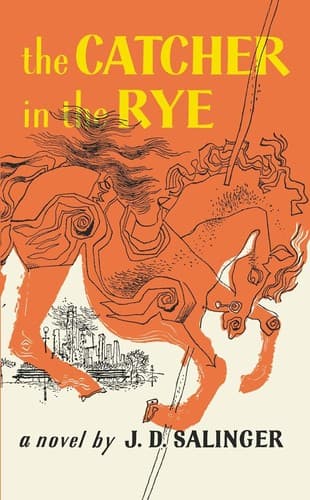
- The Catcher in the Rye
J.D. Salinger
3.8 (2.7M) average on GoodreadsYoung AdultBoth feature a cynical, introspective teenage narrator grappling with adolescence and societal phoniness.
- Bridget Jones's Diary
Helen Fielding
3.8 (881k) average on GoodreadsRomanceBoth are diary-format novels with a humorous, self-deprecating protagonist navigating life's absurdities, though Adrian is a teenager.
- Harry Potter and the Sorcerer's Stone
J.K. Rowling
4.5 (7M) average on GoodreadsFantasyRescued from a miserable life under the stairs, an orphaned boy discovers he's a wizard destined for a magical school, where he uncovers a dangerous secret tied to the dark wizard who murdered his parents.
- The Hobbit, or There and Back Again
J.R.R. Tolkien
4.3 (2.9M) average on GoodreadsFantasyA comfort-loving hobbit named Bilbo Baggins is whisked away by a mischievous wizard and a band of dwarves on an unexpected journey to reclaim stolen treasure from a fearsome dragon, discovering courage and a magical ring along the way.
- Harry Potter and the Goblet of Fire
J.K. Rowling
4.6 (2.6M) average on GoodreadsFantasyA bewildered Harry Potter, underage and thrust into a deadly Triwizard Tournament, must brave dragons, mermaids, and a resurgent dark magic to survive a year that will forever alter the wizarding world.
- Harry Potter and the Order of the Phoenix
J.K. Rowling
4.5 (2.5M) average on GoodreadsFantasyIn a year of oppressive secrets and the threat of Voldemort, Harry Potter and Dumbledore's Army secretly train for war, shown through Jim Kay and Neil Packer's dark illustrations.





Enjoyed the summary?
A summary gives you the shape of the book. The book itself has the detail, the examples and the voice.
Find The Growing Pains of Adrian Mole on AmazonAs an Amazon Associate, BookBrief earns from qualifying purchases. How we're funded