
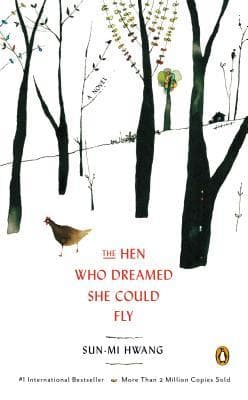
Synopsis
Covers the whole plot, including the ending.
- Difficulty
- Easy
- Pacing
- Moderate
- Mood
- Thought-provoking, Melancholy, Hopeful, Poignant
- Read it if
- You enjoy allegorical fables about freedom, motherhood, and self-sacrifice, with a touch of melancholy and profound emotional depth.
- Skip it if
- You prefer lighthearted animal stories without themes of death, struggle, and existential reflection.
The Hen Who Dreamed She Could Fly Plot Summary
Covers the whole plot, including the ending.
Life in the Coop
Sprout, a white Leghorn hen, lives a boring life in a crowded coop, laying an egg every day only for it to be taken. She wants to hatch her own egg and see the outside world she glimpses through the barn doors. Her attempts to escape are ignored by other hens and met with strictness from the farmer. She dreams of the freedom of the yard animals and the mystery of the wild. One day, she stops laying eggs, which labels her as 'spent' and leads to her being thrown into a pit, where other 'useless' animals are left to die.
Escape and New Beginnings
Left for dead in the pit, Sprout is saved by Straggler, a mallard duck who is also an outcast, having lost his mate and chicks to a weasel. Straggler helps her out of the pit, and she starts a new life in the barnyard. She is at first overwhelmed by the size and newness of it all but quickly adjusts. She watches the other animals, especially the proud Rooster and his group, and learns about the dangers of the wild. Her main wish remains to hatch an egg, a dream that seems impossible without a mate or an egg.
The Adopted Egg
One day, Sprout finds a single, abandoned duck egg. Even though it is not her species, she decides to hatch it. She works to keep the egg warm and safe, even through bad weather. She faces doubt and teasing from other barnyard animals, especially the Rooster, who thinks a hen cannot hatch a duck egg. Straggler, however, offers quiet support and protection from a distance, watching over her as she tirelessly sits on the egg, determined to prove them wrong and fulfill her strong motherly desire.
Birth of a Duckling
After a long time of waiting, the egg hatches, revealing a small, green-headed duckling. Sprout is very happy, naming him Greentop. Her happiness is mixed with the knowledge that Greentop is a duck, not a chick, and therefore different from her. The other animals are surprised by her success but keep pointing out the differences between mother and son. Sprout, however, loves Greentop completely and is determined to raise him, despite the future challenges due to their different natures.
Raising a Duckling
Raising Greentop is hard for Sprout. As a hen, she cannot swim or fly, which are important skills for a duck. Greentop naturally goes toward water and other ducks, making Sprout anxious and afraid for his safety. She tries her best to teach him, even trying to swim herself, but quickly sees her limits. Straggler, Greentop's biological father, continues to watch over them, sometimes stepping in to protect Greentop from dangers or guide him, creating a complex situation as Sprout handles her role as a mother to a different species.
Greentop's Independence
As Greentop grows, his duck instincts get stronger, and he spends more time with other ducks, learning to swim and dive. He eventually joins the wild ducks, flying with them and living his true nature. Sprout, though proud, feels a growing loneliness and the unavoidable separation. She understands that to truly love him, she must let him be free, even if it hurts her. This time is marked by Greentop's increasing distance and Sprout's quiet acceptance of his path.
Life in the Wild
After Greentop fully joins the wild ducks, Sprout decides to leave the barnyard's safety and live in the wild, near the pond where Greentop often visits. She builds her own nest and learns to find food alone. This new life is full of danger, especially from the weasel, which is a constant threat. Sprout bravely faces these challenges, embracing her new freedom and showing her strength. She sometimes sees Greentop flying overhead, offering silent comfort and a connection to her son.
The Weasel's Threat
The weasel is a constant and deadly predator throughout the story. It killed Straggler's mate and chicks, and it constantly hunts for food in the wild. Sprout meets the weasel many times, barely escaping. The weasel shows the harsh realities and dangers of life outside the protected barnyard, forcing Sprout to become brave and clever to survive. Its presence highlights how fragile life is and the strength needed to protect those she cares about.
Straggler's Sacrifice
During a dangerous meeting with the weasel, Straggler, who has been a quiet protector of Sprout and Greentop, steps in. He bravely faces the weasel, drawing its attention away from Greentop. In a heroic act of sacrifice, Straggler lets himself be caught by the weasel, making sure Greentop escapes and survives. His death deeply affects Sprout, who recognizes the deep love and protection he gave, solidifying his role as Greentop's biological father and a true friend to her.
Greentop Returns
Years pass, and Sprout continues her independent life in the wild. Greentop, now a big adult mallard, returns to the pond with his own mate and ducklings. Sprout watches him from a distance, filled with pride and happiness. She sees her dream fulfilled in his thriving life, understanding that her purpose was to raise him to be free and strong. Her own journey, from a confined layer to a free spirit and a loving mother, ends with this peaceful view of her son's happiness.
The Final Act
Old and weak, Sprout meets the weasel one more time, now with the weasel's hungry babies present. Seeing the cycle of life and death, and seeing the weasel's desperate need to feed its young, Sprout makes a choice. Instead of running, she offers herself to the weasel, becoming its last meal. This final act of sacrifice, like Straggler's, ensures the weasel's babies survive, completing her journey of motherhood and freedom by willingly becoming part of nature.
The Hen Who Dreamed She Could Fly Characters
Sprout (Ip-sak)
Protagonist
A brave hen who yearns for freedom and motherhood.
Sprout is a white Leghorn hen who initially lives a confined life in a coop, laying eggs daily. She is characterized by her strong desire for freedom, her longing to hatch an egg, and her deep maternal instincts. Despite facing skepticism, ridicule, and significant danger, she demonstrates remarkable resilience, courage, and adaptability. She is an idealist who eventually becomes a pragmatic survivor, always driven by love and a desire for self-determination.
Relationships: Straggler (Protector and eventually biological father of Greentop; a silent, supportive friend.); Greentop (Adopted son, a duckling she raises and loves unconditionally.); Rooster (Antagonist, represents the restrictive traditions and skepticism of the barnyard.)
Straggler (Nakh-dong)
Supporting
A solitary mallard duck who protects Sprout and Greentop.
Straggler is a mallard duck, an outcast among the barnyard animals after losing his mate and chicks to the weasel. He is stoic, quiet, and observant, often keeping a watchful distance. Despite his reserved nature, he exhibits profound loyalty and courage, acting as a silent guardian for Sprout and Greentop. He represents the harsh realities of the wild but also the deep, unspoken bonds of protection and sacrifice.
Relationships: Sprout (Rescuer and friend; a fellow outcast and co-parent (biologically).); Greentop (Biological father and protector.)
Greentop (Chorok)
Supporting
Sprout's adopted duckling who grows into a strong, independent mallard.
Greentop is the duckling Sprout hatches from an abandoned egg. He is curious, energetic, and embodies the natural instincts of a duck, constantly drawn to water and flight. Despite being raised by a hen, he develops into a strong, independent mallard, eventually joining his own kind in the wild. He represents the fulfillment of Sprout's maternal dream and the theme of embracing one's true nature.
Relationships: Sprout (Adopted mother, who loves and raises him unconditionally.); Straggler (Biological father and protector.)
The Weasel
Antagonist
A relentless predator representing the harshness and inevitability of nature.
The weasel is a recurring antagonist, a cunning and persistent predator that preys on the barnyard and wild animals. It is responsible for the deaths of Straggler's family and poses a constant threat to Sprout and Greentop. The weasel embodies the brutal, amoral aspects of the natural world – a force driven by instinct and hunger, rather than malice. It serves as a constant reminder of the dangers of freedom and the cycle of life and death.
Relationships: Sprout (Prey and ultimate sacrifice.); Straggler (Prey and his killer.)
The Rooster
Supporting
The proud and traditional leader of the barnyard, critical of Sprout.
The Rooster is the proud and authoritative leader of the barnyard hens. He is characterized by his adherence to tradition, his vanity, and his skepticism towards anything outside the established order. He dismisses Sprout's dreams and criticizes her unconventional choices, representing the narrow-mindedness and judgment of society. Despite his flaws, he maintains order within his domain, albeit through a rigid perspective.
Relationships: Sprout (Critic and detractor.)
The Farmer
Mentioned
The unseen owner of the barnyard, representing human control.
The farmer is largely an unseen presence, representing the human control over the animals' lives. He dictates their purpose (laying eggs, being discarded) and their environment. He is the ultimate authority in the coop, and his actions, though not malicious, are indifferent to the animals' individual desires. He embodies the external forces that initially restrict Sprout's freedom.
Relationships: Sprout (Owner who discards her.)
The Hen Who Dreamed She Could Fly Themes
Freedom and Individuality
The main theme is Sprout's constant search for freedom from the coop and the expectations placed on her. She rejects the set life of an egg-laying hen to make her own way. This theme is clear from her first wish to escape the coop, her choice to live in the wild, and her letting Greentop live as a duck. It shows how important it is to live genuinely, even if it means being an outsider.
“A hen who doesn't lay eggs is not a hen. I am a hen, but I am not just a hen. I am me.”
Motherhood and Sacrifice
Sprout's journey is deeply tied to her wish for motherhood and the sacrifices she makes for her adopted son, Greentop. She goes against species barriers to hatch and raise a duckling, enduring ridicule and danger. Her love for Greentop leads her to let him be free, even when it causes her pain. Her final act of sacrifice for the weasel's babies extends her motherly instinct beyond her immediate family, showing the deep and selfless nature of a mother's love.
“Living means to make your own life. And to live, you have to have courage. To be truly free, you have to be willing to die.”
The Cycle of Life and Death
The story clearly shows the natural cycle of life and death, especially through the constant threat of the weasel and the eventual deaths of several characters. From the discarded hens in the pit to Straggler's sacrifice and Sprout's final act, death is shown not as a tragedy, but as a necessary part of existence. Sprout's final decision to give herself to the weasel, ensuring the survival of its babies, sums up her acceptance of this natural order.
“To live outside the coop, you must live with the threat of death. That is the price of freedom.”
Acceptance and Belonging
Sprout, Straggler, and Greentop are all outsiders in different ways, trying to find acceptance and a place where they belong. Sprout is shunned for not laying eggs and for raising a duckling. Straggler is alone because of his past loss. Greentop, a duckling raised by a hen, at first struggles with his identity. The theme explores how belonging can be found not just by fitting in, but also by creating one's own family and community, and by accepting who one truly is, even if it means being different.
“Even if you're different, if you're with someone you love, you belong.”
Plot Devices & Literary Techniques
Anthropomorphism
Animals exhibit human-like thoughts, emotions, and complex motivations.
The novel uses anthropomorphism to allow readers to empathize with the animal characters and explore complex themes. Sprout's inner thoughts, her dreams of freedom, her maternal longing, and her philosophical reflections are all deeply human in nature. This device makes the story accessible and relatable, enabling the fable to convey universal messages about individuality, sacrifice, and the meaning of life through the experiences of barnyard and wild animals.
Symbolism of the Coop vs. The Wild
The coop represents confinement and tradition, while the wild signifies freedom and danger.
The coop symbolizes a life of predetermined purpose, conformity, and lack of individuality, where hens are valued only for their egg-laying ability. The wild, in contrast, represents freedom, self-determination, and the natural order, but also inherent dangers and the struggle for survival. Sprout's journey from the coop to the wild physically embodies her quest for personal liberation and a life lived on her own terms, highlighting the trade-offs between security and freedom.
The Weasel as a Force of Nature
The weasel embodies the amoral, inescapable realities of the food chain and survival.
The weasel is not portrayed as inherently evil, but rather as a necessary part of the ecosystem, driven by hunger and the need to feed its young. It serves as a constant antagonist, representing the harsh, unyielding aspects of nature and the inevitability of death in the wild. This device grounds the story in realism, preventing it from becoming overly sentimental and emphasizing that freedom comes with inherent risks and the acceptance of life's brutal cycles.
The Abandoned Egg
A catalyst for Sprout's transformation and a symbol of her maternal destiny.
The discovery of the abandoned duck egg is the pivotal moment that allows Sprout to fulfill her deepest desire for motherhood. It is a symbol of hope, new life, and unconventional family. By adopting an egg of a different species, Sprout transcends societal expectations and biological limitations, solidifying her unique path and challenging the traditional definitions of what it means to be a mother. The egg represents the potential for life and love to flourish against all odds.
The Hen Who Dreamed She Could Fly Quotes
“Living things are all the same in the end. They all want to live, and they all want to be happy.”
“Why do you keep laying eggs if you don't even hatch them yourself?”
“The world was much bigger and more beautiful than she had ever imagined.”
“A hen's dream is to hatch her own chick, raise it, and watch it fly away.”
“If you don't try, you'll never know if you can do it.”
“The strong eat the weak, that's the law of nature.”
“To hatch an egg and raise a chick, that's a hen's ultimate dream.”
“Some dreams are not meant to come true, but that doesn't mean they aren't worth having.”
“Just because you're different doesn't mean you're wrong.”
“Motherhood is not about biology; it's about love and devotion.”
“The greatest joy is to watch your child fly away, even if it means letting go.”
“Freedom is not just about escaping a cage; it's about living your own life.”
“A mother’s love is boundless, even across species.”
“Life is a cycle of birth and death, and every creature plays its part.”
Quiz
10 questions on the plot and the characters. Each answer comes with a short explanation.
Question 1
What is Sprout's primary desire that drives her to escape the chicken coop?
- To become the leader of the barnyard animals
- To fly high in the sky like the wild birds
- To hatch an egg of her own and raise a chick
- To lay more eggs than any other hen in the coop
Show answer
C. To hatch an egg of her own and raise a chick Sprout's deepest longing is to experience motherhood by hatching an egg and raising her own chick, a stark contrast to her life of laying eggs that are immediately taken away.
Question 2
What kind of animal is Straggler, the character who befriends Sprout?
- A rooster
- A duck
- A dog
- A weasel
Show answer
B. A duck Straggler is a white duck who becomes Sprout's loyal companion and protector, despite their different species.
Question 3
What is the ultimate fate of the egg Sprout eventually hatches?
- It is eaten by the farmer
- It hatches into a chick that looks just like Sprout
- It hatches into a duckling
- It never hatches and remains infertile
Show answer
C. It hatches into a duckling Sprout hatches a duckling, not a chick, which she lovingly raises as her own, highlighting the theme of unconventional motherhood.
Question 4
Why does Sprout initially struggle to find acceptance among the wild animals in the yard?
- Because she is too aggressive and tries to dominate them
- Because she is a domestic hen and looks different from them
- Because she cannot fly like the other birds
- Because she tries to lay eggs in their nests
Show answer
B. Because she is a domestic hen and looks different from them Sprout's appearance as a domestic hen makes her an outsider among the wild animals, who view her with suspicion and often exclude her.
Question 5
What significant sacrifice does Straggler make for Sprout and her duckling?
- He teaches Sprout how to fly
- He finds a safe nest for them in the wilderness
- He battles the weasel to protect them, ultimately losing his life
- He provides them with a constant supply of food
Show answer
C. He battles the weasel to protect them, ultimately losing his life Straggler sacrifices his life fighting the weasel, the primary predator, to protect Sprout and her young duckling, demonstrating his loyalty and love.
Question 6
What theme is most strongly represented by Sprout's continuous longing for freedom and a different life?
- The importance of community and belonging
- The pursuit of individuality and self-determination
- The dangers of the wild versus the safety of domestication
- The natural order of predator and prey
Show answer
B. The pursuit of individuality and self-determination Sprout's journey is an 'anthem for freedom, individuality and motherhood,' as she rebels against the predetermined life of a laying hen to forge her own path.
Question 7
What is the name Sprout gives to her hatched duckling?
- Chirp
- Leafie
- Greentop
- Feather
Show answer
C. Greentop Sprout names her duckling Greentop, a detail that emphasizes her unique connection and vision for her child.
Question 8
How does Sprout ultimately fulfill her desire to 'fly' in a metaphorical sense, despite being a hen?
- She learns to glide short distances from high places.
- She experiences true freedom and purpose through motherhood and self-sacrifice.
- She dreams vividly of flying every night.
- She is eventually carried by a strong wind to a new location.
Show answer
B. She experiences true freedom and purpose through motherhood and self-sacrifice. While Sprout cannot physically fly, her 'dream to fly' symbolizes her longing for freedom and a life beyond her confined existence. She achieves this through her journey, her unconventional motherhood, and ultimately, her self-sacrificing act at the end of her life, which grants her a profound sense of purpose and liberation.
Question 9
What is the final, poignant act Sprout performs that brings her story to a close?
- She lays one last egg and watches it hatch.
- She joins a flock of wild birds and flies away with them.
- She willingly offers herself to the weasel to save her grown duckling.
- She returns to the barnyard to live out her final days in peace.
Show answer
C. She willingly offers herself to the weasel to save her grown duckling. In a final act of profound maternal love and self-sacrifice, Sprout gives herself to the weasel to ensure her grown duckling, Greentop, can escape and live freely.
Question 10
The book is described as a 'fable for our times.' What universal message does it convey through its animal characters and their struggles?
- The importance of adhering to societal expectations and traditions.
- The inherent danger of nature compared to human-controlled environments.
- The courage required to pursue one's dreams, embrace individuality, and the profound nature of love and sacrifice.
- That only those born with the ability to fly can achieve true freedom.
Show answer
C. The courage required to pursue one's dreams, embrace individuality, and the profound nature of love and sacrifice. The story, though featuring animals, explores universal themes of freedom, individuality, the challenges of breaking tradition, and the powerful, often sacrificial, nature of maternal love.
The Hen Who Dreamed She Could Fly FAQ
What is Sprout's primary goal at the beginning of the story, and how does she attempt to achieve it?
Sprout's initial goal is to escape the confines of the chicken coop and experience freedom, specifically to hatch an egg of her own. She achieves this by refusing to eat, growing weak enough to be deemed unproductive, and then feigning death to be thrown out of the coop, thus gaining her initial liberation.
Who is Straggler, and what is his significance to Sprout's journey?
Straggler is a wild mallard duck who befriends Sprout after her escape. He becomes her protector in the wild, teaching her about survival and forming an unlikely bond with her. He is also the father of Greenie, the egg Sprout eventually hatches, making him crucial to her dream of motherhood.
Why does Sprout leave the barnyard despite the dangers of the wild?
Sprout leaves the barnyard because she feels her life is meaningless, endlessly laying eggs only to have them taken away. She yearns for individuality, freedom, and the natural experience of hatching and raising her own chick, a dream impossible within the confines of the coop.
What kind of challenges does Sprout face in the wild, and who are her main adversaries?
In the wild, Sprout faces constant dangers like predators, harsh weather, and hunger. Her primary adversary is the One-Eyed Weasel, a relentless hunter who poses a constant threat to her and her adopted son, Greenie, throughout their lives.
How does the novel conclude for Sprout, and what is the ultimate message of her ending?
Sprout ultimately sacrifices herself to save Greenie from the One-Eyed Weasel, fulfilling her role as a protective mother. Her ending emphasizes the themes of selfless love, the cycle of life and death, and the ultimate freedom found in fulfilling one's purpose, even if it means a tragic end.
What is the significance of the name 'Sprout' in relation to her character arc?
The name 'Sprout' symbolizes growth, new beginnings, and emergence, perfectly reflecting her journey from a confined, unproductive hen to a free, nurturing mother. She 'sprouts' from her old life, 'sprouts' her own dream, and helps 'sprout' new life in Greenie.
Are there any subtle indications that Greenie is not a chicken even before he hatches?
Yes, Sprout notices the egg is larger and a different shade than her usual eggs, and she also observes that Straggler, the wild duck, often visits her nest. These details subtly foreshadow Greenie's true identity as a duckling, hinting at the mixed-species family.
What role does the 'Red Comb' rooster play in the barnyard hierarchy and Sprout's early life?
The Red Comb rooster represents the patriarchal, traditional authority within the barnyard, dictating the hens' lives and expectations. He initially dismisses Sprout's aspirations and embodies the very conformity she seeks to escape, highlighting her rebellion against established norms.
How does the author use the changing seasons to reflect Sprout's emotional and physical journey?
The changing seasons parallel Sprout's journey: spring brings hope and new life (Greenie's birth), summer represents growth and challenges, autumn signifies maturity and the impending departure of Greenie, and winter brings hardship, sacrifice, and the culmination of her life's purpose.
How does Sprout's initial envy of the free-roaming animals evolve into a deeper understanding of freedom?
Initially, Sprout associates freedom with simply being outside the coop. However, through her experiences with Straggler and Greenie, she learns that true freedom isn't just about physical space, but about living authentically, making choices, and fulfilling one's purpose, even amidst danger and sacrifice.
Analyze the psychological motivations behind the One-Eyed Weasel's relentless pursuit of Sprout and Greenie.
The One-Eyed Weasel is driven by pure instinct and survival, representing the harsh, amoral reality of the food chain. Its singular focus on hunting highlights the primal struggle for existence in the wild, devoid of the complex social dynamics found in the barnyard or Sprout's emotional depth.
How does Sprout's relationship with Straggler demonstrate a shift in her understanding of love and companionship?
Sprout's relationship with Straggler moves beyond the barnyard's superficial interactions, showing a profound, unspoken bond based on mutual respect, protection, and shared purpose. It's a love that transcends species and traditional expectations, built on loyalty and shared parenthood rather than social status.
In what ways does Sprout exhibit resilience and courage, despite her inherent physical limitations as a hen?
Sprout demonstrates resilience by enduring hunger, cold, and constant threat, adapting to a life she was not bred for. Her courage is evident in her repeated confrontations with the Weasel and her unwavering commitment to protecting Greenie, pushing past her natural fears to fulfill her maternal instincts.
Is Sprout's ultimate sacrifice a victory or a tragedy?
Sprout's ultimate sacrifice can be interpreted as both a tragedy and a profound victory. It is tragic because she loses her life, but it is a victory because she fulfills her deepest dream of motherhood, ensures her son's survival, and dies on her own terms, achieving true freedom and purpose.
How does the book challenge traditional notions of 'family' and 'motherhood' through Sprout's story?
The book challenges traditional notions by depicting Sprout, a hen, raising a duckling, Greenie, who is not biologically hers in the conventional sense. It emphasizes that motherhood is defined by love, nurturing, and sacrifice, not just biological ties or species, expanding the definition of family.
Does the ending suggest a cyclical nature of life, and what does this imply for Greenie's future?
Yes, the ending strongly suggests a cyclical nature of life, where one generation gives way to the next. Sprout's sacrifice allows Greenie to live and eventually lead his own flock, implying he will carry forward the lessons of courage and freedom, continuing the cycle of life in the wild.
To what extent is 'The Hen Who Dreamed She Could Fly' a critique of societal expectations and conformity?
The book is a significant critique of societal expectations and conformity, especially through Sprout's rebellion against the barnyard's rigid rules and the hens' passive acceptance of their fate. It champions individuality and the pursuit of one's dreams over succumbing to predetermined roles.
Compare Sprout's initial desire to 'fly' with her eventual understanding of freedom.
Initially, Sprout's 'dream to fly' is a metaphor for escaping confinement and achieving a perceived physical freedom. Eventually, her understanding of freedom evolves to encompass self-determination, purpose, and the ability to live authentically and make selfless choices, even if it means not literally flying.
Similar books
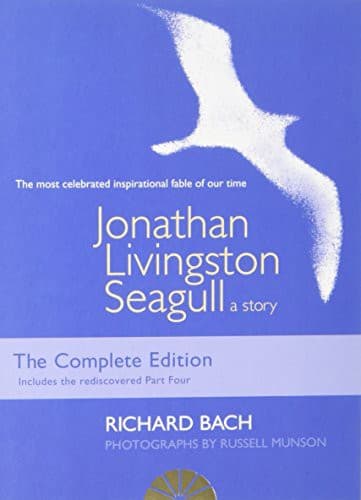
- Jonathan Livingston Seagull
Richard Bach
3.8 (202k) average on GoodreadsFantasyFocuses on an animal's quest for individuality, freedom, and transcending societal norms.
- Animal Farm
George Orwell
4.0 (2.7M) average on GoodreadsPoliticsUses farm animals to explore societal structures, rebellion, and the nature of freedom, though with a much darker political allegory.
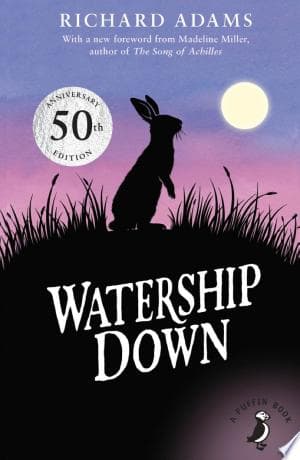
- Watership Down
Richard Adams
4.1 (434k) average on GoodreadsFantasyBoth explore themes of survival, community, and the search for a better life. 'Watership Down' has a broader scope, larger cast, and more intricate political and social dynamics among the rabbits. Hwang's book offers a more intimate and personal exploration, tightly focused on Sprout's internal journey and direct relationships, making it a more focused existential meditation.
- Harry Potter and the Sorcerer's Stone
J.K. Rowling
4.5 (7M) average on GoodreadsFantasyRescued from a miserable life under the stairs, an orphaned boy discovers he's a wizard destined for a magical school, where he uncovers a dangerous secret tied to the dark wizard who murdered his parents.
- The Hunger Games
Suzanne Collins
4.3 (6.4M) average on GoodreadsFantasyIn a future where children fight to the death on live television, Katniss Everdeen volunteers for the arena, turning a death sentence into a fight for survival and a spark of rebellion.
- 1984
George Orwell
4.2 (3.1M) average on GoodreadsPoliticsIn a future where surveillance and thought control are absolute, a man's search for truth clashes with the Party, showing that hope can be a form of rebellion.




Enjoyed the summary?
A summary gives you the shape of the book. The book itself has the detail, the examples and the voice.
Find The Hen Who Dreamed She Could Fly on AmazonAs an Amazon Associate, BookBrief earns from qualifying purchases. How we're funded