
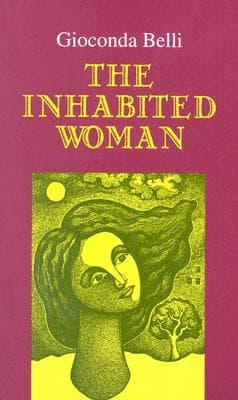
Synopsis
Covers the whole plot, including the ending.
- Difficulty
- Medium
- Pacing
- Variable
- Mood
- Passionate, Revolutionary, Spiritual, Poetic, Intense
- Read it if
- You enjoy historical fiction with a magical realism element, focused on political revolution, gender roles, and the intertwining of past and present.
- Skip it if
- You prefer fast-paced thrillers or are uncomfortable with magical realism, political violence, or explicit discussions of oppression.
The Inhabited Woman Plot Summary
Covers the whole plot, including the ending.
Lavinia's Return and Encounter with Felipe
Lavinia Alarcón, a young architect educated in Europe, returns to her fictional Central American homeland, Faguas, which General Somoza rules. She gets a job at her uncle's architecture firm, where she meets Felipe Iturbe, a charismatic and politically active lawyer. At first, Lavinia cares more about her career and personal freedom, but Felipe's talks about the country's injustices and the need for revolution start to interest her. She is drawn to his idealism, which differs from her own somewhat detached life. Their relationship grows quickly, mixing personal attraction with shared interest in politics.
The Orange Tree and Itzá's Spirit
Lavinia moves into a new apartment with an old orange tree in its courtyard. She doesn't know this tree is a sacred site, a 'mother tree' where the spirit of Itzá, an indigenous woman warrior from centuries past, lives. Itzá's spirit, having seen her people's struggles, has been waiting for someone to continue her fight. Lavinia starts to feel strange sensations and have vivid dreams, feeling a connection to the tree and a growing unrest within herself. These subtle changes mark the beginning of Itzá's spirit merging with Lavinia's mind, a process that will change her future.
Joining the Revolutionary Movement
As Lavinia and Felipe's relationship deepens, Felipe tells her he is involved with an underground revolutionary movement, the Frente Sandinista de Liberación Nacional (FSLN). He carefully invites Lavinia to join, seeing her intelligence and growing political awareness. Despite her initial fears, Lavinia agrees, driven by her love for Felipe and a growing sense of responsibility to her country. Her first tasks are small, like communication and safe houses, but they show her the dangers of secret operations. This commitment is a big turning point, pulling her from her sheltered life into the heart of the resistance.
Itzá's Memories and Influence
As Lavinia gets more involved in the revolution, Itzá's spirit fully integrates with her. Lavinia starts to experience vivid memories from Itzá's life: her love for her warrior husband, Yarince; the brutal Spanish conquest; and her fight against the invaders. These ancestral memories feel like real experiences, giving Lavinia Itzá's courage, resilience, and commitment to freedom. She begins to see the current struggles against the dictatorship through Itzá's historical fight against oppression, strengthening her resolve and connecting her personal struggle to a larger, timeless battle for justice.
Escalation of Revolutionary Activities
Lavinia's involvement in the FSLN increases. She moves from simple messenger duties to more critical and dangerous assignments, including transporting weapons and helping with planning. Her architectural skills prove useful in understanding infrastructure for operations. The risks are huge, and she sees the harsh realities of the struggle, including the arrests and deaths of comrades. Despite the fear, Itzá's warrior spirit gives Lavinia courage, letting her face these challenges with a determination she never knew she had. Her transformation from a sheltered architect to a committed revolutionary is now almost complete.
Personal Sacrifices and Loss
The revolution demands personal sacrifices from Lavinia. She endures long separations from Felipe, and their relationship is constantly strained by the pressures of their secret work. The hardest blow is losing close comrades, whose deaths show the brutal cost of their fight. Lavinia deals with grief, fear, and moments of doubt, but Itzá's spirit reminds her of the ongoing struggle and the need for perseverance. These experiences harden her resolve, changing her from an idealistic participant into a seasoned revolutionary who understands the real price of freedom.
The Dictatorship's Brutality
The Somoza dictatorship increases its repressive actions against the growing revolutionary movement. State security forces carry out widespread arrests, torture, and killings. Lavinia and her comrades are constantly watched, and their safe houses are often raided. The regime's brutality is shown through vivid accounts of its victims, emphasizing the urgent need for the revolution. This increased oppression further strengthens Lavinia's commitment, as she sees firsthand the atrocities committed by the government, reinforcing her belief that armed struggle is the only path to liberation.
Strategic Operations and Confrontations
Lavinia takes part in several key operations, including a daring bank robbery to fund the movement and a complex plan to rescue political prisoners. These actions put her in direct confrontation with the regime's forces, testing her courage and strategic thinking. Itzá's wisdom and warrior instincts guide Lavinia through these dangerous moments, helping her act decisively under extreme pressure. she learns to handle weapons, navigate dangerous urban environments, and make life-or-death decisions, fully embracing her role as a combatant in the fight for Faguas's freedom.
Love and Ideology in Conflict
Lavinia and Felipe's love story happens alongside the revolution, constantly challenged by their shared commitment to the cause. Their intimate moments are brief and precious, often overshadowed by the dangers they face and the sacrifices they must make. While their love strengthens their resolve, it also creates vulnerabilities. They deal with the tension between their personal desires and their revolutionary duties, understanding that the revolution demands their ultimate loyalty, even at the cost of their individual happiness. Their relationship becomes a symbol of the personal sacrifices inherent in the struggle for collective liberation.
The Final Offensive and Its Aftermath
The story builds toward the final offensive, a period of intense fighting as the FSLN makes its decisive push against the Somoza regime. Lavinia is fully involved in the urban guerrilla warfare, fighting with her comrades. The battle is fierce, marked by both victories and devastating losses. While the novel doesn't explicitly detail the regime's fall, it ends with a sense of the revolution's overwhelming momentum and the changes it has brought about in Lavinia. She emerges from the struggle forever changed, a survivor and a warrior, carrying Itzá's legacy and the scars of her own fight.
Principal Figures
Lavinia Alarcón
Protagonist
An architect who transforms into a revolutionary through spiritual possession
Lavinia is initially a sophisticated, educated architect, returning to Faguas with a focus on her career and personal freedom. She is sheltered and somewhat naive about the harsh political realities of her country. Her encounter with Felipe and the subsequent spiritual possession by Itzá gradually awakens her to the injustices around her. She is intelligent, observant, and possesses an underlying strength that emerges under pressure. She grapples with fear, doubt, and the immense personal sacrifices demanded by the revolution, but ultimately embraces her role as a fighter for justice.
Relationships: Felipe Iturbe (Lover and fellow revolutionary, her political awakening); Itzá (Spiritual inhabitant and guide, ancestral connection)
Itzá
Supporting/Spiritual Protagonist
An ancient indigenous woman warrior whose spirit inhabits Lavinia
Itzá is the spirit of a fierce indigenous woman warrior from pre-colonial times, who fought against the Spanish conquistadors. Her spirit has lingered, waiting for a suitable vessel to continue her eternal struggle against oppression. She embodies ancestral memory, resilience, and an unwavering commitment to her people's freedom and dignity. She is wise, courageous, and provides Lavinia with the strength, resolve, and historical perspective needed to confront the modern dictatorship. Her memories and emotions intertwine with Lavinia's, blurring the lines between their identities.
Relationships: Lavinia Alarcón (Spiritual host, vessel for her continued struggle); Yarince (Her beloved warrior husband from the past)
Felipe Iturbe
Supporting/Love Interest
A charismatic lawyer and committed revolutionary who inspires Lavinia
Felipe is a passionate and idealistic lawyer deeply involved in the revolutionary movement. He is charismatic, intelligent, and possesses a strong moral compass that drives his commitment to social justice. He serves as Lavinia's initial guide into the world of revolutionary politics, inspiring her with his convictions and drawing her into the cause through their mutual attraction. He is a dedicated leader within the FSLN, willing to make immense personal sacrifices for the liberation of Faguas, and he provides both love and ideological grounding for Lavinia.
Relationships: Lavinia Alarcón (Lover and fellow revolutionary); Other FSLN members (Comrade and leader)
General Somoza (Implicit)
Antagonist
The oppressive dictator of Faguas
Though rarely seen directly, General Somoza represents the brutal, corrupt, and dictatorial regime that the revolutionaries are fighting against. He symbolizes systemic oppression, human rights abuses, and the suppression of democratic freedoms. His forces are responsible for widespread arrests, torture, and killings, embodying the antagonist force that the FSLN seeks to overthrow. His presence is felt through the pervasive fear and suffering he inflicts upon the people of Faguas.
Yarince
Mentioned/Supporting
Itzá's warrior husband from pre-colonial times
Yarince is Itzá's beloved husband and a fellow warrior from the time of the Spanish conquest. He appears in Itzá's memories and dreams, representing her past love and the original struggle for indigenous freedom. His courage and devotion inspire Itzá, and through her, Lavinia. He symbolizes the continuity of resistance and the enduring power of love even in the face of overwhelming odds. His presence reinforces the historical depth of the conflict Lavinia is now part of.
Relationships: Itzá (Beloved husband and warrior comrade)
Ricardo
Supporting
A dedicated and pragmatic FSLN comrade
Ricardo is a trusted member of the revolutionary cell, often working closely with Felipe and Lavinia. He is pragmatic, resourceful, and deeply committed to the cause. He provides practical support, assists with logistics, and offers a steady presence amidst the chaos and danger of clandestine operations. His character highlights the collective effort required for the revolution, and his interactions with Lavinia often ground her in the practical realities of their struggle.
Relationships: Lavinia Alarcón (Comrade); Felipe Iturbe (Comrade)
Uncle Marcos
Supporting
Lavinia's uncle and employer, representing the established order
Uncle Marcos is Lavinia's employer and a member of the established, though not necessarily corrupt, upper-middle class of Faguas. He is somewhat detached from the political turmoil, representing the segment of society that benefits from the existing system or chooses to ignore its injustices. He cares for Lavinia but is unaware of her revolutionary activities. His architectural firm provides Lavinia with a cover for her clandestine work, and he symbolizes the 'normal' life she gradually leaves behind.
Relationships: Lavinia Alarcón (Uncle and employer)
Themes & Insights
Revolution and Liberation
The main theme is the struggle for national liberation against an oppressive dictatorship. The novel explores the reasons, sacrifices, and moral complexities of revolutionary movements. It highlights the desire for freedom and justice, and the personal change individuals experience when they commit to such a cause. Lavinia's journey from an architect to a dedicated combatant shows the impact of revolutionary ideals, connecting her modern struggle to Itzá's ancient fight against colonialism. The story emphasizes that true liberation requires active participation and great personal cost.
“To be free, one must fight. To be free, one must sacrifice everything.”
Feminism and Female Empowerment
The novel explores female empowerment and the breaking of traditional gender roles. Lavinia, as a modern, educated woman, already challenges societal expectations, but Itzá's spirit increases this. Itzá, a pre-colonial warrior, embodies fierce female strength, inspiring Lavinia to take on active, dangerous roles in the revolution, roles traditionally for men. The book shows women not just as supporters, but as active participants and leaders in the fight for freedom, showing their courage, intelligence, and leadership in both love and war.
“A woman's strength is not just in giving life, but in defending it with equal passion.”
Spiritual and Ancestral Connection
A core theme is the spiritual and ancestral connection that crosses time. Itzá's spirit inhabiting Lavinia links the present-day revolutionary struggle to the historical resistance of indigenous peoples against colonial oppression. This connection suggests that the fight for justice is an ongoing battle, with past struggles informing and empowering present ones. It highlights the idea that history is not just events but a living force that can guide individuals, providing strength and purpose from past generations. The orange tree is a powerful symbol of this lasting link.
“The past does not die; it sleeps, waiting to awaken in those who are ready to hear its call.”
Love and Sacrifice
The novel examines the relationship between love and sacrifice in revolution. Lavinia's love for Felipe is a main reason for her involvement, but this love is constantly tested by the demands of their shared cause. It highlights how personal relationships are both strengthened and strained by commitment to a greater ideal. The story explores the pain of separation, the fear of loss, and the willingness to sacrifice personal happiness, and even life, for collective liberation. It compares individual desire with revolutionary duty, showing love as a powerful, yet often painful, motivator.
“Our love was not just ours; it belonged to the revolution, a fuel for the fire.”
Identity and Transformation
Lavinia's journey is one of identity and transformation. She begins as a detached individual, defined by her modern education and career goals. Itzá's spirit inhabiting her, combined with her direct involvement in the revolution, forces her to shed her old self and form a new identity as a warrior and activist. This change is not easy, as she deals with fear, doubt, and the blurring of her own identity with Itzá's. Ultimately, she becomes a fully realized, empowered woman who has integrated her past and present selves into a force for change.
“I was no longer just Lavinia; I was a vessel, a voice, a sword for all those who had fought before me.”
Plot Devices & Literary Techniques
Magical Realism
The blending of realistic narrative with supernatural elements, particularly the spirit possession
Magical realism is central to the novel, most notably through the spiritual possession of Lavinia by Itzá. This supernatural element is presented as a natural, albeit extraordinary, part of the reality of Faguas, rather than an anomaly. It allows for the seamless integration of historical memory and ancestral wisdom into the contemporary political struggle. The orange tree, as a sacred site, further grounds this magical element within the natural world, making the spiritual connection feel organic to the setting and the characters' experiences.
Parallel Narratives/Intertwined Histories
The simultaneous unfolding of Lavinia's modern story and Itzá's ancient memories
The novel employs parallel narratives by intertwining Lavinia's present-day revolutionary struggle with Itzá's memories of the Spanish conquest. This device highlights the cyclical nature of oppression and resistance, suggesting that the modern dictatorship is a continuation of historical injustices. By experiencing Itzá's past, Lavinia gains a deeper understanding and resolve for her present fight, making the historical context a living, breathing part of her own identity and motivation. It emphasizes the idea that history is not distant but actively shapes the present.
Symbolism of the Orange Tree
A sacred tree that acts as a conduit for ancestral spirits and a symbol of enduring life
The ancient orange tree in Lavinia's courtyard serves as a powerful symbol and a crucial plot device. It is the physical location where Itzá's spirit resides and the conduit through which she enters Lavinia. The tree represents deep roots, ancestral memory, and the enduring spirit of the land and its people. Its continuous cycle of life and fruit-bearing symbolizes hope, renewal, and the persistent possibility of growth and resistance even in harsh conditions. It grounds the magical realism in a tangible, natural element.
First-Person (Dual) Perspective
The narrative voice shifts between Lavinia's and Itzá's consciousness
While primarily told from Lavinia's perspective, the narrative effectively incorporates Itzá's consciousness, often blurring the lines between their thoughts and experiences. This dual perspective allows the reader to intimately understand both Lavinia's modern struggles and Itzá's ancient pain and wisdom. It enhances the theme of spiritual connection and transformation, as the reader witnesses the merging of two distinct identities into a single, powerful voice for justice. This technique deepens the emotional and historical resonance of the story.
The Inhabited Woman Quotes
“The revolution is also a house, a place where people can live with dignity.”
“To be a woman in this country is to be a rebel just by existing.”
“Love, like revolution, demands everything, risks everything, and transforms everything.”
“The past is not dead. It is not even past. We carry it within us, and it continues to shape our present.”
“Freedom is not given; it is taken.”
“There are wounds that never show on the body that are deeper and more hurtful than anything that bleeds.”
“Hope is a dangerous thing, but it is also the only thing that keeps us alive.”
“A country is not just its land, but its people, their dreams, and their struggles.”
“The greatest prison is a mind closed to change.”
“Sometimes, the most revolutionary act is to simply be yourself, fully and unapologetically.”
“The stories of those who came before us are not just history; they are a living current that flows through our veins.”
“To fight for justice is to believe in the possibility of a world where justice can exist.”
“Silence can be a weapon, but it can also be a cage.”
“The heart of a woman holds the world, its sorrows and its fierce, unwavering dreams.”
Quiz
10 questions on the plot and the characters. Each answer comes with a short explanation.
Question 1
What is the name of the indigenous woman warrior whose spirit inhabits Lavinia?
- Xilonem
- Itzpapalotl
- Malinche
- Cihuacoatl
Show answer
A. Xilonem The spirit that enters Lavinia is Xilonem, an ancient indigenous warrior woman who fought against the Spanish conquistadors.
Question 2
What is the primary motivation that initially draws Lavinia into the revolutionary movement?
- A desire for personal power and recognition.
- Her family's long history of political activism.
- Her love for Felipe and his involvement in the movement.
- A direct threat from the dictator's regime against her business.
Show answer
C. Her love for Felipe and his involvement in the movement. Lavinia is initially drawn into the revolutionary movement primarily through her love for Felipe and his commitment to the cause, which gradually opens her eyes to the injustices.
Question 3
What fruit tree is a significant symbol throughout the novel, particularly in relation to Xilonem's spirit?
- Mango tree
- Orange tree
- Tamarind tree
- Avocado tree
Show answer
C. Tamarind tree The tamarind tree is a recurring symbol, representing the connection to the past, the land, and where Xilonem's spirit is believed to reside or originate from.
Question 4
Which of the following best describes Lavinia's initial character before Xilonem's influence?
- A fervent activist, already committed to social change.
- Sheltered, self-involved, and focused on her personal and professional life.
- A timid and unaccomplished woman seeking purpose.
- A cynical intellectual who distrusts all political movements.
Show answer
B. Sheltered, self-involved, and focused on her personal and professional life. Lavinia is initially portrayed as sheltered, self-involved, and primarily focused on her career as an architect and her personal life, detached from the country's political turmoil.
Question 5
What is the primary theme explored through the dual narratives of Lavinia and Xilonem?
- The conflict between modern technology and ancient traditions.
- The intertwining of personal awakening with political revolution and historical memory.
- The inevitable corruption of power in all forms of government.
- The struggle for women's suffrage in Latin American countries.
Show answer
B. The intertwining of personal awakening with political revolution and historical memory. The novel deeply explores how Lavinia's personal transformation, spurred by Xilonem's spirit, mirrors and contributes to the larger political revolution, linking individual growth with historical and collective struggle.
Question 6
How does Xilonem's spirit primarily manifest its presence to Lavinia?
- Through direct, audible conversations in her mind.
- By physically possessing Lavinia's body for extended periods.
- Through intense emotional experiences, vivid dreams, and a growing inner strength.
- By appearing as a visible apparition to Lavinia and others.
Show answer
C. Through intense emotional experiences, vivid dreams, and a growing inner strength. Xilonem's presence is often felt as an inner awakening, a surge of courage, vivid dreams, and emotional shifts within Lavinia, rather than a direct, physical manifestation or constant verbal communication.
Question 7
What is the ultimate fate of Lavinia in the novel?
- She flees the country and lives a quiet life in exile.
- She becomes a prominent leader in the new government after the revolution.
- She is killed during a revolutionary act, fulfilling her commitment to the cause.
- She abandons the revolution to pursue her architectural career abroad.
Show answer
C. She is killed during a revolutionary act, fulfilling her commitment to the cause. Lavinia ultimately sacrifices her life for the revolution, dying during an act of sabotage, symbolizing her complete transformation and commitment.
Question 8
The novel uses the metaphor of 'inhabitation' to explore which complex idea?
- The psychological phenomenon of multiple personality disorder.
- The way historical memory, ancestral wisdom, and collective consciousness can empower individuals in the present.
- The literal belief in ghosts and spirits in contemporary society.
- The process of colonial powers taking over indigenous lands and cultures.
Show answer
B. The way historical memory, ancestral wisdom, and collective consciousness can empower individuals in the present. The 'inhabitation' by Xilonem's spirit is a powerful metaphor for how the past, particularly the memory of indigenous resistance and suffering, can animate and empower individuals in the present struggle for justice.
Question 9
What specific act of sabotage does Lavinia ultimately participate in that leads to her demise?
- An assassination attempt on the dictator.
- Bombing a military barracks.
- Destroying a vital bridge to disrupt government supply lines.
- Raid on a political prison to free captives.
Show answer
C. Destroying a vital bridge to disrupt government supply lines. Lavinia's final act of revolutionary commitment is to participate in the destruction of a crucial bridge, a mission that ultimately costs her life.
Question 10
Besides Felipe, who is another significant male character who supports Lavinia and the revolutionary cause, often acting as a mentor or guide?
- Her father, who secretly aids the rebels.
- Don Pedro, an older, experienced revolutionary figure.
- A foreign journalist covering the conflict.
- The leader of the dictator's secret police, who secretly sympathizes.
Show answer
B. Don Pedro, an older, experienced revolutionary figure. Don Pedro is an important figure in the revolutionary movement, serving as a mentor and guide to Lavinia and others, providing wisdom and strategic direction.
The Inhabited Woman FAQ
What is the central premise of 'The Inhabited Woman'?
'The Inhabited Woman' follows Lavinia Alarcón, a sheltered, modern architect in a fictional Latin American country, as she becomes involved in a revolutionary movement. Her transformation is catalyzed by the spirit of Itzá, an indigenous woman warrior from the 16th century, who inhabits Lavinia's body and guides her towards courage and political action against a brutal dictatorship.
Who is Itzá, and what is her role in Lavinia's journey?
Itzá is the spirit of a 16th-century indigenous woman warrior who fought against Spanish conquistadors. After centuries, her spirit enters Lavinia, sharing her memories, emotions, and ancestral courage. Itzá acts as a spiritual guide and an internal conscience, pushing Lavinia beyond her initial self-absorption and empowering her to embrace the dangerous path of revolutionary activism.
How does Lavinia initially become involved with the revolutionary movement?
Lavinia's involvement begins through her relationship with Felipe, a charismatic poet and leader within the clandestine movement. Drawn to his ideals and passion, she gradually moves from a passive observer to an active participant, initially helping with minor tasks before taking on more significant and dangerous roles, such as transporting weapons and messages.
What is the political climate like in the fictional country where the story is set?
The story is set in a fictional Latin American country under a brutal military dictatorship, characterized by widespread oppression, human rights abuses, censorship, and political violence. The regime uses torture and intimidation to maintain power, forcing the revolutionary movement to operate in deep secrecy and at great personal risk.
How does the novel explore the theme of love in the context of revolution?
The novel explores love on multiple levels: the romantic love between Lavinia and Felipe, which fuels her commitment and bravery; the love for her country and its people, inspiring her to fight for justice; and the spiritual love and connection between Lavinia and Itzá, which represents a profound sisterhood across centuries. Love becomes a powerful motivator for sacrifice and action.
Are there specific historical events or figures that inspired the setting and plot?
While the country and characters are fictional, 'The Inhabited Woman' is deeply inspired by the Nicaraguan Revolution and the Sandinista movement, in which author Gioconda Belli herself participated. The portrayal of the dictatorship, the clandestine operations, and the role of women in the revolution draws heavily from the historical realities of Central American political struggles in the late 20th century.
How does the orange tree in Lavinia's garden symbolize the connection between Lavinia and Itzá?
The orange tree is a potent symbol. It is the tree under which Itzá was buried centuries ago, and its roots literally connect her to the earth and to Lavinia's present-day life. It represents the enduring spirit of the land, ancestral memory, and the cyclical nature of struggle and renewal, serving as the physical conduit for Itzá's spirit to enter Lavinia's being.
What is the significance of the recurring dreams and visions Lavinia experiences?
Lavinia's dreams and visions are not mere subconscious thoughts but direct manifestations of Itzá's memories and experiences. They are the primary way Itzá communicates her past, her battles, and her emotional legacy to Lavinia, gradually merging their identities and giving Lavinia a deeper understanding of the historical injustices she is now fighting against.
Are there subtle hints about the dictatorship's downfall or the future of the revolution?
The narrative, while focusing on the immediate struggle, subtly hints at the eventual triumph of the revolutionary forces through the growing organization and commitment of its members, despite setbacks. The sheer number of people willing to risk their lives, combined with the increasing brutality and isolation of the regime, suggests an inevitable shift in power, echoing historical outcomes of similar movements.
How does Lavinia's initial self-absorption evolve into empathy and social consciousness?
Lavinia's transformation is gradual, driven by Itzá's influence and her direct exposure to the regime's brutality and the suffering of ordinary people. Initially focused on her career and personal life, she begins to internalize Itzá's historical pain and witness contemporary injustices, fostering a profound empathy that compels her to abandon her comfortable life for the collective good.
Discuss the psychological impact of 'inhabitation' on Lavinia's identity.
The inhabitation profoundly challenges Lavinia's sense of self, blurring the lines between her identity and Itzá's. She experiences Itzá's memories and emotions as her own, leading to moments of confusion but ultimately a richer, more complex identity. This merging grants her ancient wisdom and courage, but also the burden of past struggles, forcing her to reconcile two distinct lives within one being.
How does Felipe's leadership style psychologically influence Lavinia?
Felipe's charisma, intellectual depth, and unwavering commitment to the cause deeply inspire Lavinia. He acts as a mentor and a lover, challenging her complacency and drawing her into the movement's inner circle. His belief in her potential helps build her confidence, while his own sacrifices demonstrate the profound moral imperative of their struggle, solidifying her resolve.
What psychological challenges does Lavinia face in maintaining her clandestine role?
Lavinia faces immense psychological pressure, including constant fear of discovery, the burden of secrecy from her family, and the moral dilemmas of violence. The threat of torture and death looms large, requiring her to develop an internal resilience and compartmentalize her life, leading to isolation and intense emotional strain, despite her growing strength.
Is Itzá's inhabitation a literal supernatural event or a metaphor for Lavinia's awakening?
This is open to interpretation. While presented as a literal spiritual event within the narrative, Itzá's presence can also be read metaphorically as Lavinia's subconscious awakening to her ancestral heritage, her suppressed inner strength, and the collective memory of resistance. The magic realism allows both interpretations to coexist, enriching the novel's themes of identity and historical consciousness.
How does the novel challenge traditional gender roles and expectations?
'The Inhabited Woman' strongly challenges traditional gender roles by portraying Lavinia as an independent, accomplished professional who then transforms into a brave revolutionary fighter. Itzá, as a warrior, further emphasizes female strength and agency. The novel highlights women's crucial, often overlooked, contributions to political movements, subverting expectations of women as passive figures.
What is the ultimate message about the relationship between personal freedom and collective liberation?
The novel argues that true personal freedom cannot exist without collective liberation. Lavinia's journey demonstrates that her initial 'freedom' was superficial, limited by her country's oppressive regime. Only by joining the fight for collective freedom does she find a deeper, more meaningful personal liberation, realizing her full potential and purpose beyond individual pursuits.
How does the ending of the novel reflect the cyclical nature of struggle and hope?
The ending, while poignant and potentially tragic for individual characters, often emphasizes the ongoing nature of the revolutionary struggle and the enduring spirit of resistance. It suggests that while battles may be lost, the fight for justice continues, and the sacrifices of individuals contribute to a larger, eventual triumph, reinforcing the idea of hope persisting through cycles of conflict.
What role does poetry and art play in the revolutionary movement depicted?
Poetry and art are vital tools for the revolutionary movement, serving as a means of communication, propaganda, and morale-boosting. Felipe, as a poet, embodies this, using his words to inspire and articulate the movement's ideals. Art becomes a form of resistance, challenging censorship and fostering solidarity among the oppressed, demonstrating its power beyond mere aesthetics.
About the author

Gioconda Belli is a Nicaraguan author known for her contributions to contemporary literature, particularly in fiction. Her notable work, "The Inhabited Woman," explores themes of identity and feminism within a rich narrative framework. Belli's writing often reflects her experiences and the socio-political landscape of Nicaragua.
Similar books
- One Hundred Years of Solitude
Gabriel García Márquez
4.1 (753k) average on GoodreadsLiterary FictionShares magical realism and a focus on Latin American history and political themes.
- Daughter of Fortune
Isabel Allende
3.9 (115k) average on GoodreadsHistorical FictionFeatures a strong female protagonist in a historical setting, exploring themes of independence and social change.
- The House of the Spirits
Isabel Allende
4.2 (190k) average on GoodreadsFantasyIntergenerational story with magical realism, set against a backdrop of political upheaval in Latin America.
- To Kill a Mockingbird
Harper Lee
4.3 (4.5M) average on GoodreadsHistorical FictionIn the 1930s Jim Crow South, Harper Lee writes about racial injustice, moral growth, and the quiet courage of a lawyer father, Atticus Finch, as seen through his young daughter's eyes.
- The Great Gatsby
F. Scott Fitzgerald
3.9 (3.8M) average on GoodreadsHistorical FictionIn the opulent Roaring Twenties, a mysterious millionaire's lavish parties hide his desperate, tragic pursuit of a lost love, exposing the emptiness within the American Dream.
- Pride and Prejudice
Jane Austen
4.3 (3M) average on GoodreadsHistorical FictionIn a society focused on status and money, Elizabeth Bennet navigates love and pride, challenging Mr. Darcy and social expectations to find true affection.





Enjoyed the summary?
A summary gives you the shape of the book. The book itself has the detail, the examples and the voice.
Find The Inhabited Woman on AmazonAs an Amazon Associate, BookBrief earns from qualifying purchases. How we're funded