
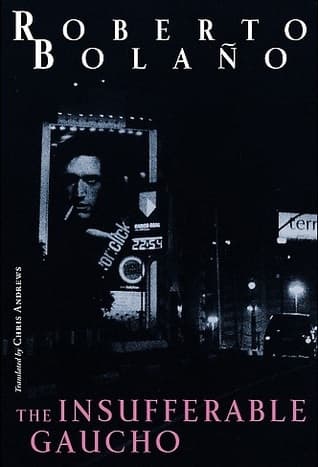
Synopsis
Covers the whole plot, including the ending.
- Difficulty
- Medium
- Pacing
- Moderate
- Mood
- Melancholy, mysterious, thought-provoking, surreal
The Insufferable Gaucho Plot Summary
Covers the whole plot, including the ending.
The Insufferable Gaucho: Part 1 - Gastón's Buenos Aires Life
Gastón Suárez, a respected and wealthy lawyer in Buenos Aires, leads a life of intellectual pursuits, attending literary workshops and cultural events. He is a man of routine, deeply involved in the city's sophisticated but somewhat sterile intellectual circles. Despite his success and participation in cultural life, Gastón feels a growing unease and dissatisfaction. He is a widower, and his adult children live their own lives, leaving him ample time for personal interests. His intellectual curiosity leans toward avant-garde and controversial literature, hinting at a hidden desire for something beyond his predictable life.
The Insufferable Gaucho: Part 2 - The Call of the Pampas
Gastón learns of an inheritance: an old, run-down estancia in the vast pampas of Argentina. This property has been in his family for generations but was long neglected. This unexpected news sparks something in him. Driven by an unexplained impulse, perhaps a longing for his ancestral past and a more authentic life, Gastón decides to leave his comfortable Buenos Aires life. He sells his apartment, liquidates his assets, and prepares to move to the remote estate. His friends and family are bewildered. This move is a rejection of his old identity and a leap into the unknown.
The Insufferable Gaucho: Part 3 - Arrival at the Estancia
When Gastón arrives at the estancia, he faces the harsh reality of his inheritance. The property is decaying, the house crumbling, the land overgrown, and the infrastructure almost nonexistent. His romantic idea of rural life quickly disappears. He is isolated, without modern amenities, and faces the difficult task of making the estancia livable and productive. The few remaining workers are wary and quiet. Gastón, used to city comforts and intellectual stimulation, struggles to adapt to the physical demands and deep solitude of the pampas. This initial period involves culture shock and a growing awareness of how big his undertaking is.
The Insufferable Gaucho: Part 4 - The Transformation
Despite the initial difficulties, Gastón starts to adapt. He trades his city clothes for practical attire, learns to ride a horse, and works with his hands, slowly rebuilding parts of the estancia. The physical labor and constant exposure to nature change him. His body hardens, and his mind, once focused on abstract literary theories, now thinks about immediate concerns like weather, livestock, and the land. He begins to understand the rhythms of the pampas and the resilience of its people. This period marks a personal change, as the urban intellectual slowly becomes a more grounded person, essentially a gaucho.
The Insufferable Gaucho: Part 5 - The Rising Reputation
As Gastón continues his work, enduring harsh conditions and showing unexpected determination, he gradually earns the respect, though somewhat puzzled, of the local gauchos. They observe his efforts, his solitude, and his unusual intellectual background, which sets him apart. His initial awkwardness turns into quiet competence. He becomes known as 'the lawyer who became a gaucho,' a figure of curiosity and, eventually, grudging admiration. His change is not just physical but also social; he begins to integrate into the rural community, developing a reputation that precedes him in the isolated pampas. He is no longer just Gastón Suárez from Buenos Aires, but a new, redefined person.
The Insufferable Gaucho: Part 6 - The Duel
Gastón's growing reputation and unusual status eventually lead to a confrontation. A local, established gaucho, perhaps offended by the 'city man's' presence or a perceived slight, challenges Gastón to a traditional knife duel. This challenge tests Gastón's transformation and his acceptance into the gaucho world. It forces him to face the violent, honor-bound aspects of his adopted culture. Despite his inexperience, Gastón accepts, knowing that refusing would mean losing all he has built in his new life. The duel is a symbolic end to his journey, where his intellectual past meets his primal present.
The Insufferable Gaucho: Part 7 - The Aftermath
The duel is brutal and tense, but Gastón, through luck, instinct, and perhaps a hidden strength, survives. The outcome solidifies his position among the gauchos, who now see him as one of their own, though unique and somewhat mysterious. He has proven his courage and commitment to this harsh life. The experience leaves him physically wounded but spiritually stronger. Gastón fully embraces his new identity as a 'gaucho,' a man who has moved past his past and found a profound, if unconventional, sense of belonging in the vast, indifferent pampas. He is no longer defined by urban intellectualism but by his resilience and connection to the land.
The Insufferable Gaucho: The Police Dog
This story shifts perspective to a police dog named Ajax (or another name, as the dog considers various identities). The dog is highly intelligent, capable of complex thought, and fascinated by literature and storytelling. It observes the human world with a keen, analytical eye, often thinking about human narratives and the fictions within their lives. The dog reflects on its duties, its relationship with its human handler, and the paradox of its existence as a creature both driven by instinct and intellectually curious. Its internal monologue explores identity, purpose, and the search for meaning, all from a canine philosopher's unique view.
The Insufferable Gaucho: The Precocious Old Man
This narrative follows an elderly, celebrated writer struggling with the end of his career and his literary past. He is known for his unique, often controversial, and thought-provoking works. As he reflects on his life and accomplishments, he becomes increasingly concerned with genius, the fleeting nature of inspiration, and the fear of artistic decline. He interacts with younger writers and critics, often finding their views both insightful and frustrating. The story explores the anxieties of creation, the burden of reputation, and the ongoing struggle to produce meaningful work even as one's physical and mental abilities fade. It is a reflection on the author's place in literary history and the subjective nature of artistic value.
The Insufferable Gaucho: The Anagrams of Life
This story explores the power of language and the human desire for order and meaning in chaos. The protagonist, perhaps an academic or an obsessive person, becomes engrossed in creating anagrams, especially with names and important words. Through this linguistic game, they start to uncover hidden messages, secret connections, and even prophecies. The line between coincidence and destiny blurs as the character goes deeper into anagrams, believing these word puzzles hold the key to understanding reality's underlying structure. The narrative questions perception, subjective interpretation of data, and the human tendency to impose narrative on disparate elements, suggesting that meaning can be constructed as much as discovered.
The Insufferable Gaucho: The Plagiarist
The story centers on a literary investigator or a frustrated author obsessed with finding a mysterious and successful plagiarist. This plagiarist doesn't just copy; they appropriate, recontextualize, and often improve original works, making their crimes hard to prove and condemn. The pursuit leads the protagonist into a rabbit hole of literary deception, questioning the definition of originality and authorship ethics. The plagiarist becomes a phantom-like figure, mirroring the literary world's anxieties. The narrative explores identity's fluidity, intellectual property's porous boundaries, and the idea that all creation might be a reinterpretation of what came before.
The Insufferable Gaucho: The Return to the City
After years in the pampas, having fully accepted his gaucho identity and rebuilt his estancia, Gastón Suárez, now a weathered and changed man, decides to briefly return to Buenos Aires. He finds the city both familiar and foreign. His old friends and acquaintances struggle to reconcile the sophisticated lawyer they knew with the rugged, silent figure before them. Gastón observes the urban intellectual scene with a new perspective, finding it somewhat superficial and detached from the realities he now understands. This return is not a rejection of his gaucho life, but a final confirmation of his transformation. He is a man caught between two worlds, yet fully belonging to neither, carrying the pampas within him even in the city's heart.
The Insufferable Gaucho Characters
Gastón Suárez
Protagonist
The sophisticated lawyer who transforms into a gaucho.
Gastón Suárez begins as a wealthy, intellectual, and somewhat disaffected lawyer in Buenos Aires, deeply immersed in the city's literary and cultural scene. He is a widower, well-read, and accustomed to a life of comfort and routine. Despite his outward success, he harbors a latent dissatisfaction and a yearning for something more authentic. His decision to abandon his urban life for a dilapidated estancia in the pampas marks a radical shift. He is initially awkward and unprepared for rural life but demonstrates remarkable resilience and adaptability, slowly shedding his intellectual persona to embrace a more primal existence.
Relationships: His Children (Distant; they are confused by his sudden change.); Local Gauchos (Initially wary, then grudgingly respectful, eventually accepting.)
Ajax (The Police Dog)
Protagonist
A police dog with profound literary aspirations and philosophical insights.
Ajax is an exceptionally intelligent police dog who serves as the central consciousness of one of the stories. Unlike typical canines, Ajax possesses complex thoughts, a keen observational ability, and a deep appreciation for literature and philosophy. He ponders the nature of human existence, storytelling, and his own identity, often questioning his role and purpose. His internal monologues reveal a sophisticated mind capable of intricate reasoning and emotional depth, making him a unique and compelling character who transcends his animalistic nature. He embodies a search for meaning from an unexpected perspective.
Relationships: His Handler (Professional, but with an underlying bond of trust and observation.); The World (Observational, philosophical, and analytical.)
The Precocious Old Man
Protagonist
An aging literary giant grappling with his legacy and the essence of genius.
This character is a celebrated but elderly writer, a figure of significant literary renown. He is characterized by his intellectual prowess, his long career of controversial and influential works, and his deep engagement with the craft of writing. In his old age, he becomes introspective, wrestling with the anxieties of maintaining his artistic relevance, the fear of creative decline, and the elusive nature of true genius. He is both wise and vulnerable, reflecting on his past achievements and the challenges of continued creation, representing the universal struggle of artists facing their mortality and legacy.
Relationships: Younger Writers/Critics (Mentorship/critique, often a source of frustration and insight.); His Own Works (Deeply personal, a source of pride and self-interrogation.)
The Plagiarist
Antagonist/Catalyst
An elusive and highly skilled literary thief who challenges notions of originality.
The Plagiarist is a mysterious and largely unseen character whose actions drive one of the collection's stories. This individual is not merely a copier but an artist of appropriation, capable of recontextualizing and even improving upon existing works, making their literary crimes complex and difficult to pinpoint. They represent a challenge to traditional notions of authorship, originality, and intellectual property. The Plagiarist embodies the fluid and often ambiguous nature of literary creation, suggesting that all art is, to some extent, a reinterpretation of what has come before. Their elusiveness highlights the porous boundaries of creative ownership.
Relationships: The Protagonist (investigator) (Adversarial, a cat-and-mouse game of intellectual pursuit.); Other Authors (Exploitative, but also re-interpretive.)
Gastón's Friends
Supporting
Urban intellectuals who represent Gastón's former life.
These are Gastón Suárez's acquaintances from his Buenos Aires days: fellow lawyers, writers, and cultural enthusiasts. They represent the intellectual, sophisticated, and somewhat insular world Gastón leaves behind. They are initially bewildered and concerned by his radical decision to move to the pampas, finding his choice incomprehensible. Their reactions highlight the stark contrast between urban intellectualism and rural pragmatism, serving as a mirror for Gastón's own past self. They are largely passive observers of his transformation, unable to truly understand or connect with his new identity upon his brief return.
Relationships: Gastón Suárez (Friendship, intellectual camaraderie, then bewilderment.)
The Local Gauchos (minor)
Supporting
The stoic and traditional inhabitants of the pampas.
These are the rural workers and inhabitants of the pampas surrounding Gastón's estancia. They are depicted as stoic, traditional, and deeply connected to the land and its harsh realities. Initially, they are wary and suspicious of Gastón, viewing him as an outsider and a city man ill-suited for their way of life. They are men of few words but keen observation, gradually coming to respect Gastón's tenacity and resilience, especially after the duel. They serve as a collective representation of the authentic gaucho culture that Gastón strives to understand and ultimately embody.
Relationships: Gastón Suárez (Initial suspicion, then grudging respect and acceptance.)
The Narrator (in some stories)
Supporting
The voice that guides the reader through the diverse narratives.
In several of the stories, a distinct, often detached and philosophical narrator provides commentary and insight. This narrator is typically highly observant, intellectual, and prone to digressions and reflections on literature, philosophy, and the human condition. The narrator's voice is a hallmark of Bolaño's style, characterized by a blend of direct storytelling and metafictional musings. They often offer a broader perspective, connecting the individual stories to larger themes of existence, art, and the search for meaning in a chaotic world. The narrator's presence unifies the disparate elements of the collection.
Relationships: The Reader (Direct, engaging, intellectually stimulating.); The Characters (Observational, interpretive, often empathetic.)
The Insufferable Gaucho Themes
The Search for Authentic Identity
This theme is explored through Gastón Suárez's transformation in 'The Insufferable Gaucho.' He leaves a life of urban intellectualism and comfort, which he finds increasingly empty, to seek a more authentic existence in the pampas. His journey from a sophisticated lawyer to a rugged gaucho shows the human need to shed superficial identities and connect with a deeper self, even if it means facing hardship. The process is one of self-discovery through radical change and adaptation.
“He felt that he was finally entering into a life that was truly his own, even if it was a life he had never imagined.”
The Nature of Literature and Storytelling
Bolaño consistently examines literature's role and power. This theme appears in the police dog's philosophical thoughts on human narratives, the aging writer's worries about his legacy, and the pursuit of the plagiarist. The stories question originality, subjective interpretation, and how narratives shape our understanding of reality. Literature is presented not just as entertainment but as a fundamental human activity, a way to make sense of the world, and a complex web of influence and appropriation.
“All stories are, in a way, plagiarized from life, or from other stories.”
Urban vs. Rural Life
The contrast between Buenos Aires's intellectual, often decadent, urban environment and the harsh, untamed Argentine pampas is a central theme. Gastón's move from one to the other highlights the perceived authenticity and challenges of rural life against the perceived superficiality and comforts of city life. The stories explore cultural clashes, different values, and the personal changes that can occur when an individual moves between these two distinct worlds, examining which environment ultimately leads to greater self-awareness and meaning.
“The city had offered him a mirror, but the pampas had offered him a soul.”
Isolation and Connection
Many characters experience deep isolation, whether it's Gastón in the pampas, the intellectual police dog in its unique mind, or the aging writer grappling with his solitary craft. Yet, against this isolation, there are attempts, sometimes successful, to form connections: Gastón with the local gauchos, the dog with its handler (though intellectually), and writers with their readers. The theme explores the inherent solitude of individual consciousness and the human need for belonging and understanding, often found in unexpected places or through unconventional means.
“In the solitude of the pampas, Gastón found a companionship he had never known in the crowded city.”
The Elusiveness of Truth and Meaning
Across the collection, there is a recurring sense that definitive truth and absolute meaning are always just out of reach. This is clear in the ambiguity around the plagiarist's actions, the subjective nature of the anagrams, and the police dog's philosophical questions. Bolaño suggests that reality is often fractured, interpreted, and constructed rather than simply discovered. Characters deal with incomplete information, contradictory evidence, and the limits of their own perceptions, leading to an understanding that meaning is often temporary, personal, and constantly negotiated.
“Every answer only led to more questions, every revelation to a deeper mystery.”
Plot Devices & Literary Techniques
Metafiction
Stories that self-consciously refer to their own fictional nature.
Bolaño frequently employs metafiction, blurring the lines between author, narrator, and character. This is evident in stories where characters are writers or literary critics, or when the narrative voice comments directly on the act of storytelling itself. The police dog's thoughts on literature are a prime example. This device invites the reader to consider the artificiality of the narrative, the constructed nature of reality within fiction, and the processes of literary creation and interpretation, enhancing the collection's intellectual depth and self-awareness.
Shifting Perspectives
Alternating narrative viewpoints to offer diverse insights.
The collection utilizes dramatic shifts in narrative perspective, moving from the third-person account of Gastón Suárez's transformation to the first-person internal monologue of a police dog, and then to the reflections of an aging writer. This device allows Bolaño to explore a wide range of thematic concerns from multiple angles, preventing any single viewpoint from dominating the reader's understanding. It emphasizes the subjective nature of truth and experience, offering a kaleidoscopic view of the human (and canine) condition and the complexities of existence.
Intertextuality
References to other literary works, authors, or cultural texts.
Bolaño's stories are rich with allusions to other writers, literary movements, and philosophical concepts. This intertextuality creates a dense literary landscape, connecting the individual narratives to a broader cultural and intellectual tradition. It enriches the reading experience for those familiar with the references and encourages deeper critical engagement for all readers, suggesting that all literature exists in dialogue with what has come before. It reinforces the theme of literature as a continuous conversation and a web of interconnected ideas, where originality is often a reinterpretation.
Symbolism (The Pampas)
The vast, untamed plains as a symbol of freedom and raw existence.
The Argentine pampas in 'The Insufferable Gaucho' function as a powerful symbol. They represent not only a physical landscape but also a state of being: untamed, indifferent, challenging, and ultimately liberating. For Gastón Suárez, the pampas symbolize a return to a more authentic, primal existence, free from the constraints and perceived superficiality of urban life. The harshness of the land reflects the internal struggle and transformation he undergoes, making the pampas a crucible for self-discovery and a metaphor for the human spirit's resilience and adaptability when faced with the absolute.
The Unreliable Narrator (implied)
Characters whose perceptions or accounts may not be entirely trustworthy.
While not explicitly unreliable in a traditional sense, many characters' internal monologues and observations are filtered through their unique, often idiosyncratic, perspectives. The police dog's intellectualism, the aging writer's self-reflection, and even Gastón's idealized initial view of rural life suggest that individual perception heavily colors reality. This device encourages the reader to question what is presented, to look for underlying biases, and to acknowledge the subjective nature of truth, reinforcing the idea that meaning is often constructed rather than objectively found.
Quiz
10 questions on the plot and the characters. Each answer comes with a short explanation.
Question 1
What is the primary genre of the book "The Insufferable Gaucho"?
- Science Fiction
- Mystery
- Literary Fiction
- Historical Romance
Show answer
C. Literary Fiction The provided text explicitly states that the genre of the book is Literary Fiction.
Question 2
According to Pankaj Mishra, what is a remarkable quality of Bolaño's short stories?
- They are always very long.
- They can do the work of a novel.
- They are always humorous.
- They are easy to understand.
Show answer
B. They can do the work of a novel. Pankaj Mishra is quoted as saying that a remarkable quality of Bolaño's short stories is that 'they can do the work of a novel.'
Question 3
What kind of character might appear in a Bolaño story, according to the description?
- A cheerful baker
- An elusive plagiarist
- A brave knight
- A talking animal
Show answer
B. An elusive plagiarist The text mentions that 'a Bolano story might concern an elusive plagiarist, or an elderly lawyer giving up city life for an improbable return to the family estate, now gone to wrack and ruin.'
Question 4
Which publication described Bolaño's stories as 'bleakly luminous and perfectly calibrated'?
- The New York Times Book Review
- The Nation
- International Herald Tribune
- Publishers Weekly
Show answer
D. Publishers Weekly The quote 'bleakly luminous and perfectly calibrated' is attributed to Publishers Weekly.
Question 5
What does the description suggest about the nature of Bolaño's stories?
- They are predictable and straightforward.
- They are lighthearted and easily forgotten.
- They are unpredictable and return to haunt the reader.
- They are simple and lack depth.
Show answer
C. They are unpredictable and return to haunt the reader. The text states that the tales are 'bent on returning to haunt you' and are 'unpredictable, daring, and highly controlled, yet somehow haywire.'
Question 6
What is the condition of the family estate mentioned in the description of a potential story plot?
- Newly renovated and prosperous.
- Sold to a wealthy developer.
- Gone to wrack and ruin.
- Undergoing extensive historical preservation.
Show answer
C. Gone to wrack and ruin. The description mentions an elderly lawyer returning to the family estate 'now gone to wrack and ruin.'
Question 7
Francine Prose, in The New York Times Book Review, described Bolaño's work as:
- derivative and uninspired.
- something extraordinarily beautiful and entirely new.
- a predictable formula.
- overly sentimental and melodramatic.
Show answer
B. something extraordinarily beautiful and entirely new. Francine Prose is quoted as saying that Bolaño's work is 'something extraordinarily beautiful and (at least to me) entirely new.'
Question 8
The phrase 'somehow haywire' when describing Bolaño's stories suggests:
- A lack of narrative structure and coherence.
- An underlying sense of chaos or unpredictability despite control.
- A deliberate attempt to confuse the reader with nonsensical plots.
- A simple error in the writing process.
Show answer
B. An underlying sense of chaos or unpredictability despite control. The phrase 'highly controlled, yet somehow haywire' suggests a paradox: the stories are meticulously crafted but also possess an element of wildness or unexpectedness.
Question 9
What additional content is included in "The Insufferable Gaucho" besides the short stories?
- A collection of poems
- A series of illustrations
- Two fascinating essays
- An introduction by the author
Show answer
C. Two fascinating essays The last sentence of the provided text states, 'Two fascinating essays are also included.'
Question 10
Considering the critical reception mentioned ('bleakly luminous,' 'complex and provocative,' 'extraordinarily beautiful and entirely new'), what can be inferred about the overall tone and impact of Bolaño's stories in this collection?
- They are consistently light and optimistic.
- They offer a straightforward and easily digestible reading experience.
- They are likely to be thought-provoking, emotionally resonant, and artistically significant.
- They are primarily focused on plot mechanics and simple entertainment.
Show answer
C. They are likely to be thought-provoking, emotionally resonant, and artistically significant. The combination of descriptors like 'luminous,' 'complex,' 'provocative,' 'beautiful,' and 'new' points towards stories that are intellectually stimulating, emotionally impactful, and artistically innovative, rather than simple or predictable.
The Insufferable Gaucho FAQ
What is "The Insufferable Gaucho" about?
"The Insufferable Gaucho" is a collection of short stories by Roberto Bolaño. The stories are known for their unpredictable and daring nature, often exploring themes of elusive characters, unexpected life changes, and the decay of familiar places.
Who is the author of "The Insufferable Gaucho"?
The author of "The Insufferable Gaucho" is Roberto Bolaño, a renowned Chilean author celebrated for his unique literary style.
What kind of stories can I expect in this collection?
You can expect stories that are both highly controlled and seemingly haywire, capable of leaving a lasting impression. They might feature characters like an elusive plagiarist or an elderly lawyer seeking a new life.
What are critics saying about Bolaño's short stories?
Critics have praised Bolaño's stories as "bleakly luminous and perfectly calibrated," "complex and provocative," and even "something extraordinarily beautiful and entirely new."
Does the book contain anything besides short stories?
Yes, in addition to the short stories, "The Insufferable Gaucho" also includes two fascinating essays.
How do Bolaño's short stories compare to his novels?
According to critics like Pankaj Mishra, Bolaño's short stories possess a remarkable quality where they can achieve the depth and impact of a full-length novel.
What makes Bolaño's writing style unique?
Bolaño's style is often described as daring, unpredictable, and controlled, yet with an element of wildness. His stories are known for their ability to linger with the reader.
Are the stories in "The Insufferable Gaucho" thematically consistent?
While each story is distinct, common threads often involve characters grappling with identity, the past, and unconventional life paths, often set against backdrops of decay or ruin.
About the author
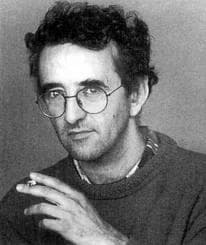
Roberto Bolaño Ávalos was a Chilean novelist, short-story writer, poet and essayist. In 1999, Bolaño won the Rómulo Gallegos Prize for his novel Los detectives salvajes, and in 2008 he was posthumously awarded the National Book Critics Circle Award for Fiction for his novel 2666, which was described by board member Marcela Valdes as a "work so rich and dazzling that it will surely draw readers and scholars for ages". The New York Times described him as "the most significant Latin American literary voice of his generation".
Similar books
- The Old Man and the Sea
Ernest Hemingway
3.8 (831k) average on GoodreadsLiterary FictionA Cuban fisherman's long struggle with a giant marlin becomes a story of endurance and dignity, now retold for young adults with illustrations, phonetic guides, and writing prompts in Traditional Chinese.
- One Hundred Years of Solitude
Gabriel García Márquez
4.1 (753k) average on GoodreadsLiterary FictionThrough the multi-generational story of the Buendía family, a mythical town deals with the repeating patterns of time, love, and solitude, as the extraordinary mixes with the ordinary.
- The Goldfinch
Donna Tartt
3.9 (720k) average on GoodreadsLiterary FictionHaunted by a tragic explosion and clutching a stolen Dutch masterpiece, a young orphan navigates the opulent drawing rooms of New York and the gritty underbelly of the art world, desperately seeking connection and redemption amidst a life spiraling into crime and obsession.
- Little Fires Everywhere
Celeste Ng
4.1 (713k) average on GoodreadsLiterary FictionIn Shaker Heights, an artist and her daughter move in, and their free-spirited lives clash with a rule-bound matriarch, revealing hidden conflicts beneath a perfect surface.
- Eleanor Oliphant Is Completely Fine
Gail Honeyman
4.3 (708k) average on GoodreadsLiterary FictionA lonely woman's structured life changes when an IT guy and an elderly man help her learn to open her heart.
- The Poisonwood Bible
Barbara Kingsolver
4.1 (659k) average on GoodreadsLiterary FictionA zealous missionary's rigid faith clashes with the Belgian Congo's wilderness and people, unraveling his family through the eyes of his five unforgettable women.





Enjoyed the summary?
A summary gives you the shape of the book. The book itself has the detail, the examples and the voice.
Find The Insufferable Gaucho on AmazonAs an Amazon Associate, BookBrief earns from qualifying purchases. How we're funded