
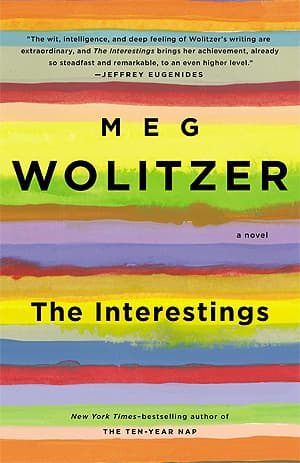
Synopsis
Covers the whole plot, including the ending.
- Difficulty
- Medium
- Pacing
- Moderate
- Mood
- Reflective, Observational, Poignant, Introspective
- Read it if
- You enjoy character-driven literary fiction that explores the long-term evolution of friendships, the complexities of talent, envy, and class over several decades.
- Skip it if
- You prefer fast-paced plots with clear resolutions, or are looking for lighthearted reads without deep psychological introspection.
The Interestings Plot Summary
Covers the whole plot, including the ending.
Spirit-in-the-Woods: The Summer of 1974
Fifteen-year-old Jules Jacobson, from a modest background, arrives at Spirit-in-the-Woods, an arts camp in Massachusetts, on scholarship. She feels out of place at first but soon connects with a group of campers: Ash Wolf, a confident aspiring theater director; her brother Ethan, a quiet animator; Jonah Boris, a musician; Cathy Kiplinger, a dancer; and Goodman Wolf, Ash and Ethan's older cousin. They bond over their shared artistic goals and youthful ideals, calling themselves "The Interestings." Jules, who wants to be a comic, feels a sense of belonging she has not known before, drawn to Ash and Ethan's privileged world.
Post-Camp Realities and Diverging Paths
After that summer, the friends go their separate ways. Jules attends college, struggling to keep the confidence she found at camp. Ash and Ethan, going to Yale, continue their artistic work easily. Jonah pursues music, while Cathy, a dancer, faces the physical demands of her art. Goodman, the most mysterious of the group, drifts and deals with personal problems. Jules, despite her comedic talent, finds the professional world less supportive than Spirit-in-the-Woods. The initial excitement of their shared artistic passion fades for some as life's practicalities and competition begin.
Ethan and Ash's Ascendancy
As years pass, Ethan and Ash Wolf's careers become very successful. Ethan's animation leads to groundbreaking, popular work, making him a visionary artist and entrepreneur. Ash, after some struggle, becomes a conceptual artist and curator, using Ethan's success and their social connections. They become wealthy and influential in the New York art scene, living in their Greenwich Village townhouse. Their success, while celebrated by their friends, also creates a gap in their lifestyles, which Jules feels especially when she sees their lavish world.
Jules's Practical Life and Lingering Envy
Jules Jacobson, now Jules Bergman, marries Dennis, a kind therapist. She gives up her comedy aspirations, finding stability as a therapist and raising two children. Despite being happy with her family, Jules often feels envious when comparing her life to Ash and Ethan's. Their creativity, financial freedom, and continued relevance in the art world remind her of the artistic path she left behind. Her friendship with Ash stays strong, but the tension of their different fortunes is always present.
Jonah's Disappearance and Reemergence
Jonah Boris, the guitarist from Spirit-in-the-Woods, decides to stop playing music completely, choosing a stable career as an engineer. He moves to California, mostly stepping away from the friends, though he appears for important events. His choice surprises and disappoints his friends, especially Jules, who saw his musical talent. Jonah's quiet nature continues, and his life choices show how "The Interestings'" youthful dreams changed with adulthood, contrasting with Ethan and Ash's artistic commitment.
Goodman's Downward Spiral
Goodman Wolf, Ash and Ethan's cousin, struggles throughout his adult life. He never finds stable work or a clear path, often relying on his family. His behavior and history of substance abuse worry Ash and Ethan. The story reveals a past event at Spirit-in-the-Woods involving Goodman and Cathy Kiplinger, which is unclear at first. This secret surfaces years later when Cathy accuses Goodman of sexual assault from their camp days. This accusation shatters the group's view of their shared past.
The Weight of the Past and Conflicting Loyalties
When Cathy Kiplinger publicly accuses Goodman Wolf of sexual assault from their time at Spirit-in-the-Woods, the group is in turmoil. Jules, despite her friendship with Goodman, feels sympathy for Cathy. Ash and Ethan, however, protect Goodman, believing his story or hoping to shield him. This revelation forces the friends to re-examine their memories of that summer and question their bond. The different reactions to Cathy's accusation create tension and division among "The Interestings," challenging their loyalties and making them face uncomfortable truths.
Jules's Confession and Ash's Reaction
Years after Cathy's accusation, Jules deals with a secret she has kept since Spirit-in-the-Woods: she saw Goodman try to assault Cathy. Overwhelmed by guilt and wanting the truth, Jules finally tells Ash. Ash reacts with anger and betrayal, not at Goodman, but at Jules for hiding this information for so long and possibly hurting her cousin's defense. This confession, meant by Jules as an act of honesty, creates a deep rift between the two best friends, changing their relationship and showing the complex loyalty and truth within their group.
The Aftermath of Revelation and Shifting Bonds
After the truth about Goodman and Jules's confession, the friendships within "The Interestings" are severely tested. Goodman faces legal problems, but the outcome is not fully resolved. Ash, hurt by Jules's perceived betrayal, pulls away from her. Ethan, pragmatic, tries to manage the emotions, often siding with Ash. Jonah, though still distant, quietly supports Jules. The incident makes each member face their own morals and the compromises they made. The idealized vision of their youth at Spirit-in-the-Woods is broken, replaced by a complex and painful understanding of their shared history.
Later Life and Enduring Connections
Years later, as the characters reach middle age, some peace is found, though relationships are changed. Jules and Ash's friendship never fully regains its closeness, becoming more distant. Ethan and Ash continue their successful careers, their wealth and influence lasting. Jonah remains a steady, if minor, presence. The novel ends with the friends, older and wiser, reflecting on their lives, the paths they took, and the talents that grew or faded. They acknowledge the lasting, sometimes painful, power of their initial bond, understanding that while their lives diverged, the mark of "The Interestings" is a part of who they are.
The Interestings Characters
Jules Jacobson (Bergman)
Protagonist
An aspiring comic who trades artistic dreams for a practical life, grappling with envy and loyalty.
Jules is the emotional core of the novel, a scholarship kid from a modest background who finds a sense of belonging and artistic purpose at Spirit-in-the-Woods. She is observant, witty, and deeply empathetic, but also prone to self-doubt and a quiet envy of her more successful friends, Ash and Ethan. She struggles with the compromises she makes in adulthood, particularly giving up her comedic aspirations for a career as a therapist. Her loyalty to her friends is paramount, but she also carries a significant burden of truth.
Relationships: Ash Wolf (Best friends, a complex bond marked by affection, admiration, and underlying envy.); Ethan Wolf (Close friend, later a surrogate brother figure, and the object of her early infatuation.); Dennis Bergman (Husband, a steady and supportive partner who grounds her.); Goodman Wolf (Friend, but also the perpetrator of a secret she witnesses.)
Ash Wolf
Supporting/Secondary Protagonist
A confident, charismatic aspiring theater director who becomes a successful artist and curator.
Ash is the magnetic center of "The Interestings," born into privilege and possessing an innate confidence and artistic vision. She is beautiful, intelligent, and fiercely loyal to her family and friends, particularly her brother Ethan and cousin Goodman. While initially an aspiring theater director, she evolves into a successful conceptual artist and curator, leveraging her talent and social connections. She embodies artistic success and a bohemian lifestyle, which both inspires and intimidates Jules. Her loyalty to Goodman blinds her to certain truths.
Relationships: Jules Jacobson (Best friends, a bond strained by class, envy, and a crucial betrayal.); Ethan Wolf (Brother, a deeply intertwined relationship built on mutual support and artistic collaboration.); Goodman Wolf (Cousin, whom she fiercely protects and defends, often at others' expense.); Jonah Boris (Friend, part of the core group.)
Ethan Wolf
Supporting/Secondary Protagonist
A quiet, brilliant animator who achieves immense success and wealth.
Ethan is the prodigy of the group, a quiet, introverted, but exceptionally gifted animator. He possesses a unique blend of artistic vision and business acumen, which propels him to extraordinary success. He is pragmatic, observant, and deeply devoted to Ash. While less outwardly charismatic than Ash, his talent is undeniable and becomes the primary source of the Wolfs' wealth and influence. He is often the calm, rational center amidst the group's emotional storms, though his loyalty to his family, particularly Goodman, can be unwavering.
Relationships: Ash Wolf (Sister, a foundational and mutually supportive bond.); Jules Jacobson (Close friend and the object of her youthful crush; he marries Ash.); Goodman Wolf (Cousin, whom he attempts to protect and support.); Jonah Boris (Friend, part of the core group.)
Jonah Boris
Supporting
A gifted musician who abandons his artistic path for a career in engineering.
Jonah is the quiet, sensitive musician of "The Interestings." He possesses immense natural talent on the guitar, capable of captivating audiences even as a teenager. Despite his artistic gifts, he makes the surprising decision to leave music behind for a stable, less glamorous career as an engineer. He is introspective and often withdrawn, preferring observation to participation in the group's dramatic conflicts. He serves as a poignant example of artistic potential left unfulfilled, yet he finds a different kind of contentment in his chosen path.
Relationships: Jules Jacobson (Close friend, a quiet confidant.); Ash Wolf (Friend, part of the core group.); Ethan Wolf (Friend, part of the core group.)
Goodman Wolf
Antagonist/Supporting
Ash and Ethan's troubled cousin, whose dark past haunts the group.
Goodman is the enigmatic and troubled older cousin of Ash and Ethan. He is charismatic but deeply flawed, struggling with substance abuse and a lack of direction throughout his life. He is a source of both fascination and concern for the group. His actions at Spirit-in-the-Woods, particularly the incident involving Cathy Kiplinger, cast a long, dark shadow over the entire group, challenging their perceptions of their shared history and the nature of loyalty. He embodies the destructive potential within the group's idealized past.
Relationships: Ash Wolf (Cousin, whom she fiercely defends and protects.); Ethan Wolf (Cousin, whom he relies on for support.); Cathy Kiplinger (Victim of his assault.); Jules Jacobson (Friend, and witness to his crime.)
Cathy Kiplinger
Supporting/Mentioned
A talented dancer whose youthful trauma resurfaces decades later.
Cathy is a member of "The Interestings" at Spirit-in-the-Woods, a talented and dedicated dancer. Her life takes a different trajectory after camp, and she largely fades from the immediate circle of friends. However, her significance to the story lies in the trauma she experiences at camp at the hands of Goodman Wolf. Her eventual accusation decades later serves as the catalyst for the novel's central conflict, forcing the other characters to confront their memories, loyalties, and the true nature of their past.
Relationships: Goodman Wolf (Her assailant.); Jules Jacobson (Friend, who eventually supports her accusation.)
Dennis Bergman
Supporting
Jules's kind and steady husband, a therapist.
Dennis is Jules's husband, a therapist who provides stability, kindness, and a grounded perspective to her life. He is practical and supportive, offering a contrast to the often tumultuous and artistically driven world of "The Interestings." He represents the choice Jules makes for a conventional, fulfilling family life over the uncertainty of an artistic career. He is a steadying force for Jules, understanding her complexities without necessarily being drawn into the dramatic intricacies of her friendships.
Relationships: Jules Jacobson (Husband, a loving and stable partner.)
The Interestings Themes
The Nature of Talent and Success
The novel explores how talent appears, whether it is used, wasted, or changed. It asks if youthful brilliance guarantees adult success, comparing Ethan and Ash's rise with Jules's artistic compromises and Jonah's decision to stop playing music. The book suggests that talent alone is not enough; privilege, luck, resilience, and business skills also play roles. This idea is central to Jules's internal struggle, as she compares her life to Ash and Ethan's, showing the arbitrary nature of success in the arts. The different fates of the friends show that the creativity rewarded at age fifteen does not always lead to a lasting adult career, and success can mean many things beyond fame and money.
“What was the point of having a talent if you didn't use it? But what was the point of using it if it didn't come to anything?”
Envy and Resentment
Envy is always present, especially for Jules, who deals with her feelings towards Ash and Ethan's success and seemingly easy lives. This is not a mean envy, but a deep desire for the artistic fulfillment and freedom they have, which Jules feels she gave up. The novel shows envy as a complex emotion that can exist with love and friendship, slowly damaging bonds. Scenes of Jules watching Ash and Ethan's lavish life, or thinking about her own less glamorous choices, illustrate this theme. It explores how financial and artistic differences can strain friendships, making characters question their choices and worth.
“Envy was a pure emotion, and for that reason it was simple. But it was also a kind of love, because it meant you admired what you coveted.”
The Enduring Power of Friendship
Despite different paths, class differences, envy, and a devastating secret, the bond formed by "The Interestings" in their youth lasts throughout their lives. The novel examines the effect of adolescent friendships, how they shape identity, and how they change under adult responsibilities and revelations. While the friendships are tested and sometimes broken, the characters remain connected, drawn by shared history and deep affection. This lasting connection, even in its changed state, shows the mark that intense youthful relationships leave, suggesting these foundational bonds can withstand significant strain. The group's loyalty, both good and bad, shows this theme.
“They were The Interestings. They were the ones who knew.”
Memory, Truth, and Betrayal
The novel explores how memory is subjective and how personal stories are made, especially about a shared past. Cathy's accusation against Goodman makes the characters re-examine their memories of Spirit-in-the-Woods and face uncomfortable truths. Jules's secret of seeing the event shows the burden of knowledge and the results of silence. The different reactions to the accusation reveal the complexities of loyalty and the difficulty of finding truth when it challenges beliefs about friends and family. This theme explores how one event can be remembered, hidden, or explained differently by each person, leading to betrayals and a re-evaluation of their collective history.
“The past was a story you told yourself. And sometimes, if you were lucky, it was a story you could change.”
Class and Privilege
The differences in social and economic backgrounds among the friends—Jules's modest upbringing versus the Wolfs' wealth—are a constant, subtle force shaping their lives. Privilege gives Ash and Ethan not just money but also access, connections, and the ability to pursue art without the same pressures as their less privileged friends. The novel shows how class affects opportunity, career paths, and the ability to take risks. Jules's awareness of this difference fuels her envy but also her practical choices. The Wolfs' ability to protect Goodman, partly due to their resources, further shows how class affects justice and consequences.
“Money was the great eraser, the great smooth-over.”
Plot Devices & Literary Techniques
Flashbacks and Non-Linear Narrative
The story jumps between the friends' youth at Spirit-in-the-Woods and their adult lives.
The novel employs a non-linear narrative, frequently shifting between the pivotal summer of 1974 at Spirit-in-the-Woods and various points in the characters' adult lives, spanning decades. This device allows Wolitzer to juxtapose youthful idealism with adult realities, highlighting the evolution (or stagnation) of their dreams, talents, and relationships. It builds suspense around the Goodman/Cathy incident by gradually revealing details from the past and showing its long-term ramifications, forcing the reader to connect the dots between past events and present circumstances. The shifting timelines emphasize the enduring impact of formative experiences.
Third-Person Omniscient Narration with Focus on Jules
The story is told from an omniscient perspective, primarily focusing on Jules's internal world.
While technically omniscient, the narration frequently centers on Jules's thoughts, feelings, and perceptions. This allows the reader deep insight into her envy, her self-doubt, and her moral struggles, making her the primary emotional anchor of the novel. By filtering much of the group's dynamics through Jules's perspective, the narrative effectively explores themes of comparison, belonging, and the subjective experience of friendship, while still providing glimpses into other characters' inner lives to maintain a broader understanding of the group's complexities and secrets.
The Spirit-in-the-Woods Camp as a Microcosm
The summer camp serves as a symbolic crucible for the characters' artistic and personal development.
Spirit-in-the-Woods is more than just a setting; it's a symbolic space where the characters' identities are forged, their talents are discovered, and their defining relationships are formed. It acts as a microcosm for the larger world, where themes of talent, ambition, social dynamics, and even dark secrets first emerge. The camp represents a period of intense idealism and potential, a benchmark against which the characters measure their adult lives. Its memory continues to shape their identities and relationships, becoming a touchstone for their shared past and a source of both nostalgia and unresolved trauma.
The 'Interestings' Group Name
The self-appointed name of the group reflects their youthful ambition and later ironic reality.
The name 'The Interestings,' chosen by the teenagers themselves, acts as a significant symbolic device. In their youth, it embodies their shared artistic aspirations, their belief in their own unique potential, and their sense of belonging to an elite, creative circle. As they age, the name takes on ironic undertones, highlighting how some members truly become 'interesting' and successful in the public eye (Ash and Ethan), while others lead more conventional lives, questioning if they ever truly lived up to the name. It underscores the novel's exploration of what it means to be 'interesting' and who gets to decide.
The Interestings Quotes
“How could you explain that the girls in the cabin had been your first real family, the ones who taught you how to live, how to be interesting?”
“The thing about being interesting was that it was a choice, a way of looking at the world. You didn't have to be born with it.”
“It was one of the things about growing up, that you started to see your parents as people, not just as parents.”
“They were the kind of people who made you feel like you were part of something, even if you weren't.”
“The past was a country, and we were all immigrants.”
“Sometimes you just had to be good enough, and good enough was good enough.”
“The great thing about starting over was that you got to rewrite your own story.”
“They had all wanted to be artists, but life had a way of intervening.”
“It wasn’t fair, how some people just had it, that invisible sparkle, that thing that drew others to them.”
“Friendship was a thing that needed feeding, like a fire. If you didn't tend to it, it went out.”
“The world was full of interesting people, but it was also full of people who just wanted to be interesting.”
“Adulthood was a series of compromises, a slow narrowing of possibilities.”
“Sometimes the greatest acts of love were the ones you didn't even know you were performing.”
“We all carry around our own versions of the past, like suitcases full of souvenirs.”
Quiz
10 questions on the plot and the characters. Each answer comes with a short explanation.
Question 1
At what summer camp do the six main characters first meet and form their inseparable bond?
- Camp Echo Lake
- Spirit-in-the-Woods
- Camp Northwood
- Artistic Horizons Camp
Show answer
B. Spirit-in-the-Woods The six main characters, including Jules, Ethan, and Ash, first meet and become 'The Interestings' at Spirit-in-the-Woods, a summer camp for the arts.
Question 2
What artistic aspiration does Jules Jacobson have as a teenager?
- A gifted painter
- An aspiring comic actress
- A talented poet
- A classical dancer
Show answer
B. An aspiring comic actress Jules Jacobson's initial artistic dream is to become a comic actress, a path she later deviates from.
Question 3
Which two characters from 'The Interestings' achieve significant artistic and financial success in adulthood?
- Jules and Jonah
- Goodman and Cathy
- Ethan and Ash
- Dennis and Suzanne
Show answer
C. Ethan and Ash Ethan and Ash, Jules's best friends, become shockingly successful, fulfilling their artistic dreams with accompanying wealth and access.
Question 4
What is Jonah's primary artistic talent in his youth, and what profession does he pursue later in life?
- He is a gifted writer who becomes a journalist.
- He is a talented painter who becomes an art dealer.
- He is a gifted musician (guitarist) who becomes an engineer.
- He is an aspiring actor who becomes a teacher.
Show answer
C. He is a gifted musician (guitarist) who becomes an engineer. Jonah is initially a gifted musician, specifically a guitarist, but he eventually stops playing and becomes an engineer, illustrating the divergence of childhood dreams.
Question 5
What significant political event is mentioned as occurring during the summer the characters first meet?
- The end of the Vietnam War
- The fall of the Berlin Wall
- Nixon's resignation
- The first moon landing
Show answer
C. Nixon's resignation The book explicitly states that the summer the six teenagers become inseparable is 'the summer that Nixon resigns,' setting the historical context for their youth.
Question 6
What is one of the central themes explored in 'The Interestings' regarding talent and adulthood?
- That all childhood talents are destined to lead to professional success.
- That creativity rewarded in youth is always enough to sustain one through life.
- That the kind of creativity rewarded at age fifteen is not always enough to propel someone through life at age thirty.
- That artistic talent is always inherited.
Show answer
C. That the kind of creativity rewarded at age fifteen is not always enough to propel someone through life at age thirty. A key theme is that 'The kind of creativity that is rewarded at age fifteen is not always enough to propel someone through life at age thirty,' highlighting the challenges of sustaining early promise.
Question 7
How does Jules Jacobson's adult life diverge from her teenage aspirations?
- She becomes a highly successful Hollywood actress.
- She becomes a famous stand-up comedian.
- She resigns herself to a more practical occupation and lifestyle, rather than pursuing comic acting.
- She becomes a theater director, fulfilling her artistic dreams backstage.
Show answer
C. She resigns herself to a more practical occupation and lifestyle, rather than pursuing comic acting. Jules, initially an aspiring comic actress, eventually 'resigns herself to a more practical occupation and lifestyle,' showing a departure from her youthful artistic ambitions.
Question 8
What significant event involving Goodman, a member of The Interestings, casts a long shadow over the group's friendships?
- His sudden departure from the group to move to another country.
- His betrayal of one of the friends in a business venture.
- His sexual assault of Cathy, which is covered up by the group.
- His immense financial success that causes resentment among the others.
Show answer
C. His sexual assault of Cathy, which is covered up by the group. Goodman's sexual assault of Cathy and the subsequent cover-up by the group is a pivotal and dark event that profoundly impacts their relationships and individual lives for decades.
Question 9
How does the theme of 'envy' manifest primarily within the friendships of 'The Interestings' as they age?
- Envy over who maintains the most friendships.
- Envy over who gets married first.
- Envy felt by those whose talents and fortunes have not matched the shocking success of Ethan and Ash.
- Envy over who has the most children.
Show answer
C. Envy felt by those whose talents and fortunes have not matched the shocking success of Ethan and Ash. The novel explicitly explores 'the nature of envy,' particularly how the differing fates and 'shocking success' of Ethan and Ash underscore the differences in their lives and ignite envy in others, like Jules.
Question 10
What is Ethan and Ash's primary artistic endeavor that leads to their immense success?
- Ethan becomes a famous novelist, and Ash is his editor.
- They create a highly successful animated television series and media empire.
- Ethan is a renowned architect, and Ash is a celebrated interior designer.
- They open a chain of successful art galleries.
Show answer
B. They create a highly successful animated television series and media empire. Ethan and Ash achieve their 'shocking success' through the creation of a popular animated series and the subsequent expansion into a broader media empire, demonstrating their sustained artistic dreams and financial acumen.
The Interestings FAQ
What is the central premise of 'The Interestings'?
The novel follows a group of six teenagers who form a close bond at an arts summer camp in 1974. It then tracks their lives over several decades, exploring how their talents, fortunes, and satisfaction diverge, and the enduring yet complex nature of their friendships amidst these changes.
Who are the core members of the 'Interestings' group, and what were their initial artistic aspirations?
The core group includes Jules Jacobson (aspiring comic actress), Ethan and Ash Wolitzer (Ethan, an animation prodigy; Ash, a writer/poet), Jonah Boyce (gifted musician), Goodman Wolf (aspiring playwright/director), and Cathy Kiplinger (dancer). Each initially pursued a path in the arts, hoping for creative fulfillment.
How do Jules Jacobson's adult life and career compare to her teenage aspirations?
As a teenager, Jules dreamed of being a comic actress, often performing skits for her friends. In adulthood, she works as a physical therapist, a more practical and less glamorous profession, which stands in stark contrast to the artistic success of some of her friends and fuels her feelings of envy.
What kind of success do Ethan and Ash Wolitzer achieve, and how does it affect their friendships?
Ethan becomes a highly successful animator, creating a beloved, long-running cartoon show, while Ash becomes a celebrated writer. Their immense wealth and fame allow them to live an extravagant life, which both sustains their friendships by providing opportunities for the group to gather, but also highlights the widening gap in fortunes and fuels resentment, particularly in Jules.
What role does the fictional summer camp, Spirit-in-the-Woods, play in the narrative?
Spirit-in-the-Woods is the crucible where the six teenagers, initially strangers, forge their unbreakable bond in 1974. It represents a time of pure artistic potential and youthful idealism, serving as a nostalgic touchstone and a stark contrast to the compromises and realities of their adult lives.
What is the significance of the 'Goodman Wolf incident' and its impact on the group dynamics?
The 'Goodman Wolf incident' refers to the sexual assault of Cathy Kiplinger by Goodman Wolf at Spirit-in-the-Woods. This traumatic event, which the group initially covers up, casts a long shadow over their lives, creating a shared secret that binds them but also reveals their moral compromises and the fragility of their youthful idealism.
How does Jonah Boyce's career trajectory differ from his early musical talent?
Jonah, a prodigiously talented guitarist at camp, eventually abandons music to become a successful engineer. This shift represents a common theme in the book: the divergence between youthful passion and adult practicality, and the quiet sacrifices made in pursuit of a stable life.
Are there any subtle clues about the future success or struggles of the characters early in the book?
Yes, Ethan's animation skills are immediately recognized as exceptional, hinting at his future success, while Jules's comedic talent, though appreciated by her friends, is often more about impersonation than original creation, subtly foreshadowing her eventual artistic plateau. Ash's quiet observational nature also hints at her future as a writer.
How does the author use the changing landscape of New York City to reflect the characters' lives?
New York City serves as a dynamic backdrop, evolving from the gritty, artist-friendly city of the 70s and 80s to the more gentrified, expensive metropolis of later decades. This mirrors the characters' own transformations, from struggling artists to established professionals, and highlights the changing opportunities and challenges they face.
How does envy manifest in Jules Jacobson, and what are its psychological roots?
Jules's envy, primarily directed at Ethan and Ash's success, stems from her own unfulfilled artistic dreams and her perception of their effortless ascent. Psychologically, it's rooted in a deep sense of inadequacy and a feeling that she was equally deserving, leading to a complex mix of admiration and resentment.
Discuss the psychological impact of the 'Goodman Wolf incident' on Cathy Kiplinger and the rest of the group.
Cathy suffers deep psychological trauma from the assault, leading to a withdrawn and quieter adult life, marked by a sense of injustice and isolation. The others, by covering it up, carry a burden of guilt and complicity, which subtly shapes their interactions and moral compasses for decades, revealing the lasting scars of shared secrets.
How does the concept of 'talent' evolve in the novel, psychologically speaking?
Initially, talent is seen as raw, inherent ability and passion. As the characters age, the novel explores how talent also requires discipline, luck, and privilege to flourish, and how the psychological burden of unfulfilled talent can lead to resentment or quiet resignation, challenging the simplistic notion of innate genius.
What psychological defense mechanisms do the characters employ to cope with their diverging fates?
Jules uses self-deprecation and a cynical wit to mask her envy and disappointment, while Jonah retreats into a practical, less emotionally exposed career. Ethan and Ash, despite their success, exhibit a form of survivor's guilt or a need to 'give back' to their less fortunate friends, perhaps as a way to alleviate discomfort or justify their privilege.
Is 'The Interestings' ultimately a cynical or hopeful portrayal of friendship and life?
It presents a nuanced, rather than strictly cynical or hopeful, view. While it acknowledges the corrosive effects of envy and unfulfilled potential, and the compromises of adulthood, the enduring nature of the friendships, despite their complexities and flaws, suggests a persistent human need for connection and shared history, offering a bittersweet hope.
What is the novel's stance on the role of class and money in artistic success?
The novel strongly suggests that class and money play a significant role. Ethan and Ash, from more privileged backgrounds, have the financial cushion and connections that allow them to pursue and sustain their artistic dreams. Jules, from a more modest background, faces greater pressure to choose a practical career, highlighting how socio-economic factors can dictate artistic viability.
How does the novel challenge or affirm the idea of 'chosen family'?
The 'Interestings' exemplify a chosen family, formed in the intense environment of summer camp. The novel affirms its power and endurance, showing how these bonds can be as strong, if not stronger, than biological ties. However, it also challenges the idealized notion, revealing how even chosen families are susceptible to jealousy, secrets, and the strains of differing life paths.
What does the ending of the novel imply about the characters' ultimate satisfaction or regret?
The ending suggests a complex mix. While some characters, like Jules, have made peace with their choices, there's a lingering sense of 'what if' and the quiet understanding that not all dreams are realized. Ethan and Ash, despite their success, also carry burdens. It implies that complete satisfaction is elusive, and life is a continuous negotiation of acceptance and longing.
Could the title 'The Interestings' be interpreted ironically?
Yes, the title can be seen ironically. While the group initially labels themselves 'the Interestings' with youthful confidence, the novel reveals that their lives, like most, are a blend of fascinating moments and mundane realities. It questions whether being 'interesting' in youth guarantees an interesting or successful adult life, and highlights the subjective nature of what truly constitutes an 'interesting' existence.
About the author

Meg Wolitzer is an American author known for her fiction, particularly exploring themes of identity and relationships. Her notable works include "The Interestings," which follows a group of friends over several decades, and "The Wife," a novel that delves into the complexities of marriage and ambition. Wolitzer's writing often examines the lives of women and the societal expectations they face.
Similar books
- A Little Life
Hanya Yanagihara
4.3 (212k) average on GoodreadsLiterary FictionExplores intense, long-lasting friendships and the impact of past trauma on adult lives.
- The Immortalists
Chloe Benjamin
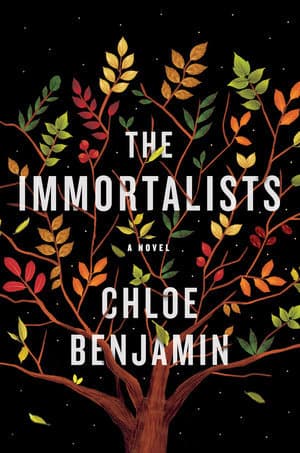
3.7 (152k) average on GoodreadsLiterary FictionBoth The Interestings and The Immortalists trace the lives of a group of young people over decades, examining how a pivotal early experience (a fortune-teller's predictions in Benjamin's novel, a summer camp in Wolitzer's) shapes their future paths. However, Benjamin's narrative is more overtly structured around a magical realist premise, explicitly exploring themes of fate versus free will through the lens of predetermined death dates. Wolitzer's approach is firmly rooted in realism, focusing on the psychological and social forces that drive character choices and outcomes. The Immortalists often uses its premise to drive a more episodic structure for each sibling, while The Interestings maintains a tighter focus on the interconnectedness of its core group and their shared history.
- The Old Man and the Sea
Ernest Hemingway
3.8 (831k) average on GoodreadsLiterary FictionA Cuban fisherman's long struggle with a giant marlin becomes a story of endurance and dignity, now retold for young adults with illustrations, phonetic guides, and writing prompts in Traditional Chinese.
- One Hundred Years of Solitude
Gabriel García Márquez
4.1 (753k) average on GoodreadsLiterary FictionThrough the multi-generational story of the Buendía family, a mythical town deals with the repeating patterns of time, love, and solitude, as the extraordinary mixes with the ordinary.
- The Goldfinch
Donna Tartt
3.9 (720k) average on GoodreadsLiterary FictionHaunted by a tragic explosion and clutching a stolen Dutch masterpiece, a young orphan navigates the opulent drawing rooms of New York and the gritty underbelly of the art world, desperately seeking connection and redemption amidst a life spiraling into crime and obsession.
- Little Fires Everywhere
Celeste Ng
4.1 (713k) average on GoodreadsLiterary FictionIn Shaker Heights, an artist and her daughter move in, and their free-spirited lives clash with a rule-bound matriarch, revealing hidden conflicts beneath a perfect surface.





Enjoyed the summary?
A summary gives you the shape of the book. The book itself has the detail, the examples and the voice.
Find The Interestings on AmazonAs an Amazon Associate, BookBrief earns from qualifying purchases. How we're funded