
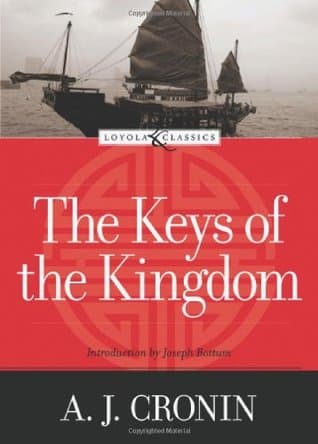
Synopsis
Covers the whole plot, including the ending.
- Difficulty
- Medium
- Pacing
- Moderate
- Mood
- Inspirational, Reflective, Resilient, Compassionate
- Read it if
- You enjoy sweeping historical sagas about moral integrity, spiritual journeys, and the triumph of human kindness against adversity, especially those with an East-meets-West setting.
- Skip it if
- You prefer fast-paced thrillers or stories without a strong spiritual or philosophical underpinning, or if you are put off by detailed depictions of hardship and war.
The Keys of the Kingdom Plot Summary
Covers the whole plot, including the ending.
Young Francis Chisholm's Tragic Beginnings
The novel opens with the elderly Monsignor Francis Chisholm thinking about his life. Flashbacks show his childhood in Tweedside, Scotland. Francis experiences tragedy early: his mother dies in childbirth, and his father is killed saving a drowning girl, leaving Francis an orphan. Raised by his stern Aunt Polly and kind Aunt Nessie, Francis finds comfort from the local Protestant minister, Mr. Tulloch. Despite the minister's faith, Francis feels drawn to Catholicism, influenced by his mother's background. These early years, marked by sorrow and spiritual awakening, lead him to pursue the priesthood.
Seminary Years and Early Struggles
Francis enters the seminary, a world of strict rules and traditional beliefs. He struggles to fit in, often questioning rigid interpretations of faith and showing rebellion against hypocrisy. He becomes close friends with Anselm Mealey, a fellow seminarian who is more worldly but shares a bond with Francis. Their different personalities highlight Francis's compassionate approach to faith. His directness often causes problems with conservative faculty and students, especially the ambitious Monsignor Sleeth. These early experiences predict the lifelong friction Francis will have with church leaders.
First Parish and Unconventional Ministry
Ordained as a priest, Father Francis Chisholm is sent to a poor parish in a Scottish mining town. He immediately focuses on his parishioners' welfare over strict church rules. He befriends the local doctor, a non-Catholic, and works to improve the lives of the poor, even if it means clashing with wealthier donors or his superiors. His compassionate approach earns him the love of the common people but also the disapproval of traditional clergy, who see his methods as undignified. His time there includes spiritual success and increasing isolation from the church.
The Call to China
Because of his unconventional ministry and clashes with authority, particularly Monsignor Sleeth, Father Francis is seen as a problem priest. His superiors send him to a remote and challenging mission in Pai-tan, China. This assignment is a form of exile, a place where 'failed' priests are sent. Despite the harsh conditions, Francis accepts his new calling with humility and a renewed sense of purpose, seeing it as a chance to live out his faith among those most in need. This marks a turning point in his life.
Arrival and Initial Struggles in Pai-tan
Father Francis arrives in Pai-tan, China, to find a desolate and poor mission. He meets the elderly, ailing Father Hamish MacNabb, who has struggled for years. The mission has a dilapidated chapel and a few small buildings. Francis immediately faces challenges: extreme poverty, widespread disease, cultural and language barriers, and distrust from the local Chinese population, who are mostly Buddhist or Taoist. He begins rebuilding the mission by earning the trust of the villagers through kindness and selflessness, not by aggressive preaching.
Building Bridges and Battling Adversity
Francis dedicates himself to the people of Pai-tan. He uses his practical skills to set up a small dispensary, caring for the sick and injured, earning him the nickname 'the foreign doctor.' He works with the practical Dr. Willie Tulloch (son of the Protestant minister from his youth), who later joins him. He learns the language and customs, showing respect for the local culture. Despite famine, plague, and hostility from warlords and bandits, Francis continues, often risking his life to protect his flock. His selfless actions, like sharing his food during a famine, slowly break down the villagers' skepticism, leading to the first conversions to Christianity.
The Arrival of the Sisters
Years into his mission, three Irish nuns arrive to help Father Francis: Mother Maria-Veronica, Sister Agnes, and Sister Martha. Mother Maria-Veronica is a rigid woman who disapproves of Francis's methods and his close relationship with the Chinese people, especially his willingness to adapt to their customs. She often clashes with Francis, believing his approach is too relaxed and not focused enough on strict Catholic doctrine. Despite these tensions, the sisters help, especially in educating children and caring for the sick. Their presence highlights the ongoing conflict between Francis's compassionate faith and the church's rigid interpretations.
War and Revolution in China
China enters civil war, and Pai-tan becomes a battleground. The mission is threatened by warring groups, bandits, and anti-foreign feelings. Francis, with the help of loyal Chinese converts and Dr. Tulloch, protects his people and the mission. He confronts armed soldiers, negotiates with warlords, and endures hardship, including the destruction of parts of the mission. During these times, his courage, resourcefulness, and commitment to his flock are clear, strengthening his bond with the community and showing his deep spiritual conviction.
The Return of Anselm Mealey
After decades in China, Francis receives a visit from his old seminary friend, Anselm Mealey, who has become a Bishop. Mealey, now a figure of authority, is shocked by the mission's primitive conditions and Francis's lack of material success. He represents the institutional church Francis has always struggled against. While there is still affection between them, their contrasting lives—Mealey's worldly success versus Francis's spiritual fulfillment in obscurity—show their different paths. Mealey, though critical at first, is moved by Francis's faith and the genuine love he receives from his Chinese parishioners.
Handing Over the Reigns
As Francis ages, his health declines. The church decides to send a younger priest, Father Paul, to take over the mission. Francis, though sad to leave the people he has served, accepts the decision with humility. He mentors Father Paul, sharing his wisdom and lessons from his years in Pai-tan. He ensures a smooth transition, showing his devotion not to his own legacy, but to the mission's well-being. This peaceful handover marks the end of his life's work and his readiness to move on.
Return to Scotland and Final Reflections
Francis returns to Scotland, an old man, and is assigned to a quiet parish. He lives a simple life, still practicing his compassionate ministry. He is often visited by his great-nephew, a young priest named Father Angus Mealey (Anselm's nephew), to whom Francis tells his life story. Despite never achieving high office in the church, Francis finds peace and contentment. He understands that the 'keys of the kingdom' are found in love, humility, and selfless service, especially to the poor. His life, seemingly a failure to the institution, is a triumph of spiritual integrity.
The Keys of the Kingdom Characters
Monsignor Francis Chisholm
Protagonist
A compassionate and unconventional Catholic priest dedicated to selfless service.
Francis Chisholm is the central figure of the novel. From a tragic childhood, he develops a deep, personal faith that often clashes with the rigid doctrines and institutionalism of the Catholic Church. He is characterized by his humility, practicality, and profound empathy for the poor and suffering. Sent to a challenging mission in China, he dedicates his life to serving the local people, not through dogma, but through acts of kindness, medical care, and genuine respect for their culture. He is often misunderstood and undervalued by his superiors, particularly Monsignor Sleeth, but finds true spiritual fulfillment in his unconventional ministry.
Relationships: Anselm Mealey (Lifelong friend and fellow seminarian, later a Bishop); Dr. Willie Tulloch (Devoted friend and medical colleague in China); Monsignor Sleeth (Antagonist and clerical rival); Mother Maria-Veronica (Superior of the nuns, often in conflict with Francis); Aunt Polly (Strict but caring aunt who raised him)
Anselm Mealey
Supporting
Francis's seminary friend who rises to become a Bishop, representing institutional success.
Anselm Mealey is Francis's closest friend during their seminary years. More worldly and ambitious than Francis, Anselm represents the more conventional path within the church. He is intelligent and capable, steadily rising through the ecclesiastical hierarchy to become a Bishop. While he retains affection for Francis, his perspective on success and duty is shaped by the institutional church. His visit to Francis in China highlights the stark contrast between their lives: Anselm's worldly achievements versus Francis's spiritual fulfillment in obscurity.
Relationships: Francis Chisholm (Lifelong friend); Father Angus Mealey (Nephew)
Dr. Willie Tulloch
Supporting
A Protestant doctor who becomes Francis's devoted medical colleague and friend in China.
Dr. Willie Tulloch is the son of the Protestant minister from Francis's childhood. He is a pragmatic and dedicated doctor who, after pursuing a medical career, joins Francis in Pai-tan, China. Despite their differing religious backgrounds, they form a deep and unbreakable bond based on their shared commitment to alleviating suffering. Willie is instrumental in establishing and running the mission's dispensary, tirelessly working alongside Francis through famines, plagues, and civil war. He represents a practical, ecumenical spirit of service.
Relationships: Francis Chisholm (Close friend and colleague); Mr. Tulloch (father) (Father and early spiritual mentor to Francis)
Monsignor Sleeth
Antagonist
An ambitious and rigid cleric who consistently opposes and undermines Francis.
Monsignor Sleeth is Francis's primary clerical antagonist. From their seminary days, Sleeth represents the conservative, power-seeking, and judgmental elements within the church. He is obsessed with rules, appearances, and his own career advancement, viewing Francis's unconventional methods and compassion for the poor as a threat to order and his own ambition. Sleeth actively works to sideline Francis, ultimately orchestrating his assignment to the remote Chinese mission. He embodies the institutional hypocrisy and lack of genuine charity that Francis so often encounters.
Relationships: Francis Chisholm (Rival and antagonist)
Mother Maria-Veronica
Supporting
The rigid and dogmatic superior of the nuns at the Chinese mission.
Mother Maria-Veronica is the superior of the three Irish nuns sent to assist Francis in Pai-tan. She is a devout but extremely rigid and dogmatic woman who believes in strict adherence to church rules and traditions. She frequently clashes with Francis over his unconventional approach to evangelism, his close relationship with the Chinese, and his willingness to adapt to local customs. While dedicated to her faith, her lack of flexibility and understanding of the local culture often create tension within the mission, serving as another representation of the institutional church's limitations.
Relationships: Francis Chisholm (Colleague, often in conflict); Sister Agnes (Subordinate nun); Sister Martha (Subordinate nun)
Aunt Polly
Supporting
Francis's stern but ultimately caring aunt who raises him after his parents' deaths.
Aunt Polly is Francis's paternal aunt who, along with her sister Nessie, raises Francis after he is orphaned. She is a stern, practical, and somewhat puritanical woman who instills a strong sense of duty and morality in young Francis. While she is strict and often critical, particularly of Francis's Catholic leanings, she genuinely cares for him. Her character represents the traditional, unyielding values of his Scottish upbringing, providing a contrast to his later spiritual openness.
Relationships: Francis Chisholm (Aunt and guardian); Aunt Nessie (Sister and co-guardian)
Aunt Nessie
Supporting
Francis's kind and gentle aunt who offers him emotional support.
Aunt Nessie is Francis's other paternal aunt, and a stark contrast to her sister Polly. She is kind, gentle, and nurturing, providing much-needed emotional support and warmth to young Francis after his tragic losses. She is more understanding and less judgmental than Polly, especially regarding Francis's spiritual inclinations. Nessie represents the softer, more compassionate side of his upbringing, offering him comfort and unconditional love.
Relationships: Francis Chisholm (Aunt and guardian); Aunt Polly (Sister and co-guardian)
Mr. Tulloch
Mentioned
The Protestant minister who provides spiritual guidance to young Francis.
Mr. Tulloch is the kindly and open-minded Protestant minister in Francis's hometown during his childhood. Despite their differing faiths, he offers spiritual comfort and guidance to young Francis after his parents' deaths. He is a man of genuine faith and broad understanding, demonstrating that true spirituality transcends denominational boundaries. His influence helps shape Francis's early understanding of compassion and service, and his son, Willie, later becomes Francis's closest ally in China.
Relationships: Francis Chisholm (Spiritual mentor); Dr. Willie Tulloch (Father)
Father Hamish MacNabb
Supporting
The ailing, elderly priest Francis replaces at the Pai-tan mission.
Father Hamish MacNabb is the elderly, long-suffering priest whom Francis replaces at the Pai-tan mission. He has toiled for years in obscurity and hardship, achieving little outward success but maintaining a quiet, enduring faith. His initial presence gives Francis a sense of the immense challenges and isolation he is about to face. MacNabb represents the hidden sacrifices of countless missionaries, and his quiet dignity sets an example for Francis.
Relationships: Francis Chisholm (Predecessor at the mission)
Father Paul
Supporting
The young, energetic priest who eventually takes over the Pai-tan mission from Francis.
Father Paul is the young priest sent to relieve Francis of his duties at the Pai-tan mission as Francis ages and his health declines. He is depicted as energetic and well-meaning, representing the next generation of missionaries. Francis mentors him, passing on his knowledge and experience of the mission and its people, ensuring a smooth transition. Father Paul symbolizes the continuity of the mission and the enduring nature of the work, even as individual priests come and go.
Relationships: Francis Chisholm (Successor at the mission)
The Keys of the Kingdom Themes
Faith vs. Institution
This is the novel's main theme. Francis Chisholm's personal, compassionate faith often clashes with the rigid doctrines, politics, and hierarchy of the Catholic Church. While the institution seeks conformity and outward success, Francis prioritizes love, humility, and practical service, often at the cost of his own career. His struggles with Monsignor Sleeth and Mother Maria-Veronica show how true spirituality can be hindered by bureaucracy, but ultimately triumphs in the heart.
“There are many keys to the kingdom, Angus, and not all of them are held by the Church.”
Humility and Selfless Service
Francis Chisholm's life shows humility and selfless service. Despite setbacks and lack of recognition, he consistently puts others' needs before his own. Whether caring for the poor in Scotland or building a mission in China, his motivation is always genuine care. He seeks no personal glory, finding reward in his flock's well-being. This theme is clear through his willingness to endure hardship, risk his life, and sacrifice comfort for others.
“Love is not a feeling, Angus, it is an act of the will. And it is the only key that truly opens the door.”
The Nature of True Success
The novel explores what true success means, contrasting worldly achievements with spiritual fulfillment. While characters like Anselm Mealey and Monsignor Sleeth rise in the church, Francis Chisholm is seen as a 'failure' by the hierarchy. However, his life in Pai-tan, marked by deep love, a great impact on the Chinese people, and strong faith, shows a more meaningful success. The book argues that true success is in living with integrity, compassion, and genuine service.
“The only failure, Angus, is to stop trying to do good.”
Cultural Understanding and Tolerance
Francis's mission in China shows the importance of cultural understanding and tolerance. Unlike the rigid Mother Maria-Veronica, Francis tries to learn the Chinese language, respect their customs, and integrate himself. He does not force his beliefs but earns trust through kindness and practical help, showing that real evangelism comes from empathy and respect, not forced conversion. His friendship with Dr. Willie Tulloch also shows that shared humanity goes beyond religious differences.
“You cannot bring God to people, Angus, until you have first shown them that you love them as they are.”
Suffering and Resilience
The novel shows Francis Chisholm's life as one of suffering, from childhood tragedies to the hardships of his mission in China, including famine, plague, and civil war. Yet, through it all, Francis shows resilience. His suffering deepens his faith and strengthens his resolve to serve. The book suggests that enduring hardship builds character and reveals spiritual strength, allowing Francis to find meaning in difficult challenges.
“It is in suffering that we often find the deepest truth, Angus, if we are willing to look.”
Plot Devices & Literary Techniques
Frame Narrative
An older Francis recounts his life story to a younger priest.
The novel employs a frame narrative, beginning and ending with the elderly Monsignor Francis Chisholm reflecting on his life and recounting his experiences to his great-nephew, Father Angus Mealey. This structure allows for a retrospective and reflective tone, providing insight into Francis's wisdom and perspective gained over a lifetime. It also allows the reader to understand the significance of his early struggles and later triumphs through the lens of his developed spiritual understanding, reinforcing the themes of faith and humility.
Foil Characters
Characters who highlight Francis's unique qualities through contrast.
The novel extensively uses foil characters to underscore Francis Chisholm's distinctive qualities. Monsignor Sleeth, with his ambition and rigid adherence to rules, serves as a direct contrast to Francis's humility and compassionate pragmatism. Similarly, Mother Maria-Veronica's dogmatic approach to the mission highlights Francis's cultural sensitivity and flexible love. Even his friend Anselm Mealey, with his worldly success, acts as a foil, emphasizing Francis's spiritual triumph in obscurity. These contrasts effectively illuminate Francis's character and the central themes of the book.
Symbolism of the 'Keys'
The metaphor of 'keys to the kingdom' representing spiritual truths.
The title itself, 'The Keys of the Kingdom,' is a central symbolic device. While traditionally referring to the keys of St. Peter and the authority of the Church, Francis Chisholm's life redefines this symbolism. For him, the 'keys' are not ecclesiastical power or dogma, but rather humility, love, compassion, and selfless service to humanity. Throughout the narrative, he discovers these true 'keys' through his experiences of suffering, understanding, and unwavering faith, ultimately finding the kingdom of God within his own actions and relationships, rather than in institutional recognition.
The Mission as a Microcosm
The Pai-tan mission reflects broader societal and spiritual struggles.
The remote Pai-tan mission in China functions as a microcosm for broader human and spiritual struggles. It becomes a crucible where Francis's faith is tested against extreme poverty, disease, war, and cultural clashes. The challenges faced at the mission—building community, overcoming prejudice, providing care in dire circumstances—mirror the larger spiritual battles between love and hate, faith and despair, and institutional rigidity versus genuine human connection. The mission's isolation allows for a focused examination of these universal themes.
The Keys of the Kingdom Quotes
“For the soul, like the body, can be starved. There is a hunger of the spirit, as there is a hunger of the flesh.”
“The greatest sin, perhaps, is not to use the gifts God has given us.”
“It is not the quantity of our good deeds, but the quality of the love that inspires them, which matters in God's eyes.”
“He learned that sometimes the greatest strength lay in admitting one's own weakness.”
“To understand all is to forgive all.”
“The true test of a man's character is what he does when no one is watching.”
“Faith is not a matter of logic, but of the heart.”
“Sometimes the greatest good comes from the most unconventional paths.”
“The world is full of suffering, but it is also full of people trying to alleviate it.”
“It is easier to be a saint than to be a good man.”
“Every man has his own cross to bear.”
“You cannot truly help others unless you first understand their pain.”
“The only real failure is the failure to try.”
“Peace comes not from the absence of trouble, but from the presence of God.”
Quiz
10 questions on the plot and the characters. Each answer comes with a short explanation.
Question 1
What is Father Francis Chisholm's primary motivation for his actions throughout the novel?
- To gain recognition and advancement within the Church hierarchy.
- To adhere strictly to all Church doctrines and traditions, regardless of circumstance.
- To live a life of selfless service and compassion, often prioritizing human need over rigid rules.
- To prove his superiors wrong and show them his individual worth.
Show answer
C. To live a life of selfless service and compassion, often prioritizing human need over rigid rules. Father Chisholm is consistently depicted as driven by genuine compassion and a desire to do good, even when it means clashing with the established norms or expectations of his superiors. His focus is on helping others.
Question 2
Where is Father Chisholm primarily sent to maintain a mission after being deemed a 'failure' by his superiors?
- A remote village in the Scottish Highlands.
- An impoverished urban slum in London.
- A war-torn region in China.
- A desolate island in the South Pacific.
Show answer
C. A war-torn region in China. The book explicitly states that Father Chisholm is sent to China, where he faces extreme poverty, civil war, and plague, highlighting the harsh conditions of his mission.
Question 3
What kind of challenges does Father Chisholm face in his mission field?
- Strict adherence to liturgical reform and theological debates.
- Desperate poverty, civil war, plague, and hostility from both locals and his superiors.
- Lack of adequate funding for building grand cathedrals.
- Disputes over property rights with local landowners.
Show answer
B. Desperate poverty, civil war, plague, and hostility from both locals and his superiors. The description clearly outlines the extreme difficulties Father Chisholm encounters in China: 'desperate poverty, civil war, plague, and the hostility of his superiors.'
Question 4
Father Chisholm's 'individuality and directness' often make him unpopular with other clergy. How does this characteristic manifest in his actions?
- He frequently criticizes the Pope's decisions in public sermons.
- He prioritizes practical help and human connection, sometimes bending or ignoring rigid clerical expectations.
- He refuses to wear traditional priestly vestments during services.
- He openly advocates for leaving the Catholic Church.
Show answer
B. He prioritizes practical help and human connection, sometimes bending or ignoring rigid clerical expectations. His individuality is shown through his willingness to act according to his conscience and compassion, even if it means being 'unpopular with other clergy' who might prefer stricter adherence to protocol or tradition.
Question 5
What is the central theme implied by the title 'The Keys of the Kingdom' in relation to Father Chisholm's journey?
- The importance of ecclesiastical power and authority within the Church.
- That true spirituality and access to the 'kingdom of heaven' are found through humility, service, and unconditional love, not worldly success or rigid dogma.
- The literal keys to a hidden treasure chest that Chisholm discovers in China.
- The political maneuvering required to rise through the ranks of the clergy.
Show answer
B. That true spirituality and access to the 'kingdom of heaven' are found through humility, service, and unconditional love, not worldly success or rigid dogma. The description states that 'Father Chisholm finds the keys to the kingdom of heaven' in the face of hardship, suggesting that true spiritual fulfillment comes from his compassionate actions and humble service, rather than conventional success.
Question 6
Despite being considered a 'failure' by his superiors, what is the ultimate outcome of Father Chisholm's life and work as depicted in the novel?
- He eventually leaves the priesthood in disillusionment.
- He receives a posthumous sainthood from the Vatican.
- He finds deep spiritual fulfillment and makes a profound, positive impact on those he serves, despite lack of institutional recognition.
- He becomes a wealthy and influential businessman after returning from China.
Show answer
C. He finds deep spiritual fulfillment and makes a profound, positive impact on those he serves, despite lack of institutional recognition. The novel emphasizes that despite being unpopular and deemed a 'failure' by superiors, Chisholm 'finds the keys to the kingdom of heaven,' indicating that his life's true success is spiritual and humanitarian, not hierarchical.
Question 7
How does Father Chisholm's character challenge the traditional perception of success within the Church?
- By demonstrating that financial prosperity is the true measure of a priest's effectiveness.
- By showing that spiritual success is often found in humble service and compassion, rather than in power, popularity, or strict adherence to rigid rules.
- By proving that a priest's primary duty is to engage in political activism.
- By advocating for a complete abandonment of all religious rituals and sacraments.
Show answer
B. By showing that spiritual success is often found in humble service and compassion, rather than in power, popularity, or strict adherence to rigid rules. Chisholm's story highlights a tension between institutional success (which he lacks) and spiritual success (which he achieves) through his 'individuality and directness' and his focus on 'doing good in an imperfect world.'
Question 8
What specific aspect of Father Chisholm's personality makes him 'unpopular with other clergy'?
- His constant efforts to undermine their authority.
- His preference for lavish ceremonies over simple worship.
- His individuality and directness, which often lead him to question or bypass conventional church protocols in favor of practical compassion.
- His outspoken atheism and rejection of religious belief.
Show answer
C. His individuality and directness, which often lead him to question or bypass conventional church protocols in favor of practical compassion. The text explicitly states that 'his individuality and directness make him unpopular with other clergy,' indicating his tendency to operate outside strict norms when he believes it's necessary for good.
Question 9
How does the author, A.J. Cronin, use the setting of China to emphasize Father Chisholm's spiritual journey?
- The peaceful, contemplative environment of China allows Chisholm to meditate without interruption.
- The extreme hardships and lack of conventional support in China force Chisholm to rely solely on his faith and compassion, revealing the depth of his spirituality.
- The rich cultural traditions of China distract Chisholm from his priestly duties.
- The presence of a strong Catholic community in China provides him with immediate acceptance and resources.
Show answer
B. The extreme hardships and lack of conventional support in China force Chisholm to rely solely on his faith and compassion, revealing the depth of his spirituality. The narrative highlights the 'desperate poverty, civil war, plague' and 'constant danger and hardship' in China, which serves as a crucible for Chisholm's faith, forcing him to find his 'keys to the kingdom' through resilience and selfless action.
Question 10
What is the primary conflict Father Chisholm faces throughout his career, both in Scotland and China?
- A constant struggle against his own personal doubts about the existence of God.
- The tension between his compassionate, individualistic approach to faith and the rigid, often bureaucratic expectations of the Church hierarchy.
- A physical battle against local bandits who target his missions.
- His inability to learn new languages, hindering his missionary work.
Show answer
B. The tension between his compassionate, individualistic approach to faith and the rigid, often bureaucratic expectations of the Church hierarchy. The core of the story revolves around Chisholm's 'individuality and directness' making him 'unpopular with other clergy' and being 'considered a failure by his superiors,' even as he dedicates himself to 'doing good in an imperfect world.' This internal and external conflict with institutional norms is central.
The Keys of the Kingdom FAQ
What is 'The Keys of the Kingdom' about?
'The Keys of the Kingdom' follows the life of Father Francis Chisholm, a Scottish Catholic priest whose unconventional compassion and directness often put him at odds with the rigid hierarchy of the Church. The narrative traces his journey from a difficult childhood through his seminary years, culminating in his decades-long mission in a remote, war-torn region of China, where he truly embodies his faith amidst immense suffering and adversity.
Why should I read 'The Keys of the Kingdom'?
You should read this book for its profound exploration of faith, human compassion, and the true meaning of spirituality beyond dogma. Father Chisholm's unwavering dedication to humanity, despite constant hardship and criticism from his superiors, offers an inspiring and deeply moving portrayal of a man living his principles in an imperfect world.
What is the background/setting of 'The Keys of the Kingdom'?
The story begins in early 20th-century Scotland, detailing Francis Chisholm's youth and seminary training, but its primary setting is a remote Catholic mission in China. This mission, called Paisien, is depicted amidst the backdrop of civil war, famine, plague, and political unrest, creating a challenging and often dangerous environment for Father Chisholm's work.
What are the most memorable quotes?
One memorable quote reflecting Francis's philosophy is, 'There are many roads to God, and the shortest, the most direct, is charity.' Another encapsulates his humility and dedication: 'Love is not a feeling, it is an act.' These lines highlight the core themes of practical faith and universal compassion.
What writing style does the author use?
A.J. Cronin employs a straightforward, empathetic, and often poignant narrative style. He uses vivid descriptions, particularly of the Chinese landscape and the hardships faced by its people, and focuses deeply on character development, allowing readers to intimately understand Father Chisholm's inner struggles and triumphs.
What minor details add significant meaning?
The recurring motif of Father Chisholm's simple, worn crucifix, often clutched in moments of doubt or prayer, subtly underscores his unwavering faith and his connection to the suffering Christ, contrasting with the more ornate symbols of authority favored by his superiors. His ability to connect with children, even non-Christian ones, also highlights his innate purity of heart.
What are some subtle foreshadowing moments?
Early in his seminary days, Francis's lack of interest in theological debates and his preference for practical acts of kindness subtly foreshadow his future conflicts with Church dogma and his ultimate calling to a life of service over intellectualism. His early friendships with 'outsiders' also hints at his later ability to bridge cultural and religious divides.
What unexpected character connections exist?
An unexpected connection is between Father Chisholm and the Chinese warlord, General Gow, who initially appears as a hostile figure. Despite their vastly different worlds and beliefs, they develop a grudging respect and even a form of understanding, demonstrating Francis's ability to find common ground with anyone, even his antagonists.
What are unspoken character motivations?
Many of Father Chisholm's superiors, like Monsignor Sleeth, are driven by an unspoken fear of anything that deviates from established tradition and a desire to maintain institutional power and decorum, rather than solely by genuine spiritual conviction. Their motivations are often rooted in personal ambition and a rigid interpretation of 'success' within the Church.
What psychological complexities do characters exhibit?
Father Chisholm himself exhibits the complexity of profound humility combined with unwavering inner strength. He constantly battles self-doubt and the pain of being misunderstood and marginalized by his own Church, yet he never allows these external pressures to compromise his core values or his mission to serve humanity.
What are the major emotional turning points?
One major emotional turning point is when Francis, as a young priest, truly embraces his 'failure' in the eyes of his superiors, realizing that their disapproval frees him to pursue a more authentic spiritual path. Another is his decision to stay and care for the sick during a devastating plague in China, despite the immense personal risk, solidifying his commitment to his adopted community.
How do relationship dynamics evolve?
Francis's relationship with his childhood friend and fellow priest, Anselm, evolves from a close bond to a stark contrast in their chosen paths, with Anselm rising through the Church hierarchy while Francis embraces a life of humble service. His relationships with the Chinese people, initially wary, transform into deep familial love and mutual respect.
Which parts remain ambiguous or open-ended?
The novel leaves the long-term future of the Paisien mission somewhat open-ended, hinting at continued challenges but also the enduring legacy of Father Chisholm's work through the people he inspired. The ultimate 'success' of his mission, in spiritual terms, is left for the reader to interpret, as it defies conventional metrics.
What are controversial scenes or decisions?
One controversial decision is Father Chisholm's pragmatic choice to allow the villagers to continue certain traditional, non-Christian practices if they did not directly conflict with core Christian tenets, rather than enforcing rigid adherence to Western customs. This often drew ire from his more orthodox superiors, who saw it as a compromise of faith.
'The Keys of the Kingdom' ending explained: how it ends & what it means
The novel ends with an elderly and frail Father Chisholm having returned to Scotland, living in a humble retirement home, still largely misunderstood by the Church hierarchy, but deeply at peace. He receives a visit from a young priest seeking guidance, signifying that his quiet, compassionate approach to faith has indeed left a lasting legacy and that the 'keys to the kingdom' are found not in power or prestige, but in a life of selfless love and service.
About the author
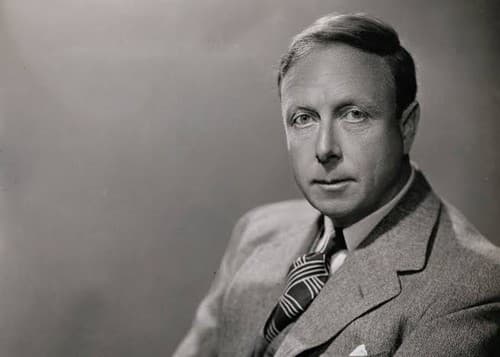
A.J. Cronin was a Scottish physician and novelist celebrated for his socially conscious fiction. His most famous works, 'The Citadel' and 'The Keys of the Kingdom,' explored themes of medical ethics and faith, achieving international bestseller status and critical acclaim. Cronin's vivid storytelling and moral seriousness left a significant mark on 20th-century literature.
Similar books
- The Citadel
A.J. Cronin
4.2 (7k) average on GoodreadsHistorical FictionExplores themes of idealism clashing with institutionalism within a professional setting, by the same author.
- The Power and the Glory
Graham Greene
4.0 (33k) average on GoodreadsLiterary FictionFeatures a 'whisky priest' protagonist who, despite his flaws, embodies a deep, unconventional spirituality in a hostile environment.
- To Kill a Mockingbird
Harper Lee
4.3 (4.5M) average on GoodreadsHistorical FictionIn the 1930s Jim Crow South, Harper Lee writes about racial injustice, moral growth, and the quiet courage of a lawyer father, Atticus Finch, as seen through his young daughter's eyes.
- The Great Gatsby
F. Scott Fitzgerald
3.9 (3.8M) average on GoodreadsHistorical FictionIn the opulent Roaring Twenties, a mysterious millionaire's lavish parties hide his desperate, tragic pursuit of a lost love, exposing the emptiness within the American Dream.
- Pride and Prejudice
Jane Austen
4.3 (3M) average on GoodreadsHistorical FictionIn a society focused on status and money, Elizabeth Bennet navigates love and pride, challenging Mr. Darcy and social expectations to find true affection.
- Angels & Demons
Dan Brown
3.9 (2.7M) average on GoodreadsThrillerA Harvard symbologist races through Rome's ancient sites, deciphering cryptic clues to unmask the Illuminati and stop a vengeful plot to destroy the Vatican with a stolen antimatter weapon.





Enjoyed the summary?
A summary gives you the shape of the book. The book itself has the detail, the examples and the voice.
Find The Keys of the Kingdom on AmazonAs an Amazon Associate, BookBrief earns from qualifying purchases. How we're funded