
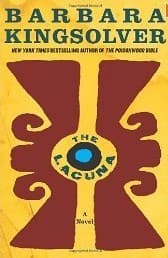
Synopsis
Covers the whole plot, including the ending.
- Difficulty
- Medium
- Pacing
- Moderate
- Mood
- Atmospheric, Reflective, Thought-provoking, Melancholy
- Read it if
- You enjoy richly detailed historical fiction with complex characters and a deep dive into the intersection of art, politics, and personal identity. Ideal for those who appreciate a slow burn and a critical look at McCarthyism and public perception.
- Skip it if
- You prefer fast-paced thrillers or lighthearted reads. The historical detail and introspective narrative might feel dense if you're looking for quick plot progression.
The Lacuna Plot Summary
Covers the whole plot, including the ending.
Early Life on Isla Pixol and Arrival in Mexico City
Harrison William Shepherd, born in the U.S. but left by his mother, Salome, with housekeepers, spends his early years on Isla Pixol, a small Mexican island. He learns to cook, read, and observe nature. His mother, a beautiful and careless woman, eventually takes him back, moving them to Mexico City in the late 1930s. There, Salome gets involved with wealthy men, leaving Harrison mostly alone. He becomes interested in ancient Aztec culture and gets a job mixing plaster for the muralist Diego Rivera, entering the political Mexican art world.
Working for Diego Rivera and Meeting Frida Kahlo
Working for Diego Rivera, Harrison becomes a minor figure in the artist's busy home. He watches Rivera's art process and his difficult relationship with Frida Kahlo. Frida, seeing Harrison's quiet intelligence and skill, likes him. She encourages his art interests, especially in Aztec history, and gives him some stability and affection. Through them, he hears fervent political discussions and revolutionary ideas, preparing him for his next important role.
Serving as Secretary to Leon Trotsky
When Leon Trotsky and his wife Natalia Sedova are given asylum in Mexico, they first stay with Rivera and Kahlo. Harrison, because he is discreet and can type, is soon hired as Trotsky's personal secretary. He moves into their compound in Coyoacán, becoming involved in the daily life and political struggles of the exiled revolutionary. Harrison carefully types Trotsky's manuscripts, including his biography of Stalin, and sees firsthand the constant fear of assassination and the intense political schemes around Trotsky, which shapes his understanding of power and propaganda.
Trotsky's Assassination and Harrison's Departure
The threat to Trotsky's life happens when Ramón Mercader, an NKVD agent, enters the compound and murders Trotsky with an ice axe. Harrison is there during the aftermath, a traumatic event that strengthens his dislike for political extremism and dangerous ideologies. After the assassination, Harrison is linked to the events and, wanting to escape the political trouble and Trotsky's shadow, decides to return to the United States. He hopes to find a new identity and a sense of belonging in his birth country.
Arrival in Asheville, North Carolina and a New Career
Harrison settles in Asheville, North Carolina, a place he chose randomly. He tries to start a new life, distancing himself from his past in Mexico. He begins to write historical novels, inspired by his knowledge of Aztec history and his experiences. His first novel, 'The Serpent and the Eagle,' is a fictional story of the conquest of Mexico. He hires a careful and dedicated stenographer, Mrs. Alice Brown, who becomes a key part of his new career and a quiet, steady presence in his life, helping him with publishing and American society.
Literary Success and Public Scrutiny
Harrison's historical novels become popular, making him a celebrated author. However, his growing public profile draws attention to his mysterious past in Mexico, especially his connection with Leon Trotsky. Journalists and the public become curious about his early life. Harrison tries to keep his life private, but suspicion, fueled by anti-communist feelings in America, begins to grow. His unique background, once a source of inspiration, slowly becomes a problem.
The Red Scare and McCarthyism
As the Cold War grows and McCarthyism takes hold in the United States, anyone with a slight connection to communism becomes a suspect. Harrison, having been Trotsky's secretary, is a clear target. His private life is examined, his writings are checked for hidden messages, and his Mexican past is seen with suspicion. J. Edgar Hoover's FBI starts a file on him, twisting facts and making up accusations, showing the destructive power of unchecked fear and public hysteria.
Interrogation and Public Trial by Media
Harrison is questioned intensely by government agents, who accuse him of communist sympathies and anti-American acts. His attempts to explain his position and his historical work are ignored or twisted. The media, wanting dramatic stories, joins in, painting him as a dangerous intellectual and a possible spy. His reputation is systematically ruined, and his life's work is damaged. Mrs. Brown, his loyal stenographer, remains a steady supporter, carefully recording the injustice.
Frida Kahlo's Death and a Return to Mexico
During his personal and professional difficulties, Harrison hears of Frida Kahlo's death. This news deeply affects him, as Frida was one of the few people who truly understood and accepted him. He makes a secret trip back to Mexico for her funeral, a sad return to the place that shaped much of his early life. This journey reminds him of his dual identity and how impossible it is to fully escape his past, even as he faces a grim future in the U.S.
Imprisonment and Isolation
Despite being innocent, Harrison is found guilty of charges related to his alleged communist ties. He is imprisoned, his career is destroyed, and his reputation is permanently damaged. In prison, he continues to write, finding comfort in putting his thoughts on paper, even if they cannot be published. He experiences deep isolation, a sharp contrast to the lively, though dangerous, life he once led. His only regular contact with the outside world is through Mrs. Brown, who continues to support him and preserve his writings.
The Truth Revealed Through 'The Lacuna'
After Harrison's death in prison, Mrs. Brown works to gather his writings, diaries, and letters. She carefully arranges them, creating 'The Lacuna,' a full account of his life. Through this work, she aims to tell the true story of Harrison's experiences, revealing the injustices he suffered and challenging the false public perception. Her efforts show his character and condemn the political climate that destroyed him, giving Harrison a voice beyond his critics.
Legacy and Historical Reassessment
Years after his death, with Cold War tensions easing and the McCarthy era re-evaluated, Harrison Shepherd's story begins to be heard more kindly. 'The Lacuna,' collected by Mrs. Brown, becomes an important document for understanding not only Harrison's life but also the wider historical period. His work is re-examined, and his reputation is slowly restored. His life, marked by the 'lacuna'—the gap between truth and public perception—becomes a strong example of individual integrity against political oppression and misinformation.
Principal Figures
Harrison William Shepherd
Protagonist
A quiet, observant man caught between two cultures and historical upheavals.
Born in the US but raised in Mexico, Harrison is an introspective and sensitive individual with a deep love for history and language. He is an astute observer of human nature and political currents, often feeling like an outsider. He seeks a place to belong and a voice of his own, finding solace in writing and the natural world. His experiences with Diego Rivera, Frida Kahlo, and Leon Trotsky shape his worldview, making him wary of extreme ideologies but committed to truth. He values integrity and quiet dignity above all else.
Relationships: Salome (Negligent and self-absorbed mother); Frida Kahlo (Lifelong friend, mentor, and confidante); Diego Rivera (Employer and artistic mentor); Leon Trotsky (Employer, political figure, and object of Harrison's careful observation); Mrs. Alice Brown (Loyal stenographer, friend, and posthumous editor)
Frida Kahlo
Supporting
The iconic Mexican artist who offers Harrison friendship and guidance.
A vibrant, passionate, and fiercely independent artist, Frida Kahlo is a central figure in Harrison's early life. Despite her own physical pain and tumultuous relationship with Diego Rivera, she possesses a keen intellect and a compassionate spirit. She sees Harrison's potential and offers him a rare sense of belonging and encouragement, particularly in his interest in Aztec history. Frida represents artistic freedom, resilience, and a deep connection to Mexican culture, contrasting sharply with the political fanaticism Harrison later encounters.
Relationships: Harrison Shepherd (Close friend and mentor); Diego Rivera (Husband, artistic collaborator, and tumultuous lover); Leon Trotsky (Initial host and political associate)
Leon Trotsky
Supporting
The exiled Russian revolutionary for whom Harrison serves as secretary.
A brilliant and controversial political theorist, Trotsky is portrayed as a man of formidable intellect and unwavering conviction, even in exile. He is deeply committed to his revolutionary ideals and works tirelessly to complete his writings despite constant threats. While Harrison respects his intellect, he also observes Trotsky's rigid ideology and the paranoia that surrounds him, understanding the destructive potential of absolute belief. Trotsky represents the powerful, yet perilous, pull of political conviction.
Relationships: Harrison Shepherd (Employer and subject of Harrison's observation); Natalia Sedova (Wife and political partner); Diego Rivera & Frida Kahlo (Initial hosts and political allies)
Mrs. Alice Brown
Supporting
Harrison's loyal and meticulous stenographer, who ultimately preserves his legacy.
Mrs. Brown is a seemingly unassuming and proper Southern woman, but beneath her quiet exterior lies immense loyalty, integrity, and a sharp mind. She is a meticulous worker, dedicated to accuracy and truth. She becomes Harrison's steadfast ally and confidante, believing in his innocence even when the world turns against him. Her diligent record-keeping and her commitment to compiling 'The Lacuna' are crucial to Harrison's posthumous vindication, embodying the power of quiet resistance and the pursuit of truth.
Relationships: Harrison Shepherd (Employer, friend, and executor of his literary estate)
Salome
Supporting
Harrison's beautiful, self-absorbed, and often absent mother.
Salome is a beautiful and charismatic woman, but utterly self-centered and neglectful as a mother. She drifts through life, seeking pleasure and attention from wealthy men, leaving Harrison largely to fend for himself. Her sporadic appearances and emotional distance contribute to Harrison's sense of rootlessness and his perpetual search for belonging. She represents the instability and lack of familial connection that define much of Harrison's early life, indirectly fostering his independence and observational skills.
Relationships: Harrison Shepherd (Biological mother, largely absent and neglectful)
Diego Rivera
Supporting
The renowned Mexican muralist and Harrison's first artistic employer.
A larger-than-life figure, Diego Rivera is a passionate artist and a committed communist. He is boisterous, often controversial, and deeply entwined with Mexico's political and artistic movements. He provides Harrison with his first real job and introduces him to the vibrant, yet volatile, world of Mexican intellectuals and revolutionaries. While Harrison admires his artistic talent, he also observes Rivera's political opportunism and the chaos of his personal life, influencing Harrison's later skepticism towards grand ideologies.
Relationships: Harrison Shepherd (Employer and artistic influence); Frida Kahlo (Wife and artistic partner); Leon Trotsky (Initial host and political ally)
J. Edgar Hoover
Antagonist
The powerful and paranoid director of the FBI, who targets Harrison.
Though not a direct character in the traditional sense, Hoover's presence is felt through the relentless persecution of Harrison Shepherd during the Red Scare. He represents the oppressive, fear-mongering machinery of the state, driven by paranoia and a desire for control. His actions, through the FBI, are responsible for fabricating evidence, orchestrating smear campaigns, and ultimately destroying Harrison's life, embodying the dangers of unchecked power and political extremism.
Relationships: Harrison Shepherd (Persecutor and target)
Ramón Mercader
Mentioned
The NKVD agent responsible for Trotsky's assassination.
Mercader is the Soviet agent who infiltrates Trotsky's inner circle and ultimately murders him. His act is a pivotal moment in Harrison's life, exposing him to the brutal reality of political violence and the ruthlessness of ideological conflict. Though a minor character in terms of direct interaction, his action has profound consequences for Harrison and solidifies his disillusionment with political extremism.
Relationships: Leon Trotsky (Assassin)
Themes & Insights
The Search for Identity and Belonging
Harrison Shepherd's life is a constant search for a home and a stable self. Raised between two cultures (American by birth, Mexican by upbringing) and left by his mother, he is always an outsider. He tries to build an identity through his historical novels and by seeking a quiet life in America, but his past always interferes. This theme appears from his early years on Isla Pixol, his quiet observation in the Kahlo/Rivera household, to his desperate attempts to fit into Asheville society. His failure to find a 'home' in America due to political persecution shows how fragile identity is when faced with outside forces.
“A person can be as much a mystery to himself as to anyone else.”
The Power and Peril of Narrative
The novel explores how stories—both personal and public—are made, controlled, and can shape or ruin lives. Harrison's life is changed by the stories told by the press and government during the Red Scare, turning him from a respected author into a 'communist sympathizer.' His historical novels try to tell accurate stories, but he learns that 'truth' is often subjective and easily twisted. Mrs. Brown's collection of 'The Lacuna' is a meta-narrative, an attempt to correct the false public record with Harrison's own words, showing the lasting power of a truthful account against propaganda. This theme is central to the 'lacuna' itself—the gap between the truth and what people publicly believe.
“A lacuna is a gap, a missing part. It is the part of a story that is not told, or that is not known.”
Art as Witness and Resistance
Art, in different forms, serves as expression, historical record, and subtle resistance throughout the novel. Diego Rivera's murals show grand historical stories, while Frida Kahlo's paintings are deeply personal and emotional. Harrison's own historical novels are his attempt to understand the past and human events. Even his careful secretarial work for Trotsky can be seen as preserving a historical narrative. When Harrison is silenced and imprisoned, his continued writing in his journals becomes his last act of defiance, a way to show his own truth. Mrs. Brown's preservation of these writings ensures that art, as literature, eventually wins over censorship and historical revisionism.
“Art is a weapon. It is also a shield.”
The Dangers of Ideology and Political Extremism
The novel shows the destructive power of unchecked political beliefs, from the strong communism around Trotsky to the fearful anti-communism of McCarthyism. Harrison, having seen Trotsky's assassination and the Red Scare, becomes wary of any absolute belief system that suppresses individual thought and truth. The novel shows how ideologies can lead to violence, censorship, and the persecution of innocent people. Harrison's quiet honesty contrasts with the fanaticism he meets on both sides of the political spectrum, highlighting the importance of critical thinking and human empathy over strict adherence to dogma.
“The greatest enemy of truth is often not the lie, but the myth.”
The Role of the Unsung Hero
The story quietly champions the contributions of those who work hard behind the scenes, often without recognition. Harrison himself, as a secretary and later a historical novelist, observes and records rather than being a public figure, yet his work holds great value. More importantly, Mrs. Alice Brown embodies this theme. Her quiet dedication, carefulness, and steady loyalty are key to preserving Harrison's true story. She is the 'unsung hero' who ensures that the 'lacuna' in Harrison's public story is eventually filled, showing that great impact can come from unassuming individuals committed to truth and justice.
“There are people who make history, and there are people who write it. And then there are people who simply preserve it.”
Plot Devices & Literary Techniques
Epistolary Format (Diaries, Letters, Clippings)
The story is primarily told through Harrison's personal writings and Mrs. Brown's compilation.
The novel is presented as a collection of Harrison Shepherd's diary entries, letters, government documents, and newspaper clippings, compiled and annotated by his stenographer, Mrs. Alice Brown. This format offers an intimate, first-person perspective on Harrison's experiences, allowing the reader direct access to his thoughts and observations. It also highlights the theme of narrative construction, as the reader sees how Harrison's private truths contrast with public representations. The interspersion of external documents emphasizes the conflict between personal truth and public perception, forming the 'lacuna' at the heart of the story.
The 'Lacuna' Metaphor
A central metaphor representing gaps in knowledge, truth, and historical record.
The 'lacuna' is a pervasive metaphor throughout the novel, referring to gaps or missing parts—in history, in personal memory, and most significantly, in the public's understanding of Harrison Shepherd's life. It represents the space between what is true and what is believed, often due to deliberate obfuscation or sensationalism. The entire novel, titled 'The Lacuna,' is an attempt by Mrs. Brown to fill these gaps, to present the complete, unvarnished truth of Harrison's experiences, exposing how easily truth can be distorted and lost in the machinery of propaganda and public opinion.
Historical Allusion and Real Figures
Integration of real historical figures and events into the fictional narrative.
The novel is deeply embedded in real historical events and features prominent historical figures such as Diego Rivera, Frida Kahlo, Leon Trotsky, and J. Edgar Hoover. This device lends authenticity and gravitas to Harrison's fictional journey, placing him directly within the tumultuous political and artistic landscapes of the 1930s-1950s. By having a fictional character interact with these icons, Kingsolver explores how individuals are shaped by and react to major historical forces, blurring the lines between fiction and historical fact and making the narrative feel both epic and deeply personal.
First-Person Limited Perspective (Harrison's Diaries)
The primary viewpoint is Harrison's subjective experience.
The majority of the narrative unfolds through Harrison's diary entries, offering a deep immersion into his thoughts, feelings, and observations. This limited perspective allows the reader to experience events as Harrison does, fostering empathy and understanding for his quiet, introspective nature. It also subtly highlights his isolation and his role as an outsider, as his internal world is often richer and more truthful than his external interactions. This device is crucial for establishing the contrast between his private reality and the public's misperceptions, central to the 'lacuna' theme.
The Lacuna Quotes
“The greatest enemy of knowledge is not ignorance, it is the illusion of knowledge.”
“Every person is a book, Harrison, and the world is a library. You must learn to read them, not just look at the covers.”
“A man who believes in nothing is a man who is afraid of everything.”
“Art is not a mirror held up to reality but a hammer with which to shape it.”
“The past is not dead. It is not even past.”
“To write is to choose, to leave out, to create a lacuna in the flow of information.”
“The most dangerous lies are the ones you tell yourself.”
“Silence is not empty. It's full of answers.”
“You can't make a revolution without breaking some eggs, but you also can't make an omelet without a recipe.”
“The world is not a stage, it's a carnival. And we are all just trying to win a prize.”
“Every story has two sides, and the truth is usually somewhere in the middle, wearing a disguise.”
“Creativity is not about thinking outside the box, it's about seeing the box for what it truly is.”
“To be truly free, you must first be free of your own expectations.”
“The best way to escape your problems is to solve them.”
Quiz
10 questions on the plot and the characters. Each answer comes with a short explanation.
Question 1
What is Harrison Shepherd's initial primary occupation when he first encounters Diego Rivera and Frida Kahlo in Mexico City?
- He is working as a cook for Frida Kahlo.
- He is mixing plaster for Diego Rivera's murals.
- He is a student at an art academy.
- He is a translator for foreign visitors.
Show answer
B. He is mixing plaster for Diego Rivera's murals. Harrison Shepherd's introduction to the art world and these famous figures begins when he takes a job mixing plaster for Diego Rivera.
Question 2
Which historical figure does Harrison Shepherd later work for as a cook and secretary, leading him into the world of exiled politics?
- Franklin D. Roosevelt
- J. Edgar Hoover
- Lev Trotsky
- Pancho Villa
Show answer
C. Lev Trotsky After his time with Rivera and Kahlo, Harrison takes on the role of cook and secretary for the exiled Russian revolutionary, Lev Trotsky.
Question 3
What does the title 'The Lacuna' primarily refer to within the context of the novel?
- A specific historical event that is omitted from history books.
- The physical distance between Mexico and the United States.
- The unspeakable breach between truth and public presumption.
- A type of ancient Aztec artwork that Harrison studies.
Show answer
C. The unspeakable breach between truth and public presumption. The synopsis explicitly states that the plot 'turns many times on the unspeakable breach—the lacuna—between truth and public presumption,' highlighting a core theme of the novel.
Question 4
Who is Mrs. Brown to Harrison Shepherd in the United States?
- His landlady who provides him shelter.
- His stenographer who proves to be an important ally.
- A journalist who interviews him about his past.
- A fellow artist he collaborates with.
Show answer
B. His stenographer who proves to be an important ally. In America, Harrison finds support from his stenographer, Mrs. Brown, who becomes an unexpectedly valuable figure in his life.
Question 5
What subject does Harrison Shepherd develop a passion for while in Mexico, influenced by his surroundings?
- Colonial Spanish architecture
- Modernist painting techniques
- Aztec history
- Revolutionary political theory
Show answer
C. Aztec history The synopsis mentions that Harrison 'discovers a passion for Aztec history' during his time in Mexico.
Question 6
Harrison Shepherd's journey is described as being 'pulled between two nations.' Which two nations are these?
- Mexico and Russia
- The United States and Mexico
- The United States and Cuba
- Mexico and Spain
Show answer
B. The United States and Mexico Harrison is 'pulled between two nations as they invent their modern identities,' specifically his birth country, the United States, and where he was largely raised, Mexico.
Question 7
How does Harrison Shepherd initially find 'precarious shelter' in Mexico after his early upbringing?
- By inheriting a small estate from a distant relative.
- Through a series of provisional households, often working in kitchens or running errands.
- By becoming a successful street artist in Mexico City.
- He is adopted by a wealthy Mexican family.
Show answer
B. Through a series of provisional households, often working in kitchens or running errands. The text states he was 'reared in a series of provisional households in Mexico' and 'Life is whatever he learns from housekeepers who put him to work in the kitchen, errands he runs in the streets.'
Question 8
What major global conflict is the United States preparing to enter as Harrison Shepherd attempts to remake himself there?
- The Great Depression
- The Cold War
- World War II
- The Mexican Revolution
Show answer
C. World War II The synopsis mentions that 'to the north, the United States will soon be caught up in the internationalist goodwill of World War II' when Shepherd attempts to establish himself there.
Question 9
Which of the following best describes the primary artistic medium associated with Diego Rivera in the novel's context?
- Oil painting on canvas
- Sculpture
- Murals
- Photography
Show answer
C. Murals Harrison's initial job is 'mixing plaster for famed Mexican muralist Diego Rivera,' directly linking Rivera to murals.
Question 10
The novel explores how 'history and public opinion can shape a life.' What is the primary consequence of this theme for Harrison Shepherd?
- He gains widespread fame and artistic recognition.
- He is constantly tossed between nations and faces risks due to political associations and gossip.
- He becomes a powerful political figure himself.
- He successfully escapes his past and lives a quiet, anonymous life.
Show answer
B. He is constantly tossed between nations and faces risks due to political associations and gossip. The synopsis highlights that 'political winds continue to toss him between north and south in a plot that turns many times on the unspeakable breach—the lacuna—between truth and public presumption,' directly showing how public opinion and history affect his precarious existence.
The Lacuna FAQ
What is the central premise of 'The Lacuna' and who is Harrison Shepherd?
The Lacuna follows Harrison Shepherd, a biracial man born in the U.S. but raised largely in Mexico, as he navigates his identity amidst the political and cultural upheaval of the 1930s and 40s. He finds himself caught between two nations and their differing ideologies, struggling to find a sense of belonging and a voice of his own.
How does Harrison Shepherd become involved with Diego Rivera, Frida Kahlo, and Leon Trotsky?
Harrison initially works as a plaster mixer for Diego Rivera in Mexico City, which introduces him to Frida Kahlo, who becomes a lifelong friend. Later, he is hired as a cook and secretary for Leon Trotsky during his exile in Mexico, placing him at the heart of political intrigue and danger.
What role does Mrs. Brown play in Harrison Shepherd's life?
Mrs. Brown is Harrison's devoted stenographer in the United States. She becomes his confidante and an invaluable ally, meticulously preserving his journals and correspondence, which are crucial to the narrative and to understanding Harrison's true story amidst public misperception.
What is the significance of the title 'The Lacuna'?
The title 'The Lacuna' refers to a gap or missing part, symbolizing the unbridgeable breach between truth and public presumption that plagues Harrison Shepherd's life. It also represents the missing pieces in historical records and personal narratives, often filled by rumor and accusation.
How does World War II influence Harrison Shepherd's journey?
World War II initially offers Harrison a hopeful opportunity to remake himself in America's image, as the nation embraces international goodwill. However, the subsequent Red Scare and McCarthyism twist this hope, leading to suspicion and persecution against anyone perceived as a communist sympathizer, including Harrison due to his past associations.
What is the true nature of Harrison's relationship with Frida Kahlo?
Harrison and Frida Kahlo share a complex and deep friendship, characterized by mutual understanding and artistic camaraderie. While not romantic in a conventional sense, Frida provides Harrison with a sense of belonging and acceptance, seeing him for who he truly is, unlike many others in his life.
How does the author use Harrison's journals to reveal hidden truths?
Harrison's journals, meticulously preserved by Mrs. Brown, serve as the primary source of his unfiltered thoughts and experiences, directly contradicting the sensationalized newspaper headlines and government accusations. They provide an intimate look at his motivations and the actual events of his life, bridging the 'lacuna' of public record.
Are the historical figures like Rivera, Kahlo, and Trotsky accurately portrayed, or are they fictionalized?
Barbara Kingsolver meticulously researched the historical figures and their lives, aiming for an authentic portrayal within the fictional narrative. While their interactions with Harrison Shepherd are fictionalized for the story, their personalities, political beliefs, and artistic endeavors are largely consistent with historical accounts.
What is the underlying psychological impact of Harrison's biracial identity and fragmented upbringing?
Harrison's biracial identity and his nomadic childhood, moving between different cultures and provisional households, contribute to a profound sense of rootlessness and an ongoing struggle to define his own identity. This constant search for belonging makes him particularly vulnerable to external influences and the judgment of others.
How does the novel explore the psychology of public opinion and mass hysteria?
The novel vividly demonstrates how public opinion can be manipulated by media and political rhetoric, particularly during times of fear like the Red Scare. Harrison's story exemplifies how easily an individual can become a scapegoat, with their true character and intentions overshadowed by baseless accusations and sensationalism.
What psychological toll does Harrison's enforced isolation and persecution take on him?
The constant surveillance, interrogation, and public vilification lead to profound psychological distress for Harrison. He experiences increasing paranoia, a sense of betrayal, and a deep alienation from society, ultimately eroding his ability to trust and find peace, despite his innocence.
How does the character of Mrs. Brown offer a psychological counterpoint to Harrison's experiences?
Mrs. Brown, with her quiet resilience, unwavering loyalty, and meticulous dedication to truth, acts as a grounding force against the chaos surrounding Harrison. Her steadfast belief in him and her methodical preservation of his story offer a testament to individual integrity in the face of collective madness, providing a psychological anchor for the narrative.
Is Harrison Shepherd ultimately a victim of circumstance, or does he bear some responsibility for his fate?
While Harrison is largely a victim of the political climate and public presumption, his initial naiveté and a certain passivity in asserting his own narrative might be seen as contributing factors. However, the overwhelming power of the state and media against an individual makes it difficult to assign significant blame to him.
What is the novel's broader message about art and its relationship to truth and propaganda?
The novel suggests that art, whether murals, novels, or even propaganda, has immense power to shape perception and influence society. It highlights how art can be a vehicle for truth and beauty, as seen in Rivera's work and Harrison's writing, but also how it can be twisted into propaganda or misinterpreted, leading to dangerous consequences.
How does 'The Lacuna' comment on the American Dream and the concept of national identity?
The novel critiques the idealized American Dream, showing how it can be a façade that crumbles under political fear and xenophobia. Harrison's attempt to 'remake himself in America's hopeful image' ultimately fails, revealing the fragility of national identity when confronted with suspicion and the arbitrary nature of belonging.
What is the significance of the Aztec history and mythology Harrison studies?
Harrison's fascination with Aztec history and mythology offers him a sense of ancient belonging and meaning that he lacks in his contemporary life. The stories of gods and sacrifices provide a framework for understanding human nature, power, and the cyclical nature of destruction and rebirth, often mirroring his own struggles and the violence he witnesses.
Does the ending offer any form of redemption or justice for Harrison Shepherd?
The ending does not offer conventional redemption or justice in Harrison's lifetime. He dies a persecuted man, his reputation tarnished by public lies. However, the meticulous work of Mrs. Brown in preserving his journals ensures that his true story eventually comes to light, offering a posthumous form of vindication and a testament to the enduring power of truth.
About the author

Barbara Kingsolver is a Pulitzer Prize winning American novelist, essayist and poet. She was raised in rural Kentucky and lived briefly in the Congo in her early childhood. Kingsolver earned degrees in biology at DePauw University and the University of Arizona and worked as a freelance writer before she began writing novels. Her widely known works include The Poisonwood Bible, the tale of a missionary family in the Congo, and Animal, Vegetable, Miracle, a non-fiction account of her family's attempts to eat locally.
Similar books
- State of Wonder
Ann Patchett
3.9 (164k) average on GoodreadsLiterary FictionExplores themes of isolation, personal discovery, and vivid settings.
- A Gentleman in Moscow
Amor Towles
4.3 (293k) average on GoodreadsLiterary FictionFeatures a protagonist navigating political upheaval and finding purpose in confined circumstances.
- Cutting for Stone
Abraham Verghese
4.3 (337k) average on GoodreadsLiterary FictionEpic historical narrative with a strong sense of place and character development.
- One Hundred Years of Solitude
Gabriel García Márquez
4.1 (753k) average on GoodreadsLiterary FictionWhile both novels span significant historical periods and incorporate political upheaval, Márquez's novel employs magical realism to explore truth and reality, offering a fantastical lens compared to Kingsolver's grounded historical realism. The Lacuna is more concerned with the tangible impact of political paranoia and public scrutiny on an individual's life, whereas One Hundred Years of Solitude uses allegory and myth to explore broader themes of history and fate.
- Wolf Hall
Hilary Mantel
3.9 (166k) average on GoodreadsLiterary FictionBoth are deeply researched historical fictions, but Mantel's work centers on a historical figure directly engaged in power and political maneuvering (Thomas Cromwell) from an ambitious, insider perspective. Kingsolver's The Lacuna, in contrast, focuses on an outsider, an artist who is an unwitting witness and victim of historical forces, offering a more introspective and often melancholic perspective on the individual's struggle against overwhelming societal pressures and the relentless pursuit of truth amidst propaganda.
- The Old Man and the Sea
Ernest Hemingway
3.8 (831k) average on GoodreadsLiterary FictionA Cuban fisherman's long struggle with a giant marlin becomes a story of endurance and dignity, now retold for young adults with illustrations, phonetic guides, and writing prompts in Traditional Chinese.





Enjoyed the summary?
A summary gives you the shape of the book. The book itself has the detail, the examples and the voice.
Find The Lacuna on AmazonAs an Amazon Associate, BookBrief earns from qualifying purchases. How we're funded