
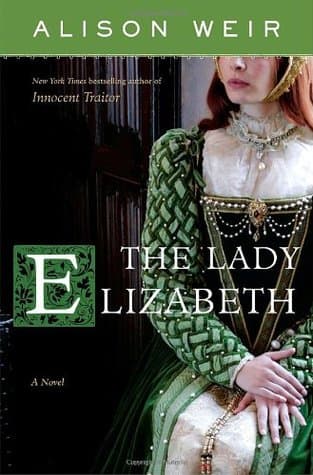
Synopsis
Covers the whole plot, including the ending.
- Difficulty
- Medium
- Pacing
- Moderate
- Mood
- Historical, Dramatic, Resilient, Suspenseful
- Read it if
- You enjoy detailed historical fiction about powerful women, Tudor England, and political intrigue.
- Skip it if
- You prefer fast-paced thrillers or are not interested in historical biographies.
The Lady Elizabeth Plot Summary
Covers the whole plot, including the ending.
A Precarious Childhood
The story begins with a young Elizabeth Tudor, barely two years old. Her status changes dramatically after her mother, Anne Boleyn, is executed and Elizabeth is declared illegitimate. She moves from the royal nursery to live with her half-sister, Mary, and later with her younger half-brother, Edward. Despite the instability, Elizabeth shows intelligence and an understanding of court politics from a young age. She sees her stepmothers—Jane Seymour, Anne of Cleves, Catherine Howard—fall, and observes the relative stability brought by Catherine Parr. She learns about the changing nature of royal favor and the need for self-preservation.
Catherine Parr's Influence
After King Henry VIII marries Catherine Parr, Elizabeth's life becomes more stable. Catherine, a kind and intelligent woman, takes a real interest in Elizabeth's education, encouraging her love for languages, theology, and classical studies. Elizabeth thrives, forming a close bond with Catherine and developing affection for her. She also reconnects with her half-brother Edward, sharing intellectual curiosity and Protestant faith. This time helps Elizabeth's intellectual growth, shaping her into the learned woman she would become, even as her illegitimacy remained an issue.
The Seymour Scandal
When Henry VIII dies, his young son Edward VI becomes king. Catherine Parr marries Thomas Seymour, Lord High Admiral and ambitious younger brother of the Lord Protector, Edward Seymour. Elizabeth, now a spirited teenager, moves into Catherine and Thomas's household. Thomas Seymour, charming but reckless, begins an inappropriate flirtation with Elizabeth, entering her bedchamber in her nightgown and engaging in physical horseplay. Catherine initially tolerates it, even participating, but as Thomas's behavior escalates and becomes more overtly sexual, she grows uncomfortable. She eventually sends Elizabeth away, seeing the danger to Elizabeth's reputation and safety.
Accusations and Interrogations
Thomas Seymour's ambition leads him to try to kidnap King Edward VI and overthrow his brother, the Lord Protector. His plans are discovered, and he is arrested and executed for treason. Elizabeth becomes involved in the scandal. Her household is questioned, and she herself is intensely interrogated by Sir Robert Tyrwhitt and others about her relationship with Thomas Seymour. She states her innocence regarding any treasonous involvement and denies any sexual impropriety beyond the inappropriate flirtation, but her reputation is damaged. She handles these interrogations with composure and intelligence, refusing to incriminate herself or others, showing her developing political skill and resilience under pressure.
Edward VI's Reign and Religious Turmoil
During her half-brother Edward VI's reign, England undergoes significant religious reform, moving towards Protestantism. Elizabeth, a devout Protestant, finds her religious views align with the young King's. However, she must still be careful, as her half-sister Mary remains a staunch Catholic and a potential rival for the throne. Elizabeth maintains a balance, showing loyalty to Edward while avoiding actions that could alienate the Catholic faction or endanger her position. She continues her studies, gaining a reputation for intelligence and piety, always aware that her future depends on her ability to navigate the complex religious and political environment of the court.
The Succession Crisis: Lady Jane Grey
King Edward VI, often ill during his short reign, eventually dies. Before his death, influenced by his Protestant advisors, especially the Duke of Northumberland, he tries to change the succession to exclude both Mary and Elizabeth, naming Lady Jane Grey as his heir. This action causes chaos in England. Elizabeth, despite her Protestant faith, is appalled by this manipulation of the succession, seeing the danger it poses to the legitimate line and to herself. She wisely refuses to support Lady Jane Grey, understanding that doing so would further destabilize the realm and could lead to her own downfall, showing her political judgment.
Mary I's Accession and Suspicion
Mary I successfully claims the throne, overturning Edward's will and Lady Jane Grey's brief reign. Initially, Elizabeth is welcomed at court, playing a role in Mary's coronation. However, the relationship between the two half-sisters quickly worsens. Mary, a fervent Catholic, views Elizabeth's Protestantism with suspicion, especially as Elizabeth remains popular among Protestant nobles. Mary's marriage to Philip II of Spain further increases tensions, as it is unpopular and seen as a threat to England's independence. Elizabeth finds herself under constant surveillance, her every move scrutinized, and her life again becomes a precarious dance of survival amidst religious and political intrigue.
Wyatt's Rebellion and Imprisonment
The unpopularity of Mary's Spanish marriage leads to Wyatt's Rebellion, a Protestant uprising aimed at preventing the marriage and possibly placing Elizabeth on the throne. Although Elizabeth claims no involvement and there is no proof linking her to the rebels, Mary and her advisors believe her complicity. Elizabeth is arrested and imprisoned in the Tower of London, a place known for death and treason, where her own mother died. This period is one of extreme fear and uncertainty for Elizabeth, as she faces the real possibility of execution. Her resilience and stoicism during this time are remarkable, as she endures harsh conditions and the constant threat to her life.
House Arrest and Survival
After several weeks in the Tower, Elizabeth moves to Woodstock Manor under strict house arrest. Though physically safer, she remains a prisoner, constantly watched and under threat of further accusations. Mary's continued determination to return England to Catholicism, along with pressure from Philip II, keeps Elizabeth in a dangerous state. She endures psychological torment, isolation, and the constant fear of being implicated in new plots or being executed. During this time, Elizabeth refines her skills of dissimulation and political maneuvering, learning to hide her true feelings and intentions to ensure her survival.
Mary's Illness and Elizabeth's Hope
Queen Mary's reign is troubled by religious persecution, the loss of Calais, and her inability to produce an heir, leading to widespread discontent. Her health begins to fail, and she suffers from phantom pregnancies and prolonged illness. As Mary's condition worsens, the question of the succession becomes central. Despite their animosity, the lack of other Catholic heirs, and the general desire for stability, forces Mary and her council to reluctantly acknowledge Elizabeth as the rightful successor. Elizabeth, though still cautious, begins to see hope for her future, subtly preparing herself for the immense responsibility that awaits her.
The Last Days of Mary
As Mary lies dying, Elizabeth is summoned to Hatfield. Their final meeting is filled with unspoken tension, sisterly resentment, and reluctant acceptance. Mary asks Elizabeth to maintain the Catholic faith, a promise Elizabeth deftly avoids fully committing to. Despite their differences and the suffering Mary caused her, Elizabeth maintains a dignified presence, offering some comfort while subtly asserting her own position. The scene highlights the deep divide between them but also the shared burden of their royal lineage, as Mary finally accepts Elizabeth as her heir.
Accession to the Throne
Queen Mary I dies on November 17, 1558. Upon hearing the news, Elizabeth, at Hatfield, receives the proclamation of her accession with solemnity and relief. She immediately begins to prepare for her new role, showing her innate leadership and political skill. Her long journey through the courts of her father and sister culminates in this moment. The novel concludes with Elizabeth Tudor, having survived illegitimacy, scandal, imprisonment, and constant threats, finally ascending to the throne as Queen Elizabeth I, ready to forge her own path and define a new era for England.
The Lady Elizabeth Characters
Elizabeth Tudor
Protagonist
The intelligent and resilient princess who endures a precarious youth to become queen.
Elizabeth is depicted as exceptionally intelligent, quick-wwitted, and highly educated, with a formidable grasp of languages, theology, and politics from a young age. She possesses remarkable resilience, surviving the constant threats to her life and legitimacy. Though outwardly composed and often guarded, she harbors deep emotional scars from her mother's execution and the subsequent instability of her childhood. She is ambitious, proud, and fiercely determined to prove her worth and secure her place in a male-dominated world. Her Protestant faith is a genuine conviction, but she also demonstrates a pragmatic understanding of when to conceal or downplay her beliefs for survival.
Relationships: Henry VIII (Distant, feared, but yearned for father's approval.); Anne Boleyn (Mother, whose execution profoundly affected her, though she had no memory of her.); Mary I (Half-sister, initially cordial but grew into deep suspicion and animosity.); Edward VI (Half-brother, shared intellectual interests and Protestant faith, a source of comfort.); Catherine Parr (Stepmother, loving and influential mentor, provided stability and education.); Thomas Seymour (Stepmother's husband, inappropriate and predatory flirtation, a source of scandal and danger.)
Mary I
Antagonist/Supporting
Elizabeth's devoutly Catholic half-sister and queen, whose reign is marked by religious persecution and suspicion.
Mary is portrayed as a deeply religious, unyielding Catholic, scarred by her own mother's divorce and her declaration of illegitimacy. She is fiercely loyal to her faith and determined to restore Catholicism to England, leading to the persecution of Protestants. While initially showing some affection for Elizabeth, her suspicion grows into outright hostility, fueled by Elizabeth's Protestantism, popularity, and the political machinations surrounding the succession. She is often depicted as isolated, insecure, and increasingly desperate to produce an heir and solidify her religious agenda, making her a formidable and often cruel opponent for Elizabeth.
Relationships: Elizabeth Tudor (Half-sister, rival for the throne, deep suspicion and animosity.); Henry VIII (Father, whose actions caused her great suffering and illegitimacy.); Philip II of Spain (Husband, a political marriage that was deeply unpopular and a source of national resentment.)
Catherine Parr
Supporting
Henry VIII's last queen and a kind, intelligent stepmother to Elizabeth.
Catherine Parr is depicted as a learned, compassionate, and politically astute woman who brings much-needed stability and intellectual stimulation to Elizabeth's life. She is a devout Protestant and fosters Elizabeth's education, encouraging her studies in languages, theology, and classical texts. Her kindness and genuine affection provide Elizabeth with a maternal figure and a sense of belonging she rarely experienced. However, she also demonstrates a flaw in her initial tolerance of Thomas Seymour's inappropriate behavior, highlighting her own vulnerabilities and the dangers of court life, even for a queen dowager.
Relationships: Elizabeth Tudor (Stepmother and loving mentor, provided education and stability.); Henry VIII (Husband, brought stability to the Tudor household.); Thomas Seymour (Husband, whose reckless ambition and inappropriate behavior caused Catherine distress and ultimately led to scandal.)
Thomas Seymour
Supporting/Antagonist
Ambitious, charming, and reckless uncle of Edward VI, whose inappropriate behavior with Elizabeth causes scandal.
Thomas Seymour is presented as a charismatic, handsome, and highly ambitious nobleman, driven by a desire for power and influence. He is the younger brother of Edward Seymour, the Lord Protector, and resents his brother's authority. His charm masks a reckless and opportunistic nature, leading him to engage in inappropriate flirtations with Elizabeth Tudor, eventually escalating into unsettling physical advances. He lacks sound judgment and political acumen, pursuing dangerous schemes to gain power, which ultimately lead to his downfall and execution. His actions deeply impact Elizabeth's reputation and place her in grave danger.
Relationships: Elizabeth Tudor (Subject of his inappropriate and predatory flirtation.); Catherine Parr (Wife, whom he married for love and status, but also used for access to Elizabeth.); Edward Seymour (Older brother, rival, and ultimately his executioner.)
Edward VI
Supporting
Elizabeth's younger half-brother and King of England, a devout Protestant.
Edward VI is portrayed as a highly intelligent and studious young king, deeply committed to Protestantism. He shares an intellectual bond with Elizabeth and holds her in genuine affection and respect. Despite his youth, he is firm in his religious convictions and eager to advance the Reformation in England. However, he is also frail and sickly, and his reign is largely influenced by his powerful Protestant advisors, particularly the Duke of Northumberland. His early death triggers a major succession crisis, directly impacting Elizabeth's future.
Relationships: Elizabeth Tudor (Half-brother, intellectual companion, shared Protestant faith.); Mary I (Half-sister, religious differences led to conflict and attempts to exclude her from succession.)
Henry VIII
Mentioned/Supporting
King of England and Elizabeth's powerful, unpredictable father.
Though he dies early in the novel, Henry VIII's presence looms large over Elizabeth's early life. He is depicted as a formidable and often terrifying figure, whose decisions profoundly shape the lives of his children and the fate of England. His desire for a male heir, his annulment from Catherine of Aragon, and his marriage to Anne Boleyn, followed by her execution, are the foundational events that render Elizabeth illegitimate and set the stage for her precarious existence. Elizabeth constantly seeks to understand and navigate the legacy of his reign, a world where royal favor is fleeting and disfavor can be deadly.
Relationships: Elizabeth Tudor (Father, declared her illegitimate, but still her sovereign.); Anne Boleyn (Second wife, executed by his command, Elizabeth's mother.); Catherine Parr (Sixth wife, brought stability to his later years and Elizabeth's childhood.)
Robert Dudley
Supporting
Elizabeth's childhood friend and later a significant figure in her life.
Robert Dudley appears as a childhood friend of Elizabeth, sharing her household during parts of her youth. He is presented as handsome, charming, and ambitious, with a lively spirit. Their early interactions hint at a deep affection and connection that transcends their differing social statuses. He is a steadfast companion during Elizabeth's difficult years, offering a degree of loyalty and familiarity. His presence in her early life foreshadows his later, more prominent role as a favorite and potential suitor during her reign, establishing the foundation of their complex relationship.
Relationships: Elizabeth Tudor (Childhood friend, shared household, deep mutual affection.)
Anne Boleyn
Mentioned
Elizabeth's executed mother, whose shadow profoundly influences Elizabeth's life.
Anne Boleyn, though executed before the main narrative begins, is a constant, haunting presence in Elizabeth's life. Her dramatic downfall and execution for treason and incest cast a long shadow over Elizabeth's legitimacy and security. Elizabeth is constantly aware of her mother's fate and the precariousness it implies for her own life. The mystery surrounding Anne's true character – whether she was a manipulative temptress or an innocent victim – is a question Elizabeth grapples with, shaping her own caution and determination to avoid a similar fate. Her mother's legacy is a powerful driving force behind Elizabeth's ambition and self-preservation.
Relationships: Elizabeth Tudor (Mother, whose fate was a constant shadow and warning.); Henry VIII (Husband, who ordered her execution.)
The Lady Elizabeth Themes
Survival and Resilience
This theme is central to Elizabeth's early life. From her earliest days, declared illegitimate and facing her mother's execution, Elizabeth must navigate a dangerous court where her very existence is uncertain. She survives the Thomas Seymour scandal, the interrogations after his downfall, the succession crisis by Edward VI, and her imprisonment in the Tower and house arrest under Mary I. Her ability to stay composed under pressure, hide her true feelings, and learn from every dangerous encounter shows her resilience and will to survive against great odds. Her refusal to break during interrogation or incriminate herself shows this theme.
“I will be good, and I will be true, and I will survive.”
The Burden of Illegitimacy
Elizabeth's illegitimacy, declared after Anne Boleyn's execution, is a constant source of insecurity and a force behind her actions. It took away her royal title and made her vulnerable to political plots throughout her youth. The stigma of being Henry VIII and Anne Boleyn's 'bastard' daughter is a weapon used against her by her enemies, especially under Mary I. This theme appears in Elizabeth's pursuit of education, her careful cultivation of alliances, and her cautious approach to any action that could further endanger her tenuous claim to the throne. It fuels her ambition to not only survive but to prove her worth and legitimacy.
“I was 'Lady Princess' no longer, but 'the Lady Elizabeth,' and the subtle shift in their voices told me all I needed to know.”
Power and Gender in a Patriarchal Society
The novel shows the challenges faced by women, especially royal women, in 16th-century England. Elizabeth, Mary, and Catherine Parr all experience the limits and dangers of their gender. Elizabeth's vulnerability to Thomas Seymour's advances, her lack of power in succession debates, and the constant need to prove her intelligence and strength in a male-dominated world highlight this theme. Her strategic use of her femininity, intelligence, and ability to charm or disarm powerful men, while never fully trusting them, is crucial to her survival. The story emphasizes that for women, power was often indirect, gained through influence, marriage, or careful political maneuvering, rather than direct authority.
“A woman's wit was her greatest weapon in a world that sought to deny her a voice.”
Religious Strife and Political Intrigue
The religious shifts of Tudor England, between Catholicism and Protestantism, are tied to political power and form a major backdrop to Elizabeth's life. The reigns of Henry VIII, Edward VI, and Mary I are defined by these religious struggles, which directly affect Elizabeth's safety and prospects. Her Protestant faith makes her a symbol for Protestant hopes, but also a dangerous target for Catholic factions. The constant plots, rebellions, and factionalism within the court, often religious conflicts, force Elizabeth to become skilled in political maneuvering, dissimulation, and self-preservation. She learns that public displays of piety must be balanced with political necessity.
“To be a Protestant in my brother's reign was to be favored; in my sister's, to walk on a knife-edge.”
The Nature of Family Loyalty
The novel explores the complex and often brutal nature of family loyalty within the royal family. Elizabeth experiences her father's absence, her half-sister Mary I's animosity, and intellectual kinship with her half-brother Edward VI. Family ties are shown to be both a source of support and danger. Mary's deep resentment and fear of Elizabeth, despite their blood relationship, drives much of the conflict. Conversely, Catherine Parr provides a loving, though temporary, family bond. The story reveals that in the ruthless Tudor court, blood ties often take a back seat to political ambition, religious conviction, and the struggle for survival, making genuine loyalty rare and precious.
“Blood might bind, but crowns divide.”
Plot Devices & Literary Techniques
Foreshadowing
Hints at future events or character developments.
The novel frequently uses foreshadowing, particularly regarding Elizabeth's eventual accession and her qualities as a future queen. Her early displays of intelligence, her composure under interrogation, and her ability to navigate dangerous situations all hint at the remarkable monarch she will become. For example, her steadfast refusal to confess to involvement in Wyatt's Rebellion, despite immense pressure, foreshadows her strength and political astuteness as Queen. The early flirtation with Robert Dudley also subtly foreshadows their lifelong, complex relationship, suggesting a bond that will endure beyond childhood.
Internal Monologue
Reveals Elizabeth's thoughts, fears, and strategic calculations.
Much of the narrative is filtered through Elizabeth's internal monologue, providing direct access to her thoughts, fears, and developing political acumen. This device is crucial for understanding her motivations, her strategic thinking, and the emotional toll of her precarious life. It allows the reader to experience her intelligence, her resilience, and her inner struggle to maintain composure while facing immense danger. For example, during her interrogations after the Seymour affair or her imprisonment in the Tower, her internal thoughts reveal her calculated responses and her determination to survive, even when her outward demeanor is calm.
Dramatic Irony
The audience knows more about historical outcomes than the characters.
Given that the novel is historical fiction about a well-known figure, dramatic irony is a powerful device. The reader knows that Elizabeth will eventually become Queen Elizabeth I, a legendary monarch. This knowledge heightens the tension during her periods of extreme danger, such as her imprisonment in the Tower or her near-execution under Mary I. The reader understands the historical significance of her survival and the stakes involved in her early struggles, even as the characters within the story are uncertain of her fate. This irony underscores the incredible odds Elizabeth overcame to reach the throne.
Symbolism (The Tower of London)
A recurring symbol of danger, power, and the precariousness of royal favor.
The Tower of London functions as a potent symbol throughout the novel. It is the place where Elizabeth's mother, Anne Boleyn, was executed, making it a chilling reminder of the ultimate fate of those who fall from royal favor. When Elizabeth herself is imprisoned there, it symbolizes the absolute nadir of her fortunes and the very real threat to her life. The Tower represents the ruthless power of the monarchy and the fragility of life within its orbit, serving as a constant, terrifying reminder of the stakes involved in the struggle for the English crown.
The Lady Elizabeth Quotes
“The crown was a gilded cage, but she would wear it with grace, even if it choked her.”
“Love was a dangerous game in the court of kings, and she had no intention of being the pawn.”
“She learned early that a woman's greatest weapon was her mind, and her greatest shield, her silence.”
“Every glance, every word, every gesture was a potential trap. She walked through a labyrinth of suspicion.”
“She was the daughter of a king, a queen in waiting, and she would not be broken.”
“The weight of a kingdom rested on shoulders that had once only carried the burden of a scandalous birth.”
“To rule was to be alone, a truth she embraced with a heavy, yet resolute, heart.”
“She would be England's queen, and England would be her husband.”
“The past was a ghost that haunted her, but she would not let it dictate her future.”
“A woman could be strong, intelligent, and capable, even without a man by her side.”
“She had learned to wear a mask, to show only what she wished the world to see.”
“Ambition was a double-edged sword; it could raise you to the heavens or cast you into the abyss.”
“To survive was not enough; one must thrive, even in the most hostile of environments.”
“She held her own counsel, for in a world of whispers, silence was a fortress.”
Quiz
10 questions on the plot and the characters. Each answer comes with a short explanation.
Question 1
At what age does Elizabeth first notice a change in how people refer to her in King Henry VIII's court?
- One year old
- Two years old
- Three years old
- Four years old
Show answer
B. Two years old The book description states that 'Even at age two, Elizabeth is keenly aware that people in the court of her father, King Henry VIII, have stopped referring to her as 'Lady Princess' and now call her 'the Lady Elizabeth.'
Question 2
What title did courtiers initially use for Elizabeth before her status changed?
- Lady Regent
- Lady Princess
- Lady Heir
- Lady Royal
Show answer
B. Lady Princess The provided text indicates that people 'stopped referring to her as 'Lady Princess' and now call her 'the Lady Elizabeth.'
Question 3
What is the primary reason for Elizabeth being called 'the Lady Elizabeth' instead of 'Lady Princess'?
- Her father, King Henry VIII, remarried.
- Her mother, Anne Boleyn, suffered a tragic fate and Elizabeth was declared illegitimate.
- She was sent away from court for her education.
- She had a younger sibling who was a male heir.
Show answer
B. Her mother, Anne Boleyn, suffered a tragic fate and Elizabeth was declared illegitimate. The text explains that 'Before she is three, she learns of the tragic fate that has befallen her mother, the enigmatic and seductive Anne Boleyn, and that she herself has been declared illegitimate, an injustice that will haunt her.'
Question 4
Which of the following is NOT a characteristic attributed to Elizabeth's mother, Anne Boleyn, in the book description?
- Enigmatic
- Seductive
- Resilient
- Tragically fated
Show answer
C. Resilient The description refers to Anne Boleyn as 'the enigmatic and seductive Anne Boleyn,' and mentions her 'tragic fate.' 'Resilient' is not used to describe her.
Question 5
What emotion is specifically mentioned as haunting Elizabeth due to her declaration of illegitimacy?
- Anger
- Fear
- Injustice
- Sadness
Show answer
C. Injustice The text states that being declared illegitimate was 'an injustice that will haunt her.'
Question 6
What is Alison Weir's previous novel mentioned in the description, which also focused on a historical female figure?
- The Six Wives of Henry VIII
- Elizabeth the Queen
- Innocent Traitor
- Mary, Queen of Scots
Show answer
C. Innocent Traitor The description explicitly states, 'Following the tremendous success of her first novel, Innocent Traitor, which recounted the riveting tale of the doomed Lady Jane Grey.'
Question 7
What specific historical figure was the subject of Alison Weir's previous novel, 'Innocent Traitor'?
- Anne Boleyn
- Catherine of Aragon
- Lady Jane Grey
- Mary Tudor
Show answer
C. Lady Jane Grey The description specifies that 'Innocent Traitor... recounted the riveting tale of the doomed Lady Jane Grey.'
Question 8
How does Elizabeth's early experience of being declared illegitimate set a foundational theme for her future life, as suggested by the description?
- It instilled in her a desire for revenge against those who wronged her mother.
- It fostered a deep-seated insecurity that prevented her from seeking power.
- It ignited a lifelong struggle against perceived injustices and a drive for legitimacy and power.
- It made her withdraw from court life and seek solace in academic pursuits.
Show answer
C. It ignited a lifelong struggle against perceived injustices and a drive for legitimacy and power. The description states that the injustice of her illegitimacy 'will haunt her,' implying a long-term impact on her character and life, likely fueling her ambition and quest for recognition, ultimately leading to her becoming 'England's most intriguing and powerful queen.'
Question 9
The novel focuses on the 'early life' of Elizabeth Tudor. What aspect of her life does this suggest the book will primarily explore?
- Her reign as queen and her political strategies.
- Her childhood, adolescence, and the formative experiences leading up to her accession.
- Her relationships with foreign dignitaries and ambassadors.
- Her legacy and its impact on modern England.
Show answer
B. Her childhood, adolescence, and the formative experiences leading up to her accession. The phrase 'early life' specifically indicates the period before she became queen, focusing on her development and the events that shaped her during her childhood and youth.
Question 10
Based on the description, what is the author's primary goal in writing 'The Lady Elizabeth'?
- To debunk common myths about Elizabeth I's reign.
- To provide a detailed academic analysis of Tudor court politics.
- To vividly narrate the formative experiences of Elizabeth Tudor before she became queen.
- To compare Elizabeth I's early life with that of Lady Jane Grey.
Show answer
C. To vividly narrate the formative experiences of Elizabeth Tudor before she became queen. The description states Alison Weir 'turns her masterly storytelling skills to the early life of young Elizabeth Tudor, who would grow up to become England's most intriguing and powerful queen,' indicating a focus on her formative years through a storytelling lens.
The Lady Elizabeth FAQ
What is the central premise of 'The Lady Elizabeth'?
'The Lady Elizabeth' chronicles the early life of Elizabeth Tudor, from her childhood as a declared illegitimate princess to her perilous years under the reigns of her half-siblings, Edward VI and Mary I, as she navigates court intrigue, suspicion, and threats to her very survival before ascending to the throne.
How does the novel portray Elizabeth's relationship with her father, King Henry VIII?
The novel depicts a complex and often distant relationship. While Elizabeth craves her father's affection and approval, Henry VIII's focus on a male heir and his subsequent marriages keep him largely detached, leaving Elizabeth with a profound sense of abandonment and a constant need to prove her worth.
What role do Elizabeth's half-siblings, Edward VI and Mary I, play in her early life?
Edward VI initially offers Elizabeth some stability and intellectual companionship, but his early death plunges her into greater danger. Mary I's reign is marked by deep suspicion and religious persecution, forcing Elizabeth into a precarious position where her Protestant faith and popularity make her a constant threat to the Catholic queen's rule.
What is the significance of the Sir Thomas Seymour scandal in Elizabeth's development?
The Sir Thomas Seymour scandal is a pivotal moment, as it exposes Elizabeth to the harsh realities of court politics and personal betrayal. It forces her to mature rapidly, teaching her caution, self-preservation, and the importance of maintaining an impeccable reputation, even when her own household betrays her.
Does the book cover Elizabeth's entire life up to her coronation?
Yes, the novel culminates with Elizabeth's ascension to the throne, detailing the tumultuous period leading up to Mary I's death and the jubilation surrounding Elizabeth's proclamation as Queen of England, marking the end of her years of vulnerability and the beginning of her reign.
What subtle hints are given about Elizabeth's future political astuteness?
The narrative subtly highlights Elizabeth's keen intelligence, her ability to learn languages quickly, her sharp observation of court dynamics, and her careful choice of words even as a young girl, all of which foreshadow her later diplomatic and political prowess as queen.
Are there any foreshadowing elements regarding Elizabeth's decision not to marry?
The novel hints at this through Elizabeth's repeated experiences of men trying to control or exploit her, from Thomas Seymour's inappropriate advances to the political machinations surrounding potential royal marriages. These experiences instill in her a deep distrust of surrendering power, suggesting her future preference for retaining sole authority.
How does the author incorporate historical figures like Robert Dudley into Elizabeth's early life?
Robert Dudley appears as a childhood companion and friend, showcasing the early bond and affection between them. Their shared experiences in the royal household lay the groundwork for their complex and enduring relationship that would become so significant during Elizabeth's reign.
What role do Elizabeth's ladies-in-waiting, like Kat Ashley, play in shaping her?
Kat Ashley serves as Elizabeth's beloved governess and confidante, providing a maternal figure and emotional support during her turbulent youth. While her advice is sometimes flawed, as seen in the Seymour affair, Kat's loyalty and affection are crucial to Elizabeth's emotional well-being and development.
How does Elizabeth's early experience with illegitimacy impact her self-perception?
Being declared illegitimate at a young age leaves Elizabeth with a profound sense of insecurity and a constant need to prove her legitimacy and worthiness. This experience fuels her ambition, her drive for education, and her determination to overcome the obstacles placed in her path by her birth.
What psychological strategies does Elizabeth employ to survive the dangerous court of Mary I?
Elizabeth masters the art of dissimulation and caution. She learns to mask her true feelings, feign illness, comply outwardly with Catholic practices while maintaining her Protestant faith privately, and cultivate an image of harmlessness and obedience to avoid Mary's wrath and the machinations of her enemies.
How does the trauma of her mother Anne Boleyn's execution affect Elizabeth?
Though very young, the trauma of Anne Boleyn's execution and subsequent illegitimacy leaves Elizabeth with a deep-seated fear of losing favor and a constant awareness of the precariousness of power. It instills in her a cautious nature and a determination to never suffer her mother's fate.
What is the psychological impact of repeated betrayals, such as by Thomas Seymour and his wife Catherine Parr?
The betrayals by Thomas Seymour and Catherine Parr deeply wound Elizabeth, fostering a sense of distrust and forcing her to build emotional walls. This experience contributes to her later guarded nature and her reluctance to fully commit to personal relationships, prioritizing her own safety and position.
How does the novel portray Elizabeth's developing religious convictions?
Elizabeth's religious convictions evolve from a childhood adherence to the Protestant faith taught by her tutors to a more deeply held and politically strategic commitment. She learns to navigate the volatile religious landscape, understanding that her faith is not just personal but also a cornerstone of her identity and a challenge to Catholic rule.
Is 'The Lady Elizabeth' primarily a romance or a political drama?
While there are elements of romance, particularly concerning Thomas Seymour, 'The Lady Elizabeth' is predominantly a political drama. It focuses on Elizabeth's struggle for survival and her development as a shrewd political figure amidst the dangerous power struggles of the Tudor court, with romance often serving as a catalyst for political peril.
How does Alison Weir balance historical accuracy with narrative dramatization in this novel?
Alison Weir, as a historian, meticulously researches the historical record to provide a factual backbone. She then uses her skill as a novelist to fill in the gaps with plausible character motivations, dialogue, and emotional depth, creating a compelling narrative that remains true to the known historical events and personalities.
What is the novel's stance on Elizabeth's relationship with Thomas Seymour – was she a victim or complicit?
The novel portrays Elizabeth as a complex figure in the Seymour affair. While she is undoubtedly an impressionable young woman preyed upon by an older man, Weir also hints at Elizabeth's own youthful curiosity and perhaps a naive enjoyment of the attention, without absolving Seymour of his predatory behavior.
How does the book contribute to the broader understanding of Elizabeth I beyond common perceptions?
The book offers a crucial look into the formative years that shaped the iconic queen, moving beyond the image of Gloriana. It illuminates the insecurities, traumas, and constant threats she faced, revealing the profound resilience and intelligence required for her to simply survive, let alone rule.
Does the novel suggest Elizabeth had a genuine affection for any of her potential suitors or companions?
The novel suggests Elizabeth harbored a genuine, albeit complicated, affection for Robert Dudley from a young age, rooted in shared experiences and companionship. While other attractions are noted, like with Thomas Seymour, her bond with Dudley appears to be the most enduring and deeply felt.
Similar books
- The Other Boleyn Girl
Philippa Gregory
4.1 (456k) average on GoodreadsHistorical FictionExplores the lives of women in the Tudor court and the intricate family dynamics surrounding Henry VIII.
- Innocent Traitor
Alison Weir
4.0 (31k) average on GoodreadsHistorical FictionAnother historical novel by the same author, focusing on a different figure in Tudor England (Lady Jane Grey).
- Wolf Hall
Hilary Mantel
3.9 (166k) average on GoodreadsLiterary FictionRichly detailed historical fiction set during the reign of Henry VIII, offering deep dives into court politics.
- To Kill a Mockingbird
Harper Lee
4.3 (4.5M) average on GoodreadsHistorical FictionIn the 1930s Jim Crow South, Harper Lee writes about racial injustice, moral growth, and the quiet courage of a lawyer father, Atticus Finch, as seen through his young daughter's eyes.
- The Great Gatsby
F. Scott Fitzgerald
3.9 (3.8M) average on GoodreadsHistorical FictionIn the opulent Roaring Twenties, a mysterious millionaire's lavish parties hide his desperate, tragic pursuit of a lost love, exposing the emptiness within the American Dream.
- Pride and Prejudice
Jane Austen
4.3 (3M) average on GoodreadsHistorical FictionIn a society focused on status and money, Elizabeth Bennet navigates love and pride, challenging Mr. Darcy and social expectations to find true affection.





Enjoyed the summary?
A summary gives you the shape of the book. The book itself has the detail, the examples and the voice.
Find The Lady Elizabeth on AmazonAs an Amazon Associate, BookBrief earns from qualifying purchases. How we're funded