

Synopsis
Covers the whole plot, including the ending.
- Difficulty
- Medium
- Pacing
- Slow
- Mood
- Atmospheric, Melancholy, Reflective, Thought-provoking
- Read it if
- You enjoy psychological dramas about freedom, choice, and the pull between duty and desire, set against a beautiful natural backdrop.
- Skip it if
- You prefer fast-paced plots with clear-cut villains and heroes, or find introspective character studies slow.
The Lady from the Sea Plot Summary
Covers the whole plot, including the ending.
A Summer's Day and Lingering Discontent
The play starts on a warm summer day at Doctor Wangel's home by a fjord. Ballested, a painter, prepares to work. Bolette Wangel, Dr. Wangel's older daughter, arranges flowers, showing a normal home life. Dr. Wangel and his younger daughter, Hilda, appear. The family talks about summer plans, but it is clear that Ellida Wangel, Dr. Wangel's second wife and the stepmother to Bolette and Hilda, is not there. Her absence and Dr. Wangel's worry suggest her emotional distance. When Ellida appears, her strong connection to the sea and her restless nature are clear, creating a feeling of unease in the peaceful setting. She speaks of the sea's call and her difficulty feeling at home inland, a feeling made worse by the recent death of the lighthouse keeper's wife, which affects her deeply.
Ellida's Past and the 'Stranger'
Ellida and Dr. Wangel discuss her sadness and her feeling of being a 'stranger' in their home. Ellida explains her main problem: years ago, before marrying Wangel, she had an intense, almost mystical meeting with a sailor, called 'the Stranger,' who promised to return for her. They exchanged rings and pledged themselves to each other. Ellida sees this bond as sacred and unbreakable, despite her later marriage to Wangel. She believes this man, though absent for a long time, still has a claim on her soul and that his spiritual presence keeps her from fully committing to Wangel and their life together. Wangel, though loving and patient, struggles to understand her strong, almost supernatural belief.
Arnholm's Return and Bolette's Aspirations
Judge Arnholm, Bolette's former tutor, visits. His return sparks a quiet hope in Bolette, who feels limited by her home duties and her stepmother's emotions. She wants intellectual stimulation and a life beyond the fjord. She tells Arnholm her wish to study and see the world, expressing her frustration at being stuck. Arnholm, unmarried, likes Bolette and sees her potential. Their talks quietly show Bolette's unfulfilled goals and her role as a caretaker, contrasting with Ellida's more dramatic, but equally limiting, inner struggles.
Hilda's Observations and Lyngstrand's Influence
Hilda, the younger, more cynical daughter, makes sharp comments about Ellida's behavior and the family. She often sees through polite talk. She mostly dismisses Ellida's 'sea sickness.' Lyngstrand, a young, sick sculptor, is also present. He often talks romantically about his art and his future. He tells Hilda his plans to make a sculpture of a drowned woman waiting for her husband. This theme oddly matches Ellida's situation and her wait for the 'Stranger.' Lyngstrand's presence adds a touch of youthful, artistic idealism that contrasts with the more real, but troubled, lives of the Wangel household.
The Stranger's Arrival
The tension ends with a mysterious man's sudden appearance. He is 'the Stranger,' the sailor Ellida pledged herself to years ago. His arrival is dramatic and unsettling, confirming Ellida's deepest fears and wishes. He has returned, as promised, to claim her. His presence is strong and almost mesmerizing, confirming the deep, almost supernatural bond Ellida feels with him. He demands she leave Wangel and their life to join him, fulfilling their old vow. This forces Ellida to make a choice, pulling her between her past mystical promise and her current life with Wangel.
Ellida's Dilemma and Wangel's Plea
Ellida feels a deep inner conflict. The Stranger's presence awakens the wild, untamed part of her soul that desires the freedom and mystery of the sea. She feels a strong pull towards him, believing it is her destiny. Dr. Wangel, seeing her pain, tries to reason with her, to understand her bond with the Stranger. He asks her to stay, highlighting their shared life, their daughter, and his deep love. He offers her freedom within their marriage, promising to let her choose. He hopes that by freeing her from obligation, she might freely choose him.
The Ultimate Choice
In a dramatic talk, Wangel realizes he cannot hold Ellida by force or duty. He makes a radical decision. He declares he will release her from all marriage bonds and duties, giving her complete freedom to choose between him and the Stranger. He says that true love and commitment can only exist when chosen freely, without force. This act of deep trust and selflessness is a turning point. It changes Ellida's view from feeling bound by fate or a past vow to realizing she has power to decide her own future. The Stranger gives her a deadline to choose.
Freedom and the Choice of Inland Life
Given Wangel's unconditional freedom, Ellida changes deeply. The 'Stranger' represents a wild, untamed, and finally destructive freedom. Wangel's offer represents a different kind of freedom – the freedom to choose love and belonging. When the Stranger returns to claim her, Ellida, now free from the compulsion she felt, realizes her true desire is to stay with Wangel. The spell is broken; the 'sea sickness' disappears. She chooses the stability, love, and human connection of her life with Wangel and his family. She finds peace inland, finally understanding that her 'home' is where she chooses it to be.
Bolette's Future and Lyngstrand's Fate
After Ellida's decision, Bolette also makes a choice about her future. Arnholm, who had shown affection for her, proposes marriage. This offers her a chance to leave the fjord and follow her intellectual goals. Bolette, though unsure, accepts. She sees it as her only escape from a life of home duties and unfulfilled potential, even if she does not deeply love Arnholm. Meanwhile, Lyngstrand's health worsens. He still dreams of his sculpture and a future with Hilda, not knowing he will soon die. This adds a sad note to the play's ending. Hilda, in her usual direct way, comments on his innocence.
Principal Figures
Ellida Wangel
Protagonist
Dr. Wangel's second wife, deeply connected to the sea and haunted by a past promise.
Ellida is a restless, melancholic woman, feeling like a 'lady from the sea' trapped inland. Her deep spiritual connection to the ocean manifests as a profound longing and a sense of being bound by a past, almost mystical, promise to a sailor. She struggles with her identity, her role as a wife and stepmother, and her inability to fully commit to her present life. Her emotional state dominates the household, and her journey is one of finding true freedom and self-determination. She is sensitive, imaginative, and somewhat naive about the realities of human relationships, often blurring the lines between the spiritual and the physical.
Relationships: Dr. Wangel (Husband, patient and loving, yet initially unable to fully understand her); The Stranger (Past lover, a figure of mystical allure and a binding promise); Bolette Wangel (Stepmother, a distant and somewhat strained relationship); Hilda Wangel (Stepmother, a contentious and often critical relationship)
Dr. Wangel
Supporting
A kind and understanding doctor, Ellida's husband, who patiently seeks to cure her melancholy.
Dr. Wangel is a compassionate, rational, and somewhat conventional man, deeply in love with Ellida. He struggles to understand the depth of her 'sea sickness' and her spiritual connection to the past. His primary concern is Ellida's well-being, and he patiently tries to find a 'cure' for her melancholia. He is a loving father to Bolette and Hilda, though perhaps somewhat oblivious to Bolette's own unfulfilled desires. His ultimate act of love is granting Ellida complete freedom, demonstrating his profound respect for her autonomy and his belief in love as a free choice.
Relationships: Ellida Wangel (Husband, deeply loving and patient); Bolette Wangel (Father, somewhat protective but also a source of her confinement); Hilda Wangel (Father, often indulgent of her sharp observations)
The Stranger
Antagonist/Catalyst
A mysterious sailor from Ellida's past, who returns to claim her.
The Stranger is a powerful, almost mythical figure, representing Ellida's untamed past and the call of the wild, unbounded sea. He is a man of the world, having traveled widely, and his presence is both alluring and menacing. He embodies a raw, primitive freedom that appeals to Ellida's deepest desires. He believes in the sacredness of their old vow and expects Ellida to fulfill it, without question. His arrival forces Ellida to confront her past and make a definitive choice about her future, acting as the ultimate catalyst for her transformation.
Relationships: Ellida Wangel (Past lover, holds a powerful, almost supernatural, claim over her)
Bolette Wangel
Supporting
Dr. Wangel's elder daughter, longing for intellectual freedom and escape.
Bolette is intelligent, responsible, and feels trapped by her domestic duties and the emotional demands of her household. She longs for intellectual stimulation, education, and a life beyond the fjord. She is perceptive of her father's concern for Ellida and her stepmother's melancholia, but also feels neglected in her own aspirations. Her relationship with Arnholm represents her hope for escape and self-improvement, even if it means a marriage of convenience rather than passion. She is a foil to Ellida, representing a more grounded, yet equally unfulfilled, desire for freedom.
Relationships: Dr. Wangel (Daughter, feels obligated to him); Ellida Wangel (Stepmother, often resents her emotional demands); Hilda Wangel (Sister, a more pragmatic relationship); Judge Arnholm (Former tutor, potential husband, and avenue for escape)
Hilda Wangel
Supporting
Dr. Wangel's younger daughter, sharp-tongued and observant.
Hilda is the younger, more cynical, and observant daughter. She is blunt, direct, and often critical of Ellida's 'sickness' and the emotional drama in the household. She represents a more pragmatic and less sentimental perspective. She is fascinated by Lyngstrand and his artistic dreams, even while being somewhat dismissive of his naivety. Her sharp comments often cut through the polite facade, providing a dose of reality and exposing underlying tensions. She is less emotionally invested in the family drama than Bolette, offering a more detached viewpoint.
Relationships: Dr. Wangel (Daughter); Ellida Wangel (Stepmother, often critical and dismissive); Bolette Wangel (Sister); Lyngstrand (Object of her fascination and mild amusement)
Judge Arnholm
Supporting
Bolette's former tutor, a thoughtful and well-meaning bachelor.
Arnholm is an educated, well-meaning man who returns to the Wangel household after many years. He is kind and thoughtful, and clearly fond of Bolette. He represents the intellectual world that Bolette longs for. He is initially puzzled by Ellida's condition but tries to understand it from a rational perspective. His proposal to Bolette, while offering her a path to freedom, is also tinged with a sense of practicality rather than deep passion, highlighting the compromises women often had to make in that era to achieve their aspirations.
Relationships: Bolette Wangel (Former tutor, suitor, and means of escape); Dr. Wangel (Friend and colleague)
Lyngstrand
Supporting
A young, consumptive sculptor with romantic ideals.
Lyngstrand is a young, sickly sculptor, full of romantic ideals and artistic aspirations, despite his poor health. He dreams of creating a grand sculpture and finding love with Hilda, unaware of his own impending death. His artistic vision, particularly his idea for a sculpture of a drowned woman waiting for her husband, eerily parallels Ellida's situation, though he perceives it through a romanticized lens. He serves as a symbol of youthful idealism and the fragility of life, contrasting with the more complex emotional realities of the adults.
Relationships: Hilda Wangel (Object of his romantic affections); Ballested (Artistic acquaintance)
Ballested
Mentioned
A local painter and musician, a keen observer of human nature.
Ballested is a local painter and musician, an older man who serves as a minor, yet observant, character. He often comments on the changing nature of the fjord and the people, offering a detached, philosophical perspective. He represents the artistic and somewhat bohemian element of the local community. His observations, though seemingly peripheral, often provide subtle commentary on the themes of change, adaptation, and the human spirit's struggle against its environment. He is generally good-natured and philosophical.
Themes & Insights
Freedom and Self-Determination
This is the main theme, seen through Ellida and Bolette. Ellida's 'sea sickness' symbolizes her lack of spiritual freedom, her feeling of being tied by a past promise and social expectations. Her final choice, made possible by Wangel's act of release, shows true self-determination. Bolette also wants freedom from home life and intellectual limits, seeking escape through marriage. The play suggests that real love and happiness come only when people are free to choose their own path, not when forced by duty or past promises.
“But what is the good of freedom if you can't use it to choose what you want?”
The Call of the Wild vs. Domesticity
The contrast between the wild, mysterious sea and the stable, conventional inland life is central to Ellida's struggle. The sea represents passion, danger, the unknown, and a natural connection, shown by the Stranger. Inland life, shown by Wangel and his home, offers security, love, and domesticity. Ellida feels pulled between these two worlds, at first believing she belongs to the sea. Her journey is about bringing these two parts of herself together, finally choosing a home life she freely accepts, calming her wild spirit without suppressing it.
“I belong to the sea. To the sea alone. It calls to me.”
The Nature of Love and Marriage
Ibsen questions common ideas of marriage as a duty or social agreement. Wangel's act of giving Ellida complete freedom changes their relationship. He understands that true love cannot be forced; it must be a free choice. Ellida's decision to stay with Wangel, made when she is no longer bound, changes their marriage into a union based on mutual respect, understanding, and freely given affection. Bolette's marriage to Arnholm, however, shows a more practical, less romantic view of marriage as a way to achieve a goal (freedom from being confined).
“If you are to live with me, you must do so as a free, willing human being.”
Past vs. Present
Ellida is troubled by her past, especially the promise made to the Stranger, which she sees as an unbreakable spiritual bond. This past keeps her from fully living in the present and committing to her current life with Wangel. The Stranger's arrival forces a confrontation between her past duties and her present reality. She finds resolution when she realizes that the past only controls her if she lets it, and that she has the power to choose her present and future, freeing herself from the past's hold. This theme also touches on how psychological 'ghosts' can stop one from moving forward.
“It is the past that holds me fast. The dead hand of the past.”
Plot Devices & Literary Techniques
The Sea (Symbolism)
Represents freedom, the wild, the unknown, and Ellida's subconscious desires.
The sea is the most potent symbol in the play. For Ellida, it embodies her true nature, her longing for boundless freedom, and the spiritual bond with the Stranger. It represents the untamed, the mysterious, and the subconscious. Her 'sea sickness' is a metaphor for her soul's yearning for the ocean's vastness and her inability to adapt to the constrained inland life. The sea also symbolizes the dangerous allure of the unknown and the potential for both liberation and destruction. Its constant presence in the background underscores Ellida's internal conflict.
The Stranger (Symbolism)
Embodies Ellida's past, fate, and the irresistible call of the wild.
The Stranger is more than just a character; he is a symbolic embodiment of Ellida's past, her sense of destiny, and the primal, untamed aspects of her own psyche. He represents the 'call of the wild' that Ellida feels so strongly. His almost hypnotic power over her is not just personal but also symbolic of a larger, almost supernatural force. By choosing to reject the Stranger, Ellida is not merely rejecting a man, but consciously choosing to integrate her wildness within a framework of human connection and free will, rather than being driven by an external, fated compulsion.
The Fjord (Setting)
Represents a liminal space, a compromise between the sea and inland.
The fjord, where the Wangel family lives, is a crucial setting that acts as a liminal space – neither fully open sea nor completely enclosed land. It symbolizes Ellida's trapped existence, a compromise that fails to satisfy her longing for the open ocean. It is a place where the wildness of the sea is contained and diluted. The fjord underscores the theme of confinement and the blurred boundaries between different states of being, reflecting Ellida's own internal state of being caught between two worlds and two selves.
Lyngstrand's Sculpture Idea (Foreshadowing/Symbolism)
Foreshadows Ellida's dilemma and symbolizes romanticized longing.
Lyngstrand's artistic idea for a sculpture of a drowned woman waiting faithfully for her husband serves as a subtle piece of foreshadowing and symbolism. It directly mirrors Ellida's situation – a woman bound to a distant sailor, waiting for his return. However, Lyngstrand's romanticized vision contrasts sharply with the complex psychological reality of Ellida's torment. It highlights the difference between an idealized, perhaps naive, understanding of loyalty and the profound, almost destructive, nature of Ellida's spiritual bond, while also hinting at the potential for tragic outcomes.
The Lady from the Sea Quotes
“The sea has a strange power over me. It is as if I belonged to it.”
“I am not free. I am bound by a promise.”
“The unknown is always more attractive than the known.”
“A woman cannot be herself in the society of the present day.”
“I have a right to my own life.”
“The sea calls to me, and I must answer.”
“Love is not enough; there must be freedom.”
“I am like a bird in a cage, longing for the open sky.”
“The past has a hold on me that I cannot break.”
“To be truly alive, one must risk everything.”
“I have chosen my own path, and I will follow it.”
“The sea is both my prison and my salvation.”
“A promise made under duress is no promise at all.”
“I am not afraid of the unknown; I am afraid of the known.”
Quiz
10 questions on the plot and the characters. Each answer comes with a short explanation.
Question 1
What is Ballested doing at the beginning of the scene?
- Painting a landscape on his easel
- Setting up the flagpole and arranging the canvas
- Tending to the garden flowers
- Sitting in the gazebo with Bolette
Show answer
B. Setting up the flagpole and arranging the canvas Ballested is described as being next to the flagpole, which is lying on the ground, and he is arranging the canvas. This sets up the visual and thematic elements of the scene, hinting at his artistic role and the symbolic importance of the flagpole.
Question 2
Where is Dr. Rangel's house located in relation to the scene?
- To the right, with a small balcony
- To the left, with a large terrace full of furniture
- Behind the fence, along the beach path
- In the center, next to the flagpole
Show answer
B. To the left, with a large terrace full of furniture The stage directions specify that Dr. Rangel's house is on the left, featuring a large terrace filled with furniture. This establishes the setting and the domestic space central to the play's events.
Question 3
What does Bolette Wangel bring out to the terrace?
- A book to read in the gazebo
- A vase full of flowers
- A tray with tea for Ballested
- A flag to hoist on the pole
Show answer
B. A vase full of flowers Bolette exits through the open garden room door carrying a vase full of flowers, which she places on the table. This action introduces her character and adds to the domestic, summery atmosphere of the scene.
Question 4
What natural feature is visible through the trees along the path?
- A distant city skyline
- A fjord and the outline of mountains and rocks
- A river flowing into the sea
- A lighthouse on a cliff
Show answer
B. A fjord and the outline of mountains and rocks The stage directions describe that through the trees along the path, one can see the fjord and the outline of mountains and rocks in the distance. This highlights the coastal setting and the play's themes of nature and freedom.
Question 5
How is Ballested dressed, indicating his profession?
- In a formal suit and tie
- In a sailor's uniform
- In an old jacket and a wide artist's hat
- In gardening clothes with a straw hat
Show answer
C. In an old jacket and a wide artist's hat Ballested is described as wearing an old jacket and a wide artist's hat, which identifies him as an artist. This is reinforced by the presence of his easel, canvas, and painting supplies nearby.
Question 6
What is the weather like on this summer day?
- Cold and foggy, typical of the fjord
- Warm and resplendent
- Rainy and overcast
- Windy with storm clouds gathering
Show answer
B. Warm and resplendent The stage directions specify a warm and resplendent summer day, which contributes to the idyllic yet potentially oppressive atmosphere of the setting, reflecting the characters' inner conflicts.
Question 7
Which object in the scene is described as lying on the ground?
- The easel with the canvas
- The flagpole
- The garden fence
- The table in the gazebo
Show answer
B. The flagpole The flagpole is noted as lying on the ground, with Ballested next to it arranging the canvas. This detail might symbolize themes of identity or national pride in the play, as flags often represent such concepts.
Question 8
What does the presence of the fjord and mountains in the distance suggest about the play's themes?
- Urbanization and modern life
- Confinement and domesticity versus freedom and nature
- Political conflict and war
- Technological advancement and industry
Show answer
B. Confinement and domesticity versus freedom and nature The fjord and mountains represent the allure of nature and freedom, contrasting with the domestic setting of the house and garden. This ties into themes of longing, escape, and the conflict between societal roles and personal desires, central to Ibsen's work.
Question 9
Why might Ballested's artistic activities be significant in this opening scene?
- They show he is the main protagonist of the play
- They foreshadow the arrival of a wealthy art collector
- They symbolize the characters' attempts to create or control their realities
- They indicate the play is set in an art school
Show answer
C. They symbolize the characters' attempts to create or control their realities Ballested's painting and the flagpole setup can be seen as metaphors for artistry and representation, reflecting how characters in the play grapple with constructing their identities and narratives amidst societal expectations.
Question 10
How does the detailed stage setting contribute to the play's genre as historical fiction and romance?
- It provides exact historical dates and events for accuracy
- It creates a vivid, period-specific atmosphere that enhances emotional and relational tensions
- It focuses solely on action-packed sequences to drive the plot
- It minimizes setting to emphasize dialogue over description
Show answer
B. It creates a vivid, period-specific atmosphere that enhances emotional and relational tensions The elaborate description of the house, garden, flagpole, and natural scenery establishes a specific historical and emotional context. This setting immerses the audience in the late 19th-century Norwegian coastal life, heightening the romantic and personal conflicts that unfold.
The Lady from the Sea FAQ
What is 'The Lady from the Sea' about?
The play follows Ellida Wangel, a lighthouse keeper's daughter who feels trapped in her marriage to Dr. Wangel in a small Norwegian coastal town. Her obsession with the sea and a mysterious sailor from her past, known as the Stranger, creates tension as she must choose between her domestic life and the call of the unknown.
Why should I read 'The Lady from the Sea'?
It explores themes of freedom, choice, and psychological conflict through Ibsen's nuanced characters and symbolic use of the sea. The play delves into women's autonomy in the 19th century, making it a thought-provoking read on personal liberation and societal constraints.
What is the background/setting of 'The Lady from the Sea'?
Set in a small Norwegian coastal town by a fjord during a warm summer day, the action unfolds in Dr. Wangel's house with a terrace, garden, flagpole, and a view of the sea. This setting symbolizes Ellida's connection to the ocean and her inner turmoil.
What are the most memorable quotes?
Key quotes include Ellida's line, 'The sea has a hold on me,' reflecting her obsession, and Dr. Wangel's declaration, 'I give you back your freedom,' which marks a pivotal moment of choice. These highlight the central themes of bondage and liberation.
What writing style does Ibsen use?
Ibsen employs realistic dialogue with symbolic elements, using the sea as a metaphor for freedom and the unknown. The detailed stage directions, like the flagpole and fjord, create a vivid atmosphere that mirrors the characters' psychological states.
What minor details add significant meaning?
The flagpole lying on the ground symbolizes Ellida's lack of direction and freedom, while Ballested's painting activity represents the attempt to capture or control nature, mirroring Dr. Wangel's efforts to contain Ellida's desires.
What are some subtle foreshadowing moments?
Early scenes with Ballested arranging the flagpole hint at upcoming changes in Ellida's life, and references to the fjord's tides foreshadow the Stranger's arrival and the looming decision Ellida must make about her future.
What unexpected character connections exist?
Ellida's past connection to the Stranger, a sailor she almost married, resurfaces unexpectedly, challenging her current marriage to Dr. Wangel. This reveals hidden ties that drive the plot's conflict over loyalty and desire.
What are unspoken character motivations?
Ellida is motivated by a deep-seated fear of confinement and a longing for the sea's freedom, while Dr. Wangel is driven by a desire to protect and control her, stemming from his own insecurities about their marriage.
What psychological complexities do characters exhibit?
Ellida shows symptoms of what might be interpreted as depression or anxiety tied to her past trauma with the Stranger, while Dr. Wangel grapples with paternalistic love versus genuine understanding, highlighting the era's gender dynamics.
What are the major emotional turning points?
Key moments include the Stranger's reappearance, which reignites Ellida's inner conflict, and Dr. Wangel's decision to grant Ellida freedom, leading to her choice to stay, which resolves her psychological struggle.
How do relationship dynamics evolve?
Ellida and Dr. Wangel's marriage shifts from one of control and dependency to mutual respect and freedom, as he learns to trust her choices. This evolution reflects Ibsen's critique of traditional marital roles.
Which parts remain ambiguous or open-ended?
The exact nature of Ellida's bond with the Stranger and whether her choice to stay is truly liberating or a compromise are left ambiguous, inviting debate on the meaning of freedom and happiness.
What are controversial scenes or decisions?
Ellida's consideration of leaving her husband for the Stranger sparked controversy for challenging 19th-century marital norms. Dr. Wangel's ultimate surrender of control was seen as radical for its time, questioning patriarchal authority.
'The Lady from the Sea' ending explained: how it ends & what it means
The play ends with Ellida choosing to stay with Dr. Wangel after he grants her freedom, symbolizing that true liberation comes from within rather than escape. This suggests that personal choice and self-awareness are key to resolving inner conflicts.
About the author
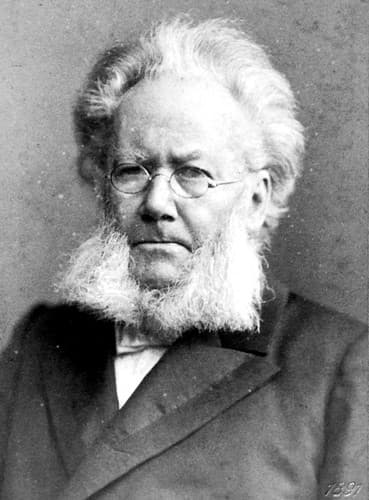
Henrik Johan Ibsen was a Norwegian playwright and theatre director. As one of the founders of modernism in theatre, Ibsen is often referred to as "the father of realism" and one of the most influential playwrights of his time. His major works include Brand, Peer Gynt, An Enemy of the People, Emperor and Galilean, A Doll's House, Hedda Gabler, Ghosts, The Wild Duck, When We Dead Awaken, Rosmersholm, and The Master Builder. Ibsen is the most frequently performed dramatist in the world after Shakespeare, and A Doll's House was the world's most performed play in 2006.
Similar books
- A Doll's House
Henrik Ibsen
3.7 (106k) average on GoodreadsFictionExplores themes of personal freedom, societal expectations, and a woman's struggle for identity within marriage.
- Hedda Gabler
Henrik Ibsen
3.8 (30k) average on GoodreadsFictionFeatures a complex female protagonist grappling with societal constraints and a profound sense of dissatisfaction.
- Pride and Prejudice
Jane Austen
4.3 (3M) average on GoodreadsHistorical FictionAusten's novel is a quintessential romance focused on societal expectations and marriage as a social contract. While both deal with women's choices in marriage, Ibsen's work delves into existential freedom and a quasi-mystical pull, offering far greater psychological depth and symbolic weight than traditional romance.
- Anna Karenina
Leo Tolstoy
4.0 (682k) average on GoodreadsHistorical FictionTolstoy's novel is a profound psychological work exploring passion, adultery, and social consequences within a detailed historical backdrop. Anna's struggle for fulfillment is grounded in human love and societal destruction, whereas Ellida's 'love' is more abstract—a yearning for an unbridled self and symbolic liberation, making her journey primarily internal and symbolic rather than a socially destructive romantic tragedy.
- To Kill a Mockingbird
Harper Lee
4.3 (4.5M) average on GoodreadsHistorical FictionIn the 1930s Jim Crow South, Harper Lee writes about racial injustice, moral growth, and the quiet courage of a lawyer father, Atticus Finch, as seen through his young daughter's eyes.
- The Great Gatsby
F. Scott Fitzgerald
3.9 (3.8M) average on GoodreadsHistorical FictionIn the opulent Roaring Twenties, a mysterious millionaire's lavish parties hide his desperate, tragic pursuit of a lost love, exposing the emptiness within the American Dream.






Enjoyed the summary?
A summary gives you the shape of the book. The book itself has the detail, the examples and the voice.
Find The Lady from the Sea on AmazonAs an Amazon Associate, BookBrief earns from qualifying purchases. How we're funded