

Synopsis
Covers the whole plot, including the ending.
- Difficulty
- Medium
- Pacing
- Slow
- Mood
- Reflective, Melancholy, Profound, Existential, Luminous
- Read it if
- You appreciate literary fiction that delves into the human condition, explores themes of mortality and memory with poetic prose, and enjoys unconventional narrative structures.
- Skip it if
- You prefer fast-paced plots, clear-cut resolutions, or straightforward narratives without much ambiguity or introspection.
The Largesse of the Sea Maiden Plot Summary
Covers the whole plot, including the ending.
The Largesse of the Sea Maiden
The title story introduces an unnamed narrator, an elderly writer in Key West, who recalls a peculiar incident from his youth. He describes being on a boat, possibly a fishing vessel, where he sees a 'sea maiden' – a beautiful, seemingly supernatural woman – emerge from the water and briefly interact with the boat's captain. The narrator questions how clear and true this memory is, wondering if it was a dream, a hallucination, or a real supernatural event. He revisits this memory repeatedly, each time adding or removing details, showing how fluid and unreliable personal history and perception are. The story sets a tone of existential thought about aging, the past, and the elusive nature of truth.
The Starlight on Idaho
Bill Wheatley is in a drug rehabilitation center in rural Idaho, writing letters to his sponsor, his ex-wife, and his children. These letters show his struggles with addiction, his attempts at sobriety, and his deep guilt and regret over his past actions. He describes the daily routines of rehab, the challenges of group therapy, and his desire for connection and forgiveness. Bill often drifts into philosophical thoughts and vivid, sometimes disturbing, memories of his life, blurring the line between his present and the ghosts of his past. His voice is raw, honest, and full of a desperate hope for redemption.
Strangler Bob
The narrator, Mark, is in a psychiatric ward, where he befriends a charismatic, unpredictable fellow patient known as Strangler Bob. Bob is a large, intimidating man with a history of violence and a peculiar, often profound, way of seeing the world. Their conversations range from everyday topics to deep philosophy, touching on freedom, sanity, and the nature of reality. Mark feels drawn to Bob's unconventional wisdom and wild stories, even as he recognizes Bob's dangerous instability. The story explores the blurred lines between madness and insight, and the deep connections made in extreme circumstances.
Triumph Over the Grave
An aging writer, who shares many traits with the author, thinks about the deaths of several friends and acquaintances, especially other writers and artists. He revisits their lives, their struggles, and their legacies, dealing with the concept of an afterlife and the lasting power of art. His reflections are tinged with both sorrow and a dark humor, as he faces the physical decay of his own body and the approaching specter of his own death. The story is a deep meditation on mortality, memory, and the human attempt to find meaning in the face of oblivion, often through creative expression.
The Largesse of the Sea Maiden (Reprise)
The narrator of the collection's first story returns to his memory of the sea maiden, but this time the details are more vivid and disturbing. He remembers the captain's interaction with the sea maiden as more forceful, almost violent, and the maiden herself appears less ethereal and more vulnerable. The narrator's struggle with the accuracy of his memory intensifies, suggesting that the past is not fixed but a constantly shifting narrative influenced by present worries and perspectives. This return to the original theme emphasizes the collection's concern with the unreliability of memory and the subjective nature of truth, leaving the reader with a lingering sense of ambiguity.
The Starlight on Idaho (Reprise)
Bill Wheatley's letters from the rehabilitation center continue, showing a gradual, though difficult, progression in his self-awareness. He explores the psychological roots of his addiction, acknowledging his own involvement and the pain he has caused others. While still prone to despair and self-doubt, there are glimpses of real insight and a fragile hope for recovery. He starts to imagine a future, however uncertain, where he might make amends and live a more meaningful life. The reprise highlights the ongoing, difficult journey of recovery and the incremental nature of personal growth and redemption.
Strangler Bob (Reprise)
The narrator, Mark, continues his story from the psychiatric ward, focusing more intensely on his relationship with Strangler Bob. Bob's statements become increasingly erratic and profound, challenging Mark's own perceptions of reality and sanity. Mark finds himself questioning his own mental state, wondering if he is being influenced by Bob's delusions or if Bob possesses a unique, though unsettling, form of wisdom. Their dynamic grows more intense, highlighting the collection's exploration of mental illness not just as a condition, but as an alternative way of experiencing and interpreting the world.
Triumph Over the Grave (Reprise)
The aging writer's thoughts on death and legacy deepen as he deals more directly with his own physical decline and the imminent approach of his end. He describes his ailments, his fading senses, and his increasing detachment from the world of the living. His thoughts become more philosophical, touching on the nature of consciousness and the possibility of something beyond death. While still maintaining a wry, dark humor, there is a deep sense of acceptance mixed with an enduring curiosity about life's ultimate mystery. The story becomes a poignant, almost farewell, meditation on facing the final frontier.
The Largesse of the Sea Maiden (Final Reflection)
In a final return to the sea maiden memory, the narrator offers his most nuanced and uncertain account yet. He acknowledges that it is impossible to definitively know what truly happened, accepting that the memory itself is a construct, a story he tells himself. The 'sea maiden' becomes a metaphor for the elusive nature of truth, the power of imagination, and how the past continues to shape and haunt the present, even if its details remain forever unclear. This concluding reflection emphasizes the collection's central themes of memory's unreliability and the ultimately subjective experience of reality.
The Starlight on Idaho (Final Insights)
Bill Wheatley's final letters from the rehab center show him reaching a point of fragile peace and a renewed sense of purpose. He has come to terms with his past, not as a source of paralyzing guilt, but as a foundation for growth. He expresses a desire to live authentically and to connect with his family, even if forgiveness is a long and uncertain process. His journey, though far from over, signifies a deep shift from self-destruction to a tentative embrace of life, showing the lasting human capacity for change and the search for meaning even in the darkest circumstances.
Principal Figures
The Narrator (Largesse of the Sea Maiden)
Protagonist/Speaker
An aging writer grappling with an enigmatic memory from his youth.
This unnamed narrator is an elderly, reflective writer living in Key West. He is highly introspective, preoccupied with memory, the passage of time, and the subjective nature of truth. His primary struggle is to reconcile a vivid, yet possibly imagined, encounter with a 'sea maiden' from his past. He is intellectual and philosophical, using his writing as a means to process the mysteries of existence and his own aging body.
Bill Wheatley
Protagonist
A man in drug rehabilitation striving for sobriety and redemption.
Bill Wheatley is a man in his middle years, undergoing drug rehabilitation in Idaho. He is intelligent, articulate, and deeply introspective, as evidenced by his extensive letters. He is driven by a profound sense of guilt over his past actions and a desperate longing for forgiveness from his family. His journey is marked by intense self-examination, struggles with temptation, and a slow, painful process of confronting his addiction and its consequences.
Relationships: His Sponsor (mentor/confidant in recovery); His Ex-Wife (estranged, source of guilt and longing for forgiveness); His Children (estranged, deep desire for reconnection)
Mark (Strangler Bob)
Protagonist/Narrator
A patient in a psychiatric ward befriending a charismatic, dangerous man.
Mark is the narrator of 'Strangler Bob,' confined to a psychiatric ward. He is observant, curious, and somewhat detached, finding himself drawn into the orbit of the enigmatic Strangler Bob. Mark struggles with his own perceptions of reality and sanity, often questioning the boundaries between illness and insight. He is a seeker of understanding, trying to make sense of the chaotic world within the institution and the profound, often unsettling, ideas presented by Bob.
Relationships: Strangler Bob (complex friendship, mentor/mentee dynamic, source of fascination and fear)
Strangler Bob
Supporting/Antagonist
A charismatic, violent, and philosophical patient in a mental institution.
Strangler Bob is a larger-than-life character in the psychiatric ward. He is physically imposing, with a history of violence, yet possesses a surprising intellectual depth and a unique, often disturbing, philosophical outlook. He is unpredictable, prone to sudden shifts in mood and behavior, but also capable of profound insights. Bob serves as a catalyst for Mark's self-reflection, embodying the blurred lines between madness, genius, and danger.
Relationships: Mark (complex friendship, a source of intellectual and emotional challenge)
The Narrator (Triumph Over the Grave)
Protagonist/Speaker
An aging writer contemplating death, legacy, and the meaning of life.
This narrator, strongly implied to be a version of Denis Johnson himself, is an elderly writer facing his own mortality. He is highly intellectual, with a deep appreciation for literature and art, and a wry, often dark sense of humor. He is driven by a desire to understand death, the afterlife, and the enduring impact of human lives and creative work. His reflections are deeply personal and philosophical, grappling with physical decay and the ultimate unknowns of existence.
Relationships: Deceased Friends/Fellow Writers (objects of reflection and memory, catalysts for his contemplation of mortality)
The Captain (Largesse of the Sea Maiden)
Mentioned
The enigmatic figure who interacts with the sea maiden.
The Captain is a shadowy figure in the narrator's memory, a gruff and perhaps dangerous man on the fishing boat. His interaction with the sea maiden is ambiguous, shifting from seemingly benign to potentially coercive in the narrator's recollections. He represents a primal, mysterious force, connected to the sea and its secrets, and his actions are central to the narrator's long-standing enigma.
Relationships: The Narrator (witnessed by, object of memory); The Sea Maiden (brief, enigmatic, and potentially unsettling interaction)
The Sea Maiden
Mentioned/Symbolic
A mysterious, possibly supernatural, woman emerging from the sea.
The Sea Maiden is a spectral, beautiful figure who emerges from the ocean in the narrator's memory. She is an embodiment of mystery, the subconscious, and the elusive nature of truth. Her presence is unsettling and captivating, representing the unknown and the supernatural elements that can intrude upon ordinary life. Her ambiguous nature fuels the narrator's lifelong quest to understand the event.
Relationships: The Narrator (object of his memory and lifelong contemplation); The Captain (brief, enigmatic interaction)
Bill's Sponsor
Supporting
Bill Wheatley's guide and confidant in his recovery journey.
Bill's sponsor, though never directly seen, is a crucial figure in 'The Starlight on Idaho.' He represents the support system and principles of recovery. Bill's letters are largely addressed to him, making him a silent but powerful presence, a recipient of Bill's confessions, reflections, and hopes. He symbolizes the path to sobriety and the guidance Bill desperately needs.
Relationships: Bill Wheatley (mentor/confidant in recovery)
Bill's Ex-Wife and Children
Mentioned
The estranged family Bill Wheatley longs to reconnect with.
These characters exist primarily in Bill Wheatley's letters, representing the family he has hurt through his addiction and the relationships he desperately hopes to mend. They are the driving force behind his desire for recovery and redemption. Their absence and the pain he has caused them fuel much of his introspection and guilt, making them powerful motivators in his journey.
Relationships: Bill Wheatley (estranged family, objects of his guilt and longing for forgiveness)
The Doctors/Nurses (Strangler Bob)
Mentioned
The authority figures within the psychiatric ward.
These medical professionals are largely background figures, representing the institutional control and attempts at order within the chaotic environment of the psychiatric ward. They are seen through Mark's subjective lens, often as detached or ineffective, highlighting the limitations of conventional approaches to mental illness. They embody the external world's attempt to categorize and manage the unmanageable.
Relationships: Mark (caretakers/overseers); Strangler Bob (caretakers/overseers)
Themes & Insights
The Unreliability of Memory and Truth
This theme is central to the collection, especially in the title story. The narrator of 'The Largesse of the Sea Maiden' repeatedly revisits his memory of the sea maiden, each time with different details, showing how personal history is not fixed but a fluid, subjective narrative. This is further explored in 'Triumph Over the Grave' as the writer reflects on the legacies of his deceased friends, understanding that their stories are also subject to interpretation and the passage of time. The collection suggests that absolute truth, especially about the past, is elusive, and what remains is our interpretation and the stories we tell ourselves.
“I tried to remember what had actually happened, but I couldn’t be sure. The incident had become a story, and the story changed with every telling.”
Mortality and Aging
A pervasive theme throughout the collection, most clearly in 'Triumph Over the Grave' and the reflections of the aging narrator in 'The Largesse of the Sea Maiden.' The characters deal with physical decay, the loss of friends, and the approaching specter of their own deaths. They reflect on the meaning of a life lived, the legacies left behind, and the ultimate mystery of what lies beyond. The stories offer a raw, often darkly humorous, look at the indignities and deep questions that come with old age.
“It was the final mystery, the one we all had to solve, and the solving of it was the end of us.”
Addiction and Redemption
This theme is explored in 'The Starlight on Idaho' through Bill Wheatley's letters from a rehabilitation center. Bill's struggle with addiction is shown with honesty, revealing the cycles of craving, guilt, and the desperate desire for a better life. The story looks at the difficult journey of recovery, the search for forgiveness, and the fragile hope for redemption. It highlights the internal battles and the slow, incremental process of healing and self-discovery that comes with confronting one's demons.
“I’m trying to rewrite my story, but the old chapters keep bleeding through.”
The Nature of Sanity and Reality
Explored most directly in 'Strangler Bob,' this theme questions the boundaries between sanity and madness, and how individuals perceive and construct their own realities. The psychiatric ward serves as a small example where conventional ideas of mental health are challenged. Strangler Bob, despite his violence and delusions, often offers profound, though unsettling, insights, making the reader question who is truly 'sane.' The collection suggests that reality is subjective and that what one person sees as madness, another might see as an alternative, though dangerous, form of wisdom.
“The sane ones, they just don’t see the whole picture. They only see the part they want to see.”
The Power of Storytelling and Art
Throughout the collection, writing and storytelling are ways for characters to process their experiences, deal with existential questions, and try to find meaning. The narrators are often writers themselves, reflecting on the act of creation and its ability to shape memory, preserve legacies, and confront the inevitability of death. Art is presented as a way to transcend mortality, to leave a mark, and to communicate the incommunicable. The very structure of the collection, with its recurring themes and voices, shows the lasting power of narrative.
“We write to remember, to invent, to make sense of the chaos, to leave a ghost behind.”
Plot Devices & Literary Techniques
Unreliable Narrator
The narrators' accounts are often subjective, incomplete, or consciously altered.
This device is central to the collection, particularly in 'The Largesse of the Sea Maiden,' where the narrator openly questions the veracity of his own memories. In 'The Starlight on Idaho,' Bill Wheatley's letters, while seemingly honest, are filtered through his addiction and recovery, making his perceptions of past events potentially biased. This device forces the reader to actively engage with the text, questioning what is 'true' and highlighting the subjective nature of human experience and memory.
Epistolary Format
The story is told through a series of letters.
Used exclusively in 'The Starlight on Idaho,' the epistolary format provides an intimate and unfiltered glimpse into Bill Wheatley's mind. The letters allow for a direct, first-person narrative that reveals his raw emotions, struggles, and philosophical musings without the mediation of an external narrator. This device creates a sense of immediacy and authenticity, drawing the reader deeply into Bill's internal world and the arduous process of his recovery.
Recurring Motifs/Echoes
Themes, images, and narrative structures are revisited and re-examined across stories.
The collection employs a structure where stories, or elements of them, are revisited ('Reprise' sections), creating a sense of a larger, interconnected meditation. For example, the 'sea maiden' memory is recounted multiple times with subtle variations, and the overarching themes of mortality and memory are echoed in different narrative voices. This device reinforces the idea that life's fundamental questions are constantly re-evaluated and that truth is multifaceted and elusive, seen through different lenses and at different stages of life.
Stream of Consciousness
Narrators' thoughts flow freely, often without strict logical progression.
Many of the stories, particularly 'Triumph Over the Grave' and sections of 'The Largesse of the Sea Maiden,' utilize a stream of consciousness style. The narrators' thoughts often drift from present observations to past memories, philosophical digressions, and vivid internal monologues. This device mirrors the natural, often chaotic, flow of human thought, immersing the reader directly into the characters' minds and reflecting the fragmented and associative nature of memory and introspection, especially in old age.
The Largesse of the Sea Maiden Quotes
“The worst part of it was that I knew it was all my fault, even though I couldn’t remember what I’d done.”
“I’d been so careful, so deliberate, and still, the world had found a way to undo me.”
“Every single one of us is an expert in the language of our own despair.”
“It’s not the dying that’s hard, it’s the thinking about it.”
“You can’t escape your own skin, no matter how far you run.”
“The past is a country we visit, but we can never live there again.”
“We were all just trying to make sense of something that didn’t make any sense.”
“Sometimes the only way to get through it is to pretend it isn’t happening.”
“There are some things you can’t outrun, no matter how fast you are.”
“The world was full of small, inexplicable cruelties, and sometimes the biggest one was just being alive.”
“I understood then that sorrow was not a thing to be overcome, but a place to inhabit.”
“We carry our histories inside us, like invisible scars.”
“The greatest mystery isn't what happens after death, but what happens during life.”
“You never really know a person until you see them at their absolute worst.”
Quiz
10 questions on the plot and the characters. Each answer comes with a short explanation.
Question 1
In the story 'The Largesse of the Sea Maiden,' what significant item does the narrator, Bill, repeatedly attempt to sell?
- An antique pocket watch
- A valuable stamp collection
- His late wife's diamond ring
- A rare first edition book
Show answer
C. His late wife's diamond ring Bill's attempts to sell his late wife's diamond ring are a central, recurring motif in the title story, reflecting his financial struggles and his relationship with the past.
Question 2
Which story features a character named Mark, who is a veteran struggling with PTSD and living in a remote cabin?
- The Starlight on Idaho
- Strangler Bob
- Triumph Over the Grave
- The F***ing
Show answer
C. Triumph Over the Grave 'Triumph Over the Grave' introduces Mark, a veteran haunted by his past and living an isolated existence, which the narrator visits.
Question 3
What is a prominent theme explored across multiple stories in 'The Largesse of the Sea Maiden,' particularly concerning the narrators' perspectives?
- The promise of eternal youth
- The joys of technological advancement
- Aging, mortality, and grappling with the past
- The pursuit of corporate success
Show answer
C. Aging, mortality, and grappling with the past Many narrators in the collection are older men reflecting on their lives, losses, and the approach of death, making aging and mortality a central theme.
Question 4
In 'The Starlight on Idaho,' what is the primary activity of the narrator, who is a former addict, in the rehabilitation center?
- Leading group therapy sessions
- Writing letters to various people
- Organizing recreational activities
- Studying for a GED
Show answer
B. Writing letters to various people The narrator of 'The Starlight on Idaho' spends his time in the rehab facility writing numerous, often rambling, letters to family, friends, and even strangers.
Question 5
Which story features a character who believes he is haunted by the ghost of a man he once knew, and details their strange encounters?
- The Largesse of the Sea Maiden
- Strangler Bob
- Triumph Over the Grave
- The F***ing
Show answer
B. Strangler Bob 'Strangler Bob' tells the bizarre and unsettling tale of a narrator who is convinced he is being followed or visited by the spectral presence of a man named Strangler Bob.
Question 6
The collection's style is often described as 'luminous prose.' What characteristic best defines this style in 'The Largesse of the Sea Maiden'?
- Formal, academic, and highly structured sentences
- Sparse, direct, and often brutally honest, with moments of poetic insight
- Flowery, ornate, and excessively descriptive language
- Colloquial, humorous, and light-hearted, avoiding serious topics
Show answer
B. Sparse, direct, and often brutally honest, with moments of poetic insight Johnson's 'luminous prose' is characterized by its directness, often raw honesty, and ability to imbue everyday observations and harsh realities with profound, sometimes spiritual, meaning.
Question 7
In the story 'The F***ing,' what is the narrator's profession, which often involves him driving long distances and encountering various people?
- A traveling salesman
- A long-haul truck driver
- A private investigator
- A journalist researching a story
Show answer
D. A journalist researching a story The narrator of 'The F***ing' is a journalist on assignment, which leads him to various locations and interactions, including the memorable encounter with a woman named Fanny.
Question 8
The collection often features characters who are marginalized or struggling. What does this choice of characters typically allow Johnson to explore?
- The ease of achieving the American Dream
- The superficiality of modern society
- The raw human condition, vulnerability, and the search for meaning amidst chaos
- The benefits of strict societal hierarchies
Show answer
C. The raw human condition, vulnerability, and the search for meaning amidst chaos Johnson frequently focuses on characters on the fringes of society to delve into the fundamental aspects of human existence, their struggles, their search for grace, and their often-unconventional paths to understanding.
Question 9
In 'The Largesse of the Sea Maiden,' the narrator Bill reflects on the nature of memory. What is his specific observation about how memories function as one ages?
- Memories become clearer and more accurate with time.
- Old memories fade completely, replaced by new ones.
- They don't disappear but rather 'drift' and re-present themselves in unexpected, sometimes confusing, ways.
- Memories can be consciously controlled and recalled at will.
Show answer
C. They don't disappear but rather 'drift' and re-present themselves in unexpected, sometimes confusing, ways. Bill's reflections on memory suggest that as one ages, memories don't simply vanish but rather become fluid, drifting and resurfacing in ways that can be both vivid and disorienting, blurring the lines of past and present.
Question 10
What is the overarching tone that pervades most of the stories in 'The Largesse of the Sea Maiden'?
- Optimistic and celebratory
- Lighthearted and comedic
- Melancholy, reflective, and imbued with a sense of searching or spiritual yearning
- Angry and confrontational
Show answer
C. Melancholy, reflective, and imbued with a sense of searching or spiritual yearning The stories are often marked by a profound sense of melancholy, as characters grapple with loss, the passage of time, and the search for meaning in a world that often feels chaotic or indifferent, yet often carry a spiritual undercurrent.
The Largesse of the Sea Maiden FAQ
What is the overarching theme connecting the diverse stories in 'The Largesse of the Sea Maiden'?
The collection, Denis Johnson's final work, primarily explores themes of aging, mortality, memory, and the search for meaning or transcendence in ordinary lives. Many characters grapple with their pasts, the decline of their bodies, and an impending sense of an ending, often filtered through a lens of dark humor and profound contemplation.
Who is the recurring narrator, Richard Eberhart, and what is his significance?
Richard Eberhart is a recurring first-person narrator in several stories, notably 'The Largesse of the Sea Maiden' and 'Strangler Bob.' He is an aging writer, reflecting on his life, career, and encounters, often with a detached yet deeply observant perspective. His experiences frequently involve brushes with the absurd, the criminal, and the spiritual, serving as a conduit for Johnson's explorations of memory and the human condition.
What is the central mystery or conflict in the title story, 'The Largesse of the Sea Maiden'?
In the title story, Richard Eberhart reflects on his life, his writing, and a specific, unsettling encounter during his youth involving a mysterious woman and a possible crime. The central conflict isn't a traditional mystery to be solved, but rather the narrator's internal struggle to make sense of fragmented memories, the nature of reality, and the elusive presence of grace or transcendence in his past.
How does the story 'Strangler Bob' connect to other narratives or themes in the collection?
'Strangler Bob' features Richard Eberhart encountering a man who may or may not be the infamous serial killer Strangler Bob. The story delves into themes of mistaken identity, the unreliability of memory, and the pervasive presence of violence or menace in the background of everyday life. It echoes the collection's focus on the uncanny and the way past events, both personal and public, haunt the present.
What role do supernatural or inexplicable elements play in the collection, particularly in stories like 'Triumph Over the Grave'?
Supernatural or inexplicable elements often appear as fleeting, ambiguous moments rather than overt fantasy. In 'Triumph Over the Grave,' the narrator experiences visions and a sense of spiritual encounter, blurring the lines between hallucination, dream, and genuine mystical experience. These moments underscore the characters' grappling with mortality and the unknown, suggesting a world beyond immediate perception.
Are there any subtle allusions or callbacks to Denis Johnson's earlier works, like 'Jesus' Son'?
While not explicit character crossovers, the collection shares a stylistic and thematic kinship with 'Jesus' Son,' particularly in its luminous, precise prose, its focus on marginalized or struggling characters, and its exploration of addiction, redemption, and moments of unexpected grace. The fragmented narratives and blend of gritty realism with spiritual yearning are consistent Johnson trademarks.
What is the significance of the recurring imagery of water, particularly the sea, throughout the stories?
Water imagery, especially the sea, often symbolizes the vastness of time, the unconscious, and the overwhelming nature of existence. In 'The Largesse of the Sea Maiden,' it evokes both beauty and menace, representing the unknown depths of memory and the ultimate boundary of life. It can also suggest cleansing, oblivion, or a return to a primal state.
How does Johnson use humor, specifically dark or ironic humor, to address serious themes?
Johnson frequently employs dark humor and irony as a coping mechanism for his characters and as a way to highlight the absurdities of life and death. This humor often arises from their misfortunes, their self-awareness of their own failings, or the surreal circumstances they encounter. It provides a counterpoint to the profound melancholy, allowing for moments of lightness amidst existential dread.
What is the implied fate or state of the unnamed narrator in 'The Starlight on Idaho'?
The unnamed narrator in 'The Starlight on Idaho' is a man in a drug rehabilitation facility. His fragmented thoughts, prayers, and reflections suggest a struggle with addiction and a search for spiritual solace. His ultimate fate is left ambiguous, but the story conveys a sense of fragile hope and the ongoing, difficult process of recovery, rather than a definitive resolution.
How do the characters in the collection cope with their own aging and the physical decline of their bodies?
Characters often cope with aging through a mix of denial, wry observation, and a heightened awareness of their own mortality. They reflect on past selves, lament lost vigor, and confront the indignities of physical decay, sometimes with a philosophical resignation, other times with a profound sense of loss. Their bodies become physical manifestations of their journey through time.
What psychological impact does memory, particularly unreliable memory, have on characters like Richard Eberhart?
Unreliable memory profoundly shapes characters like Richard Eberhart, making them question their own pasts and the nature of reality. They grapple with fragmented recollections, uncertain details, and the possibility that their memories are distorted or entirely fabricated. This creates a sense of existential unease, blurring the lines between truth and self-deception and impacting their understanding of identity.
How do the characters' experiences with addiction or past trauma influence their present perceptions?
Characters' past experiences with addiction and trauma cast long shadows over their present perceptions, often manifesting as paranoia, heightened sensitivity, or a distorted view of reality. These experiences can lead to a sense of being perpetually haunted, impacting their relationships, their decision-making, and their overall ability to find peace or stability.
What role does isolation play in the psychological states of the characters?
Isolation is a prevalent psychological state for many characters, often amplifying their internal struggles with memory, mortality, and meaning. Whether physically alone or feeling alienated in social settings, this isolation forces them into deep introspection, sometimes leading to profound insights, but also to heightened anxiety and a sense of being disconnected from the world and others.
Is there a sense of redemption or hope offered to the characters, despite their struggles with mortality and regret?
While the collection is often melancholic, it frequently offers glimmers of redemption or hope, not necessarily through traditional happy endings, but through moments of unexpected grace, spiritual revelation, or profound self-acceptance. These moments suggest that even in decline, there can be beauty, insight, and a connection to something larger than oneself.
How does Johnson's choice of first-person narration impact the reader's engagement with the characters and themes?
The prevalent use of first-person narration creates an intimate, immediate connection with the characters' internal worlds, drawing readers directly into their thoughts, anxieties, and philosophical musings. This subjective viewpoint emphasizes the unreliability of perception and memory, forcing readers to interpret events alongside the characters and engage deeply with their personal struggles.
What is the ultimate 'largesse' implied by the title, 'The Largesse of the Sea Maiden'?
The 'largesse' of the sea maiden can be interpreted in multiple ways: perhaps it's the gift of life itself, the overwhelming beauty and mystery of existence, or even the final surrender to the unknown (death). It might represent the unpredictable, sometimes unsettling, but ultimately profound insights and experiences that life bestows, even in its twilight years.
How does the collection comment on the nature of storytelling and the role of the writer?
The collection, especially through Richard Eberhart, frequently comments on the nature of storytelling, portraying it as a means to make sense of a chaotic world, to preserve fragmented memories, and to search for truth, even if elusive. It highlights the writer's struggle with inspiration, the burden of the past, and the ultimate futility or triumph of their craft in confronting mortality.
What is the philosophical stance on death and the afterlife presented in the book?
The book presents a complex and often ambiguous philosophical stance on death and the afterlife. While characters grapple with the fear of oblivion, there are also moments suggesting a spiritual dimension, a continuation of consciousness, or a return to a primal state. It's less about definitive answers and more about the profound human yearning for meaning beyond the physical end.
How does the structure of the collection, as a series of distinct yet thematically linked stories, contribute to its overall impact?
The collection's structure allows Johnson to explore his core themes from multiple angles and through diverse voices, creating a multifaceted portrait of aging, memory, and mortality. The thematic links between stories, rather than a linear plot, create a cumulative emotional and philosophical impact, deepening the reader's understanding of the human condition in its twilight stages.
About the author
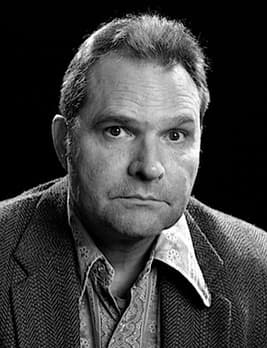
Denis Hale Johnson was an American novelist, short-story writer, and poet. He is perhaps best known for his debut short story collection, Jesus' Son (1992). His most successful novel, Tree of Smoke (2007), won the National Book Award for Fiction. Johnson was twice shortlisted for the Pulitzer Prize for Fiction. Altogether, Johnson was the author of nine novels, one novella, two books of short stories, three collections of poetry, two collections of plays, and one book of reportage. His final work, a book of short stories titled The Largesse of the Sea Maiden, was published posthumously in 2018.
Similar books
- Tenth of December
George Saunders
4.0 (62k) average on GoodreadsLiterary FictionA collection of short stories that similarly explores the depths of human experience with a unique voice and often dark humor.
- Pastoralia
George Saunders
4.1 (18k) average on GoodreadsLiterary FictionAnother collection focusing on the quirky, often melancholic lives of ordinary people, with a distinctive authorial voice.
- The Old Man and the Sea
Ernest Hemingway
3.8 (831k) average on GoodreadsLiterary FictionA Cuban fisherman's long struggle with a giant marlin becomes a story of endurance and dignity, now retold for young adults with illustrations, phonetic guides, and writing prompts in Traditional Chinese.
- One Hundred Years of Solitude
Gabriel García Márquez
4.1 (753k) average on GoodreadsLiterary FictionThrough the multi-generational story of the Buendía family, a mythical town deals with the repeating patterns of time, love, and solitude, as the extraordinary mixes with the ordinary.
- The Goldfinch
Donna Tartt
3.9 (720k) average on GoodreadsLiterary FictionHaunted by a tragic explosion and clutching a stolen Dutch masterpiece, a young orphan navigates the opulent drawing rooms of New York and the gritty underbelly of the art world, desperately seeking connection and redemption amidst a life spiraling into crime and obsession.
- Little Fires Everywhere
Celeste Ng
4.1 (713k) average on GoodreadsLiterary FictionIn Shaker Heights, an artist and her daughter move in, and their free-spirited lives clash with a rule-bound matriarch, revealing hidden conflicts beneath a perfect surface.






Enjoyed the summary?
A summary gives you the shape of the book. The book itself has the detail, the examples and the voice.
Find The Largesse of the Sea Maiden on AmazonAs an Amazon Associate, BookBrief earns from qualifying purchases. How we're funded