

Synopsis
Covers the whole plot, including the ending.
- Difficulty
- Medium
- Pacing
- Fast
- Mood
- Dark, Violent, Suspenseful, Bleak
- Read it if
- You enjoy dark, gritty fantasy with a morally ambiguous protagonist, focused on military training, religious fanaticism, and political intrigue.
- Skip it if
- You prefer lighthearted fantasy, clear-cut heroes, or shy away from graphic violence and bleak settings.
The Left Hand of God Plot Summary
Covers the whole plot, including the ending.
The Sanctuary of the Redeemers
Thomas Cale, a boy of uncertain age, lives a harsh life in the Sanctuary of the Redeemers, a fortress atop Shotover Scarp. Like many other boys, he was taken there young and trained as a warrior for the One True Faith. The Redeemers are a brutal order, and Cale is known for his unusual intelligence, wit, and capacity for violence. He has suppressed his past and true name, adopting the identity given to him. The training involves extreme torment, designed to strip boys of individuality and instill obedience and ferocity. Cale, despite outward conformity, has a rebellious spirit and a hidden depth that sets him apart.
A Glimpse of True Horror
One day, Cale stumbles upon a horrifying scene in the Sanctuary's corridors. He sees Lord Redeemers torturing and murdering a woman, seemingly for sport or ritual, not for religious purpose. This act, even by the Sanctuary's standards, is depraved and shatters Cale's already fragile morality. Realizing he saw something forbidden, and fearing for his life, Cale understands he must escape or face a gruesome end. This event drives his desperate resolve to flee the only home he has known.
The Escape from Shotover Scarp
Driven by the horror he witnessed, Cale plans a daring escape. He recruits a small group of fellow 'recruits' – boys who endured the Redeemers' brutal training – including Riba and Kleist. Together, they navigate the Sanctuary's treacherous defenses, using their combat skills and Cale's strategic mind. The escape is dangerous, with Redeemer patrols and the harsh environment of Shotover Scarp posing constant threats. Their goal is to cross the arid Scablands, a wilderness separating the Sanctuary from the outside world, and reach Memphis.
Journey Across the Scablands
Cale and his companions embark on a grueling journey across the Scablands, a desolate desert. They face extreme dehydration, starvation, and the constant threat of pursuit by the relentless Redeemers. The boys scavenge for food and water, their bond tested by the harsh conditions. During this trek, Cale's leadership and unconventional thinking are essential for survival. They encounter dangers, including hostile wildlife and the fear of recapture and brutal 'redemption.' The journey pushes them to their physical and mental limits.
Arrival in Memphis
After immense hardship, Cale and the surviving escapees reach Memphis. Memphis contrasts sharply with the austere Sanctuary: a city of dazzling beauty, immense wealth, and overt decadence. It is corrupt and godless, a place where pleasure and power rule. The boys are overwhelmed by the city's sensory overload, from its architecture to its markets and diverse inhabitants. They quickly realize escaping the Sanctuary was only the first step; navigating Memphis's complexities and dangers will present new challenges.
Life Among the Outcasts
In Memphis, Cale and his companions are adrift in a world they barely understand. They initially struggle to survive, their martial skills from the Sanctuary not directly useful in the city. They eventually join a group of outcasts and street dwellers, finding some safety and community. Cale, with his sharp intellect, begins to learn the city's ways, observing its power structures. He forms a strong bond with Vayl, a young woman who becomes a crucial ally and confidante, helping him navigate Memphis's treacherous social landscape.
The Redeemers' Reach
The Redeemers, led by Lord Redeemer Bosco, do not give up their pursuit of Cale. Their relentless hunt extends into Memphis, showing their vast influence. It becomes clear that their desire to recapture Cale goes beyond punishment for his escape or witnessing their secret act. Lord Redeemer Bosco seems to have a deeper, personal interest in Cale. The true reason for their obsession with Cale slowly unravels, hinting at a hidden prophecy or a unique power Cale possesses, which even he does not know.
The Prophecy and Cale's Destiny
Through fragmented clues and encounters in Memphis, Cale begins to uncover the truth about his past and his destiny. He learns he is connected to an ancient prophecy, one that foretells a figure who will either bring a new age or unleash destruction. The Redeemers believe Cale is this individual, and they seek to control him to fulfill their interpretation of the prophecy or eliminate him to prevent it. Cale grapples with this revelation, struggling to reconcile his brutal past with the potential future laid out for him.
Political Intrigue and War
Memphis is a hub of political intrigue and simmering conflict. The city is ruled by powerful, often corrupt, families and faces threats from rival factions and the encroaching Redeemers. Cale and his allies become entangled in these power struggles, forced to choose sides and fight for survival. Memphis's political landscape mirrors the larger conflict between the secular world and the Redeemers' militant faith. Cale increasingly finds himself at the center of this brewing storm, his actions having significant repercussions on the balance of power.
The Battle for Memphis
The Redeemers, under Lord Redeemer Bosco's command, launch a full-scale assault on Memphis, aiming to reclaim Cale and impose their will on the 'godless' city. Cale, drawing on his brutal training and new allies, takes a leading role in Memphis's defense. He uses his strategic mind and ruthless combat skills to rally the city's forces, including outcasts and noble houses, against the disciplined Redeemer army. The battle is fierce and bloody, with heavy casualties on both sides. Cale's actions are key in determining Memphis's fate.
Confrontation with Bosco
During the climactic battle for Memphis, Cale faces Lord Redeemer Bosco. Their confrontation is not just physical but also a clash of ideas and a moment of revelation. Bosco reveals more about Cale's origins and the specific nature of the prophecy tied to him. It becomes clear that Bosco has a complex, possibly paternal, connection to Cale, viewing him as a critical piece in a grander scheme. The encounter forces Cale to confront the dark truths of his past and the terrifying implications of his destiny, giving him a deeper understanding of his power and purpose.
A Pyrrhic Victory and New Path
Memphis is defended against the Redeemer invasion, but the victory comes at a great cost. The city is scarred, and many lives are lost. Cale, having played a key role, emerges changed, burdened by the knowledge of his destiny and the violence he committed. The immediate threat from the Redeemers is repelled, but the larger conflict between faiths and the revelation of Cale's prophetic role set the stage for future battles. Cale's journey is not over; he is now aware of the immense power he holds and the responsibility it carries, preparing him for continued struggles.
Principal Figures
Thomas Cale
Protagonist
A brutalized yet brilliant warrior with a mysterious past and a prophesied destiny.
Thomas Cale is a young man raised in the brutal Sanctuary of the Redeemers, trained from childhood to be a ruthless killer. Despite his violent upbringing, he possesses a sharp intellect, a cynical wit, and a hidden capacity for empathy and loyalty. He is haunted by fragmented memories and a sense of being different. His moral compass is warped by his training, yet he is capable of great compassion and fierce protectiveness towards his friends. He struggles with his identity, torn between the killer he was trained to be and the person he wishes to become.
Relationships: Vayl (Love interest and trusted confidante); Riba (Fellow recruit and loyal companion); Kleist (Fellow recruit and loyal companion); Lord Redeemer Bosco (Mentor/Antagonist, with a complex, almost paternal, connection)
Vayl
Supporting
A cunning and resourceful girl from the streets of Memphis who becomes Cale's ally and love interest.
Vayl is a street-smart and resilient young woman from Memphis. She is independent, quick-witted, and possesses a strong survival instinct honed by a life in the city's underbelly. She is initially wary of Cale and his companions but quickly recognizes Cale's unique qualities and becomes his closest confidante and eventually, his love interest. Vayl provides Cale with a connection to the 'normal' world outside the Sanctuary and helps him navigate the complex social and political landscape of Memphis. She is fiercely loyal to those she cares about and is not afraid to stand up for herself or others.
Relationships: Thomas Cale (Love interest and trusted confidante)
Riba
Supporting
One of Cale's fellow recruits, loyal but less intelligent, often serving as muscle.
Riba is one of the boys who escapes the Sanctuary with Cale. He is physically strong and fiercely loyal to Cale, whom he views as his leader and protector. While not as intelligent or strategic as Cale, Riba is a dependable fighter and a steadfast companion. He embodies some of the more brutal aspects of their Redeemer training but is also capable of simple loyalty and camaraderie. He struggles to adapt to the complexities of Memphis but remains a constant presence by Cale's side, often acting as a foil to Cale's darker impulses.
Relationships: Thomas Cale (Loyal companion and follower); Kleist (Fellow recruit and companion)
Kleist
Supporting
Another of Cale's fellow recruits, quieter and more observant than Riba.
Kleist is another of Cale's companions from the Sanctuary. He is generally quieter and more observant than Riba, often taking in his surroundings before acting. Like Riba, he is loyal to Cale and is a capable fighter, having endured the same brutal training. Kleist represents a slightly more introspective side of the Redeemer recruits, often reflecting on their situation in a way that Riba does not. He is a reliable member of Cale's small group, contributing his skills and loyalty to their shared survival.
Relationships: Thomas Cale (Loyal companion and follower); Riba (Fellow recruit and companion)
Lord Redeemer Bosco
Antagonist/Mentor
A powerful and enigmatic Lord Redeemer with a mysterious connection to Cale.
Lord Redeemer Bosco is a formidable and ruthless leader within the Sanctuary. He is a master strategist and a devout follower of the One True Faith, embodying its most extreme and violent tenets. Bosco is Cale's primary antagonist, relentlessly pursuing him after his escape. However, his motives are complex; he seems to possess a deeper understanding of Cale's true nature and destiny, hinting at a paternal or guiding role rather than purely antagonistic. He is cold, calculating, and capable of immense cruelty, yet he also shows a strange, almost possessive, interest in Cale's development.
Relationships: Thomas Cale (Antagonist/Mentor, with a profound and mysterious connection)
The Redeemers
Antagonists
A fanatical military religious order that rules Shotover Scarp and seeks to enforce their faith.
The Redeemers are the militant arm of the One True Faith, a ruthless and ascetic religious order. They operate from the Sanctuary on Shotover Scarp, training young boys into fanatical warriors. Their ideology is one of extreme devotion, self-flagellation, and brutal enforcement of their dogma. They view the outside world, particularly cities like Memphis, as 'godless' and corrupt, deserving of their 'redemption' through violence. They are highly organized, disciplined, and relentless in their pursuit of their objectives, driven by an unwavering belief in their divine mission.
Relationships: Thomas Cale (Persecutors and former trainers); Lord Redeemer Bosco (Leader and enforcer of their will)
Idris
Supporting
A powerful and influential figure in Memphis, often involved in political machinations.
Idris is a prominent and influential figure within the political landscape of Memphis. He is a man of wealth, power, and considerable cunning, navigating the city's complex web of alliances and rivalries. Idris represents the secular, often corrupt, power structures of Memphis, standing in stark contrast to the religious fanaticism of the Redeemers. He becomes aware of Cale's unique abilities and potential, sometimes using him as a pawn in his own schemes, but also offering a degree of protection and guidance in the bewildering city. His motives are often self-serving, but he can also be a valuable, if untrustworthy, ally.
Relationships: Thomas Cale (Political ally/pawn)
Themes & Insights
The Nature of Identity and Dehumanization
The novel explores how environment shapes identity, particularly through Cale's upbringing in the Sanctuary. The Redeemers strip boys of their names, pasts, and individuality, turning them into brutal instruments of faith. Cale constantly struggles with who he is: a weapon, a leader, a person capable of love and compassion. His journey is one of reclaiming his humanity and forging an identity beyond the one imposed upon him. This shows in his internal thoughts about his forgotten name and his struggle to reconcile his violent training with his growing empathy, especially in Memphis.
“He had long-forgotten his real name, but now they call him Thomas Cale.”
Religious Fanaticism vs. Secular Corruption
The conflict between the zealous Redeemers and the decadent, 'godless' city of Memphis forms the central ideological struggle of the book. The Redeemers represent extreme religious dogma, violence, and asceticism, believing their faith justifies any cruelty. Memphis, in contrast, embodies secularism, pleasure, and political corruption, but also freedom and diversity. The novel does not present a clear 'good' or 'evil' side; instead, it explores the destructive potential of both extremes. Cale is caught between these two worlds, forced to navigate their moral ambiguities and see the flaws in each system.
“The Sanctuary of the Redeemers on Shotover Scarp is named after a damned lie for there is no redemption that goes on there and less sanctuary.”
The Burden of Prophecy and Destiny
Cale's connection to an ancient prophecy drives much of the Redeemers' relentless pursuit and adds cosmic significance to his personal struggles. He is a reluctant hero, unaware of his potential or the impact he is destined to have. The prophecy places a burden on him, forcing him to confront a future he did not choose and understand a power he barely comprehends. This theme highlights the struggle between free will and predetermined fate, as Cale must decide whether to embrace or defy his path.
“They want Cale back at any price... not because of the secret he now knows but because of a much more terrifying secret he does not.”
The Corrupting Influence of Power
Power, in its various forms, is a pervasive theme. The Lord Redeemers wield absolute power within the Sanctuary, leading to unchecked cruelty and abuse. In Memphis, power is concentrated in wealthy families and political figures, leading to corruption, intrigue, and exploitation. The novel shows how both religious and secular power can corrupt individuals and institutions, leading to violence and injustice. Cale, as he gains influence, must grapple with the temptations and responsibilities that come with his power and leadership, constantly questioning how it should be used.
“Memphis, a city the opposite of the Sanctuary in every way: breathtakingly beautiful, infinitely Godless, and deeply corrupt.”
Plot Devices & Literary Techniques
The Chosen One Prophecy
Cale is destined to play a pivotal role in a world-altering conflict.
This classic fantasy trope is central to Cale's character and the overarching plot. Cale is revealed to be the subject of an ancient prophecy, making him a figure of immense importance to both the Redeemers and other factions. This device provides a compelling reason for the Redeemers' relentless pursuit and elevates Cale's personal journey beyond mere survival into a struggle with cosmic implications. It also creates a sense of foreboding and mystery, as the exact nature of the prophecy and Cale's role in it are gradually unveiled throughout the narrative, driving reader engagement and anticipation.
Fish Out of Water
Cale's transition from the brutal Sanctuary to the decadent Memphis.
The stark contrast between Cale's upbringing in the austere and violent Sanctuary and his arrival in the vibrant, corrupt, and 'godless' city of Memphis serves as a powerful 'fish out of water' device. This juxtaposition highlights Cale's unique perspective and skills, while also forcing him to adapt to an entirely new social and moral code. It allows for exploration of themes like culture shock, identity, and the clash of ideologies, as Cale's reactions to Memphis's opulence and freedoms are shaped by his brutal past, often leading to both humor and profound insights.
The Enigmatic Antagonist
Lord Redeemer Bosco's complex and mysterious motives regarding Cale.
Lord Redeemer Bosco functions as an enigmatic antagonist. While clearly a villain in his actions, his relationship with Cale is shrouded in mystery and seems to extend beyond simple animosity. His deep knowledge of Cale's past and destiny, combined with his sometimes paternalistic words, suggests a more complex connection than a typical hero-villain dynamic. This device creates suspense and intrigue, making the reader question Bosco's true intentions and Cale's origins, adding layers to the conflict and hinting at deeper revelations to come.
The MacGuffin (The 'Secret')
The true reason for the Redeemers' obsession with Cale.
Initially, Cale believes the Redeemers want him back because he witnessed a horrific act. However, the narrative quickly establishes that there is a 'much more terrifying secret he does not' know. This 'secret' acts as a MacGuffin, driving the plot and the Redeemers' relentless pursuit. It's a mystery that propels Cale's journey and the reader's curiosity, eventually revealing itself to be tied to his prophetic destiny and unique abilities, thus elevating the stakes and providing a deeper motivation for the overarching conflict.
The Left Hand of God Quotes
“The greatest trick the Devil ever pulled was convincing the world he didn't exist.”
“There are no gods, only men. And men are not to be trusted.”
“The price of freedom is eternal vigilance.”
“Sometimes, the only way to save someone is to let them go.”
“Hope is a dangerous thing. It can drive a man insane.”
“Every man has his price. It's just a matter of finding out what it is.”
“The past is never dead. It's not even past.”
“To err is human, to forgive divine.”
“Power tends to corrupt, and absolute power corrupts absolutely.”
“The road to hell is paved with good intentions.”
“Sometimes, the most important battles are fought within.”
“Fear makes men do terrible things.”
“Even in the darkest places, a flicker of light can remain.”
“The truth is often stranger than fiction.”
Quiz
10 questions on the plot and the characters. Each answer comes with a short explanation.
Question 1
What is the primary purpose of the Lord Redeemers' brutal regime in the Sanctuary?
- To train boys for philosophical debates
- To serve in the name of the One True Faith
- To prepare them for a life of farming
- To make them forget their past lives entirely
Show answer
B. To serve in the name of the One True Faith The excerpt explicitly states that the Redeemers' cruelty and violence have 'one singular purpose—to serve in the name of the One True Faith.'
Question 2
What is the name of the boy protagonist?
- Shotover Scarp
- Memphis
- Thomas Cale
- Lord Redeemer
Show answer
C. Thomas Cale The text states, 'He has long-forgotten his real name, but now they call him Thomas Cale.'
Question 3
What city does Cale hope to escape to across the Scablands?
- Shotover
- Memphis
- Sanctuary
- The Scablands
Show answer
B. Memphis Cale's 'only hope of survival is to escape across the arid Scablands to Memphis.'
Question 4
Which of the following best describes the city of Memphis, according to the excerpt?
- Desolate, joyless, and brutal
- Breathtakingly beautiful, infinitely Godless, and deeply corrupt
- A sanctuary of redemption and hope
- A place of strict religious adherence
Show answer
B. Breathtakingly beautiful, infinitely Godless, and deeply corrupt Memphis is described as 'the opposite of the Sanctuary in every way: breathtakingly beautiful, infinitely Godless, and deeply corrupt.'
Question 5
Why do the Redeemers want Cale back after his escape?
- Because he knows the way to Memphis
- Because of a much more terrifying secret he does not know
- Because he is a skilled fighter they need
- Because he stole valuable artifacts
Show answer
B. Because of a much more terrifying secret he does not know The excerpt states the Redeemers want Cale back 'not because of the secret he now knows but because of a much more terrifying secret he does not.'
Question 6
What is the initial reason Cale feels he must leave the Sanctuary?
- He is bored with the daily routine
- He witnessed an act so terrible he had to leave or die
- He was ordered to by a Lord Redeemer
- He wanted to explore the Scablands
Show answer
B. He witnessed an act so terrible he had to leave or die Cale 'will open the wrong door at the wrong time and witness an act so terrible that he will have to leave this place, or die.'
Question 7
The opening line, 'The Sanctuary of the Redeemers on Shotover Scarp is named after a damned lie for there is no redemption that goes on there and less sanctuary,' primarily serves to establish what theme?
- The importance of faith
- The hypocrisy and false pretenses of the Sanctuary
- The beauty of the natural landscape
- The protagonist's internal conflict
Show answer
B. The hypocrisy and false pretenses of the Sanctuary The quote directly contradicts the name 'Sanctuary of the Redeemers' by stating 'there is no redemption that goes on there and less sanctuary,' immediately highlighting the deceit and hypocrisy of the institution.
Question 8
Which set of adjectives best describes Thomas Cale's character, according to the provided text?
- Naive, timid, and easily manipulated
- Optimistic, compassionate, and gentle
- Strange, secretive, witty, charming, violent, and profoundly bloody-minded
- Pious, obedient, and selfless
Show answer
C. Strange, secretive, witty, charming, violent, and profoundly bloody-minded The text describes Cale as 'strange and secretive, witty and charming, violent and profoundly bloody-minded.'
Question 9
What is the significance of Cale's age and memory regarding his name?
- It shows he is exceptionally old for his training
- It emphasizes the dehumanizing and isolating nature of the Sanctuary's regime, stripping identities
- It indicates a magical amnesia affecting all boys in the Sanctuary
- It suggests he is a child prodigy with advanced memory skills
Show answer
B. It emphasizes the dehumanizing and isolating nature of the Sanctuary's regime, stripping identities The text states he is 'perhaps fourteen or fifteen years old—he is not sure and neither is anyone else' and 'He has long-forgotten his real name.' This loss of personal history and identity is a key indicator of the harsh, dehumanizing environment of the Sanctuary.
Question 10
How does the description of the Sanctuary's corridors as 'vast and twisting maze' contribute to the atmosphere of the place?
- It suggests a place of intellectual challenge and puzzles
- It implies a sense of endless confinement, confusion, and difficulty in escaping or navigating
- It highlights the architectural beauty and grandeur of the building
- It foreshadows a literal maze that Cale must solve to escape
Show answer
B. It implies a sense of endless confinement, confusion, and difficulty in escaping or navigating A 'vast and twisting maze' evokes feelings of being lost, trapped, and disoriented, reinforcing the lack of sanctuary and the oppressive nature of the Redeemers' domain.
The Left Hand of God FAQ
What is the primary setting of the story and what kind of organization runs it?
The story primarily begins in the Sanctuary of the Redeemers on Shotover Scarp, a desolate and brutal institution run by the Lord Redeemers. This organization indoctrinates young boys into a violent and merciless faith, training them to become instruments of their 'One True Faith' through extreme discipline and cruelty.
Who is Thomas Cale and what are his defining characteristics?
Thomas Cale is a boy of unknown age, perhaps fourteen or fifteen, raised within the Sanctuary. He is characterized by his intelligence, wit, charm, and a deeply ingrained capacity for violence and ruthlessness, a product of his harsh upbringing. He has forgotten his original name and is known for his secretive nature.
What event forces Thomas Cale to flee the Sanctuary?
Cale is forced to flee the Sanctuary after he inadvertently witnesses a horrifying act committed by the Lord Redeemers. This terrible event, which he stumbles upon by opening 'the wrong door at the wrong time,' makes his continued presence there impossible, as he would either be killed or perpetually imprisoned.
Where does Cale seek refuge after escaping the Sanctuary, and what is this new place like?
After his escape, Cale seeks refuge in Memphis, a city located across the arid Scablands. Memphis is depicted as the antithesis of the Sanctuary: breathtakingly beautiful, openly godless, and deeply corrupt. It offers a stark contrast to the oppressive environment Cale has always known.
Why are the Redeemers so intent on recapturing Cale, beyond the secret he witnessed?
The Redeemers are relentlessly pursuing Cale not merely because he witnessed their terrible secret, but because he harbors a much more significant and terrifying secret within himself that he is unaware of. This unknown truth makes him invaluable and dangerous to their organization, hinting at a deeper prophecy or purpose.
What specific 'terrible act' does Cale witness that triggers his escape?
Cale witnesses the Lord Redeemers engaging in the systematic torture and murder of innocent children who are not compliant with their faith. This horrific discovery reveals the true depths of their cruelty and the extent of their 'purification' rituals, cementing his decision to flee.
How does the 'One True Faith' of the Redeemers differ from traditional religious concepts?
The 'One True Faith' is less about spiritual enlightenment and more about absolute control, violent subjugation, and the eradication of perceived heresy. It uses religious dogma as a justification for extreme brutality, turning its adherents into fanatical instruments of war rather than followers of peace.
Are there any characters from Cale's past in the Sanctuary who aid or hinder his escape?
Yes, Cale is aided by his fellow 'Redeemer' boys, particularly Vague Henri and Kleist, who, despite their own brutal upbringing, show him loyalty and help orchestrate his initial escape. However, others, like the more zealous Redeemers, actively pursue him, becoming his immediate antagonists.
What is the significance of Cale's forgotten name and his unknown age?
Cale's forgotten name and unknown age symbolize his complete detachment from his past and any original identity. It emphasizes that he is a product of the Sanctuary, stripped of personal history and molded entirely by his environment, making his future trajectory all the more unpredictable.
How does Cale's upbringing in the Sanctuary influence his moral compass and decision-making in Memphis?
Cale's brutal upbringing has instilled in him a pragmatic, often ruthless, and highly violent approach to problem-solving. While he seeks to escape the Redeemers' influence, his inherent capacity for violence and his jaded view of humanity shape his interactions in Memphis, making him capable of both great loyalty and extreme cruelty.
In what ways does Cale display a psychological duality, being both charming and profoundly bloody-minded?
Cale exhibits a striking duality: he can be witty, charming, and capable of forming bonds, particularly with those he chooses to protect. However, beneath this surface lies a cold, calculating, and utterly merciless killer, a direct result of his training. This allows him to navigate complex social situations while also being capable of extreme violence when necessary.
How does the stark contrast between the Sanctuary and Memphis impact Cale's psychological development?
The contrast between the oppressive Sanctuary and the hedonistic Memphis forces Cale to confront different facets of human nature and morality. It challenges his ingrained worldview, exposing him to freedoms and corruptions he never imagined, further shaping his identity as he navigates these new complexities.
What could be the 'much more terrifying secret' about Cale that the Redeemers want to keep hidden?
The 'terrifying secret' likely relates to Cale's true lineage or a prophecy that marks him as a pivotal figure, possibly the 'Left Hand of God' himself, destined to either lead the Redeemers or destroy them. It suggests he is not merely a boy, but an instrument of significant supernatural or historical power.
Is Cale inherently good or evil, or is he merely a product of his environment?
Cale is best interpreted as a morally ambiguous character, primarily a product of his brutal environment. While he commits violent acts, often ruthlessly, he also shows glimpses of loyalty, protectiveness, and even a desire for something beyond the Redeemers' world, suggesting a complex internal struggle rather than inherent good or evil.
What themes does the novel explore through the juxtaposition of the Sanctuary and Memphis?
The novel explores themes of religious fanaticism versus secular corruption, the nature of good and evil, the impact of environment on identity, and the search for freedom. It questions whether true redemption is possible in a world defined by such extremes and moral decay.
How does the title, 'The Left Hand of God,' relate to Thomas Cale and the narrative?
The title suggests Cale is an instrument of divine will, but one associated with destruction, judgment, or a darker, more violent aspect of power, rather than benevolent creation. It implies he is a force of immense, possibly destructive, change, fulfilling a prophecy or destiny related to the 'One True Faith' or its antithesis.
What role do the Scablands play metaphorically in Cale's journey?
The arid Scablands act as a physical and metaphorical barrier, representing the harsh transition Cale must endure to escape his past and enter a new world. They symbolize the desolation and struggle inherent in his quest for freedom, a barren landscape reflecting his own internal emptiness and the challenges ahead.
How does the 'Godless' nature of Memphis challenge or reinforce Cale's understanding of the world?
Memphis's 'Godless' nature initially challenges Cale's indoctrinated understanding, forcing him to see that life can exist and even thrive outside the rigid confines of faith. However, its corruption also reinforces his cynicism, suggesting that humanity's flaws persist regardless of religious dogma, merely manifesting in different forms.
Similar books
- Prince of Thorns
Mark Lawrence
3.9 (95k) average on GoodreadsFantasyFeatures a young, morally complex, and violent protagonist in a dark fantasy world.
- The Road
Cormac McCarthy
4.0 (716k) average on GoodreadsScience FictionShares a bleak, post-apocalyptic atmosphere and a focus on survival in a harsh landscape.
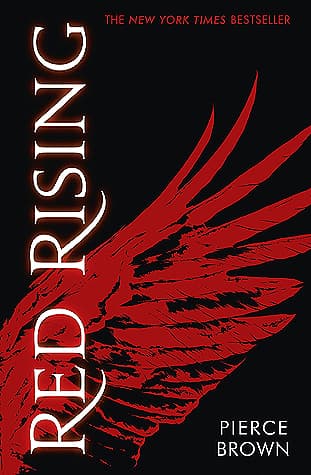
- Red Rising
Pierce Brown
4.3 (248k) average on GoodreadsFantasyInvolves a protagonist trained in brutal combat schools and rising against an oppressive system.
- Harry Potter and the Sorcerer's Stone
J.K. Rowling
4.5 (7M) average on GoodreadsFantasyRescued from a miserable life under the stairs, an orphaned boy discovers he's a wizard destined for a magical school, where he uncovers a dangerous secret tied to the dark wizard who murdered his parents.
- The Hunger Games
Suzanne Collins
4.3 (6.4M) average on GoodreadsFantasyIn a future where children fight to the death on live television, Katniss Everdeen volunteers for the arena, turning a death sentence into a fight for survival and a spark of rebellion.
- 1984
George Orwell
4.2 (3.1M) average on GoodreadsPoliticsIn a future where surveillance and thought control are absolute, a man's search for truth clashes with the Party, showing that hope can be a form of rebellion.





Enjoyed the summary?
A summary gives you the shape of the book. The book itself has the detail, the examples and the voice.
Find The Left Hand of God on AmazonAs an Amazon Associate, BookBrief earns from qualifying purchases. How we're funded