

Synopsis
Covers the whole plot, including the ending.
- Difficulty
- Medium
- Pacing
- Moderate
- Mood
- Melancholy, Thought-provoking, Heartbreaking, Poignant
- Read it if
- You enjoy emotionally charged historical fiction with deep moral dilemmas and complex characters, exploring themes of grief, love, and sacrifice.
- Skip it if
- You prefer lighthearted stories, or find stories about child separation and moral ambiguity too distressing.
The Light Between Oceans Plot Summary
Covers the whole plot, including the ending.
Tom Sherbourne Finds Solace on Janus Rock
In 1926, Tom Sherbourne, a veteran with trauma from World War I, wants to escape his memories. He takes the solitary job of lighthouse keeper on Janus Rock, a small island off Western Australia. His careful nature and strong morals suit the job, which needs precise records and dedication. Before going to the island, Tom visits Point Partageuse, the mainland town. There, he meets Isabel Graysmark, a smart young woman. Despite his quiet manner, Isabel likes Tom's calm strength. They start writing letters, and this develops into love. They marry, and Isabel goes with Tom to the remote island, hoping for a peaceful life away from sadness.
Isabel's Heartbreak and Despair
Isabel's happiness on Janus Rock soon turns to sadness. Over several years, she has three tragic pregnancies: two miscarriages and one stillbirth. The island's isolation makes her grief worse. Tom, though supportive, finds it hard to comfort her through such pain. Isabel's spirit fades, replaced by despair and a desire for a child that seems impossible. Her mental and emotional state worsens, and she questions her purpose and happiness, finding little comfort in the beautiful but lonely island. The repeated losses leave her desperate.
A Boat Washes Ashore, Bearing a 'Gift'
One morning, just after Isabel's third loss, a small boat washes ashore on Janus Rock. Inside, Tom finds a dead man and a baby girl, unharmed. Tom, following his strict morals and job rules, plans to report the incident to the mainland authorities. However, Isabel, filled with grief and wanting a child, sees the baby as a 'gift from God.' She refuses to give the baby up, begging Tom to keep her. The baby's cries awaken a strong maternal feeling in Isabel, overriding any logical or moral thoughts.
Tom's Moral Compromise
Tom loves his suffering wife, but he also has a duty. He faces a difficult choice. He knows the serious legal and moral problems of not reporting the discovery. But seeing Isabel's deep sadness and the hope the baby brings her, he reluctantly agrees to her pleas. They decide to bury the dead man on the island and raise the baby as their own, naming her Lucy. Tom makes up a story for the mainland, saying Isabel had a secret pregnancy and gave birth to Lucy on the island. This decision changes Tom's morals and the lives of him and Isabel forever.
Life with Lucy on Janus Rock
For the next two years, Tom and Isabel live happily on Janus Rock with Lucy. Isabel is very happy, and Lucy grows well with their care. Tom, despite his guilt, finds deep happiness in their small family. He watches Isabel change from a grieving woman to a loving mother. He teaches Lucy about the lighthouse and the sea, and Isabel fills their home with laughter and warmth. Lucy grows into a happy, curious child, not knowing the secret of her birth. Their isolated life protects them from the results of their decision, creating a fragile happiness that seems almost perfect.
A Clue on the Mainland
During a rare trip to Point Partageuse, Tom attends a service for missing fishermen. He sees a grieving woman, Hannah Roennfeldt, sad about her husband, Frank, and their baby daughter, Grace, who are missing. Tom feels uneasy when he realizes their disappearance date matches the day he found the dinghy on Janus Rock. Overcome by a sudden urge, Tom anonymously mails a small rattle he found in the dinghy with the dead man to Hannah. This act, from his conscience, is an attempt to give some closure, but it starts the process of revealing their secret.
The Truth Unravels
The rattle, a unique family item, immediately confirms Hannah's suspicions: her missing husband and baby were in the dinghy. With this evidence, Hannah works harder to find her daughter. The authorities, now with a lead, investigate Frank Roennfeldt and baby Grace's disappearance more carefully. The investigation eventually leads them to Janus Rock, where Tom and Isabel's lie begins to fall apart. The truth about Lucy's birth comes out, ending their peaceful life and showing their moral mistake to the world.
Lucy's Return to Her Biological Mother
After the investigation, Lucy, now called Grace Ellen Roennfeldt, is taken from Tom and Isabel and returned to her biological mother, Hannah. This separation devastates everyone. Lucy, who only knows Tom and Isabel as her parents, is confused and traumatized by the sudden change. Isabel is heartbroken, her world again shattered by loss. Hannah, happy to have her daughter back, struggles to connect with a child who does not know her and is very upset. Tom is arrested and charged with murder, as Frank Roennfeldt was identified as German, making his death a political issue after the war.
Tom's Trial and Isabel's Confession
Tom faces trial for Frank Roennfeldt's murder. Though evidence suggests Frank died naturally, the prosecution pushes for a conviction, driven by public feelings against Germans. Isabel, feeling guilty and wanting to save Tom, writes a confession. She takes full responsibility for burying Frank and keeping Lucy, making up details about forcing Tom. This confession, though partly untrue, makes the legal process more complex. Tom, not wanting Isabel to take the blame, also confesses his part. This leads to a complex and emotional trial that shows the impossible ethical choice they faced. Their love for each other drives their different testimonies, further tangling their fates.
The Aftermath and Lingering Scars
Tom receives a short prison sentence for his actions, while Isabel gets a suspended sentence. After his release, Tom returns to Point Partageuse, but their lives are changed forever. Lucy/Grace struggles with her identity, eventually connecting with Hannah but never forgetting Tom and Isabel. Years later, an adult Grace finds Tom, offering him forgiveness and some peace. Isabel, however, never fully recovers from losing Lucy, carrying the pain and guilt for the rest of her life. The story ends with the lasting emotional pain on everyone involved, showing the deep and long-term effects of their choices on their lives and relationships.
The Light Between Oceans Characters
Tom Sherbourne
Protagonist
A morally upright WWI veteran and lighthouse keeper haunted by his past.
Tom is a reserved, meticulous, and deeply moral man, scarred by his experiences in World War I. He seeks solace in the solitude and strict routine of the lighthouse keeper's life on Janus Rock. His strong sense of duty and adherence to rules are central to his character, but his love for Isabel ultimately leads him to make a morally compromising decision. He carries immense guilt and silently endures the consequences of his actions to protect those he loves. He is a man of few words but deep emotional capacity, constantly battling his conscience.
Relationships: Isabel Sherbourne (Devoted husband, deeply in love and protective); Lucy/Grace (Adoptive father, deeply attached and loving); Hannah Roennfeldt (The woman he unintentionally wronged)
Isabel Sherbourne (née Graysmark)
Protagonist
A vibrant young woman whose grief over childlessness drives her to a fateful decision.
Isabel is initially a lively, spirited young woman, full of hope and eager for a family. Her profound love for Tom is matched only by her intense desire for a child. After enduring multiple miscarriages and a stillbirth, she is consumed by grief and desperation, which leads her to make the impulsive and ultimately tragic decision to keep the baby found in the dinghy. She is fiercely maternal and protective, but her choices are driven by emotion rather than logic, leading to immense suffering for herself and others. Her love for Lucy is absolute and unwavering.
Relationships: Tom Sherbourne (Devoted wife, deeply in love and reliant); Lucy/Grace (Adoptive mother, intensely loving and possessive); Hannah Roennfeldt (The biological mother of the child she raised)
Lucy / Grace Ellen Roennfeldt
Supporting
The child at the center of the moral dilemma, caught between two mothers.
Lucy is the infant found in the dinghy, raised by Tom and Isabel for two years as their own. She is a happy, well-loved child who knows only Tom and Isabel as her parents. When her true identity as Grace Ellen Roennfeldt is revealed, she experiences profound trauma and confusion, caught between the two women who claim her. As an adult, she grapples with her dual identity and the complex legacy of her past, eventually seeking to understand and forgive. Her journey represents the innocent party most affected by the adults' decisions.
Relationships: Tom Sherbourne (Adoptive father figure); Isabel Sherbourne (Adoptive mother figure); Hannah Roennfeldt (Biological mother)
Hannah Roennfeldt (née Potts)
Supporting
The biological mother of Grace, who relentlessly searches for her lost family.
Hannah is a grieving widow and mother who loses her husband, Frank, and infant daughter, Grace, at sea. She is strong-willed, persistent, and deeply devoted to her family. Her relentless search for answers and her unwavering hope of finding her daughter drive a significant portion of the plot. When Grace is returned to her, Hannah faces the challenge of bonding with a child who doesn't know her, demonstrating resilience and a deep capacity for love and forgiveness, despite her initial pain and anger. She represents the perspective of the wronged party.
Relationships: Frank Roennfeldt (Husband (deceased)); Lucy/Grace (Biological mother); Tom Sherbourne (The man who withheld her child)
Frank Roennfeldt
Mentioned
Grace's biological father, whose death at sea sparks the central conflict.
Frank Roennfeldt is Hannah's German husband and Grace's biological father. He is only seen in flashbacks and is found dead in the dinghy with baby Grace. His identity as a German national in post-WWI Australia adds a layer of xenophobia and prejudice to the legal proceedings, complicating Tom's trial. His death is initially attributed to murder, but later confirmed to be from natural causes (a blow to the head followed by drowning), which is a key plot point. His disappearance and death are the catalyst for all subsequent events.
Relationships: Hannah Roennfeldt (Husband); Lucy/Grace (Biological father)
Ralph Addicott
Supporting
A local policeman involved in the investigation.
Ralph Addicott is a policeman in Point Partageuse who becomes involved in the investigation into Frank Roennfeldt's disappearance and the discovery of Lucy. He is a diligent and observant officer who plays a key role in uncovering the truth about the baby's origins. He is persistent in his duties, representing the arm of the law that eventually brings Tom and Isabel's secret to light, acting without personal malice but with a commitment to justice.
Relationships: Tom Sherbourne (Investigator of Tom's actions); Hannah Roennfeldt (Aids Hannah in her search)
Gwen Potts
Supporting
Hannah's mother and a pillar of support.
Gwen Potts is Hannah Roennfeldt's mother and a strong, supportive presence in her daughter's life. She stands by Hannah through her grief and her relentless search for Grace. Gwen provides emotional support and practical assistance, representing the enduring strength of family in times of crisis. Her unwavering belief in Hannah's quest and her love for her granddaughter are significant, offering a contrast to the isolated existence of Tom and Isabel.
Relationships: Hannah Roennfeldt (Mother); Lucy/Grace (Grandmother)
Septimus Potts
Supporting
Hannah's father and a respected figure in Point Partageuse.
Septimus Potts is Hannah's father and a prominent, respected figure in Point Partageuse. He is a successful businessman and a man of influence within the community. Like his wife, he provides unwavering support to Hannah during her ordeal, using his resources and connections to aid in the search for Grace. He embodies the community's perspective and the societal pressures that influence the legal proceedings against Tom and Isabel.
Relationships: Hannah Roennfeldt (Father); Lucy/Grace (Grandfather)
Bluey
Mentioned
Tom's fellow lighthouse keeper for a brief period.
Bluey is a temporary assistant lighthouse keeper who briefly works with Tom on Janus Rock. He is a jovial and straightforward man, providing a stark contrast to Tom's internal struggles and reserved nature. His presence highlights the isolation Tom and Isabel usually experience and serves as a temporary disruption to their secret world. He is not privy to the full truth of Lucy's origins but is a witness to their life on the island before the secret unravels.
Relationships: Tom Sherbourne (Colleague)
The Light Between Oceans Themes
Moral Dilemmas and the Nature of Right and Wrong
The novel shows the complexities of moral choice, especially when love and kindness conflict with duty and law. Tom's choice to hide Lucy's origins, driven by his love for Isabel, is the main problem. The story asks if a 'good' act (bringing joy to a grieving woman) can be 'wrong' if it causes another person to suffer. It asks the reader if there is a truly 'right' answer when two sympathetic people are in conflict, as seen with Isabel and Hannah.
“One day, she will ask you where she came from. You can't lie to her, Tom. She deserves to know the truth. And so does her mother.”
Grief, Loss, and Desperation
Grief is a common theme, especially through Isabel's repeated miscarriages and stillbirths. Her deep sadness and desire for a child cause her to keep Lucy, showing how extreme sorrow can lead to desperate acts. Hannah's grief over losing her husband and baby is also strong, fueling her search. The novel shows the different parts of grief and how it shapes characters' decisions, actions, and their ability to heal or remain broken.
“The silence was so heavy it felt like a physical weight, pressing down on her chest, stealing her breath. It was the silence of a life that should have been.”
Love and Sacrifice
The novel looks at different kinds of love and the sacrifices made for it. Tom's deep love for Isabel causes him to go against his morals and face legal trouble to protect her. Isabel's strong maternal love for Lucy drives her actions, while Hannah's lasting love for her lost family fuels her search for truth. The characters often make hard sacrifices for those they love, often with painful results, showing both the beauty and destructive power of strong affection.
“He just wanted to make her happy. And if that meant keeping a secret, then so be it.”
Identity and Belonging
Identity is central to Lucy/Grace's story. She is caught between two families, two names, and two sets of memories, trying to figure out who she is and where she belongs. The novel examines how identity is shaped by upbringing, parents, and the stories we are told. It also touches on Tom's post-war identity as a man trying to escape his past and Isabel's identity as a woman defined by motherhood, or its absence, exploring how outside events and inner desires create a person's sense of self.
“She was a daughter of two mothers, and she carried the love and the scars of both.”
Consequences and Forgiveness
Every action in the novel has important, far-reaching results, showing how one decision can affect many lives. The story carefully tracks the outcomes of Tom and Isabel's choice, from legal battles to emotional pain. The novel explores the chance for forgiveness—for oneself and for others—as a way to heal, especially through Grace's eventual connection with Tom. This suggests that even after serious wrongdoing, understanding and kindness can appear.
“The past, she knew, was not a dead thing. It was a living, breathing beast, forever nipping at their heels.”
Plot Devices & Literary Techniques
The Isolated Setting of Janus Rock
The lighthouse island symbolizes moral isolation and a temporary sanctuary.
Janus Rock, a remote island accessible only by boat and home to a solitary lighthouse, serves as more than just a backdrop. It acts as a crucible for Tom and Isabel's moral choices. Its isolation allows them to live with their secret for two years, creating a private world free from societal judgment and legal oversight. This geographic separation mirrors their moral isolation, emphasizing how their decisions are made in a vacuum, initially protecting them but ultimately making their eventual discovery more dramatic and devastating. It represents both escape and entrapment.
The Dinghy and its Contents
A literal 'gift from God' and the catalyst for the entire plot.
The small dinghy, containing the dead man and the live baby, is the central inciting incident of the novel. It is a literal 'deus ex machina' that arrives unexpectedly, presenting Tom and Isabel with their impossible dilemma. The objects within the dinghy – the dead man, the baby, and crucially, the rattle – are not merely props but active plot devices. The rattle, in particular, serves as the key piece of evidence that links the baby to Hannah, unraveling the entire secret and driving the narrative towards its tragic conclusion.
First-Person Perspective Shifts (Limited)
While primarily omniscient, the narrative often focuses deeply on one character's internal state.
Although the novel is told from a third-person omniscient perspective, it frequently dives deep into the internal thoughts and feelings of individual characters, particularly Tom and Isabel. This allows the reader to understand their motivations, their pain, and their moral struggles intimately. By focusing on their subjective experiences, the author builds empathy for even their most questionable decisions, making the moral dilemmas more poignant and the consequences more heartbreaking. This technique creates a nuanced understanding of their complex humanity.
The Lighthouse as a Symbol
A symbol of guidance, duty, and the search for truth.
The lighthouse itself is a powerful symbol throughout the novel. Traditionally, a lighthouse represents guidance, safety, and a beacon of truth in a treacherous world. Tom, as its keeper, embodies duty and moral uprightness. However, his decision to keep Lucy goes against the very principles the lighthouse represents. The light, meant to guide ships away from danger, ironically shines over a secret that leads to immense human suffering, highlighting the moral darkness that can exist even in places meant for illumination. It also symbolizes the constant watchfulness and the eventual exposure of hidden truths.
The Light Between Oceans Quotes
“You can take a man out of the army, but you can't take the army out of a man.”
“A person’s world is only as small as their desire to explore it.”
“Some things you can never forgive. Some things you can never forget.”
“The world was a terrible place, and life was a terrible thing. But there was beauty in it, too.”
“The greatest prison people live in is the fear of what other people think.”
“There are some things you can't undo, no matter how much you might want to.”
“Every day you make a choice about what kind of person you are.”
“Grief is a private thing, a secret sorrow.”
“Sometimes, doing the right thing means doing the hard thing.”
“Love is not a straight line, it's a series of curves and bumps and unexpected turns.”
“The sea always finds a way to take what it wants.”
“It was impossible to live an ordinary life when you had known such extraordinary grief.”
“The heart, like the ocean, has its own tides and currents.”
“Silence can be a terrible thing, when there are words that need to be said.”
Quiz
10 questions on the plot and the characters. Each answer comes with a short explanation.
Question 1
Where does Tom Sherbourne take a job after returning from the Western Front?
- A remote sheep station in the outback
- A lighthouse on Janus Rock
- A fishing village on the coast of Western Australia
- A government office in Perth
Show answer
B. A lighthouse on Janus Rock Tom Sherbourne becomes the lighthouse keeper on the isolated Janus Rock, a job that takes him far from the mainland.
Question 2
What tragic events does Isabel endure before the baby arrives on Janus Rock?
- Two stillbirths and one miscarriage
- The loss of her entire family in a storm
- Two miscarriages and one stillbirth
- A severe illness that prevents her from having children
Show answer
C. Two miscarriages and one stillbirth Isabel's deep grief and longing for a child are fueled by her experiences of two miscarriages and one stillbirth.
Question 3
What does Tom initially want to do when the boat with the dead man and baby washes ashore?
- Bury the man and raise the baby as his own
- Signal a passing ship for help immediately
- Report the man and infant to the authorities immediately
- Try to revive the man and give the baby to Isabel
Show answer
C. Report the man and infant to the authorities immediately Tom, known for his meticulous records and strong moral principles, immediately wants to report the discovery according to his duty as a lighthouse keeper.
Question 4
What is the name Tom and Isabel give to the baby they find?
- Hannah
- Grace
- Lucy
- Pearl
Show answer
C. Lucy Against Tom's better judgment, Isabel takes the baby and they claim her as their own, naming her Lucy.
Question 5
What is the primary internal conflict Tom faces regarding Isabel's decision to keep the baby?
- His desire to leave the isolated island versus his love for Isabel.
- His strong moral compass and duty versus his love for Isabel and her happiness.
- His fear of being caught versus his belief in fate.
- His past trauma from the war versus his new life with Isabel.
Show answer
B. His strong moral compass and duty versus his love for Isabel and her happiness. Tom is deeply conflicted between his ingrained sense of right and wrong, and his profound love for Isabel which leads him to go along with her desperate desire to keep the baby.
Question 6
What is the central theme explored by the novel, as suggested by the librarian's note?
- The importance of strict adherence to law and order.
- The devastating consequences of isolation on mental health.
- Finding one's moral compass in a world where there is no single 'right' answer, and justice for one is loss for another.
- The resilience of the human spirit in overcoming grief.
Show answer
C. Finding one's moral compass in a world where there is no single 'right' answer, and justice for one is loss for another. The librarian's note explicitly states the story is about 'extraordinarily compelling characters seeking to find their North Star in a world where there is no right answer, where justice for one person is another's tragic loss.'
Question 7
How often does the supply boat typically come to Janus Rock?
- Once a month
- Once a season
- Twice a year
- Every other month
Show answer
B. Once a season The island's extreme isolation is highlighted by the fact that the supply boat only comes once a season.
Question 8
What historical period does the story primarily take place in?
- Post-World War II (1950s)
- Pre-World War I (1900s)
- Interwar period, specifically starting in 1926
- During the Great Depression (1930s)
Show answer
C. Interwar period, specifically starting in 1926 The book explicitly states the setting as 'Australia, 1926. After four harrowing years fighting on the Western Front,' placing it in the interwar period following WWI.
Question 9
The novel is described as 'mesmerizing' and 'beautifully written' by the librarian. What literary device or stylistic choice contributes significantly to the reader's understanding and acceptance of Isabel's controversial decision?
- Extensive use of third-person omniscient narration to reveal the inner thoughts of all characters impartially.
- A first-person narrative from Isabel's perspective, forcing empathy with her actions.
- The author 'seduces us into accommodating Isabel's decision' through compelling character development and emotional depth, rather than explicit justification.
- Frequent flashbacks to Isabel's childhood to explain her motivations.
Show answer
C. The author 'seduces us into accommodating Isabel's decision' through compelling character development and emotional depth, rather than explicit justification. The librarian's note states the author 'seduces us into accommodating Isabel's decision to keep this 'gift from God,'' implying a narrative style that draws the reader into her emotional state and circumstances, making her actions understandable, if not strictly morally correct.
Question 10
What is the ultimate consequence of Tom and Isabel's choice to keep Lucy, as revealed when they return to the mainland?
- They are celebrated as heroes for rescuing the baby.
- Their choice has devastated another person, leading to a complex moral dilemma.
- They find Lucy's biological parents had abandoned her willingly.
- They realize their decision was entirely justified and without negative repercussions.
Show answer
B. Their choice has devastated another person, leading to a complex moral dilemma. The synopsis clearly states: 'When she is two, Tom and Isabel return to the mainland and are reminded that there are other people in the world. Their choice has devastated one of them,' setting up the central conflict and tragic consequences.
The Light Between Oceans FAQ
What is 'The Light Between Oceans' about?
'The Light Between Oceans' tells the story of Tom Sherbourne, a lighthouse keeper on a remote Australian island, and his wife Isabel. After Isabel suffers multiple miscarriages, a boat washes ashore carrying a dead man and a live infant. Against Tom's moral objections, Isabel convinces him to raise the baby, whom they name Lucy, as their own, leading to devastating consequences when they eventually return to the mainland and discover the baby's true mother.
Why should I read 'The Light Between Oceans'?
You should read 'The Light Between Oceans' for its emotionally charged exploration of moral dilemmas, grief, and love. It presents a 'no right answer' scenario, forcing readers to grapple with the complexities of human choices and the profound impact they have on multiple lives, all set against the stark beauty of a remote Australian lighthouse.
What is the background/setting of 'The Light Between Oceans'?
The story is primarily set in Australia in 1926, with much of the early narrative taking place on the isolated Janus Rock, where Tom Sherbourne works as a lighthouse keeper. This remote, windswept island, accessible only by a supply boat every few months, serves as a powerful symbol of the couple's isolation and the secret they keep, contrasting sharply with the bustling mainland town of Partageuse.
What are the most memorable quotes?
One memorable quote is, 'You only have to forgive once. To resent, you have to do it all day, every day.' This encapsulates the novel's themes of forgiveness and the burden of holding onto anger. Another is, 'Grief is like a package that is carried, it never really goes away; it just gets lighter,' reflecting Isabel's enduring pain from her losses.
What writing style does the author use?
M.L. Stedman employs a lyrical and evocative writing style, rich in sensory details that bring the remote setting of Janus Rock to life. She uses poignant prose to explore the characters' internal struggles and emotional landscapes, often shifting perspectives to allow readers deep insight into the motivations and suffering of each individual, creating a deeply immersive and empathetic reading experience.
What minor details add significant meaning?
Tom's meticulous record-keeping as a lighthouse keeper, which he applies to everything including the discovered boat, highlights his inherent adherence to rules and truth, making his eventual complicity in Isabel's deception all the more profound. The recurring motif of the ocean itself, both a source of isolation and a bringer of 'gifts' and tragedies, underscores the unpredictable nature of fate.
What are some subtle foreshadowing moments?
Early in the novel, Isabel's intense longing for a child and her despair after multiple miscarriages subtly foreshadow her desperate decision to keep the baby from the boat. Tom's internal struggle with the 'right thing to do' versus his love for Isabel from the moment they find the boat also hints at the moral compromises he will ultimately make, setting the stage for future conflict.
What unexpected character connections exist?
The most significant unexpected connection is between the Sherbournes and Hannah Roennfeldt. Unknown to Tom and Isabel, the baby Lucy (whom they rename Grace) is actually Hannah's daughter, stolen from her after her husband's death on the boat. This connection turns their 'gift from God' into a profound act of theft and unravels Hannah's life, creating a direct and tragic link between the families.
What are unspoken character motivations?
Isabel's unspoken motivation to keep baby Lucy is her overwhelming grief and desperate need for a child after multiple miscarriages and a stillbirth; she sees the baby as a divine answer to her prayers, ignoring the moral implications. Tom's unspoken motivation for going along with Isabel's plan, despite his strong moral compass, is his profound love for Isabel and his desire to protect her from further pain, even if it means compromising his own integrity.
What psychological complexities do characters exhibit?
Tom Sherbourne exhibits profound psychological complexity, grappling with severe PTSD from the war, which makes him seek order and solitude, yet he's torn between his rigid moral code and his deep love for Isabel. Isabel, conversely, demonstrates a powerful blend of resilience and fragility, her grief over her lost children driving her to a morally ambiguous act, yet she genuinely believes she is doing what is right for the child.
What are the major emotional turning points?
A major emotional turning point is Isabel finding the baby on the washed-up boat, which ignites her desperate hope for motherhood. Another is Tom's decision to anonymously send a letter to Hannah Roennfeldt, revealing that her daughter is alive, which sets in motion the painful unraveling of their secret and brings all parties face-to-face with the consequences of their actions.
How do relationship dynamics evolve?
The relationship between Tom and Isabel evolves from a deeply loving and isolated bond to one strained by their shared secret and differing moral compasses. Their initial unity in raising Lucy fractures under the weight of guilt and the pressure from the outside world. The dynamic between Lucy/Grace and both her biological mother, Hannah, and her adoptive parents, Tom and Isabel, becomes a heartbreaking tug-of-war, highlighting the complexities of maternal love and attachment.
Which parts remain ambiguous or open-ended?
The novel leaves the long-term emotional recovery of all characters somewhat open-ended, particularly for Hannah and the child, Lucy/Grace. While a resolution is reached regarding the child's parentage, the lasting psychological scars and the full extent of healing for Hannah, who lost years with her daughter, and for Lucy, who experienced a traumatic separation, are left for the reader to ponder.
What are controversial scenes or decisions?
The most controversial decision is Isabel's insistence, and Tom's eventual agreement, to keep the baby found on the boat, effectively kidnapping her from her biological mother. This act, driven by Isabel's profound grief, sparks intense debate among readers about the morality of their actions and whether their love for the child justifies the pain inflicted on Hannah Roennfeldt.
'The Light Between Oceans' ending explained: how it ends & what it means
The novel ends with Tom taking full responsibility for the 'kidnapping' of Lucy/Grace, going to prison to protect Isabel, though Isabel eventually confesses her role. Years later, Lucy/Grace, now an adult, visits Tom, acknowledging him as a part of her past but having fully integrated into Hannah's family. The ending signifies that while justice was served legally, the emotional wounds remain, emphasizing the enduring impact of choices made and the complex nature of love, loss, and forgiveness, suggesting that 'right' and 'wrong' are often blurred.
Similar books
- A Thousand Splendid Suns
Khaled Hosseini
4.4 (1.2M) average on GoodreadsHistorical FictionExplores profound human suffering and the strength of women in difficult circumstances, with a similar emotional intensity.
- The Nightingale
Kristin Hannah
4.6 (698k) average on GoodreadsHistorical FictionHistorical fiction set during wartime, focusing on women's difficult choices and sacrifices, with a strong emotional core.
- Room
Emma Donoghue
4.1 (714k) average on GoodreadsThrillerDeals with themes of captivity, a child's unique upbringing, and the challenges of reintegration into the 'real' world.
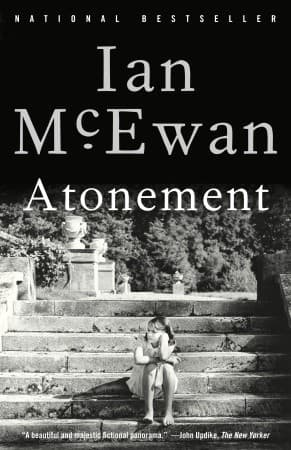
- Atonement
Ian McEwan
4.4 (70) average on Goodreads'Atonement' by Ian McEwan also grapples with the long-lasting consequences of a single, life-altering decision, much like Stedman's novel. Both books explore themes of guilt, responsibility, and the subjective nature of truth. However, McEwan's narrative is more experimental, playing with meta-narrative elements and different perspectives to explore the act of storytelling itself, especially in its famous twist ending. Stedman's approach, while emotionally complex, is more straightforward in its narrative structure and focus on a singular moral problem. While both authors are masters of psychological depth, McEwan's work often leans into intellectual puzzles and literary craft, whereas Stedman prioritizes direct emotional impact and ethical debate within a more traditional historical fiction framework.
- To Kill a Mockingbird
Harper Lee
4.3 (4.5M) average on GoodreadsHistorical FictionIn the 1930s Jim Crow South, Harper Lee writes about racial injustice, moral growth, and the quiet courage of a lawyer father, Atticus Finch, as seen through his young daughter's eyes.
- The Great Gatsby
F. Scott Fitzgerald
3.9 (3.8M) average on GoodreadsHistorical FictionIn the opulent Roaring Twenties, a mysterious millionaire's lavish parties hide his desperate, tragic pursuit of a lost love, exposing the emptiness within the American Dream.





Enjoyed the summary?
A summary gives you the shape of the book. The book itself has the detail, the examples and the voice.
Find The Light Between Oceans on AmazonAs an Amazon Associate, BookBrief earns from qualifying purchases. How we're funded