

Synopsis
Covers the whole plot, including the ending.
- Difficulty
- Medium
- Pacing
- Slow
- Mood
- Atmospheric, Melancholy, Satirical, Reflective
- Read it if
- You enjoy richly detailed historical fiction exploring class, politics, and sexuality in 1980s Britain, with a focus on character and social observation.
- Skip it if
- You prefer fast-paced plots or explicit political thrillers, or are uncomfortable with detailed depictions of gay relationships and the AIDS crisis.
The Line of Beauty Plot Summary
Covers the whole plot, including the ending.
Arrival in Notting Hill
In the summer of 1983, Nick Guest, a recent Oxford graduate from a modest background, moves into the attic room of the Fedden family's large Notting Hill home. Gerald Fedden is a newly elected Conservative MP, and his wife Rachel is a socialite. Their children are Toby, Nick's Oxford friend with whom he has an unspoken sexual tension, and Catherine, a troubled university student. Nick is immediately drawn into the Feddens' wealthy, politically charged world, observing their lavish lifestyle and social events, which include dinners with important people and talks about Thatcherite politics. He tries to navigate this new environment, feeling like both an outsider and an eager participant in their glamorous life.
First Love and Social Circles
Nick starts a secret relationship with Leo Charles, a charismatic Black council worker he meets by chance. Their relationship is passionate but kept hidden from the Feddens and their friends because of social prejudices and Nick's own worries. During this time, Nick also becomes closer to Catherine, who struggles with bulimia and feels disconnected from her family's values. He attends parties, meets various people in the Feddens' social group, including wealthy friends and political colleagues, and enjoys what he sees as the freedom and excitement of London life, all while pursuing his own artistic interests and studies of Henry James.
The Feddens' Rise and Nick's Growing Involvement
Gerald Fedden's political career begins to advance, leading to more important social events and a greater need for privacy about his personal life. Nick, still living in their home, becomes an almost essential, though unofficial, part of the household, often going with Rachel to social functions or helping with household tasks. He observes the complex interactions of power and privilege, becoming more aware of the subtle hypocrisies and unspoken rules of their world. His relationship with Leo continues, marked by intense private moments contrasted with his public life among the Feddens, creating a growing internal conflict for Nick.
Leo's Illness and Toby's Wedding
As the mid-1980s continue, Leo Charles begins to show symptoms of an illness, which Nick gradually realizes is AIDS, a terrifying and stigmatized disease at the time. This period is shown alongside the preparations for Toby Fedden's wedding to Penelope, a seemingly traditional marriage that further highlights the different worlds Nick lives in. Nick cares for Leo through his worsening condition, facing the harsh realities of the epidemic and the lack of understanding or kindness from wider society. The difference between Leo's suffering and the Feddens' continued rise in wealth and social standing becomes clear, deepening Nick's feeling of not belonging.
Leo's Death and Nick's Grief
Leo dies from AIDS at home with Nick beside him. Nick is devastated by the loss, which he must mostly deal with in secret. He cannot openly mourn Leo with the Feddens or their group, as their relationship was hidden and the stigma around AIDS was huge. This deep grief further isolates Nick, making him feel even more like an outsider in the Fedden household, despite their continued hospitality. He struggles to combine his private sorrow with the public cheerfulness expected in the Feddens' world, finding comfort only in his memories of Leo and his studies of beauty.
The Second Affair: Wani Ouradi
After Leo's death, Nick meets Wani Ouradi, a wealthy Lebanese heir and socialite, at a party. They begin a relationship, and Nick is introduced to an even more extravagant and pleasure-seeking gay subculture, with expensive drugs, lavish parties, and a superficial pursuit of enjoyment. Wani's world is one of great privilege and carelessness, offering Nick a temporary escape from his grief and the more restricted environment of the Fedden household. This relationship marks a change in Nick's experiences, moving him from a more grounded, loving connection to one full of luxury and some moral uncertainty.
The Feddens' New Heights and Nick's Unease
Gerald Fedden is appointed a junior minister in the Thatcher government, a political achievement for the family. Their social status and influence grow, and they host even more important people, including the Prime Minister. Nick, still living with them, observes their rise with growing discomfort. He becomes more aware of the moral compromises and hypocrisies in their pursuit of power and wealth. His own experiences with Leo and Wani, along with his artistic views, make him question the 'line of beauty' he once saw in their lives, finding it increasingly twisted.
The Scandal Begins
The Feddens' seemingly perfect world begins to fall apart when a tabloid newspaper, the 'Daily Comet,' starts investigating Gerald Fedden's financial affairs and his connections to questionable businessmen. At the same time, Wani Ouradi's lavish lifestyle and his father's questionable business practices also come under scrutiny. Nick finds himself in the middle, as his close association with both the Feddens and Wani makes him a possible target for the press. The atmosphere in the Fedden household becomes tense and worried, as they try to manage the growing crisis and protect their public image.
The Exposure and Its Fallout
The 'Daily Comet' publishes articles exposing Gerald Fedden's unethical financial dealings and his involvement with Wani Ouradi's family, suggesting corruption. The articles also hint at Nick's homosexuality and his relationship with Wani, using coded language and suggestions. The scandal destroys the Feddens' political career and social standing. Afterwards, Rachel Fedden, feeling betrayed and disgraced, confronts Nick and makes him leave their home, blaming him for bringing scandal and 'perversion' into their lives. Nick is left homeless, publicly shamed, and heartbroken, realizing how superficial his place was in their world.
Aftermath and Reflection
Disgraced and without a place to stay, Nick tries to rebuild his life. He briefly stays with Catherine, who is also disappointed with her family. He thinks about his relationships with Leo and Wani, the different natures of their loves, and the terrible impact of AIDS. He also considers the 'line of beauty' he once admired in the Feddens' lives, now realizing it was a fragile illusion built on privilege and denial. The novel ends with Nick walking through London, alone, having lost his lovers, his home, and his illusions about the upper-class world, left only with his memories and a deeper, more painful understanding of beauty and belonging.
The Line of Beauty Characters
Nick Guest
Protagonist
A young, aesthetically sensitive Oxford graduate navigating the complexities of 1980s upper-class London.
Nick is a thoughtful, observant, and aesthetically inclined young man from a modest background. He is drawn to beauty in all its forms, from Henry James's prose to the opulent lives of the Feddens and the physical attractiveness of his lovers. Initially naive about politics and class, he gradually becomes a keen observer of the Feddens' world, experiencing both its allure and its moral failings. He is deeply private about his homosexuality, which he explores through relationships with Leo Charles and Wani Ouradi, and struggles with the societal stigma surrounding it, particularly during the AIDS epidemic. His desire for connection and beauty is central to his character.
Relationships: Gerald Fedden (host, political figure, object of initial admiration); Rachel Fedden (hostess, socialite, later accuser); Toby Fedden (Oxford friend, unacknowledged sexual tension); Catherine Fedden (confidante, fellow outsider); Leo Charles (first significant gay lover); Wani Ouradi (second significant gay lover, wealthy socialite)
Gerald Fedden
Supporting
An ambitious Conservative MP whose political career and personal life unravel amidst scandal.
Gerald is a charming, ambitious, and ultimately corrupt Conservative MP. He embodies the Thatcherite ethos of wealth accumulation and social climbing. While initially appearing benevolent towards Nick, his true character is revealed through his unethical financial dealings and his callous disregard for anyone who might threaten his public image. He represents the hypocrisy and moral decay beneath the polished surface of the British establishment. His downfall is a central plot point, exposing the fragility of his carefully constructed public persona.
Relationships: Rachel Fedden (wife, social partner); Nick Guest (lodger, later scapegoat); Lord Risley (political mentor, business associate)
Rachel Fedden
Supporting
Gerald's socialite wife, a formidable figure who ultimately rejects Nick after the scandal.
Rachel is Gerald's elegant and socially astute wife, fiercely protective of her family's image and status. She navigates the upper-class social scene with ease and is instrumental in maintaining the façade of their perfect life. While initially welcoming to Nick, her kindness is conditional on his adherence to their unspoken rules. Her character highlights the pressures and expectations placed upon women in her social sphere. Her ultimate rejection of Nick, blaming him for the scandal, reveals her deep-seated prejudices and the limits of her acceptance.
Relationships: Gerald Fedden (husband, political partner); Nick Guest (hostess, later accuser); Catherine Fedden (daughter, strained relationship)
Leo Charles
Supporting
Nick's first significant gay lover, a Black council worker whose life is tragically cut short by AIDS.
Leo is a kind, grounded, and sexually confident Black council worker who becomes Nick's first significant lover. He offers Nick a connection that is both passionate and emotionally honest, contrasting sharply with the superficiality of the Feddens' world. His illness and eventual death from AIDS serve as a stark reminder of the devastating human cost of the epidemic and the societal prejudices faced by gay men at the time. Leo represents a genuine, albeit hidden, source of love and authenticity in Nick's life.
Relationships: Nick Guest (lover)
Wani Ouradi
Supporting
Nick's second lover, a wealthy and flamboyant Lebanese heir who embodies hedonism and excess.
Wani is a flamboyant, wealthy Lebanese heir whose family's dubious business dealings become intertwined with Gerald Fedden's scandal. He introduces Nick to a world of extravagant parties, drug use, and superficial hedonism, offering a stark contrast to Leo's grounded love. Wani is charming but ultimately self-absorbed, representing the excesses and moral ambiguities of a certain segment of the gay subculture in the 1980s. His connection to the financial scandal directly contributes to Nick's downfall.
Relationships: Nick Guest (lover); Lord Risley (business associate's family)
Catherine Fedden
Supporting
The Feddens' troubled daughter, who shares a bond with Nick as an outsider in her own family.
Catherine is the Feddens' daughter, a university student who struggles with bulimia and a deep sense of alienation from her family's values. She is more politically aware and socially conscious than her parents or brother, often criticizing their conservative views and superficiality. She forms a bond with Nick, recognizing a kindred spirit in their shared feeling of being outsiders. Her disillusionment mirrors Nick's own growing discomfort with the Fedden world, and she offers him a brief refuge after his expulsion.
Relationships: Nick Guest (confidante, friend); Gerald Fedden (father, strained relationship); Rachel Fedden (mother, strained relationship)
Toby Fedden
Supporting
Nick's Oxford friend and Gerald's son, representing conventional upper-class masculinity.
Toby is Nick's Oxford friend and Gerald's son, embodying the conventional, slightly entitled masculinity of the upper class. There's an unacknowledged sexual tension between him and Nick early on, but Toby ultimately pursues a heterosexual path, marrying Penelope. He is less politically aware than his parents, more focused on maintaining the status quo and enjoying his privileged life. He serves as a contrast to Nick's more complex and marginalized identity.
Relationships: Nick Guest (friend, unacknowledged sexual tension); Penelope (wife)
Lord Risley
Mentioned
A powerful, elderly Tory grandee and friend of the Feddens, representing the old guard of the Conservative Party.
Lord Risley is an elderly, influential Tory peer and a close family friend of the Feddens. He represents the established, often morally compromised, old guard of the Conservative Party. His connections are crucial to Gerald Fedden's career, and he is implicated in some of the dubious financial dealings. He embodies a certain type of aristocratic power and privilege, largely detached from the consequences of his actions. His presence underscores the deep-seated networks of influence within the British establishment.
Relationships: Gerald Fedden (political mentor, business associate); Rachel Fedden (family friend)
The Line of Beauty Themes
Identity and Self-Discovery
Nick's journey is one of self-discovery, especially about his gay identity in conservative 1980s Britain. He deals with social expectations, the need for secrecy, and the terrible impact of the AIDS epidemic on his community. His relationships with Leo and Wani, though very different, shape his understanding of love, desire, and his place in the world. His artistic views, particularly his study of Henry James, also help him understand himself and the world, offering a escape from the harsh realities of his social and sexual life.
“He thought of the beauty of Leo's body, the beauty of his character, and felt a profound, aching sense of loss, unshareable with anyone in this house.”
Class and Social Mobility
The novel closely examines the British class system in the 1980s, especially through Nick's experiences as an outsider in the wealthy Fedden home. His modest background contrasts sharply with their inherited wealth, and he constantly navigates the unspoken rules, expectations, and prejudices of their world. The Feddens' rise to political power is linked to their social standing and connections, while Nick's eventual expulsion shows how conditional his acceptance was within their elite group, demonstrating the lasting barriers of class.
“He was a guest, after all, and even in the most hospitable house a guest knew his place.”
Politics and Corruption
Set during Margaret Thatcher's Conservative government, the novel critiques the moral state of 1980s Britain. Gerald Fedden's political career, built on ambition and ultimately ruined by financial scandal, reveals the corruption and hypocrisy that can hide beneath the polished surface of power. The novel subtly comments on the era's focus on wealth, deregulation, and the growing gap between the wealthy and the poor. The political events are not just background; they actively shape the characters' lives and the eventual downfall of the Fedden family.
“The money seemed to flow, not in rivers but in a kind of underground sea, always there, always available.”
Beauty and Aesthetics
Nick's 'private interest in beauty' is a central theme, shown in his appreciation for art, architecture, literature (especially Henry James), and the human form. He first sees a 'line of beauty' in the Feddens' rich lifestyle and in the physical attractiveness of his lovers. However, as the novel continues, his understanding of beauty changes, becoming more complex and tinged with disappointment. He comes to see that superficial beauty can hide moral decay, and true beauty can be found in unexpected places, often mixed with pain and loss, particularly in his memories of Leo.
“He knew that beauty was not a moral quality, but it seemed to him, in the presence of it, that it was inseparable from goodness.”
Love and Loss in the AIDS Epidemic
The novel shows the terrible impact of the AIDS epidemic on the gay community in the 1980s. Leo Charles's illness and death, and Nick's secret grief, highlight the fear, stigma, and lack of public understanding about the disease. This theme explores the deep personal losses people experienced, often alone, and how these private tragedies were made worse by social prejudice. It emphasizes the fragility of life and love in a period marked by both pleasure-seeking and devastating illness.
“The fear of it was everywhere, a silent, invisible thing, but it was still somehow distant, not quite real, until it touched you.”
Plot Devices & Literary Techniques
The 'Line of Beauty'
A recurring aesthetic and philosophical concept that defines Nick's perceptions and the novel's central metaphor.
The 'line of beauty,' a concept derived from William Hogarth, serves as a central metaphor throughout the novel. For Nick, it initially represents an ideal of elegance, grace, and aesthetic perfection, which he seeks in art, literature, and the lives of the Feddens. As the plot unfolds, this device highlights Nick's evolving understanding of beauty, revealing its superficiality in the Feddens' world and its deeper, more complex manifestations in his personal relationships and experiences of loss. It becomes a lens through which he judges moral and aesthetic value, ultimately exposing the distortions beneath the surface of Thatcherite Britain.
Henry James's Novels
A literary motif and intellectual framework for Nick's observations and understanding of the world.
Nick's academic study and personal immersion in the novels of Henry James serve as a crucial literary device. James's themes of innocence encountering experience, the clash of American and European sensibilities, and the intricate social dynamics of the upper classes provide an intellectual framework for Nick's own observations of the Feddens' world. The allusions to James, particularly 'The Spoils of Poynton' and 'The Portrait of a Lady,' allow Nick to articulate and process the moral ambiguities and social nuances he encounters, subtly foreshadowing his own disillusionment and eventual expulsion from a privileged sphere.
The Feddens' Notting Hill House
A symbolic setting representing the opulent yet ultimately hollow world of the British establishment.
The Feddens' grand Notting Hill house is more than just a setting; it acts as a symbolic character in itself. Its opulent rooms, lavish parties, and carefully curated appearance represent the wealth, power, and superficiality of the British establishment in the 1980s. Nick's attic room, initially a privileged perch, also symbolizes his liminal status as an outsider looking in. As the family's world unravels, the house becomes a site of tension and decay, ultimately expelling Nick, mirroring the breakdown of the illusions it once held. It embodies the 'line of beauty' that is eventually corrupted.
The AIDS Epidemic
A historical backdrop that functions as a catalyst for personal tragedy and a critique of societal prejudice.
The AIDS epidemic is not merely a historical detail but a powerful plot device that drives much of Nick's personal tragedy and highlights societal prejudices. Leo Charles's illness and death, and the subsequent fear and stigma, profoundly shape Nick's emotional landscape and his experience of gay identity. The epidemic serves to contrast the private suffering of individuals with the public indifference or hostility of the time, especially within the conservative circles the Feddens inhabit. It underscores the fragility of life and the devastating consequences of a disease that was widely misunderstood and stigmatized.
The Line of Beauty Quotes
“He knew he was handsome; it was a fact he had lived with for a long time, and it was a fact that had shaped him.”
“The past was not a foreign country, it was just a country that had changed its name.”
“The truth was, he was a snob. Not in the old sense of the word, but in the new, more insidious sense of the word.”
“Beauty was an argument, a form of logic, a way of being in the world.”
“It was the summer of 1983, the summer of the general election, the summer of Thatcher's second term, the summer of AIDS.”
“He felt a thrill of discovery, a sense of having stumbled upon something both secret and profound.”
“The rich were different, not just in their money, but in their very being, their effortless assumption of superiority.”
“He was an outsider, always had been, always would be, even when he was inside.”
“Love was not a thing to be acquired, but a thing to be endured.”
“The house was a stage, and they were all performing, even when they thought they were alone.”
“He loved the way they spoke, the casual elegance of their pronouncements, the way they moved through the world as if it belonged to them.”
“The past was always there, a palimpsest beneath the present, ready to be revealed by the slightest shift in light or mood.”
“He felt a sudden, sharp pang of loneliness, the kind that came from being surrounded by people who didn't truly know him.”
“There was a kind of beauty in decay, a melancholy charm in things falling apart.”
Quiz
10 questions on the plot and the characters. Each answer comes with a short explanation.
Question 1
In what year does Nick Guest first move into the Feddens' Notting Hill home?
- 1980
- 1983
- 1985
- 1987
Show answer
B. 1983 The book explicitly states that Nick moves into the Feddens' home in the summer of 1983, which sets the stage for the novel's events during the Thatcher era.
Question 2
What is Gerald Fedden's profession?
- A successful artist
- A wealthy property developer
- An ambitious Tory MP
- A university professor
Show answer
C. An ambitious Tory MP Gerald Fedden is introduced as an 'ambitious Tory MP,' placing him at the heart of the political world Nick Guest observes.
Question 3
What is Nick Guest's primary personal 'obsession' mentioned in the book's description?
- Political activism
- Financial success
- The pursuit of beauty
- Social climbing
Show answer
C. The pursuit of beauty The description highlights Nick's 'own private obsession with beauty,' which is a central theme and motivation for his character throughout the novel.
Question 4
Which political figure is mentioned in the excerpt as being asked to dance?
- The Prime Minister
- The Home Secretary
- The Leader of the Opposition
- The Chancellor of the Exchequer
Show answer
A. The Prime Minister The excerpt directly quotes, 'Prime Minister, would you like to dance?', indicating Margaret Thatcher's presence and influence in the setting.
Question 5
What kind of room does Nick Guest occupy in the Feddens' home?
- A lavish guest suite
- A basement apartment
- An attic room
- A ground-floor study
Show answer
C. An attic room Nick 'moves into an attic room' in the Feddens' Notting Hill home, symbolizing his initial position as an observer on the periphery of their wealthy world.
Question 6
The novel is set during the premiership of which British Prime Minister?
- John Major
- Tony Blair
- Margaret Thatcher
- Harold Wilson
Show answer
C. Margaret Thatcher The book is explicitly set in 'Margaret Thatcher’s 1980s Britain,' making her premiership a crucial backdrop to the story.
Question 7
What is the broader socio-political context that Nick Guest is 'swept up into' when he joins the Feddens' world?
- A period of economic recession and social unrest
- An era of endless possibility and political ambition
- The decline of the Conservative party
- A time of cultural austerity and artistic censorship
Show answer
B. An era of endless possibility and political ambition Nick is 'swept up into the Feddens’ world and an era of endless possibility,' reflecting the optimistic and ambitious mood of certain segments of society during the Thatcher years.
Question 8
The novel's title, 'The Line of Beauty,' most directly refers to Nick's personal fascination with:
- The precise legal boundaries of political power
- The aesthetic and physical form, often linked to his sexuality
- The lineage and aristocratic heritage of the wealthy
- The strict social decorum of high society
Show answer
B. The aesthetic and physical form, often linked to his sexuality The title 'The Line of Beauty' directly relates to Nick's 'private obsession with beauty,' which in the context of the novel, is deeply intertwined with his exploration of desire and sexuality, and the aesthetic appreciation of form.
Question 9
How does Nick Guest's background contrast with that of the Fedden family?
- Nick comes from a more politically influential family.
- Nick is described as 'innocent of politics and money,' unlike the wealthy and politically active Feddens.
- Nick's family is artistically renowned, while the Feddens are purely business-oriented.
- Nick is older and more experienced than anyone in the Fedden household.
Show answer
B. Nick is described as 'innocent of politics and money,' unlike the wealthy and politically active Feddens. The description states Nick is 'Innocent of politics and money,' which sharply contrasts with Gerald Fedden's status as an 'ambitious Tory MP' and the family's wealth, highlighting the class divide central to the novel.
Question 10
The novel is described as exploring a young man's 'collision with his own desires, and with a world he can never truly belong to.' This suggests a central theme of:
- The triumph of ambition over social barriers.
- The challenges of identity, belonging, and social alienation.
- The corruption inherent in political power.
- The ease with which one can assimilate into any social class.
Show answer
B. The challenges of identity, belonging, and social alienation. The phrase 'a world he can never truly belong to' directly points to themes of social alienation and the struggle for identity and belonging, especially for Nick as an outsider in the Feddens' upper-class, politically charged world.
The Line of Beauty FAQ
What is 'The Line of Beauty' about?
'The Line of Beauty' follows Nick Guest, a young, gay, Oxford graduate, as he navigates the opulent, politically charged world of the wealthy Fedden family in Margaret Thatcher's 1980s Britain. Living in their Notting Hill home, Nick becomes entangled in their lives, experiencing the glamour and hypocrisy of the era while pursuing his own aesthetic and sexual desires, ultimately leading to a stark confrontation with class, sexuality, and the AIDS crisis.
Why should I read 'The Line of Beauty'?
You should read 'The Line of Beauty' for its exquisite prose, intricate character studies, and its profound exploration of class, sexuality, and politics in 1980s Britain. It offers a piercing look at the Thatcher era's social dynamics, the emergence of the AIDS crisis, and the poignant journey of a young man discovering himself in a world he can never fully belong to, all while maintaining a captivating sense of beauty and irony.
What is the background/setting of 'The Line of Beauty'?
The novel is set primarily in Notting Hill, London, during the summer of 1983 and extends through the mid-1980s, an era defined by Margaret Thatcher's Conservative government. This period is characterized by economic prosperity for some, growing social divisions, and the escalating fear and prejudice surrounding the nascent AIDS epidemic, all of which form the backdrop for Nick Guest's experiences with the upper-class Fedden family.
What are the most memorable quotes?
One memorable quote reflects Nick's aesthetic focus: 'He had a private obsession with beauty.' Another captures the era's superficiality: 'There was a gleaming sense of occasion, the gleam floating in the eye as a blot of shadow.' The opening scene with 'Prime Minister, would you like to dance?' also sets a memorable, audacious tone.
What writing style does the author use?
Alan Hollinghurst employs a highly sophisticated, elegant, and often ironic prose style, rich with sensory detail and nuanced psychological insight. His descriptions are meticulously crafted, evoking both the physical grandeur of the Fedden's world and the subtle emotional currents beneath the surface, reminiscent of Henry James in its precision and social observation.
What minor details add significant meaning?
The recurring motif of Nick's appreciation for 'the line of beauty' in art and architecture subtly highlights his detached aestheticism and his gradual realization that true beauty can be found beyond superficial appearances. The shifting social dynamics of the Fedden household staff also reflect the broader class tensions and power imbalances inherent in the narrative, often mirroring Nick's own precarious position.
What are some subtle foreshadowing moments?
Early mentions of Gerald Fedden's financial dealings and his political vulnerabilities, often dismissed by Nick, subtly foreshadow the eventual scandal that brings down the Fedden family. Similarly, casual remarks about 'a new disease' or 'gay cancer' in the background of Nick's hedonistic pursuits ominously prefigure the devastating impact of the AIDS crisis later in the novel.
What unexpected character connections exist?
Beyond Nick's direct involvement with the Feddens, there's the unexpected connection between Gerald Fedden and Leo Charles, Nick's first boyfriend, through their shared public school background. Also, Nick's casual encounters in gay clubs later become tragically intertwined with the wider community affected by AIDS, revealing a shared vulnerability across social strata.
What are unspoken character motivations?
Gerald Fedden's unspoken motivation is often a desperate need to maintain his public image and political power, even at the expense of his family's well-being or ethical conduct. Rachel Fedden, while outwardly supportive, harbors a deep-seated desire to preserve the illusion of her perfect family, masking her own anxieties and resentments about her husband's ambition and their children's struggles.
What psychological complexities do characters exhibit?
Nick Guest exhibits a complex blend of innocence and cunning; he is genuinely drawn to beauty and affection but also a keen observer who benefits from his proximity to power, sometimes at the expense of his own moral compass. Catherine Fedden struggles with depression and self-harm, revealing the hidden psychological costs of living within her family's superficial and demanding environment, contrasting sharply with her brother Toby's more outwardly conventional path.
What are the major emotional turning points?
A major emotional turning point for Nick is the death of his lover, Wani Ouradi, from AIDS, which shatters his detached aestheticism and forces him to confront the grim realities of the epidemic. Another is the collapse of the Fedden family's public facade due to Gerald's scandal, forcing Nick to re-evaluate his loyalties and his place within their world, marking the end of his 'innocent' period.
How do relationship dynamics evolve?
Nick's relationship with the Feddens evolves from that of an admiring, somewhat naive guest to a more complex, almost familial bond, before ultimately dissolving under the weight of scandal and betrayal. His romantic relationships, particularly with Leo and Wani, deepen from initial infatuation to more profound connections, only to be tragically cut short by the AIDS crisis, transforming his understanding of love and loss.
Which parts remain ambiguous or open-ended?
The full extent of Gerald Fedden's moral culpability in his financial dealings and his true feelings towards Nick remain somewhat ambiguous, leaving readers to infer the depth of his hypocrisy. Nick's future after leaving the Fedden household is also left open-ended, suggesting a profound personal transformation but not explicitly detailing his subsequent path.
What are controversial scenes or decisions?
The novel's explicit depiction of Nick's sexual encounters, particularly in the context of the emerging AIDS crisis, was considered controversial by some for its frankness and its portrayal of hedonism alongside tragedy. Gerald Fedden's decision to sacrifice Nick to protect his own political career, despite Nick's loyalty, is also a highly controversial and morally reprehensible act within the narrative.
'The Line of Beauty' ending explained: how it ends & what it means
The novel ends with Nick Guest being effectively expelled from the Fedden household and their social circle after Gerald Fedden uses him as a scapegoat during a political scandal, coinciding with the devastating impact of the AIDS crisis. This ending signifies the collapse of the artificial world Nick inhabited, forcing him to confront the harsh realities of class, prejudice, and loss, marking his painful transition from youthful idealism to a more sober understanding of life's complexities.
About the author

Alan James Hollinghurst is an English novelist, poet, short story writer and translator. He won the 1989 Somerset Maugham Award, the 1994 James Tait Black Memorial Prize and the 2004 Booker Prize.
Similar books
- Brideshead Revisited
Evelyn Waugh
4.0 (93k) average on GoodreadsLiterary FictionExplores themes of class, sexuality, and social ascension/decline within a wealthy English family, with a focus on an outsider's perspective.
- A Little Life
Hanya Yanagihara
4.3 (212k) average on GoodreadsLiterary FictionFeatures a deep exploration of gay relationships, trauma, and the complexities of identity, though in a contemporary setting and with a different tone.
- Maurice
E.M. Forster
4.0 (28k) average on GoodreadsHistorical FictionA classic novel exploring homosexual love and societal constraints in England, offering a historical parallel to Nick's experiences.
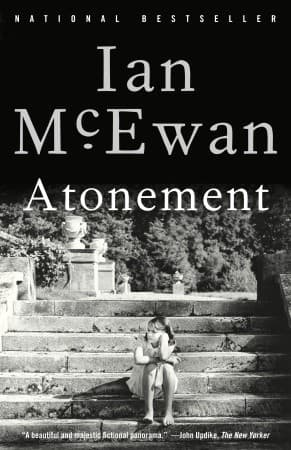
- Atonement
Ian McEwan
4.4 (70) average on GoodreadsWhile both use historical backdrops and intricate plotting, Hollinghurst focuses more on the subtleties of social performance and the politics of desire within a specific socio-political moment, rather than grand narratives of war and trauma or explicit moral dilemmas.
- The Old Man and the Sea
Ernest Hemingway
3.8 (831k) average on GoodreadsLiterary FictionA Cuban fisherman's long struggle with a giant marlin becomes a story of endurance and dignity, now retold for young adults with illustrations, phonetic guides, and writing prompts in Traditional Chinese.
- One Hundred Years of Solitude
Gabriel García Márquez
4.1 (753k) average on GoodreadsLiterary FictionThrough the multi-generational story of the Buendía family, a mythical town deals with the repeating patterns of time, love, and solitude, as the extraordinary mixes with the ordinary.





Enjoyed the summary?
A summary gives you the shape of the book. The book itself has the detail, the examples and the voice.
Find The Line of Beauty on AmazonAs an Amazon Associate, BookBrief earns from qualifying purchases. How we're funded