
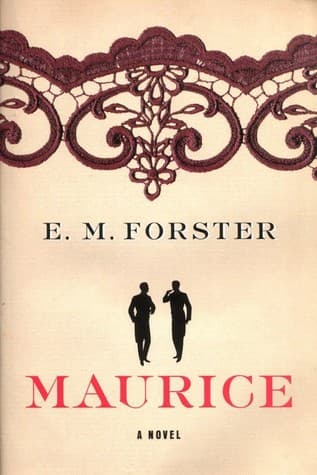
Synopsis
Covers the whole plot, including the ending.
- Difficulty
- Medium
- Pacing
- Moderate
- Mood
- Melancholy, Romantic, Introspective, Hopeful
- Read it if
- You enjoy classic literature exploring themes of forbidden love, social class, and self-discovery in a historical setting.
- Skip it if
- You prefer fast-paced plots or stories without a focus on introspective character development.
Maurice Plot Summary
Covers the whole plot, including the ending.
Early Life and Cambridge
Maurice Hall grows up in a comfortable, middle-class English family, navigating public school and preparing for Cambridge University. He is at first somewhat naive and conventional, though with an underlying restlessness. At Cambridge, he befriends George Ansell, a more intellectual student. Maurice's life changes when he meets Clive Durham, a charismatic and cultured fellow undergraduate. Their relationship quickly deepens, moving beyond friendship into a strong emotional and intellectual bond. Clive introduces Maurice to a world of literature, art, and philosophical discussions, and Maurice is increasingly drawn to Clive in a way he doesn't fully understand but intensely feels. Their intimacy develops, marked by shared confidences and a growing, unspoken affection that challenges Maurice's ideas of love and companionship.
The Love Affair with Clive Durham
Maurice and Clive's relationship at Cambridge becomes the central focus of Maurice's life. Their bond is deeply emotional and intellectual, characterized by long conversations, shared literary passions, and a strong sense of mutual understanding. Clive, though clearly affectionate towards Maurice, maintains a strict boundary against physical expression, viewing their love as purely Platonic. Maurice, while at first accepting of this, feels a growing, unfulfilled physical desire for Clive. Their time together is idyllic, filled with secret meetings and shared intimacies that only they understand. However, societal pressures and the unspoken rules of their time weigh heavily on Clive, who, despite his feelings for Maurice, begins to feel he must conform to heterosexual expectations. This internal conflict sets the stage for the eventual end of their intense connection.
Clive's Retreat and Marriage
After their time at Cambridge, Clive Durham, influenced by societal expectations and a fear of scandal, abruptly decides to end his intense relationship with Maurice. He declares that their youthful affection was a phase and that he must now conform to a respectable, heterosexual life. This decision is a shock and betrayal for Maurice, who had invested all his emotional energy into their bond. Clive then announces his engagement to Anne Woods, a conventional young woman, and soon marries her, settling into a life of country gentry and political aspirations. Maurice is heartbroken and bewildered, struggling to comprehend Clive's sudden change of heart and the loss of the most significant relationship he has ever known. This period is a turning point for Maurice, plunging him into despair and a deep sense of isolation.
Maurice's Despair and Search for a Cure
Devastated by Clive's rejection and marriage, Maurice falls into a deep depression. He struggles to reconcile his own desires and identity with the societal norms that Clive has embraced. Feeling isolated and believing there is something inherently wrong with him, Maurice seeks help for what he perceives as a 'condition'. He consults Dr. Barry, a family physician, who offers little understanding and suggests a change of scenery. Later, Maurice visits Mr. Ducie, a hypnotist, hoping for a 'cure' for his homosexual feelings. While Ducie's methods are ineffective in changing Maurice's core identity, the sessions do help Maurice confront and articulate his feelings, albeit to himself. This period is marked by Maurice's desperate attempts to conform and suppress his true nature, leading to increased internal conflict and a sense of deep loneliness.
A Life of Conformity (and Discontent)
Following his failed attempts at a 'cure' and still reeling from Clive's abandonment, Maurice tries to immerse himself in a conventional life. He takes up a position as a stockbroker in London, a respectable but unfulfilling career. He spends his leisure time engaging in activities deemed appropriate for a young man of his class, such as sports and social gatherings, but finds little joy or genuine connection. He occasionally visits the Durhams at Penge, their country estate, where he observes Clive's seemingly contented heterosexual life with a mix of longing and resentment. Despite his outward conformity, Maurice remains deeply unhappy and unfulfilled, constantly aware of the gap between his inner self and the life he is expected to lead. His discontent grows, signaling that he cannot truly suppress his true nature.
The Encounter with Alec Scudder
Maurice visits Penge, Clive Durham's country estate, where he encounters Alec Scudder, the young, working-class under-gamekeeper. One night, after a melancholic evening observing Clive's domestic life, Maurice feels a strong longing for companionship. In a moment of intense loneliness, he silently calls out for someone to be with him. Later that night, Alec Scudder, having observed Maurice, climbs through Maurice's window and into his bed. This unexpected and physically intimate encounter is a turning point for Maurice. It is his first truly physical experience of love and desire, and it shatters his previous notions of what a loving relationship could be. Unlike Clive, Alec is uninhibited and direct, offering Maurice a raw, passionate connection that is both shocking and deeply satisfying.
The Aftermath and Alec's Demands
Following their initial encounter, Maurice is thrown into a state of confusion and exhilaration. He is thrilled by the physical and emotional release he experienced with Alec and terrified by the social implications of such a relationship. Alec, at first appearing somewhat aloof, begins to make demands. He writes a letter to Maurice, effectively blackmailing him for money and threatening to expose their relationship if Maurice doesn't comply. This threat forces Maurice to confront the stark realities of his situation: the vast social gap between him and Alec, and the severe legal and social penalties for homosexuality in Edwardian England. Maurice is torn between his growing feelings for Alec and his fear of ruin, leading to a period of intense anxiety and difficult decisions.
A Trip to London and Confession
Panicked by Alec's blackmail, Maurice travels to London to seek legal advice under a false pretense, trying to understand the potential consequences of his situation without revealing his personal involvement. The solicitor confirms the severe penalties for 'gross indecency.' Overwhelmed and desperate, Maurice then returns to Dr. Barry, his family physician, and for the first time, openly confesses his homosexual nature and his recent encounters. Dr. Barry, though at first shocked, is sympathetic but unhelpful in a practical sense, reinforcing the societal view that Maurice's feelings are a 'problem' to be managed or suppressed. This confession, however, is a significant step for Maurice, as it represents his first open acknowledgment of his identity to another person, though one who cannot offer a solution.
Alec's Change of Heart
Maurice, having prepared to flee England to escape Alec's blackmail and the threat of exposure, arranges a final meeting with Alec at the British Museum. He expects Alec to demand money and threaten him further. However, at their meeting, Alec reveals a change of heart. He confesses that his previous demands were born out of fear, insecurity, and a desperate desire to keep Maurice's attention, not out of malice. Alec admits that he genuinely loves Maurice and wants to be with him. He tells Maurice that he had planned to emigrate to Argentina, but now he wants Maurice to join him. This revelation completely disarms Maurice, transforming his fear into hope and confirming the depth of Alec's feelings.
The Boathouse and a Future Together
After Alec's confession at the British Museum, Maurice returns to Penge, where he finds Alec waiting for him at the boathouse. In an emotional and intimate conversation, they solidify their commitment to each other. Alec expresses his desire to abandon his plans for Argentina and instead stay in England with Maurice, whatever the risks. Maurice, now fully embracing his love for Alec and rejecting the societal expectations that had previously constrained him, agrees to forge a life with Alec. They discuss the practicalities and dangers of their choice, acknowledging the need for secrecy and the challenges they will face. This scene represents Maurice's ultimate decision to choose love and authenticity over conformity and societal approval, marking his full acceptance of his identity and his future with Alec.
Clive's Final Encounter
Maurice visits Clive Durham one last time at Penge. Clive, having overheard whispers and perhaps sensing a change in Maurice, attempts to engage him in a conversation about his future, still assuming Maurice will follow a conventional path. Maurice, however, is no longer the heartbroken, uncertain man Clive once knew. He bravely confronts Clive, telling him about his relationship with Alec and the happiness and fulfillment he has found. He explains that he has chosen a life true to himself, even if it means societal ostracization. Clive, now a respectable country gentleman, is bewildered and uncomfortable, unable to comprehend or accept Maurice's radical choice. This final encounter shows Maurice's transformation and his liberation from Clive's influence and societal expectations.
The 'Greenwood' Ending
The novel concludes with Maurice and Alec Scudder having disappeared from conventional society. They have chosen to live together, forging their own path outside the rigid class structures and homophobic laws of Edwardian England. Their future is uncertain and dangerous, but they are united by a deep love and a shared commitment to authenticity. Maurice has found true happiness and self-acceptance, no longer bound by the expectations of his family or the ghost of his past with Clive. The 'greenwood' ending symbolizes their escape into a more natural, less constrained existence, a hidden life where their love can flourish. Their departure represents a radical act of defiance and a hopeful vision of love's triumph over societal prejudice.
Principal Figures
Maurice Hall
Protagonist
A middle-class Englishman searching for love and self-acceptance.
Maurice is initially presented as a conventional, somewhat naive young man from a respectable middle-class background. He is earnest, emotionally deep, and capable of intense affection, but also prone to self-doubt and societal pressures. His journey is one of profound self-discovery, from a state of emotional confusion and societal conformity to one of radical self-acceptance and defiance. He struggles with his homosexual identity in a repressive era, grappling with loneliness, heartbreak, and the fear of exposure. His core drive is to find genuine love and a place where he can be his true self.
Relationships: Clive Durham (First love, intellectual and emotional bond, ultimately unphysical and ends in betrayal.); Alec Scudder (Second love, physical and emotional bond, leads to mutual commitment and shared future.); George Ansell (University friend, intellectual confidant.); Dr. Barry (Family doctor, confidant regarding his 'condition', represents societal ignorance.)
Clive Durham
Antagonist/Catalyst
Maurice's first love, who ultimately conforms to societal expectations.
Clive is a cultured, intelligent, and initially charismatic young man from an upper-class background. He is drawn to Maurice's earnestness and forms an intense intellectual and emotional bond with him at Cambridge. However, Clive is deeply fearful of societal repercussions and, despite his genuine affection for Maurice, ultimately prioritizes social conformity and respectability. He rejects physical expression of their love and eventually marries Anne Woods, embracing a conventional heterosexual life. His actions, while devastating to Maurice, serve as a catalyst for Maurice's eventual self-discovery.
Relationships: Maurice Hall (First love interest, intellectual and emotional bond, ultimately severed by Clive's fear of scandal.); Anne Woods (Wife, relationship of convenience and social expectation, not true love.)
Alec Scudder
Love Interest
The working-class gamekeeper who offers Maurice true physical and emotional love.
Alec is a young, working-class under-gamekeeper at Penge, Clive Durham's estate. He is depicted as physically attractive, direct, and less inhibited by social conventions than Maurice or Clive. Initially, he appears somewhat enigmatic and even threatening due to his blackmail attempt. However, he is ultimately revealed to be deeply in love with Maurice, driven by a desire for genuine connection and a yearning for a life beyond his limited circumstances. He is courageous, willing to defy class boundaries and societal norms for love, offering Maurice the physical and emotional fulfillment he craved.
Relationships: Maurice Hall (Second love interest, physical and emotional bond, leads to mutual commitment and shared future.)
George Ansell
Supporting
Maurice's intellectual and somewhat detached university friend.
Ansell is a fellow student at Cambridge and a friend of Maurice. He is portrayed as intelligent, observant, and more pragmatic than Maurice. He serves as an intellectual sounding board for Maurice, though he remains somewhat detached from Maurice's emotional turmoil. Ansell is aware of the intensity of Maurice's relationship with Clive but does not fully understand or condone its nature. He represents a more conventional, albeit intellectual, perspective on life and relationships, offering Maurice advice that often reflects societal norms rather than emotional truth.
Relationships: Maurice Hall (University friend, intellectual confidant, though somewhat detached.)
Dr. Barry
Supporting
Maurice's family doctor, representing institutional ignorance about homosexuality.
Dr. Barry is Maurice's family physician, to whom Maurice eventually confesses his homosexual feelings. He is a well-meaning but ultimately unhelpful figure, representing the medical and societal ignorance surrounding homosexuality in the early 20th century. He views Maurice's 'condition' as something to be 'cured' or suppressed, offering vague advice about exercise and a change of scenery. While he listens to Maurice's confession, he cannot provide any real understanding or support, highlighting the isolation Maurice feels in his struggle for self-acceptance.
Relationships: Maurice Hall (Patient, confidant regarding his 'condition', represents societal ignorance.)
Mr. Ducie
Mentioned
The hypnotist Maurice consults for a 'cure'.
Mr. Ducie is a hypnotist whom Maurice consults in his desperate attempt to be 'cured' of his homosexual desires. He is a somewhat shadowy figure, whose methods are presented as ineffective in changing Maurice's fundamental nature. While he fails to 'cure' Maurice, the sessions with Ducie inadvertently help Maurice articulate his feelings and desires, pushing him closer to self-awareness, even if not towards a conventional outcome. He represents another facet of society's misguided attempts to 'fix' those who deviate from the norm.
Relationships: Maurice Hall (Patient seeking a 'cure' for his desires.)
Anne Woods
Supporting
Clive Durham's conventional wife.
Anne Woods is the woman Clive Durham marries after ending his relationship with Maurice. She is portrayed as a conventional, respectable young woman from a good family, embodying the type of wife expected of a rising country gentleman. Her presence highlights Clive's choice to conform to societal expectations over following his true feelings. She is largely unaware of Clive's past with Maurice and serves primarily as a symbol of the heterosexual norm that Maurice struggles against. She represents the 'normal' life that Maurice ultimately rejects.
Relationships: Clive Durham (Wife, a relationship based on social convention.)
Lascelle
Mentioned
A fellow student at Cambridge who is also homosexual.
Lascelle is a student at Cambridge who is known, or suspected, to be homosexual. He is briefly mentioned as a cautionary tale by Clive, who fears being associated with such individuals due to the social stigma and legal dangers. Lascelle represents the marginalized and ostracized homosexual men of the era, and his fate serves as a warning for Clive, influencing his decision to suppress his own desires and conform. Maurice, however, later considers Lascelle as a potential connection, symbolizing his growing acceptance of his own identity.
Relationships: Maurice Hall (Acquaintance, a potential connection in the homosexual underworld.)
Themes & Insights
The Search for Authentic Love and Self-Acceptance
Maurice's central journey is his quest for a love that aligns with his true self in a society that condemns his desires. He first experiences an intense, though unphysical, love with Clive, which, despite its emotional depth, ultimately proves untrue due to Clive's fear and conformity. This heartbreak forces Maurice to confront his identity and the societal pressures to 'cure' himself. His eventual relationship with Alec, a working-class man, is raw, physical, and deeply fulfilling, allowing Maurice to fully embrace his homosexual identity and find a love that is true and uninhibited, even if it means living outside conventional society. This theme is evident in Maurice's desperate search for a 'cure' and his eventual rejection of it to pursue a life with Alec, as seen in the boathouse scene.
“He was not to be the first man to love another man. He was not to be the last. He had found his home.”
Social Class and Its Impact on Relationships
The novel portrays how rigid class structures influence and complicate relationships, particularly same-sex ones. Maurice, from the middle class, and Clive, from the upper class, at first navigate their relationship within the intellectual bubble of Cambridge, where class distinctions are somewhat blurred. However, Clive's eventual conformity is heavily tied to maintaining his upper-class status and respectability. The relationship between Maurice and Alec clearly highlights class divides; Alec is a working-class gamekeeper, and their love defies not only sexual norms but also the deeply ingrained social hierarchy. Their decision to live together signifies a radical rejection of class boundaries, as they choose love over the security and expectations associated with their social strata, evident in Alec's initial blackmail and their eventual understanding.
“England has always been disinclined to accept human nature.”
The Repressive Nature of Edwardian Society
Forster illustrates the suffocating homophobia and conformity of early 20th-century England. Homosexuality was illegal and deeply taboo, leading to severe social exclusion, legal penalties, and personal torment for individuals like Maurice. Clive's decision to abandon Maurice and marry is a direct consequence of this societal pressure. Maurice's attempts to seek a 'cure' from doctors and hypnotists show the era's ignorance and prejudice. The constant threat of exposure and blackmail (as at first perpetrated by Alec) highlights the precarious existence of gay men. The novel critiques this repression, ultimately championing individual freedom and love over societal dictates, culminating in Maurice and Alec's choice to live a hidden life together, outside the reach of these oppressive norms.
“It was not his fault that he was an outcast. It was the fault of the society that made him one.”
The Contrast Between Platonic and Physical Love
A significant theme is the distinction between purely intellectual/emotional (Platonic) love and love that includes physical intimacy. Maurice's relationship with Clive is at first presented as a deeply intellectual and emotional bond, which Clive insists must remain unphysical. While strong, this lack of physical expression leaves Maurice unfulfilled and contributes to his heartbreak. In contrast, Maurice's relationship with Alec is characterized by immediate and uninhibited physical passion, which develops into deep emotional connection. This contrast suggests that for Maurice, true love and self-acceptance require the integration of both emotional and physical intimacy, and that a love that denies the body is ultimately incomplete, as seen in Maurice's despair after Clive's rejection and his subsequent fulfillment with Alec.
“The love of man for man is a thing, in England, that can exist only as a secret.”
The Journey from Innocence to Experience
Maurice's narrative traces a clear path from youthful naivety to a deep understanding of himself and the world. At Cambridge, he is innocent of his true desires, which are awakened by Clive. His subsequent heartbreak and confusion force him to confront the harsh realities of societal prejudice and his own identity. The encounter with Alec, at first shocking and dangerous, ultimately leads him to a more mature and authentic form of love and self-acceptance. Maurice's journey is one of shedding illusions and embracing a difficult truth, moving from a conventional upbringing to a radical, self-chosen path, symbolizing a coming-of-age that involves not just growing up but growing into one's true self, as evidenced by his final confrontation with Clive.
“He had been through Hell and come out on the other side. He was not afraid of anything now.”
Plot Devices & Literary Techniques
The 'Greenwood' Motif
Symbolizes a hidden, natural refuge outside societal norms.
The 'Greenwood' motif, drawn from English folklore (like Robin Hood), represents a natural, unconventional space where individuals can live freely, outside the restrictive laws and social expectations of established society. In 'Maurice,' it symbolizes the hidden, unconventional life that Maurice and Alec choose together. It is a place of freedom, authenticity, and love, away from the judgmental eyes of Edwardian England, embodying their radical defiance and the hope for a future where their love can thrive, even if it must remain secret. It signifies their escape and the establishment of their own moral and social order.
Letters and Written Communication
Used to convey pivotal plot points, emotional shifts, and threats.
Letters play a crucial role in advancing the plot and revealing character motivations. Clive's letter to Maurice, ending their relationship, is a devastating turning point. Alec's initial blackmail letter to Maurice creates intense suspense and forces Maurice to confront the legal dangers of his situation. These written communications serve to externalize internal conflicts, solidify decisions, and create irreversible plot developments, often carrying more weight and finality than spoken words. They also highlight the dangers of written evidence in an era where homosexuality was illegal.
The Window as a Symbol
Represents boundaries, transgression, and access to intimacy.
The window serves as a powerful symbol, particularly in the pivotal scene where Alec Scudder climbs through Maurice's window at Penge. This act of transgression breaks down both physical and social barriers, allowing for unexpected intimacy. It represents Alec's directness, his disregard for conventional entrances, and his bold initiation of a physical relationship that Maurice desperately craved but dared not pursue. The window symbolizes a gateway to a different kind of love and life, one that is outside the 'proper' and conventional, leading Maurice to his ultimate self-acceptance.
The Role of Doctors and Hypnotists
Represents society's futile attempts to 'cure' homosexuality.
The consultations with Dr. Barry and Mr. Ducie (the hypnotist) serve as a plot device to illustrate the societal and medical ignorance surrounding homosexuality in the early 20th century. Maurice's desperate search for a 'cure' highlights the immense pressure he feels to conform. These figures, though well-meaning in their own way, ultimately fail to change Maurice's fundamental nature, underscoring the futility of trying to 'fix' an inherent identity. Their presence emphasizes the isolation and lack of understanding faced by homosexual individuals during this period, and Maurice's eventual rejection of their 'help' marks his path to self-acceptance.
Maurice Quotes
“England has always been disinclined to accept the divinity of love, and to-day she is more disinclined than ever.”
“I was a boy, and you were a boy, and we were both afraid.”
“If it was right, it was right, and if it was wrong, it was wrong, but it was not a joke.”
“He was not a gentleman. He was not a lady. He was not a man. He was not a woman. He was a human being.”
“The only possible life for him was in the open, with the sun and wind and rain to help him.”
“It was impossible for him to do anything but love.”
“Pity, if it were not allied to love, was a cruel thing.”
“England has always been disinclined to accept the divinity of love, and to-day she is more disinclined than ever.”
“He had wanted to be normal, but he had found his normality in abnormality.”
“The world was a prison, but he had found a key.”
“He knew that he was not alone, that there were others like him, and that they had a right to exist.”
“He was an Edwardian, and the Edwardians were not interested in love.”
“He could not be happy without love, and he could not love without happiness.”
“It came to him that he had been born in the wrong age, and for a moment he felt an intense bitterness.”
Quiz
10 questions on the plot and the characters. Each answer comes with a short explanation.
Question 1
What is the primary reason E.M. Forster chose not to publish 'Maurice' during his lifetime?
- He felt the manuscript was incomplete and needed further revisions.
- He feared the novel's themes of same-sex love would end his career and damage his reputation.
- He was unable to find a publisher willing to take on the controversial subject matter.
- He wanted to wait for a more progressive social climate to ensure wider acceptance.
Show answer
B. He feared the novel's themes of same-sex love would end his career and damage his reputation. Forster understood that publishing a novel about same-sex love in 1914 would likely have ended his career, so he requested it be published posthumously.
Question 2
Which character does Maurice first fall in love with, leading to his initial heartbreak and awakening?
- Alec Scudder
- Clive Durham
- Dr. Barry
- Risley
Show answer
B. Clive Durham Maurice's first significant love interest, and the source of his initial heartbreak, is Clive Durham, whom he meets at Cambridge.
Question 3
What significant social barrier does Maurice ultimately cross in order to be true to himself?
- Religious doctrine
- Political affiliations
- Class and wealth divisions
- Geographic location
Show answer
C. Class and wealth divisions The book description highlights that Maurice goes against society's unspoken rules of class, wealth, and politics to be true to himself, particularly in his relationship with Alec Scudder.
Question 4
What is Clive Durham's ultimate decision regarding his relationship with Maurice and his own sexuality?
- He remains secretly committed to Maurice while marrying a woman for appearances.
- He fully embraces his homosexuality and lives openly with Maurice.
- He renounces his homosexual feelings, marries a woman, and settles into a conventional life.
- He leaves England to live in a more tolerant society.
Show answer
C. He renounces his homosexual feelings, marries a woman, and settles into a conventional life. Clive ultimately decides to conform to societal expectations, marrying Anne and suppressing his homosexual desires, which deeply hurts Maurice.
Question 5
Who is Alec Scudder in relation to Clive Durham's estate?
- Clive's distant cousin
- Clive's tutor
- A gamekeeper on Clive's Penge estate
- A fellow student from Cambridge
Show answer
C. A gamekeeper on Clive's Penge estate Alec Scudder is the gamekeeper on Clive Durham's country estate, Penge, which is where he and Maurice first meet.
Question 6
What event directly leads to Maurice's physical encounter with Alec Scudder?
- Maurice accidentally injures himself and Alec comes to his aid.
- Alec climbs into Maurice's bedroom window at Penge.
- They meet at a local pub and share drinks.
- Maurice follows Alec into the woods during a hunting trip.
Show answer
B. Alec climbs into Maurice's bedroom window at Penge. The pivotal moment where Maurice and Alec's relationship becomes physical occurs when Alec climbs into Maurice's bedroom window at Penge, signaling a bold advance.
Question 7
What is the primary reason Alec Scudder initially attempts to blackmail Maurice?
- He wants to force Maurice to marry him.
- He needs money to emigrate to Argentina.
- He seeks revenge for a perceived slight from Maurice.
- He wants to expose Maurice's homosexuality to the public.
Show answer
B. He needs money to emigrate to Argentina. Alec's initial motivation for blackmailing Maurice is to secure funds for his planned emigration to Argentina.
Question 8
How does Maurice's family and social circle react to his increasingly withdrawn and troubled demeanor after Clive marries?
- They are highly suspicious and attempt to uncover the cause of his distress.
- They attribute it to a need for a suitable marriage and encourage him to find a wife.
- They suggest he seek psychiatric help for his 'unmanly' behavior.
- They largely ignore it, believing he will eventually 'grow out of it'.
Show answer
B. They attribute it to a need for a suitable marriage and encourage him to find a wife. Maurice's family and the societal norms of the time lead them to believe his unhappiness stems from not being married, pushing him towards finding a wife as a 'cure'.
Question 9
Which specific historical context made the publication of 'Maurice' so risky for Forster in 1914?
- The ongoing World War I creating a climate of moral conservatism.
- Strict obscenity laws and the criminalization of homosexual acts in Britain.
- The prevailing literary trends favoring realism over romanticism.
- A strong public backlash against authors who challenged traditional gender roles.
Show answer
B. Strict obscenity laws and the criminalization of homosexual acts in Britain. In 1914 Britain, homosexual acts were illegal, and publishing a novel openly depicting same-sex love would have been a direct violation of obscenity laws and could have led to imprisonment and ruin.
Question 10
What does the 'greenwood' symbolize for Maurice and Alec by the end of the novel?
- A temporary escape from their responsibilities.
- A place of societal acceptance and integration.
- A sanctuary where their forbidden love can exist freely, outside societal norms.
- The inevitable decline of their relationship due to its secretive nature.
Show answer
C. A sanctuary where their forbidden love can exist freely, outside societal norms. The 'greenwood' represents a natural, wild space away from the constraints and judgments of conventional society, allowing Maurice and Alec to find freedom and authenticity in their love.
Maurice FAQ
What is the central conflict Maurice Hall faces throughout the novel?
Maurice's primary struggle is reconciling his homosexual identity with the rigid expectations and severe legal penalties of early 20th-century British society. He grapples with internalised shame, the desire for companionship, and the fear of exposure, which is exacerbated by his privileged but conventional upbringing.
How does Maurice's relationship with Clive Durham evolve and what is its ultimate outcome?
Maurice and Clive initially share an intense intellectual and physical bond at Cambridge, which Clive later represses and abandons for a conventional marriage to Anne Woods. This rejection deeply wounds Maurice, leaving him heartbroken and convinced that happiness in love is impossible for him.
Who is Alec Scudder and what role does he play in Maurice's journey?
Alec Scudder is the gamekeeper on Clive Durham's Penge estate. He represents a different social class and a more direct, less intellectualised approach to love and desire, ultimately becoming Maurice's passionate and devoted partner, offering him the hope of a lasting relationship outside societal norms.
What is the significance of the 'greenwood' or 'Penge' in the novel?
Penge, particularly its wilder, untamed areas, symbolises a space of freedom, authenticity, and natural desire, away from the constraints of polite society. It is where Maurice and Alec's relationship blossoms, representing a refuge where their love can exist unjudged.
How does Dr. Barry's 'cure' attempt reflect the societal attitudes of the time?
Dr. Barry's attempts to 'cure' Maurice through hypnosis and talking therapy highlight the contemporary medical and societal view of homosexuality as a psychological illness or perversion. His methods are ineffective and only deepen Maurice's despair, showcasing the futility of trying to conform to an unnatural standard.
Are there any subtle indications of Clive's true feelings or regrets after his marriage?
While Clive publicly maintains his heterosexual facade, his occasional discomfort, his avoidance of Maurice, and his ultimate inability to find genuine contentment with Anne suggest an underlying regret or unresolved conflict about his repressed desires. His later coldness towards Maurice hints at a self-protective denial.
What is the significance of the recurring motif of windows or looking through them?
Windows often symbolise Maurice's changing perspectives and his longing to connect with a world beyond his immediate, restrictive environment. His initial glimpse of Clive, Alec's entry through Maurice's window, and Maurice's final view of the world with Alec all signify transitions and breakthroughs in his understanding of himself and love.
How does the social class difference between Maurice and Alec contribute to the narrative's themes?
The class disparity between Maurice, an upper-middle-class stockbroker, and Alec, a working-class gamekeeper, underscores the novel's critique of societal barriers. Their relationship transcends these divisions, suggesting that genuine connection can overcome artificial class distinctions, while also highlighting the practical challenges they face.
How does Maurice's initial attraction to Clive reflect his own self-discovery?
Maurice's intense feelings for Clive at Cambridge serve as the catalyst for his awakening to his own sexual identity. Clive's intellectualism and initial reciprocation allow Maurice to explore his desires in a somewhat 'safe', if ultimately fleeting, environment, opening his eyes to a truth he had previously suppressed.
Analyze Maurice's psychological journey from denial to acceptance.
Maurice moves from initial confusion and shame, through a period of intense self-loathing and attempts at 'curing' himself, to a final acceptance of his true nature. His journey is marked by profound loneliness and despair, gradually replaced by self-affirmation and courage, largely facilitated by Alec's unconditional love.
How does Maurice's relationship with his family, particularly his mother, impact his psychological state?
Maurice's family, especially his well-meaning but conventional mother, represents the societal pressures he must defy. Their expectations of marriage and social conformity create an internal conflict for Maurice, contributing to his feelings of isolation and the difficulty of openly expressing his identity.
What role does shame play in shaping the characters' actions and decisions?
Shame is a pervasive force, driving Clive to repress his true self and marry Anne, and initially forcing Maurice into a torturous cycle of denial and self-loathing. It is only when Maurice begins to shed this shame, largely through Alec's influence, that he can pursue genuine happiness and freedom.
Is the ending of 'Maurice' truly optimistic, or does it carry an underlying sense of precariousness?
While the ending offers a rare 'happy ever after' for a queer novel of its time, its optimism is tempered by the precariousness of Maurice and Alec's situation. They are living outside the law and societal acceptance, suggesting their happiness is fragile and dependent on their ability to remain hidden and self-sufficient.
How does Forster's decision to withhold publication until after his death influence the novel's reception and legacy?
Forster's posthumous publication allowed him to write a story with an unambiguously happy ending for his gay characters, free from the censorship and career repercussions he would have faced. This decision made 'Maurice' a groundbreaking work upon its release, offering hope and validation to a new generation of readers and influencing subsequent LGBTQ+ literature.
Can Clive Durham be seen as a tragic figure, despite his choices?
Clive can indeed be viewed tragically, as he sacrifices his true self and potential for genuine happiness for social acceptance and convention. His life with Anne, though outwardly respectable, appears emotionally barren, leaving him 'marooned' and unable to experience the profound connection Maurice eventually finds, making him a victim of societal pressures.
What is the broader social commentary Forster makes about Edwardian England through 'Maurice'?
Forster critiques the hypocrisy, class rigidity, and oppressive social conventions of Edwardian England, particularly its severe criminalization of homosexuality and the suffocating impact on individual freedom. He exposes how societal structures forced individuals to deny their true selves, leading to widespread unhappiness and moral compromise.
How does the novel challenge conventional notions of masculinity prevalent in its era?
The novel challenges rigid masculinity by portraying Maurice's struggle against the expected roles of husband and father, and by presenting a tender, romantic bond between two men. It questions the idea that masculinity must be exclusively heterosexual and highlights the emotional depth and vulnerability often suppressed by societal ideals of 'manliness.'
About the author

Edward Morgan Forster was an English author, best known for his novels, particularly A Room with a View (1908), Howards End (1910) and A Passage to India (1924).
Similar books
- A Room With a View
E.M. Forster
3.9 (152k) average on GoodreadsHistorical FictionExplores societal conventions and personal freedom in early 20th-century England.
- Brideshead Revisited
Evelyn Waugh
4.0 (93k) average on GoodreadsLiterary FictionDeals with themes of class, forbidden love, and self-discovery within the British aristocracy.
- The Well of Loneliness
Radclyffe Hall
3.7 (13k) average on GoodreadsHistorical FictionUnlike Maurice's 'Greenwood' ending, The Well of Loneliness (1928) offers a tragic and despairing narrative for its protagonist, Stephen Gordon, who ultimately renounces her love for Mary Llewellyn for Mary's presumed happiness. Forster's novel provides a more hopeful, albeit still clandestine, vision of queer love, directly contrasting Hall's plea for societal understanding through suffering.
- To Kill a Mockingbird
Harper Lee
4.3 (4.5M) average on GoodreadsHistorical FictionIn the 1930s Jim Crow South, Harper Lee writes about racial injustice, moral growth, and the quiet courage of a lawyer father, Atticus Finch, as seen through his young daughter's eyes.
- The Great Gatsby
F. Scott Fitzgerald
3.9 (3.8M) average on GoodreadsHistorical FictionIn the opulent Roaring Twenties, a mysterious millionaire's lavish parties hide his desperate, tragic pursuit of a lost love, exposing the emptiness within the American Dream.
- Pride and Prejudice
Jane Austen
4.3 (3M) average on GoodreadsHistorical FictionIn a society focused on status and money, Elizabeth Bennet navigates love and pride, challenging Mr. Darcy and social expectations to find true affection.




Enjoyed the summary?
A summary gives you the shape of the book. The book itself has the detail, the examples and the voice.
Find Maurice on AmazonAs an Amazon Associate, BookBrief earns from qualifying purchases. How we're funded