

Core Idea
- Difficulty
- Medium
- Read it if
- You are interested in understanding the core principles of systematic trend-following strategies and risk management in trading, or if you're looking for an alternative to traditional buy-and-hold or predictive investing.
- Skip it if
- You are seeking detailed technical analysis strategies, specific stock picks, or a book that promotes active day trading based on short-term market predictions.
Key Takeaways from The Little Book of Trading
Trend Following is Your North Star
Embrace the power of price action and ride market trends, rather than predicting them.
Trend following is the main idea of successful trading, especially in active markets. This means you don't try to guess the future, which is often wrong. Instead, you look at what the market is doing now—the price changes—and trade in line with those trends. Whether the market goes up, down, or stays flat, a trend follower finds the direction and strength, then makes trades to profit from that movement. This systematic way removes emotional guesses and uses objective facts, helping traders make good money while managing risk. It's a practical recognition that the market often shows you where it is going, if you pay attention.
“All great trend followers wait for the market to make a move and then they follow it.”
In the book: Covel frequently references the legendary Turtle Traders, who were famously taught a systematic trend-following strategy that allowed them to profit immensely across various markets, proving the efficacy of the approach over mere prediction.
Try this: Develop a clear set of rules for identifying trends (e.g., using moving averages, price breakouts). Only enter trades that align with the established trend, and exit when the trend reverses or shows signs of weakness. Prioritize following the market's direction over personal hunches or news-driven speculation.
Related ideas: trend-following, price-action, systematic-trading
Risk Management Above All Else
Protect your capital first; profits are a secondary, though crucial, consideration.
Many new traders only think about how much money they can make. Covel, using insights from top traders, clearly states that managing risk must always be the main concern. This means knowing your maximum acceptable loss per trade, always setting stop-losses, and sizing your positions correctly based on your total money. Without strong risk management, even many winning trades can be lost by one big mistake. The goal is not to avoid all losses—that is impossible—but to make sure individual losses are small and manageable. This allows your money to last and be part of future profitable trends. This discipline is the foundation of long-term trading success.
“Rule No. 1: Never lose money. Rule No. 2: Never forget Rule No. 1.”
In the book: Covel details how successful traders, even those with lower win rates, achieve profitability by cutting losses quickly and letting winners run. He highlights stories where traders who failed to manage risk were wiped out, regardless of their market insights.
Try this: Before every trade, define your stop-loss level and position size based on your risk tolerance (e.g., risking no more than 1-2% of your total capital per trade). Stick to these limits without exception. Never 'hope' a losing trade will turn around; execute your stop-loss plan.
Related ideas: risk-management, stop-loss, position-sizing, capital-preservation
Embrace Volatility, Don't Fear It
Market choppiness presents opportunities for disciplined traders, not just threats.
For many, market movement means danger and uncertainty. However, Covel says that for trend followers, movement is helpful, not scary. Big price changes, up or down, create trends. Without movement, markets would be still, offering few chances for profit. Successful traders learn to find and use these times of increased movement. While movement requires stricter risk management and possibly smaller trade sizes, it also offers the chance for faster and larger gains when a strong trend appears. The key is to have a system that can adjust to changing movement levels, rather than being frozen by fear when the market gets wild.
“Volatility is not to be feared. It is the raw material from which money is made.”
In the book: Covel showcases traders who thrived during major market crashes and booms (e.g., 1987, 2008), demonstrating that these periods of high volatility are often the most lucrative for systematic trend followers.
Try this: Instead of avoiding volatile assets, learn to trade them with appropriate position sizing and tighter stop-losses. Understand that increased volatility can lead to larger swings, which, if caught in a trend, can be highly profitable. Develop a strategy that adjusts to different volatility regimes.
Related ideas: volatility, market-opportunity, adaptive-trading
The Myth of Prediction
Stop trying to guess the future; react to the present reality of the market.
One of the most harmful habits for new traders is trying to predict market movements. Whether it's listening to financial news, economic forecasts, or 'expert' opinions, trying to guess where the market will go next is a waste of time. The market is a complex system, affected by countless things, many of which are unknown. Successful traders understand this basic truth. They do not predict; they react. Their strategies are made to find what the market is doing right now and follow that path, rather than trying to guess what it will do tomorrow. This change from predicting to reacting is vital for emotional stability and steady profits.
“Forecasting is a mug's game. Always has been, always will be.”
In the book: Covel repeatedly highlights the dismal track record of economic forecasters and investment gurus, contrasting it with the systematic, non-predictive success of trend followers. He emphasizes that 'the market is always right,' regardless of what analysts say.
Try this: Ignore financial news and 'expert' opinions that attempt to predict market direction. Focus solely on price charts and your defined trading rules. Let the market's actual behavior dictate your decisions, rather than external narratives or your own speculative hunches.
Related ideas: market-prediction, reactive-trading, financial-news-bias
Systems Over Subjectivity
Build and stick to a defined trading system to remove emotion and ensure consistency.
The human brain is built for emotions—fear, greed, hope—all of which hurt consistent trading. Covel supports using a systematic approach. A trading system is a set of clear rules that say when to enter a trade, how much to risk, and when to exit. By setting these rules beforehand, traders can follow their plan without giving in to the moment. This objectivity ensures consistency, allows for testing and improvement, and most importantly, removes the psychological biases that trouble traders who rely on their feelings. A strong system provides a framework for decisions, making trading a disciplined process rather than a gamble.
“A good system frees you to do other things, and it frees you from your emotions.”
In the book: The entire premise of the Turtle Traders experiment was to prove that a systematic, teachable approach could turn ordinary people into successful traders, demonstrating the power of systems over innate talent or intuition.
Try this: Document your trading rules explicitly: entry signals, stop-loss placement, profit-taking (or trend-following exit) criteria, and position sizing. Backtest your system to validate its robustness. Commit to following your system without deviation, even when it feels uncomfortable.
Related ideas: trading-system, rule-based-trading, emotional-discipline, system-development
Let Your Winners Run
The biggest profits come from holding onto strong trends, not from quick exits.
A common psychological trap for traders is taking small profits too soon, fearing a reversal. Covel says that real wealth in trading comes from letting your winning trades grow into big gains. This means not selling too early and instead, staying with a trend until clear signs of reversal show up. While this might mean giving back some profit at times, it ensures that when you catch a major move, you get a large part of it. The idea is about uneven returns: small, frequent losses are okay, but they must be balanced by rare, very large wins. This needs great patience and discipline.
“The secret to making money is not to be right a lot, but to be right big when you are right.”
In the book: Covel consistently highlights that the most successful traders often have win rates below 50%, but their average winning trade is many multiples larger than their average losing trade, directly due to letting winners run.
Try this: Once a trade is in profit, consider trailing stops or other trend-following exit strategies instead of fixed profit targets. Resist the urge to 'take profits' just because you have some. Stay with the trade as long as the trend remains intact according to your system.
Related ideas: letting-winners-run, asymmetric-returns, trailing-stop, patience
Diversity Across Markets
Don't limit yourself to stocks; opportunities exist in commodities, currencies, and bonds.
Many individual investors only think about stocks. Covel strongly suggests a wider view of 'the market,' noting that profitable trends can appear in many types of assets: commodities (oil, gold, corn), currencies (forex), bonds, and even interest rates. Limiting yourself to one market greatly reduces the number of possible chances and increases exposure to that market's specific risks. By trading across different, often unrelated markets, traders increase their chances of finding strong trends at any given time, improving overall portfolio strength and potential returns. This means not caring about the asset type, only about whether there is a tradable trend.
“The market is not just stocks. The market is everything.”
In the book: Covel showcases traders who successfully trade a wide array of markets, from grains to currencies, demonstrating that the principles of trend following are universal and not restricted to equities.
Try this: Educate yourself on trading various asset classes beyond just stocks. Consider brokers that offer access to futures, forex, and bond markets. Incorporate a diverse range of instruments into your trend-following system to capture opportunities wherever they arise.
Related ideas: market-diversity, asset-classes, commodities, forex, bonds
Don't Fight the Fed (or the Trend)
Respect the prevailing forces; opposing them is a recipe for disaster.
A basic mistake traders make is forming a strong idea about where the market should go, and then holding onto that view even when the market is clearly moving the other way. This 'fighting the trend' attitude is dangerous. Whether it's the Federal Reserve's policy, big economic changes, or simply the group psychology of millions of people, the market's current direction is the main force. Successful traders understand they are small players in a huge arena. They do not try to outsmart or fight these overwhelming forces; they adjust and go with them. This humility and willingness to change based on clear price action is key.
“The market is always right. Your opinion is irrelevant.”
In the book: Covel recounts stories of traders who lost fortunes by clinging to their 'right' opinions against overwhelming market evidence, contrasting them with those who simply followed the path of least resistance – the trend.
Try this: Regularly review your positions to ensure they are still aligned with the current market trend. If the market reverses against your position, respect that signal and exit, even if you believe your initial analysis was correct. Never average down on a losing position that is clearly trending against you.
Related ideas: market-humility, trend-following-discipline, fighting-the-market, adaptive-trading
The Power of Compounding
Consistent, small gains, protected by strict risk management, lead to exponential growth.
While trend following aims for big wins, the real power of building wealth in trading comes from compounding. This is not about hitting home runs every trade, but about consistently making positive returns, even small ones, and letting those profits be reinvested. When strict risk management keeps losses small, and winning trades are allowed to grow, the capital base gets bigger over time, leading to increasingly larger profits on later trades. This exponential growth is why sticking to a good system for a long time, rather than chasing quick riches, is the way to significant wealth. It's like the tortoise beating the hare, steadily and without stopping.
“The biggest gains are not made in a single trade, but over a lifetime of consistent application.”
In the book: Covel references how even moderate annual returns, compounded over decades, can lead to substantial wealth, especially when compared to the often-underperforming, fee-laden mutual funds.
Try this: Focus on consistent execution of your trading system and strict risk management to ensure your capital grows steadily. Reinvest a portion of your profits back into your trading capital to take advantage of compounding. Avoid 'all-or-nothing' trades that could wipe out your progress.
Related ideas: compounding, long-term-growth, consistent-returns, wealth-accumulation
Mutual Funds Are Not Your Friend
High fees and poor performance make mutual funds an inefficient vehicle for wealth building.
A radical but important point from Covel is his strong criticism of mutual funds as the usual investment choice, especially for retirement. He says that mutual funds, with their typically high fees (management fees, expense ratios, trading costs), often perform worse than market benchmarks, making it very hard for investors to reach their financial goals. The structure encourages fund managers to gather money, not necessarily to create better returns. Instead, Covel suggests that individuals who learn about systematic trading and manage their own money, or invest in very low-cost index funds, have a much better chance of building wealth. It's a call to take control of your financial future rather than passively trusting it to often underperforming, expensive middlemen.
“Mutual funds are a great way to make money for the fund managers, not necessarily for you.”
In the book: Covel points to statistical data showing that a vast majority of actively managed mutual funds fail to beat their respective market indices over the long term, especially after accounting for fees.
Try this: Review your existing mutual fund holdings and understand their expense ratios and historical performance relative to a relevant benchmark. Consider moving towards low-cost index funds or, if you're committed to learning, developing your own systematic trading approach.
Related ideas: mutual-funds, high-fees, underperformance, passive-investing, financial-autonomy
The Little Book of Trading Quotes
“Trend following is about riding your winners and cutting your losers, not about predicting the future.”
“The market doesn't care what you think. It only cares what it does.”
“Big profits come from big trends, and big trends are rare. You have to be patient and wait for them.”
“Risk is not knowing what you are doing. Risk is not having a plan.”
“Don't predict, react. That's the essence of trend following.”
“The greatest enemy of a good plan is the hope of a perfect plan.”
“Emotional control is paramount. The market will test your resolve.”
“You don't need to be right often, just right big.”
“A trading system is a set of rules that defines how you enter and exit trades, and how you manage risk.”
“The goal is to capture the bulk of a trend, not necessarily the exact beginning or end.”
“Drawdowns are part of the game. How you handle them defines your longevity.”
“Simplicity is the ultimate sophistication in trading.”
“Never risk more than a small percentage of your capital on any single trade.”
“The secret to success is not a secret at all: consistency, discipline, and hard work.”
Quiz
10 questions on the main ideas. Each answer comes with a short explanation.
Question 1
According to 'The Little Book of Trading,' what is a primary reason why mutual funds should NOT be the investment vehicle of choice for people looking to secure retirement?
- They are too risky compared to individual stocks.
- They often fail to beat the market and are not suitable for all financial climates.
- They require too much active management from the investor.
- They are only accessible to high-net-worth individuals.
Show answer
B. They often fail to beat the market and are not suitable for all financial climates. The book highlights a 'radical realization' that mutual funds should not be the investment vehicle of choice for retirement, implying they often underperform or are not suitable for consistent gains across different market conditions.
Question 2
What kind of advice does 'The Little Book of Trading' offer, drawing on the author's experience and insights from legendary traders?
- Highly theoretical and academic strategies for economic forecasting.
- Sound, practical advice in an easy-to-understand, readily digestible way.
- Complex algorithms for automated high-frequency trading.
- Specific stock picks and market timing predictions.
Show answer
B. Sound, practical advice in an easy-to-understand, readily digestible way. The book description states it 'offers sound, practical advice in an easy to understand, readily digestible way,' contrasting with overly complex or speculative approaches.
Question 3
A key benefit of the trading philosophies presented in the book is their ability to help people protected and making money during which market events?
- Only during bull markets with steady growth.
- When the next market bubble or surprise crisis occurs.
- Solely through long-term buy-and-hold strategies.
- By exclusively investing in government bonds.
Show answer
B. When the next market bubble or surprise crisis occurs. The book 'Identifies tools, concepts, psychologies, and philosophies that keep people protected and making money when the next market bubble or surprise crisis occurs.'
Question 4
How does 'The Little Book of Trading' intend to help average people overcome their fear of investment opportunities after the last decade's crises?
- By guaranteeing high returns with minimal risk.
- By providing rules and philosophies that winners use to beat the market, regardless of the financial climate.
- By advocating for complete withdrawal from the market.
- By focusing exclusively on safe, low-yield savings accounts.
Show answer
B. By providing rules and philosophies that winners use to beat the market, regardless of the financial climate. The book teaches 'the average person rules and philosophies that winners use to beat the market, regardless of the financial climate,' aiming to empower them despite past fears.
Question 5
What specific feature of 'The Little Book of Trading' provides readers with 'moneymaking knowledge'?
- It includes a comprehensive list of current stock recommendations.
- It features top traders in each chapter who have beaten the market for decades.
- It details the author's personal portfolio performance year by year.
- It offers exclusive access to a private trading forum.
Show answer
B. It features top traders in each chapter who have beaten the market for decades. The book 'Features top traders in each chapter that have beaten the market for decades, providing readers with their moneymaking knowledge.'
Question 6
Beyond just stocks, what does the book emphasize about how successful traders make money?
- They only make money in booming stock markets.
- They make money at different times, not just from stocks alone.
- They primarily rely on insider information.
- They only invest in mutual funds with high fees.
Show answer
B. They make money at different times, not just from stocks alone. The book 'Shows how traders who beat mutual fund performance make money at different times, not just from stocks alone,' implying diversification and adaptability across various asset classes or market conditions.
Question 7
The book states that 'the market has always fluctuated.' What is the implication for 'savvy traders' in this context?
- They avoid the market during periods of high fluctuation.
- They know how to make money in good times and bad.
- They predict market fluctuations with perfect accuracy.
- They only invest in assets that are immune to fluctuations.
Show answer
B. They know how to make money in good times and bad. The text explicitly states, 'The market has always fluctuated, but savvy traders know how to make money in good times and bad.' This highlights their adaptability.
Question 8
What distinguishes Michael Covel's approach in 'The Little Book of Trading' from typical investment advice, particularly regarding mutual funds?
- It promotes mutual funds as the safest long-term investment.
- It presents a radical realization that mutual funds should not be the investment vehicle of choice for retirement.
- It suggests that mutual funds are only suitable for day trading.
- It argues that mutual funds are too complex for the average investor.
Show answer
B. It presents a radical realization that mutual funds should not be the investment vehicle of choice for retirement. The summary states, 'Most importantly, The Little Book of Trading explains why mutual funds should not be the investment vehicle of choice for people looking to secure retirement, a radical realization highlighting the changed face of investing today.'
Question 9
Given the book's focus, what is a likely core philosophy that readers are encouraged to adopt to 'beat the market'?
- Predicting future economic conditions with precision.
- Following a structured trading plan that adapts to various market climates rather than relying on passive investing alone.
- Consistently buying and holding a diversified portfolio of blue-chip stocks.
- Investing solely in emerging markets for rapid growth.
Show answer
B. Following a structured trading plan that adapts to various market climates rather than relying on passive investing alone. The book teaches 'rules and philosophies that winners use to beat the market, regardless of the financial climate,' implying active, adaptable strategies beyond passive buy-and-hold, especially when critiquing mutual funds.
Question 10
What is the overarching goal of 'The Little Book of Trading' in relation to the average person's financial well-being?
- To convince them to hand over all investment decisions to professional advisors.
- To empower them with knowledge and strategies to make money in fluctuating markets and secure their financial future.
- To warn them against all forms of market participation due to inherent risks.
- To promote speculative, high-risk trading for quick profits.
Show answer
B. To empower them with knowledge and strategies to make money in fluctuating markets and secure their financial future. The book aims to help 'would-be investors who could be making money if they had a solid plan' and provides 'rules and philosophies that winners use to beat the market,' ultimately to help secure retirement, indicating empowerment and proactive wealth building.
The Little Book of Trading FAQ
What is 'The Little Book of Trading' about?
This book teaches average people the rules and philosophies that successful traders use to consistently beat the market, regardless of the financial climate. It provides practical advice and insights drawn from legendary traders to help navigate market fluctuations and make money.
Does the trading strategy in this book work during market crises or downturns?
Yes, the book specifically addresses how to make money and protect investments even when the next market bubble or surprise crisis occurs. It highlights that savvy traders know how to profit in both good times and bad.
What is 'trend following' as discussed in the book?
While not explicitly named 'trend following' in the description, the book's emphasis on making money in fluctuating markets and learning from traders who 'beat the market for decades' strongly implies principles related to identifying and riding market trends, rather than predicting them.
How is 'The Little Book of Trading' different from traditional investment guides that recommend mutual funds?
This book takes a radical stance by explaining why mutual funds should not be the primary investment vehicle for retirement security. It offers alternative strategies and philosophies used by top traders that outperform mutual funds.
Who are some of the legendary traders featured in the book?
The book features insights from 'top traders in each chapter that have beaten the market for decades,' providing readers with their proven moneymaking knowledge. Specific names are not listed in the description but are central to the content.
What tools and concepts does the book introduce for protecting investments?
The book identifies various tools, concepts, psychologies, and philosophies designed to keep people protected and profitable during market volatility, such as bubbles or crises. It focuses on strategies that allow traders to make money at different times and from more than just stocks.
Is 'The Little Book of Trading' suitable for beginners with little to no trading experience?
Yes, the book is designed to teach the 'average person' and presents sound, practical advice in an 'easy to understand, readily digestible way,' making it accessible for those new to trading principles.
What kind of returns can I expect by following the strategies in this book?
The book focuses on teaching the rules and philosophies used by winners who 'beat the market,' and 'make money at different times.' While it doesn't promise specific returns, it aims to equip readers with strategies to consistently make money regardless of the financial climate.
About the author

Michael W. Covel is an author known for his work in the field of trading and finance. His book, The Little Book of Trading, explores principles of trend following and investment strategies. Covel's writings primarily focus on non-fiction topics related to trading and market analysis.
Similar books
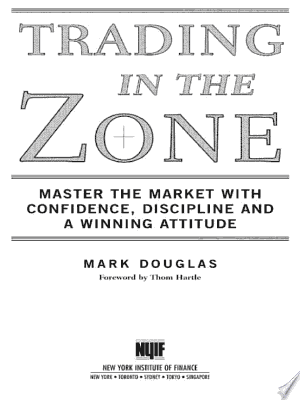
- Trading in the Zone
Mark Douglas
4.3 (10k) average on GoodreadsFinanceWhile Covel focuses on the mechanical aspects of trend following and risk management, Douglas's "Trading in the Zone" delves much deeper into the psychological mastery required for consistent trading success. Douglas addresses the mental hurdles, beliefs, and emotional control necessary to execute a system without self-sabotage, which Covel touches upon but doesn't explore with the same depth. Covel provides the 'what to do,' Douglas provides the 'how to think while doing it.'
- The Diary of a Young Girl
Anne Frank
4.2 (2.7M) average on GoodreadsBiographyDuring the Nazi occupation, a teenage girl's diary, written from a secret annex, shares observations on humanity, hope, and the wait for freedom.
- Twisted 1. Twisted love
Ana Huang
3.7 (1.7M) average on GoodreadsA quiet billionaire with a difficult past finds his guarded heart opening to the woman he must protect, but their growing passion uncovers dangerous secrets and a shared, traumatic history.
- Eat, Pray, Love
Elizabeth Gilbert
3.6 (1.5M) average on GoodreadsLifestyleA heartbroken writer leaves her conventional life for a year-long global search for pleasure in Italy, spiritual devotion in India, and unexpected love and balance in Bali.
- Night
Elie Wiesel
4.3 (970k) average on GoodreadsBiographyIn the darkness of Auschwitz and Buchenwald, a teenage Elie Wiesel faces the extermination of his family, the loss of his faith, and the lasting scars of humanity's deepest cruelty.
- Steve Jobs
Walter Isaacson
4.1 (957k) average on GoodreadsBusinessSteve Jobs was a visionary who fused creativity and technology to revolutionize six industries and shape our digital world.





Enjoyed the summary?
A summary gives you the shape of the book. The book itself has the detail, the examples and the voice.
Find The Little Book of Trading on AmazonAs an Amazon Associate, BookBrief earns from qualifying purchases. How we're funded