

Synopsis
Covers the whole plot, including the ending.
- Difficulty
- Medium
- Read it if
- You are interested in a deep, literary, and philosophical exploration of animal ethics that challenges conventional human-centric views and grapples with the emotional and intellectual difficulty of confronting animal suffering.
- Skip it if
- You are looking for a straightforward, systematic philosophical treatise on animal rights, or prefer a less emotionally charged and more purely academic discussion of the topic.
The Lives of Animals Quotes
“I am not a philosopher. I am a novelist. I don't pretend to be able to solve the problem of evil. I am only interested in representing it.”
“But the truth is, we have lost the capacity to feel. We are numb. And the animals, they are still feeling.”
“The problem is not that we don't know what to do. The problem is that we don't want to know.”
“What is it like to be a bat? We will never know. But we can imagine. And in imagining, we extend our humanity.”
“Reason, after all, is not the only faculty of the mind. There is also sympathy, and imagination, and the capacity for love.”
“The greatest evil is not to feel. Not to care. Not to be moved.”
“To be human is to be a moral agent. And to be a moral agent is to choose.”
“We are all in the same boat, the animals and us. We are all living creatures, and we all suffer.”
“Perhaps the only way to truly understand another being is to become that being, even if only in imagination.”
“The animal's silence is not an absence of voice, but a voice we have chosen not to hear.”
“To deny the suffering of animals is to deny a part of our own humanity.”
“We are capable of great cruelty, and also of great compassion. The choice is always ours.”
“The stories we tell ourselves about animals are often more revealing about ourselves than about them.”
“It is not enough to simply exist. We must also live with a certain awareness, a certain responsibility.”
Quiz
10 questions on the plot and the characters. Each answer comes with a short explanation.
Question 1
Which of the following best describes Elizabeth Costello's primary concern regarding human interaction with animals?
- The economic impact of large-scale animal agriculture.
- The perceived moral superiority of humans over other species.
- The widespread human cruelty to animals in farms, slaughterhouses, factories, and laboratories.
- The scientific inaccuracy of animal intelligence assessments.
Show answer
C. The widespread human cruelty to animals in farms, slaughterhouses, factories, and laboratories. The text explicitly states that 'the idea of human cruelty to animals so consumes novelist Elizabeth Costello in her later years that she can no longer look another person in the eye.' This highlights her primary concern.
Question 2
What is the profession of Elizabeth Costello's son in the story?
- A novelist
- A physics professor
- A literary theorist
- A moral philosopher
Show answer
B. A physics professor The description states, 'Costello's son, a physics professor, admires her literary achievements.'
Question 3
What is the format in which J.M. Coetzee presents the story of Elizabeth Costello, as described in the book's introduction?
- A collection of short stories
- A series of journal entries
- A fable presented as a Tanner Lecture
- A critical essay on animal ethics
Show answer
C. A fable presented as a Tanner Lecture The text explicitly states: 'In his fable, presented as a Tanner Lecture sponsored by the University Center for Human Values at Princeton University, Coetzee immerses us in a drama reflecting the real-life situation at hand.'
Question 4
Which specific argument does Elizabeth Costello make that her son's colleagues resist?
- That animal intelligence is equal to human intelligence.
- That human reason is overrated and inability to reason does not diminish life's value.
- That vegetarianism is the only morally defensible diet.
- That animal rights should take precedence over human rights.
Show answer
B. That human reason is overrated and inability to reason does not diminish life's value. The description notes, 'His colleagues resist her argument that human reason is overrated and that the inability to reason does not diminish the value of life.'
Question 5
How does Elizabeth Costello's daughter-in-law react to her vegetarianism?
- She finds it inspiring and considers adopting it.
- She views it as a form of moral superiority.
- She ignores it, finding it irrelevant to her own life.
- She debates the ethical implications of diet with her.
Show answer
B. She views it as a form of moral superiority. The text states: 'his wife denounces his mother's vegetarianism as a form of moral superiority.'
Question 6
The book includes responsive essays from several leading thinkers. Which of the following fields is NOT represented by one of these essayists?
- Religion scholarship
- Primatology
- Neuroscience
- Literary theory
Show answer
C. Neuroscience The responsive essays are by Wendy Doniger (religion scholar), Barbara Smuts (primatologist), Marjorie Garber (literary theorist), and Peter Singer (moral philosopher). Neuroscience is not listed.
Question 7
What is the primary effect of Elizabeth Costello's views on her son, as described in the passage?
- He is inspired to join her cause and advocate for animal rights.
- He feels proud of her intellectual vigor and public speaking skills.
- He finds her offensive and flaky, yet also strangely on target.
- He becomes estranged from her due to their fundamental disagreements.
Show answer
C. He finds her offensive and flaky, yet also strangely on target. The text states: 'Painfully for her son, Elizabeth Costello seems offensive and flaky, but—dare he admit it?—strangely on target.' This captures his conflicted feelings.
Question 8
The description highlights that Elizabeth Costello's alienation extends to her own family. What is the core reason for this alienation, particularly with meat-eating individuals?
- She believes they are intellectually inferior for not grasping her arguments.
- She sees them as conspirators in a 'crime of stupefying magnitude'.
- She resents their lack of support for her literary career.
- She feels they are deliberately trying to provoke her with their dietary choices.
Show answer
B. She sees them as conspirators in a 'crime of stupefying magnitude'. The text states: 'humans, especially meat-eating ones, seem to her to be conspirators in a crime of stupefying magnitude taking place on farms and in slaughterhouses, factories, and laboratories across the world.' This is the root of her alienation.
Question 9
How does J.M. Coetzee's approach to discussing animal rights in 'The Lives of Animals' differ from a purely academic treatise?
- He uses only logical arguments and avoids emotional appeals.
- He presents a fictional narrative (fable) and integrates elements of literature, philosophy, and performance.
- He relies exclusively on scientific data and empirical evidence.
- He adopts a neutral, objective tone to allow readers to form their own conclusions without influence.
Show answer
B. He presents a fictional narrative (fable) and integrates elements of literature, philosophy, and performance. The description highlights Coetzee's unique method: 'Here the internationally renowned writer J. M. Coetzee uses fiction to present a powerfully moving discussion of animal rights... Literature, philosophy, performance, and deep human conviction—Coetzee brings all these elements into play.'
Question 10
What broader consequence is explored through the 'lecture-fable and the essays' in the book, according to the description?
- The economic benefits of adopting vegetarian diets globally.
- The scientific challenges in proving animal sentience.
- The palpable social consequences of uncompromising moral conflict and confrontation.
- The historical evolution of animal rights movements.
Show answer
C. The palpable social consequences of uncompromising moral conflict and confrontation. The concluding sentence states: 'Together the lecture-fable and the essays explore the palpable social consequences of uncompromising moral conflict and confrontation.'
The Lives of Animals FAQ
What is the main argument Elizabeth Costello presents in 'The Lives of Animals'?
Elizabeth Costello argues that human reason is often overrated and that the inability to reason does not diminish the value of a life. She critiques humanity's cruelty towards animals, particularly in industrial farming and research, viewing it as a crime of immense scale.
Does 'The Lives of Animals' advocate for strict vegetarianism or veganism?
While Elizabeth Costello herself is a vegetarian and her views are central, the book presents a complex discussion rather than a simple advocacy. It explores the moral implications of consuming animal products through various characters' perspectives, including sympathetic and skeptical reactions to her stance.
What is the 'Tanner Lecture' format and how does it relate to the book?
The book itself is framed as a fictional Tanner Lecture delivered by Elizabeth Costello, followed by responses from other thinkers. This format allows J.M. Coetzee to explore the issue of animal rights from multiple philosophical, anthropological, and religious perspectives, mirroring a real-life academic event.
How does 'The Lives of Animals' differ from Peter Singer's 'Animal Liberation'?
While both address animal rights, 'The Lives of Animals' uses a fictional narrative and philosophical exploration through character and story, whereas 'Animal Liberation' is a non-fiction philosophical treatise directly arguing for animal liberation based on utilitarian ethics. Peter Singer also provides a response essay within Coetzee's book.
What role does Elizabeth Costello's son play in the narrative?
Her son, a physics professor, acts as a conflicted observer. He admires his mother's literary work but is uncomfortable with her outspoken views on animal rights, particularly when she lectures at his college, highlighting the personal and social friction her convictions create.
Does the book offer solutions to the problem of human cruelty to animals?
The book primarily focuses on exploring the moral and ethical complexities of human-animal relationships and the profound emotional impact these issues have on individuals. It prompts readers to consider the questions deeply rather than providing definitive solutions.
What is the significance of the human-animal boundary in the book?
The book questions the traditional boundary between humans and animals, particularly challenging the idea that human reason grants exclusive moral superiority. Costello suggests that our shared capacity for suffering and experience should be a more significant factor in our ethical considerations.
How does Coetzee use fiction to discuss philosophical issues?
Coetzee employs a 'lecture-fable' format, embedding complex philosophical arguments within a compelling narrative. This allows him to explore emotionally charged issues like animal rights through character experience, dialogue, and internal conflict, making the abstract concepts more relatable and impactful.
About the author

John Maxwell Coetzee OMG is a South African and Australian novelist, essayist, linguist, translator and recipient of the 2003 Nobel Prize in Literature. He is one of the most critically acclaimed and decorated authors in the English language. He has won the Booker Prize (twice), the CNA Prize (thrice), the Jerusalem Prize, the Prix Femina étranger, and The Irish Times International Fiction Prize, and holds a number of other awards and honorary doctorates.
Similar books
- Animal Liberation
Peter Singer
4.3 (7k) average on GoodreadsPoliticsA foundational text in animal ethics, though more systematic and less literary than Coetzee's work.
- Eating Animals
Jonathan Safran Foer
4.2 (66k) average on GoodreadsMemoirExplores the moral and ethical dilemmas of eating meat, blending personal narrative with philosophical inquiry, similar to Coetzee's blend of fiction and philosophy.
- Brave New World
Aldous Huxley
4.0 (1.4M) average on GoodreadsFantasyIn a future where happiness comes from chemicals and individuality is gone, one man's desire for real experience threatens the calm, controlled society.
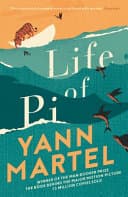
- Life of Pi
Yann Martel
3.9 (1.3M) average on GoodreadsFantasyStranded in the vast Pacific, a young Indian boy forms an unlikely bond with a Bengal tiger, questioning belief and survival.
- The Picture of Dorian Gray
Oscar Wilde
4.1 (966k) average on GoodreadsFantasyA beautiful young man's soul decays within a cursed portrait, mirroring the grotesque cost of his hedonistic pursuit of eternal youth and illicit pleasure.
- Tuesdays with Morrie
Mitch Albom
4.1 (782k) average on GoodreadsBiographyA dying professor's weekly lessons from his bedside change a former student, giving him ideas on life, love, and letting go.





Enjoyed the summary?
A summary gives you the shape of the book. The book itself has the detail, the examples and the voice.
Find The Lives of Animals on AmazonAs an Amazon Associate, BookBrief earns from qualifying purchases. How we're funded