
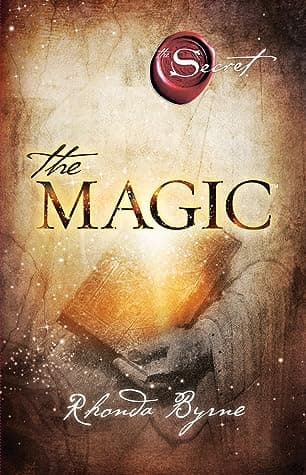
Core Idea
- Difficulty
- Easy
- Read it if
- You are looking for a highly structured, daily practice to cultivate gratitude and believe in the power of positive thinking and universal laws to transform your life.
- Skip it if
- You are skeptical of self-help books that emphasize spiritual or 'magical' thinking over scientific evidence, or you prefer a more analytical and less prescriptive approach to personal development.
Key Takeaways from The Magic
Gratitude as the Master Key
Actively feeling grateful for what you have is the foundational principle for attracting more positivity.
Byrne says gratitude is not just a good feeling but a strong energy that connects you with the universe's plenty. It is not enough to just think about things you are grateful for; the book stresses feeling genuine appreciation. This regular practice, she says, changes your energy, making you attract more of what you want. The main idea is that the universe responds to your main emotional state, and gratitude, being a high-energy emotion, shows you are ready for more good things. This active, daily practice goes beyond passive appreciation to a conscious choice to focus on the positive, changing your reality.
“Gratitude is the great multiplier. When you are grateful for what you have, no matter how small it may seem, you will receive more.”
In the book: The entire 28-day program is built around daily gratitude exercises, such as the 'Magic Rock' or 'Magic Check,' designed to embed this practice deeply.
Try this: Start each day by listing at least ten things you are genuinely grateful for, feeling the emotion deeply for each one. End your day by holding a 'Magic Rock' and thinking of the best thing that happened, expressing thanks.
Related ideas: law-of-attraction, positive-psychology, gratitude-practice
The Universe as a Mirror
Your internal state and dominant thoughts are reflected back to you in your external circumstances.
This point emphasizes the main way the Law of Attraction works: similar things attract each other. Byrne suggests the universe does not see 'good' or 'bad' thoughts or feelings; it only responds to the energy you send out. If you always focus on not having enough, problems, or what you lack, the universe shows you more situations that confirm those feelings. But if you focus on plenty, joy, and gratitude, you attract more experiences that match those positive states. It is a continuous loop where your inner world controls your outer reality, requiring conscious effort to manage your inner state.
“The feeling of gratitude is the perfect mirror of your inner world, and what you feel inside is what you receive in your outer world.”
In the book: The 'Magic Mirror' exercise encourages visualizing your desired life and feeling the emotions associated with it as if it's already true, directly influencing your reality.
Try this: When facing a challenge, consciously shift your internal dialogue from problem-focused to solution-focused, or even better, gratitude for the lessons or opportunities within the challenge.
Related ideas: law-of-attraction, manifestation, self-fulfilling-prophecy
Gratitude for the Past, Present, and Future
Extend gratitude to all aspects of your timeline to heal and create a desired future.
Byrne expands how gratitude is used beyond just current possessions. She suggests a full approach: being grateful for good experiences in the past (even if they are gone), for present blessings, and, importantly, for desired future outcomes as if they have already happened. This multi-time gratitude does several things. Gratitude for the past helps let go of regrets and appreciate lessons. Gratitude for the present grounds one in plenty. Gratitude for the future, felt with real emotion, prepares the way, telling the universe you are ready to receive those future blessings, making them real.
“To bring about a magical future, you must use the magic power of gratitude for your present and your past.”
In the book: The 'Magical Air That You Breathe' exercise focuses on present gratitude, while the 'Magical To-Do List' and 'Magic Check' focus on future desires.
Try this: Before starting a new project or significant event, take a moment to express gratitude for its successful and joyful completion. Reflect on past successes and feel gratitude for them.
Related ideas: temporal-gratitude, future-pacing, healing-past
Gratitude for Health and Relationships
Consciously appreciating your body and the people in your life enhances well-being and strengthens bonds.
This point focuses on two important areas of life often overlooked. Byrne tells readers to actively appreciate their body's functions, even if not perfect, to help healing and energy. The idea is that focusing on illness or flaws only attracts more of the same. Similarly, she stresses showing gratitude for the good qualities of people in your relationships, instead of their faults. This practice improves your inner state and, she claims, subtly changes the relationship, as your positive energy affects the other person and the interaction.
“To receive the gift of health, you must give gratitude for the health you have. To receive the gift of great relationships, you must give gratitude for the relationships you have.”
In the book: Specific exercises include 'The Magic of Health' where one lists all the perfect functions of their body, and 'Magical Relationships' where one lists ten things they love about a person.
Try this: Before a challenging conversation, mentally list three things you genuinely appreciate about the other person. Spend a few minutes daily appreciating your body's ability to see, hear, walk, etc.
Related ideas: relationship-gratitude, mind-body-connection, emotional-wellbeing
The Power of 'As If'
To manifest, embody the feeling of having your desires fulfilled *before* they appear.
This is a key part of Byrne's method. It is not just about wishing for something, but about feeling like you already have it. This 'acting as if' is not about fooling yourself, but about matching your energy with the desired outcome. By feeling the joy, relief, or excitement of having your desire met, you are, according to the book, sending a clear message to the universe that you are ready to receive it. This avoids doubt and thoughts of not having enough, which are seen as blocks to making things happen. It needs a strong imagination and a willingness to fully feel the desired future state.
“The magic of gratitude is that you have to feel the gratitude *as if* you have already received what you want.”
In the book: The 'Magic Check' exercise where you fill out a check for a desired amount and feel the joy of spending it, or 'Magical To-Do List' where you feel relief as if tasks are already completed.
Try this: When visualizing a goal, don't just see it, *feel* the emotions you would experience if it were already accomplished. Practice this for 5-10 minutes daily.
Related ideas: visualization, affirmations, energetic-alignment
Turning Negatives into Positives
Use gratitude to dissolve problems and shift perspectives on challenging situations.
Byrne suggests that even with problems, a lack of money, or difficult people, gratitude can change the situation. Instead of focusing on the negative, you are encouraged to find something to be grateful for within or around the problem. For example, if you have debt, be grateful for the money you do have, or for the services that led to the debt. This is not about ignoring the problem but about changing your energy response to it. By changing from feeling lack or frustration to appreciation, you supposedly open the door for solutions and positive changes to appear, instead of continuing the negative cycle.
“Every single negative situation is an opportunity to use gratitude to transform it.”
In the book: The 'Magical Solution' exercise involves listing all the things you are grateful for about a problem, even if it's just the fact that you recognize it or have the capacity to solve it.
Try this: When facing a major problem, list at least five things you can be grateful for related to that situation (e.g., 'I'm grateful for the lesson this is teaching me,' 'I'm grateful for the resources I have to tackle this').
Related ideas: reframing, problem-solving, resilience
Consistent Daily Practice is Essential
Sporadic gratitude offers limited results; sustained daily effort transforms your life.
The book says "The Magic" is not a one-time read or a quick solution. The 28-day program is made to make gratitude a daily habit. Byrne says consistent, intentional practice changes your brain and energy patterns. Just as exercise builds muscle, daily gratitude builds a 'gratitude muscle,' making it easier to naturally think and feel positively. Skipping days or seeing it as a chore reduces its power. The continued effort creates momentum, leading to more noticeable and lasting changes in your life and inner well-being.
“The magic of gratitude doesn't work by itself; you must work it every single day.”
In the book: The entire structure of the book is a 28-day challenge with a specific gratitude exercise for each day, requiring daily engagement.
Try this: Commit to a non-negotiable daily gratitude practice, even if it's just five minutes. Use reminders or integrate it with existing routines (e.g., while brushing teeth).
Related ideas: habit-formation, daily-ritual, mindset-shift
The Abundance Mentality
Shift from a scarcity mindset to believing in the limitless generosity of the universe.
A main idea is rejecting the idea of not having enough. Byrne says many people think 'not enough' – not enough money, time, love, or chances. This thinking, she claims, pushes away abundance. By being grateful, even for small things, you start to think there is plenty, believing the universe is generous and can provide for all needs and desires. This change is not just about personal gain; it is about understanding the connection and endless possibilities available to everyone, creating a feeling of security and generosity instead of fear and competition.
“There is more than enough for everyone. When you truly believe this, you will open yourself to receiving more.”
In the book: The 'Magic Check' exercise explicitly challenges scarcity beliefs by encouraging one to ask for a large sum and feel worthy of it.
Try this: Whenever you notice thoughts of lack or 'not enough,' consciously reframe them by acknowledging what you *do* have and affirming the universe's abundance.
Related ideas: scarcity-mindset, abundance-mindset, manifestation-principles
Giving and Receiving are Two Sides of the Same Coin
Generosity and gratitude are inextricably linked in the flow of universal abundance.
Byrne connects giving with gratitude, seeing them as connected forces in the Law of Attraction. She suggests that when you are truly grateful for what you have, you naturally want to share or give back, whether it is your time, talent, or money. This act of giving, coming from a place of plenty rather than duty, further increases your gratitude and tells the universe you can receive more. It is a continuous cycle: gratitude leads to giving, which then opens you up to receiving even more, creating a growing flow of positivity and abundance in your life and others' lives.
“The more you give, the more you will receive. And gratitude is the greatest form of giving.”
In the book: While not a specific exercise, the entire philosophy encourages generosity as an outcome of true gratitude, exemplified by the 'Pay It Forward' concept.
Try this: Actively look for opportunities to give, whether it's a compliment, a helping hand, or sharing your knowledge, and do so with a grateful heart, expecting nothing in return.
Related ideas: generosity, reciprocity, flow-state
The 'Magic Dust' of Gratitude
Infuse everyday actions and interactions with conscious gratitude to elevate their impact.
This point encourages using gratitude in all areas, moving beyond set exercises to a continuous, mindful practice throughout the day. Byrne suggests consciously appreciating small, everyday things – the food you eat, the clothes you wear, the services you get, even people you briefly meet (e.g., a cashier, a delivery person). This 'magic dust' idea means that by filling every moment with gratitude, you raise your energy and, in turn, positively affect your surroundings and interactions. It is about living in constant appreciation, making gratitude a natural part of who you are instead of just a task.
“Sprinkle magic dust on everything you do and everyone you meet by feeling gratitude.”
In the book: The 'Magical People' exercise and the general instruction to be grateful for food, water, and the services provided by others throughout the day.
Try this: Before eating, pause and express gratitude for the food. When interacting with service providers, silently (or verbally) express gratitude for their work. Consciously appreciate the comfort of your bed, the warmth of your shower, etc.
Related ideas: mindfulness, everyday-gratitude, positive-vibrations
The Magic Quotes
“Gratitude is the single most important ingredient to living a successful and fulfilled life.”
“When you are grateful, fear disappears and abundance appears.”
“The more grateful you are, the more you receive.”
“You cannot be grateful and unhappy at the same time.”
“Every single thing that has ever happened to you is happening for you.”
“The magic of gratitude turns what we have into enough.”
“When you give thanks for what you have, you will find you have more to give thanks for.”
“Your thoughts and feelings create your life.”
“The universe is listening to your every word and feeling.”
“Gratitude is the bridge between your current reality and your dreams.”
“When you are grateful, you are in harmony with the universe.”
“The more you practice gratitude, the more you will see miracles in your life.”
“Your life is a reflection of your dominant thoughts.”
“Gratitude is the key that unlocks the fullness of life.”
Quiz
10 questions on the main ideas. Each answer comes with a short explanation.
Question 1
According to 'The Magic', what is the single word that changes everything and is central to the book's teachings?
- Love
- Gratitude
- Faith
- Hope
Show answer
B. Gratitude The book identifies 'gratitude' as the transformative word that unlocks the 'magic' in life, based on ancient wisdom that has been misunderstood for centuries.
Question 2
What is the duration of the practical journey outlined in 'The Magic' for applying its principles?
- 21 days
- 28 days
- 30 days
- 40 days
Show answer
B. 28 days Rhonda Byrne structures the book around a 28-day journey, with daily practices to help readers integrate gratitude into their lives.
Question 3
In 'The Magic', what ancient text is referenced as containing the misunderstood riddle about gratitude?
- The Bible
- The Tao Te Ching
- The Vedas
- A sacred text (unspecified)
Show answer
D. A sacred text (unspecified) The book mentions 'words within a sacred text' that have been a mystery for over twenty centuries, but it does not specify which text, focusing instead on the universal principle of gratitude.
Question 4
According to 'The Magic', what is the primary reason gratitude has such transformative power in life?
- It makes you more likable to others
- It aligns you with universal laws of attraction and abundance
- It reduces stress and improves health
- It helps you forget past troubles
Show answer
B. It aligns you with universal laws of attraction and abundance The book teaches that gratitude works by harnessing the law of attraction, drawing more positive experiences and abundance into one's life through focused appreciation.
Question 5
What is a key daily practice recommended in 'The Magic' to cultivate gratitude?
- Writing a gratitude list each morning
- Meditating for an hour daily
- Performing random acts of kindness
- Avoiding negative thoughts entirely
Show answer
A. Writing a gratitude list each morning A core practice in the 28-day journey is creating a daily gratitude list, often with specific items like '10 things I am grateful for,' to shift focus to appreciation.
Question 6
How does 'The Magic' suggest handling negative situations or challenges using gratitude?
- Ignore them and focus only on positive things
- Find something to be grateful for even in the difficulty
- Complain about them to release negative energy
- Use them as motivation to work harder
Show answer
B. Find something to be grateful for even in the difficulty The book emphasizes transforming challenges by actively seeking gratitude within them, which can shift perspective and attract positive outcomes.
Question 7
In the context of 'The Magic', what does Rhonda Byrne claim happens when you solve the riddle of the sacred text?
- You gain supernatural powers
- A new world of abundance and joy appears before your eyes
- You achieve enlightenment and detachment
- You understand the mysteries of the universe
Show answer
B. A new world of abundance and joy appears before your eyes By uncovering the mystery of gratitude, the book promises a transformative shift in perception, leading to a life filled with magic, abundance, and happiness.
Question 8
What is a specific technique from 'The Magic' for enhancing gratitude toward money and finances?
- Visualizing yourself as wealthy
- Gratitude for money you have, even small amounts
- Donating all excess money to charity
- Tracking every expense meticulously
Show answer
B. Gratitude for money you have, even small amounts The book advises practices like being thankful for any money you receive or have, as gratitude attracts more financial abundance according to the law of attraction.
Question 9
According to 'The Magic', why have the words in the sacred text been misunderstood for centuries?
- They were written in a dead language
- They were intentionally cryptic to hide the truth
- People focused on literal interpretations instead of the underlying principle of gratitude
- They were corrupted over time by translations
Show answer
C. People focused on literal interpretations instead of the underlying principle of gratitude The book suggests that the true meaning—gratitude as a transformative force—was overlooked because readers took the words at face value without solving the riddle.
Question 10
In 'The Magic', what is the relationship between gratitude and the law of attraction as described?
- Gratitude is a separate concept that complements the law of attraction
- Gratitude is the most powerful way to activate and harness the law of attraction
- The law of attraction is a myth, but gratitude works on its own
- Gratitude weakens the law of attraction by focusing on the past
Show answer
B. Gratitude is the most powerful way to activate and harness the law of attraction The book posits that gratitude is the key to making the law of attraction work effectively, as feeling grateful for what you have attracts more of what you want.
The Magic FAQ
What is 'The Magic' by Rhonda Byrne about?
'The Magic' is a self-help book that reveals a life-changing principle based on gratitude, presented as a riddle from ancient texts. It offers a 28-day journey with daily practices to apply this knowledge, aiming to transform readers' lives by shifting their focus to appreciation and positivity.
Does 'The Magic' really work?
Yes, according to the book and many readers, practicing the gratitude exercises consistently over the 28-day program can lead to positive changes in mindset and life circumstances. It emphasizes that results depend on commitment to the daily rituals and belief in the power of gratitude.
How is 'The Magic' different from 'The Secret'?
While both books by Rhonda Byrne focus on the law of attraction, 'The Magic' specifically centers on gratitude as the key principle, offering a structured 28-day practice. 'The Secret' is broader, covering various aspects of manifesting desires through thoughts and feelings.
What is the 28-day journey in 'The Magic'?
The 28-day journey is a step-by-step program where readers perform daily gratitude exercises, such as listing things they're thankful for or expressing appreciation for specific aspects of life. Each day builds on the previous to cultivate a habit of gratitude and unlock its transformative effects.
Is 'The Magic' based on science or spirituality?
'The Magic' blends spirituality and philosophy, drawing from ancient wisdom and personal transformation concepts. While it references psychological benefits of gratitude, it primarily presents a spiritual approach to life change rather than a strictly scientific one.
What is the 'riddle' mentioned in 'The Magic'?
The riddle refers to hidden teachings within sacred texts that emphasize gratitude as a fundamental force for creating a better life. Solving it means understanding that gratitude is the key to unlocking abundance and happiness, which the book aims to reveal and explain.
How different is 'The Magic' from other self-help books?
'The Magic' stands out by focusing exclusively on gratitude with a practical, day-by-day structure, making it highly actionable. Unlike many self-help books that discuss multiple principles, it drills down into one core idea to foster deep, consistent practice.
Can 'The Magic' help with specific problems like money or health?
Yes, the book suggests that practicing gratitude can improve all areas of life, including finances and health, by shifting focus to abundance and positivity. It includes exercises tailored to attract specific blessings, but emphasizes that overall mindset change is crucial.
What is the main concept of gratitude in 'The Magic'?
Gratitude in 'The Magic' is presented as a powerful, transformative force that magnetizes positive experiences and blessings. It teaches that by consistently appreciating what you have, you align with abundance and attract more of what you desire into your life.
Is 'The Magic' suitable for beginners in self-help?
Yes, 'The Magic' is beginner-friendly with its clear, structured approach and simple daily exercises. It doesn't require prior knowledge, making it accessible for anyone looking to start a gratitude practice and explore personal development concepts.
Similar books
- The Secret
Rhonda Byrne
4.4 (53) average on GoodreadsExpands on the Law of Attraction, with gratitude as a core component, from the same author.
- Think and Grow Rich
Napoleon Hill
4.2 (218k) average on GoodreadsBusinessFocuses on the power of thought and belief to achieve success, including a strong emphasis on positive mental attitude.
- The Perks of Being a Wallflower
Stephen Chbosky
4.2 (1.3M) average on GoodreadsPsychologyThrough letters, a shy high school freshman learns to navigate first love, trauma, and self-discovery, stepping off the sidelines and into life.
- Eleanor Oliphant Is Completely Fine
Gail Honeyman
4.3 (708k) average on GoodreadsLiterary FictionA lonely woman's structured life changes when an IT guy and an elderly man help her learn to open her heart.
- One Flew Over the Cuckoo's Nest
Ken Kesey
4.2 (631k) average on GoodreadsPsychologyIn a mind-bending asylum, the boisterous Randle McMurphy wages a defiant war against the tyrannical Nurse Ratched, inspiring his fellow inmates, including the seemingly catatonic Chief Bromden, to reclaim their lost humanity.
- The Bell Jar
Sylvia Plath
4.0 (591k) average on GoodreadsPsychologyIn the suffocating grip of 1950s expectations, a brilliant young woman's descent into mental illness is painted with such vivid, internal clarity that her 'insanity' feels terrifyingly rational and inevitable.





Enjoyed the summary?
A summary gives you the shape of the book. The book itself has the detail, the examples and the voice.
Find The Magic on AmazonAs an Amazon Associate, BookBrief earns from qualifying purchases. How we're funded