
Core Idea
- Difficulty
- Medium
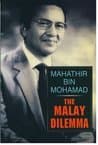
Key Takeaways from The Malay Dilemma
The Definitive People and Indigenous Rights
Mahathir asserts Malays are the 'definitive people' of Malaya, deserving of special status and protection.
This is the core argument of 'The Malay Dilemma': Malays, as the original inhabitants, have an inherent right to the land and its resources. Mahathir argues their historical presence predates immigrant communities, giving them a unique claim to prioritize their welfare and culture. This view supports affirmative action policies meant to correct economic imbalances and protect Malay identity from assimilation by more economically powerful groups. Though controversial, this idea formed the basis for New Economic Policy initiatives, which aimed to increase Malay economic involvement and ownership. Its strength is a clear, if ethnocentric, idea of national identity.
“The Malays are the rightful owners of Malaya.”
In the book: Mahathir's repeated assertion throughout the book regarding Malays as the original inhabitants and therefore the rightful owners of Malaya, contrasting their historical rootedness with the immigrant status of other communities.
Try this: Understanding this concept is crucial for grasping the historical rationale behind Malaysia's bumiputera policies and the ongoing debates surrounding ethnic identity and resource distribution.
Environmental Conditioning and Malay Backwardness
Mahathir attributes Malay economic underdevelopment to environmental factors and historical conditioning, fostering a lack of drive.
A central, and perhaps the most debated, idea is Mahathir's socio-biological explanation for Malay economic struggles. He argues that Malaya's fertile environment, along with a history of feudalism and little competition, led to a relaxed, less ambitious Malay character. This 'environmental conditioning,' he claims, made them less interested in business and industry, leaving economic opportunities for more 'aggressive' immigrant communities. This argument tries to explain a complex issue but is close to essentialism and has been heavily criticized for its generalizations and potential to create stereotypes. However, it was a sincere, if flawed, attempt to identify a problem he genuinely wanted to fix through policy.
“The Malay is by nature a rural dweller, content with the simple life, and lacking the drive and aggressiveness of the immigrant races.”
In the book: Mahathir's detailed descriptions of the Malay agricultural lifestyle, the abundance of natural resources, and the perceived lack of necessity for aggressive economic pursuit compared to the immigrant communities who faced harsher conditions or greater competition in their homelands.
Try this: This theory highlights how leaders can interpret socio-economic disparities through a lens that combines historical, environmental, and even quasi-biological factors, influencing policy design (e.g., affirmative action to 'correct' these traits).
Immigrant Assimilation as a National Imperative
True Malaysian identity, for immigrants, necessitates abandoning their original language and culture.
Mahathir strongly supports a single national identity, arguing that immigrant communities must fully adopt Malay language and culture to be 'true' Malaysians. He compares this to assimilation in countries like America and Australia, where immigrants learn the language of the 'main people.' This argument offers a strong insight into worries about national unity and the perceived threat of cultural division in a multi-ethnic society. Its flaw, however, is its one-sided demand for assimilation, potentially overlooking the value of cultural diversity and causing resentment among groups asked to give up their heritage. This position directly led to policies promoting Malay as the only national language and emphasizing Malay culture in education.
“Immigrants are guests until properly absorbed, and that they are not properly absorbed until they have abandoned the language and culture of their past.”
In the book: Mahathir's explicit comparison of Malaysia's situation to immigrant absorption in Western nations, where he states immigrants adopt the language and culture of the host nation, arguing Malaysia should follow suit for national cohesion.
Try this: This takeaway provides insight into the historical pressures for cultural homogenization in newly independent multi-ethnic nations and the challenges of balancing national unity with cultural diversity.
The Role of Education in Malay Upliftment
Education is presented as the primary vehicle for changing Malay attitudes and fostering economic competitiveness.
Seeing perceived weaknesses in Malay economic drive, Mahathir stresses education as a transformative tool. He argues that the education system needs reform to instill diligence, entrepreneurship, and competitiveness in Malays, moving them from traditional farming to modern business and industry. This is a practical insight, acknowledging that simply providing opportunities is not enough; a change in mindset and skills is also necessary. The book implicitly criticizes existing educational structures for not properly preparing Malays for the challenges of a modern economy. This argument directly influenced the expansion of educational access and the creation of institutions to develop Malay human capital.
“Education must be utilized to overcome the psychological and social barriers that prevent Malays from competing effectively.”
In the book: Mahathir's advocacy for a more practical, commercially oriented education system for Malays, contrasting it with traditional, less economically focused learning, as a means to alter their economic behavior and competitiveness.
Try this: This highlights the enduring belief in education as a panacea for socio-economic problems, particularly in developing nations aiming to shift societal values and economic structures.
Economic Disparity as a Source of Racial Conflict
The extreme economic imbalance between Malays and non-Malays is identified as the root cause of racial tensions, particularly the 1969 riots.
Mahathir directly links the 1969 racial riots to large economic differences, where immigrant communities, especially the Chinese, dominated business and industry while Malays mostly remained in rural agriculture and civil service. He argues that this visible economic imbalance fueled Malay resentment and a feeling of being left out, eventually leading to violence. This is the book's strongest insight, offering a clear, if politically charged, explanation for a critical historical event. While the book's solutions are controversial, its diagnosis of economic inequality as a cause of ethnic conflict is widely accepted and remains relevant in many multi-ethnic societies. It highlights the danger of allowing significant economic gaps to continue along ethnic lines.
“The 13 May incident was not merely a racial clash but a direct consequence of the economic frustrations felt by the Malays.”
In the book: The entire premise of the book is to explain the 13 May 1969 riots through the lens of Malay economic frustration and the perceived dominance of other races in the economy.
Try this: This takeaway emphasizes the critical importance of equitable economic development in maintaining social cohesion and preventing inter-ethnic conflict in diverse societies.
The Limitations of Malay Political Power
Despite political dominance, Malays are economically weak, rendering their political power fragile and ineffective without economic parity.
Mahathir points out a key contradiction: while Malays held political power after independence, their lack of economic strength made this power feel empty and insecure. He argues that true power and stability for Malays could only come from achieving economic equality with other communities. This insight shows the vulnerability of a politically dominant group that is economically weaker, suggesting that such a situation is inherently unstable and prone to conflict. It is a powerful argument for affirmative action policies, not just as social justice, but as a strategic necessity for national stability. This view explains the intense push for Malay economic empowerment through policies like the New Economic Policy.
“Political power without economic strength is an illusion.”
In the book: Mahathir's analysis of the post-independence political landscape where Malay political control did not translate into significant economic ownership, leading to a sense of frustration and vulnerability despite electoral victories.
Try this: This concept is vital for understanding the complex interplay between political power and economic might, especially in post-colonial nations grappling with inherited economic structures.
The Danger of Unchecked Liberalism for Developing Nations
Mahathir implies that Western-style liberalism and meritocracy, if applied prematurely, could exacerbate ethnic inequalities in Malaysia.
Implicitly, and sometimes explicitly, 'The Malay Dilemma' argues against fully adopting liberal democratic principles, especially regarding meritocracy and non-discrimination, given Malaysia's unbalanced ethnic makeup. Mahathir suggests that a 'color-blind' approach would only worsen Malay economic disadvantage, as they are not starting equally. This argument has limits as it can justify discriminatory policies, but it also raises a valid point about the practical challenges of applying universal principles in societies with significant historical differences. It reflects a developmental view that prioritizes national stability and ethnic improvement over pure liberal ideals, a common theme in many post-colonial nations.
“To treat unequal people equally is the greatest inequality.”
In the book: Mahathir's advocacy for special privileges and affirmative action for Malays, directly contradicting a purely meritocratic or liberal approach, arguing that such an approach would further disadvantage the already backward Malays.
Try this: This takeaway encourages critical thinking about the universal applicability of Western liberal ideals in diverse socio-historical contexts and the potential trade-offs involved in nation-building.
The Necessity of Government Intervention
Active government intervention and affirmative action are crucial to rectify historical imbalances and foster Malay economic participation.
Given his assessment of Malay economic struggles and the perceived advantages of immigrant communities, Mahathir concludes that free-market economics is not an option. He advocates for strong government action, including affirmative action policies, to actively promote Malay involvement in business, industry, and education. This is presented as a necessary, though temporary, measure to 'normalize' the economic situation and prevent future racial conflicts. This commitment to state-led development and social engineering is a key feature of the book's proposed solutions. While critics debate the long-term effects and potential for dependency, this approach undeniably shaped Malaysia's economic policies for decades, most notably through the New Economic Policy.
“Only through deliberate government policy can the Malays be brought into the mainstream of the economy.”
In the book: The entire policy thrust of the book, which argues for specific government interventions, quotas, and preferences (e.g., in business licenses, education, land ownership) to uplift Malays economically.
Try this: This illustrates a strong argument for state intervention in economies, particularly in developing countries aiming to address ethnic or historical inequalities, offering a counterpoint to purely market-driven approaches.
The Psychological Dimension of Racial Identity
Mahathir delves into the psychological impact of perceived inferiority and resentment on both Malay and non-Malay communities.
Beyond economic and political analysis, Mahathir explores the psychological aspects of racial identity and inter-ethnic relations. He discusses the Malay feeling of inferiority and resentment from their economic position, as well as non-Malay communities' worries about their place and future in a Malay-dominated state. This is a nuanced part of the book, recognizing that racial harmony involves not just policies but also perceptions, emotions, and shared historical experiences. Understanding these psychological currents is important for grasping the depth of the challenge Mahathir tried to address. Its limitation is that it tends to generalize complex group psychologies, but its attempt to include this aspect is commendable.
“The feeling of being economically deprived, even when politically dominant, creates a deep psychological scar.”
In the book: Mahathir's discussions about the 'inferiority complex' among Malays regarding their economic prowess and the 'superiority complex' of the Chinese, leading to mutual suspicion and resentment.
Try this: This helps in understanding how historical grievances and perceived power imbalances can shape the collective psychology of different ethnic groups, influencing social dynamics and political outcomes.
A Pragmatic, Though Controversial, Vision for National Unity
The book presents a highly pragmatic, yet ethnocentric, blueprint for national unity and stability based on Malay primacy.
Ultimately, 'The Malay Dilemma' tries to create a stable, unified Malaysian nation, though one built on the idea of Malay priority and the need for their economic improvement. Mahathir's vision is practical in its focus on preventing future conflicts by addressing what he saw as the core imbalance. While highly controversial for its racial arguments and favoring one ethnic group, the book was a serious, if flawed, effort to articulate a solution to Malaysia's post-independence challenges. It reflects a nationalist leader's struggle to define identity and ensure stability in a multi-ethnic, post-colonial state. Its influence on Malaysian policy and discussion is undeniable, making it a key text despite ongoing criticisms.
“A nation cannot be built on a foundation of perpetual disunity and economic imbalance.”
In the book: The concluding arguments of the book, which tie together the various analyses of Malay characteristics, immigrant roles, and economic disparities into a coherent, albeit ethnocentric, strategy for national stability and development.
Try this: This takeaway encourages a critical examination of how leaders define national unity in diverse societies, often balancing ideals of equality with perceived historical injustices or strategic imperatives.
Quiz
10 questions on the main ideas. Each answer comes with a short explanation.
Question 1
What is the primary subject matter of "The Malay Dilemma"?
- The economic development of Southeast Asia.
- The history of the Malaysian monarchy.
- The nature of Malays and the issue of racial harmony in Malaysia.
- The impact of British colonialism on Malaysia.
Show answer
C. The nature of Malays and the issue of racial harmony in Malaysia. The book explicitly examines the 'make-up of the Malays and the problem of racial harmony in Malaysia'.
Question 2
What event does "The Malay Dilemma" seek to explain the causes of?
- The formation of Malaysia.
- The 13 May 1969 riots in Kuala Lumpur.
- The signing of the Merdeka Proclamation.
- The establishment of the Malaysian Parliament.
Show answer
B. The 13 May 1969 riots in Kuala Lumpur. The text states the book 'seeks to explain the causes for the 13 May 1969 riots in Kuala Lumpur'.
Question 3
According to the book, what is a key reason for the Malays being economically backward?
- Lack of natural resources.
- External economic sanctions.
- The author's view on their economic circumstances.
- A deliberate policy of suppression by other ethnic groups.
Show answer
C. The author's view on their economic circumstances. The book 'seeks to explain the causes for... why the Malays are economically backward'. This implies the author is presenting his analysis of the reasons.
Question 4
What does Mahathir Mohamad argue about immigrants in Malaysia in the context of absorption?
- They should maintain their original languages and cultures.
- They are fully absorbed once they acquire citizenship.
- They are considered guests until they abandon their past languages and cultures.
- They are never fully absorbed, regardless of their actions.
Show answer
C. They are considered guests until they abandon their past languages and cultures. The text states, 'He also argues that immigrants are guests until properly absorbed, and that they are not properly absorbed until they have abandoned the language and culture of their past.'
Question 5
The author compares the absorption of immigrants in Malaysia to immigrants in which other regions?
- Europe and Africa.
- America or Australia.
- Canada and New Zealand.
- South America and Asia.
Show answer
B. America or Australia. The author makes a comparison to 'immigrants to America or Australia speak nothing but the language of what the author calls "the definitive people"'.
Question 6
What does Mahathir Mohamad assert about the ownership of Malaya?
- It is jointly owned by all ethnic groups.
- It is owned by the British colonial government.
- The Malays are the rightful owners.
- Ownership is determined by economic contribution.
Show answer
C. The Malays are the rightful owners. The text clearly states, 'He argues that the Malays are the rightful owners of Malaya.'
Question 7
What is the central argument regarding the language policy for immigrants in Malaysia, as presented by Mahathir?
- Immigrants should be encouraged to maintain their native languages for cultural diversity.
- The use of Malay should be mandatory for all citizens, including immigrants.
- Bilingualism is the ideal policy for national integration.
- Immigrants should primarily speak English to facilitate international trade.
Show answer
B. The use of Malay should be mandatory for all citizens, including immigrants. The book suggests that immigrants should eventually speak 'nothing but Malay', mirroring the author's analogy with immigrants in America or Australia adopting the language of the 'definitive people'.
Question 8
The book was first published in what year?
- 1957
- 1969
- 1970
- 1981
Show answer
C. 1970 The text explicitly states, 'First published in 1970'.
Question 9
Mahathir Mohamad's perspective on the 'definitive people' in the context of immigration implies that:
- The original inhabitants of a land have a primary claim to its identity.
- Immigrants should retain their distinct cultural identities indefinitely.
- Economic contributions are the sole determinant of belonging.
- The 'definitive people' are a multi-ethnic coalition.
Show answer
A. The original inhabitants of a land have a primary claim to its identity. The analogy of immigrants in America or Australia speaking the language of the 'definitive people' suggests that the original or primary inhabitants (in this case, Malays) define the national identity and language.
Question 10
The core dilemma presented in the book relates to the tension between:
- Modernization and traditional values.
- National unity and ethnic distinctiveness.
- Economic growth and environmental protection.
- Internal politics and foreign policy.
Show answer
B. National unity and ethnic distinctiveness. The book discusses the 'make-up of the Malays', 'racial harmony', the status of immigrants, and the need for them to assimilate, all pointing to the tension between creating a unified nation and acknowledging or preserving ethnic identities.
The Malay Dilemma FAQ
What is The Malay Dilemma about?
The Malay Dilemma, written by Mahathir Mohamad, analyzes the Malay community and the issue of racial harmony in Malaysia. It was first published in 1970 and attempts to explain the reasons behind the 1969 riots in Kuala Lumpur.
What historical event does The Malay Dilemma aim to explain?
The book seeks to explain the causes of the 13 May 1969 riots in Kuala Lumpur. These riots were a significant event in Malaysian history, highlighting racial tensions.
What is Dr. Mahathir's view on the economic status of Malays?
Dr. Mahathir Mohamad argues in the book that Malays are economically backward. He explores the reasons he believes contribute to this economic disparity within the Malay community.
What does The Malay Dilemma propose regarding immigrants and assimilation?
The book argues that immigrants should become 'real Malaysians' by adopting the Malay language and culture. Dr. Mahathir suggests that, similar to immigrants in America or Australia, they should eventually speak only the language of the 'definitive people'.
What is the author's stance on the ownership of Malaya?
Mahathir Mohamad asserts that the Malays are the rightful owners of Malaya. This forms a central argument in his analysis of the nation's demographic and political landscape.
How does The Malay Dilemma define an 'absorbed' immigrant?
According to the book, immigrants are considered guests until they are properly absorbed. Proper absorption means they have abandoned their past language and culture and fully embraced the dominant Malay identity.
When was The Malay Dilemma first published?
The Malay Dilemma was first published in 1970. This timing is significant as it follows closely after the 1969 riots it aims to address.
Who is the author of The Malay Dilemma?
The author of The Malay Dilemma is Mahathir Mohamad, who served as the Prime Minister of Malaysia. His perspective as a political leader heavily influences the book's content.
What is the main problem addressed in The Malay Dilemma?
The main problem addressed in The Malay Dilemma is the issue of racial harmony in Malaysia, particularly examining the Malay community's position and the dynamics with other ethnic groups.
Does The Malay Dilemma offer solutions or just analysis?
The book primarily offers an analysis of the historical, economic, and social factors contributing to the 'Malay Dilemma.' While it presents arguments and perspectives, it's more focused on explaining the situation rather than providing prescriptive solutions.
About the author

Mahathir Mohamad is a Malaysian politician and author known for his influential role in Malaysian politics. His book, The Malay Dilemma, explores the socio-economic challenges faced by Malays in Malaysia, reflecting his views on race and identity. He served as Prime Minister of Malaysia for two non-consecutive terms and is recognized for his significant impact on the country's development.
Similar books
- 1984
George Orwell
4.2 (3.1M) average on GoodreadsPoliticsIn a future where surveillance and thought control are absolute, a man's search for truth clashes with the Party, showing that hope can be a form of rebellion.
- Animal Farm
George Orwell
4.0 (2.7M) average on GoodreadsPoliticsA farm animals' rebellion against humans turns into a pig-led dictatorship, showing how power corrupts and revolutionary ideals are betrayed.
- Freakonomics: A Rogue Economist Explores the Hidden Side of Everything
Steven D. Levitt
4.0 (709k) average on GoodreadsBusinessThis book uses economic principles to reveal the surprising incentives behind everything from drug dealing and real estate to cheating teachers and the decline of crime.
- I Am Malala: The Story of the Girl Who Stood Up for Education and Was Shot by the Taliban
Malala Yousafzai
4.1 (419k) average on GoodreadsPoliticsA teenage girl from a Taliban-controlled valley refuses to give up her books, becoming a global voice for education even after an assassination attempt.
- Atlas Shrugged
Ayn Rand
3.7 (354k) average on GoodreadsPoliticsIn a dystopian America where innovators vanish, a brilliant heiress races to uncover the truth behind the disappearing industrialists and the enigmatic John Galt, who vows to stop the world's progress.
- The Art of War
Sun Tzu
4.0 (330k) average on GoodreadsBusinessLearn ancient strategies for outsmarting rivals, whether on the battlefield or in the boardroom.






Enjoyed the summary?
A summary gives you the shape of the book. The book itself has the detail, the examples and the voice.
Find The Malay Dilemma on AmazonAs an Amazon Associate, BookBrief earns from qualifying purchases. How we're funded