
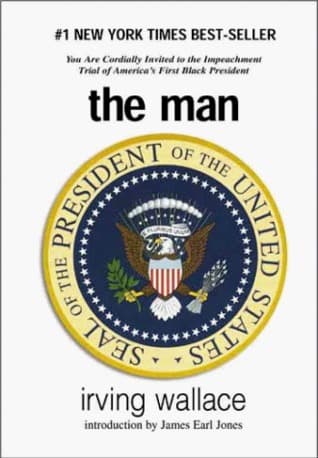
Synopsis
Covers the whole plot, including the ending.
- Difficulty
- Medium
- Pacing
- Moderate
- Mood
- Intense, Thought-provoking, Suspenseful, Dramatic
- Read it if
- You enjoy political thrillers with historical context, exploring themes of race and power in a high-stakes environment.
- Skip it if
- You prefer lighthearted reads or are not interested in detailed political procedural narratives from a mid-20th century perspective.
The Man Plot Summary
Covers the whole plot, including the ending.
The Accidental President
The story begins with a terrible accident in Frankfurt, Germany. A building collapses during a diplomatic meeting, killing the President of the United States, William Alfred Eaton, and his Vice President, Noah Calvin. According to the line of succession, the Speaker of the House, Douglass Dilman, a Black man and former Senator from California, becomes the 49th President. This unexpected event immediately creates political and racial tension across the United States and worldwide. Dilman, at first overwhelmed, must quickly learn the huge responsibilities of the office while facing deep prejudice and doubt from his own government and the public.
A Nation Divided
After becoming President, Dilman faces immediate and widespread opposition. Many people, especially in the Southern states, refuse to accept him because of his race. Senator Lafe Harkness, a powerful and openly racist figure, becomes a main enemy, vowing to remove Dilman from office. The White House staff, mostly from the previous administration, includes both cautious supporters and clear saboteurs. Everything Dilman does is watched closely, and the media, both at home and abroad, focuses on the newness and controversy of a Black man in the Oval Office, showing the deep racial divisions in American society.
The First Crisis: Africa and the Congo
President Dilman's first big international test is a growing crisis in the Congo. A coup attempt threatens to destabilize the region, with major effects on American interests and global stability. Dilman, wanting to show his leadership and avoid looking weak, takes a firm but careful approach. He manages complex diplomatic relations, especially with European and African nations, showing his intelligence and determination. This early success, however, does little to calm the domestic opposition, who continue to question his abilities and right to lead, often using racist language in their criticisms.
The Civil Rights Bill and Domestic Unrest
At home, President Dilman prioritizes a comprehensive civil rights bill. This action further increases racial tensions across the nation. Protests, both for and against the bill, break out in major cities, sometimes becoming violent. Dilman is pressured to either back down or take a stronger stance, but he remains committed to the law. He faces strong opposition in Congress, especially from Southern Democrats led by Senator Harkness. The struggle to pass the bill tests his political skill and his ability to unite a deeply divided country, all while dealing with the constant threat of civil unrest.
The Private Life of the President
As the pressures of the presidency grow, President Dilman's private life becomes a weapon for his enemies. His estranged daughter, Wanda, is in a controversial relationship with a white man. This gives his enemies material for racist attacks and attempts to damage Dilman's moral standing. Additionally, his political enemies uncover a past, secret relationship Dilman had with a white woman, threatening to become a major scandal. These personal attacks aim to undermine his credibility and exploit racial prejudices, forcing Dilman to deal with the very public nature of his job while protecting his family and his reputation.
The Impeachment Conspiracy
Driven by his strong racial prejudice and political ambition, Senator Lafe Harkness starts to build a case for President Dilman's impeachment. He gathers a group of like-minded senators and uses every available scandal, real or made up, to portray Dilman as unfit for office. Harkness's plan involves using the controversy around Dilman's daughter, his past relationships, and any perceived mistakes in his policy decisions. The threat of impeachment hangs over the White House, creating an atmosphere of suspicion and forcing Dilman to prepare for the fight of his political life.
The Senate Trial Begins
The impeachment process against President Douglass Dilman officially begins in the Senate. This marks a historic and tense moment for the nation. Senator Harkness presents several charges, including alleged abuses of power, moral failings, and being unfit for office. The trial becomes a public show, with intense media coverage and a deeply divided public watching every development. Dilman, advised by his legal team, must defend himself against many accusations, many of which are thinly veiled attacks on his race and character. The political stakes are very high, with the future of his presidency and the nation hanging in the balance.
The Defense and Revelations
During the impeachment trial, President Dilman's defense team systematically disproves the prosecution's case. They reveal the racist reasons behind Senator Harkness's actions and show the lack of real evidence for many of the charges. Key witnesses are called, and the truth behind some of the alleged scandals begins to appear, showing them as misunderstandings or politically motivated lies. The trial becomes a chance for Dilman to explain his vision for the country and to directly confront the prejudice he has faced, gaining some public sympathy and support as the trial continues.
The Verdict and Its Aftermath
After a difficult and emotional trial, the Senate votes on the articles of impeachment. The verdict is close, but President Dilman is found not guilty of the charges, allowing him to stay in office. Despite the win, the experience has affected Dilman and the nation. The trial exposed the deep-seated racial prejudices and political divisions in the country. Dilman must now decide how to move forward, whether to seek reconciliation or to continue fighting against those who tried to remove him. His presidency, though saved, is forever changed by the ordeal.
A Legacy Defined
After the impeachment trial, President Dilman thinks about his journey from an unknown senator to the first Black President. He acknowledges the huge challenges and personal sacrifices, but also the progress made in civil rights and showing that a Black man could lead the nation. While divisions remain, Dilman's survival of the impeachment and his continued dedication to his office offer hope for a more unified future. The book ends with Dilman looking to the future, determined to continue his work despite the problems, having created a unique and lasting legacy.
The Man Characters
Douglass Dilman
Protagonist
The first Black President of the United States, thrust into office by tragedy.
Douglass Dilman is a former Senator from California and Speaker of the House, a man of integrity, intelligence, and quiet dignity. He is initially overwhelmed by the sudden weight of the presidency, but quickly rises to the challenge. Dilman is driven by a strong sense of duty and a desire to serve his country, particularly in the realm of civil rights. He is resilient in the face of intense racial prejudice and political opposition, maintaining his composure and moral compass even under extreme pressure. He is deeply committed to justice and equality.
Relationships: Wanda Dilman (Daughter, strained but loving); Lafe Harkness (Political antagonist, driven by racism); President Eaton (Predecessor, respected but briefly known)
Lafe Harkness
Antagonist
A powerful, racist Senator determined to remove Dilman from office.
Senator Lafe Harkness is a cunning and deeply prejudiced politician, representing the entrenched racism and resistance to change within the American political landscape. He is motivated by a visceral hatred of Dilman's race and a fear of the social progress Dilman represents. Harkness is manipulative, using his power and influence to orchestrate the impeachment proceedings, exploiting every perceived weakness or scandal in Dilman's past and present. He embodies the forces of reaction and bigotry that Dilman must overcome.
Relationships: Douglass Dilman (Sworn political and racial enemy)
Wanda Dilman
Supporting
President Dilman's daughter, whose personal choices become political fodder.
Wanda Dilman is Douglass Dilman's adult daughter, who, despite her love for her father, struggles with the immense public scrutiny that comes with his presidency. Her relationship with a white man becomes a focal point for racist attacks against her father, creating tension and additional pressure on the Dilman family. She is independent and somewhat rebellious, but ultimately loyal to her father. Her storyline highlights the personal toll of political life and the way private lives are weaponized in the public sphere.
Relationships: Douglass Dilman (Father-daughter, loving but strained by circumstances)
Gerald 'Gerry' Foster
Supporting
President Dilman's loyal and astute Press Secretary.
Gerry Foster is a dedicated and savvy political operative who serves as President Dilman's Press Secretary. He is a steadfast ally to Dilman, often acting as his sounding board and strategist in navigating the hostile media landscape. Foster is intelligent, quick-witted, and skilled at managing public perception, though he sometimes struggles against the overwhelming tide of prejudice Dilman faces. He provides crucial support and counsel to Dilman throughout his tumultuous presidency, offering practical advice and moral support.
Relationships: Douglass Dilman (Close professional confidante and loyal aide)
Herbert L. 'Herb' Miller
Supporting
President Dilman's Chief of Staff.
Herb Miller is President Dilman's Chief of Staff, a seasoned political operator with extensive experience in Washington. He provides crucial administrative and strategic support to Dilman, helping him navigate the complexities of the White House and the political establishment. Miller is pragmatic and often acts as a gatekeeper, shielding Dilman from unnecessary distractions. While initially cautious, he grows to respect Dilman's integrity and leadership, becoming a key member of his inner circle. He is essential in managing the day-to-day operations of the presidency.
Relationships: Douglass Dilman (Chief of Staff, close professional relationship)
Senator Abe Gold
Supporting
A liberal Senator and early supporter of Dilman.
Senator Abe Gold is a principled and outspoken liberal Senator who is one of Douglass Dilman's earliest and most vocal supporters. He champions civil rights and progressive causes, and his support provides a crucial counterpoint to the racism and conservatism embodied by Senator Harkness. Gold often acts as a moral compass and a strategic ally for Dilman in the Senate, helping to rally support and defend the President against his detractors. He represents the progressive segment of the political spectrum that embraces Dilman's presidency.
Relationships: Douglass Dilman (Political ally and friend)
President William Alfred Eaton
Mentioned
The deceased President whose death elevates Dilman.
President William Alfred Eaton is the incumbent President at the novel's opening, who is tragically killed in a building collapse. Though his presence is brief, his death is the catalyst for the entire story, setting in motion the chain of events that leads to Douglass Dilman's presidency. Eaton is portrayed as a respected leader whose unexpected demise creates a void that Dilman must fill.
Relationships: Douglass Dilman (Predecessor, though they had no direct professional relationship)
Noah Calvin
Mentioned
The deceased Vice President.
Noah Calvin is the Vice President who is also killed in the Frankfurt accident alongside President Eaton. His death, combined with Eaton's, ensures that the line of succession falls to the Speaker of the House, Douglass Dilman. Like Eaton, his role is primarily that of a catalyst, setting the stage for the novel's central conflict.
Relationships: Douglass Dilman (Predecessor in the line of succession)
The Man Themes
Race and Prejudice
The most important theme explores the deep racial prejudice in American society, especially in the 1960s. Dilman's presidency faces constant challenges from open racism, like from Senator Harkness, and subtle biases from others. The book shows the institutional and personal barriers a Black man faces in a position of ultimate power, from the initial shock to organized efforts to discredit and remove him based on his race. The civil rights movement and related unrest provide an important background, highlighting the nation's struggle with racial equality. For example, Harkness's impeachment efforts are clear racist attacks.
“He was the Man. A Negro Man. And that, more than anything else, was the problem.”
The Burden of Leadership
The book details the huge personal and political pressures that come with being president. Douglass Dilman, an accidental President, must deal with international crises, domestic unrest, political schemes, and intense public scrutiny. He faces the challenge of uniting a divided nation, making hard decisions, and keeping his integrity while constantly under attack. This theme explores the isolation of the office and the sacrifices required, as Dilman's private life is examined and his every action watched. His struggle to balance duty, morality, and political survival shows this burden, especially during the impeachment trial.
“The weight of the world, he thought, was a heavy cloak, and it settled most heavily on the man who wore the highest office.”
Political Power and Corruption
This theme explores how political power works, both fairly and unfairly. It looks at how power is used, misused, and fought over in Washington. Senator Harkness's ruthless pursuit of Dilman's impeachment, driven by racial hatred and ambition, shows the corrupting effect of power and prejudice. The secret deals, strategic leaks, and manipulation of public opinion during the impeachment trial highlight the darker side of political maneuvering. The book contrasts Harkness's corrupt use of power with Dilman's principled approach, showing the constant battle between integrity and political gain.
“In Washington, power was not given; it was taken, or it was lost.”
Identity and Representation
The book explores what it means for a Black man to hold the highest office in a mostly white nation. Dilman's identity as a Black man is central to his presidency, shaping how people see him, how he governs, and the problems he faces. He becomes a symbol of hope for many, and a target of fear and hatred for others. This theme explores the psychological impact of being a pioneer, the responsibility of representing an entire race, and the struggle to define oneself beyond racial categories while also acknowledging their deep importance. His presence forces the nation to confront its identity and representation.
“He was not just a President; he was a symbol, a mirror reflecting the best and worst of America.”
Plot Devices & Literary Techniques
Deus ex Machina (Tragic Catalyst)
The sudden, unexpected death of the President and Vice President.
The catastrophic building collapse in Frankfurt that kills President Eaton and Vice President Calvin is the central 'deus ex machina' that sets the entire plot in motion. This sudden, unforeseeable event is the sole reason Douglass Dilman, the Speaker of the House, is elevated to the presidency. It serves as a tragic catalyst, immediately thrusting the protagonist into an extraordinary situation without any prior political maneuvering on his part, thus creating the central conflict and premise of the novel. This device bypasses conventional political succession struggles to immediately establish the core racial and political drama.
The Impeachment Trial
A dramatic legal and political battle to remove the President.
The impeachment trial of President Dilman serves as the novel's climactic plot device. It provides a structured framework for the central conflict, allowing for the public airing of grievances, the revelation of political machinations, and the direct confrontation between Dilman and his adversaries. This device ratchets up tension, forcing Dilman to defend his character and presidency under intense scrutiny. It encapsulates the themes of prejudice, political power, and the burden of leadership, culminating in a high-stakes resolution that determines the fate of Dilman's presidency and symbolizes the nation's struggle with racial equality.
The Line of Succession
The constitutional mechanism that elevates Dilman.
The U.S. Presidential line of succession is a fundamental plot device that dictates how Douglass Dilman assumes the presidency. By having both the President and Vice President perish, the novel meticulously adheres to this constitutional process, making Dilman's ascension legally legitimate, despite the unprecedented racial implications. This device grounds the extraordinary premise in a realistic political framework, lending credibility to the story and emphasizing that Dilman's position is not a coup but a lawful, albeit shocking, consequence of established law, thereby highlighting the racial prejudice of those who still challenge his legitimacy.
The Man Quotes
“The Presidency is a lonely office, but it need not be an isolated one.”
“Power, like a dangerous drug, can be intoxicating, and its withdrawal, agonizing.”
“History does not judge intentions, only results.”
“To lead, one must sometimes stand alone, even against the tide of popular opinion.”
“The truth is a weapon, and like all weapons, it can be used for good or ill.”
“In politics, a man is often judged not by his character, but by his perceived weaknesses.”
“Sometimes the greatest victories are won not on the battlefield, but in the quiet corridors of negotiation.”
“Fear is a powerful motivator, but hope is an even stronger one.”
“The past is never truly dead; it merely waits for an opportune moment to resurface.”
“A leader must be a shepherd, not a wolf.”
“Even in the darkest times, there is always a flicker of light, if one only chooses to see it.”
“The greatest danger is not in falling, but in refusing to get back up.”
“Love, even in the most tumultuous of circumstances, can be a steadfast anchor.”
“The weight of the world rests on few shoulders, but the burden is felt by all.”
Quiz
10 questions on the plot and the characters. Each answer comes with a short explanation.
Question 1
What is the initial event that leads to Douglass Dilman becoming President of the United States?
- He won the presidential election by a landslide.
- He was appointed Vice President and the President resigned.
- An unexpected accident and the law of succession elevated him.
- He successfully impeached the previous President.
Show answer
C. An unexpected accident and the law of succession elevated him. According to the premise, Douglass Dilman becomes President due to 'an unexpected accident and the law of succession,' making him the first black President.
Question 2
What year is the novel 'The Man' primarily set in?
- 1950
- 1964
- 1970
- 1988
Show answer
B. 1964 The provided text explicitly states, 'The time is 1964,' setting the historical context for the novel.
Question 3
Before becoming President, what political office did Douglass Dilman hold?
- Governor of a state
- Member of the House of Representatives
- Vice President of the United States
- An almost unknown senator
Show answer
D. An almost unknown senator The description states that Dilman, 'until now an almost unknown senator,' takes on the presidency.
Question 4
Which of the following is NOT listed as a burden Douglass Dilman must bear as President?
- His office
- His financial debt
- His race
- His private life
Show answer
B. His financial debt The text lists 'his office, his race, and his private life' as Dilman's three burdens. Financial debt is not mentioned.
Question 5
What specific location in the White House is mentioned as the setting where Dilman becomes President?
- The Oval Office
- The East Room
- The Cabinet Room
- The Press Briefing Room
Show answer
C. The Cabinet Room The text explicitly states, 'The place is the Cabinet Room of the White House' where the events unfold.
Question 6
What is the 'breathtaking climax' of the novel that plays out in the full glare of publicity?
- A declaration of war against a foreign nation.
- The Senate meeting to impeach the President.
- A major civil rights demonstration on the National Mall.
- The public announcement of a new cabinet.
Show answer
B. The Senate meeting to impeach the President. The description details the climax as 'the Senate of the United States meets for the first time in one hundred years to impeach the President.'
Question 7
Which of the following is NOT described as a challenge President Dilman faces while in office?
- International crises
- Domestic dissension
- A global pandemic
- Scandal and ferocious hostility
Show answer
C. A global pandemic The text mentions 'international crises, domestic dissension, violence, scandal, and ferocious hostility' but does not include a global pandemic.
Question 8
The novel is described as 'one of the most provocative novels of the 1960s' primarily due to what central theme?
- Its detailed exploration of Cold War espionage.
- Its portrayal of the first black President of the United States.
- Its expose of corruption within the military.
- Its controversial depiction of a presidential romance.
Show answer
B. Its portrayal of the first black President of the United States. The premise highlights the 'theme of what was surely one of the most provocative novels of the 1960s' being Dilman's ascension as the 'first black President of the United States.'
Question 9
What is the historical significance of the Senate meeting to impeach the President in the novel's climax?
- It is the first time such a meeting has ever occurred in U.S. history.
- It is the first time in one hundred years the Senate has met to impeach the President.
- It is a routine procedure that happens every few decades.
- It happens immediately after every presidential election.
Show answer
B. It is the first time in one hundred years the Senate has met to impeach the President. The text states it's 'the first time in one hundred years' that the Senate meets to impeach the President, emphasizing its rare and dramatic nature.
Question 10
The novel 'The Man' is categorized under several genres. Which of the following is NOT explicitly mentioned as one of its genres?
- Thriller
- Science Fiction
- Historical Fiction
- Mystery
Show answer
B. Science Fiction The provided genre list includes Politics, Thriller, Historical Fiction, Mystery, and Romance. Science Fiction is not listed.
The Man FAQ
What is the central premise of 'The Man' by Irving Wallace?
The novel explores the unprecedented scenario where Douglass Dilman, a relatively unknown black senator, suddenly becomes President of the United States in 1964 due to an unforeseen accident triggering the line of succession. It chronicles his struggle to govern while confronting immense racial prejudice, political opposition, and personal challenges.
Who is Douglass Dilman and what is his initial political standing?
Douglass Dilman is a black senator from an unspecified state who, prior to the catastrophic event, was largely unknown on the national political stage. He was the President Pro Tempore of the Senate, which, in the specific circumstances of the novel, placed him next in line for the presidency after the President and Vice President's deaths.
What event leads to Dilman's unexpected ascension to the presidency?
A catastrophic accident, likely involving a plane crash or similar tragedy, kills both the sitting President and the Vice President, creating an immediate vacancy. As President Pro Tempore of the Senate, Douglass Dilman is constitutionally next in line, thrusting him into the nation's highest office.
What are the primary challenges Douglass Dilman faces during his presidency?
Dilman faces overwhelming challenges including virulent racial prejudice from within his own cabinet and the public, international crises that test his leadership, severe domestic dissension over his legitimacy, and a looming impeachment trial. He also grapples with scandals related to his private life that are exploited by his enemies.
How does the novel address the racial tensions prevalent in 1960s America?
The novel deeply explores the racial tensions of 1964 by showcasing the intense hostility, bigotry, and systemic racism Dilman encounters as the first black president. It depicts both overt prejudice from political opponents and subtle biases from supposed allies, reflecting the turbulent Civil Rights era.
Are there any subtle indications of the public's initial reaction to Dilman's presidency beyond overt racism?
Beyond overt racism, the novel hints at a widespread sense of disbelief and unease among the public, even from those who aren't overtly bigoted. There's a subtext of questioning his qualifications and experience simply because he's an unfamiliar figure thrust into power, compounded by his race.
Does the novel feature any specific historical figures or events thinly veiled?
While the novel is fictional, its portrayal of political maneuvering, racial strife, and the Cold War-era international crises subtly mirrors the political climate and social issues of the mid-1960s, drawing parallels to real-world figures and events without directly naming them. For instance, the Civil Rights Movement's struggles are a constant backdrop.
What is the significance of the impeachment trial at the novel's climax?
The impeachment trial represents the ultimate political and racial showdown, as the Senate convenes for the first time in a century to remove a president. It's a culmination of all the forces arrayed against Dilman, forcing him to defend his legitimacy, integrity, and the very concept of a black man holding the nation's highest office.
How does Douglass Dilman's past affect his leadership style and decisions?
Dilman's past as a relatively obscure senator and his experiences with racial discrimination likely inform his cautious yet resolute leadership style. He is acutely aware of the scrutiny he faces, leading him to meticulously consider his decisions and perhaps initially be more conciliatory before asserting his authority.
What psychological toll does the presidency take on Dilman, beyond the political pressure?
The presidency imposes immense psychological strain on Dilman, forcing him to constantly battle isolation, paranoia, and self-doubt, intensified by the racial prejudice he endures. He must also reconcile his public persona with his private vulnerabilities, all while under relentless scrutiny and facing threats to his life and reputation.
How do the supporting characters' reactions reveal their own biases or moral compass?
The reactions of characters like Dilman's cabinet members, political rivals, and even allies reveal a spectrum of biases, from overt racism to subtle paternalism or genuine support. Their responses highlight the societal prejudices of the era and serve as a mirror reflecting their own moral and ethical stances regarding race and power.
In what ways does Dilman's race influence his approach to international diplomacy?
Dilman's race likely influences his international diplomacy by making him acutely aware of how his image is perceived globally, especially in newly independent African nations or among Cold War adversaries. He might strive to project strength and competence to counter any racist assumptions about his ability to lead on the world stage.
Is 'The Man' primarily a political thriller or a deeper commentary on race and power?
'The Man' functions as both a gripping political thriller and a profound commentary on race and power. While it delivers swift drama and suspense typical of the genre, its core strength lies in its unflinching exploration of racial prejudice, the burdens of leadership, and the challenges of breaking societal barriers.
How does the novel's ending, particularly the impeachment trial, leave room for interpretation regarding Dilman's legacy?
The outcome of the impeachment trial, regardless of its explicit result, leaves Dilman's legacy open to interpretation. It forces readers to consider whether he ultimately succeeded in upholding his oath and proving his capability despite the immense opposition, or if the experience irrevocably defined him as a symbol rather than just a president.
What is the novel's lasting message about the American political system and its capacity for change?
The novel's lasting message suggests that while the American political system possesses the constitutional capacity for radical change (like a black man becoming president), the societal and human elements within it, particularly ingrained prejudices, create immense resistance. It questions whether true change can occur without a fundamental shift in hearts and minds.
Could 'The Man' be considered a cautionary tale about the pressures of the presidency?
Absolutely. Beyond the racial aspects, 'The Man' serves as a profound cautionary tale about the overwhelming pressures, isolation, and scrutiny inherent in the presidency. It highlights how the office can test an individual's integrity, mental fortitude, and personal life, even without the added burden of racial prejudice.
How does the 'private life' burden mentioned in the synopsis manifest and impact Dilman?
Dilman's 'private life' burden manifests through personal scandals, past relationships, or family issues that his political enemies ruthlessly exploit to discredit him. These attacks are designed to undermine his moral authority and distract from his presidential duties, often blurring the lines between legitimate scrutiny and character assassination.
About the author
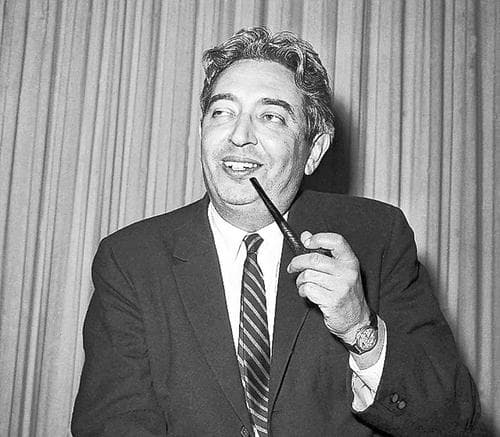
Irving Wallace was an American author known for his works of fiction. Among his notable books are "The Man," which explores themes of power and politics, and "The Miracle," a narrative that delves into faith and human experience. Wallace's writing often combines intricate plots with social commentary.
Similar books
- Advise and Consent
Allen Drury
4.1 (9k) average on GoodreadsLiterary FictionExplores the inner workings of the U.S. Senate and political machinations.
- 1984
George Orwell
4.2 (3.1M) average on GoodreadsPoliticsIn a future where surveillance and thought control are absolute, a man's search for truth clashes with the Party, showing that hope can be a form of rebellion.
- Animal Farm
George Orwell
4.0 (2.7M) average on GoodreadsPoliticsA farm animals' rebellion against humans turns into a pig-led dictatorship, showing how power corrupts and revolutionary ideals are betrayed.
- Freakonomics: A Rogue Economist Explores the Hidden Side of Everything
Steven D. Levitt
4.0 (709k) average on GoodreadsBusinessThis book uses economic principles to reveal the surprising incentives behind everything from drug dealing and real estate to cheating teachers and the decline of crime.
- I Am Malala: The Story of the Girl Who Stood Up for Education and Was Shot by the Taliban
Malala Yousafzai
4.1 (419k) average on GoodreadsPoliticsA teenage girl from a Taliban-controlled valley refuses to give up her books, becoming a global voice for education even after an assassination attempt.
- Atlas Shrugged
Ayn Rand
3.7 (354k) average on GoodreadsPoliticsIn a dystopian America where innovators vanish, a brilliant heiress races to uncover the truth behind the disappearing industrialists and the enigmatic John Galt, who vows to stop the world's progress.





Enjoyed the summary?
A summary gives you the shape of the book. The book itself has the detail, the examples and the voice.
Find The Man on AmazonAs an Amazon Associate, BookBrief earns from qualifying purchases. How we're funded