

Synopsis
Covers the whole plot, including the ending.
- Difficulty
- Medium
- Pacing
- Moderate
- Mood
- Atmospheric, Melancholy, Critical, Social Commentary
- Read it if
- You enjoy classic Victorian literature, family sagas, and explorations of class, property, and patriarchal power dynamics.
- Skip it if
- You prefer fast-paced plots, lighthearted themes, or find discussions of marital abuse and possessiveness too difficult.
The Man of Property Plot Summary
Covers the whole plot, including the ending.
The Forsyte Gathering
The novel begins with a large gathering of the Forsyte family at old Jolyon Forsyte's house. They are celebrating the engagement of his granddaughter, June Forsyte, to an architect named Philip Bosinney. The Forsytes are a wealthy, propertied Victorian family, proud of their social standing and possessions. The dinner introduces various family members, showing their connections and quirks. Soames Forsyte, a solicitor, is there with his beautiful but distant wife, Irene. Their conversations show their focus on wealth, status, and the security of their 'property,' including their women and possessions. June's choice of the poorer Bosinney is met with some disapproval, reflecting the family's materialistic views.
Soames's Obsession with Irene
Soames Forsyte is deeply possessive of his wife, Irene, seeing her as his most valuable possession. Despite her beauty, Irene is unhappy in her marriage, feeling stifled by Soames's cold, materialistic nature. Soames does not see her emotional distress, believing that material comforts should be enough. He tries to control her, limiting her social interactions and dictating her choices. His desire for a new country house, supposedly to please Irene, is also driven by his need to show his control over her and to display his wealth, further trapping her in his ownership.
The Commissioning of Bosinney
Soames decides to build a new country house in Robin Hill. Despite the family's initial concerns about his finances, he hires June's fiancé, Philip Bosinney, as the architect. This decision is driven by Soames's wish for a grander home, a symbol of his prosperity, and to involve Irene in the project. However, this arrangement brings Irene and Bosinney into frequent contact as they discuss plans and visit the site. Irene finds Bosinney's artistic nature and warmth a strong contrast to Soames's coldness. A mutual attraction begins between them, unknown to Soames, who is too focused on the house's details.
Growing Affection and Suspicion
As construction on the Robin Hill house continues, Irene and Bosinney spend more time together, developing a deep emotional connection. Irene finds comfort and understanding in Bosinney, while he is captivated by her beauty and spirit. Their growing intimacy is noticed by other Forsyte family members, particularly the gossiping aunts and uncles. June Forsyte, Bosinney's fiancée, also senses a change in his affections and becomes increasingly jealous. Soames, initially unaware, begins to notice Irene's detachment and Bosinney's frequent presence, starting his suspicion and possessive anger.
The Family Confrontation
Rumors of Irene and Bosinney's affair spread through the Forsyte family, causing scandal and distress, especially for June. Old Jolyon, despite his affection for June, feels for Irene, recognizing her unhappiness. Young Jolyon, old Jolyon's estranged son, also sympathizes with Irene. Soames, now fully aware, is consumed by jealousy and a feeling of betrayal, not of love, but of his property being threatened. He confronts Irene, demanding she end the affair, but she refuses, intensifying the conflict and strengthening her resolve to escape his control.
Soames's Legal Maneuvers
Driven by revenge and a desire to reassert ownership over Irene, Soames takes legal action. He considers suing Bosinney for alienation of affection, a move meant to publicly humiliate and financially ruin the architect. He also tries to control Irene by threatening to cut off her financial support and isolate her. Soames's actions are about preserving his reputation and his 'property,' not love. He also refuses to pay Bosinney for the Robin Hill house, claiming poor workmanship, a clear attempt to punish him and force him out of Irene's life. This increases tension and involves the wider family in the dispute.
The Rape of Irene
After a heated argument where Irene expresses her disgust for him and her wish to leave, Soames, in a brutal act of possessiveness, forces himself upon her. He believes that by asserting his marital rights, he can re-establish his ownership and control over her body and will. This act is the horrific peak of his 'man of property' mentality, seeing Irene as an object to be used as he sees fit, regardless of her feelings. The rape leaves Irene broken and confirms her absolute resolve to escape Soames, marking a turning point in their marriage.
Bosinney's Demise
After the rape, Irene is shattered and flees Soames. Bosinney, distraught and financially ruined by Soames's refusal to pay for the house and the legal threats, wanders aimlessly. He is last seen heading into the London fog. Later, news arrives that Bosinney has been killed in a traffic accident, run over by a hansom cab. His death is a tragic result of the emotional and financial pressures placed upon him by the Forsytes. Irene is devastated, losing the only person who offered her genuine affection and a potential escape from her suffocating marriage. His death also leaves June heartbroken.
Irene's Departure
After Bosinney's death, Irene, with the support of young Jolyon and old Jolyon, finally leaves Soames for good. She refuses to live with him any longer, her spirit crushed by his possessiveness and the tragic events. Soames, though outwardly composed, is deeply affected by her departure, realizing too late the emptiness of possessing someone who offers no affection. Irene's decision to leave shows her assertion of self and her rejection of the Forsyte ideal of women as property, choosing personal freedom over societal expectations and material comfort.
The Aftermath and Loose Ends
The novel ends with the immediate aftermath of Irene's departure and Bosinney's death. June mourns her fiancé and comes to terms with the Forsyte family's rigid values. Old Jolyon reflects on the events, acknowledging the tragedy of Irene's situation and the destructive nature of Soames's possessiveness. Soames is left alone in his grand new house at Robin Hill, which feels empty without Irene. He has achieved his material ambitions, but at the cost of his wife's love and happiness, and ultimately, her presence. The ending leaves Soames contemplating his loss, hinting at the long-term consequences of his actions and the impact on the Forsyte family.
Principal Figures
Soames Forsyte
Protagonist/Antagonist
A wealthy solicitor obsessed with property and control, particularly over his wife.
Soames is a successful solicitor, meticulously organized, financially astute, and deeply conservative. He embodies the Forsyte ideal of 'the man of property,' valuing possessions above all else, including human emotions. He is cold, reserved, and socially awkward, struggling to express affection. His love for Irene is possessive and materialistic; he sees her as a beautiful object he owns, rather than an independent individual with her own feelings and desires. This possessive nature drives him to control every aspect of her life, leading to the tragic events of the novel.
Relationships: Irene Forsyte (Husband, deeply possessive and controlling); June Forsyte (Cousin, disapproves of her artistic inclinations); Philip Bosinney (Architect, rival for Irene's affection, object of Soames's vengeance)
Irene Forsyte
Protagonist
Soames's beautiful and artistic wife, stifled by her marriage and seeking freedom.
Irene is a woman of exquisite beauty, grace, and artistic sensibility. She is deeply unhappy in her marriage to Soames, feeling trapped and suffocated by his cold, materialistic, and possessive nature. She longs for beauty, understanding, and genuine affection, which Soames is incapable of providing. Her silence and detachment are her only forms of rebellion against her husband's control. Her affair with Bosinney is an attempt to find emotional solace and escape, and she ultimately chooses personal freedom over the material security offered by Soames.
Relationships: Soames Forsyte (Wife, oppressed and repulsed by his possessiveness); Philip Bosinney (Lover, finds emotional connection and solace with him); Old Jolyon Forsyte (Sympathetic relative, offers her understanding and support)
Philip Bosinney
Supporting
An artistic architect, June's fiancé, who falls in love with Irene.
Philip Bosinney is an architect, artistic, impulsive, and financially less secure than the Forsytes. He represents a more bohemian, less materialistic worldview compared to the established family. He is engaged to June Forsyte but falls deeply in love with Irene, drawn to her beauty and shared artistic sensibilities. His passion for Irene leads him to disregard social conventions and the potential consequences, ultimately bringing about his tragic downfall. He struggles against the Forsyte's entrenched values and Soames's legal and financial power.
Relationships: June Forsyte (Fiancé, later estranged); Irene Forsyte (Lover, deeply in love); Soames Forsyte (Client, later adversary and victim of his revenge)
June Forsyte
Supporting
Old Jolyon's granddaughter, a fiery and independent young woman, engaged to Bosinney.
June is a spirited, somewhat rebellious young woman, granddaughter of Old Jolyon. She possesses a fiery temperament and a strong sense of loyalty. She is deeply in love with Philip Bosinney and is devastated when he falls for Irene. Despite her youth, she challenges the conventional Forsyte attitudes, particularly regarding love and marriage. Her passion and idealism are a stark contrast to the family's materialism, though she is still deeply affected by the Forsyte sense of propriety and family honor. Her heartbreak is a significant element of the novel's emotional landscape.
Relationships: Philip Bosinney (Fiancé, later heartbroken); Old Jolyon Forsyte (Grandfather, deeply loved and supported by him); Irene Forsyte (Rival for Bosinney's affection, initially resents her)
Old Jolyon Forsyte
Supporting
The patriarch of the Forsyte family, observant and increasingly empathetic.
Old Jolyon is the venerable patriarch of the Forsyte family, a shrewd and successful businessman who has accumulated considerable wealth. Despite his age and established position, he possesses a surprising capacity for empathy and reflection. He observes the family dynamics with a keen eye, often seeing beyond the superficial adherence to property and convention. He develops a particular fondness for Irene and sympathizes with her plight, offering her quiet support. He represents a more humane and introspective side of the Forsyte character, in contrast to Soames's rigid materialism.
Relationships: June Forsyte (Grandfather, deeply devoted to her); Young Jolyon Forsyte (Son, estranged but later reconciled); Irene Forsyte (Sympathetic observer, offers her support)
Young Jolyon Forsyte
Supporting
Old Jolyon's estranged son, an artist and a more liberal-minded Forsyte.
Young Jolyon is Old Jolyon's son, who famously left his first wife and family for his children's governess, causing a scandal within the Forsyte clan. He is an artist, intellectual, and more liberal in his views than most of his relatives. He lives a somewhat unconventional life, detached from the core Forsyte obsession with property. He is perceptive and compassionate, understanding Irene's unhappiness and the oppressive nature of her marriage to Soames. He offers a moral and intellectual counterpoint to the prevailing Forsyte values, often acting as a voice of reason and empathy.
Relationships: Old Jolyon Forsyte (Father, estranged but later reconciled); Irene Forsyte (Sympathetic friend, offers her understanding and practical help)
James Forsyte
Supporting
Soames's father, a stereotypical Forsyte, anxious and deeply concerned with property and reputation.
James Forsyte is Soames's father and a quintessential 'man of property.' He is constantly worried about money, social standing, and the family's reputation. He is timid, anxious, and deeply conservative, always fearing financial ruin or social disgrace. His worldview is entirely dictated by material security and the maintenance of appearances. He struggles to understand anything beyond the tangible and quantifiable, making him incapable of comprehending Irene's emotional suffering or Bosinney's artistic spirit. He represents the older generation's entrenched Forsyte values.
Relationships: Soames Forsyte (Father, shares similar values regarding property); Emily Forsyte (Wife, shares his anxieties)
Themes & Insights
The Nature of Property and Possession
The novel's central theme is the Forsyte family's obsession with property, including land, money, and people. Soames Forsyte views his wife, Irene, as his most valuable possession, believing he has an absolute right to control her, like his house or investments. This theme shows in Soames's cold, transactional view of marriage, his anger when Irene seeks independence, and his attempts to legally and financially ruin Bosinney for 'encroaching' on his 'property.' The novel criticizes the Victorian view that women were their husbands' property, highlighting the destructive consequences of such a mindset on individual freedom and happiness, as seen in Irene's suffering and eventual flight.
“A man of property! He was not a man of property for nothing. He would not allow his wife to treat him as if he were a man of straw.”
Love vs. Ownership
This theme explores the contrast between real affection and the desire for ownership. Soames believes he 'loves' Irene, but his love is really a desire to possess and control her. He cannot understand love as a mutual emotional connection based on respect and freedom. In contrast, Irene's relationship with Philip Bosinney, though scandalous, is based on mutual understanding, passion, and a shared appreciation for beauty and art. The tragic outcome of their affair and Irene's eventual freedom show the novel's argument that true love cannot exist within possessive ownership. The Forsyte family often struggles to prioritize human connection over material gain and social standing.
“He knew that he had lost her. But he knew, too, that she was his. He had bought her, and she was his.”
Freedom and Confinement
The struggle for personal freedom against societal and marital confinement is a theme shown through Irene. Her marriage to Soames is a gilded cage, where material comfort comes at the cost of her spirit and independence. Her attempts to find freedom through art, social connections, and her affair with Bosinney are met with resistance and punishment from Soames and the conservative Forsyte world. The novel explores the limited options available to women in Victorian society who tried to escape oppressive marriages. Irene's act of leaving Soames, despite the uncertainties, represents her ultimate triumph in claiming her freedom, even if it comes with great personal cost and leaves her vulnerable.
“She felt like a bird that has been caught and whose wings are clipped.”
The Conflict Between Art and Materialism
The novel highlights the clash between artistic sensibilities and the pragmatic, materialistic values of the Forsyte family. Philip Bosinney, as an architect and artist, represents creativity, passion, and a disregard for mere money. His vision for the Robin Hill house prioritizes beauty and design over cost-efficiency, clashing with Soames's financial calculations. Irene, with her appreciation for beauty and music, is drawn to Bosinney's artistic spirit. The Forsytes, however, largely see art as a commodity or decoration, failing to understand its true value. This conflict shows the broader cultural tension between emerging artistic movements and the Victorian focus on wealth and property.
“He was an artist, and the Forsytes had a natural distrust of artists, who, in their opinion, were either immoral or impecunious, or both.”
Societal Expectations and Reputation
The Forsyte family deeply cares about maintaining their social standing and reputation in Victorian society. The scandal of Irene's affair and Bosinney's death threatens to tarnish the family name, causing anxiety and gossip among relatives. Soames's actions, including his legal threats, are partly driven by a desire to preserve his public image and reassert control, rather than genuine emotional distress. The novel exposes the hypocrisy and rigid moral codes of the era, where appearances often mattered more than individual happiness or suffering. The pressure to conform to societal norms and uphold a respectable facade greatly influences the characters' choices and the unfolding drama.
“The Forsytes, as a family, were not in the habit of discussing emotion; they distrusted it, as they distrusted anything that threatened their peace of mind or their pockets.”
Plot Devices & Literary Techniques
Symbolism of the Robin Hill House
The new house represents Soames's possessiveness and the ill-fated love affair.
The house at Robin Hill, designed by Bosinney for Soames and Irene, serves as a powerful symbol. Initially, it represents Soames's desire for a grander 'property' and his attempt to control Irene by engaging her in its creation. However, it quickly becomes the physical manifestation of the growing illicit love between Irene and Bosinney, a space where their shared aesthetic sensibilities and mutual attraction flourish. Ultimately, after Bosinney's death and Irene's departure, the house becomes a hollow monument to Soames's possessiveness, standing empty and devoid of the life and love he sought to command, symbolizing the futility of owning without affection.
The Family Dinner/Gathering
A recurring structural device used to introduce characters and reveal family dynamics.
The novel frequently employs large family dinners or gatherings as a structural device. The opening scene, a large Forsyte family dinner, efficiently introduces the sprawling cast of characters, establishes their interconnected relationships, and immediately highlights the family's core values, particularly their obsession with property and social standing. These gatherings serve as microcosms of Forsyte society, allowing Galsworthy to expose their collective opinions, prejudices, and anxieties through dialogue and observation. They also act as points of tension where societal expectations clash with individual desires, and where rumors and scandals are discreetly (or indiscreetly) discussed, driving the plot forward.
The 'Man of Property' Archetype
A character archetype embodying the materialistic and possessive values of the Forsyte family.
The 'Man of Property' is not just the title but an archetype embodied by Soames Forsyte and, to varying degrees, by many other male Forsytes. This device allows Galsworthy to critique a specific socio-economic mindset of Victorian England. This archetype prioritizes material acquisition, financial security, and the ownership of possessions—including wives—above emotional connection, artistic expression, or individual freedom. The character of Soames perfectly illustrates how this mentality can lead to emotional stuntedness, cruelty, and ultimately, profound unhappiness, despite outward success. The archetype serves as a lens through which the novel examines the moral and social costs of an overly materialistic society.
Foreshadowing through Dialogue and Observation
Subtle hints and comments that predict future conflicts and tragedies.
Galsworthy frequently uses subtle foreshadowing, particularly through dialogue and the observations of more perceptive characters like Old Jolyon or Young Jolyon. Early comments about Irene's unhappiness, Soames's possessive nature, or the unsuitability of Bosinney for a Forsyte marriage subtly hint at the impending conflicts. For instance, the initial tension surrounding June's engagement to the 'poor' Bosinney, or the family's collective scrutiny of Irene's demeanor, foreshadows the eventual scandal and tragedy. This device builds suspense and allows the reader to anticipate the unfolding drama, making the eventual outcomes feel inevitable consequences of the characters' natures and societal pressures.
The Man of Property Quotes
“Property, of course, is both the test and the playground of human nature.”
“He who has property has a stake in the country.”
“To have what you want is riches, but to be able to do without it is power.”
“The only thing that really counts is what you do, not what you say.”
“That sense of property, which had made him what he was, was in fact the master of his soul.”
“It was impossible for him to conceive of life without the tangible, without the visible, without the ownership.”
“A man never knows what he's got till he's lost it.”
“The Forsytes were not a family to whom anything really mattered, except property.”
“Beauty, like all other good things, had to be possessed to be enjoyed.”
“The Forsytes lived in a world where everything was judged by its market value.”
“Love was not a thing to be trifled with, not if one were a Forsyte.”
“There was in him a deep, unconscious worship of what was solid, what was established, what was old.”
“To be well-off was the cardinal point of all their lives.”
“There are things which one does not do, if one is a gentleman.”
Quiz
10 questions on the plot and the characters. Each answer comes with a short explanation.
Question 1
Who is the central character whose marriage struggles are a primary focus of 'The Man of Property'?
- Jolyon Forsyte
- Old Jolyon Forsyte
- Soames Forsyte
- Young Jolyon Forsyte
Show answer
C. Soames Forsyte The book narrows its focus to the relationship between Soames Forsyte and his wife, Irene, making him the central character of this installment.
Question 2
What is the profession of Soames Forsyte?
- Architect
- Solicitor
- Doctor
- Merchant
Show answer
B. Solicitor The description explicitly states that Soames Forsyte is a 'wealthy solicitor'.
Question 3
What is the name of the architect with whom Irene Forsyte begins to take a romantic interest?
- Philip Bosinney
- Jolyon Forsyte
- Roger Forsyte
- Montague Dartie
Show answer
A. Philip Bosinney The text states, 'And when Irene begins to take a romantic interest in architect Philip Bosinney...'
Question 4
What primary theme does John Galsworthy's 'The Man of Property' explore regarding women?
- The empowerment of women in the workforce
- The constricted roles of women within the confines of marriage
- The rise of female entrepreneurs
- Women's suffrage movement
Show answer
B. The constricted roles of women within the confines of marriage The description highlights Galsworthy's 'take on the constricted roles of women within the confines of marriage'.
Question 5
What action does Soames take to try and gain more dominion over Irene before her interest in Bosinney develops?
- He encourages her to pursue an independent career.
- He buys her an extensive new wardrobe.
- He convinces her to move to a countryside home.
- He introduces her to a wider social circle.
Show answer
C. He convinces her to move to a countryside home. The text mentions, 'Soames slowly narrows his wife’s social circle before convincing her to move to a countryside home.'
Question 6
How does the novel portray traditional courtship?
- As a romantic and fulfilling experience
- With an unforgiving light
- As largely irrelevant to the plot
- As a humorous social ritual
Show answer
B. With an unforgiving light The description states that Galsworthy's take 'casts an unforgiving light on traditional courtship'.
Question 7
'The Man of Property' is the first installment of which critically acclaimed series?
- The Chronicles of Narnia
- The Forsyte Saga
- A Song of Ice and Fire
- The Bridgerton Series
Show answer
B. The Forsyte Saga The text clearly states, 'The first installment of the critically acclaimed Forsyte Saga introduces the Forsyte clan...'
Question 8
What literary period is 'The Man of Property' considered a groundbreaking work of?
- Romantic literature
- Modernist literature
- Victorian literature
- Postmodern literature
Show answer
C. Victorian literature The description refers to 'The Man of Property' as 'a groundbreaking work of Victorian literature'.
Question 9
What is the general relationship between Soames Forsyte and Irene, particularly concerning his desire for her?
- He seeks to empower her independence.
- He is a jealous husband who will stop at nothing to gain dominion over her.
- He is indifferent to her desires and actions.
- He encourages her romantic interests outside their marriage.
Show answer
B. He is a jealous husband who will stop at nothing to gain dominion over her. The summary states he is 'a jealous husband who will stop at nothing to gain dominion over his bride' and 'Determined to keep Irene for himself'.
Question 10
How does Galsworthy render common domestic dramas in this novel?
- Through minimalist, stark prose
- Using satirical and comedic language
- In luscious, indelible prose
- With a focus on factual, journalistic reporting
Show answer
C. In luscious, indelible prose The description praises Galsworthy for 'rendering otherwise common domestic dramas in the luscious, indelible prose'.
The Man of Property FAQ
What is the central conflict driving the plot of 'The Man of Property'?
The central conflict revolves around Soames Forsyte's possessive desire to control his beautiful wife, Irene, whom he views as another piece of his property. This possessiveness clashes with Irene's yearning for freedom and genuine affection, leading to a tragic struggle for dominion within their marriage.
Who are the main characters introduced in 'The Man of Property'?
The primary characters are Soames Forsyte, a wealthy and possessive solicitor; his beautiful, enigmatic wife Irene Forsyte; and Philip Bosinney, an architect with whom Irene develops a romantic connection. The novel also introduces the broader Forsyte family, including Old Jolyon, Young Jolyon, and June Forsyte.
How does the novel portray the role of women within Victorian marriage?
The novel critically portrays women's constricted roles, particularly through Irene's experience. She is treated as an object or property by Soames, with little agency or personal freedom within her marriage, highlighting the societal expectations and legal limitations placed on married women in the Victorian era.
What is the significance of the title, 'The Man of Property'?
The title refers primarily to Soames Forsyte, embodying the Forsyte family's materialistic values and their deep-seated belief in ownership. Soames views everything, including his wife Irene, as property to be acquired, controlled, and displayed, reflecting the novel's critique of Victorian materialism and possessiveness.
What is the relationship between June Forsyte and Philip Bosinney?
June Forsyte, Young Jolyon's daughter, is engaged to Philip Bosinney at the beginning of the novel. Their relationship is characterized by June's fierce loyalty and Bosinney's initial affection, which eventually wanes as he becomes entangled with Irene, leading to heartbreak for June.
How does the construction of Robin Hill symbolize the characters' desires?
Robin Hill, the country house designed by Bosinney for Soames, becomes a central symbol. For Soames, it's another possession to define his status; for Irene, it initially represents a potential escape or a place where she might find happiness, but it ultimately becomes a prison. For Bosinney, it signifies his artistic integrity and his burgeoning love for Irene.
What is the 'Forsyte 'Change' and how does it represent the family's values?
The 'Forsyte 'Change' is a metaphorical term representing the Forsyte family's collective financial acumen and their constant pursuit of wealth and material security. It signifies their ingrained habit of buying, selling, and accumulating property, underscoring their materialistic worldview and their focus on tangible assets over emotional or artistic values.
What is the significance of the recurring motif of 'beauty' in the novel, particularly concerning Irene?
Irene's beauty is a central motif, presented as both a blessing and a curse. It attracts Soames's possessive desire but also draws Bosinney's genuine admiration. Her beauty, however, is often framed as a superficial quality, objectified by many, which ironically contributes to her lack of agency and reinforces her status as a 'possession' rather than an individual.
How does Soames Forsyte's upbringing within the Forsyte family contribute to his possessive nature?
Soames's upbringing within the affluent, property-obsessed Forsyte family instills in him a deep-seated belief in ownership and control. He is taught that security and status come from acquiring and retaining property, leading him to apply this mindset to his marriage, viewing Irene as another valuable asset he must possess and protect from others.
Analyze Irene Forsyte's psychological state throughout her marriage to Soames.
Irene experiences profound psychological entrapment, characterized by a sense of suffocation, despair, and a desperate longing for freedom. Her initial passivity gradually gives way to quiet rebellion and a search for genuine connection, driven by her deep unhappiness and aversion to Soames's possessive nature, ultimately leading her to seek solace with Bosinney.
What psychological impact does the affair with Irene have on Philip Bosinney?
The affair with Irene profoundly impacts Bosinney, transforming him from a relatively carefree architect into a man deeply consumed by passion and moral conflict. His love for Irene becomes an all-encompassing force, leading him to abandon his engagement to June and disregard societal conventions, ultimately contributing to his tragic downfall and despair.
How does the novel explore the concept of freedom versus security?
The novel explores this dichotomy through Irene's yearning for personal freedom and Soames's insistence on marital security. Irene sacrifices her freedom for the financial security of marriage, only to find herself deeply unhappy. Soames, in his pursuit of security, ironically destroys any chance of genuine affection or freedom for Irene, highlighting the destructive nature of prioritizing property over human connection.
Is Soames Forsyte a purely villainous character, or is there a more nuanced interpretation?
While Soames's actions are undeniably cruel and possessive, a nuanced interpretation recognizes him as a product of his environment and class. He genuinely believes he is entitled to Irene and struggles with his inability to inspire her love, seeing her as a valuable possession he cannot lose. This doesn't excuse his behavior but offers insight into his motivations, rooted in the Forsyte values of ownership and control.
How does the tragic ending of Philip Bosinney serve the novel's themes?
Bosinney's tragic death serves as a stark consequence of defying the Forsyte establishment and their values. It underscores the destructive power of Soames's possessiveness and the unforgiving nature of society towards those who challenge its norms, particularly concerning property and marital fidelity. His death leaves Irene even more isolated and highlights the futility of her fight for freedom within such a constricted world.
To what extent can Irene be considered an active agent in her own fate, despite her constrained circumstances?
Despite her extreme constraints, Irene demonstrates agency through her steadfast refusal to submit emotionally to Soames and her pursuit of genuine affection with Bosinney. Her final act of leaving Soames, even if it leads to further uncertainty, is a powerful assertion of her will. While her options are limited by Victorian society, she makes conscious choices that defy her husband's control, asserting her inner freedom.
What is the significance of the elder Forsytes' reactions to Soames and Irene's marital troubles?
The elder Forsytes' reactions reveal their collective adherence to traditional values and their discomfort with anything that threatens the family's reputation or property. While some, like Old Jolyon, show sympathy for Irene, most prioritize appearances and the sanctity of marriage (as a property arrangement), often blaming Irene for the scandal rather than Soames's possessiveness, highlighting societal hypocrisy.
How does Galsworthy use setting, particularly the various Forsyte homes, to reflect character and theme?
Galsworthy uses setting to mirror character and theme. The opulent, meticulously furnished Forsyte homes, like Soames's house, symbolize their materialism and desire for status. Robin Hill, initially a symbol of hope and artistic vision, becomes a cage for Irene and a battleground for love and ownership, reflecting the characters' internal struggles and the broader themes of property and freedom.
Discuss the impact of the legal system on the characters, particularly in the context of marriage.
The legal system profoundly impacts characters, especially Irene, by reinforcing Soames's power. As a married woman, Irene has few legal rights; her property is her husband's, and she is legally bound to him, making divorce extremely difficult and socially ruinous. This legal framework traps her, underscoring the novel's critique of the patriarchal laws that facilitate Soames's control and deny women agency.
About the author

John Galsworthy was an English novelist and playwright. He is best known for his trilogy of novels collectively called The Forsyte Saga, and two later trilogies, A Modern Comedy and End of the Chapter. He won the Nobel Prize in Literature in 1932.
Similar books
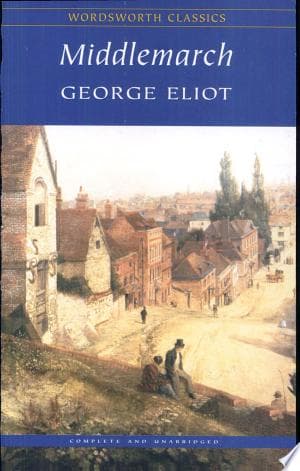
- Middlemarch
George Eliot
4.0 (136k) average on GoodreadsHistorical FictionExplores complex social structures, marriage, and individual desires within Victorian society.
- Pride and Prejudice
Jane Austen
4.3 (3M) average on GoodreadsHistorical FictionExamines marriage as a social and economic institution, though with a different tone.
- A Room With a View
E.M. Forster
3.9 (152k) average on GoodreadsHistorical FictionFeatures a young woman breaking free from societal constraints and a stifling engagement.
- The Portrait of a Lady
Henry James
3.8 (73k) average on GoodreadsHistorical FictionWhile both novels critique the constraints placed upon women within marriage and society, James's The Portrait of a Lady offers a more intense psychological exploration of Isabel Archer's inner life and moral choices. Galsworthy's critique in The Man of Property is broader, encompassing an entire social class, whereas James delves deeper into individual consciousness and the subtle nuances of moral compromise. Galsworthy's realism is more overtly social, while James's realism is profoundly psychological, examining the internal landscapes of his characters with greater intricacy. For instance, the 'property' theme in James is more about reputation and personal freedom, less about physical assets than in Galsworthy.
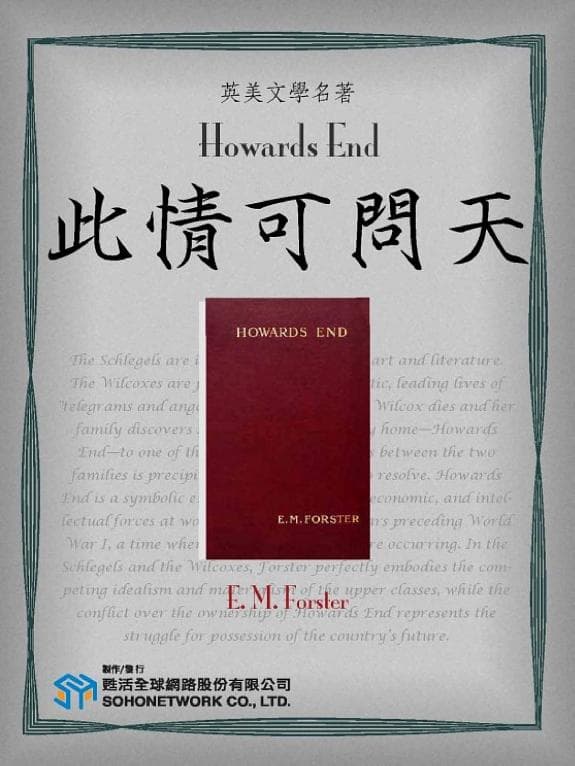
- Howards End
E.M. Forster
4.0 (79k) average on GoodreadsLiterary FictionBoth Galsworthy and Forster explore class divisions and the clash of values in early 20th-century England. However, Forster's Howards End presents a more optimistic vision of reconciliation and the possibility of 'only connect' different social strata and intellectual ideals (represented by the Wilcoxes and Schlegels). Galsworthy's The Man of Property is far more pessimistic, showing the destructive and unyielding nature of the Forsyte's materialism. While both criticize the English middle class, Forster's novel offers a more philosophical and symbolic exploration of 'England' and its future, whereas Galsworthy provides a more direct, critical social commentary on a specific family and their ingrained possessiveness.
- Nineteen Eighty-Four
George Orwell
4.2 (5.5M) average on GoodreadsFictionWinston Smith dreams of truth and rebellion in a world where Big Brother watches all, but he confronts the terrifying power of a regime that controls not just actions, but thoughts.




Enjoyed the summary?
A summary gives you the shape of the book. The book itself has the detail, the examples and the voice.
Find The Man of Property on AmazonAs an Amazon Associate, BookBrief earns from qualifying purchases. How we're funded