

Core Idea
- Difficulty
- Easy
- Read it if
- You are fascinated by true stories of audacious human achievement, the intersection of art and civil disobedience, or the history of the Twin Towers. It's also excellent for children learning about courage, determination, and the pursuit of dreams.
- Skip it if
- You prefer detailed psychological analyses or extensive historical context over a focused, poetic narrative of a single event. If you are looking for a deep dive into the ethics of illegal acts, this brief, celebratory account may not suffice.
Key Takeaways from The Man Who Walked Between the Towers
The Audacity of Vision
Petit's dream transcended the physical, envisioning art where others saw only architecture.
Philippe Petit's story shows the human ability for bold vision. Before the World Trade Center towers were finished, Petit, a street performer, saw them as a stage for an artistic act. This was not about seeking thrills, but about an artistic drive so strong that he spent years planning and executing it. His vision was not just to walk, but to turn a city space into a canvas for a brief, beautiful performance, changing how people saw public space and what was possible in it. It shows how a single, focused pursuit of an extraordinary dream can lead to unlikely achievements, often against difficult odds.
“He looked at the towers, and in his mind, he saw a wire stretched between them, high in the sky. He saw himself walking on that wire.”
In the book: The book details Petit's long-term planning, including studying blueprints, making sketches, and practicing for years, all before the towers were even finished, demonstrating a pre-existing, deeply ingrained vision.
Try this: Cultivate a 'vision board' for long-term, ambitious goals. Regularly revisit and refine it, allowing your initial audacious idea to guide your persistent efforts, even when the path seems unclear or impossible to others.
Related ideas: audacious-vision, artistic-expression, unwavering-focus
Mastery Through Obsession
Years of relentless practice and meticulous planning underpinned Petit's seemingly spontaneous act.
The book shows that Petit's 'walk' was not a spur-of-the-moment stunt; it was the result of intense, focused practice and careful preparation. His commitment to mastering the tightrope, clear from his early street performances and constant training, shows that true skill comes from consistent repetition and refinement. This involved not only physical training but also studying the towers, understanding wind patterns, and finding clever ways to string the cable. His 'performance' shows that extraordinary feats are often the visible part of much unseen, persistent effort and detailed planning, turning a seemingly impossible dream into reality through sheer will and disciplined work.
“He practiced on a wire stretched between two trees. He practiced on a wire stretched between two buildings. He practiced, and practiced, and practiced.”
In the book: Gerstein describes Petit's extensive practice, first between trees, then between buildings, as well as the detailed planning involving his accomplices to sneak equipment into the towers.
Try this: Identify a skill you want to master. Dedicate a specific, consistent block of time each day or week for deliberate practice, focusing on incremental improvements and identifying specific weaknesses to address. Document your progress.
Related ideas: mastery, deliberate-practice, meticulous-planning
The Power of Collaboration (and Deception)
Petit's solo performance was an intricate orchestration of a dedicated, albeit illicit, team.
While the famous image is of Petit alone on the wire, the book clearly shows that his feat was a complex, shared effort. He gathered a team who played important roles in the elaborate, almost heist-like, operation. Each team member's help was vital, from sneaking in heavy equipment to distracting security guards and stringing the cable across the huge gap. This shows that even the most individual acts of genius often depend on a network of support, trust, and shared goals. The illegal nature of their collaboration adds daring and cleverness, showing how a shared commitment to an extraordinary goal can build strong bonds and overcome big logistical problems, even if it means breaking rules.
“He gathered a band of conspirators: friends who would help him carry the heavy cable and equipment, friends who would stand guard, friends who would distract the guards.”
In the book: The narrative explicitly details the roles of Petit's friends in aiding the 'coup,' including carrying equipment, posing as construction workers, and using a bow and arrow to string the pilot line.
Try this: For your next ambitious project, identify key areas where you need support. Actively recruit and clearly delegate tasks to a small, trusted team, fostering a sense of shared purpose and celebrating collective achievements.
Related ideas: collaboration, teamwork, logistical-planning
Transcending the Mundane
Petit's walk transformed ordinary architecture into a stage for profound, ephemeral art.
Petit's tightrope walk was more than a physical achievement; it was an act of artistic change. He took two huge, practical buildings—symbols of business and city power—and, for a short, amazing hour, turned them into the ends of a sky stage. The act itself was brief, existing only in that moment, but its effect on thousands of onlookers was deeply spiritual. It made people look up, pause their daily routines, and see something unexpected and beautiful, changing their ideas of what cities are for and what art can be. This brief spectacle reminded people of the beauty in daring, the power of imagination, and one person's ability to lift the human spirit above everyday life, even for a moment.
“The people on the streets below stopped and stared. They pointed. They gasped. They couldn't believe their eyes.”
In the book: The book describes the reactions of the crowd below – stopping, staring, gasping – and the awe generated by the sight of Petit high above.
Try this: Seek out or create moments of 'awe' in your daily life. This could be actively observing nature, attending live performances, or engaging in creative acts that challenge your routine and invite wonder.
Related ideas: ephemeral-art, urban-transformation, awe-and-wonder
The Dance with Danger
The inherent peril of the walk was not a deterrent, but an integral element of its artistic power.
The danger in Petit's walk was not a mistake; it was a key part of its artistic and emotional effect. The book shows the terrifying height and the fragility of his position, highlighting the great risk. This dance with death, performed with grace, made the act more than just a stunt—it made it art. It spoke to the human interest in pushing limits, facing fear, and finding beauty in instability. The danger made the wonder and preciousness of the moment greater, making the performance unforgettable. It showed that sometimes, true art exists where human vulnerability meets great courage, creating a spectacle that is more than just entertainment.
“A tiny figure, dancing in the sky, between two giants of steel and glass. The wind blew. The towers swayed slightly. He swayed with them.”
In the book: Gerstein emphasizes the height, the wind, and Petit's swaying, explicitly detailing the perilous conditions and the physical demands of the walk.
Try this: When pursuing a significant goal, acknowledge and embrace the inherent risks. Understand that overcoming challenges and facing fears can amplify the reward and personal growth associated with the achievement, rather than viewing danger as a reason to avoid it.
Related ideas: risk-taking, courage, human-vulnerability
Living in the Moment
For Petit, the walk was an immersive, timeless experience, detached from external consequences.
One of the most striking parts of Petit's performance, as shown by Gerstein, is his deep focus on the moment. Despite the threat of arrest, the incredible height, and global attention, Petit seemed completely unaffected by outside consequences, fully present in his 'dance.' He spent over 45 minutes on the wire, not rushing, but performing, lying down, kneeling, and greeting a seagull. This shows a deep state of flow, where the act itself becomes the only reality, beyond time and outside pressures. It is a strong lesson in mindfulness and the joy of complete immersion in one's work, suggesting that true freedom and fulfillment can be found in absolute presence, even amid chaos or danger.
“He was dancing with the wind. He was one with the sky. He was free.”
In the book: The book details Petit's extended time on the wire, his various poses (lying down, kneeling), and his interaction with the seagull, indicating a state of profound presence rather than hurried execution.
Try this: Practice mindfulness during a challenging task. Focus entirely on the immediate actions and sensations, rather than worrying about outcomes or external judgments. Aim for a 'flow state' where your attention is fully absorbed.
Related ideas: mindfulness, flow-state, presence
The Impermanence of Grandeur
The story, written before 9/11, offers a poignant reflection on monuments and their legacy.
Though published in 2003, after the events of 9/11, Gerstein's book carries a deep message about how even the grandest human creations are temporary. The towers, once symbols of ambition and engineering, are shown as magnificent backgrounds for Petit's brief art. The afterword acknowledging their absence adds a sad, almost mournful tone to the story. It shows that while physical structures may fall, the human spirit, acts of beauty, and the stories of those who dared to dream can last. The book turns the World Trade Center from just buildings into a stage for a timeless human story, reminding us that true legacy is often in experiences and shared memories, rather than just concrete monuments.
“And the towers are gone now, but the memory of the man who walked between them remains.”
In the book: The book's dedication and postscript, written after the towers' destruction, directly address their absence, imbuing the story with a deeper sense of historical poignancy.
Try this: Reflect on the temporary nature of material possessions and even grand achievements. Prioritize creating meaningful experiences and fostering human connection, as these intangible legacies often outlast physical structures.
Related ideas: impermanence, legacy, human-spirit
Art as Civil Disobedience
Petit's act was a beautiful defiance, a challenge to authority and conventional norms.
Petit's tightrope walk was an illegal act of civil disobedience. He broke many laws to achieve his artistic vision. However, the unique outcome—his sentence to perform for children—shows society's complex view of such acts. It suggests that when art is truly extraordinary, it can sometimes go beyond or even redefine legal limits, appealing to a deeper human appreciation for beauty, courage, and freedom. His defiance was not destructive; it was creative, challenging the ordinary and the restrictive. This takeaway explores how some acts, though illegal, can serve a higher purpose, sparking conversation, inspiring wonder, and enriching the human experience, even if they briefly disrupt order.
“He was arrested, of course. But the judge, perhaps touched by the beauty of the act, sentenced him to perform for children in the park.”
In the book: The book explicitly states his arrest and the unusual, lenient sentence, demonstrating the legal consequences and the public's unique reaction.
Try this: When faced with creative or ethical boundaries, consider how 'disrupting' the norm (within ethical reason) might lead to a more impactful or meaningful outcome. Challenge assumptions about what is 'allowed' in pursuit of a greater good or artistic expression.
Related ideas: civil-disobedience, artistic-freedom, challenging-norms
The Everyday Magic of Extraordinary Feats
The book reminds us that magic isn't supernatural, but often found in human dedication and daring.
Gerstein's lyrical writing gives Petit's story a sense of magic, suggesting that the extraordinary is not just in fantasy, but can be brought into reality through human will and skill. The 'magic' here is not supernatural; it is the deep impact of seeing someone achieve the seemingly impossible through years of dedication and a strong belief in their vision. The book reminds us that true wonder often comes from pushing human limits, turning daring acts into moments of shared awe. It encourages readers, especially children, to believe in their own ability to create magic through hard work, imagination, and the courage to pursue dreams others might call unrealistic, proving that the everyday world can be filled with wonder.
“It was as if he had conjured a dream into reality.”
In the book: The evocative language used throughout the book, describing Petit's actions as 'dancing' and 'conjuring a dream,' creates a magical tone around a very real event.
Try this: Identify a personal 'impossible dream' that you've dismissed. Break it down into small, actionable steps. Dedicate consistent effort, believing that sustained dedication can transform the seemingly magical into a tangible reality.
Related ideas: human-potential, imagination, dedication
Finding Freedom in Constraint
The narrow confines of the wire became Petit's expansive stage for ultimate freedom.
Paradoxically, the ultimate freedom Petit felt was found within the tightest limits: a thin wire hundreds of feet in the air. This narrow, dangerous path, which would be terrifying and limiting for most, became his space for endless expression. He was not just walking; he was dancing, lying down, kneeling, and performing, showing complete skill and freedom within a very confined and dangerous space. This idea challenges the usual concept of freedom, suggesting that true liberation is not always found in an absence of boundaries, but sometimes in deep skill and creative expression within them. It shows that the greatest artistic and personal freedoms can come from intense discipline and a deep understanding of one's chosen medium or challenge, turning limitation into opportunity.
“He stretched out his arms like a bird, and flew.”
In the book: The detailed descriptions of Petit's various movements on the wire (lying down, kneeling, dancing) illustrate how he found expansive expression within the severe physical constraint.
Try this: Identify a current constraint in your life or work (e.g., limited resources, time). Instead of viewing it as a barrier, brainstorm ways to innovate and create within those specific boundaries, finding unexpected opportunities for creativity and freedom.
Related ideas: creative-constraint, mastery-and-freedom, discipline-as-liberation
The Man Who Walked Between the Towers Quotes
“The year was 1974, and on a wire, high above the city, a young man was about to begin a walk.”
“He loved to juggle. He loved to ride his unicycle. But most of all, Philippe loved to walk on a wire.”
“He practiced and practiced, on a wire he strung between two trees in his yard, on a wire he strung across a stream.”
“When Philippe Petit first saw a picture of the Twin Towers, not yet finished, he knew just what he must do.”
“He would string a wire between the two towers and walk on it.”
“It was against the law. But Philippe was a street performer, a rebel, a poet of the air.”
“Secretly, he planned his fantastic crime.”
“He dressed as a construction worker, and with his friends, snuck into the towers.”
“They shot a fishing line across the void, then a stronger rope, then a cable.”
“And then, at dawn, on August 7, 1974, Philippe stepped out onto the wire.”
“He was an angel. He was a phantom. He was a bird.”
“For almost an hour, he walked, danced, knelt, and even lay down on the wire.”
“When he finally stepped off the wire, he was arrested. But he was also a hero.”
“He gave them a free show, a gift, a dream.”
“And for a while, the people of New York looked up, and remembered the man who walked between the towers.”
Quiz
10 questions on the main ideas. Each answer comes with a short explanation.
Question 1
What was Philippe Petit's primary goal when he decided to walk between the Twin Towers?
- To protest the construction of the towers.
- To gain international fame and wealth.
- To perform an artistic act of beauty and defiance.
- To test the structural integrity of the newly built towers.
Show answer
C. To perform an artistic act of beauty and defiance. The book emphasizes Petit's artistic vision and his desire to bring a moment of unexpected beauty and daring to the city, rather than for protest or personal gain.
Question 2
Which year did Philippe Petit perform his famous tightrope walk between the World Trade Center towers?
- 1969
- 1974
- 1980
- 2001
Show answer
B. 1974 The book clearly states that the event took place in 1974, a key historical detail.
Question 3
What was the weather like on the morning of Philippe Petit's walk?
- Stormy and rainy.
- Foggy and cold.
- Clear and breezy.
- Hot and humid.
Show answer
C. Clear and breezy. The book describes the morning as 'a beautiful day' with 'a slight breeze,' setting the scene for his graceful performance.
Question 4
How did Philippe and his friends manage to get the heavy wire and equipment to the top of the towers without being noticed?
- They used a secret tunnel system.
- They disguised themselves as construction workers and moved in at night.
- They airlifted the equipment via helicopter.
- They bribed the security guards.
Show answer
B. They disguised themselves as construction workers and moved in at night. The book details their covert operation, where they snuck into the towers at night, posing as workers, to haul their gear up.
Question 5
What was the initial reaction of the people on the streets below when they first saw Philippe on the wire?
- Indifference, as they thought it was a publicity stunt.
- Confusion, then awe and wonder.
- Panic, fearing he would fall.
- Anger, believing he was breaking the law.
Show answer
B. Confusion, then awe and wonder. The narrative describes how people first stopped, then looked up in amazement, their initial confusion turning into collective wonder.
Question 6
What 'punishment' did Philippe Petit receive for his unauthorized walk between the towers?
- A lifetime ban from all New York City buildings.
- A large fine and a brief jail sentence.
- He was asked to perform a free show for children in Central Park.
- He was deported from the United States.
Show answer
C. He was asked to perform a free show for children in Central Park. The book highlights the unique outcome: instead of severe legal repercussions, he was asked to perform a high-wire walk for children in Central Park.
Question 7
The book describes Philippe Petit's walk as an act of 'poetic crime.' What does this phrase imply about the author's perspective?
- That the act was truly criminal and dangerous, despite its beauty.
- That while technically illegal, it was an artistic expression that transcended mere law-breaking.
- That Petit was a master manipulator who used art to get away with crime.
- That the event was a fictional story, not a real crime.
Show answer
B. That while technically illegal, it was an artistic expression that transcended mere law-breaking. The phrase 'poetic crime' captures the book's central theme: Petit's act, though illegal, was primarily an artistic and beautiful endeavor, a 'gift' to the city, rather than malicious mischief.
Question 8
What specific challenge did Philippe and his team face in getting the main cable across the 200-foot gap between the towers?
- They had to use a long fishing rod to cast a line.
- They shot an arrow with a thin line attached from one tower to the other.
- They used a drone to carry the initial line across.
- They had a bird trained to carry the line across.
Show answer
B. They shot an arrow with a thin line attached from one tower to the other. The book vividly describes the ingenious method of shooting an arrow with a fishing line from one tower to the other, which was then used to pull across heavier ropes and eventually the main cable.
Question 9
The book concludes by reflecting on the absence of the Twin Towers. How does this ending primarily impact the reader's understanding of Petit's walk?
- It diminishes the significance of his act, as the stage is gone.
- It highlights the transient nature of human creations and makes Petit's act a timeless memory.
- It suggests that Petit's walk was a premonition of the towers' eventual fate.
- It encourages readers to forget about the towers and focus only on the walk.
Show answer
B. It highlights the transient nature of human creations and makes Petit's act a timeless memory. The poignant ending, acknowledging the towers' destruction, transforms Petit's walk from a historical event into a powerful, enduring memory, emphasizing the fleeting beauty and the lasting impact of his unique act on structures that no longer stand.
Question 10
Which of the following best describes the overall tone and mood of 'The Man Who Walked Between the Towers'?
- Suspenseful and thrilling.
- Whimsical and reverent.
- Informative and strictly factual.
- Melancholy and reflective.
Show answer
B. Whimsical and reverent. While it has elements of suspense, the book's lyrical prose and illustrations create a magical, almost dreamlike quality, revering Petit's act as a beautiful, almost impossible feat.
The Man Who Walked Between the Towers FAQ
What is 'The Man Who Walked Between the Towers' about?
'The Man Who Walked Between the Towers' by Mordicai Gerstein tells the true story of Philippe Petit, a French aerialist who, in 1974, secretly strung a tightrope between the tops of the World Trade Center's Twin Towers and walked across it multiple times. It captures the daring, beauty, and impact of this unauthorized high-wire act.
Does Philippe Petit's tightrope walk actually work?
Yes, Philippe Petit successfully executed his tightrope walk between the World Trade Center towers on August 7, 1974. Despite being illegal and incredibly dangerous, he managed to string the cable and walk across it for 45 minutes, performing various acts before being arrested.
What is the main concept of Philippe Petit's 'coup'?
The main concept of Petit's 'coup' was to achieve an artistic and seemingly impossible feat, transforming the formidable towers into a stage for a poetic, unauthorized performance. It was a testament to human courage, artistic expression, and the pursuit of dreams against all odds, temporarily transcending the towers' architectural function.
How does this book differ from other accounts of Philippe Petit's walk?
Mordicai Gerstein's book stands out as a lyrical and visually stunning picture book, making the complex story accessible and inspiring for children. Unlike more detailed adult biographies or documentaries, it focuses on the wonder, excitement, and artistic spirit of the event through evocative illustrations and concise text, rather than deep investigative journalism.
Is 'The Man Who Walked Between the Towers' suitable for children?
Yes, it is highly suitable for children and is primarily a children's picture book. Its engaging narrative and beautiful illustrations make the extraordinary event understandable and inspiring for young readers, introducing them to history, art, and the power of dreams in an age-appropriate way.
What was the significance of Philippe Petit's walk?
Petit's walk was significant as a breathtaking act of daring and artistic expression that captivated the world. It transformed the imposing World Trade Center towers into a canvas for a fleeting, beautiful performance, offering a moment of shared wonder and challenging perceptions of possibility and freedom.
Did Philippe Petit get in trouble for his walk?
Yes, Philippe Petit was arrested immediately after completing his walk. However, due to the public's fascination and the poetic nature of his act, the charges were eventually dropped in exchange for him performing a high-wire walk for children in Central Park.
Where can I learn more about Philippe Petit?
Beyond this book, you can learn more about Philippe Petit through his own memoir, 'To Reach the Clouds' (also known as 'Man on Wire'), and the Academy Award-winning documentary 'Man on Wire.' These resources provide deeper insights into his planning, motivations, and the event itself.
About the author
Mordicai Gerstein is an author and illustrator known for his contributions to children's literature. He is particularly recognized for his book "The Man Who Walked Between the Towers," which tells the story of Philippe Petit's tightrope walk between the Twin Towers. Gerstein's works often blend factual elements with engaging narratives, appealing to both young readers and adults.
Similar books
- Tar Beach
Faith Ringgold
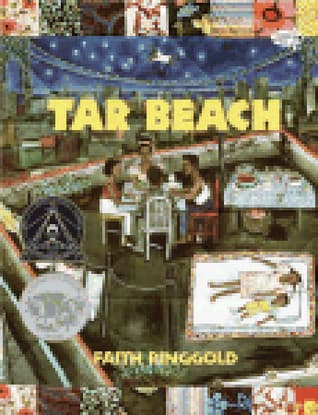
4.1 (8k) average on GoodreadsFantasyBoth books use urban architecture as a backdrop for extraordinary feats. However, Ringgold's 'Tar Beach' uses magical realism to explore themes of freedom, aspiration, and social commentary through a child's imaginative flight over the George Washington Bridge. Gerstein's book, while celebrating an extraordinary event, is a more grounded biographical account of a physical, though improbable, human achievement. Ringgold's focus is on symbolic escape and wish fulfillment, while Gerstein's is on the tangible realization of an audacious dream.
- The Diary of a Young Girl
Anne Frank
4.2 (2.7M) average on GoodreadsBiographyDuring the Nazi occupation, a teenage girl's diary, written from a secret annex, shares observations on humanity, hope, and the wait for freedom.
- Eat, Pray, Love
Elizabeth Gilbert
3.6 (1.5M) average on GoodreadsLifestyleA heartbroken writer leaves her conventional life for a year-long global search for pleasure in Italy, spiritual devotion in India, and unexpected love and balance in Bali.
- Night
Elie Wiesel
4.3 (970k) average on GoodreadsBiographyIn the darkness of Auschwitz and Buchenwald, a teenage Elie Wiesel faces the extermination of his family, the loss of his faith, and the lasting scars of humanity's deepest cruelty.
- Steve Jobs
Walter Isaacson
4.1 (957k) average on GoodreadsBusinessSteve Jobs was a visionary who fused creativity and technology to revolutionize six industries and shape our digital world.
- The Glass Castle
Jeannette Walls
4.3 (903k) average on GoodreadsBiographyJeannette Walls's memoir describes her unusual childhood with brilliant, free-spirited parents whose poverty-stricken life shaped her independence and love despite family problems.





Enjoyed the summary?
A summary gives you the shape of the book. The book itself has the detail, the examples and the voice.
Find The Man Who Walked Between the Towers on AmazonAs an Amazon Associate, BookBrief earns from qualifying purchases. How we're funded