
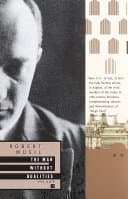
Synopsis
Covers the whole plot, including the ending.
- Difficulty
- Hard
- Pacing
- Slow
- Mood
- Intellectual, Satirical, Philosophical, Melancholy, Analytical
- Read it if
- You enjoy vast, philosophical epics that dissect society, consciousness, and the human condition with intellectual rigor and satire, and you don't mind a lack of conventional plot resolution.
- Skip it if
- You prefer fast-paced narratives, clear plot arcs, or character-driven stories with emotional immediacy over dense philosophical exploration and social commentary.
The Man Without Qualities Plot Summary
Covers the whole plot, including the ending.
The Parallel Campaign and Ulrich's Return
In 1913 Vienna, society prepares for the 'Parallel Campaign,' a grand initiative to celebrate Emperor Franz Josef's seventieth jubilee in 1918. This movement, led by Count Leinsdorf and his prominent wife, aims to show Austria's cultural and intellectual superiority. Ulrich, a brilliant but detached former mathematician and soldier, returns to Vienna after a period of self-imposed exile and intellectual wandering. His father, a respected jurist, invites him to join the Parallel Campaign's secretariat. Ulrich accepts, not because he believes in it, but out of aimlessness and a desire to observe the workings of this ambitious project and the society it represents. He sees the campaign as a grand experiment in collective delusion, a perfect subject for his analytical mind.
The Search for a 'Great Idea'
Ulrich soon discovers that the Parallel Campaign, despite its high goals, lacks a unifying 'great idea.' Its committee meetings are a chaotic mix of clichés, conflicting interests, and superficial discussions. He meets various members of Viennese society: Diotima, Leinsdorf's intellectual and somewhat pretentious cousin, who becomes interested in Ulrich's detached brilliance; General Stumm von Bordwehr, a military man trying to apply scientific rigor to societal problems; and Clarisse, the unstable wife of his friend Walter, a composer. Ulrich becomes a critical observer and occasional provocateur, offering cynical insights into the campaign's contradictions and the vanity of its participants, all while seeking purpose for his own life.
Agathe's Arrival and the 'Millennial Kingdom'
Ulrich's life changes with the sudden return of his sister, Agathe, after their father's death. Agathe, intelligent and unconventional, shares a deep spiritual and intellectual bond with Ulrich. Their reunion starts an intense period of introspection and mutual exploration, a 'millennial kingdom' of the soul, as they try to live outside conventional morality and societal expectations. They begin a quest for an 'other state' – a realm of pure experience and authentic feeling, free from the limits of logic and social roles. This relationship, ambiguous and deeply intimate, becomes the main focus of Ulrich's 'man without qualities' existence, challenging their identities and societal norms.
Moosbrugger's Case and the Nature of Reality
Throughout the story, the ongoing trial of Christian Moosbrugger, a seemingly ordinary man who committed a brutal murder, is a recurring theme. Moosbrugger's case fascinates Ulrich, who sees in it a reflection of society's inability to truly understand individual motives and the arbitrary nature of justice. Moosbrugger's defense relies on his claim of being misunderstood, a 'man without qualities' in his own violent way. Ulrich often thinks about Moosbrugger's actions and society's reactions, using the case to further his philosophical inquiries into reality, morality, and the individual's place in a chaotic world. The trial highlights the novel's themes of subjective truth and the limits of rational interpretation.
The Intellectual Salons and Diotima's Influence
Diotima, Count Leinsdorf's cousin, hosts a prominent intellectual salon, which becomes a center for the Parallel Campaign's discussions and a stage for various societal figures to display their intellectual vanity. She is captivated by Ulrich's analytical mind and his detached observations, mistaking his cynicism for deep insight. Diotima tries to intellectualize the campaign, seeking to give it a 'soul' and a 'spiritual mission,' often leading to absurd and pretentious statements. Ulrich, while participating, remains an ironic observer, dissecting the intellectual posturing and the contradictions of their grand ambitions. His interactions with Diotima show the gap between genuine thought and performative intellectualism in Viennese society.
Clarisse's Decline and Walter's Struggles
Ulrich's friends, the composer Walter and his wife Clarisse, represent another aspect of the era's spiritual unease. Walter struggles with creative blocks and feelings of inadequacy, often seeking validation in Diotima's intellectual circles. Clarisse, increasingly unstable and drawn to the radical ideas of the philosopher Meingast (a thinly veiled caricature of Nietzsche), goes mad. Her erratic behavior and eventual mental breakdown contrast with the more controlled, though equally aimless, intellectual pursuits of the Parallel Campaign. Ulrich observes their struggles with empathy and analytical detachment, seeing their personal crises as signs of a broader societal fragmentation and the search for meaning in a world without fixed values.
The Search for the 'Other State' with Agathe
Ulrich and Agathe's relationship deepens into an experimental quest for the 'other state' – a way of being marked by intense subjective experience, emotional truth, and a rejection of conventional logic and social roles. They have long, intimate conversations, trying to express and embody this elusive state. Their interactions show a unique mix of intellectual rigor and deep emotional intimacy, blurring the lines of traditional sibling relationships. They read, discuss philosophy, and conduct 'experiments' in living, hoping to go beyond the limits of their 'qualities' and achieve a more authentic existence. This intellectual and emotional journey is central to Ulrich's development, as he seeks to move beyond mere observation to active, though unconventional, participation in life.
General Stumm von Bordwehr's Scientific Approach
General Stumm von Bordwehr, a well-meaning but somewhat naive military officer, tries to bring order and scientific rigor to the chaotic Parallel Campaign. He attempts to apply military principles of organization, measurement, and strategy to the amorphous goal of celebrating the Emperor's jubilee, often with comically futile results. His efforts highlight the absurdity of trying to quantify and systematize something as intangible as national spirit or cultural achievement. Ulrich observes Stumm's earnest but misguided attempts with detached amusement, seeing them as another example of society's futile efforts to impose order on a fundamentally irrational world. Stumm's character contrasts with Ulrich's intellectual detachment, showing a different kind of 'man without qualities' – one defined by his adherence to rigid systems rather than their absence.
The End of the Parallel Campaign's Initial Phase
As 1913 ends, the Parallel Campaign, despite its initial enthusiasm, begins to lose momentum. Its various subcommittees fail to produce concrete results, and the grand vision remains elusive. The internal squabbles, intellectual posturing, and lack of a clear purpose become more apparent. This stagnation mirrors the decay of the Austro-Hungarian Empire itself, which is unknowingly on the verge of collapse. Ulrich continues to observe these developments with his characteristic detachment, seeing the campaign's failure as an inevitable outcome of its contradictions. The political and social anxieties simmering beneath the surface of Viennese society become more pronounced, foreshadowing the major shifts that will soon engulf Europe.
Further Explorations of the 'Other State'
The later sections of the novel intensify Ulrich and Agathe's shared journey into the 'other state.' Their discussions become deeper, exploring philosophical concepts of identity, morality, and the nature of love. They try to live in a state of 'love without qualities,' going beyond conventional definitions of relationships and seeking a pure, unmediated connection. This exploration is both intellectually stimulating and emotionally challenging, pushing the boundaries of their individual selves. Their quest for an authentic existence outside societal norms becomes a central metaphor for the novel's broader themes of meaninglessness and the search for new values in a fragmented world. Their bond becomes a sanctuary from external chaos, yet also a place for radical self-discovery.
The Unfinished Symphony of Life
The novel remains unfinished, ending abruptly with the outbreak of World War I. There is no definitive resolution to Ulrich's quest for the 'other state' or the fate of the Parallel Campaign. Instead, the narrative emphasizes the ongoing, open-ended nature of life and philosophical inquiry. The impending war casts a long shadow over the characters and their concerns, making many of their earlier preoccupations seem trivial. Musil's decision to leave the work incomplete highlights the novel's central theme of the 'man without qualities' – a character always changing, whose life, like the century it inhabits, is a continuous, unresolved experiment. The ending underscores the profound uncertainty and the radical shift in European history.
Principal Figures
Ulrich
Protagonist
A brilliant, detached former mathematician seeking purpose in a world without fixed values.
Ulrich is the quintessential 'man without qualities,' a highly intelligent and analytical individual who feels disconnected from the conventional roles and values of society. He is an ex-mathematician, former soldier, and seducer, but none of these identities fully define him. He approaches life as an experiment, observing the world with a critical, ironic distance. His defining characteristic is his lack of a fixed character or sense of self, leading him to constantly question, analyze, and seek an 'other state' of being, free from the constraints of logic and social expectation. He is driven by a profound intellectual curiosity and a yearning for authentic experience.
Relationships: Agathe (Intense, intellectual, and spiritually intimate sibling bond); Diotima (Object of his ironic observation, intellectual sparring partner); Walter (Childhood friend, artistic contrast); Clarisse (Friend's wife, a subject of his psychological interest); Count Leinsdorf (Employer in the Parallel Campaign, object of his cynical analysis)
Agathe
Supporting
Ulrich's sister and intellectual soulmate, who joins him in his quest for an 'other state'.
Agathe is Ulrich's younger sister, equally intelligent, unconventional, and searching. She shares a profound intellectual and spiritual bond with Ulrich, becoming his primary companion in his quest for the 'other state' and a life beyond conventional morality. Her return to Vienna after their father's death catalyzes Ulrich's deeper exploration of identity and existence. Agathe is rebellious, emotionally intense, and possesses a keen intuitive understanding that complements Ulrich's analytical mind. She challenges him, inspires him, and together they attempt to forge a new mode of being, characterized by 'sibling love' and a rejection of societal norms.
Relationships: Ulrich (Intense, intellectual, and spiritually intimate sibling bond)
Diotima
Supporting
Count Leinsdorf's intellectual cousin, who attempts to infuse the Parallel Campaign with a 'soul'.
Diotima is a prominent figure in Viennese intellectual society, hosting a salon and playing a key role in the Parallel Campaign. She is highly cultured, refined, and prone to intellectualizing everything, often to the point of pretension. She becomes captivated by Ulrich's detached brilliance, misinterpreting his cynicism as profound depth. Diotima earnestly attempts to imbue the campaign with a 'spiritual mission' and a 'soul,' but her efforts often result in vague pronouncements and a comical disconnect from reality. She represents the superficial intellectualism and cultural vanity of a certain segment of Viennese high society.
Relationships: Ulrich (Intellectual sparring partner, object of her misdirected admiration); Count Leinsdorf (Cousin, collaborator in the Parallel Campaign); General Stumm von Bordwehr (Admirer, participant in her salon)
General Stumm von Bordwehr
Supporting
A military general attempting to apply scientific and military logic to societal problems.
General Stumm von Bordwehr is a well-meaning but somewhat naive military officer who tries to approach the complexities of society and the Parallel Campaign with the rigid logic of military strategy and scientific measurement. He is earnest in his efforts to bring order and efficiency to the chaotic discussions, often with comically absurd results. Stumm represents a different kind of 'man without qualities' – one defined by his adherence to systems and classifications rather than their absence. His struggles to apply quantifiable methods to intangible concepts like 'national spirit' highlight the limitations of pure rationality in understanding human affairs.
Relationships: Ulrich (Analytical observer, subject of Ulrich's detached amusement); Diotima (Admirer, participant in her salon)
Walter
Supporting
Ulrich's childhood friend, a struggling composer plagued by creative blocks and insecurity.
Walter is Ulrich's childhood friend, a talented but insecure composer who grapples with creative paralysis and feelings of inadequacy. He represents the artistic and emotional anxieties of the era, struggling to find his voice in a world that seems increasingly fragmented. Walter often seeks validation from intellectual figures like Diotima, but his artistic spirit is stifled by his self-doubt and the prevailing intellectual climate. His character serves as a foil to Ulrich, embodying the emotional and creative struggles that Ulrich observes with his detached, analytical mind. His relationship with his wife, Clarisse, is deeply troubled.
Relationships: Ulrich (Childhood friend, subject of Ulrich's observation); Clarisse (His unstable wife, a source of his distress); Diotima (Intellectual figure he seeks validation from)
Clarisse
Supporting
Walter's unstable wife, who descends into madness, drawn to radical philosophical ideas.
Clarisse is Walter's wife, a highly sensitive and increasingly unstable woman who is drawn to radical philosophical ideas, particularly those of the philosopher Meingast (a Nietzschean figure). Her emotional volatility and eventual descent into madness serve as a stark counterpoint to the more controlled, albeit equally aimless, intellectual pursuits of the Parallel Campaign. Clarisse embodies the extreme psychological and emotional fragmentation of the individual in a world devoid of stable values. Her struggles highlight the destructive potential of an unmoored search for meaning and the fragility of the human psyche amidst societal decay.
Relationships: Walter (Her husband, whose life she complicates); Ulrich (Subject of his psychological interest and observation)
Count Leinsdorf
Supporting
The aristocratic leader of the Parallel Campaign, representing traditional power and values.
Count Leinsdorf is a prominent Austrian aristocrat and the figurehead of the Parallel Campaign. He embodies the traditional values and social structure of the Austro-Hungarian Empire, striving to preserve a sense of grandeur and cultural significance in a rapidly changing world. He is well-meaning but ultimately ineffectual, leading a campaign that lacks a clear purpose beyond vague patriotism and cultural pride. Leinsdorf represents the old order, struggling to maintain relevance and coherence in the face of modern complexities and impending collapse. He serves as an object of Ulrich's detached observation regarding the futility of grand, yet empty, societal projects.
Relationships: Ulrich (Employer in the Parallel Campaign, object of his cynical analysis); Diotima (Cousin, collaborator in the Parallel Campaign)
Christian Moosbrugger
Mentioned
A common murderer whose trial serves as a philosophical case study for Ulrich.
Christian Moosbrugger is a seemingly ordinary man who commits a brutal murder, and his ongoing trial is a recurring motif throughout the novel. He is not a direct participant in the main narrative but serves as a philosophical touchstone for Ulrich and the other characters. Ulrich is particularly fascinated by Moosbrugger's case, seeing it as an example of society's inability to truly understand individual motives and the arbitrary nature of justice. Moosbrugger, in his violent and incomprehensible actions, represents a different kind of 'man without qualities' – one whose internal world is entirely opaque to external judgment, challenging conventional notions of good and evil.
Relationships: Ulrich (Subject of Ulrich's philosophical analysis)
Themes & Insights
The Search for Identity and Meaning
The main theme is Ulrich's search for an authentic self in a world where traditional values and identities have disappeared. As the 'man without qualities,' Ulrich struggles to define himself beyond a collection of attributes. This search is reflected in the broader societal unease, where figures like Walter struggle with creative identity and the Parallel Campaign seeks a 'great idea' to define Austrian nationhood. Ulrich and Agathe's pursuit of the 'other state' is the most clear example of this theme, as they try to create a new, unmediated form of existence, free from societal roles and expectations. The novel suggests that in a fragmented modern world, individual meaning must be actively built rather than passively inherited.
“A man without qualities, that is, a man to whom reality means nothing, or everything, or something in between, as the mood takes him.”
The Decay of the Austro-Hungarian Empire
The novel is set in 1913, before World War I, and subtly portrays the decline and impending collapse of the Austro-Hungarian Empire. The Parallel Campaign, meant to celebrate the Emperor's jubilee, is shown as a futile and chaotic attempt to project an image of strength and cultural superiority that hides the underlying fragmentation and lack of purpose within the empire. The intellectual posturing, bureaucratic inefficiency, and moral aimlessness of Viennese society are signs of this decay. The characters' personal crises, like Clarisse's madness or Walter's artistic paralysis, can be seen as small examples of the larger societal breakdown, with the impending war acting as the ultimate, violent end to this prolonged decline.
“The Kakanian state was not a modern state; it was a state of states, a state of mind, an empire of the soul.”
The Nature of Reality and Subjective Truth
Musil constantly questions the objective nature of reality, instead emphasizing the subjective and constructed nature of truth. Ulrich's 'qualities' are not inherent but are given to him by society, highlighting the arbitrary nature of labels and classifications. The trial of Moosbrugger further emphasizes this, as society struggles to impose a coherent narrative and judgment on an individual whose motives remain largely incomprehensible. The novel suggests that there are 'many realities' and that what is considered 'normal' is often just a collective agreement. Ulrich and Agathe's quest for the 'other state' is an attempt to access a more authentic, unmediated reality beyond conventional perception and logic, emphasizing the elusive and multifaceted nature of truth.
“The real world, it seemed, was not a given, but a perpetually unfinished task.”
The Role of Intellect and Emotion
The novel explores the tension between intellect and emotion, and the limits of pure rationality in understanding human experience. Ulrich, a highly intellectual and analytical character, often finds himself detached from genuine emotion, viewing life as a series of experiments. Diotima's intellectual salon shows the superficiality of intellect without genuine feeling, leading to pretentious and unproductive discussions. Conversely, Clarisse's descent into madness highlights the dangers of unchecked emotion and radical, ungrounded philosophical ideas. Ulrich and Agathe's 'sibling love' and their search for the 'other state' represent an attempt to combine intellect and emotion, seeking a holistic experience that goes beyond the traditional division and finds meaning in a deeper, more integrated form of consciousness.
“The intellect, if it is to be of any use, must be accompanied by a profound and passionate feeling.”
Satire of Viennese Society
Musil uses sharp satire to criticize the intellectual pretensions, social hypocrisy, and bureaucratic inefficiencies of Viennese high society in the early 20th century. The Parallel Campaign itself is a main target, shown as a grand, yet ultimately absurd and pointless, undertaking driven by vanity and a desperate attempt to maintain an illusion of cultural superiority. Characters like Diotima, with her earnest but empty intellectualizing, and Count Leinsdorf, the well-meaning but ineffective aristocrat, are caricatures that expose the superficiality and self-delusion of the elite. General Stumm von Bordwehr's attempts to apply military logic to social problems add another layer of comedic absurdity, highlighting the disconnect between theory and reality. The satire reveals the moral and intellectual bankruptcy beneath the glittering surface of imperial Vienna.
“What was being planned was nothing less than the celebration of the Austrian spirit, its genius, its unique contribution to humanity – but no one knew what that was.”
Plot Devices & Literary Techniques
The Parallel Campaign
A futile and chaotic national initiative to celebrate the Emperor's jubilee.
The Parallel Campaign serves as a central structural device and a powerful metaphor for the novel's themes. It is a grand, yet ultimately aimless, project initiated by Viennese society to celebrate Emperor Franz Josef's seventieth jubilee. Its lack of a clear 'great idea' and its chaotic, bureaucratic nature reflect the intellectual and moral decay of the Austro-Hungarian Empire itself. For Ulrich, it is an ideal observation ground, allowing him to analyze the absurdities of society and the human tendency for collective delusion. The campaign's eventual stagnation mirrors the impending collapse of the empire and the futility of trying to impose grand narratives on a fragmented reality.
The 'Man Without Qualities'
Ulrich's defining characteristic, representing a lack of fixed identity or conventional character.
The concept of the 'man without qualities' is the novel's titular and most significant plot device, embodied by Ulrich. It describes an individual whose identity is not fixed by inherent traits or societal roles but is fluid, experimental, and constantly questioning. This lack of a defined character allows Ulrich to observe the world with radical detachment and analytical clarity, but also leaves him searching for meaning and purpose. It challenges traditional notions of character and selfhood, suggesting that in a modern, fragmented world, identity is something to be actively constructed rather than passively received. It also reflects the broader societal crisis of meaning.
The 'Other State'
Ulrich and Agathe's shared quest for a mode of being beyond conventional logic and morality.
The 'other state' is a philosophical and spiritual concept that Ulrich and Agathe actively pursue. It represents a desired mode of existence characterized by intense subjective experience, emotional truth, and a transcendence of conventional societal norms and logical constraints. It is an attempt to find a more authentic, unmediated reality and a deeper form of connection and understanding, particularly through their unique 'sibling love.' This device functions as both a personal quest for the protagonists and a broader philosophical exploration of alternative ways of being in a world where traditional values have lost their meaning. It pushes the boundaries of human experience and perception.
Moosbrugger's Trial
A recurring criminal case that highlights the arbitrary nature of justice and human incomprehensibility.
The ongoing trial of Christian Moosbrugger, a murderer, serves as a recurring motif and a philosophical counterpoint to the intellectual discussions of the Parallel Campaign. Moosbrugger's seemingly inexplicable crime and society's struggle to understand his motives highlight the limitations of rational judgment and the arbitrary nature of justice. For Ulrich, Moosbrugger represents a different kind of 'man without qualities' – one whose actions are so detached from conventional morality that they defy easy categorization or comprehension. This device underscores the novel's themes of subjective truth, the inscrutability of the human psyche, and the chaos lurking beneath the veneer of ordered society.
The Man Without Qualities Quotes
“The story of this man, in short, is that he was a man of qualities, to an unusual degree, and yet he had no qualities, or rather, he had not yet found a definite relationship to their possession.”
“If humanity could dream collectively, it would be the world as it will be.”
“The greatest difficulty in life is to know what to do with one's own time.”
“What is the true nature of a man who is not a man of action, nor a man of thought, but a man of possibilities?”
“The world is not a system, but a series of possibilities.”
“Love is not a feeling, but a decision.”
“Every man has a right to be a genius, but no man has a right to be a fool.”
“One should not try to understand life, but to live it.”
“The difference between a genius and a madman is success.”
“The world is full of people who are busy being themselves, and that is why they never become anything else.”
“What is the purpose of art if not to make us more human?”
“The soul is not a thing, but a possibility.”
“Every age has its disease, and ours is the disease of the soul.”
“The greatest adventure is to live.”
Quiz
10 questions on the plot and the characters. Each answer comes with a short explanation.
Question 1
What significant historical event's jubilee is Viennese high society preparing to celebrate at the beginning of the novel?
- The founding of the Austro-Hungarian Empire
- Emperor Franz Josef's seventieth birthday
- The accession of Emperor Franz Josef to the throne
- The end of the Napoleonic Wars
Show answer
C. The accession of Emperor Franz Josef to the throne The novel opens in 1913, with preparations for the seventieth jubilee of Emperor Franz Josef's accession, not his birthday or the empire's founding.
Question 2
Which term best describes Ulrich's perceived personal identity, leading to the novel's title?
- A man of great ambition
- A man of unwavering principles
- A man without qualities
- A man of strong traditional values
Show answer
C. A man without qualities Ulrich is described as 'unable to deceive himself that the jumble of attributes and values that his world has bestowed on him amounts to anything so innate as a 'character'', making him a man 'without qualities'.
Question 3
What is the primary socio-political context against which the novel's events unfold in Vienna in 1913?
- A period of strong imperial stability and economic prosperity
- The rise of a new, unified German Empire
- The collapse of the Austro-Hungarian Empire and growing social unrest
- A time of cultural isolation from the rest of Europe
Show answer
C. The collapse of the Austro-Hungarian Empire and growing social unrest The aristocracy is trying to salvage something 'illustrious out of the collapse of the Austro-Hungarian Empire', and 'the ordinary Viennese world is beginning to show signs of more serious rebellion'.
Question 4
Before becoming a 'man without qualities' and a detached observer, what were some of Ulrich's former roles or attributes mentioned in the description?
- A politician, philosopher, and artist
- An ex-soldier, seducer, and scientist
- A merchant, priest, and poet
- A farmer, teacher, and inventor
Show answer
B. An ex-soldier, seducer, and scientist Ulrich is explicitly described as 'youngish, rich, an ex-soldier, seducer and scientist'.
Question 5
What does the novel suggest about the aristocracy's efforts regarding the Emperor's jubilee?
- They are genuinely enthusiastic about the future of the Empire.
- They are trying to find an appropriate way to celebrate, amidst signs of imperial decline.
- They are actively trying to suppress the rebellion of the ordinary Viennese.
- They are completely oblivious to the socio-political changes around them.
Show answer
B. They are trying to find an appropriate way to celebrate, amidst signs of imperial decline. The text states the aristocracy 'tries to salvage something illustrious out of the collapse of the Austro-Hungarian Empire' through the celebration, indicating an awareness of decline.
Question 6
How does Ulrich primarily engage with the 'spinning, racing society' around him?
- As an active leader in social reform
- As a brilliant, detached observer
- As a participant trying to uphold traditional values
- As a revolutionary instigating rebellion
Show answer
B. As a brilliant, detached observer Ulrich is characterized as 'a brilliant, detached observer of the spinning, racing society around him'.
Question 7
What does the novel imply about the concept of 'character' in the context of Ulrich's experience?
- Character is an innate and unchangeable quality.
- Character is a jumble of attributes and values bestowed by society, rather than an innate quality.
- Character is solely determined by one's profession and social status.
- Character is something one actively cultivates through consistent moral choices.
Show answer
B. Character is a jumble of attributes and values bestowed by society, rather than an innate quality. Ulrich is 'unable to deceive himself that the jumble of attributes and values that his world has bestowed on him amounts to anything so innate as a 'character''. This suggests character is largely a social construct or aggregate, not an innate essence.
Question 8
The introduction by Jonathan Lethem is mentioned. What does this suggest about the novel's enduring relevance or critical reception?
- It indicates the novel is a recently discovered work.
- It implies the novel requires significant historical context to be understood.
- It suggests the novel has continued importance and resonance for contemporary readers and writers.
- It means the novel is primarily studied for its linguistic innovations.
Show answer
C. It suggests the novel has continued importance and resonance for contemporary readers and writers. The presence of an introduction by a contemporary author like Jonathan Lethem usually signals that the work has lasting literary merit and continues to engage modern sensibilities and critical discourse.
Question 9
How does the novel's setting of Vienna in 1913 contribute to its thematic exploration of societal collapse and individual identity?
- It provides a picturesque backdrop for a romantic comedy.
- It places the characters at the precipice of major historical upheaval, mirroring internal and external fragmentation.
- It highlights the unchanging nature of European society.
- It focuses solely on the economic prosperity of the era.
Show answer
B. It places the characters at the precipice of major historical upheaval, mirroring internal and external fragmentation. The year 1913, just before WWI and with the 'collapse of the Austro-Hungarian Empire' looming, serves as a powerful metaphor for the broader fragmentation of values and identity that Ulrich experiences, making it a pivotal setting for these themes.
Question 10
Considering the description of 'The Man Without Qualities' as 'Part satire, part visionary epic, part intellectual tour de force,' what can be inferred about its narrative style and scope?
- It is a straightforward historical account with minimal literary embellishment.
- It is a complex work employing multiple literary modes to explore broad philosophical and societal issues.
- It is primarily a character study with little focus on broader societal critique.
- It exclusively uses humor to comment on the political landscape.
Show answer
B. It is a complex work employing multiple literary modes to explore broad philosophical and societal issues. The combination of 'satire,' 'visionary epic,' and 'intellectual tour de force' indicates a multifaceted narrative approach that blends critical commentary, grand scope, and profound thought, suggesting a complex and ambitious work.
The Man Without Qualities FAQ
What is the central premise of 'The Man Without Qualities'?
The novel primarily revolves around the 'Parallel Campaign,' a committee formed in Vienna in 1913 to organize a grand celebration for Emperor Franz Josef's seventieth jubilee. This campaign becomes a microcosm of the collapsing Austro-Hungarian Empire, reflecting its intellectual paralysis and societal fragmentation, as the characters struggle to define a meaningful contribution.
Who is Ulrich, the titular 'Man Without Qualities'?
Ulrich is a brilliant but detached intellectual, a former soldier and scientist who finds himself unable to commit to a fixed identity or purpose. He views the world with a critical, experimental eye, observing the absurdity and contradictions of Viennese society without fully participating in its conventions, embodying a state of potentiality rather than defined character.
What role does Ulrich's sister, Agathe, play in the narrative?
Agathe enters Ulrich's life after their father's death and quickly becomes his intellectual and spiritual counterpart. Their relationship develops into an intense, almost incestuous 'experiment' in exploring new forms of consciousness and ethical living, challenging societal norms and seeking a 'state of other conditions' beyond conventional morality.
What is the 'Parallel Campaign' and what does it represent?
The 'Parallel Campaign' is a committee tasked with finding a suitable idea for celebrating the Emperor's jubilee, contrasting with a similar German campaign. It represents the Austro-Hungarian Empire's deep-seated identity crisis, its inability to articulate a unifying vision, and the inherent contradictions and inefficiencies of its bureaucratic and aristocratic structures.
How does the novel satirize Viennese high society?
Musil satirizes Viennese high society through its preoccupation with superficiality, its intellectual posturing, and the inherent futility of the Parallel Campaign. Characters like Count Leinsdorf and Diotima are depicted as well-intentioned but ultimately ineffectual, their grand pronouncements and elaborate schemes yielding no concrete results, highlighting the empire's decay.
What is the significance of the character Moosbrugger?
Moosbrugger is a mentally disturbed murderer whose case is frequently discussed throughout the novel, often serving as a foil to Ulrich's intellectual detachment. He represents a raw, unmediated form of existence and violence, challenging the rational order and revealing the thin veneer of civilization that Ulrich observes in others.
How do the various love affairs and relationships, like Ulrich's with Bonadea and Clarisse, contribute to his 'qualities'?
Ulrich's relationships with women like Bonadea, a nymphomaniac, and Clarisse, an artist obsessed with Moosbrugger, serve as intellectual experiments rather than emotional bonds. They allow him to explore different facets of human nature and societal conventions, but ultimately reinforce his detachment and his inability to find a singular, defining quality through them.
What philosophical concepts are explored through Ulrich's 'essayism'?
Ulrich's 'essayism' refers to his approach of viewing life as a series of experiments and possibilities, rather than a fixed path. This reflects Musil's engagement with philosophical concepts like Nietzschean perspectivism, the rejection of absolute truths, and the emphasis on the subjective construction of reality, as Ulrich constantly questions established values.
How does the novel foreshadow the collapse of the Austro-Hungarian Empire and World War I?
The novel, set in 1913, subtly but consistently foreshadows these events through the pervasive sense of intellectual and moral decay, the inefficiency of the Parallel Campaign, and the characters' inability to grasp the profound societal shifts occurring around them. The celebratory efforts appear increasingly futile against the backdrop of an impending catastrophe.
What is the psychological impact of Ulrich's 'potentiality' on his relationships?
Ulrich's state of 'potentiality,' his refusal to commit to a fixed identity, makes genuine emotional connection difficult for him. While he engages intellectually with others, his detachment prevents deep intimacy, leading to a sense of isolation for himself and frustration for those who seek a more conventional relationship with him, such as Bonadea.
How does Musil depict the psychological state of 'Kakania' (the Austro-Hungarian Empire)?
Musil portrays 'Kakania' as a psychologically fragmented and contradictory entity, characterized by a blend of nostalgia for past glory and an inability to adapt to modernity. Its inhabitants, particularly the aristocracy, suffer from a collective neurosis of indecision and a preference for abstract ideals over concrete action, leading to societal paralysis.
Discuss the psychological dynamics of Ulrich and Agathe's 'incestuous' relationship.
Ulrich and Agathe's relationship is psychologically complex, transcending conventional sibling bonds into an exploration of shared consciousness and a quest for a 'spiritual' or 'other' state of being. It represents an attempt to escape the confines of societal norms and individual ego, seeking a mystical union that challenges traditional morality and identity.
What is the significance of the recurring motif of 'precision' in a world of 'imprecision'?
Ulrich, as a scientist, values precision, yet he operates within a world defined by imprecision, ambiguity, and subjective interpretations. This contrast highlights his internal conflict and the novel's broader critique of a society that prioritizes vague ideals and emotional rhetoric over logical rigor, ultimately leading to chaos.
Does Ulrich ever find his 'qualities' by the end of the unfinished novel?
As the novel remains unfinished, Ulrich does not definitively find his 'qualities.' Instead, he continues his 'experiment' with Agathe, exploring the 'state of other conditions' and the possibilities of a life beyond conventional identity. The ending leaves him in a state of ongoing search and potentiality, characteristic of his nature.
How can the novel be interpreted as a critique of modernity and Enlightenment ideals?
The novel critiques modernity by showing how an overemphasis on rationalism and scientific progress, without a corresponding moral framework, can lead to intellectual paralysis and a loss of meaning. Enlightenment ideals of progress and reason are shown to falter in the face of human irrationality and the complexities of the modern world, as seen in the futile Parallel Campaign.
What is the role of humor and irony in Musil's writing?
Musil employs a sophisticated, often dry and intellectual humor, and pervasive irony to expose the absurdity and hypocrisy of his characters and society. This allows him to critique without moralizing, creating a detached, analytical tone that mirrors Ulrich's own perspective and underlines the futility of many characters' endeavors.
How does Jonathan Lethem's introduction influence a contemporary reading of the book?
Jonathan Lethem's introduction likely frames 'The Man Without Qualities' as a precursor to modern existentialism and a profound commentary on identity in a fragmented world. His perspective might highlight the novel's relevance to contemporary anxieties about meaning, selfhood, and societal breakdown, emphasizing its enduring philosophical insights.
Is 'The Man Without Qualities' primarily a philosophical novel or a social satire?
It is both. While it functions as a sharp social satire of Austro-Hungarian society through the Parallel Campaign, its core concerns are deeply philosophical, exploring themes of identity, ethics, potentiality, and the nature of reality through Ulrich's internal monologues and his relationship with Agathe. The satire serves as a vehicle for the philosophical inquiry.
What is the significance of the unfinished nature of the novel?
The unfinished nature of the novel itself mirrors Ulrich's state of 'potentiality' and the unresolved questions it raises about identity and meaning. It suggests that the quest for 'qualities' or a definitive answer is ongoing, reflecting Musil's belief that life is an endless experiment, rather than a narrative with a fixed resolution.
About the author
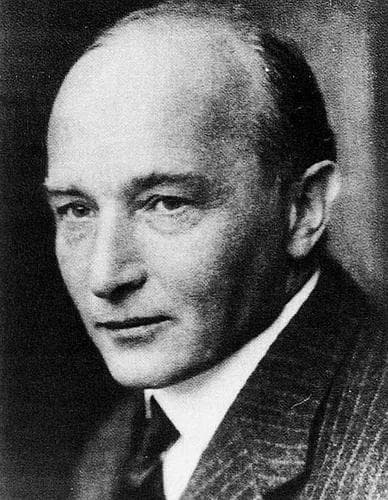
Robert Musil was an Austrian philosophical writer. His unfinished novel, The Man Without Qualities, is generally considered to be one of the most important and influential modernist novels.
Similar books
- Ulysses
James Joyce
3.7 (111k) average on GoodreadsLiterary FictionBoth are modernist epics exploring a single day/period through stream of consciousness and complex intellectual themes.
- In Search of Lost Time
Marcel Proust
4.3 (10k) average on GoodreadsLiterary FictionBoth are multi-volume, introspective works that delve deeply into memory, time, and the subjective experience of life.
- The Magic Mountain
Thomas Mann
4.1 (38k) average on GoodreadsLiterary FictionBoth are long, philosophical novels set in the early 20th century, using a specific setting to explore broad intellectual debates.
- The Old Man and the Sea
Ernest Hemingway
3.8 (831k) average on GoodreadsLiterary FictionA Cuban fisherman's long struggle with a giant marlin becomes a story of endurance and dignity, now retold for young adults with illustrations, phonetic guides, and writing prompts in Traditional Chinese.
- One Hundred Years of Solitude
Gabriel García Márquez
4.1 (753k) average on GoodreadsLiterary FictionThrough the multi-generational story of the Buendía family, a mythical town deals with the repeating patterns of time, love, and solitude, as the extraordinary mixes with the ordinary.
- The Goldfinch
Donna Tartt
3.9 (720k) average on GoodreadsLiterary FictionHaunted by a tragic explosion and clutching a stolen Dutch masterpiece, a young orphan navigates the opulent drawing rooms of New York and the gritty underbelly of the art world, desperately seeking connection and redemption amidst a life spiraling into crime and obsession.




Enjoyed the summary?
A summary gives you the shape of the book. The book itself has the detail, the examples and the voice.
Find The Man Without Qualities on AmazonAs an Amazon Associate, BookBrief earns from qualifying purchases. How we're funded