

Synopsis
Covers the whole plot, including the ending.
- Difficulty
- Hard
- Read it if
- You are fascinated by post-WWII French intellectual life, the ethical challenges of political engagement, and the complex interplay between love, philosophy, and ideology. Ideal for those who appreciate character-driven philosophical fiction with a strong historical backdrop.
- Skip it if
- You prefer fast-paced plots, clear-cut moral answers, or lighter reads. This book is dense, contemplative, and deals with significant existential angst, which might not appeal to all readers.
The Mandarins Quotes
“One day, it'll be too late. You'll be too old, too tired, too jaded. Don't put off living.”
“The great thing about being a writer is that you can always start over. You can always correct the past.”
“What a strange thing it is to be a human being, to be alive, to be here, now.”
“We were so sure we could change the world. Perhaps we changed ourselves instead.”
“Freedom is what you do with what's been done to you.”
“One doesn't have to be a hero to be a man.”
“Love is not a matter of counting the days, but of making the days count.”
“The greatest tragedy is not to die, but to live without purpose.”
“Every word is a choice, and every choice has consequences.”
“We invent our future by living it.”
“The world is not a problem to be solved, but a reality to be experienced.”
“One must make choices, even if they are wrong. Not to choose is the greatest error.”
“Happiness is not something you postpone for the future; it is something you design for the present.”
“To be free is to be alone, to be responsible for oneself, to create oneself.”
“Ideas are not enough. One must live them.”
Quiz
10 questions on the plot and the characters. Each answer comes with a short explanation.
Question 1
Which prestigious French literary prize did 'The Mandarins' win?
- Prix Femina
- Prix Renaudot
- Prix Goncourt
- Grand Prix du Roman de l'Académie française
Show answer
C. Prix Goncourt As stated in the book jacket, 'The Mandarins' is a winner of France's prestigious Prix Goncourt.
Question 2
At the beginning of the novel, what significant historical event has just concluded, allowing the characters to plan their future?
- The end of World War I
- The end of the German occupation of Paris
- The liberation of France from Vichy rule
- The fall of the Third Republic
Show answer
B. The end of the German occupation of Paris The book jacket specifies that the characters gather 'to celebrate the end of the German occupation and to plan their future.'
Question 3
Which character is described as an 'ex-Resistance fighter' eager to resume his life?
- Robert
- Henri
- Lewis
- Jean
Show answer
B. Henri The book jacket explicitly identifies Henri as the 'Ex-Resistance fighter' who is 'eager to resume his life'.
Question 4
The novel is described as both an 'epic romance' and what other significant literary form?
- A political satire
- A historical chronicle
- A philosophical manifesto
- A psychological thriller
Show answer
C. A philosophical manifesto The book jacket categorizes 'The Mandarins' as 'An epic romance and a philosophical manifesto'.
Question 5
Which real-life intellectual giants are mentioned in the book jacket as having 'wickedly accurate portraits' within the novel?
- Foucault and Derrida
- Sartre and Camus
- Merleau-Ponty and Lévi-Strauss
- Gide and Malraux
Show answer
B. Sartre and Camus The book jacket explicitly states the novel is 'punctuated by wickedly accurate portraits of Sartre, Camus and other intellectual giants of the time.'
Question 6
Robert, one of the central characters, is determined to pursue what specific ambition after the war?
- To write a great novel
- To enter politics
- To establish a new philosophical journal
- To rebuild his pre-war business empire
Show answer
B. To enter politics The book jacket states: 'Robert is determined to enter politics'.
Question 7
Anne, Robert's wife, is a psychiatrist. What personal distraction is she experiencing that is mentioned in the summary?
- A professional crisis at her clinic
- A philosophical debate with a colleague
- An affair
- A deep depression brought on by the war
Show answer
C. An affair The book jacket states that Anne, Robert's psychiatrist wife, 'is distracted by an affair'.
Question 8
Given the description of the novel as a 'philosophical manifesto' and its author, Simone de Beauvoir, what central philosophical theme is most likely to be explored in 'The Mandarins'?
- The nature of divine grace and predestination
- The absurdity of existence and the search for meaning in a post-war world
- The inherent goodness of humanity and the perfectibility of society
- The logical structure of language and its impact on thought
Show answer
B. The absurdity of existence and the search for meaning in a post-war world Simone de Beauvoir was a prominent existentialist philosopher. Given the context of post-war Paris and the mention of Sartre and Camus (also existentialists), the novel would likely delve into themes of existentialism, focusing on the search for meaning, freedom, responsibility, and the absurdity of existence in a world grappling with the aftermath of profound conflict.
Question 9
The book jacket describes Henri's lover, Paula, as wanting to 'revive their affair'. What does this imply about their relationship at the beginning of the novel?
- They are in a new relationship, just starting after the war.
- Their affair had been interrupted or was dormant during the war.
- Paula is pursuing Henri, who is uninterested in rekindling anything.
- They are in a committed, long-term relationship that Paula wishes to deepen.
Show answer
B. Their affair had been interrupted or was dormant during the war. The word 'revive' implies that the affair existed previously but had ceased or significantly diminished, and Paula wishes to bring it back to life, likely due to the disruptions of wartime.
Question 10
Considering the historical context of post-WWII Paris and the intellectual figures portrayed, what kind of 'future' are the characters most likely planning, beyond personal relationships?
- Strictly economic ventures and personal wealth accumulation.
- A return to pre-war social norms and political structures.
- Reconstruction of French society, intellectual movements, and political ideologies.
- Escaping France for more stable countries to avoid further conflict.
Show answer
C. Reconstruction of French society, intellectual movements, and political ideologies. Given the setting (post-occupation Paris), the characters (ex-Resistance, aspiring politician, intellectuals like Sartre and Camus), and the description as a 'philosophical manifesto,' the 'future' they plan would inevitably involve the intellectual, social, and political reconstruction of France and the grappling with new ideas in the aftermath of a devastating war.
The Mandarins FAQ
What is 'The Mandarins' about?
'The Mandarins' is a novel by Simone de Beauvoir that follows a group of Parisian intellectuals and Resistance fighters in the aftermath of World War II. It explores their struggles with love, politics, philosophy, and the search for meaning in a changed world, often drawing on existentialist themes.
Does 'The Mandarins' accurately portray real historical figures?
Yes, 'The Mandarins' features thinly veiled fictionalized versions of real intellectual giants of the time, including Simone de Beauvoir herself, Jean-Paul Sartre, Albert Camus, and Arthur Koestler. The novel offers 'wickedly accurate portraits' of their personalities and philosophical debates.
What philosophical concepts are explored in 'The Mandarins'?
The novel deeply explores existentialist themes such as freedom, responsibility, commitment, the meaning of existence, and the ethical dilemmas of political engagement. It grapples with the tension between individual liberty and collective action, particularly in a post-war context.
Is 'The Mandarins' a difficult book to read for someone new to philosophy?
While 'The Mandarins' is a philosophical novel, it is also a compelling story driven by character relationships and historical events. Its narrative structure makes the philosophical ideas more accessible as they are woven into the characters' lives and dialogues, rather than presented as abstract treatises.
How does 'The Mandarins' differ from other post-war French novels?
'The Mandarins' stands out for its unique blend of epic romance, political commentary, and philosophical inquiry, all set against the backdrop of post-WWII intellectual Paris. Unlike some contemporaries, it offers a nuanced and often critical look at the left-wing intelligentsia's struggles and contradictions.
Does 'The Mandarins' work as a standalone novel, or should I read other Beauvoir books first?
'The Mandarins' can absolutely be read as a standalone novel. While it reflects Beauvoir's own philosophical journey, prior knowledge of her other works is not necessary to appreciate its narrative, characters, and themes. It serves as an excellent introduction to her fiction.
What is the significance of the title 'The Mandarins'?
The title 'The Mandarins' refers to the intellectual elite, often seen as detached from practical life but holding significant cultural and political influence. The novel explores the responsibilities and limitations of these 'mandarins' in shaping society after the war.
What role does love and relationships play in 'The Mandarins'?
Love and relationships are central to 'The Mandarins,' serving as a lens through which philosophical and political ideas are explored. The characters' intertwined personal lives, including complex affairs and evolving partnerships, highlight the challenges of commitment, freedom, and fidelity in a world grappling with new ideals.
How does 'The Mandarins' reflect Simone de Beauvoir's own experiences?
As a semi-autobiographical novel, 'The Mandarins' deeply reflects Simone de Beauvoir's own experiences as an intellectual, writer, and participant in the post-war Parisian scene. Her personal relationships, political engagements, and philosophical inquiries are vividly mirrored in the characters and their struggles.
About the author

Simone Lucie Ernestine Marie Bertrand de Beauvoir was a French existentialist philosopher, writer, social theorist, and feminist activist. Though she did not consider herself a philosopher, nor was she considered one at the time of her death, she had a significant influence on both feminist existentialism and feminist theory.
Similar books
- Nausea
Jean-Paul Sartre
3.9 (86k) average on GoodreadsPhilosophyA seminal work of existentialist fiction, reflecting similar philosophical concerns of freedom and responsibility.
- The Plague
Albert Camus
4.0 (171k) average on GoodreadsLiterary FictionExamines human responses to crisis, moral choice, and the search for meaning in a post-war context.
- Brave New World
Aldous Huxley
4.0 (1.4M) average on GoodreadsFantasyIn a future where happiness comes from chemicals and individuality is gone, one man's desire for real experience threatens the calm, controlled society.
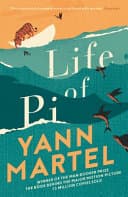
- Life of Pi
Yann Martel
3.9 (1.3M) average on GoodreadsFantasyStranded in the vast Pacific, a young Indian boy forms an unlikely bond with a Bengal tiger, questioning belief and survival.
- The Picture of Dorian Gray
Oscar Wilde
4.1 (966k) average on GoodreadsFantasyA beautiful young man's soul decays within a cursed portrait, mirroring the grotesque cost of his hedonistic pursuit of eternal youth and illicit pleasure.
- Tuesdays with Morrie
Mitch Albom
4.1 (782k) average on GoodreadsBiographyA dying professor's weekly lessons from his bedside change a former student, giving him ideas on life, love, and letting go.





Enjoyed the summary?
A summary gives you the shape of the book. The book itself has the detail, the examples and the voice.
Find The Mandarins on AmazonAs an Amazon Associate, BookBrief earns from qualifying purchases. How we're funded